
Hypothesis Testing with the Impact Canvas The Methodology
- Slides: 23
Hypothesis Testing with the Impact Canvas
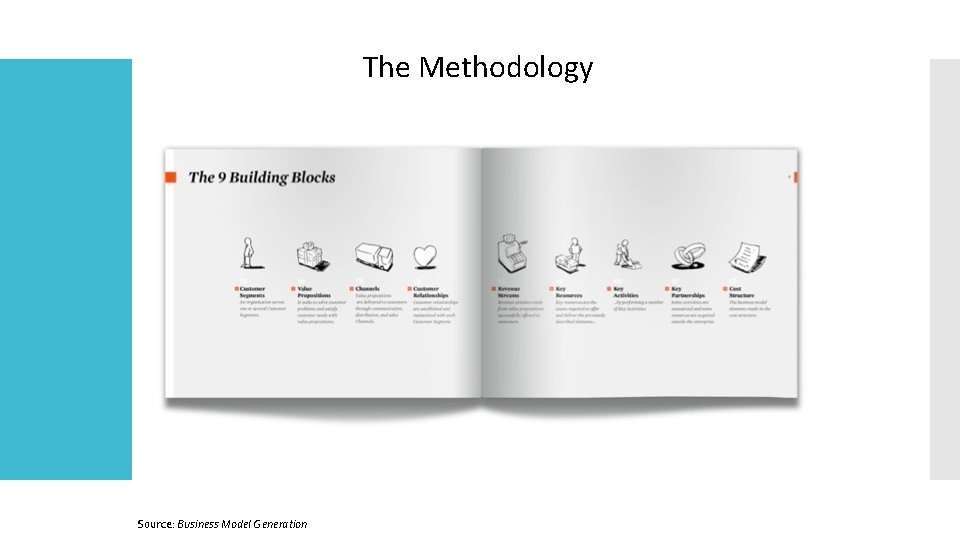
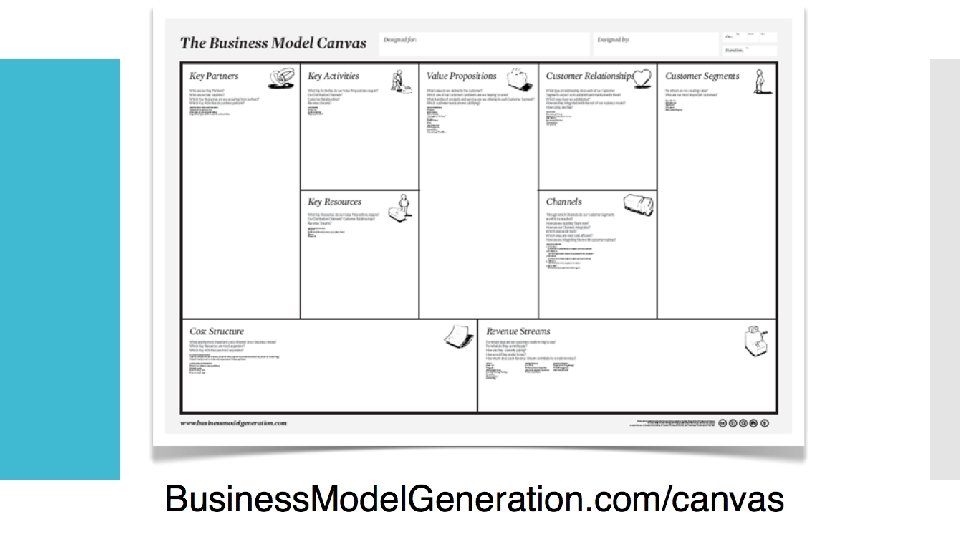
The Methodology Source: Business Model Generation
What about Social Impact?
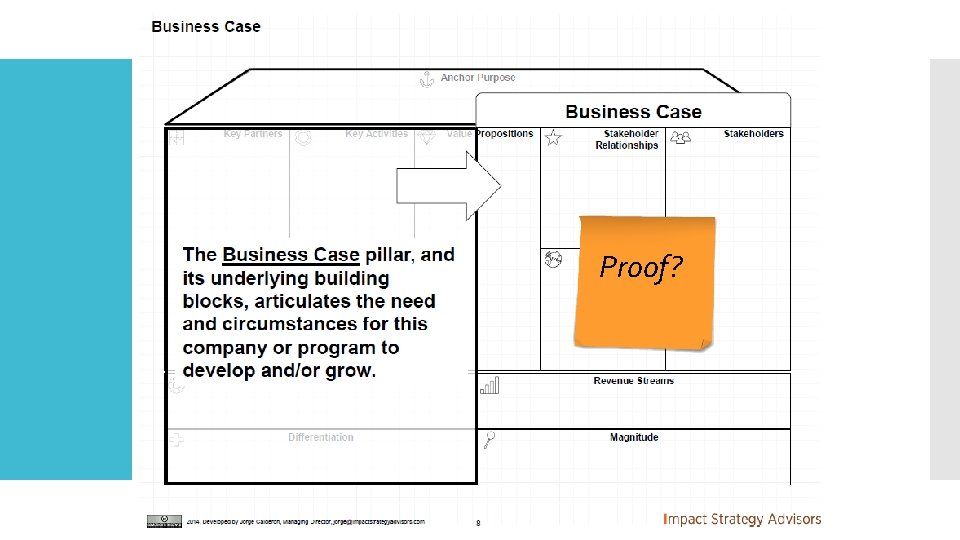
Proof?
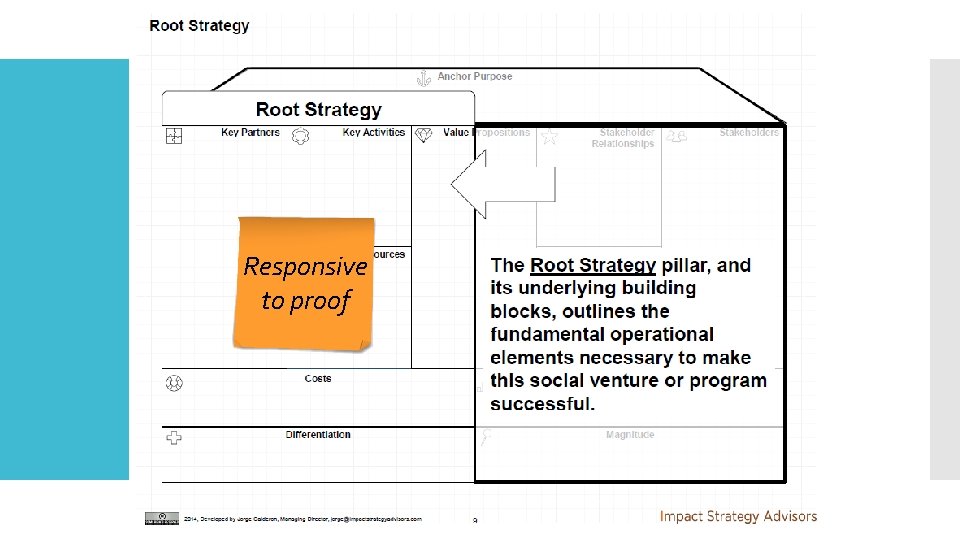
Responsive to proof
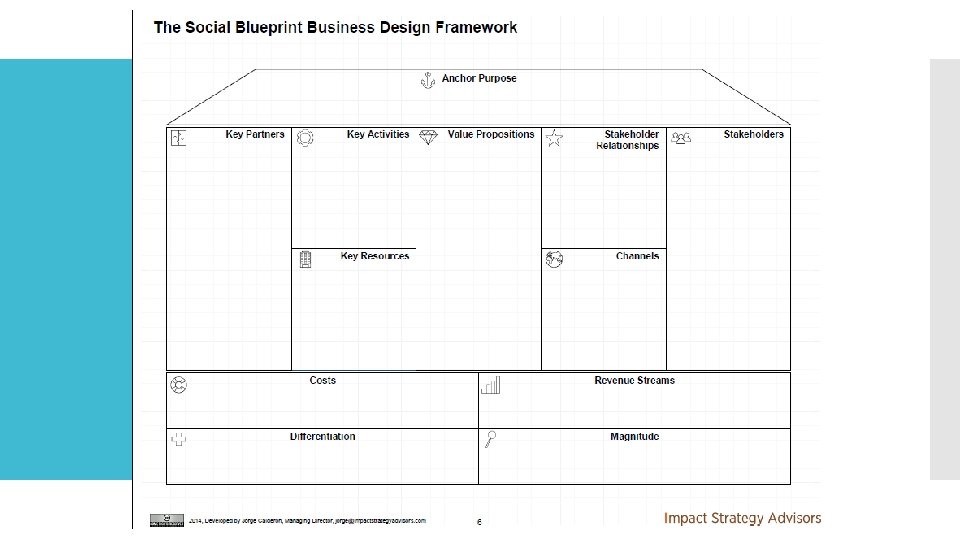
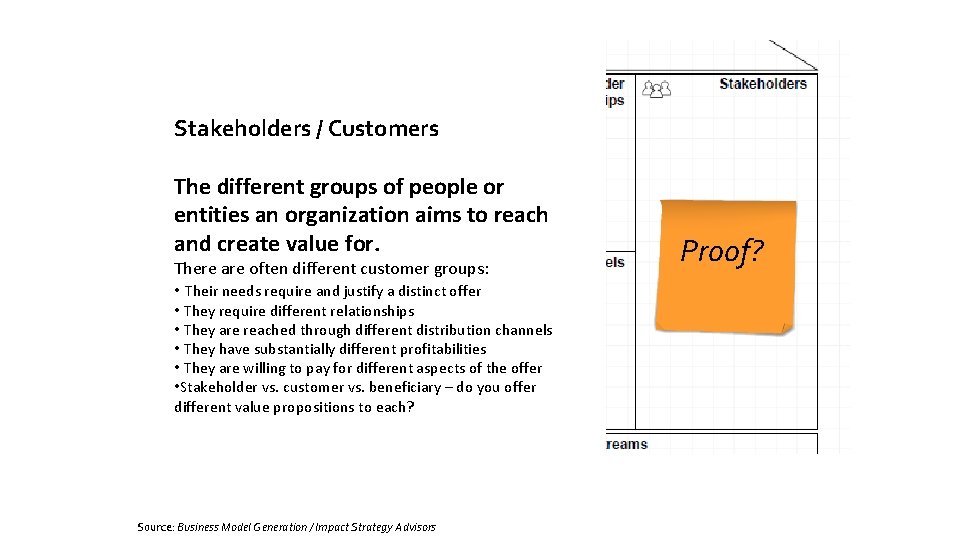
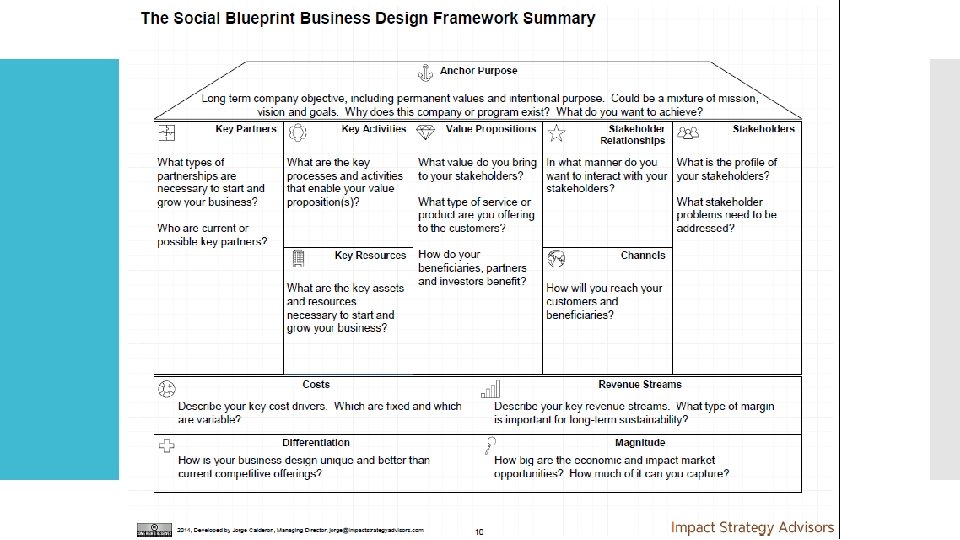
Stakeholders / Customers The different groups of people or entities an organization aims to reach and create value for. There are often different customer groups: • Their needs require and justify a distinct offer • They require different relationships • They are reached through different distribution channels • They have substantially different profitabilities • They are willing to pay for different aspects of the offer • Stakeholder vs. customer vs. beneficiary – do you offer different value propositions to each? Source: Business Model Generation / Impact Strategy Advisors Proof?
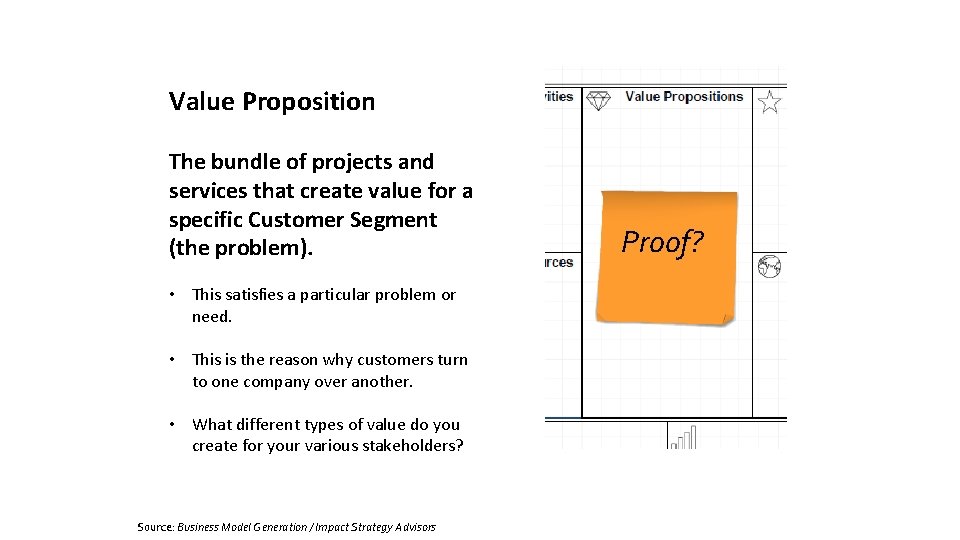
Value Proposition The bundle of projects and services that create value for a specific Customer Segment (the problem). • This satisfies a particular problem or need. • This is the reason why customers turn to one company over another. • What different types of value do you create for your various stakeholders? Source: Business Model Generation / Impact Strategy Advisors Proof?
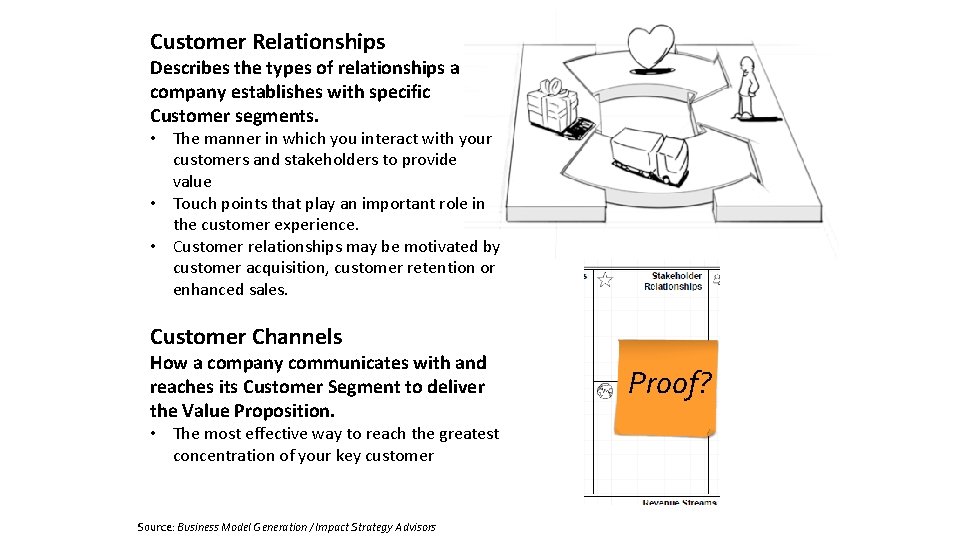
Customer Relationships Describes the types of relationships a company establishes with specific Customer segments. • The manner in which you interact with your customers and stakeholders to provide value • Touch points that play an important role in the customer experience. • Customer relationships may be motivated by customer acquisition, customer retention or enhanced sales. Customer Channels How a company communicates with and reaches its Customer Segment to deliver the Value Proposition. • The most effective way to reach the greatest concentration of your key customer Source: Business Model Generation / Impact Strategy Advisors Proof?
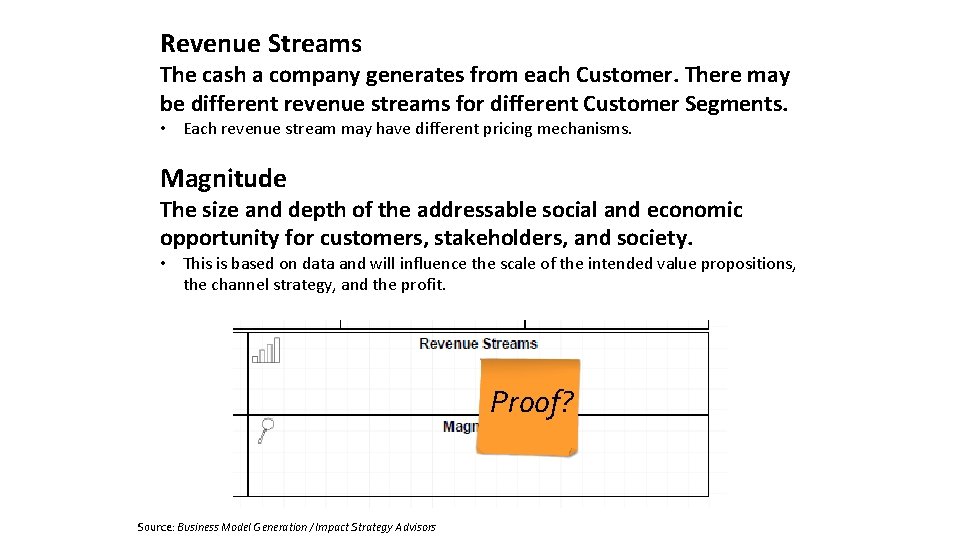
Revenue Streams The cash a company generates from each Customer. There may be different revenue streams for different Customer Segments. • Each revenue stream may have different pricing mechanisms. Magnitude The size and depth of the addressable social and economic opportunity for customers, stakeholders, and society. • This is based on data and will influence the scale of the intended value propositions, the channel strategy, and the profit. Proof? Source: Business Model Generation / Impact Strategy Advisors
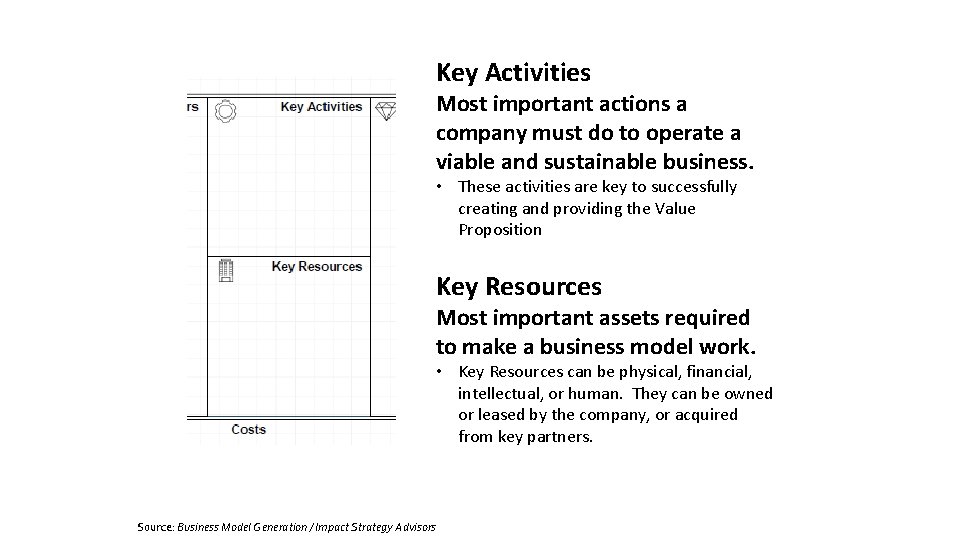
Key Activities Most important actions a company must do to operate a viable and sustainable business. • These activities are key to successfully creating and providing the Value Proposition Key Resources Most important assets required to make a business model work. • Key Resources can be physical, financial, intellectual, or human. They can be owned or leased by the company, or acquired from key partners. Source: Business Model Generation / Impact Strategy Advisors
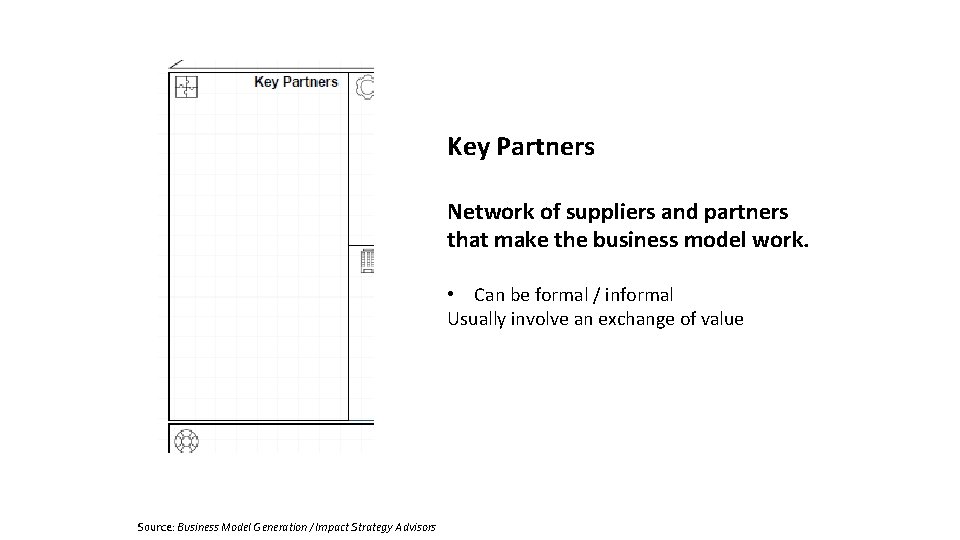
Key Partners Network of suppliers and partners that make the business model work. • Can be formal / informal Usually involve an exchange of value Source: Business Model Generation / Impact Strategy Advisors
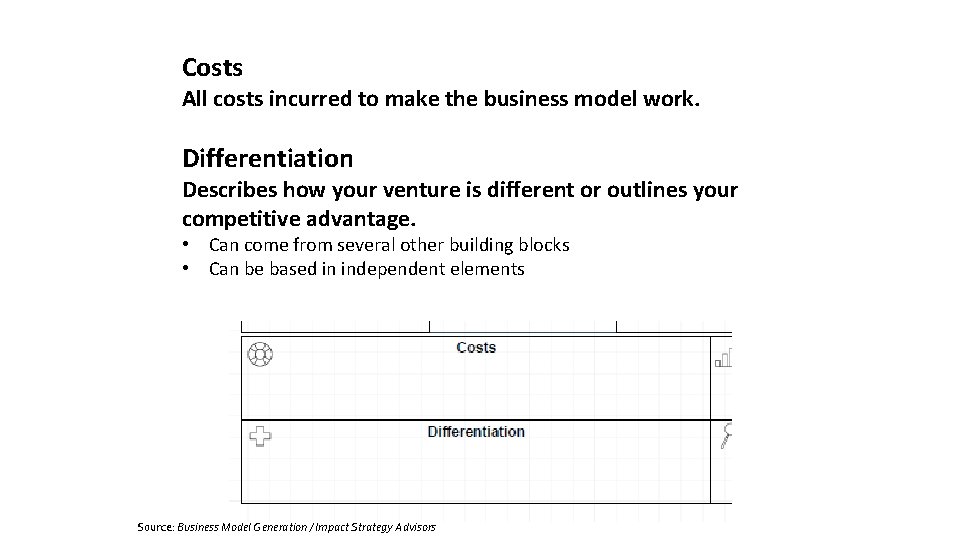
Costs All costs incurred to make the business model work. Differentiation Describes how your venture is different or outlines your competitive advantage. • Can come from several other building blocks • Can be based in independent elements Source: Business Model Generation / Impact Strategy Advisors
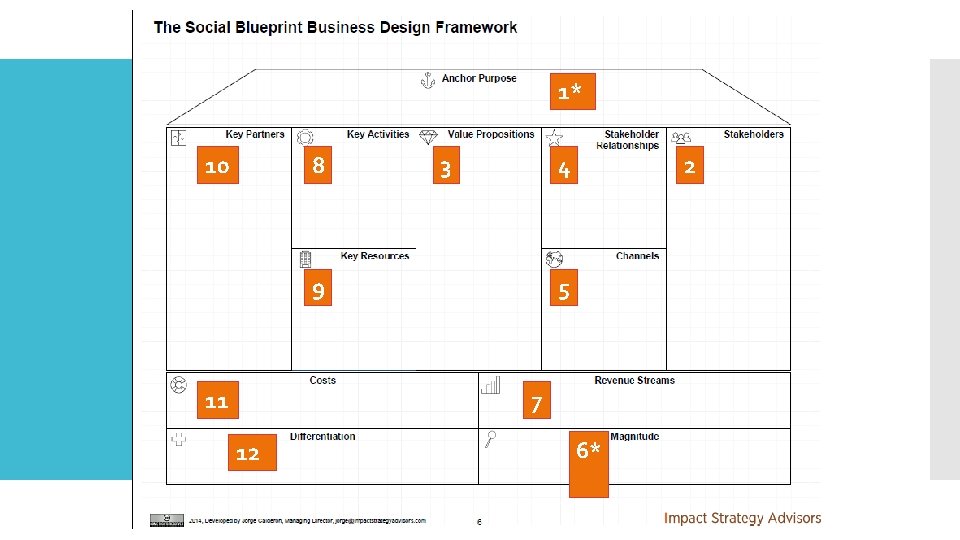
1* 8 10 5 9 11 2 4 3 7 12 6*
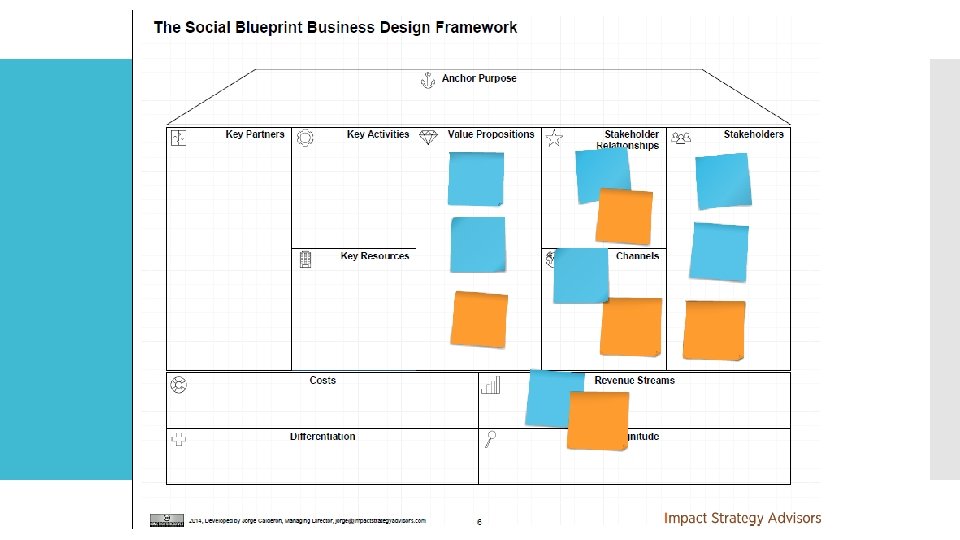
Activity – Impact Canvas Groups: 1– 2– 3– 4– 5– 6–
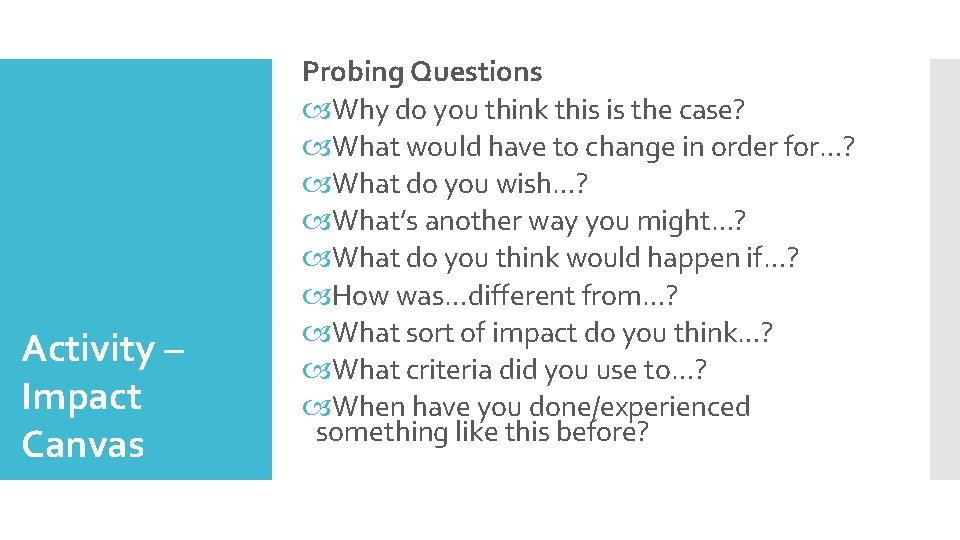
Activity – Impact Canvas Probing Questions Why do you think this is the case? What would have to change in order for…? What do you wish…? What’s another way you might…? What do you think would happen if…? How was…different from…? What sort of impact do you think…? What criteria did you use to…? When have you done/experienced something like this before?
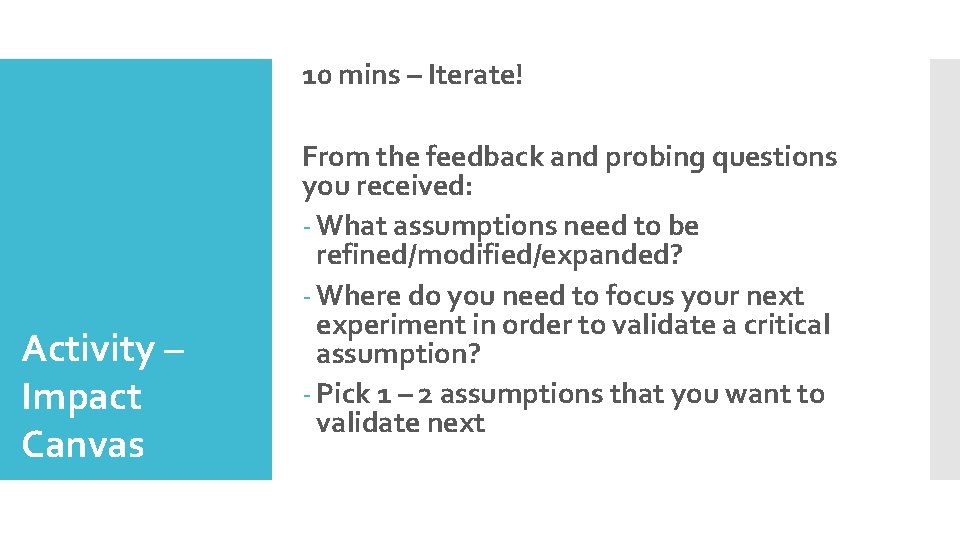
10 mins – Iterate! Activity – Impact Canvas From the feedback and probing questions you received: - What assumptions need to be refined/modified/expanded? - Where do you need to focus your next experiment in order to validate a critical assumption? - Pick 1 – 2 assumptions that you want to validate next