
HYPOTHESIS OR PROVING SOMETHING THROUGH QUESTIONING AND FINDING
- Slides: 8
HYPOTHESIS OR PROVING SOMETHING THROUGH QUESTIONING AND FINDING ANSWERS. WE DISCOVER MORE WHEN WE ASK QUESTIONS.
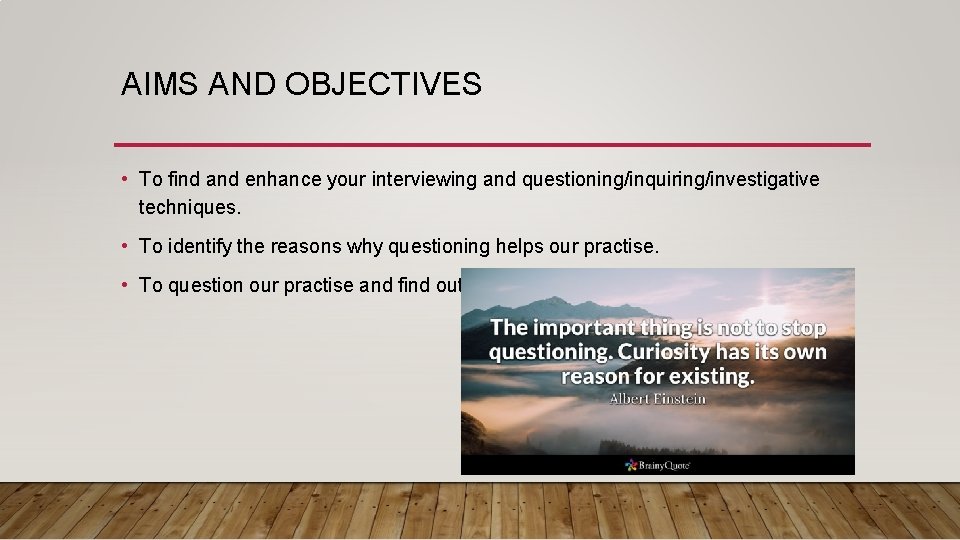
AIMS AND OBJECTIVES • To find and enhance your interviewing and questioning/inquiring/investigative techniques. • To identify the reasons why questioning helps our practise. • To question our practise and find out more about our medium and our theme.
WHY DO WE ASK QUESTIONS? • “Comedians are sociologists. We're pointing out stuff that the general public doesn't even stop to think about, looking at life in slow-motion and questioning everything we see”. Steven Wright
WHAT IS A HYPOTHESIS? • a supposition or proposed explanation made on the basis of limited evidence as a starting point for further investigation. • A scientific hypothesis is the initial building block in the scientific method. Many describe it as an "educated guess, " based on prior knowledge and observation. While this is true, the definition can be expanded
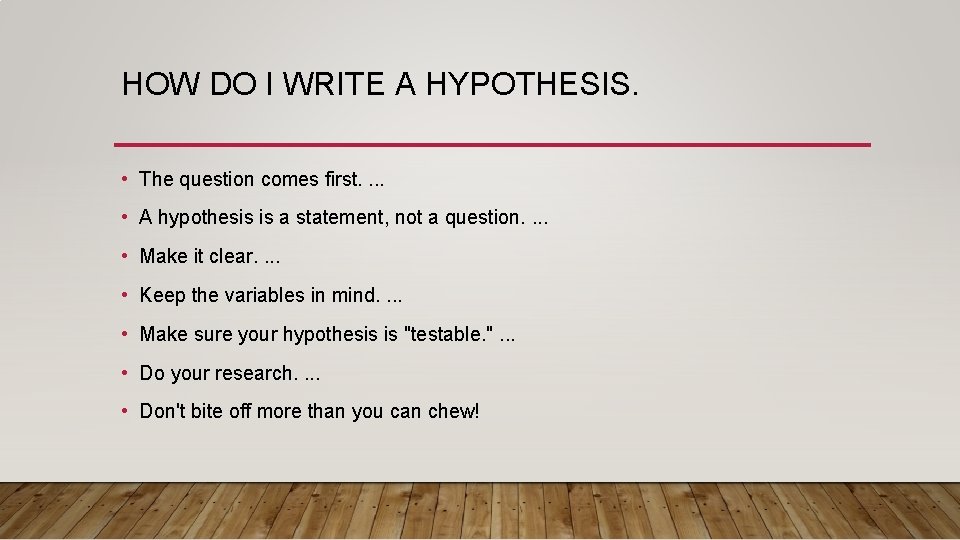
HOW DO I WRITE A HYPOTHESIS. • The question comes first. . • A hypothesis is a statement, not a question. . • Make it clear. . • Keep the variables in mind. . • Make sure your hypothesis is "testable. ". . . • Do your research. . • Don't bite off more than you can chew!
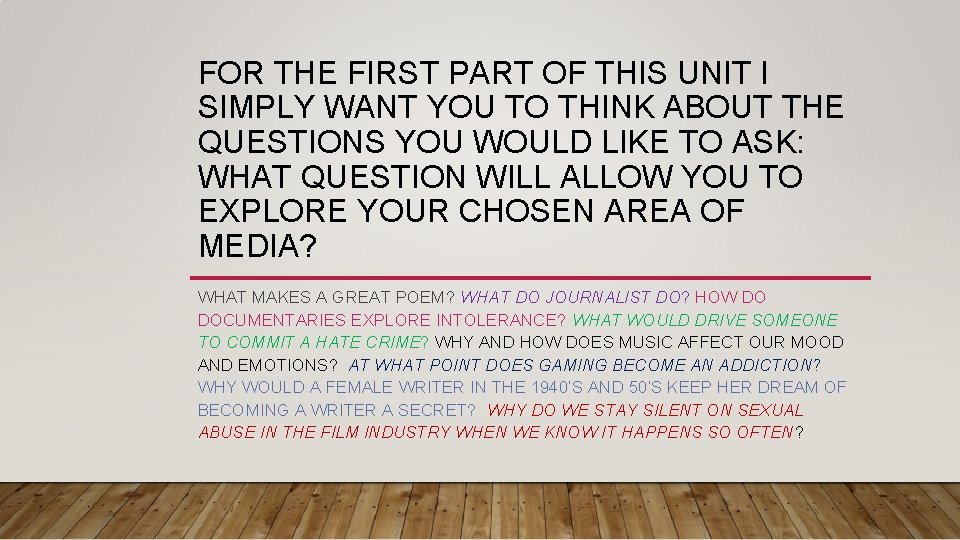
FOR THE FIRST PART OF THIS UNIT I SIMPLY WANT YOU TO THINK ABOUT THE QUESTIONS YOU WOULD LIKE TO ASK: WHAT QUESTION WILL ALLOW YOU TO EXPLORE YOUR CHOSEN AREA OF MEDIA? WHAT MAKES A GREAT POEM? WHAT DO JOURNALIST DO? HOW DO DOCUMENTARIES EXPLORE INTOLERANCE? WHAT WOULD DRIVE SOMEONE TO COMMIT A HATE CRIME? WHY AND HOW DOES MUSIC AFFECT OUR MOOD AND EMOTIONS? AT WHAT POINT DOES GAMING BECOME AN ADDICTION? WHY WOULD A FEMALE WRITER IN THE 1940’S AND 50’S KEEP HER DREAM OF BECOMING A WRITER A SECRET? WHY DO WE STAY SILENT ON SEXUAL ABUSE IN THE FILM INDUSTRY WHEN WE KNOW IT HAPPENS SO OFTEN?
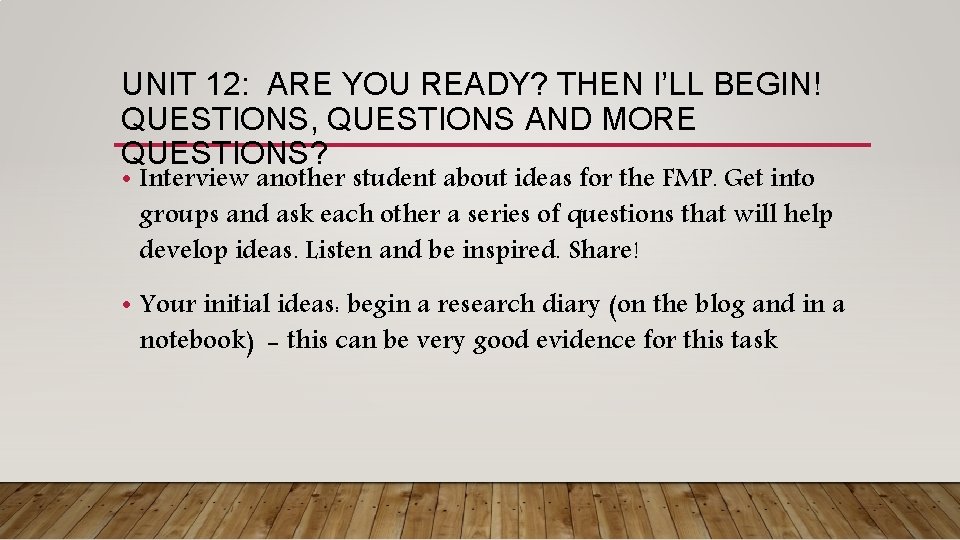
UNIT 12: ARE YOU READY? THEN I’LL BEGIN! QUESTIONS, QUESTIONS AND MORE QUESTIONS? • Interview another student about ideas for the FMP. Get into groups and ask each other a series of questions that will help develop ideas. Listen and be inspired. Share! • Your initial ideas: begin a research diary (on the blog and in a notebook) - this can be very good evidence for this task
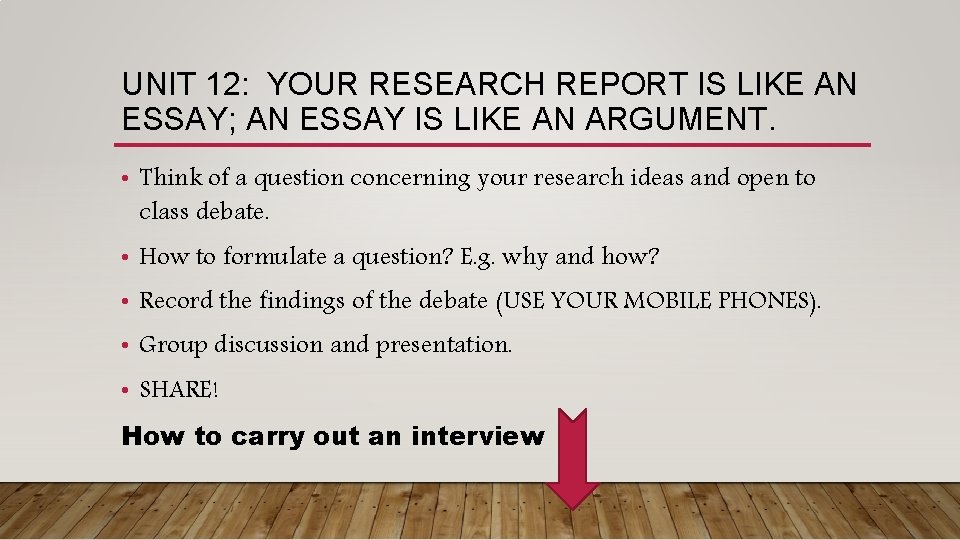
UNIT 12: YOUR RESEARCH REPORT IS LIKE AN ESSAY; AN ESSAY IS LIKE AN ARGUMENT. • Think of a question concerning your research ideas and open to class debate. • How to formulate a question? E. g. why and how? • Record the findings of the debate (USE YOUR MOBILE PHONES). • Group discussion and presentation. • SHARE! How to carry out an interview