
HYPOTHERMIA What is Hypothermia is a lowering of
- Slides: 20
HYPOTHERMIA
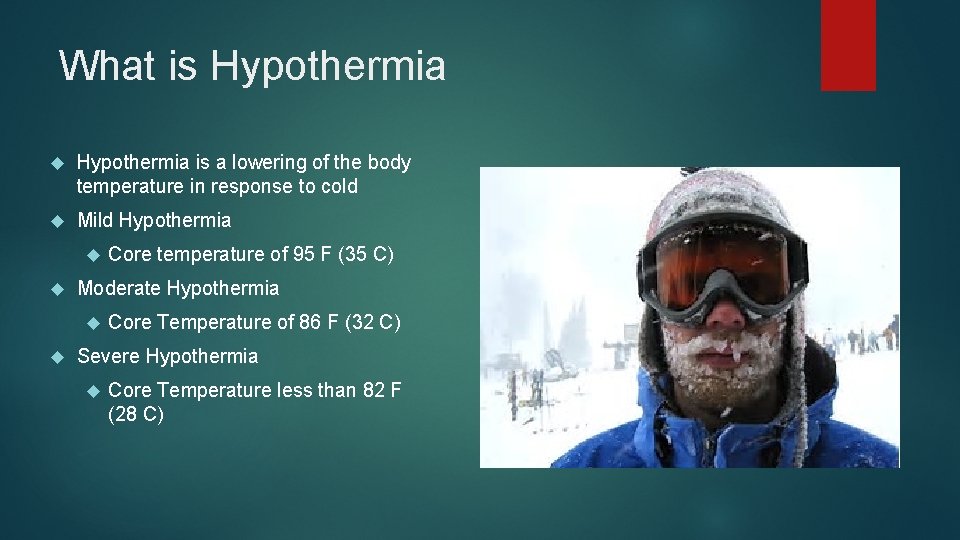
What is Hypothermia is a lowering of the body temperature in response to cold Mild Hypothermia Moderate Hypothermia Core temperature of 95 F (35 C) Core Temperature of 86 F (32 C) Severe Hypothermia Core Temperature less than 82 F (28 C)
Temperature is Difficult to Measure in the Field Core temperature is measured rectally Do not expose patient unnecessarily to obtain a temperature Oral, ear, and skin thermometers are unsuitable for this purpose – inaccurate. Most conventional mercury thermometers do not register abnormally low temperatures For our purposes we will gauge severity by the appearance of the patient
We Lose Heat By Evaporation Loss of heat by vaporizing liquid from the skin or clothing Example: sweating Radiation Transfer of heat in the form of electromagnetic energy between two objects Example: warming hands by a fire Conduction Direct transfer of heat from warmer to cooler object in direct contact Sitting on a block of ice Convection Transfer of heat to or from a gas or liquid that is in motion Example: standing in front of a fan
To Prevent Heat Loss
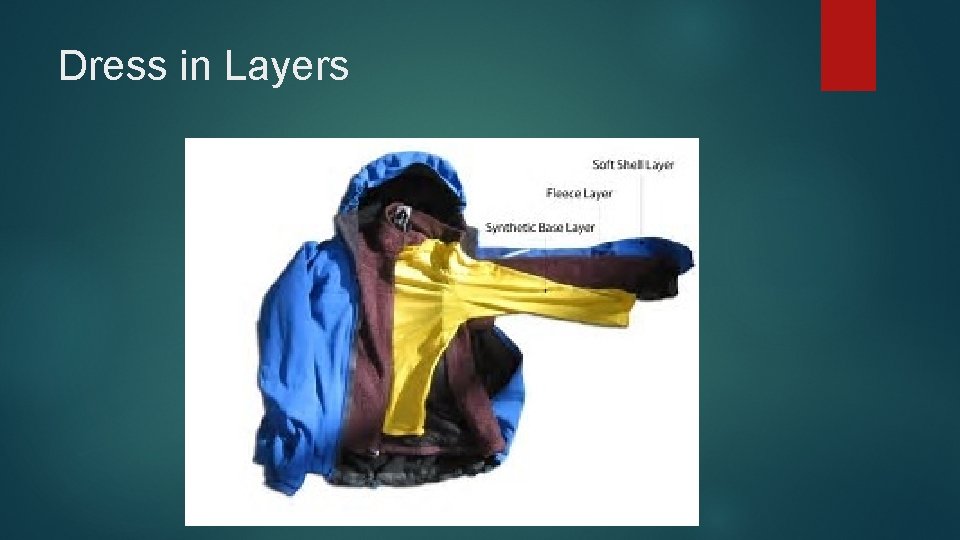
Dress in Layers
Layering Allows removal of a layer of clothing when body heats from exertion Wicking layer next to skin Avoid “Rotten Cotton” the fabric of death Polypropylene doesn’t hold water vapor and keeps us drier Insulating layer Wool or fleece insulate when wet Can wear multiple layers if needed Wind and water resistant layer Gortex or similar fabric breathes and allows passage of water vapor
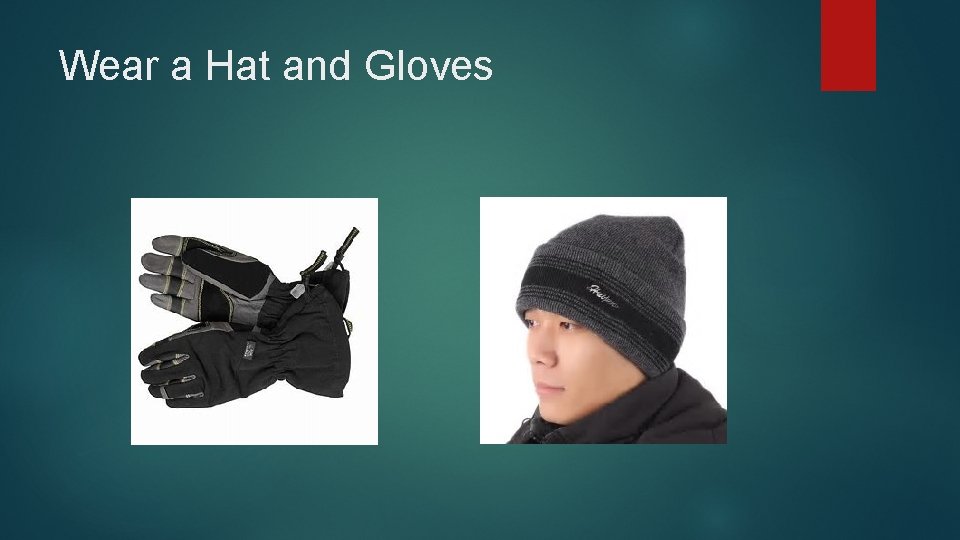
Wear a Hat and Gloves
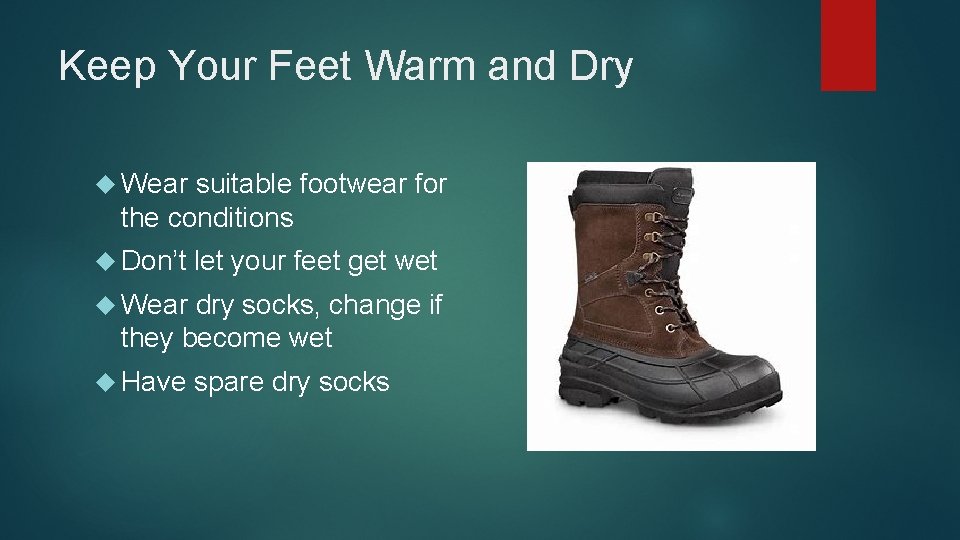
Keep Your Feet Warm and Dry Wear suitable footwear for the conditions Don’t let your feet get wet Wear dry socks, change if they become wet Have spare dry socks
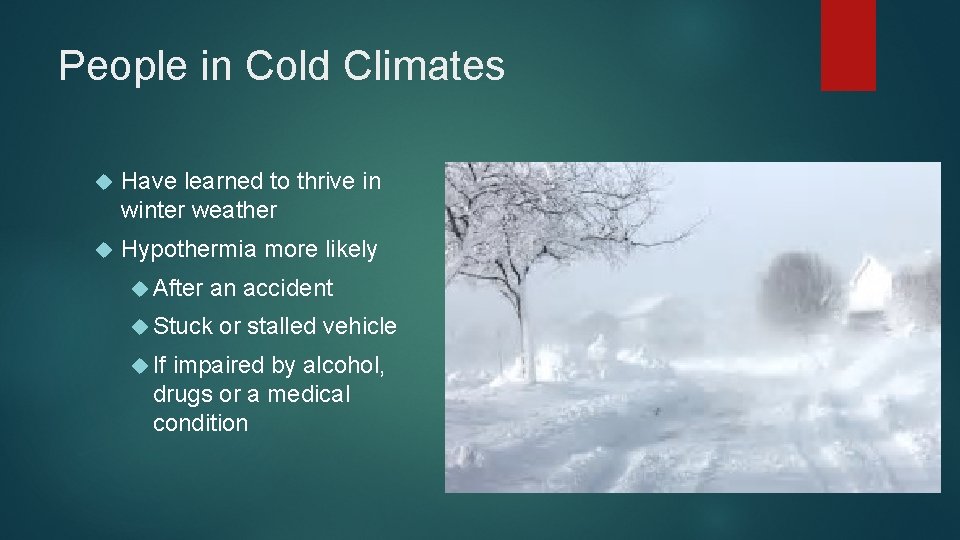
People in Cold Climates Have learned to thrive in winter weather Hypothermia more likely After an accident Stuck If or stalled vehicle impaired by alcohol, drugs or a medical condition
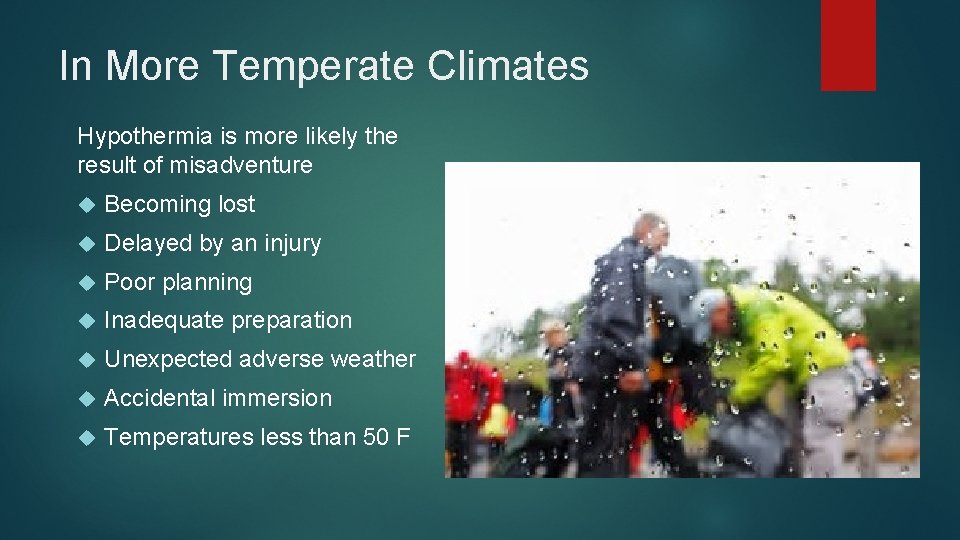
In More Temperate Climates Hypothermia is more likely the result of misadventure Becoming lost Delayed by an injury Poor planning Inadequate preparation Unexpected adverse weather Accidental immersion Temperatures less than 50 F
Recognizing Hypothermia Mental Status: Normal Able mental status but “cold”: Not hypothermic to care for themselves, but slow: Mild hypothermia Conscious Not but disoriented: Moderate hypothermia shivering and unconscious: Severe hypothermia Shivering Slowed vital signs
Vital Signs Are difficult to obtain due clothing Pulse is difficult to detect if the rescuer has cold hands Check pulse and respiration for one full minute
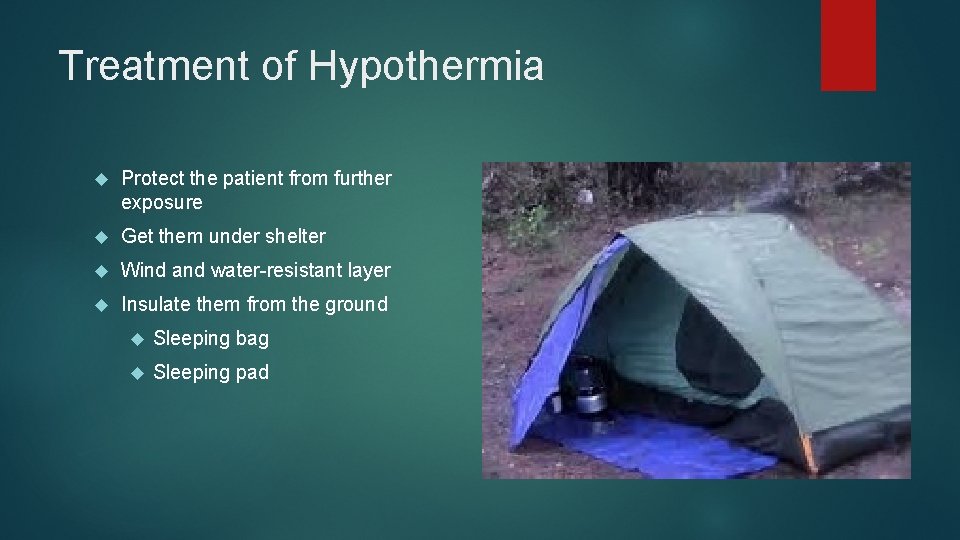
Treatment of Hypothermia Protect the patient from further exposure Get them under shelter Wind and water-resistant layer Insulate them from the ground Sleeping bag Sleeping pad
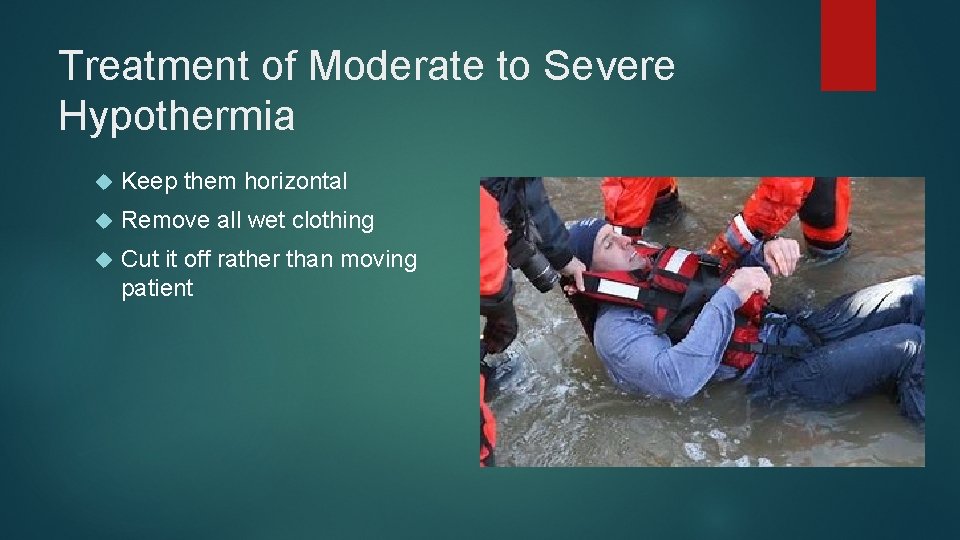
Treatment of Moderate to Severe Hypothermia Keep them horizontal Remove all wet clothing Cut it off rather than moving patient
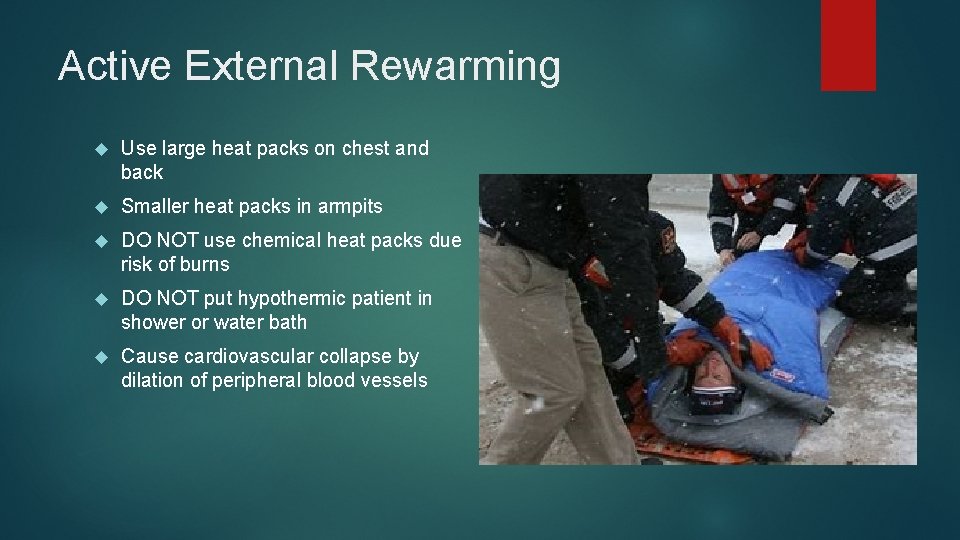
Active External Rewarming Use large heat packs on chest and back Smaller heat packs in armpits DO NOT use chemical heat packs due risk of burns DO NOT put hypothermic patient in shower or water bath Cause cardiovascular collapse by dilation of peripheral blood vessels
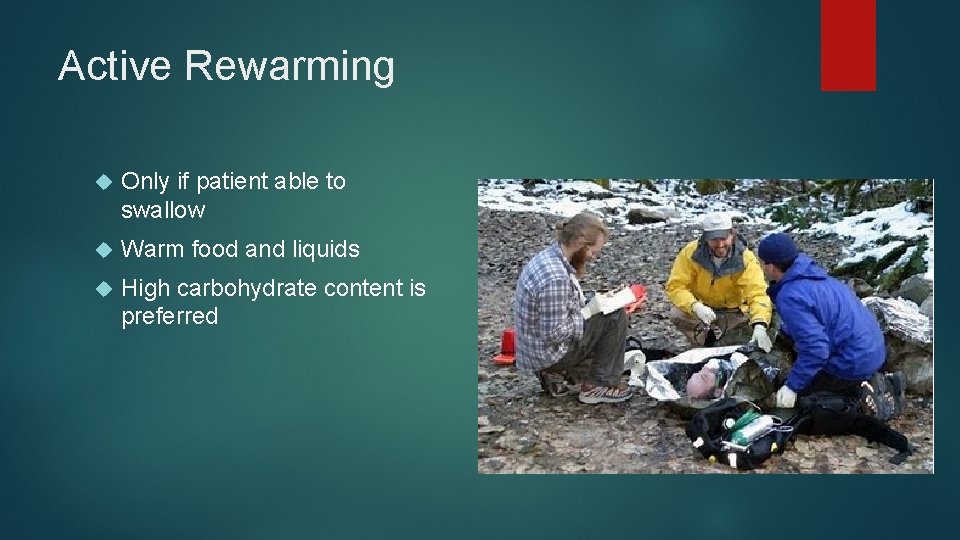
Active Rewarming Only if patient able to swallow Warm food and liquids High carbohydrate content is preferred
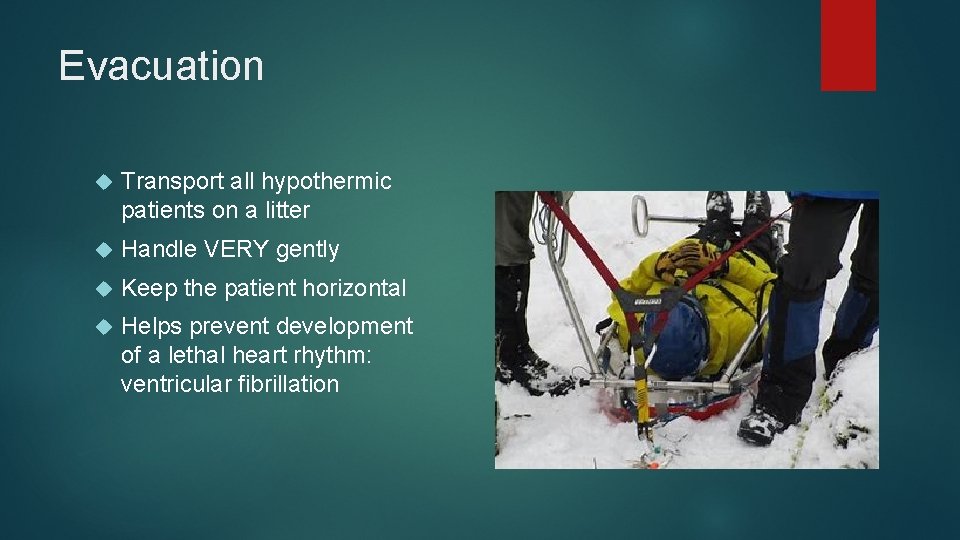
Evacuation Transport all hypothermic patients on a litter Handle VERY gently Keep the patient horizontal Helps prevent development of a lethal heart rhythm: ventricular fibrillation
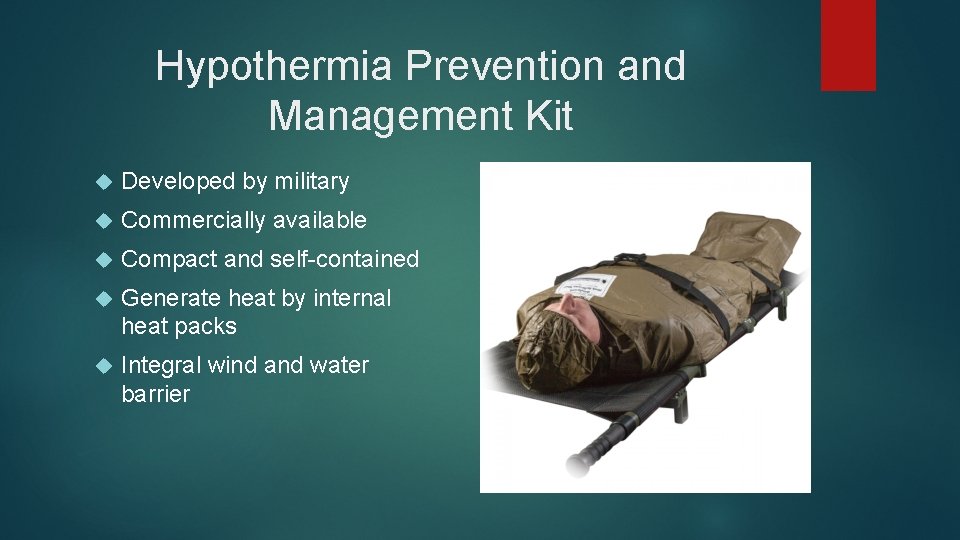
Hypothermia Prevention and Management Kit Developed by military Commercially available Compact and self-contained Generate heat by internal heat packs Integral wind and water barrier
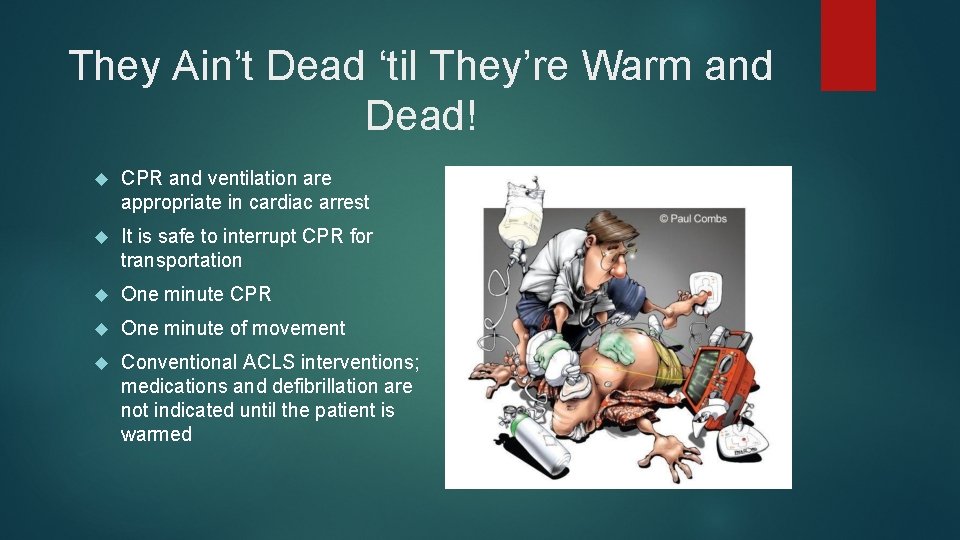
They Ain’t Dead ‘til They’re Warm and Dead! CPR and ventilation are appropriate in cardiac arrest It is safe to interrupt CPR for transportation One minute CPR One minute of movement Conventional ACLS interventions; medications and defibrillation are not indicated until the patient is warmed