
HYPOHIDROTIC ECTODERMAL DYSPLASIA PRESENTED BY GUADALUPE COMPEAN DENTAL
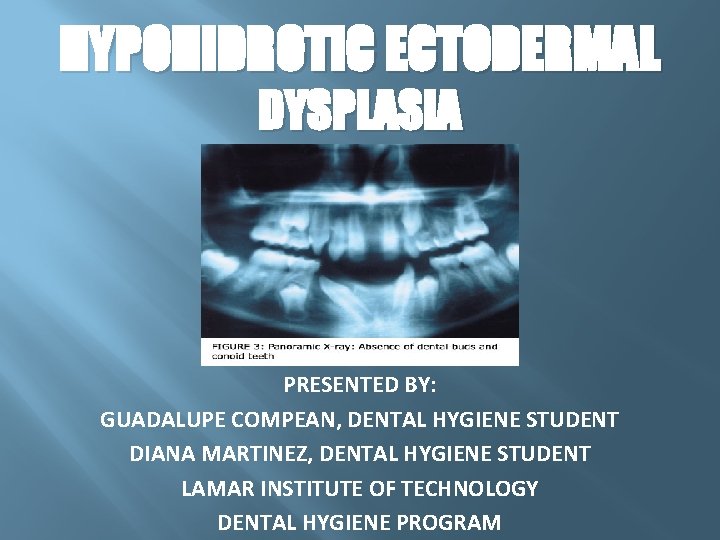
HYPOHIDROTIC ECTODERMAL DYSPLASIA PRESENTED BY: GUADALUPE COMPEAN, DENTAL HYGIENE STUDENT DIANA MARTINEZ, DENTAL HYGIENE STUDENT LAMAR INSTITUTE OF TECHNOLOGY DENTAL HYGIENE PROGRAM
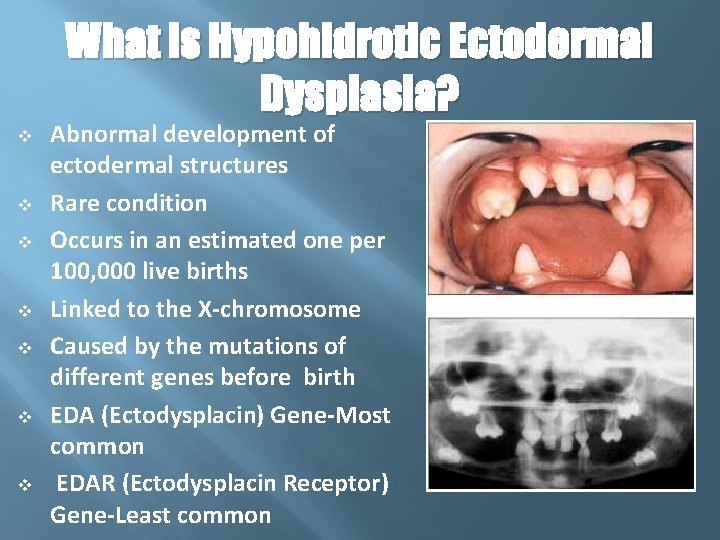
What is Hypohidrotic Ectodermal Dysplasia? v v v v Abnormal development of ectodermal structures Rare condition Occurs in an estimated one per 100, 000 live births Linked to the X-chromosome Caused by the mutations of different genes before birth EDA (Ectodysplacin) Gene-Most common EDAR (Ectodysplacin Receptor) Gene-Least common
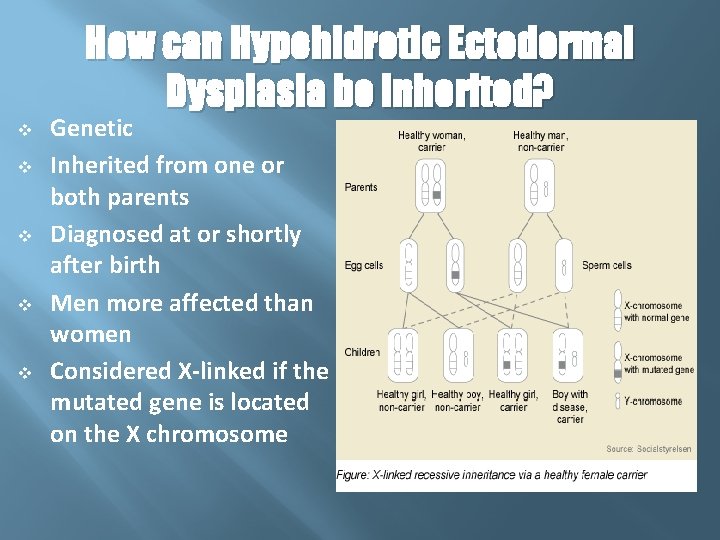
How can Hypohidrotic Ectodermal Dysplasia be inherited? v v v Genetic Inherited from one or both parents Diagnosed at or shortly after birth Men more affected than women Considered X-linked if the mutated gene is located on the X chromosome
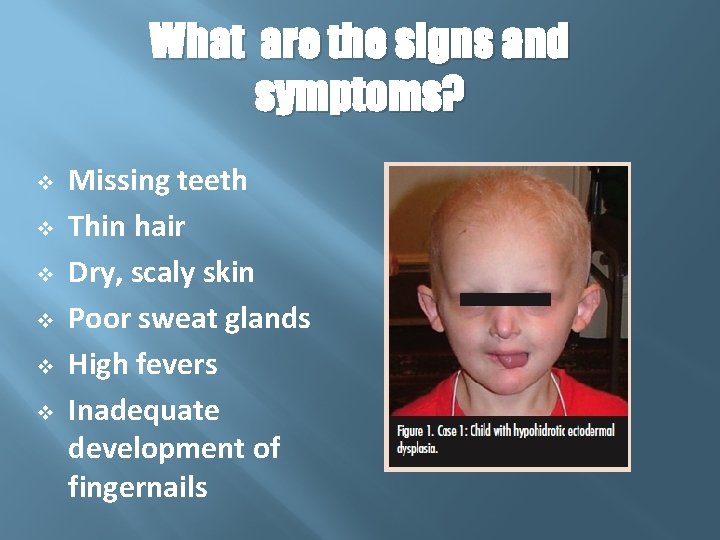
What are the signs and symptoms? v v v Missing teeth Thin hair Dry, scaly skin Poor sweat glands High fevers Inadequate development of fingernails
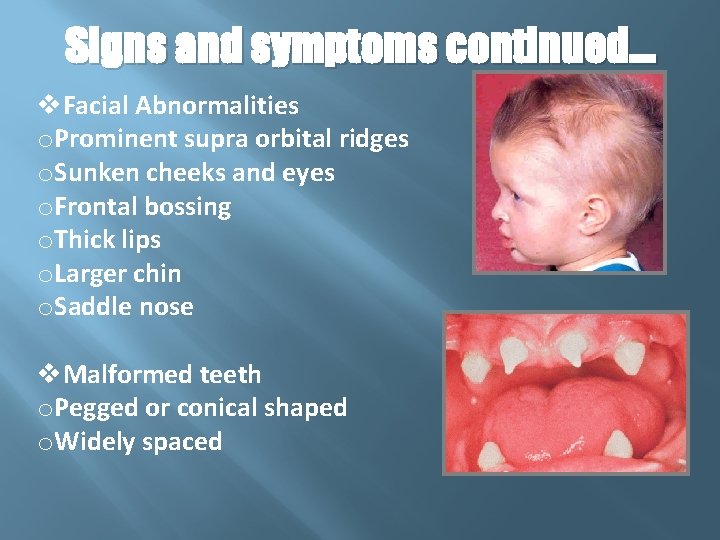
Signs and symptoms continued… v. Facial Abnormalities o. Prominent supra orbital ridges o. Sunken cheeks and eyes o. Frontal bossing o. Thick lips o. Larger chin o. Saddle nose v. Malformed teeth o. Pegged or conical shaped o. Widely spaced
How can hypohidrotic ectodermal dysplasia be diagnosed? v v v v Full medical/dental history Ask additional questions Family history Perform a thorough head & neck exam Oral exam Radiographs Refer for genetic testing
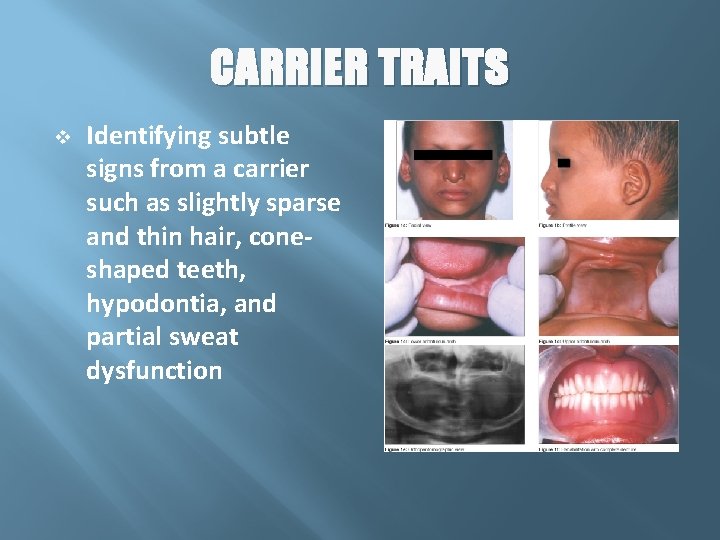
CARRIER TRAITS v Identifying subtle signs from a carrier such as slightly sparse and thin hair, coneshaped teeth, hypodontia, and partial sweat dysfunction
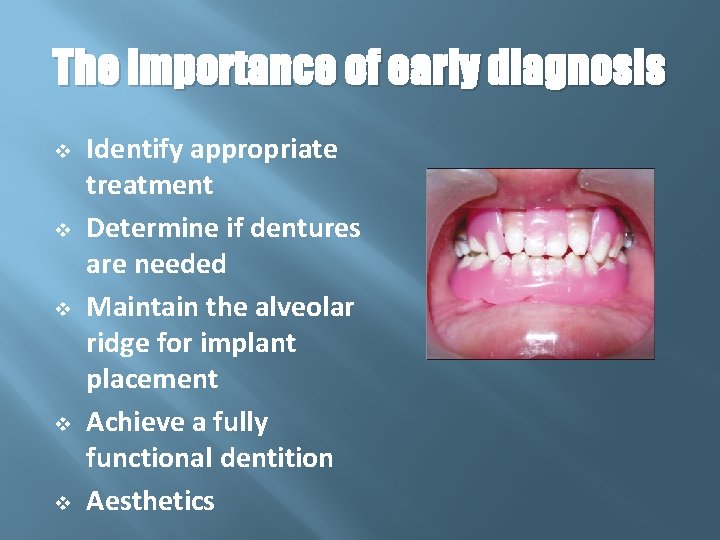
The importance of early diagnosis v v v Identify appropriate treatment Determine if dentures are needed Maintain the alveolar ridge for implant placement Achieve a fully functional dentition Aesthetics
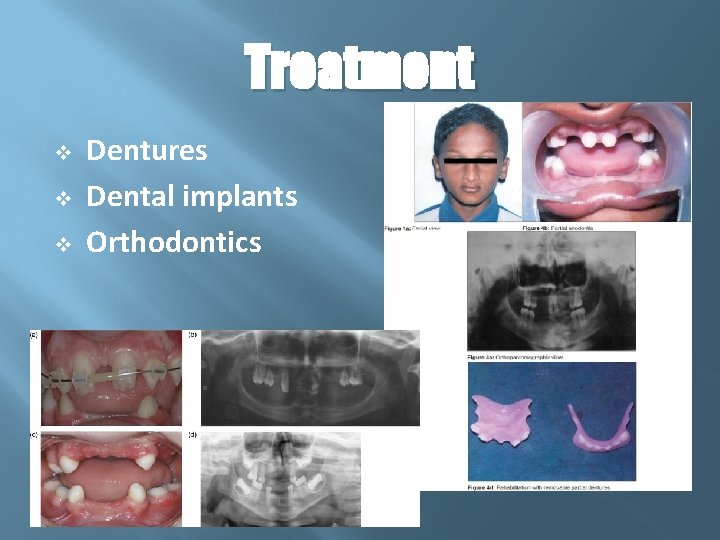
Treatment v v v Dentures Dental implants Orthodontics
Future Research v v Genetic research is developing fast and making advances in understanding the genes known for tooth development. In the future, tooth development and stem cell research could indicate the possibility to create new teeth artificially.
CREDITS Clauss, F. , Chassaing, N. , Smahi A. , Vincent, M. C. , Calvas, P. , Molla, M. , Lesot, H. , Alembik, Y. , Hadj. Rabia, S. , Bodemer, C. , Maniere, M. C. , & Schmittbuhl, M. (2010). X-linked and autosomal recessive hypohidrotic ectodermal dysplasia: Genotypic-dental phenotypic findings. Clinical Genetics, 78, 257 -266. Deshpande, S. N. , & Kumar, V. (2010). Ectodermal dysplasia maxillary and mandibular alveolar reconstruction with dental rehabilitation: A case report and review of the literature. Indian Journal of Plastic Surgery, 43(1), 92 -96. Jayantilal, P. R. , Rajesh, S. , Naveen Y. G. , &Nandini, P. (2010). Treatment considerations for a patient with ectodermal dysplasia: A case report. Journal of International Oral Health, 2(4), 73 -78. Lukes, S. , & Sherry, J. S. (2010). Hypohidrotic Ectodermal Dysplasia. RDH, 31(1), 92 -96. Retrieved from http: //www. rdhmag. com Manuja, N. , Passi, S. , Pandit, I. K. , & Singh, N. (2011). Management of a Case of Ectodermal Dysplasia: A Multidisciplinary Approach. Journal of Dentistry of Children, 78(2), 107 -110. Shah, K. N. (2010, January 24). Ectodermal Dysplasia Treatment & Management. Medscape Reference: Drugs, Diseases, & Procedures. Retrieved from http: //emedicine. medscape. com/article/1111595 -overview The Swedish Information Center for Rare Diseases. (2011). Hypohidrotic ectodermal dysplasia. Retrieved from http: //socialstyrelsen. se/raredisease/hypohidroticectodermal dysplasia#anchor_14
- Slides: 11