
Hypnosis Hypnosis an altered state of consciousness characterized

- Slides: 12
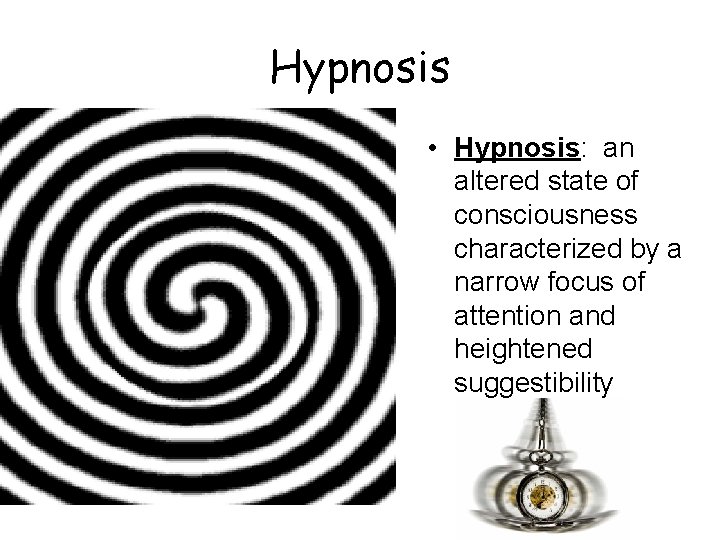
Hypnosis • Hypnosis: an altered state of consciousness characterized by a narrow focus of attention and heightened suggestibility
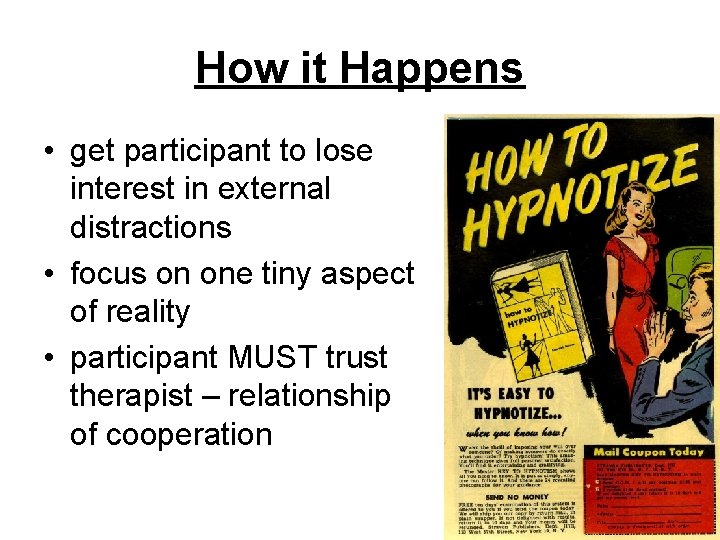
How it Happens • get participant to lose interest in external distractions • focus on one tiny aspect of reality • participant MUST trust therapist – relationship of cooperation
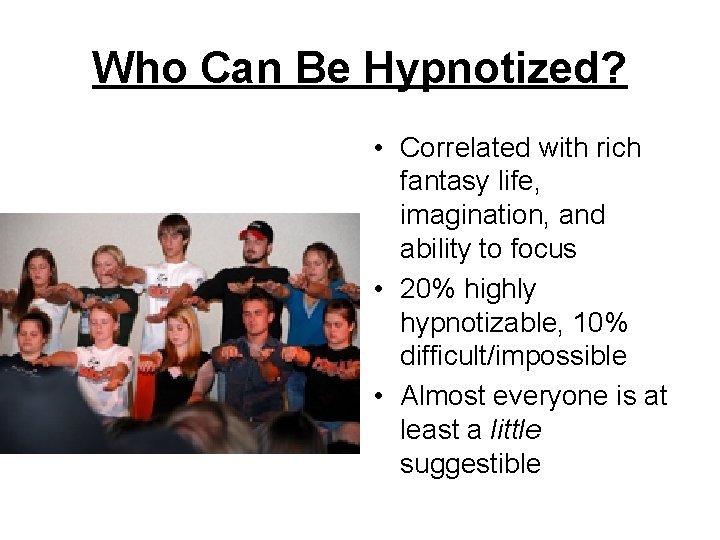
Who Can Be Hypnotized? • Correlated with rich fantasy life, imagination, and ability to focus • 20% highly hypnotizable, 10% difficult/impossible • Almost everyone is at least a little suggestible
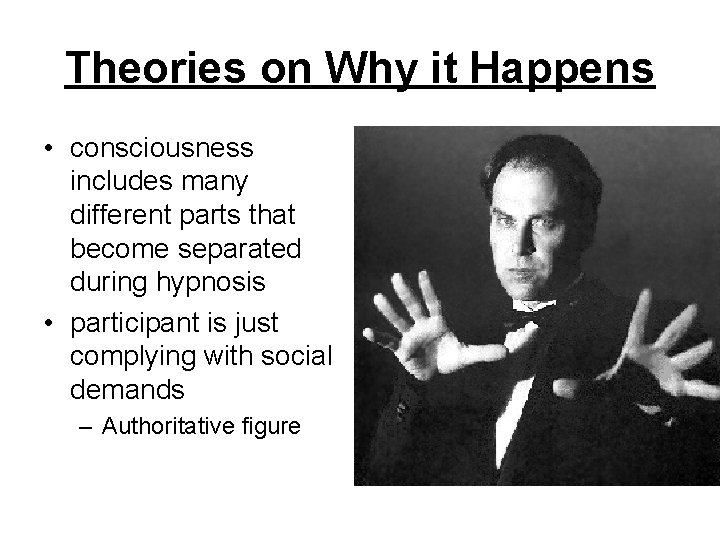
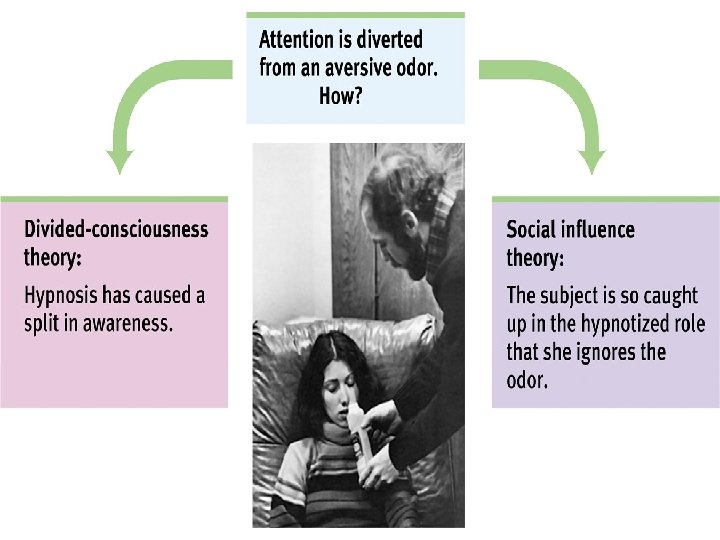
Theories on Why it Happens • consciousness includes many different parts that become separated during hypnosis • participant is just complying with social demands – Authoritative figure
Uses of Hypnosis • post-hypnotic suggestions – Successes: Woman with sores all over her body cured, obesity – Does not work as well with quitting drugs, alcohol, or smoking • pain control – Dissociation • therapy
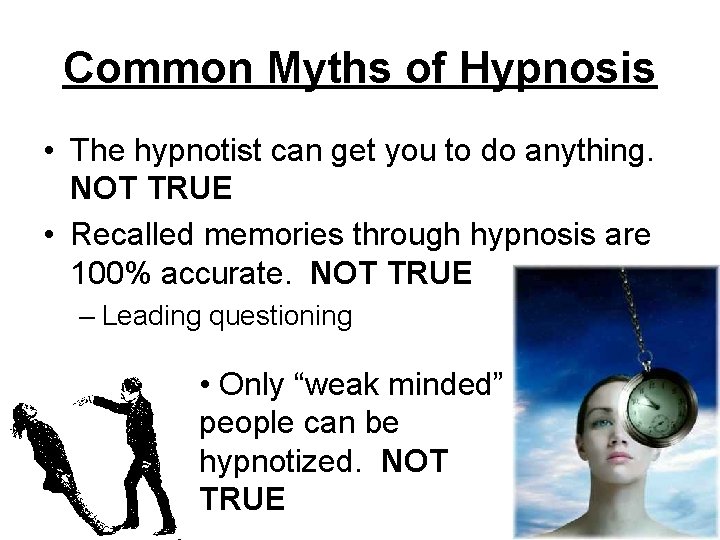
Common Myths of Hypnosis • The hypnotist can get you to do anything. NOT TRUE • Recalled memories through hypnosis are 100% accurate. NOT TRUE – Leading questioning • Only “weak minded” people can be hypnotized. NOT TRUE
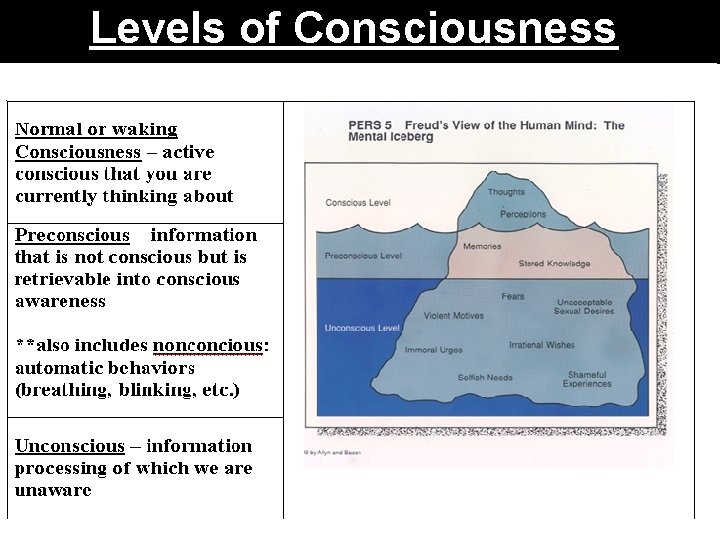
Levels of Consciousness
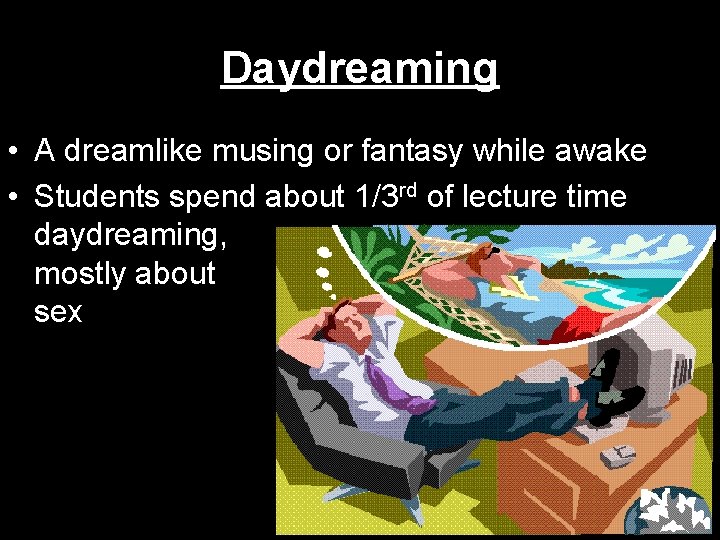
Daydreaming • A dreamlike musing or fantasy while awake • Students spend about 1/3 rd of lecture time daydreaming, mostly about sex
Daydreaming • Next two most common themes: – Conquering hero and suffering martyr
Meditation • A self-directed practice for calming the body and relaxing the mind
Meditation • Increased relaxation of body • Better awareness of body and concentration • Heart rate decreases • Blood pressure and cardiovascular risk reduced