
Hyphens 1 Identifying hyphens Hyphens are used to


- Slides: 8
Hyphens
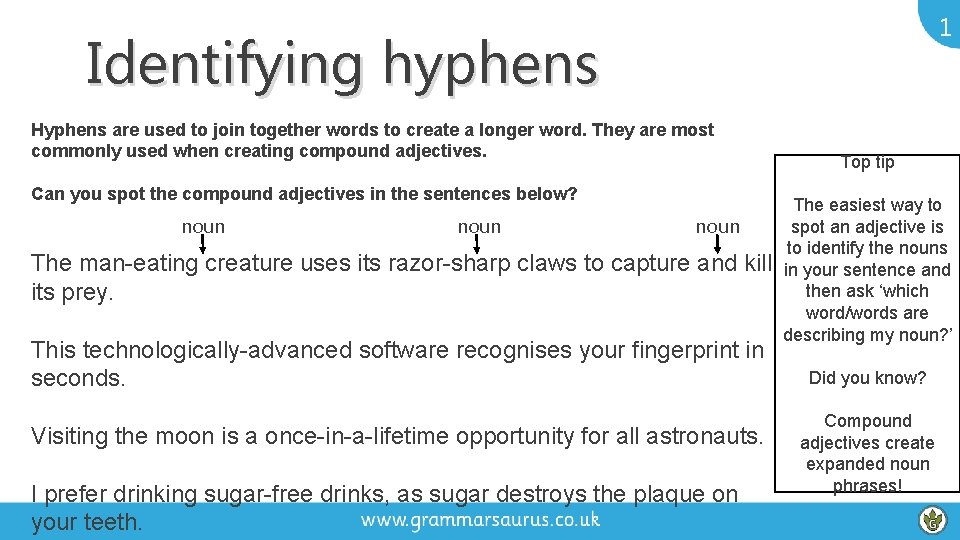
1 Identifying hyphens Hyphens are used to join together words to create a longer word. They are most commonly used when creating compound adjectives. Can you spot the compound adjectives in the sentences below? noun The man-eating creature uses its razor-sharp claws to capture and kill its prey. This technologically-advanced software recognises your fingerprint in seconds. Visiting the moon is a once-in-a-lifetime opportunity for all astronauts. I prefer drinking sugar-free drinks, as sugar destroys the plaque on your teeth. Top tip The easiest way to spot an adjective is to identify the nouns in your sentence and then ask ‘which word/words are describing my noun? ’ Did you know? Compound adjectives create expanded noun phrases!
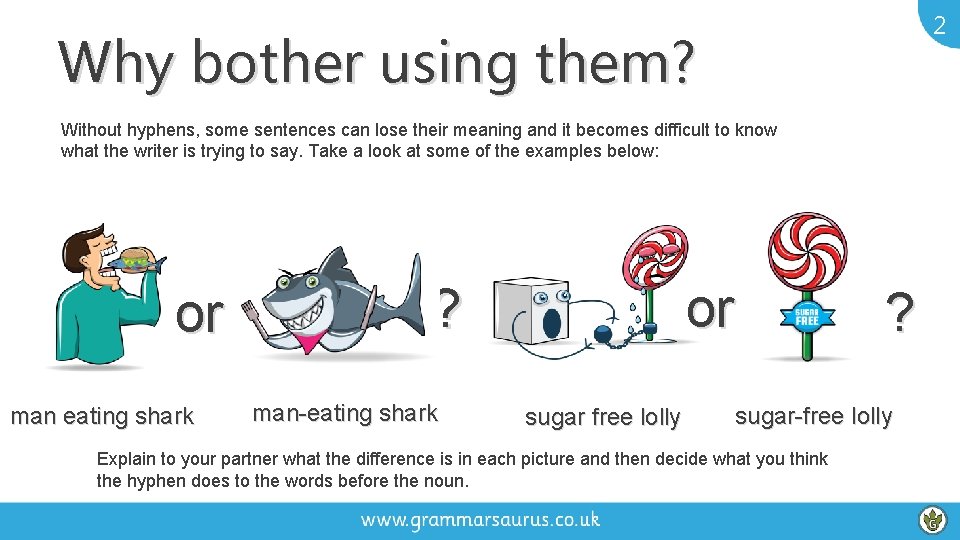
2 Why bother using them? Without hyphens, some sentences can lose their meaning and it becomes difficult to know what the writer is trying to say. Take a look at some of the examples below: or man eating shark or ? man-eating shark sugar free lolly ? sugar-free lolly Explain to your partner what the difference is in each picture and then decide what you think the hyphen does to the words before the noun.
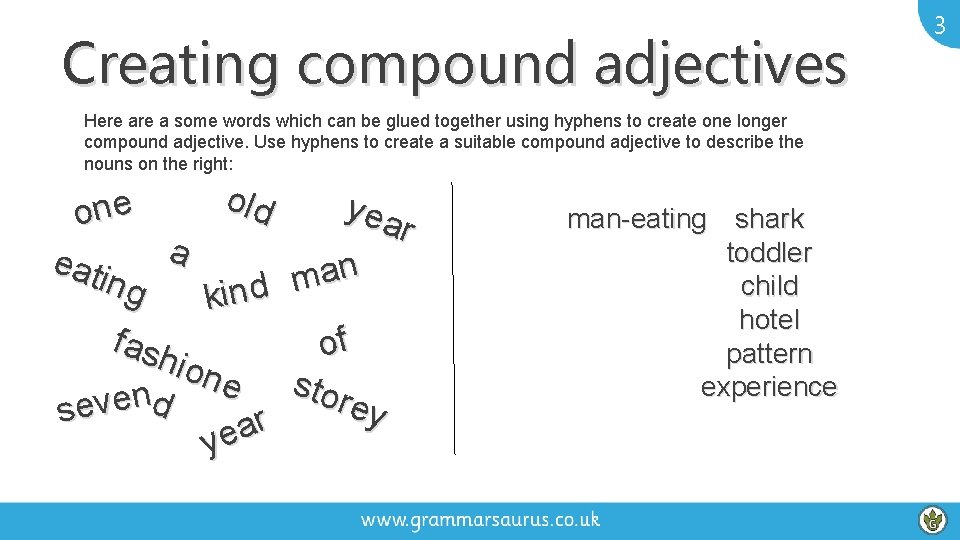
Creating compound adjectives Here a some words which can be glued together using hyphens to create one longer compound adjective. Use hyphens to create a suitable compound adjective to describe the nouns on the right: old e n o a eat ing kind fash ione n e d v e s r a ye yea r man of stor ey man-eating shark toddler child hotel pattern experience 3
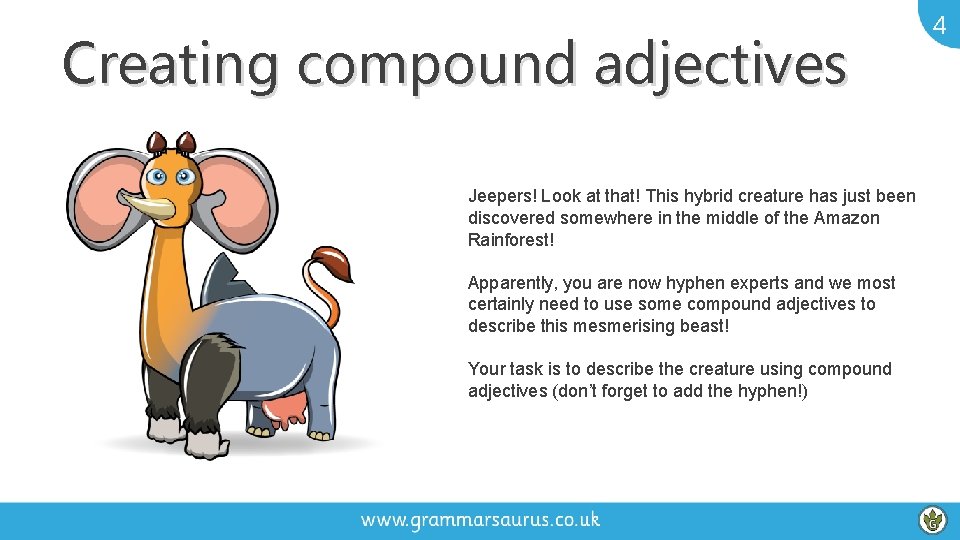
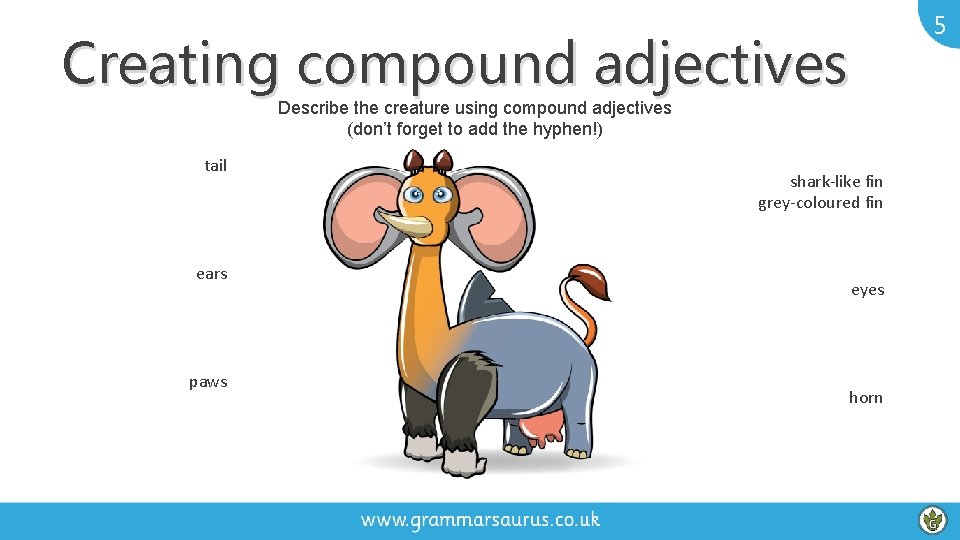
Creating compound adjectives Jeepers! Look at that! This hybrid creature has just been discovered somewhere in the middle of the Amazon Rainforest! Apparently, you are now hyphen experts and we most certainly need to use some compound adjectives to describe this mesmerising beast! Your task is to describe the creature using compound adjectives (don’t forget to add the hyphen!) 4
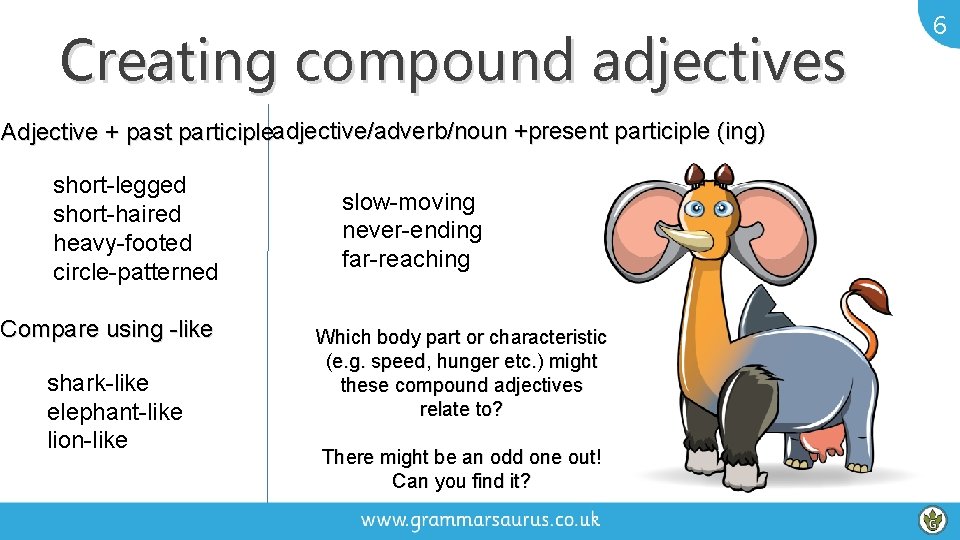
Creating compound adjectives Adjective + past participleadjective/adverb/noun +present participle (ing) short-legged short-haired heavy-footed circle-patterned Compare using -like shark-like elephant-like lion-like slow-moving never-ending far-reaching Which body part or characteristic (e. g. speed, hunger etc. ) might these compound adjectives relate to? There might be an odd one out! Can you find it? 6
Creating compound adjectives adjective/adverb/noun rhino cone throat lion sand fly - like (compare) +ed (describe) +ing (describe) Noun (body part or characteristic) - like shaped piercing horn - like coloured swatting tail 7 - Use the boxing-up grid to help you create your own expanded noun phrases using compound adjectives.
Creating compound adjectives Describe the creature using compound adjectives (don’t forget to add the hyphen!) tail ears paws shark-like fin grey-coloured fin eyes horn 5