
Hypertrophic Cardiomyopathy Definition Genetic disease of heart muscle

- Slides: 29
Hypertrophic Cardiomyopathy
Definition � Genetic disease of heart muscle characterized by left ventricular hypertrophy in absence of another cardiac or systemic disease; variable morphologies � Maximal LV wall thickness > 15 mm � Clinical manifestations and hemodynamic abnormalities are manifold � Biggest fear is sudden cardiac death in young, athletic population 2/2 ventricular fibrillation
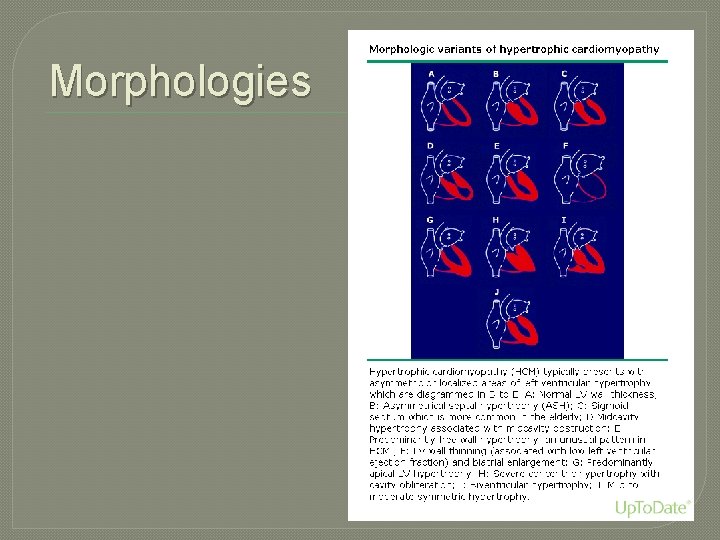
Morphologies
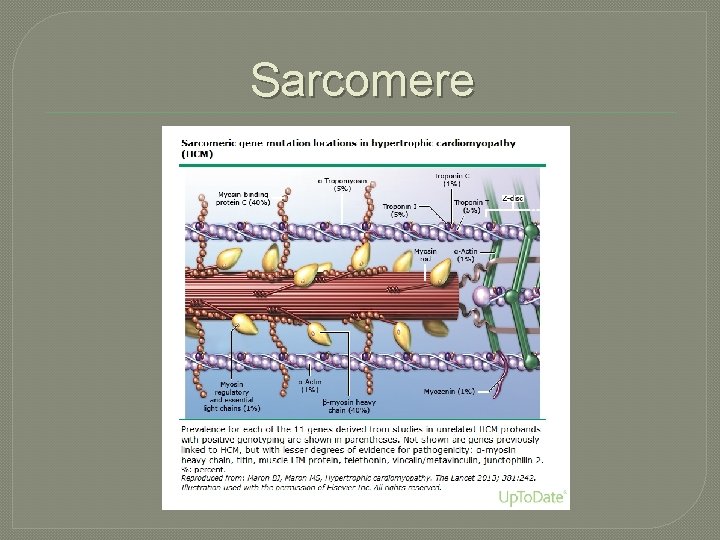
Etiology �Genetically Determined (60 – 70%) �Autosomal Dominant, variable expressivity, high degree of penetrance �Mutations involve of one of several sarcomere genes • 11+ causative genes with 1400+ mutations have been reported
Sarcomere
Non-sarcomeric Causes of LVH � Fabry Disease (alpha-galactosidase A deficiency, lysosomal storage disorder) � Noonan Syndrome (AD, facial dysmorphism) � Mitochondrial disease � Multiple other myocardial storage disorders � Important to differentiate because progression and management are vastly different
Common Differential Diagnosis �Hypertensive Heart Disease �Athlete’s Heart �Can usually be distinguished by family history, LV cavity dimension, diastolic function, and pattern of LV hypertrophy
Pathogenesis Proposal �Variable calcium sensitivity of myosin fibers • Variability from fiber to fiber generates force imbalances • This yields contractile dysfunction, disarray within the myocardium, and disordered cardiac remodeling
Development � Phenotypic development of left ventricular hypertrophy begins in puberty � Wall thickness development is usually complete by adulthood • ie: In most cases, not a progressive disease • Can be compatible with normal longevity � Portion of patients are at risk for diseaserelated complications • Progressive heart failure symptoms with systolic dysfunction • Atrial fibrillation with thromboembolic stroke risk
Prevalence �Quintessential • 0. 2 % or worldwide �At Phenotype of HCM 1: 500 in general population least 600, 000 people affected in United States
Physiologic Abnormalities �LV Outflow Obstruction �Diastolic Dysfunction �Myocardial Ischemia �Mitral Regurgitation
Symptoms Categorized �Heart Failure �Chest Pain �Arrhythmia • Increased incidence of supraventricular and ventricular arrhythmias • Hence, increased risk for SCD
Presentation �Fatigue �Dyspnea �Chest Pain �Palpitations �Presyncope/syncope �INDEX OF SUSPICION MUST BE HIGH IN YOUNG ATHLETE WITH THESE SYMPTOMS
Diagnosis �Echocardiography �Cardiac MR is indicated if echo is inconclusive for diagnosis �Unexplained LVH, often asymmetric �Genetic testing is becoming more available to identify those that carry disease-causing mutation in absence of LVH
Work-up � 12 -lead EKG � 24 Hour Ambulatory (Holter) EKG is recommended in initial evaluation and every 1 to 2 years • Detect ventricular tachycardia • Identify candidates for ICD therapy �Echo every 1 to 2 years is reasonable in symptomatically stable patients �Exercise stress Echo to evaluate LVOT obstruction
Genetic Testing �DNA testing is available incorporating most common mutations �This is complicated though • Interpretation of results is sometimes equivocal • If a pathogenic mutation is identified in one family member, then all family members without
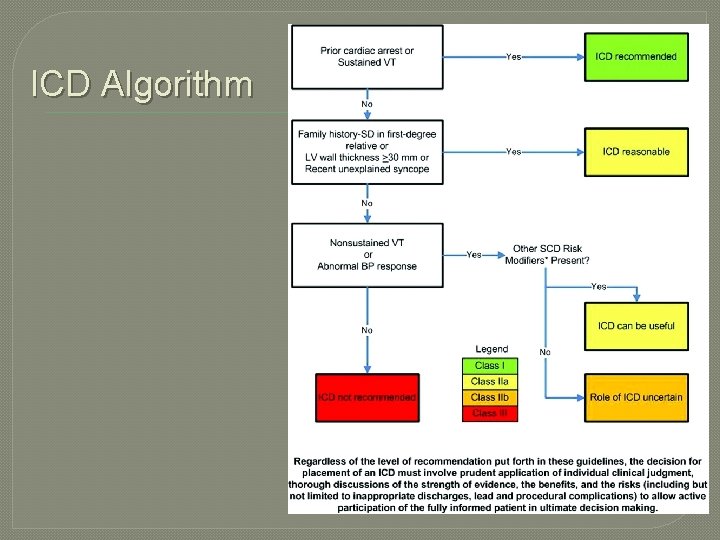
SCD Risk Stratification �Personal history of ventricular fibrillation, sustained VT, or SCD �Family history for SCD events �Unexplained syncope �Documented non-sustained VT (Holter) �Maximal LV wall thickness >30 mm �Blood pressure response during exercise �Invasive EP testing as routine SCD risk stratification should NOT be performed
ICD Algorithm
Participation in Sports �Reasonable for patients with HCM to participate in low-intensity sports • Golf, bowling, skating, swimming, biking �Patients with HCM should NOT participate in intense competitive sports regardless of age, sex, race, presence of LVOT obstruction, prior reduction therapy, or ICD implanatation
ACCF/AHA Guidelines—Family � Class I Recommendations • In patients with HCM, evaluation of familial inheritance and genetic counseling is recommended (Level of Evidence: B) • Screening (clinical +/- genetic testing) is recommended in first-degree relatives of patients with HCM (Level of Evidence: B) � Clinical Screening includes: • 12 -lead EKG and echo 12 to 18 months for adolescents starting at age 12 • Echocardiogram as initial screening for first-degree family members • Regular follow up
ACCF/AHA Guidelines—Family �Class IIa • Genetic testing is reasonable in the index patient to facilitate the identification of first-degree family members at risk for developing for HCM (Level of Evidence: B) �Class IIb • The usefulness of genetic testing in the assessment of risk for SCD in HCM is uncertain (Level of Evidence: B)
ACCF/AHA Guidelines—Family �Class III: No Benefit • Genetic testing is not indicated in relatives when the index patient does not have a definitive pathogenic mutation (Level of Evidence: B) • Ongoing clinical screening is not indicated in genotype-negative relatives in families with HCM (Level of Evidence: B)
ACCF/AHA Guidelines—Echo �TTE recommended at initial evaluation of all patients with suspected HCM �Repeat TTE is recommended for evaluation of patients with HCM and a change in clinical status �TTE should NOT be performed more frequently than every 12 months when it is unlikely to have impact on clinical decision making
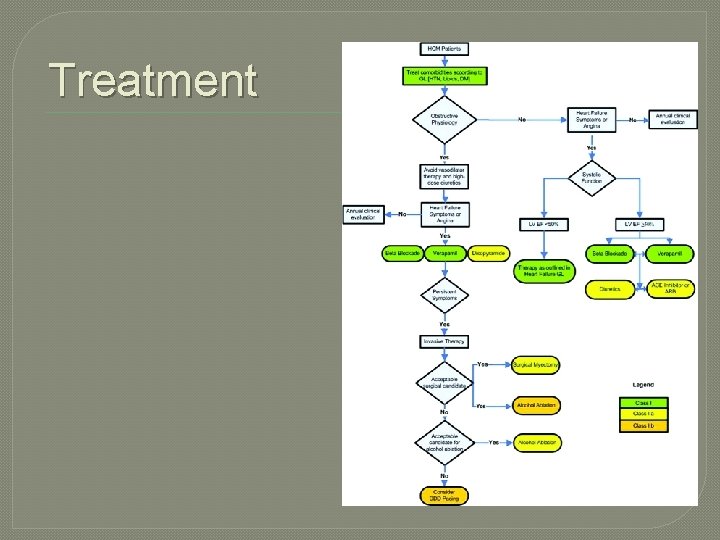
Pharmacologic Management �Beta-blockers for treatment of angina or dyspnea in adults • Caution with sinus bradycardia or severe conduction disease • Can titrate to HR of less than 60 – 65 �Verapamil �Can add disopyramide and diuretics �Usefulness of ACE inhibitors is questionable
Pharmacologic Management �Do NOT use DHP calcium channel blockers (eg: nifedipine) �Verapamil potentially harmful �Digitalis potentially harmful �Dopamine, dobutamine, norepi are potentially harmful for acute hypotension with HOCM (use phenylephrine IV)
Invasive Therapies �Septal Myomectomy �Alcohol Septal Ablation • Severe, drug-refractory symptoms and LVOT obstruction • Severe dyspnea, NYHA III or IV, syncope, affects ADLs • Severe Hemodynamic
Treatment
Heart Transplantation �Patients with advanced heart failure and non-obstructive HCM recalcitrant to other interventions with EF < 50 % should be considered �Should NOT be performed in mildly symptomatic
References 2011 ACCF/AHA Guideline for the Diagnosis and Treatment of Hypertrophic Cardiomyopathy. http: //circ. ahajournals. org/content/124/24/2761. full Maron, Elliott et al. Clinical Manifestations, Diagnosis, and Evaluation of Hypertrophic Cardiomyopathy. Dec 18, 2014. uptodate. com. Maron, Martin S. Medical Theraphy in Hypertrophic Cardiomyopathy. Jan 08, 2014. uptodate. com