
Hypertension in children and adolescent New Defining BP

Hypertension in children and adolescent
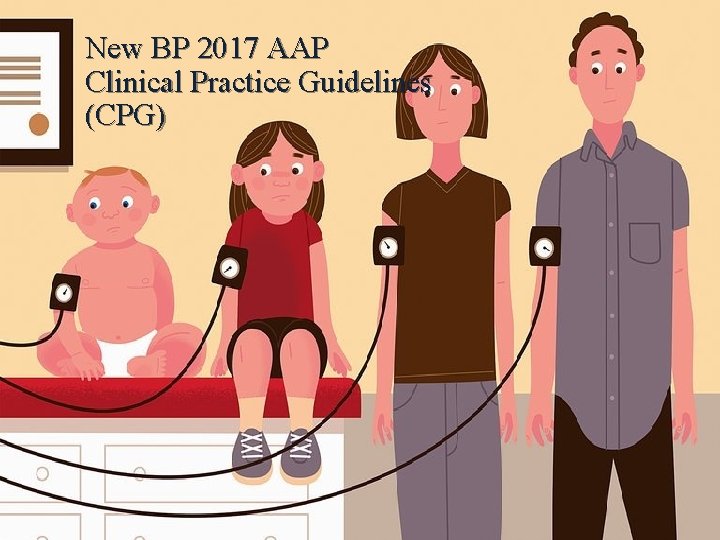
New Defining BP 2017 AAPHT in children Clinical Practice Guidelines (CPG) The definition of HTN in children is based on the normal distribution of BP in healthy children
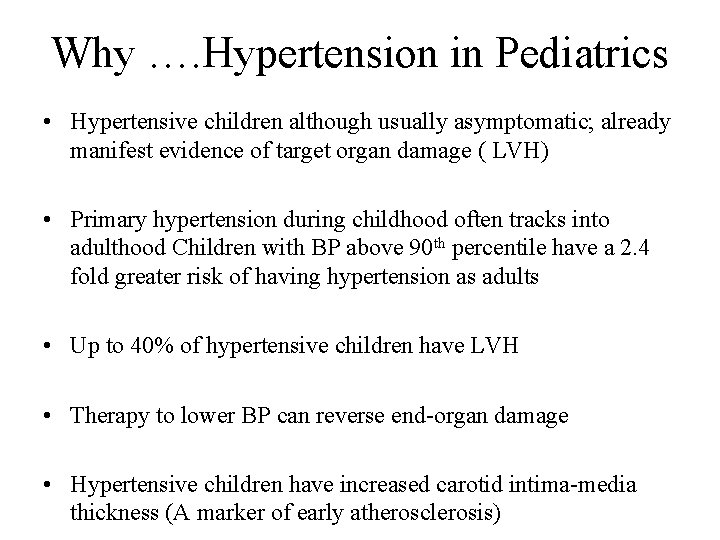
Why …. Hypertension in Pediatrics • Hypertensive children although usually asymptomatic; already manifest evidence of target organ damage ( LVH) • Primary hypertension during childhood often tracks into adulthood Children with BP above 90 th percentile have a 2. 4 fold greater risk of having hypertension as adults • Up to 40% of hypertensive children have LVH • Therapy to lower BP can reverse end-organ damage • Hypertensive children have increased carotid intima-media thickness (A marker of early atherosclerosis)
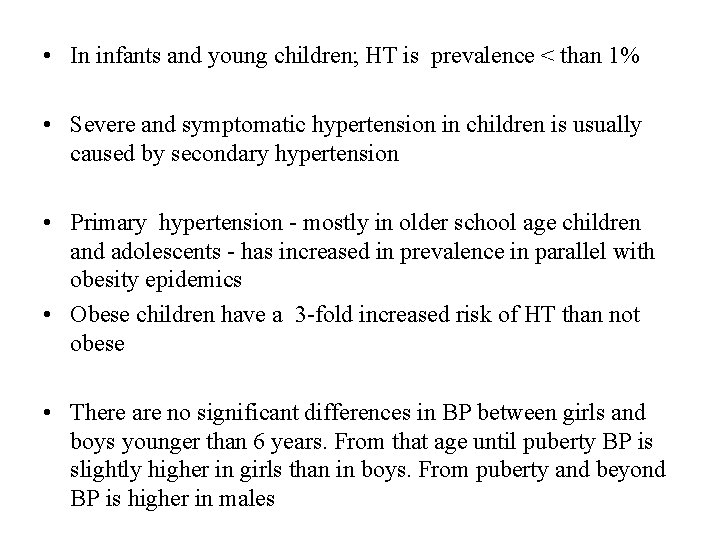
• In infants and young children; HT is prevalence < than 1% • Severe and symptomatic hypertension in children is usually caused by secondary hypertension • Primary hypertension - mostly in older school age children and adolescents - has increased in prevalence in parallel with obesity epidemics • Obese children have a 3 -fold increased risk of HT than not obese • There are no significant differences in BP between girls and boys younger than 6 years. From that age until puberty BP is slightly higher in girls than in boys. From puberty and beyond BP is higher in males
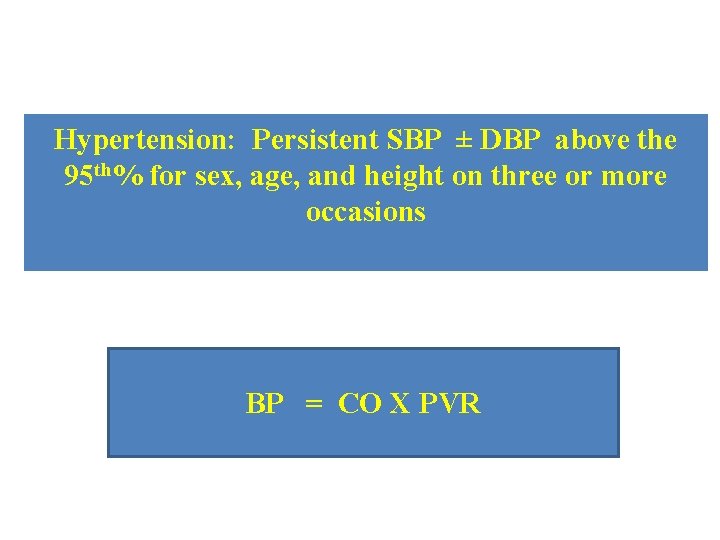
Hypertension: Persistent SBP ± DBP above the 95 th% for sex, age, and height on three or more occasions BP = CO X PVR

New Normative Blood Pressure Tables • 4 th Report BP tables generated from BP values in ~70, 000 healthy children • Many children had overweight or obesity • Inclusion of these children likely biased normative BP values upward • New normative BP tables commissioned for this clinical practice guideline, based only on BP readings from ~50, 000 normal-weight children


Screening Recommendation BP should be measured annually in children and adolescents ≥ 3 years of age
BP should be checked in all children and adolescents ≥ 3 years of age at every health care encounter if they 1. Have obesity 2. Taking medications known to increase BP, 3. Renal disease 4. History of aortic arch obstruction or coarctation 5. Diabetes
Prevalence of HT is rising • 1970 – 1980 s less than 2% of children • In the last 2 decayed 3 -5 % • Rise in the pre-hypertension 10 -15% of adolescent • USA 10% of youth have pre-HT, 4% have HT • USA 20% are obese, 10% of obese are HT • In USA but less so in Europe, at least half of cases of hypertension in older children are primary in origin due to ongoing obesity epidemic

Correct Method of BP Measurement • Position: sitting, legs uncrossed with cuff at heart level, infants and small children may be lying down • Rest period: at least 5 minutes • To best characterize BP, obtain an average of 3 or more values take the average • Correct size cuff: 1. The width of the cuff’s inflatable bladder is at least 40% of length. The length should cover 80 -100% of the circumference of the arm 2. If a cuff is too small, the next largest cuff should be used, even if it appears large
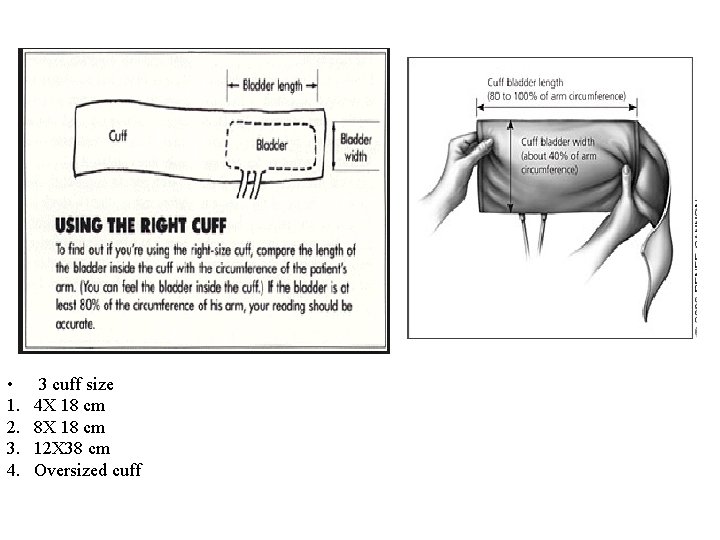
• 1. 2. 3. 4. 3 cuff size 4 X 18 cm 8 X 18 cm 12 X 38 cm Oversized cuff
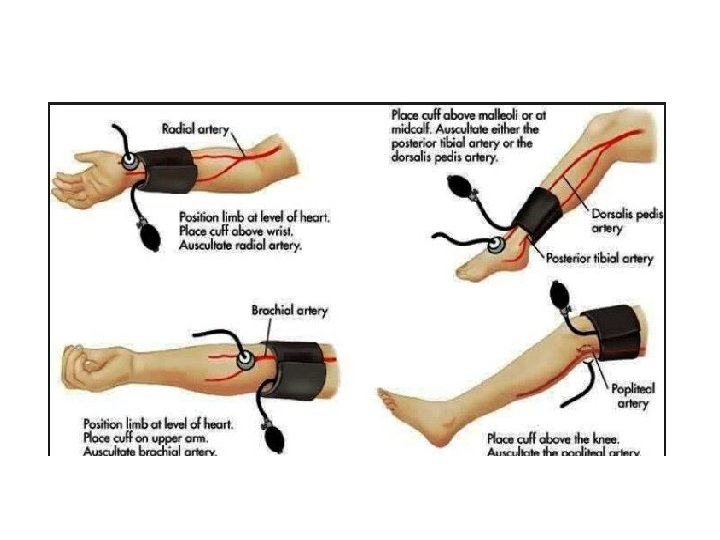
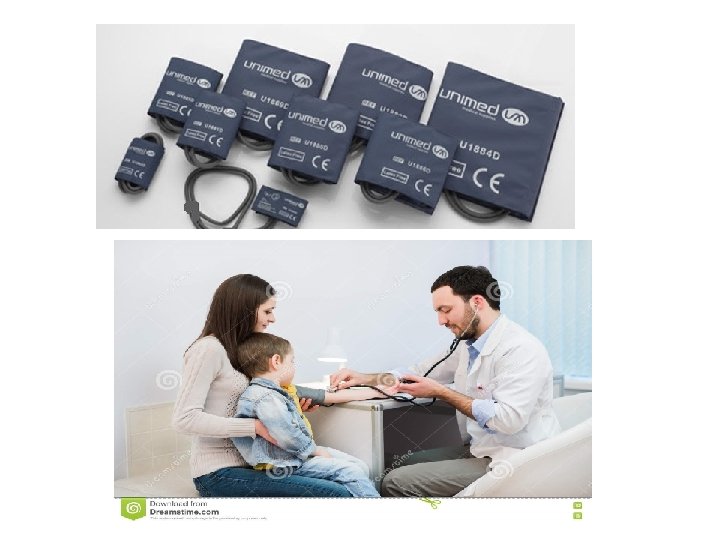
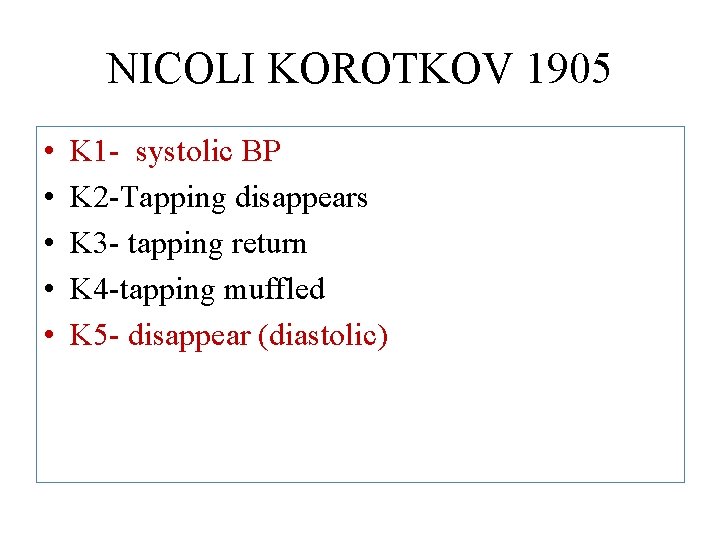
NICOLI KOROTKOV 1905 • • • K 1 - systolic BP K 2 -Tapping disappears K 3 - tapping return K 4 -tapping muffled K 5 - disappear (diastolic)
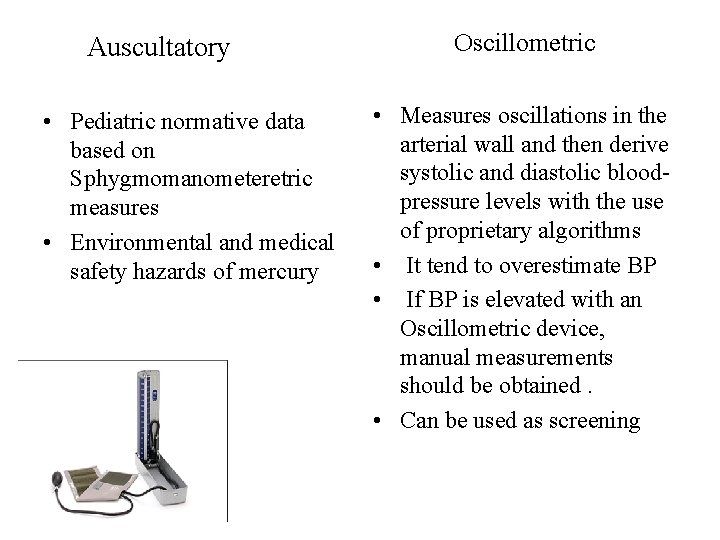
Auscultatory • Pediatric normative data based on Sphygmomanometeretric measures • Environmental and medical safety hazards of mercury Oscillometric • Measures oscillations in the arterial wall and then derive systolic and diastolic bloodpressure levels with the use of proprietary algorithms • It tend to overestimate BP • If BP is elevated with an Oscillometric device, manual measurements should be obtained. • Can be used as screening

Definitions Of Hypertension: • White coat hypertension : a child with BP above 95 % in any medical setting but normal BP outside the office • Sever HT: 20 mm. Hg above the 95 th • Resistant HT: poor control of BP despite three rational antihypertensive agents, including a diuretic at maximal dose • Hypertensive Crisis: sudden & abrupt elevation in BP from baseline • Hypertensive Emergency: immediate threat to the integrity of the CVS, kidneys, CNS • Hypertensive Urgency: severe hypertension with no acute endorgan damage
Ambulatory blood-pressure monitoring (24 hour) • Mean day time pressure, mean night time pressure • White-coat hypertension: elevated BP in the clinician’s office alone (30 to 40% of children referred for HT) • Identify nocturnal hypertension: Non-dippers • Provides a near true picture of BP • Identify resistance to treatment as well as hypotensive episodes
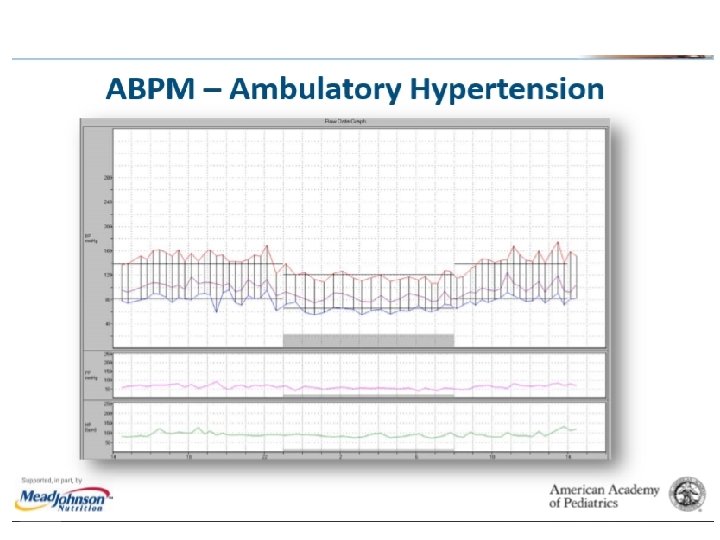

• ABPM should be performed for confirmation of HTN in office BP measurements in the elevated BP category for ≥ 1 year or with Stage 1 HTN over 3 clinic visits • Children suspected WCH should undergo ABPM • Diagnosis is based: mean systolic blood pressure and diastolic blood pressure > 95 th percentile and SBP and DBP load < 25%
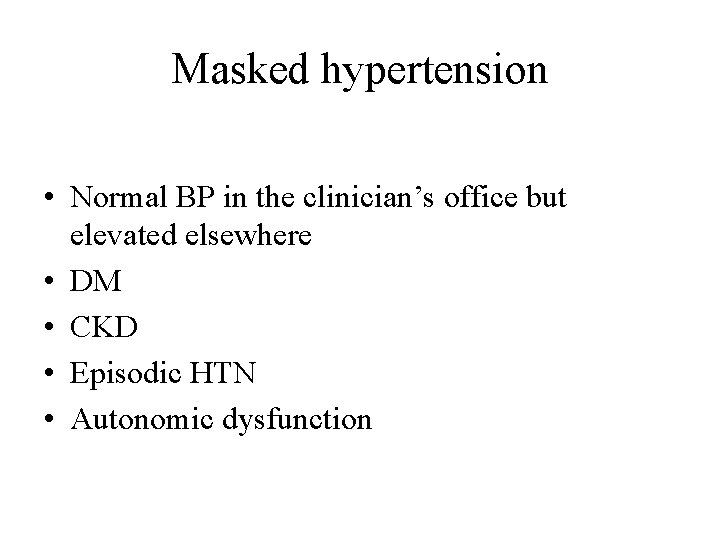
Masked hypertension • Normal BP in the clinician’s office but elevated elsewhere • DM • CKD • Episodic HTN • Autonomic dysfunction
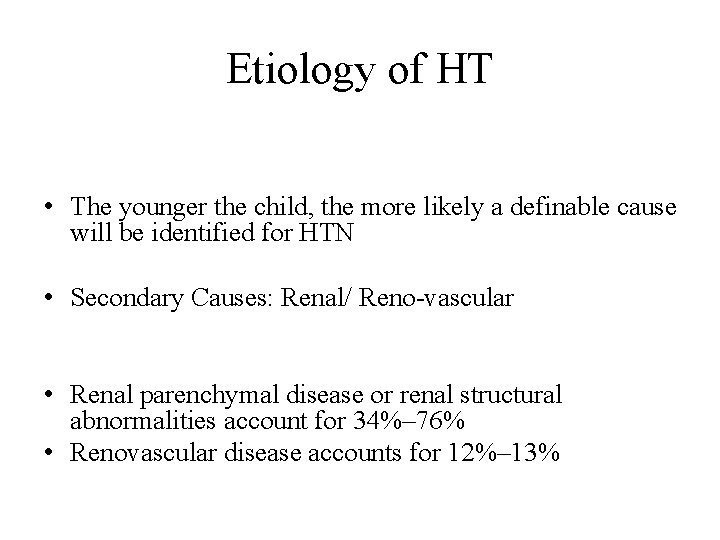
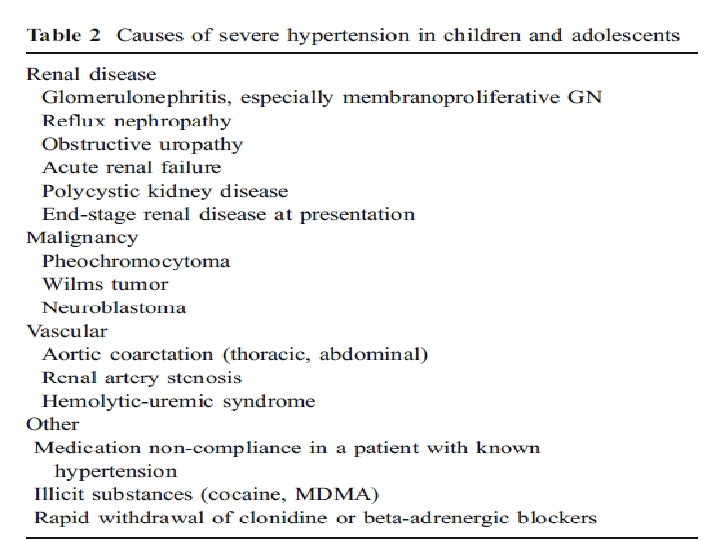
Etiology of HT • The younger the child, the more likely a definable cause will be identified for HTN • Secondary Causes: Renal/ Reno-vascular • Renal parenchymal disease or renal structural abnormalities account for 34%– 76% • Renovascular disease accounts for 12%– 13%

Primary Hypertension • Predominant cause of HTN in US children • Characteristics include: 1. ≥ 6 years of age 2. Positive family history of HTN; 3. Obesity/overweight • Severity of BP elevation is similar between primary and secondary HTN • Diastolic HTN predictive of secondary cause • Systolic HTN predictive of primary HTN
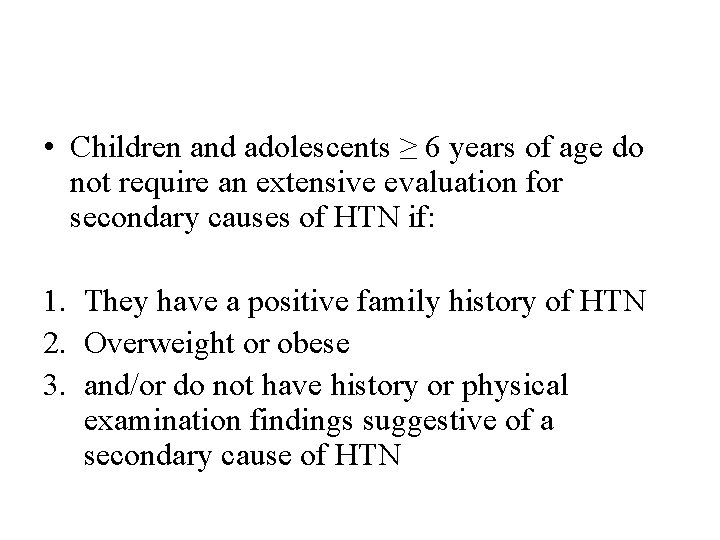
• Children and adolescents ≥ 6 years of age do not require an extensive evaluation for secondary causes of HTN if: 1. They have a positive family history of HTN 2. Overweight or obese 3. and/or do not have history or physical examination findings suggestive of a secondary cause of HTN
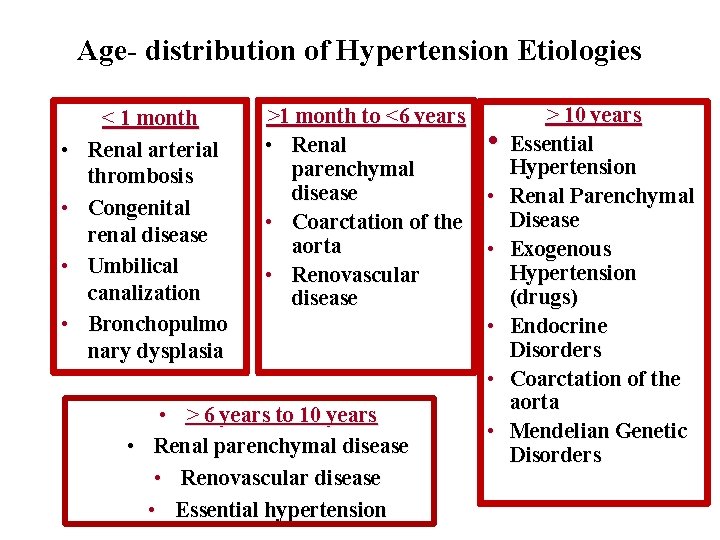
Age- distribution of Hypertension Etiologies • • > 10 years >1 month to <6 years • Essential • Renal Hypertension parenchymal disease • Renal Parenchymal Disease • Coarctation of the aorta • Exogenous Hypertension • Renovascular (drugs) disease • Endocrine Disorders • Coarctation of the aorta • > 6 years to 10 years • Mendelian Genetic • Renal parenchymal disease Disorders • Renovascular disease • Essential hypertension < 1 month Renal arterial thrombosis Congenital renal disease Umbilical canalization Bronchopulmo nary dysplasia
History 1. 2. 3. 4. Perinatal history, nutritional history, physical activity history Symptoms of renal disease as polyuria, dysuria, enuresis Symptoms of phaeochromacytoma; Palpitation and flushing Symptoms of high BP; FTT, lethargy, visual disturbance, headache, nausea & vomiting 5. Drugs , Amphetamines, Ecstasy, OCP • Family History; Essential HT, other familial HT sudden death, renal failure, MI or stroke
Physical examination 1. Pulse and 4 extremities BP, femoral delay and BP discrepancy in co-arctation or Takayasu 2. Signs of heart failure 3. Cafe au lait spots; axillary freckles ; NF 1 4. Abdominal bruit, RVD 5. Skin rash, lower limb edema 6. Signs of CRF; Anemia, short stature , deafness, BMI 7. Ambigious Genetalia 8. Fundi retinal and CV system
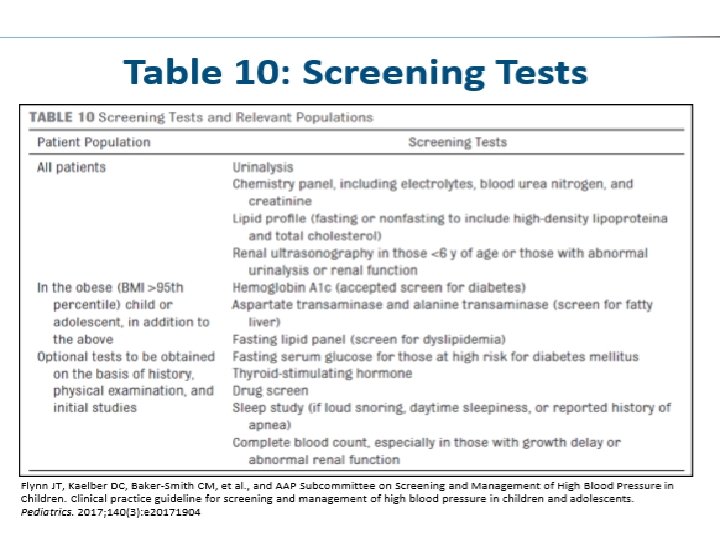
Echocardiogram • It is recommended to assess for cardiac target organ damage • left ventricular mass, geometry, and function • At the time of consideration of pharmacologic treatment of HTN • LVH definitions: >51 g/m 2. 7 or >115 g/body surface area (BSA) in boys, >95 g/BSA in girls • Repeat echocardiography to monitor patients with LVH or abnormal LV function
Overall Treatment Goals • Reduction in SBP and DBP to <90 th percentile and <130/80 mm Hg in adolescents ≥ 13 years of age • Children or adolescents with both CKD and HTN should be treated to lower 24 -hour mean arterial pressure <50 th percentile by ABPM
Management • Life style Intervention 1. DASH: Dietary Approaches to Stop Hypertension 2. Moderate to vigorous physical activity at least 3 to 5 days per week (30– 60 each)
Indication for Pharmacotherapy • Patient has failed at least 6 months of lifestyle change • Symptomatic HTN • Stage 2 HTN without clearly modifiable risk factor (e. g. obesity)
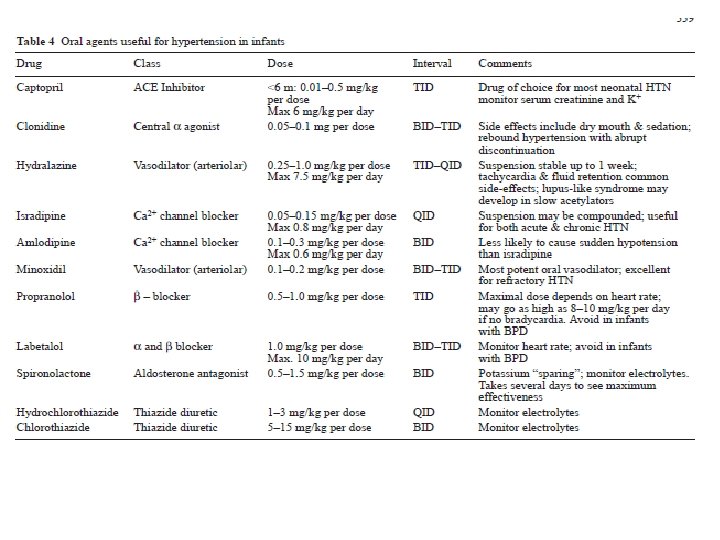
1 st line agents may include • ACE or ARB (contraindicated in bilateral renal artery stenosis. Drug of choice for unilateral) • Long-acting calcium channel blocker • Thiazide diuretic • In CKD or diabetes: ACE inhibitor or ARB
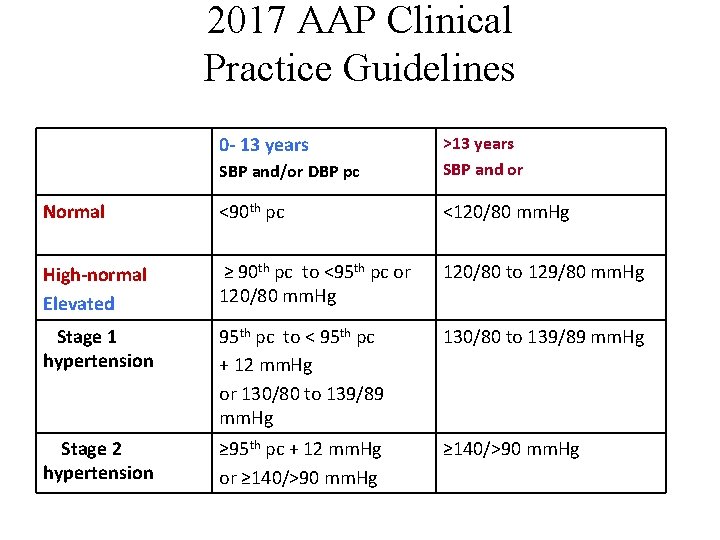
2017 AAP Clinical Practice Guidelines 0 - 13 years SBP and/or DBP pc >13 years SBP and or Normal <90 th pc <120/80 mm. Hg High-normal Elevated ≥ 90 th pc to <95 th pc or 120/80 mm. Hg 120/80 to 129/80 mm. Hg Stage 1 hypertension 95 th pc to < 95 th pc + 12 mm. Hg or 130/80 to 139/89 mm. Hg Stage 2 hypertension ≥ 95 th pc + 12 mm. Hg or ≥ 140/>90 mm. Hg
- Slides: 39