
Hypertension Implementing NICE guidance 2 nd Edition March

- Slides: 26
Hypertension Implementing NICE guidance 2 nd Edition March 2013 NICE clinical guideline 127
Updated guidance This guideline updates and replaces ‘Hypertension: management of hypertension in adults in primary care’ (NICE clinical guideline 34, 2006). NICE clinical guideline 34 was a partial update of ‘Hypertension’ (NICE clinical guideline 18, 2004). This update was produced in collaboration with the British Hypertension Society
What this presentation covers • Background • Scope • Key priorities for implementation and updated areas • Areas not updated • Costs and savings • Discussion • NICE quality standard for hypertension • NICE pathways • NHS evidence • Find out more
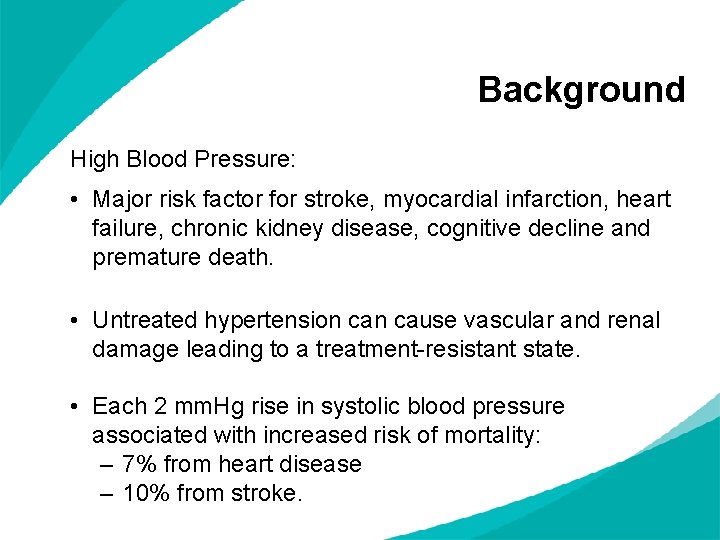
Background High Blood Pressure: • Major risk factor for stroke, myocardial infarction, heart failure, chronic kidney disease, cognitive decline and premature death. • Untreated hypertension cause vascular and renal damage leading to a treatment-resistant state. • Each 2 mm. Hg rise in systolic blood pressure associated with increased risk of mortality: – 7% from heart disease – 10% from stroke.
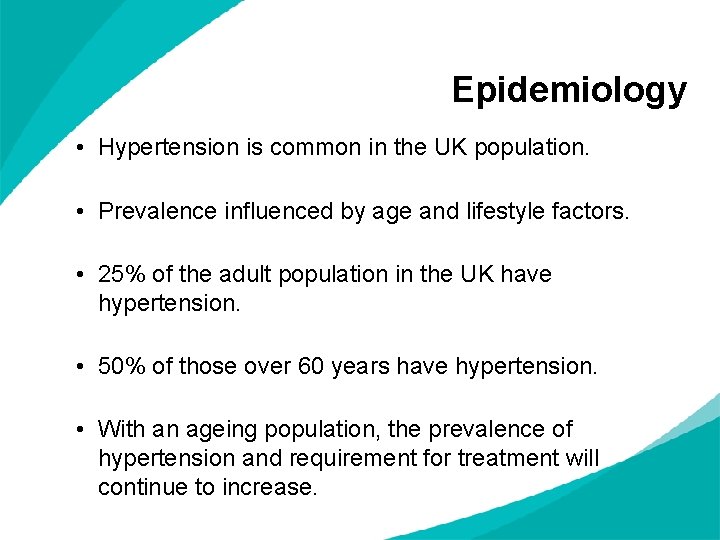
Epidemiology • Hypertension is common in the UK population. • Prevalence influenced by age and lifestyle factors. • 25% of the adult population in the UK have hypertension. • 50% of those over 60 years have hypertension. • With an ageing population, the prevalence of hypertension and requirement for treatment will continue to increase.
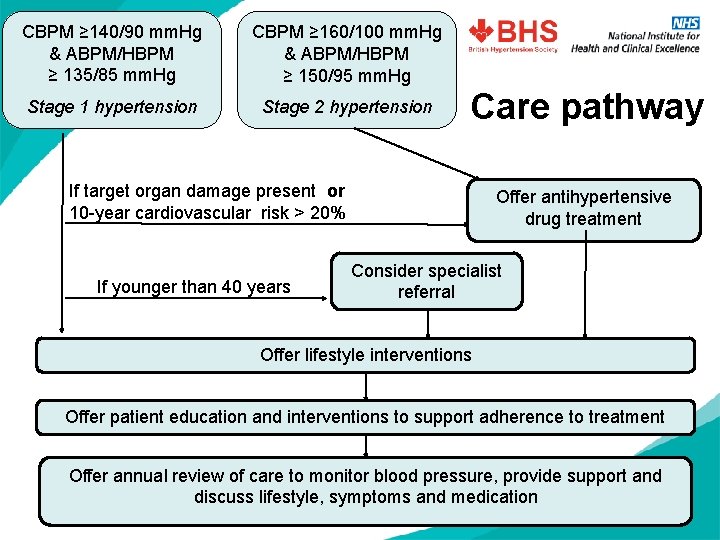
Definitions Stage 1 hypertension: • Clinic blood pressure (BP) is 140/90 mm. Hg or higher and • ABPM or HBPM average is 135/85 mm. Hg or higher. Stage 2 hypertension: • Clinic BP 160/100 mm. Hg is or higher and • ABPM or HBPM daytime average is 150/95 mm. Hg or higher. Severe hypertension: • Clinic BP is 180 mm. Hg or higher or • Clinic diastolic BP is 110 mm. Hg or higher.
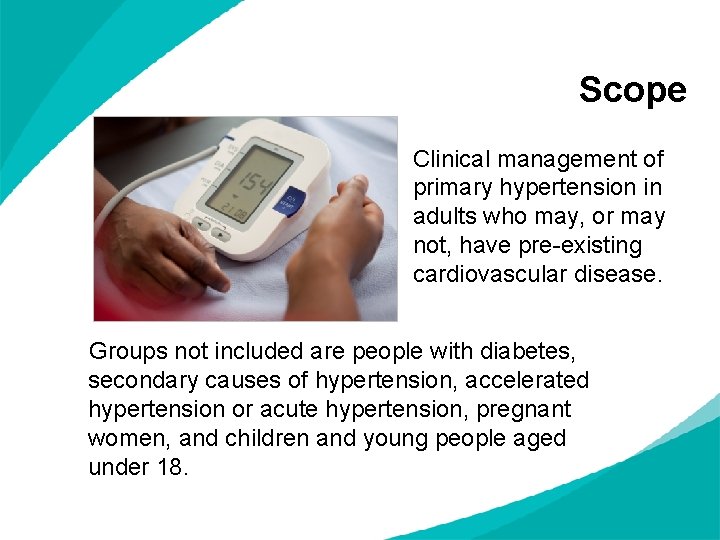
Scope Clinical management of primary hypertension in adults who may, or may not, have pre-existing cardiovascular disease. Groups not included are people with diabetes, secondary causes of hypertension, accelerated hypertension or acute hypertension, pregnant women, and children and young people aged under 18.
Key priorities for implementation • Diagnosis. • Initiating and monitoring antihypertensive drug treatment. • Choosing antihypertensive drug treatment.
Diagnosis (1) If the clinic blood pressure is 140/90 mm. Hg or higher, offer ambulatory blood pressure monitoring (ABPM) to confirm the diagnosis of hypertension.
Diagnosis (2) When using the following to confirm diagnosis, ensure: ABPM: – at least two measurements per hour during the person’s usual waking hours, average of at least 14 measurements to confirm diagnosis HBPM: – two consecutive seated measurements, at least 1 minute apart – blood pressure is recorded twice a day for at least 4 days and preferably for a week – measurements on the first day are discarded – average value of all remaining is used.
Initiating drug treatment Offer antihypertensive drug treatment to people: • who have stage 1 hypertension, are aged under 80 and meet identified criteria • who have stage 2 hypertension at any age. If aged under 40 with stage 1 hypertension and without evidence of target organ damage, cardiovascular disease, renal disease or diabetes, consider: • specialist evaluation of secondary causes of hypertension • further assessment of potential target organ damage.
Monitoring drug treatment (1) Use clinic blood pressure measurements to monitor response to treatment. Aim for target blood pressure below: • 140/90 mm. Hg in people aged under 80 • 150/90 mm. Hg in people aged 80 and over
Monitoring drug treatment (2) For people identified as having a ‘white-coat effect’ consider ABPM or HBPM as an adjunct to clinic blood pressure measurements to monitor response to treatment. Aim for ABPM/HBPM target average of: • below 135/85 mm. Hg in people aged under 80 • below 145/85 mm. Hg in people aged 80 and over. White-coat effect: a discrepancy of more than 20/10 mm. Hg between clinic and average daytime ABPM or average HBPM blood pressure measurements at the time of diagnosis.
CBPM ≥ 140/90 mm. Hg & ABPM/HBPM ≥ 135/85 mm. Hg CBPM ≥ 160/100 mm. Hg & ABPM/HBPM ≥ 150/95 mm. Hg Stage 1 hypertension Stage 2 hypertension Care pathway If target organ damage present or 10 -year cardiovascular risk > 20% If younger than 40 years Offer antihypertensive drug treatment Consider specialist referral Offer lifestyle interventions Offer patient education and interventions to support adherence to treatment Offer annual review of care to monitor blood pressure, provide support and discuss lifestyle, symptoms and medication
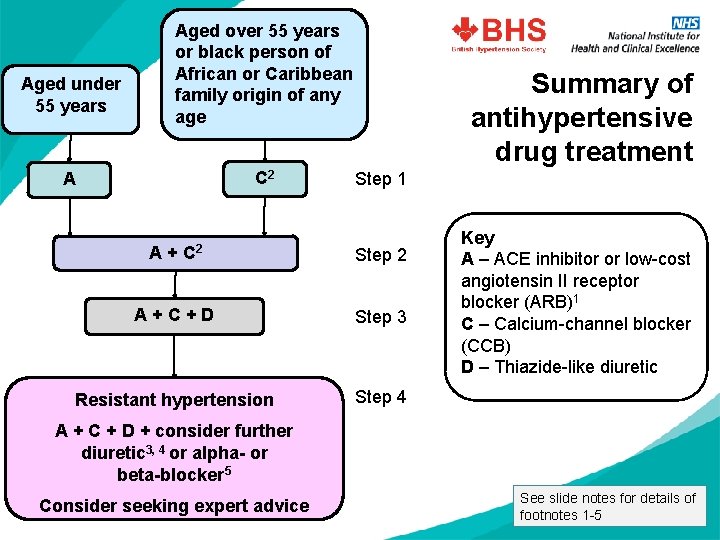
Aged under 55 years Aged over 55 years or black person of African or Caribbean family origin of any age C 2 A A+ C 2 Summary of antihypertensive drug treatment Step 1 Step 2 A+C+D Step 3 Resistant hypertension Step 4 Key A – ACE inhibitor or low-cost angiotensin II receptor blocker (ARB)1 C – Calcium-channel blocker (CCB) D – Thiazide-like diuretic A + C + D + consider further diuretic 3, 4 or alpha- or beta-blocker 5 Consider seeking expert advice See slide notes for details of footnotes 1 -5
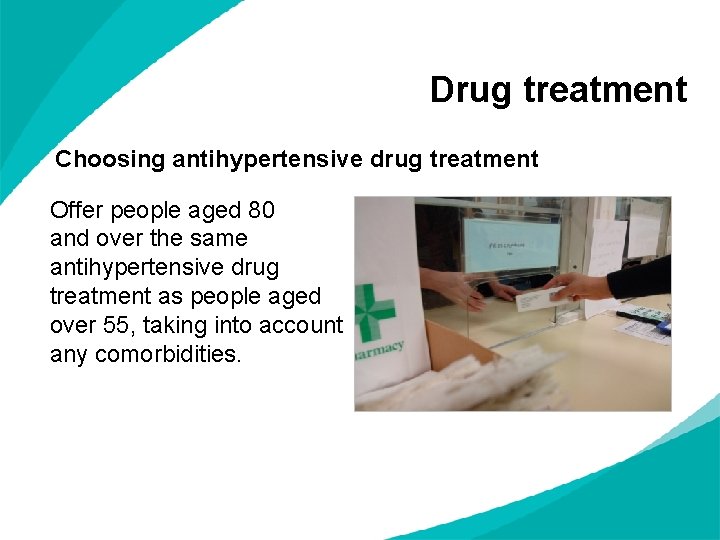
Drug treatment Choosing antihypertensive drug treatment Offer people aged 80 and over the same antihypertensive drug treatment as people aged over 55, taking into account any comorbidities.
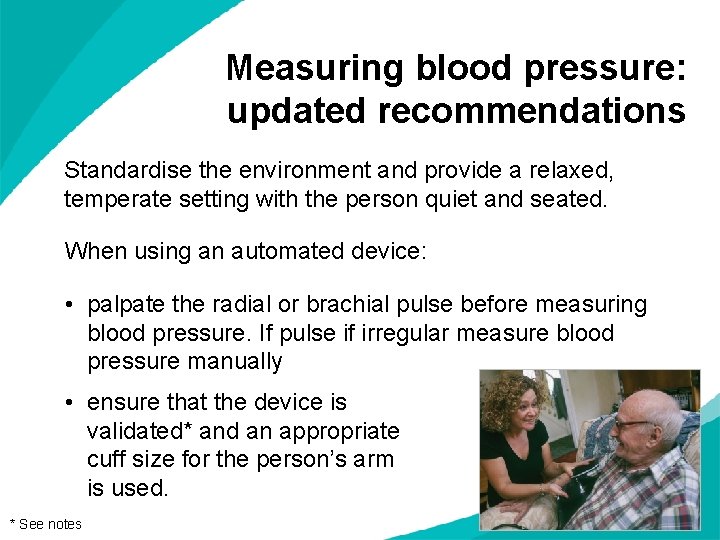
Measuring blood pressure: updated recommendations Standardise the environment and provide a relaxed, temperate setting with the person quiet and seated. When using an automated device: • palpate the radial or brachial pulse before measuring blood pressure. If pulse if irregular measure blood pressure manually • ensure that the device is validated* and an appropriate cuff size for the person’s arm is used. * See notes
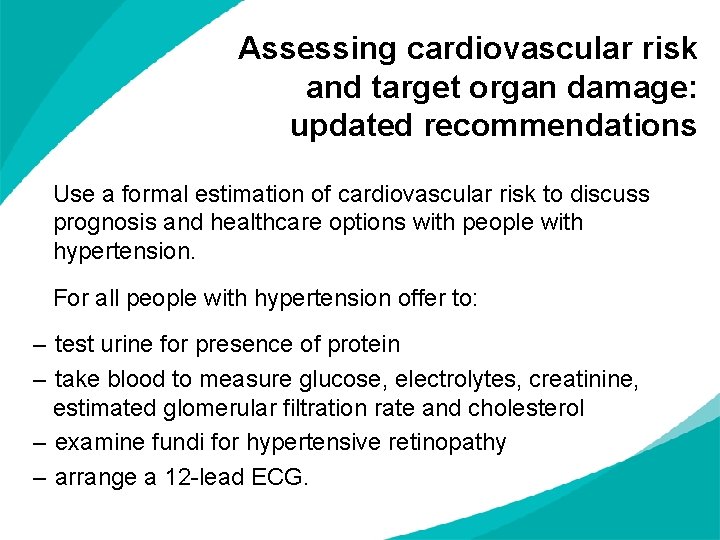
Assessing cardiovascular risk and target organ damage: updated recommendations Use a formal estimation of cardiovascular risk to discuss prognosis and healthcare options with people with hypertension. For all people with hypertension offer to: – test urine for presence of protein – take blood to measure glucose, electrolytes, creatinine, estimated glomerular filtration rate and cholesterol – examine fundi for hypertensive retinopathy – arrange a 12 -lead ECG.
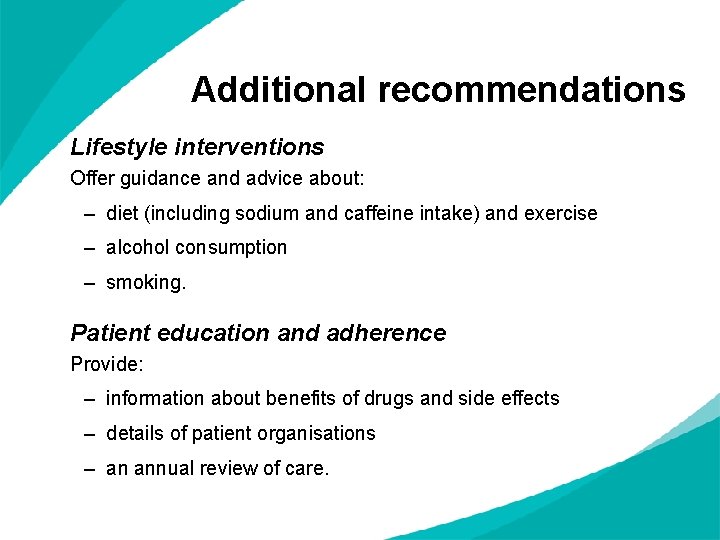
Additional recommendations Lifestyle interventions Offer guidance and advice about: – diet (including sodium and caffeine intake) and exercise – alcohol consumption – smoking. Patient education and adherence Provide: – information about benefits of drugs and side effects – details of patient organisations – an annual review of care.
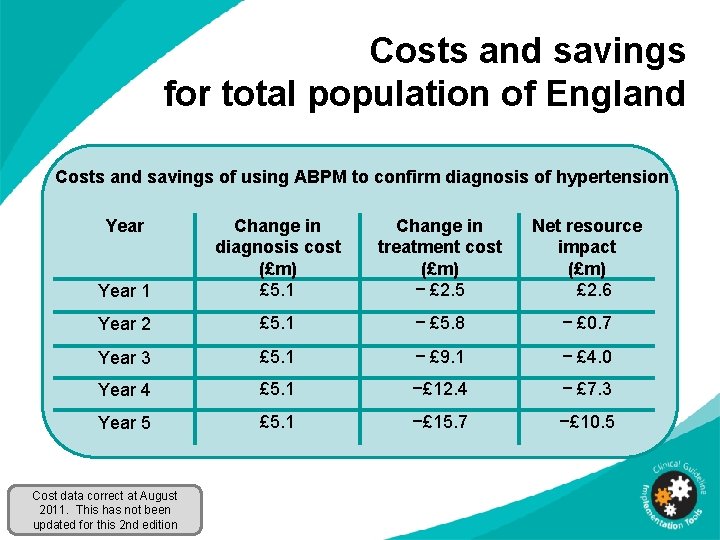
Costs and savings for total population of England Costs and savings of using ABPM to confirm diagnosis of hypertension Year 1 Change in diagnosis cost (£m) £ 5. 1 Change in treatment cost (£m) − £ 2. 5 Net resource impact (£m) £ 2. 6 Year 2 £ 5. 1 − £ 5. 8 − £ 0. 7 Year 3 £ 5. 1 − £ 9. 1 − £ 4. 0 Year 4 £ 5. 1 −£ 12. 4 − £ 7. 3 Year 5 £ 5. 1 −£ 15. 7 −£ 10. 5 Cost data correct at August 2011. This has not been updated for this 2 nd edition
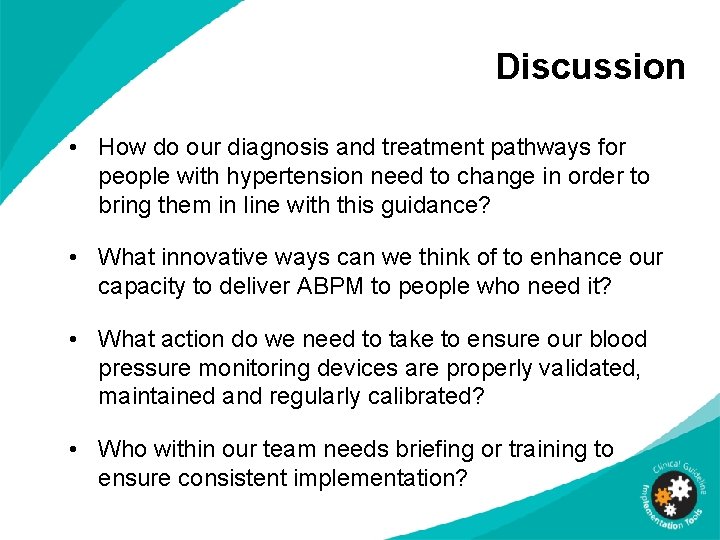
Discussion • How do our diagnosis and treatment pathways for people with hypertension need to change in order to bring them in line with this guidance? • What innovative ways can we think of to enhance our capacity to deliver ABPM to people who need it? • What action do we need to take to ensure our blood pressure monitoring devices are properly validated, maintained and regularly calibrated? • Who within our team needs briefing or training to ensure consistent implementation?
NICE quality standard for hypertension • Published March 2013 • Covers: management of primary hypertension in adults, including diagnosis and investigations, treatment to reduce risk of cardiovascular disease, monitoring of treatment efficacy, and specialist referral • Provides specific, concise quality statements, measures and audience descriptors to provide the public, health and social care professionals, commissioners and service providers Click here to go to with definitions of high-quality care. the NICE quality standard for hypertension
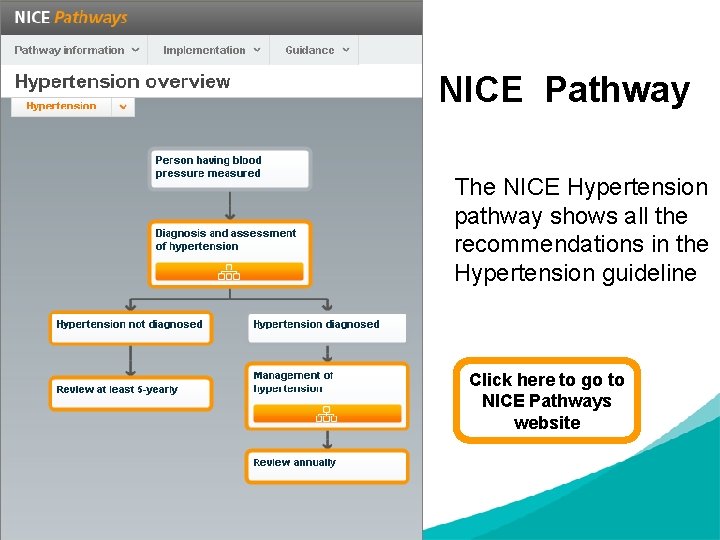
NICE Pathway The NICE Hypertension pathway shows all the recommendations in the Hypertension guideline Click here to go to NICE Pathways website
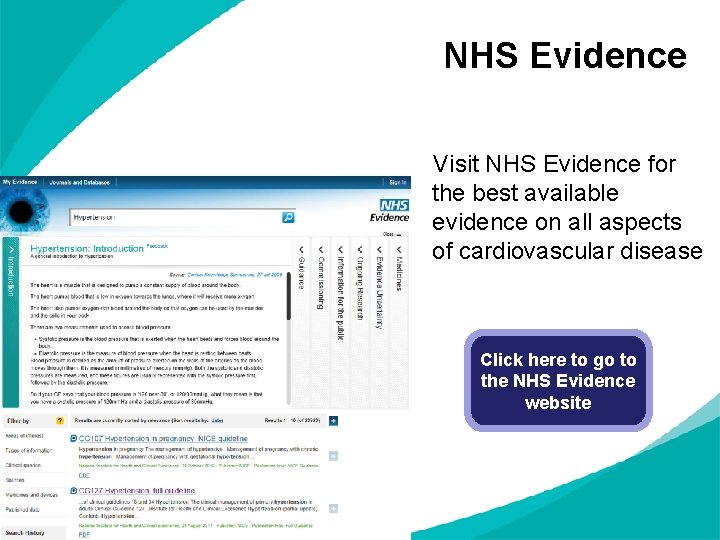
NHS Evidence Visit NHS Evidence for the best available evidence on all aspects of cardiovascular disease Click here to go to the NHS Evidence website
Find out more Visit www. nice. org. uk/guidance/CG 128 for: • the guideline • the quick reference guide • ‘Understanding NICE guidance’ • costing report and template • audit support • baseline assessment tool • clinical case scenarios • implementation advice • podcast
What do you think? Did the implementation tool you accessed today meet your requirements, and will it help you to put the NICE guidance into practice? We value your opinion and are looking for ways to improve our tools. Please complete this short evaluation form. If you are experiencing problems accessing or using this tool, please email implementation@nice. org. uk To open the links in this slide set right click over the link and choose ‘open link’