
Hypernatremia and Fluid Resuscitation Staci Smith DO Hypernatremia

- Slides: 34
Hypernatremia and Fluid Resuscitation Staci Smith, DO
Hypernatremia • serum sodium level >145 m. Eq/L • hypertonic by definition • usually due to loss of hypotonic fluid – occasionally infusion of hypertonic fluid • due to too little water, too much salt, or a combination – typically due to water deficit plus restricted access to free water • approximately 1 -4% of hospitalized patients • tends to be at the extremes of age
Mortality Eye Opener • mortality rate across all age groups is approximately 45%. • mortality rate in the geriatric age group is as high as 79%
Hypernatremia • sodium levels are tightly controlled – by regulation of urine concentration – production and regulation of the thirst response • normally water intake and losses are matched • to maintain salt homeostasis, the kidneys adjust urine concentration to match salt intake and loss • kidneys' normal response – is excretion of a minimal amount of maximally concentrated urine
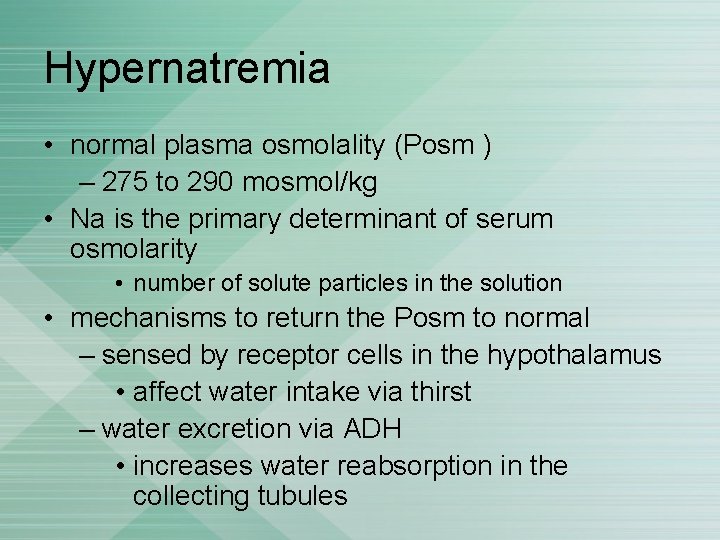
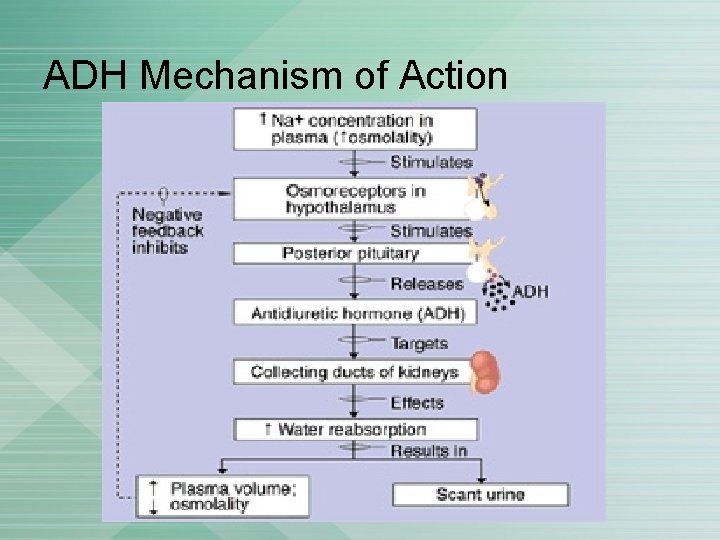
Hypernatremia • normal plasma osmolality (Posm ) – 275 to 290 mosmol/kg • Na is the primary determinant of serum osmolarity • number of solute particles in the solution • mechanisms to return the Posm to normal – sensed by receptor cells in the hypothalamus • affect water intake via thirst – water excretion via ADH • increases water reabsorption in the collecting tubules
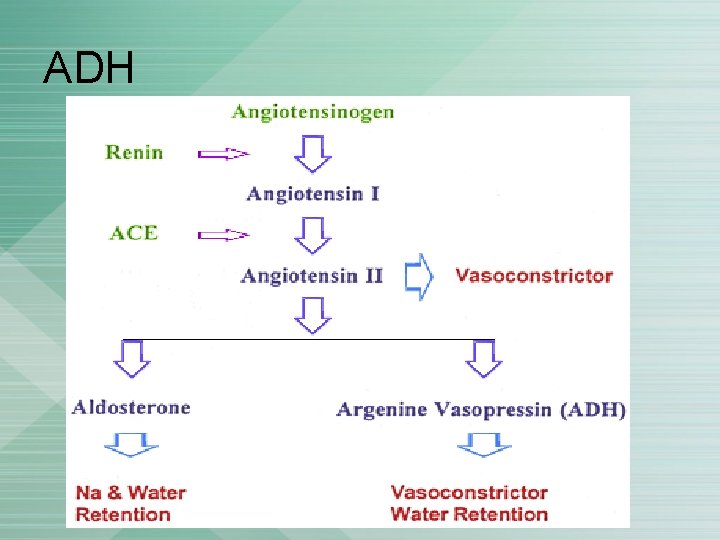
ADH
ADH Mechanism of Action
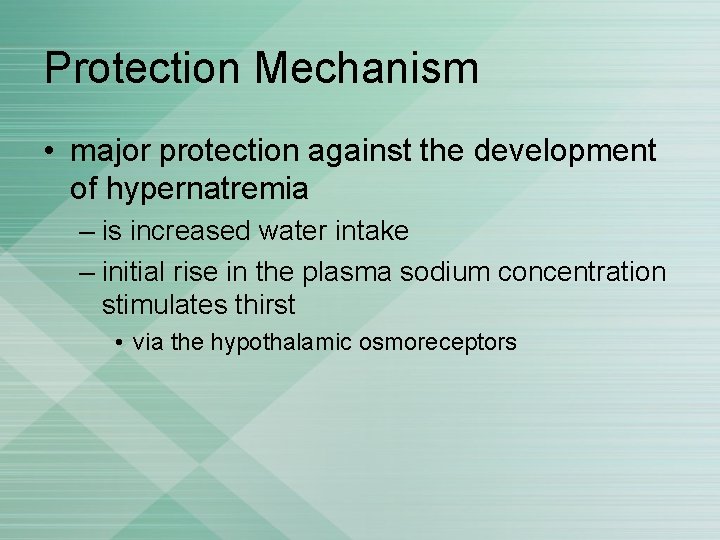
Protection Mechanism • major protection against the development of hypernatremia – is increased water intake – initial rise in the plasma sodium concentration stimulates thirst • via the hypothalamic osmoreceptors
Hypernatremia • usually occurs in infants or adults – particularly the elderly – impaired mental status • may have an intact thirst mechanism but are unable to ask for water – increasing age is also associated with diminished osmotic stimulation of thirst • unknown mechanism
Hypernatremia • cells become dehydrated • sodium acts to extract water from the cells – primarily an extracellular ion – is actively pumped out of most cells • dehydrated cells shrink from water extraction • effects seen principally in the CNS
Protective Mechanism • cells respond to combat this shrinkage – by transporting electrolytes across the cell membrane – altering rest potentials of electrically active membranes • intracellular organic solutes – generated in an effort to restore cell volume and avoid structural damage
Risk factors for hypernatremia – Age older than 65 years – Mental or physical disability – Hospitalization (intubation, impaired cognitive function) – Residence in nursing home – Inadequate nursing care – Urine concentrating defect (diabetes insipidus) – Solute diuresis (diabetes mellitus) – Diuretic therapy
Assessment • Two important questions: – What is the patient's volume status? – Is the problem acute or chronic? • Does the patient complain of polyuria or polydipsia ? – Central vs Nephrogenic DI – often crave ice-cold water
Clinical Manifestations • • lethargy general weakness irritability weight loss diarrhea twitching seizures coma • orthostatic hypotension • tachycardia • oliguria • prerenal : High BUN-tocreatinine ratio • dry axillae/ dry MMM • hyperthermia • poor skin turgor • nystagmus • myoclonic jerks
Work-up : Sodium levels – more than 170 m. Eq/L usually indicates longterm salt ingestion – 50 -170 m. Eq/L usually indicates dehydration – chronicity typically has fewer neurologic symptoms
Lab Work-up : Sodium levels • order urine osmolality and sodium levels • glucose level to ensure that osmotic diuresis has not occurred • CT or MRI head • water deprivation test • ADH stimulation
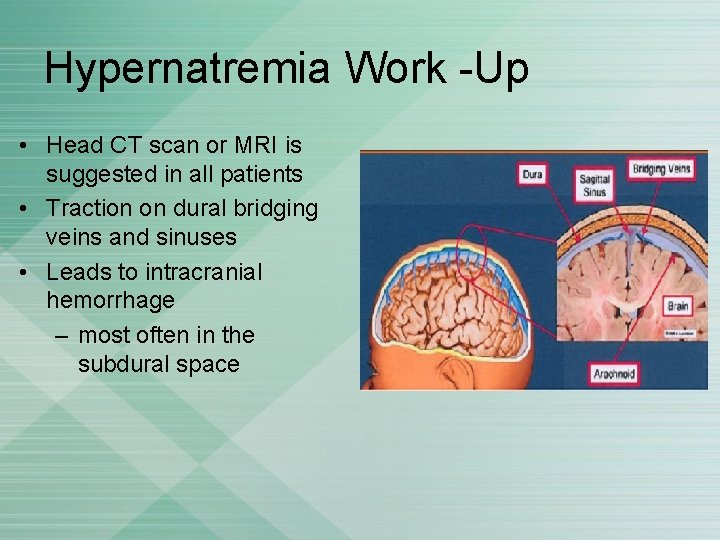
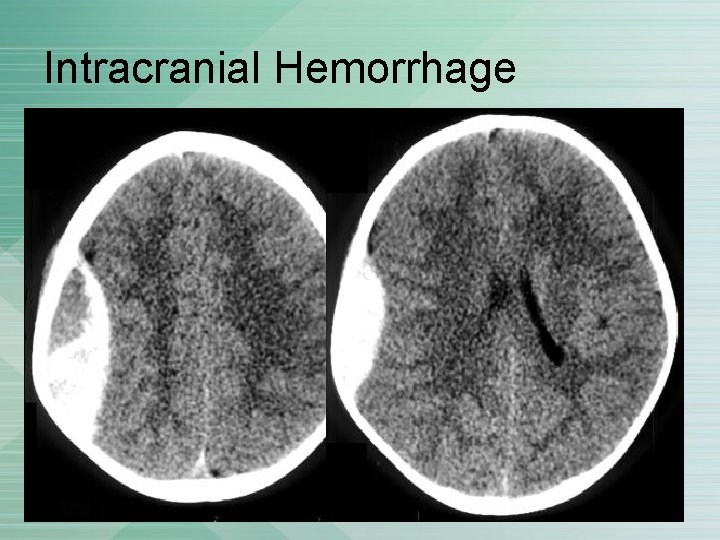
Hypernatremia Work -Up • Head CT scan or MRI is suggested in all patients • Traction on dural bridging veins and sinuses • Leads to intracranial hemorrhage – most often in the subdural space
Intracranial Hemorrhage
Intracranial Hemorrhage
Treatment • Replace free water deficit – IVF – TPN / tube feeds • Rapid correction of extracellular hypertonicity – passive movement of water molecules into the relatively hypertonic intracellular space – causes cellular swelling, damage and ultimate death
Treatment • First, estimate TBW (Total Body Water) – TBW=. 60 x IBW x 0. 85 if female & 0. 85 if elderly • IBW for women= 100 lbs for the first 5 feet and 5 lbs for each additional inch • IBW men= 110 lbs for the first 5 feet and 5 lbs for each additional inch • Our pt IBW= 120 (5 ft , 4’’) • TBW= 52. 0 – =. 60 x 120 x 0. 85
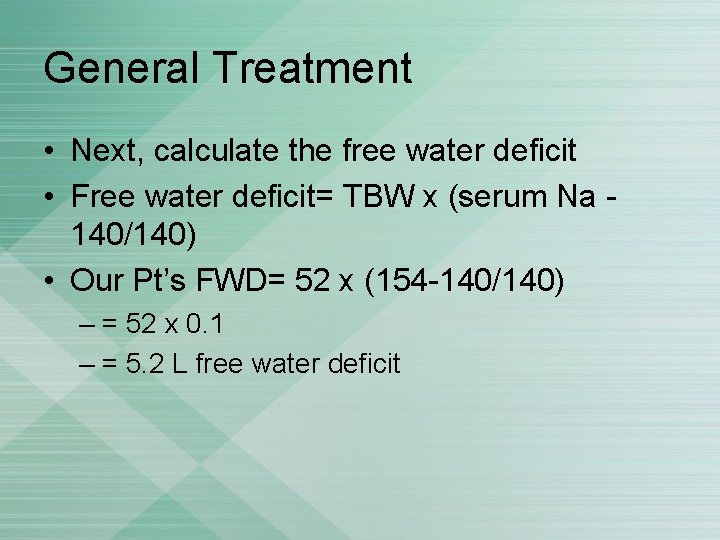
General Treatment • Next, calculate the free water deficit • Free water deficit= TBW x (serum Na 140/140) • Our Pt’s FWD= 52 x (154 -140/140) – = 52 x 0. 1 – = 5. 2 L free water deficit
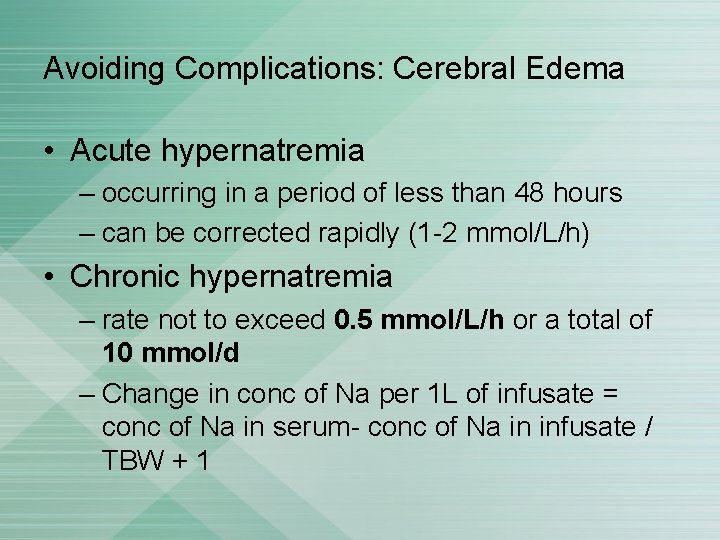
Avoiding Complications: Cerebral Edema • Acute hypernatremia – occurring in a period of less than 48 hours – can be corrected rapidly (1 -2 mmol/L/h) • Chronic hypernatremia – rate not to exceed 0. 5 mmol/L/h or a total of 10 mmol/d – Change in conc of Na per 1 L of infusate = conc of Na in serum- conc of Na in infusate / TBW + 1
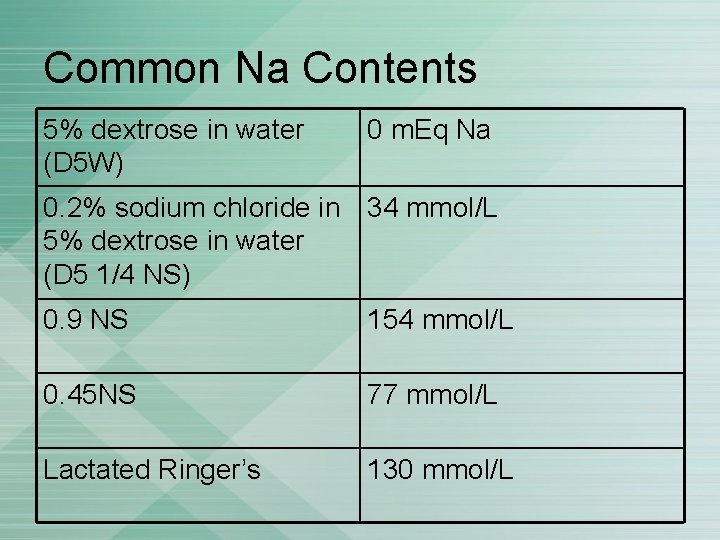
Common Na Contents 5% dextrose in water (D 5 W) 0 m. Eq Na 0. 2% sodium chloride in 34 mmol/L 5% dextrose in water (D 5 1/4 NS) 0. 9 NS 154 mmol/L 0. 45 NS 77 mmol/L Lactated Ringer’s 130 mmol/L
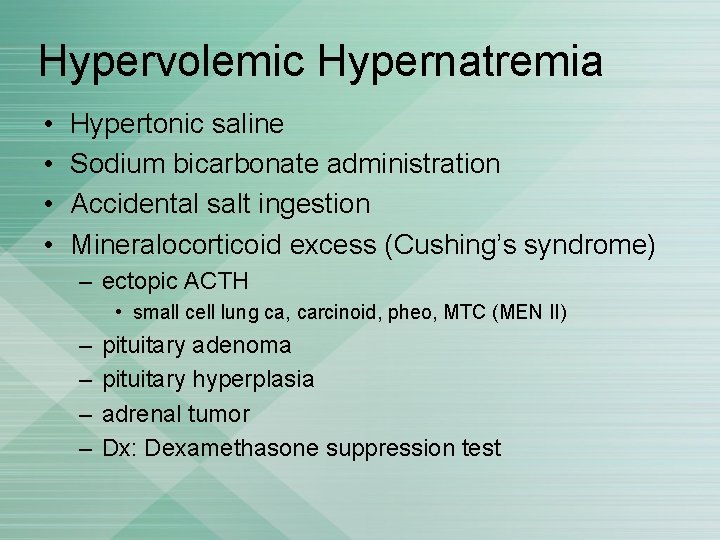
Hypervolemic Hypernatremia • • Hypertonic saline Sodium bicarbonate administration Accidental salt ingestion Mineralocorticoid excess (Cushing’s syndrome) – ectopic ACTH • small cell lung ca, carcinoid, pheo, MTC (MEN II) – – pituitary adenoma pituitary hyperplasia adrenal tumor Dx: Dexamethasone suppression test
Hypervolemic Hypernatremia • Treatment – D 5 W plus loop diuretic such as Lasix – may require dialysis for correction
Hypovolemia Hypernatremia • water deficit >sodium deficit – Extrarenal losses • diarrhea, vomiting, fistulas, significant burns • Urine Na less than 20 and U Osm >600 – Renal losses • urine Na >20 with U Osm 300 -600 • osmotic diuretics, postobstructive diuresis, intrinsic renal disease • DM / DKA – increased solute clearance per nephron, increasing free water loss
Euvolemic Hypernatremia • Diabetes Insipidus – Typically mild hypernatremia with severe polyuria – Central DI = ADH deficiency • Sx, hemorrhage, infxn, ca/tumor, trauma, anorexics, hypoxia, granulomatous dz (Wegener’s, sarcoidosis, TB), Sheehan’s • U Osm less than 300 • Tx is DDAVP
Diabetes Insipidus: Euvolemic Hypernatremia Nephrogenic DI = ADH resistance • Congenital • Meds – Lithium, ampho B, demeclocycline, foscarnet • Obstructive uropathy • Hypercalcemia, severe hypokalemia • Chronic tubulointerstitial diseases - Analgesic abuse nephropathy, polycystic kidney disease, medullary cystic disease • Pregnancy • Sarcoidosis • Sjogren’s synd • Sickle Cell Anemia – U osm 300 -600 – Tx: salt restriction plus thiazide – Tx underlying cause
Euvolemic Hypernatremia • Seizures where osmoles are generated that cause water shifts – transient increase in Na • Increased insensible losses (hyperventilation)
Hypovolemia Hypernatremia • Combo of volume deficit plus hypernatremia – intravascular volume should be restored with isotonic sodium chloride (. 9 NS) before free water administration
Summary • Dehydration is NOT synonomous with hypovolemia • Hypernatremia due to water loss is called dehydration. • Hypovolemia is where both salt and water are lost. • Two important questions: – What is the patient's volume status? – Is the problem acute or chronic? • Does the patient complain of polyuria or polydipsia ?
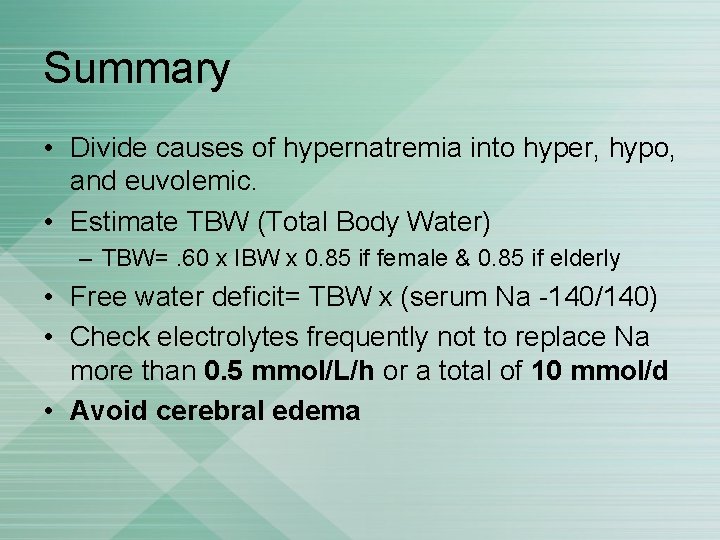
Summary • Divide causes of hypernatremia into hyper, hypo, and euvolemic. • Estimate TBW (Total Body Water) – TBW=. 60 x IBW x 0. 85 if female & 0. 85 if elderly • Free water deficit= TBW x (serum Na -140/140) • Check electrolytes frequently not to replace Na more than 0. 5 mmol/L/h or a total of 10 mmol/d • Avoid cerebral edema
References • Harrison’s Internal Medicine • E-medicine • http: //www. mdcalc. co m/bicarbdeficit. php