
Hyperlipidemia 1 2 The story of lipids n

- Slides: 27
Hyperlipidemia 1
2
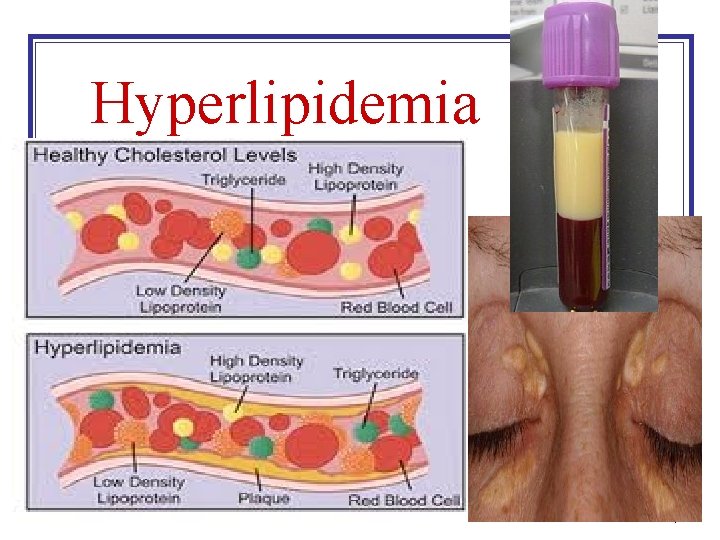
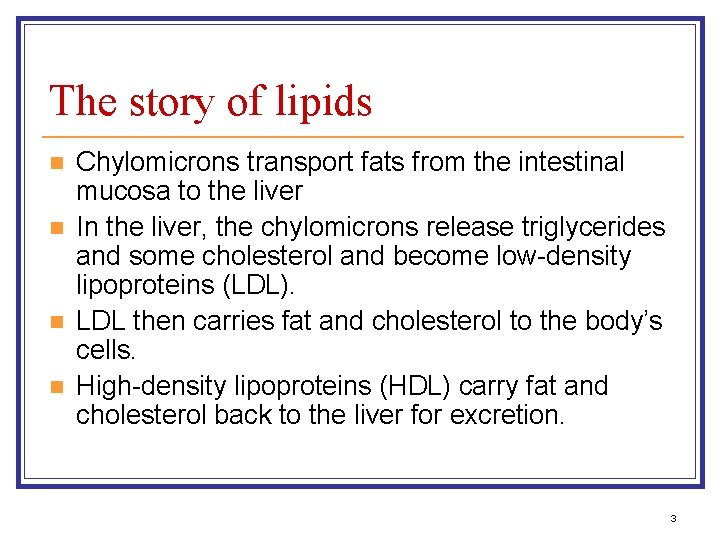
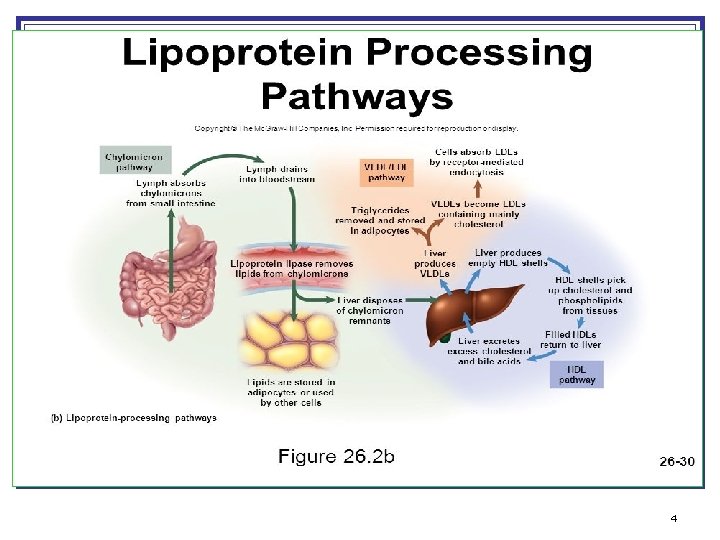
The story of lipids n n Chylomicrons transport fats from the intestinal mucosa to the liver In the liver, the chylomicrons release triglycerides and some cholesterol and become low-density lipoproteins (LDL). LDL then carries fat and cholesterol to the body’s cells. High-density lipoproteins (HDL) carry fat and cholesterol back to the liver for excretion. 3
4
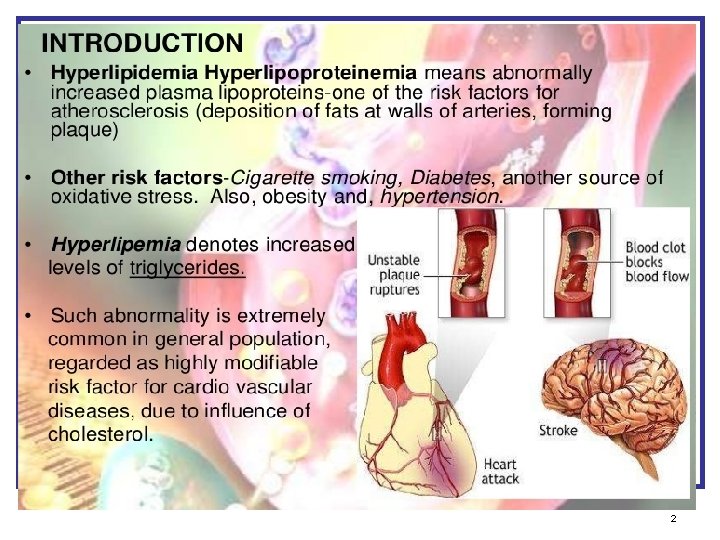
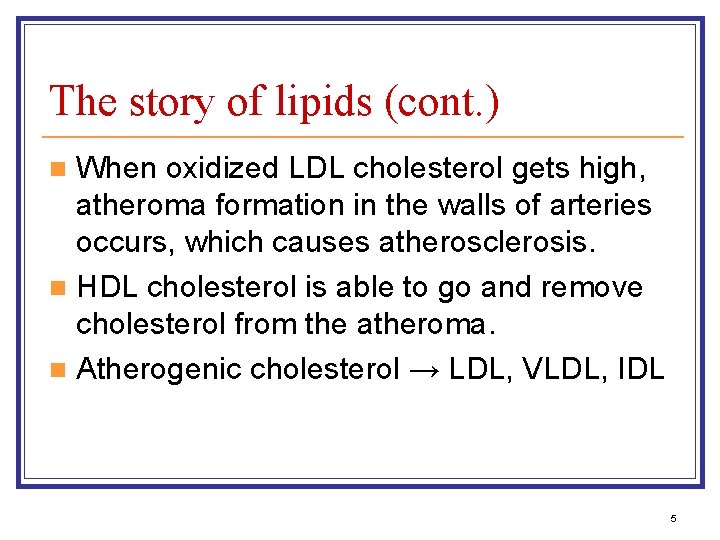
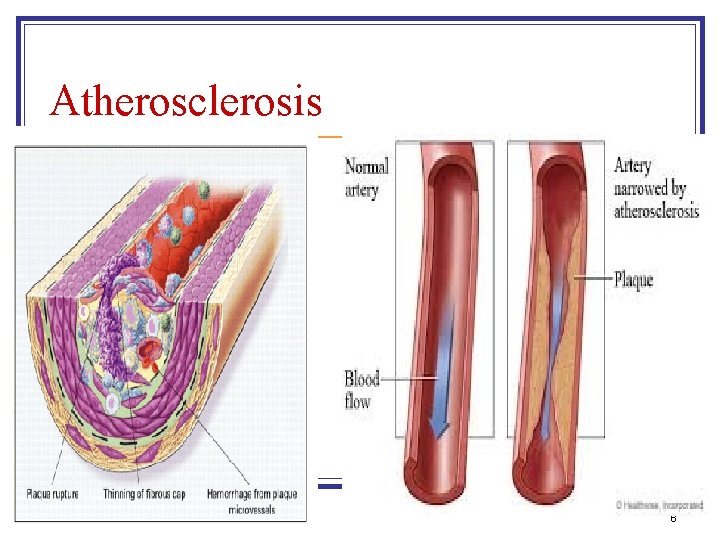
The story of lipids (cont. ) When oxidized LDL cholesterol gets high, atheroma formation in the walls of arteries occurs, which causes atherosclerosis. n HDL cholesterol is able to go and remove cholesterol from the atheroma. n Atherogenic cholesterol → LDL, VLDL, IDL n 5
Atherosclerosis 6
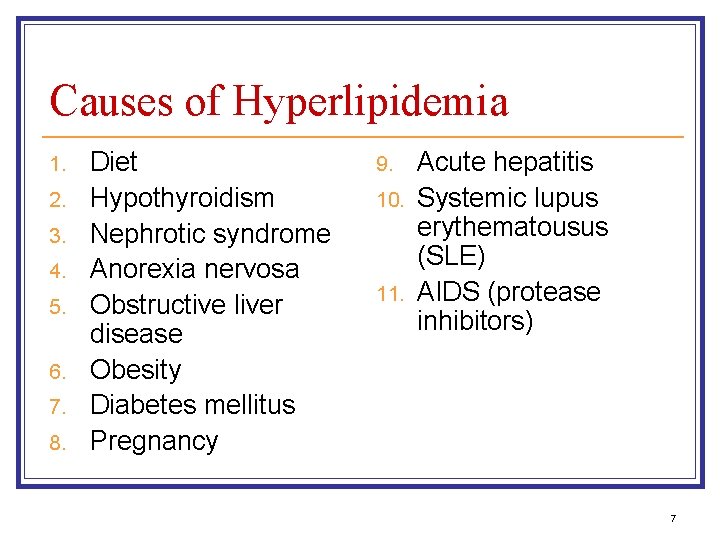
Causes of Hyperlipidemia 1. 2. 3. 4. 5. 6. 7. 8. Diet Hypothyroidism Nephrotic syndrome Anorexia nervosa Obstructive liver disease Obesity Diabetes mellitus Pregnancy 9. 10. 11. Acute hepatitis Systemic lupus erythematousus (SLE) AIDS (protease inhibitors) 7
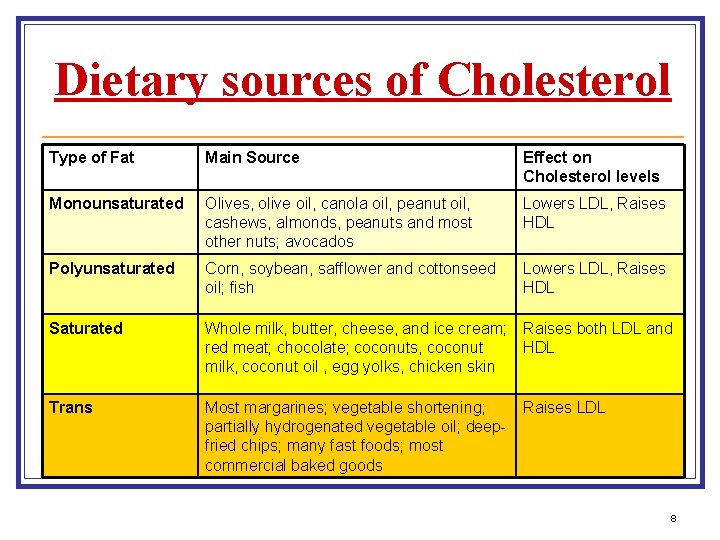
Dietary sources of Cholesterol Type of Fat Main Source Effect on Cholesterol levels Monounsaturated Olives, olive oil, canola oil, peanut oil, cashews, almonds, peanuts and most other nuts; avocados Lowers LDL, Raises HDL Polyunsaturated Corn, soybean, safflower and cottonseed oil; fish Lowers LDL, Raises HDL Saturated Whole milk, butter, cheese, and ice cream; Raises both LDL and red meat; chocolate; coconuts, coconut HDL milk, coconut oil , egg yolks, chicken skin Trans Most margarines; vegetable shortening; partially hydrogenated vegetable oil; deepfried chips; many fast foods; most commercial baked goods Raises LDL 8
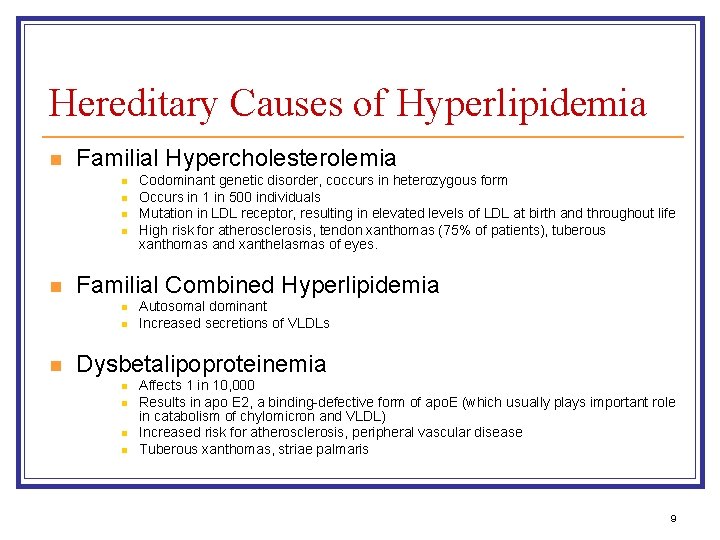
Hereditary Causes of Hyperlipidemia n Familial Hypercholesterolemia n n n Familial Combined Hyperlipidemia n n n Codominant genetic disorder, coccurs in heterozygous form Occurs in 1 in 500 individuals Mutation in LDL receptor, resulting in elevated levels of LDL at birth and throughout life High risk for atherosclerosis, tendon xanthomas (75% of patients), tuberous xanthomas and xanthelasmas of eyes. Autosomal dominant Increased secretions of VLDLs Dysbetalipoproteinemia n n Affects 1 in 10, 000 Results in apo E 2, a binding-defective form of apo. E (which usually plays important role in catabolism of chylomicron and VLDL) Increased risk for atherosclerosis, peripheral vascular disease Tuberous xanthomas, striae palmaris 9
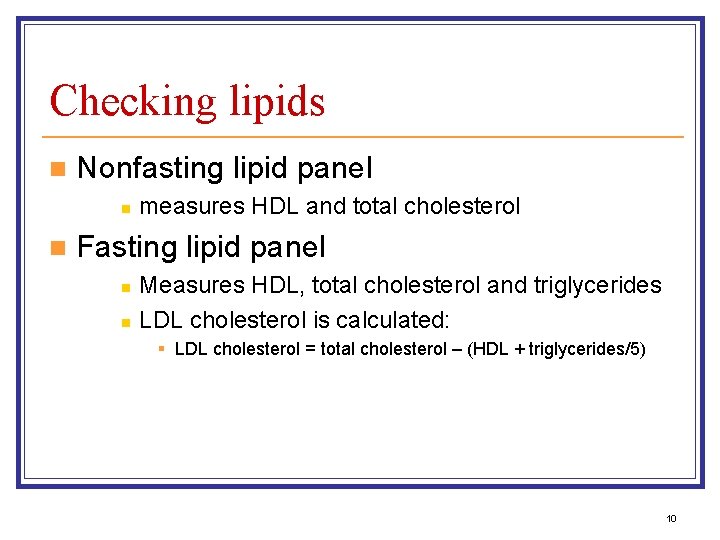
Checking lipids n Nonfasting lipid panel n n measures HDL and total cholesterol Fasting lipid panel n n Measures HDL, total cholesterol and triglycerides LDL cholesterol is calculated: § LDL cholesterol = total cholesterol – (HDL + triglycerides/5) 10
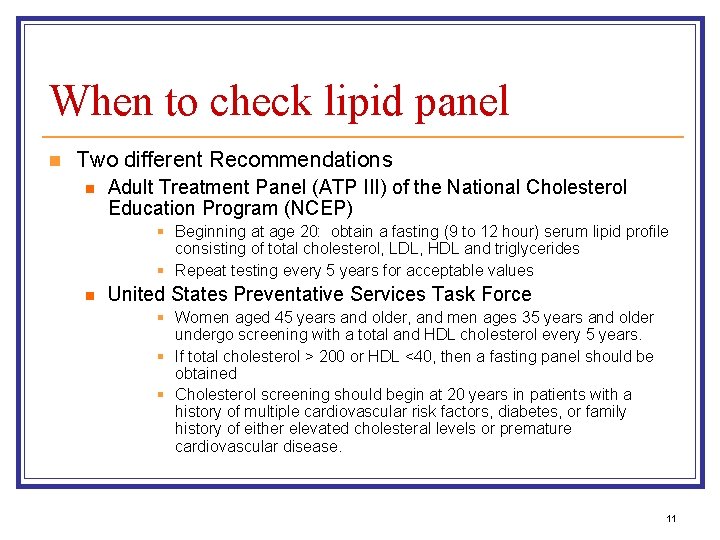
When to check lipid panel n Two different Recommendations n Adult Treatment Panel (ATP III) of the National Cholesterol Education Program (NCEP) § Beginning at age 20: obtain a fasting (9 to 12 hour) serum lipid profile consisting of total cholesterol, LDL, HDL and triglycerides § Repeat testing every 5 years for acceptable values n United States Preventative Services Task Force § Women aged 45 years and older, and men ages 35 years and older undergo screening with a total and HDL cholesterol every 5 years. § If total cholesterol > 200 or HDL <40, then a fasting panel should be obtained § Cholesterol screening should begin at 20 years in patients with a history of multiple cardiovascular risk factors, diabetes, or family history of either elevated cholesteral levels or premature cardiovascular disease. 11
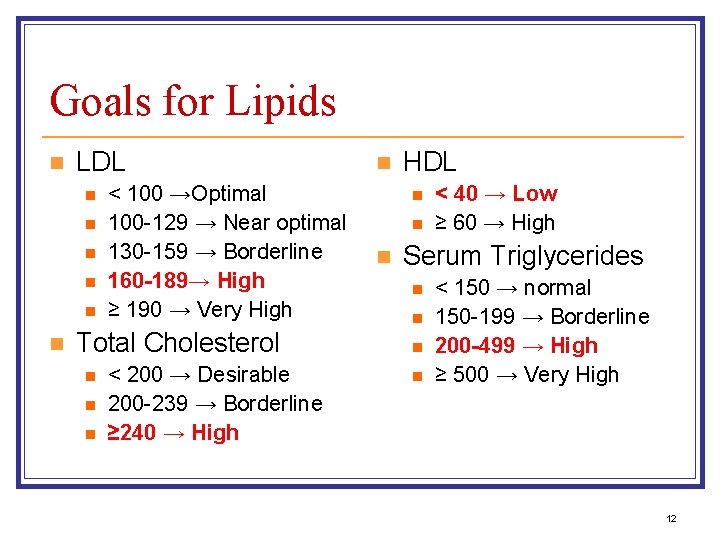
Goals for Lipids n LDL n n n < 100 →Optimal 100 -129 → Near optimal 130 -159 → Borderline 160 -189→ High ≥ 190 → Very High Total Cholesterol n n n < 200 → Desirable 200 -239 → Borderline ≥ 240 → High n HDL n n n < 40 → Low ≥ 60 → High Serum Triglycerides n n < 150 → normal 150 -199 → Borderline 200 -499 → High ≥ 500 → Very High 12
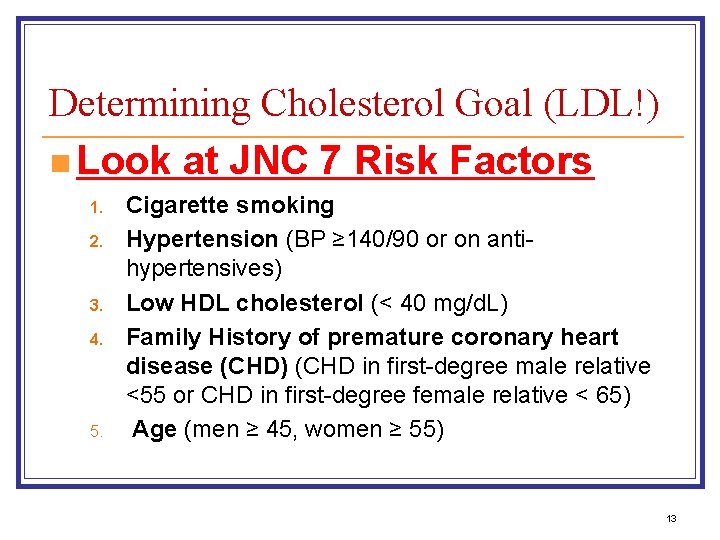
Determining Cholesterol Goal (LDL!) n Look at JNC 7 Risk Factors 1. 2. 3. 4. 5. Cigarette smoking Hypertension (BP ≥ 140/90 or on antihypertensives) Low HDL cholesterol (< 40 mg/d. L) Family History of premature coronary heart disease (CHD) (CHD in first-degree male relative <55 or CHD in first-degree female relative < 65) Age (men ≥ 45, women ≥ 55) 13
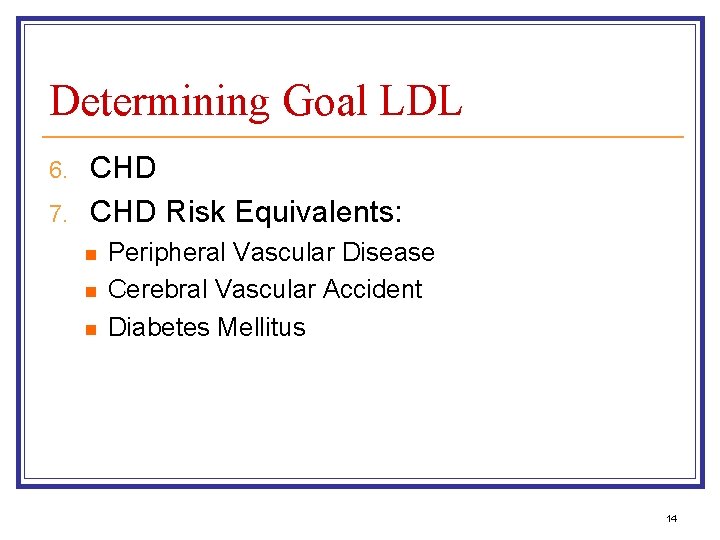
Determining Goal LDL 6. 7. CHD Risk Equivalents: n n n Peripheral Vascular Disease Cerebral Vascular Accident Diabetes Mellitus 14
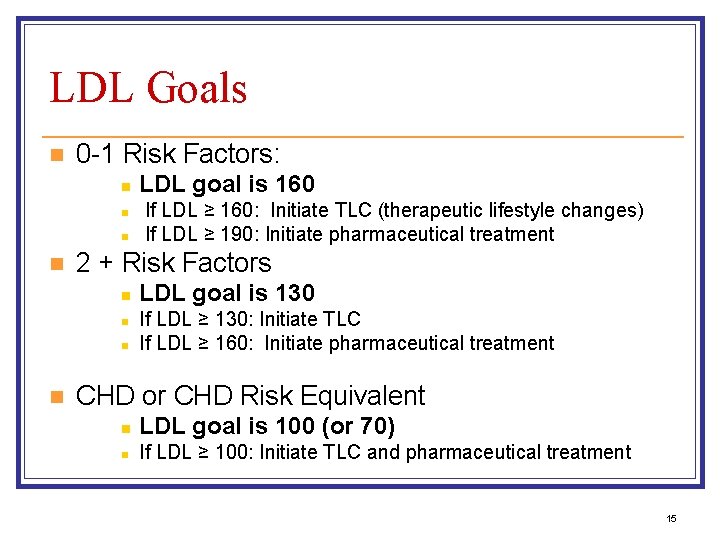
LDL Goals n 0 -1 Risk Factors: n n If LDL ≥ 160: Initiate TLC (therapeutic lifestyle changes) If LDL ≥ 190: Initiate pharmaceutical treatment 2 + Risk Factors n n LDL goal is 160 LDL goal is 130 If LDL ≥ 130: Initiate TLC If LDL ≥ 160: Initiate pharmaceutical treatment CHD or CHD Risk Equivalent n LDL goal is 100 (or 70) n If LDL ≥ 100: Initiate TLC and pharmaceutical treatment 15
16
17
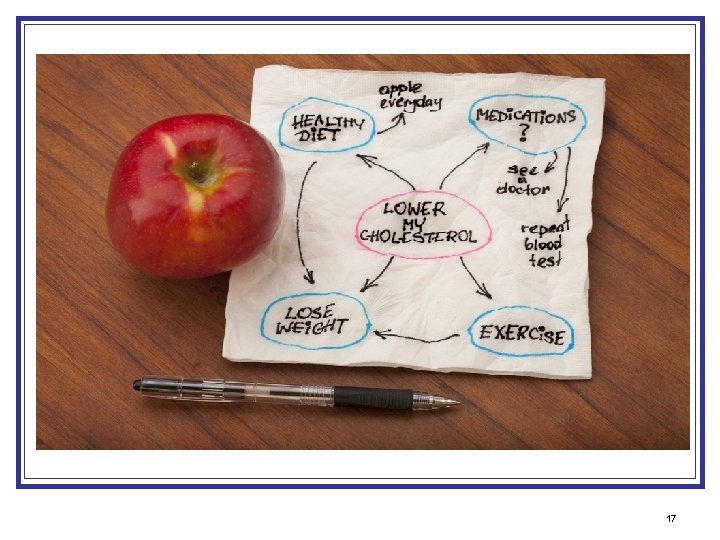
Treatment of Hyperlipidemia n Lifestyle modification n n Low-cholesterol diet Exercise 18
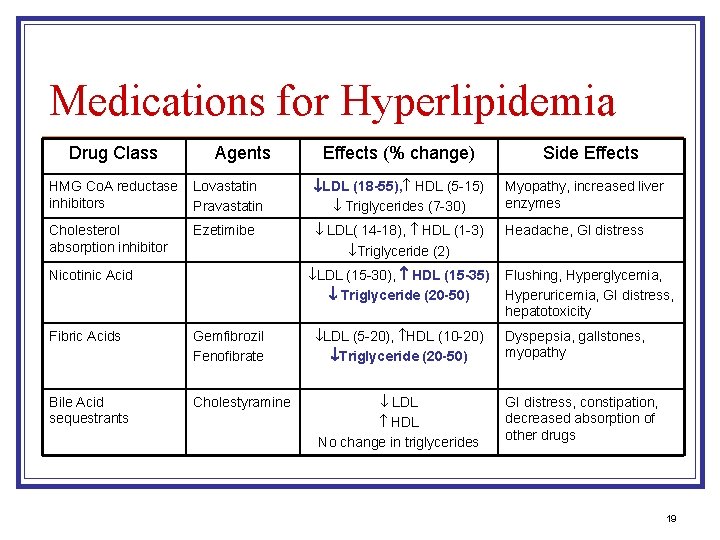
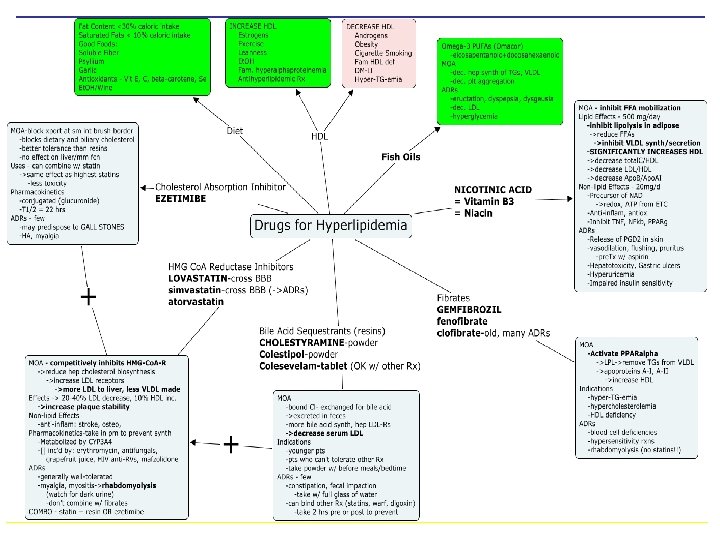
Medications for Hyperlipidemia Drug Class Agents Effects (% change) Side Effects HMG Co. A reductase inhibitors Lovastatin Pravastatin LDL (18 -55), HDL (5 -15) Triglycerides (7 -30) Myopathy, increased liver enzymes Cholesterol absorption inhibitor Ezetimibe LDL( 14 -18), HDL (1 -3) Triglyceride (2) Headache, GI distress LDL (15 -30), HDL (15 -35) Triglyceride (20 -50) Nicotinic Acid Flushing, Hyperglycemia, Hyperuricemia, GI distress, hepatotoxicity Fibric Acids Gemfibrozil Fenofibrate LDL (5 -20), HDL (10 -20) Triglyceride (20 -50) Dyspepsia, gallstones, myopathy Bile Acid sequestrants Cholestyramine LDL HDL No change in triglycerides GI distress, constipation, decreased absorption of other drugs 19
20
TLC Lower your cholesterol, decrease risk for heart disease, and lose weight with the Therapeutic Lifestyle Changes (TLC) Diet, a weight-loss program created by the National Institute of Health (NIH) and endorsed by the American Heart Association. Following the TLC Diet is simple -- you’ll cut back on saturated fats, incorporate more fiber into your diet, and add regular exercise into your daily routine to get your health back on track. How It Works: First, know why you’re starting the TLC Diet to help determine your daily caloric intakes. If the objective is to lower LDL cholesterol, men should consume 2, 500 calories per day and women should consume 1, 800 calories per day. If the objective is to lower LDL cholesterol and lose weight, men should consume 1, 600 calories per day and women should consume 1, 200 calories per day. 21
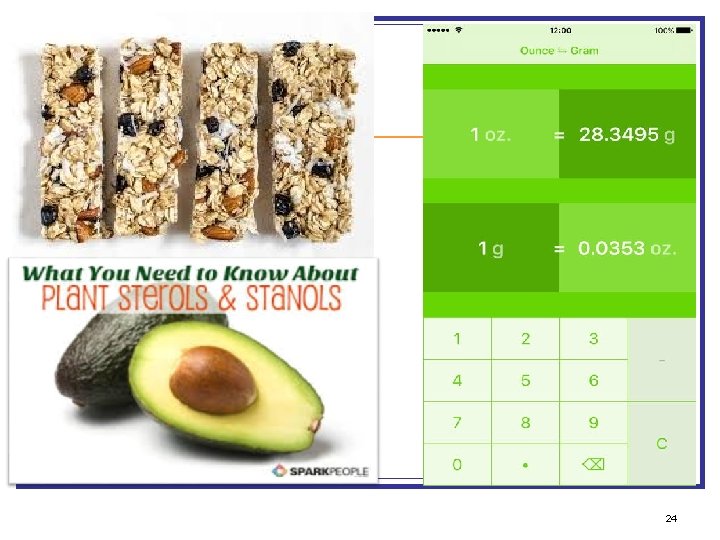
There a few rules from NIH you’ll need to follow each day when keeping to your calorie count: 1. 2. 3. 4. 5. Consume less than 7 % of your daily calories from saturated fat. Consume less than 200 mg a day of cholesterol. Consume 25 -35 % of your daily calories from total fat (including the saturated fat calories). Eat two grams per day of plant stanols or sterols if you want to lower LDL cholesterol. You can find these in things like orange juice, cereal, and granola bars. Eat 10 -25 grams per day of soluble fiber found in things like nuts, seeds, beans, and lentils if you want to lower your LDL cholesterol. 22
6. Eat no more than five ounces of meat, preferably skinless chicken or fish. 7. Eat two to three servings of low-fat or fat-free dairy per day. 8. Eat three to five servings of vegetables, dry beans, or peas per day. 9. Eat two to four servings of fruit per day. 10. Eat six or more servings of breads, cereals, or grains per day. 11. Eat no more than two egg yolks per week, including the yolks in baked goods and cooked or processed foods. 12. Plus, you should have 30 minutes of moderate-intensity exercise every day 23
24
Cutting out bad fat from your diet will help to lower your cholesterol, since fat, especially saturated and trans fat, increases your LDL (bad cholesterol) which increases risk for heart disease. Plus, consuming more soluble fiber is also beneficial, as it can help reduce your risk for heart disease and fills you up so that you’ll eat fewer calories. Overall, eating a healthier diet and getting active for 30 minutes each day will improve your health and help you lose weight. . 25
26
27