
Hyperbolic heat conduction equation HHCE Bernd Httner CPhys
Hyperbolic heat conduction equation (HHCE) Bernd Hüttner CPhys. FInst. P, Stuttgart Outline 1. Maxwell – Cattaneo versus Fourier 2. Some properties of the HHCE 3. Objections against the HHCE – a misunderstanding 4. A physical explanation of the relaxation time Institute of Technical Physics 1
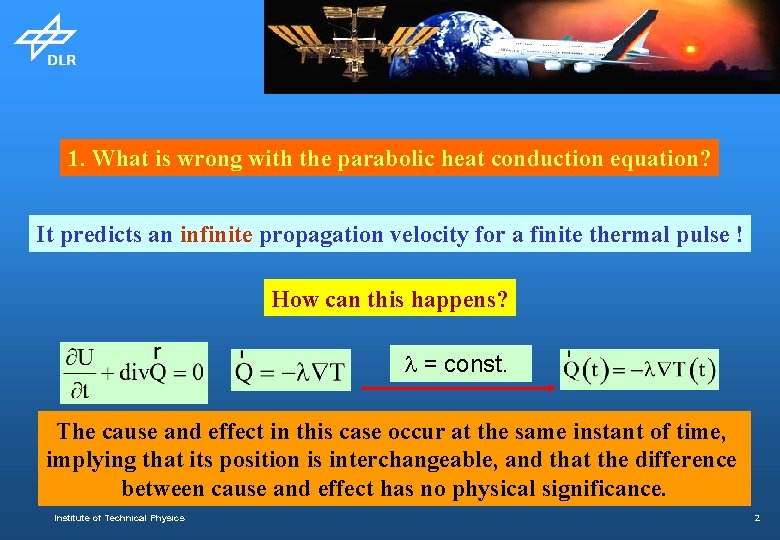
1. What is wrong with the parabolic heat conduction equation? It predicts an infinite propagation velocity for a finite thermal pulse ! How can this happens? = const. The cause and effect in this case occur at the same instant of time, implying that its position is interchangeable, and that the difference between cause and effect has no physical significance. Institute of Technical Physics 2
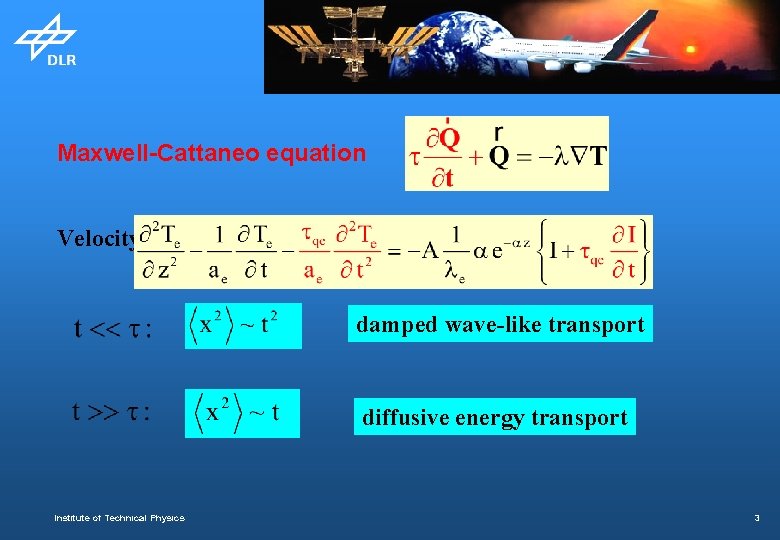
Maxwell-Cattaneo equation Velocity: damped wave-like transport diffusive energy transport Institute of Technical Physics 3
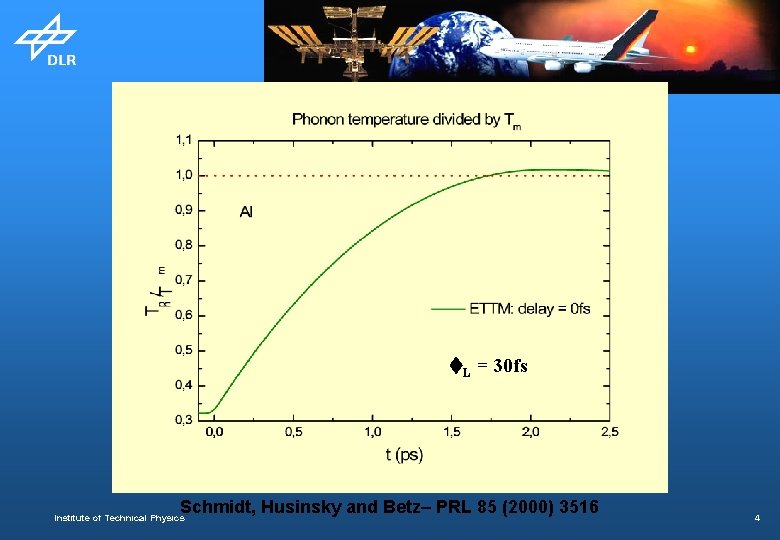
L = 30 fs Schmidt, Husinsky and Betz– PRL 85 (2000) 3516 Institute of Technical Physics 4

Schmidt, Husinsky and Betz– PRL 85 (2000) 3516 Institute of Technical Physics 5
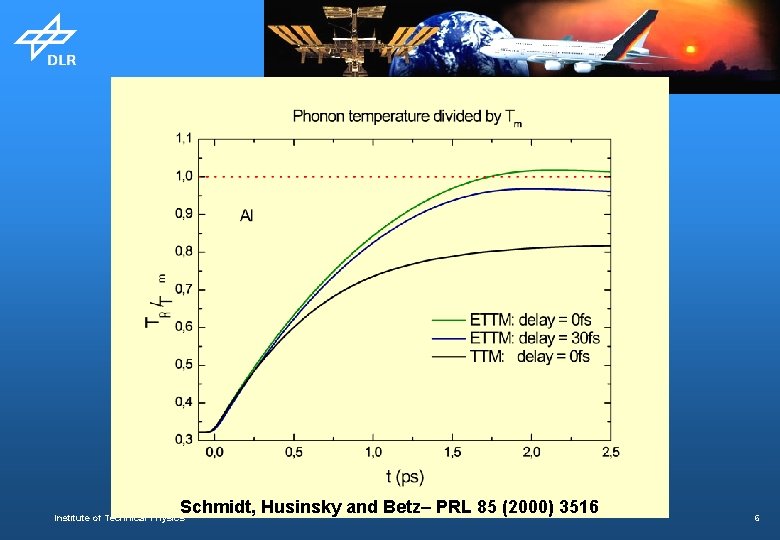
Schmidt, Husinsky and Betz– PRL 85 (2000) 3516 Institute of Technical Physics 6
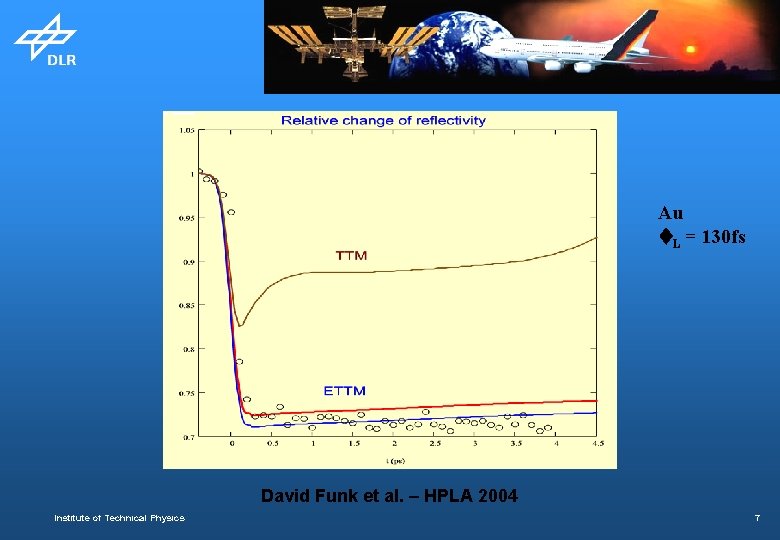
Au L = 130 fs David Funk et al. – HPLA 2004 Institute of Technical Physics 7
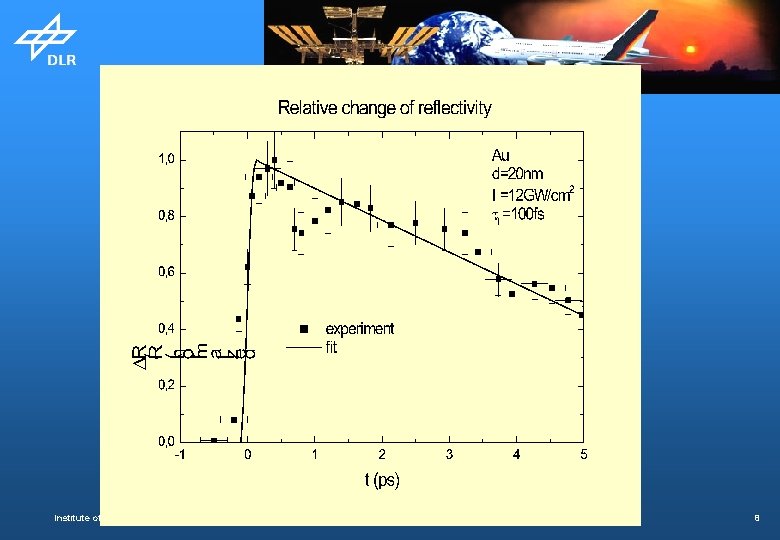
Institute of Technical Physics 8
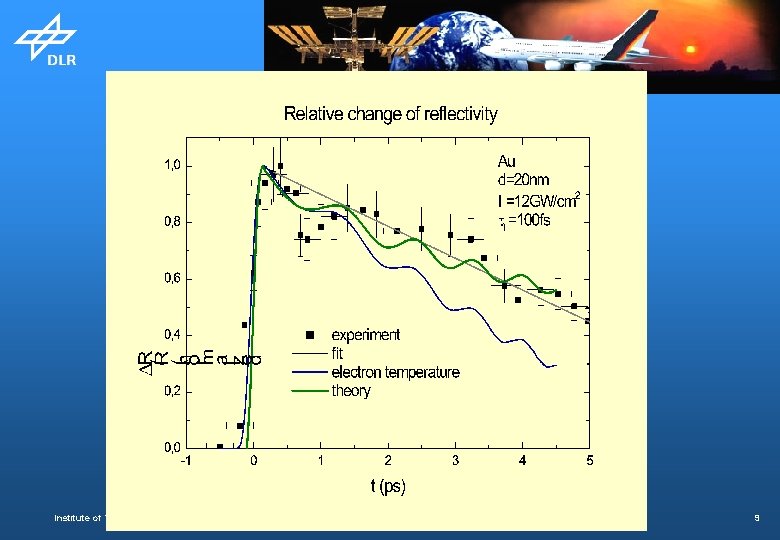
Institute of Technical Physics 9
The physical defects of hyperbolic heat conduction equation Körner and Bergmann - Appl. Phys. A 67 (1998) 397 In this paper the HHCE is inspected on a microscopic level from a physical point of view. Starting from the Boltzmann transport equation we study the underlying approximations. We find that the hyperbolic approach to the heat current density violates the fundamental law of energy conservation. As a consequence, the HHCE predicts physically impossible solutions with a negative local heat content. Institute of Technical Physics 10
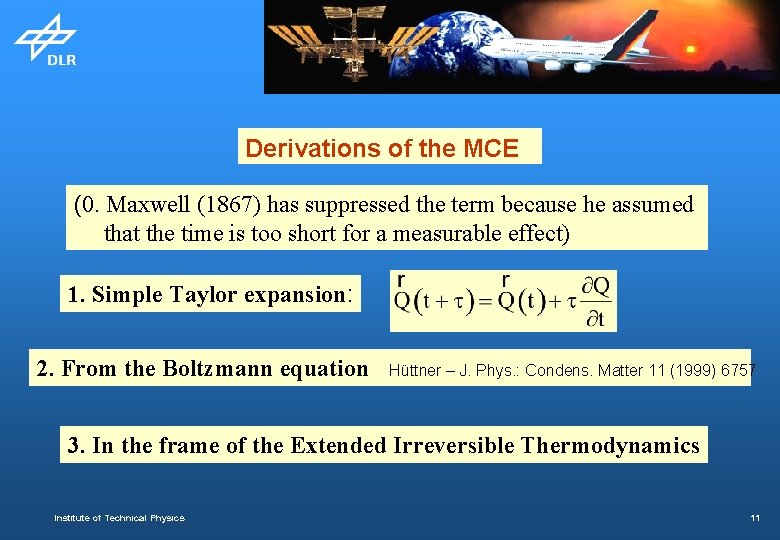
Derivations of the MCE (0. Maxwell (1867) has suppressed the term because he assumed that the time is too short for a measurable effect) 1. Simple Taylor expansion: 2. From the Boltzmann equation Hüttner – J. Phys. : Condens. Matter 11 (1999) 6757 3. In the frame of the Extended Irreversible Thermodynamics Institute of Technical Physics 11
2. Classical irreversible thermodynamics Based on the assumption of local thermal equilibrium, Onsager linear relations Ji = å Lik·Xk and positive entropy production Fourier’s law q = - l grad. T parabolic diff. equation local in space and time, no memory, close to equilibrium Institute of Technical Physics 12
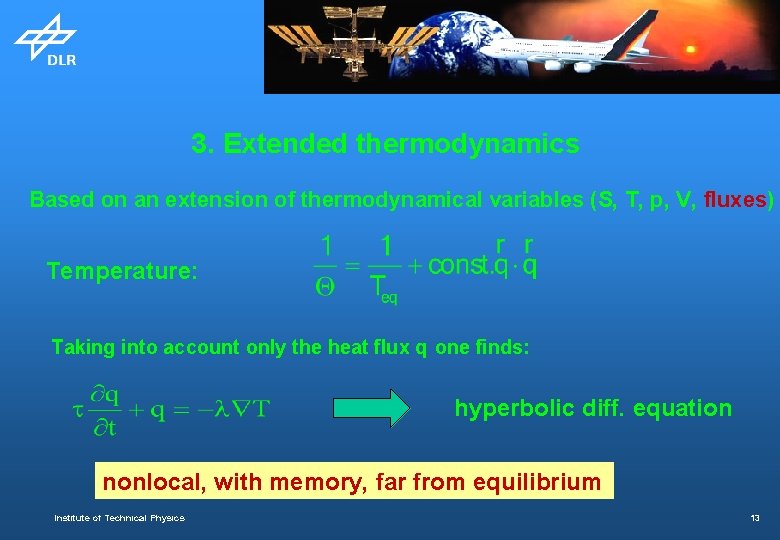
3. Extended thermodynamics Based on an extension of thermodynamical variables (S, T, p, V, fluxes) Temperature: Taking into account only the heat flux q one finds: hyperbolic diff. equation nonlocal, with memory, far from equilibrium Institute of Technical Physics 13
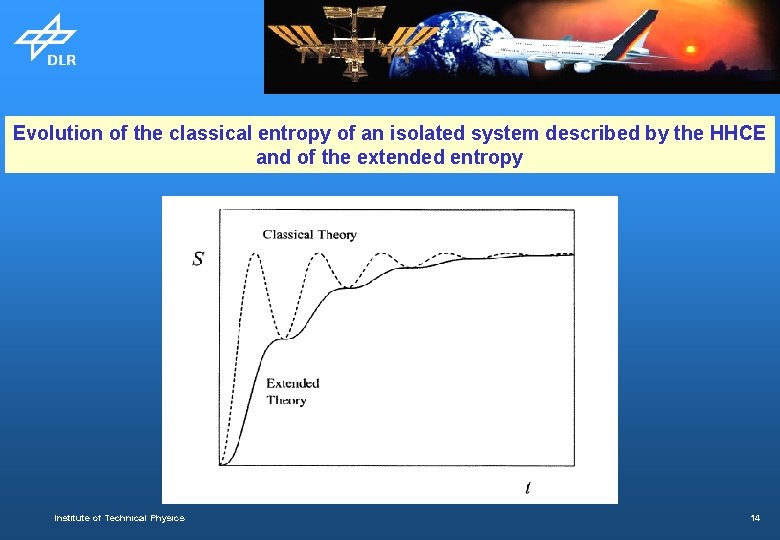
Evolution of the classical entropy of an isolated system described by the HHCE and of the extended entropy Institute of Technical Physics 14
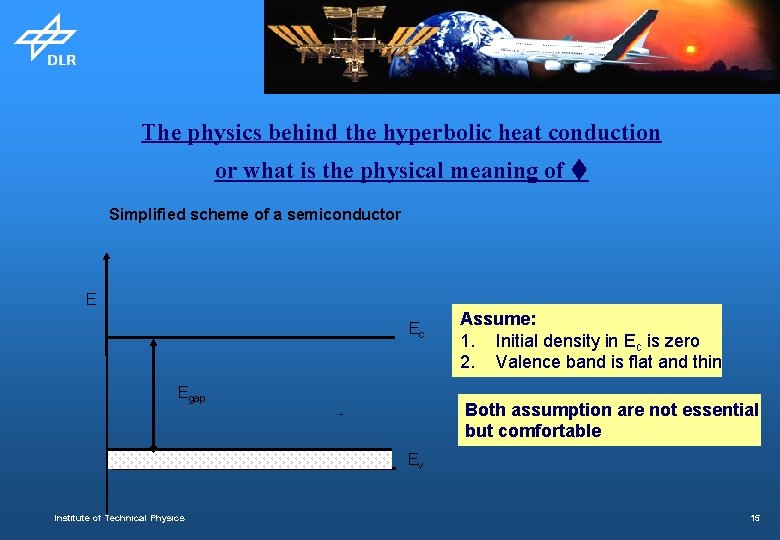
The physics behind the hyperbolic heat conduction or what is the physical meaning of Simplified scheme of a semiconductor E Ec Egap Assume: 1. Initial density in Ec is zero 2. Valence band is flat and thin Both assumption are not essential but comfortable Ev Institute of Technical Physics 15
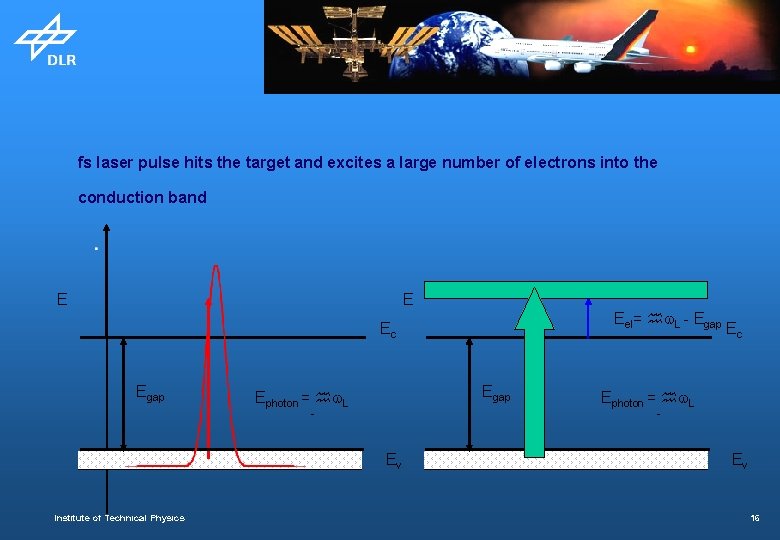
fs laser pulse hits the target and excites a large number of electrons into the conduction band E E Eel= L - Egap Ec Egap Ephoton = L Ev Institute of Technical Physics Ec Ephoton = L Ev 16
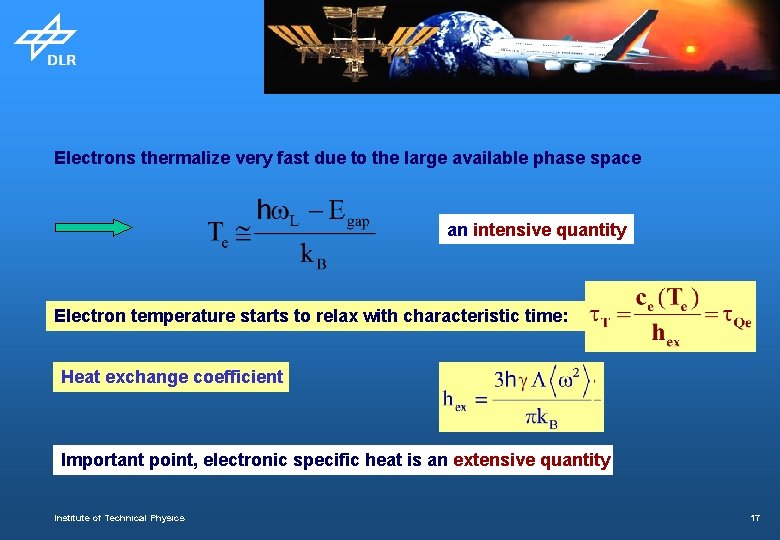
Electrons thermalize very fast due to the large available phase space an intensive quantity Electron temperature starts to relax with characteristic time: Heat exchange coefficient Important point, electronic specific heat is an extensive quantity Institute of Technical Physics 17
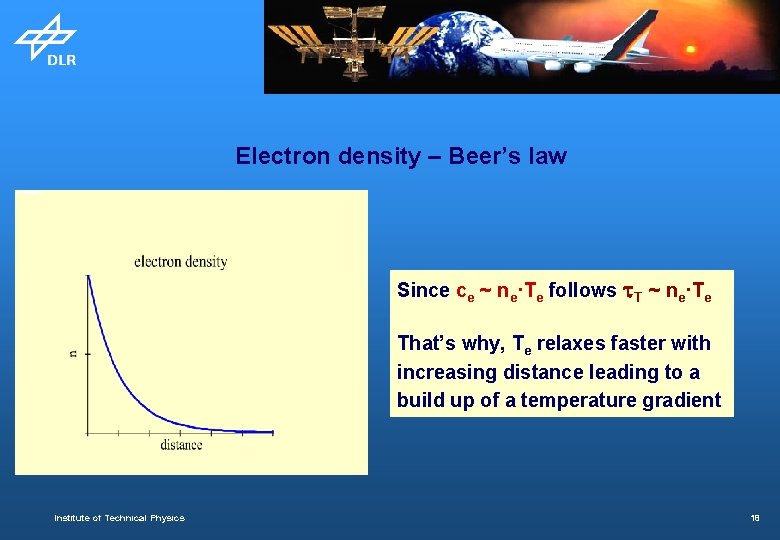
Electron density – Beer’s law Since ce ~ ne·Te follows T ~ ne·Te That’s why, Te relaxes faster with increasing distance leading to a build up of a temperature gradient Institute of Technical Physics 18
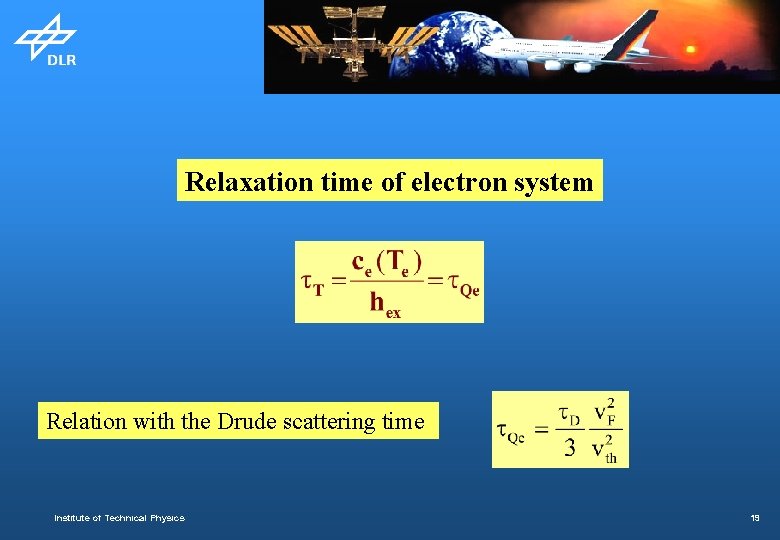
Relaxation time of electron system Relation with the Drude scattering time Institute of Technical Physics 19
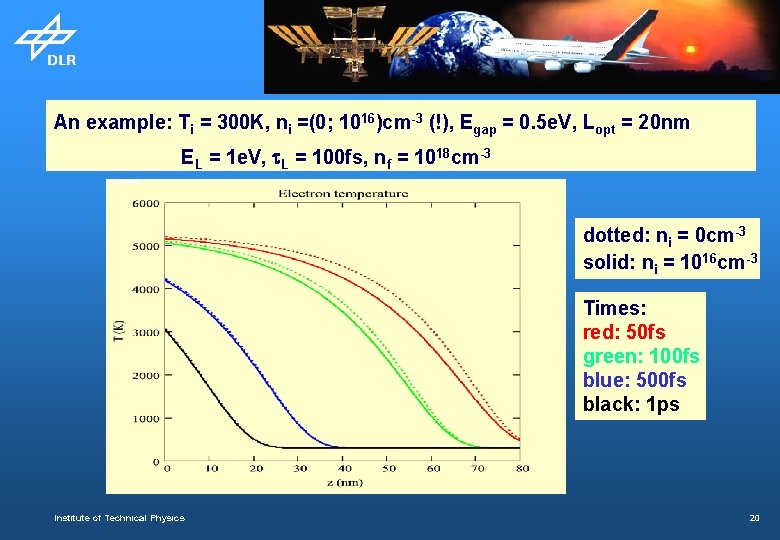
An example: Ti = 300 K, ni =(0; 1016)cm-3 (!), Egap = 0. 5 e. V, Lopt = 20 nm EL = 1 e. V, L = 100 fs, nf = 1018 cm-3 dotted: ni = 0 cm-3 solid: ni = 1016 cm-3 Times: red: 50 fs green: 100 fs blue: 500 fs black: 1 ps Institute of Technical Physics 20
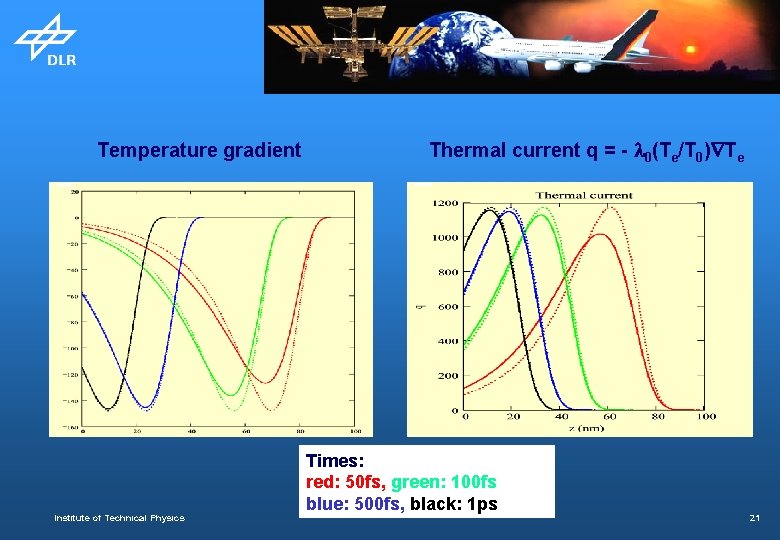
Temperature gradient Institute of Technical Physics Thermal current q = - 0(Te/T 0) Te Times: red: 50 fs, green: 100 fs blue: 500 fs, black: 1 ps 21

Institute of Technical Physics 22
- Slides: 22