
HyperbilirubinemiaIntoxication EncephalopathySyndrome Hubertus von Voss Munich Copyright H
Hyperbilirubinemia-Intoxication. Encephalopathy-Syndrome Hubertus von Voss, Munich Copyright H von Voss, Munich 2011
Thanks to • Mrs. Prof. Dr. Birgit Ertl – Wagner, Inst. for Clinical Radiology, Ludwig – Maximilians – University, Munich • Dr. Andreas Nickisch and • Mrs. Dr. Claudia Massinger, Kinderzentrum München Copyright von Voss H Copyright von Voss, 2010 Munich 2011 2

History of Kernikterus
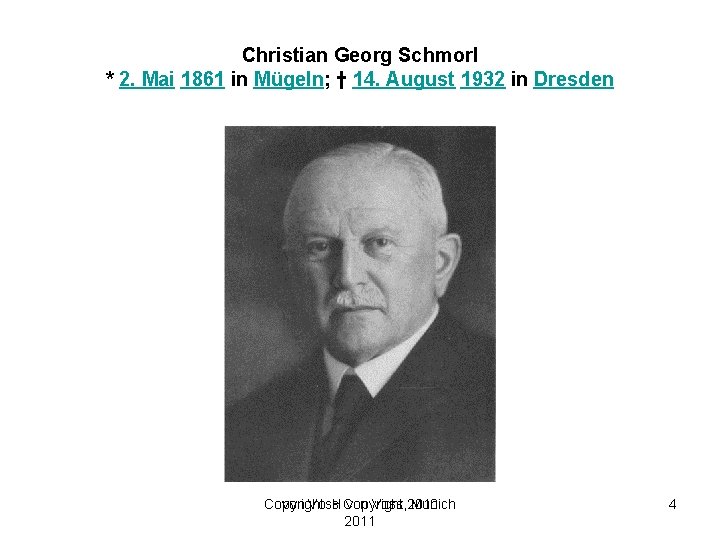
Christian Georg Schmorl * 2. Mai 1861 in Mügeln; † 14. August 1932 in Dresden Copyright von Voss H Copyright von Voss, 2010 Munich 2011 4
Christian Georg Schmorl Zur Kenntnis des Ikterus neonatorum, insbesondere der dabei auftretenden Gehirnveränderungen. Verh Dtsch Pathol Ges 6, 109 -115 (1904) Copyright von Voss H Copyright von Voss, 2010 Munich 2011 5
Own Literature 1. MR-findings in a patient with kernicterus Steinborn M, Seelos KG, Heuck A, von Voss H, Reiser M Eur. Radiol. 1999, 9, 1913 – 15 2. Pedaudiolgic findings after severe neonatal hyperbilirubinemia Nickisch A, Massinger C, Ertl – Wagner B, von Voss H Eur Arch Otorhinolaryngol. 2009, 266, 207 - 212 Copyright von Voss H Copyright von Voss, 2010 Munich 2011 6
Kernikterus The term of KERNIKTERUS had been defined at the beginning of the last century by investigations of died newborns. Nowadays we have to define the Kernikterus – Syndrome on the basis of metabolismus functions and magnetic – resonance performance Copyright von Voss H Copyright von Voss, 2010 Munich 2011 7
Part I Physiology and pathophysiology of bilirubin Copyright H von Voss, Munich 2011
Kernikterus Definition Yellow coloured regions in deep levels of the brain, especially basal ganglias: hippocampus, nucleus geniculatus, nuclei: nervus oculomotorius, vestibularis, abducens, cochlearis, formatio reticularis, cerebellum Copyright H von Voss, Munich 2011
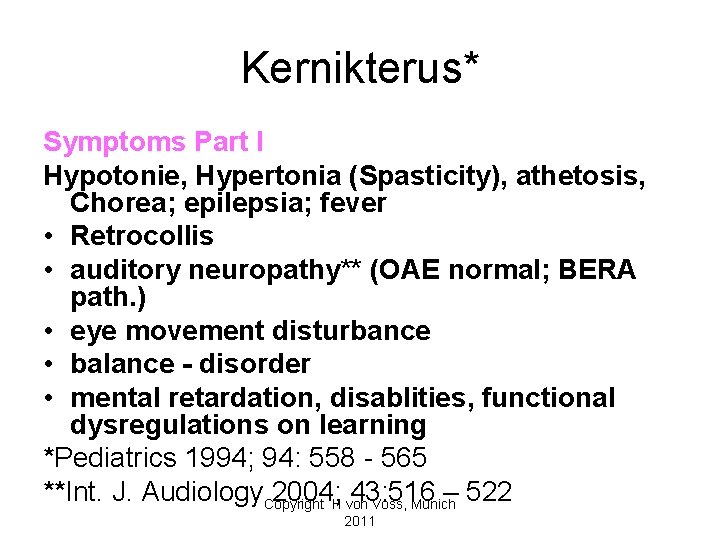
Kernikterus* Symptoms Part I Hypotonie, Hypertonia (Spasticity), athetosis, Chorea; epilepsia; fever • Retrocollis • auditory neuropathy** (OAE normal; BERA path. ) • eye movement disturbance • balance - disorder • mental retardation, disablities, functional dysregulations on learning *Pediatrics 1994; 94: 558 - 565 **Int. J. Audiology. Copyright 2004; H von 43: 516 – 522 Voss, Munich 2011
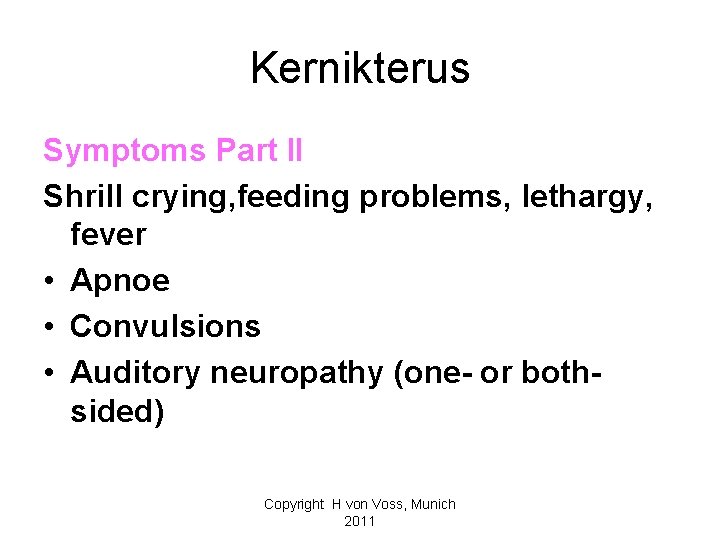
Kernikterus Symptoms Part II Shrill crying, feeding problems, lethargy, fever • Apnoe • Convulsions • Auditory neuropathy (one- or bothsided) Copyright H von Voss, Munich 2011
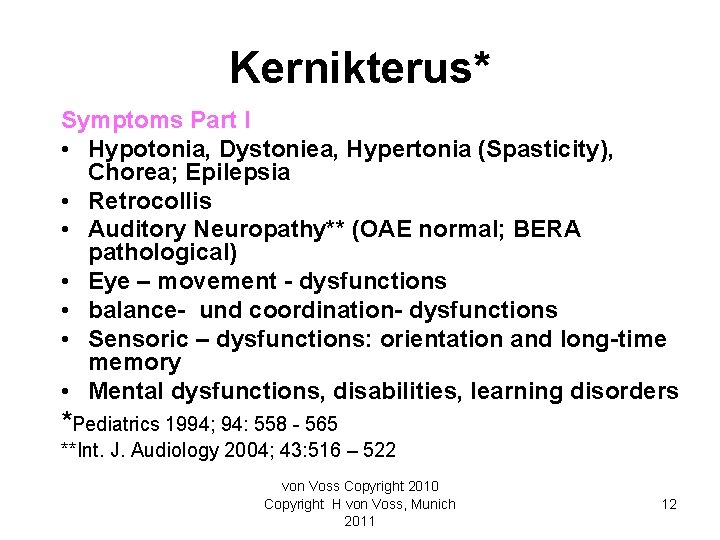
Kernikterus* Symptoms Part I • Hypotonia, Dystoniea, Hypertonia (Spasticity), Chorea; Epilepsia • Retrocollis • Auditory Neuropathy** (OAE normal; BERA pathological) • Eye – movement - dysfunctions • balance- und coordination- dysfunctions • Sensoric – dysfunctions: orientation and long-time memory • Mental dysfunctions, disabilities, learning disorders *Pediatrics 1994; 94: 558 - 565 **Int. J. Audiology 2004; 43: 516 – 522 von Voss Copyright 2010 Copyright H von Voss, Munich 2011 12
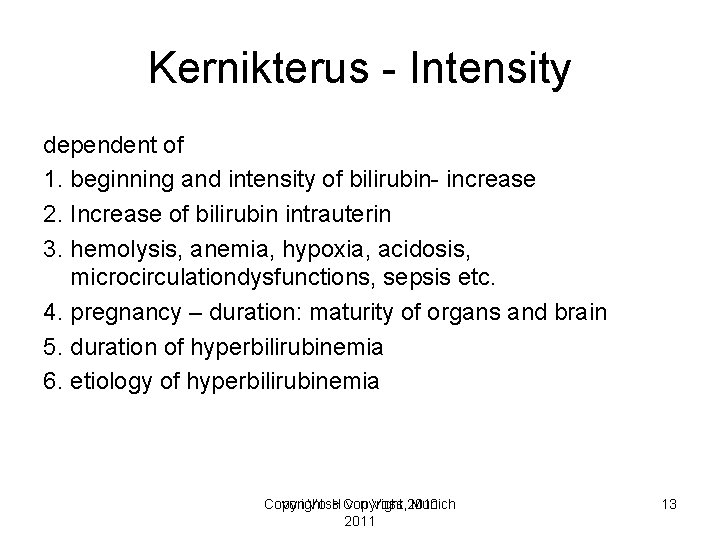
Kernikterus - Intensity dependent of 1. beginning and intensity of bilirubin- increase 2. Increase of bilirubin intrauterin 3. hemolysis, anemia, hypoxia, acidosis, microcirculationdysfunctions, sepsis etc. 4. pregnancy – duration: maturity of organs and brain 5. duration of hyperbilirubinemia 6. etiology of hyperbilirubinemia Copyright von Voss H Copyright von Voss, 2010 Munich 2011 13
Kernikterus Incidence 1. 7. 2003 bis 31. 12. 2004 11 patients (ESPED) Center for registration of rare diseases in Germany Copyright H von Voss, Munich 2011
Kernikterus Reasons late detection of hyperbilirubinemia and late dectection of risks along pregnancy American Academy of Pediatrics Vol 94, 4. Oktober 1994, Seite 558 - 565 Copyright H von Voss, Munich 2011
Hyperbilirubinemia physiological ikterus prevalence: 60% in all newborns physiological ikterus beginning early, duration maximum 8 days, maximal bilirubin on 5 th day, maximum to 17 mg/ dl in normal babys 1 mg bilirubin/ dl = 17, 1µmol/liter Copyright H von Voss, Munich 2011
Typs of hyperbilirubinemia • physiological ikterus: maximum 17 mg/dl • pathological ikterus - types Icterus praecox: ►Bilirubin more than 7 mg within first 24 life - hours, or >12 mg/dl within first 36 life-hours Ikterus gravis ► 20 mg/dl Ikterus prolongatus ► 14 Tage Emergency case !! ► 6 mg/dl in umbilical cord directly after birth Copyright H von Voss, Munich 2011
Hyperbilirubinemia - Kernikterus Risks refering to outpatient and home-deliveries + investigation of newborns under artifical (NEON) - lights. Geburten Copyright H von Voss, Munich 2011
BILIRUBIN Types lipophile fraktion of bilirubin = non conjugated bilirubin(indirect bilirubin) is toxic for newborns and especially preterms Characteristics penetrance to brain tissue. water soluble fraction of bilirubin = conjugated bilirubin which can be excreted by enzymatic functions of glukuronidase : excretion with the fluid of gall-bladder and urine. Albumin has capacities of binding the bilirubin but the capacity in newborns and especially preterms is not comparable to adults. Copyright H von Voss, Munich 2011
Causes for hyperbilirubinemia Part I isoimmunisation/ inkompatibilities rhesus, ABO and subgroups (antibodies of rhesussystem: C, c, D, d, E, e, Kell, Duffy…) feto – fetal and materno - fetal transfusion glucose – 6 – phopsphatdehydrogenase – deficiency(G 6 - PDH), thalassemia severe coagulation disorders and hemolysis Copyright H von Voss, Munich 2011
Causes for hyperbilirubinemia Part II Hypothyreosis Crigler – Najar Lucey – Driscoll Galaktosemia Cystic fibrosis alpha – 1 – antitrypsindeficiency Tyrosinosis Alagille- Syndrom biliare atresia: intra- and extrahepatic spherocytosis Copyright H von Voss, Munich 2011
Causes for Hyperbilirubinämie Part III intrauterine infections sepsis toxoplasmosís, rubeola, cytomegaly, herpes, syphilis (lues) starvation and thirst Copyright H von Voss, Munich 2011
Hyperbilirubinämie and preterms The risks for hyperbilirubinemia and following unwished side-effects increase especially in children with small for date premraturity, sick newborns and preterms with brain – bleeding and/ or sepsis. Indication for exchange transfusion and transfusion starts on bilirubin 18 mg% (310µmol/l or more) Copyright H von Voss, Munich 2011
Hyperbilirubinemia and preterms Phototherapy with blue light (460 nm): These lights can be used only time – limited Copyright H von Voss, Munich 2011
Early exchange transfusion • Umbilical cord - bilirubin 6 mg/dl and more • umbilicalcord - hemoglobin ◄ 12 g/dl (Hämatokrit ◄ 35%) • direct Coombstest very positive (rhesus – Inkompatibility) • postnatale bilirubin - increase ► 0, 5 mg/dl/ hour along for the first 48 life-hours Copyright H von Voss, Munich 2011
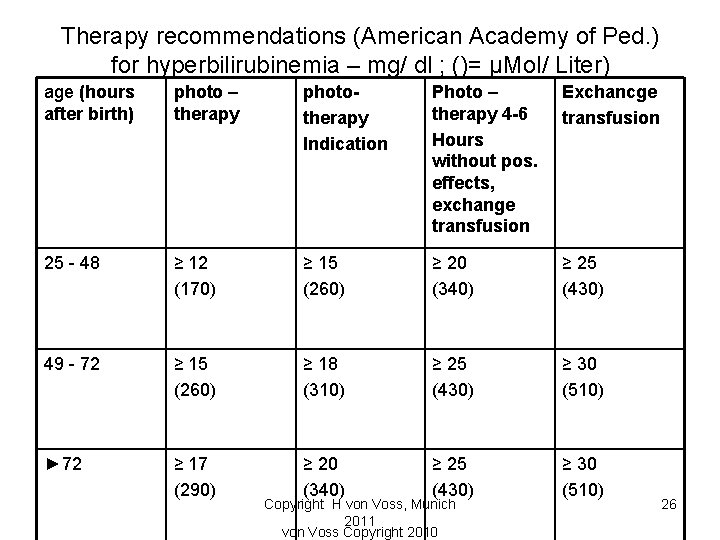
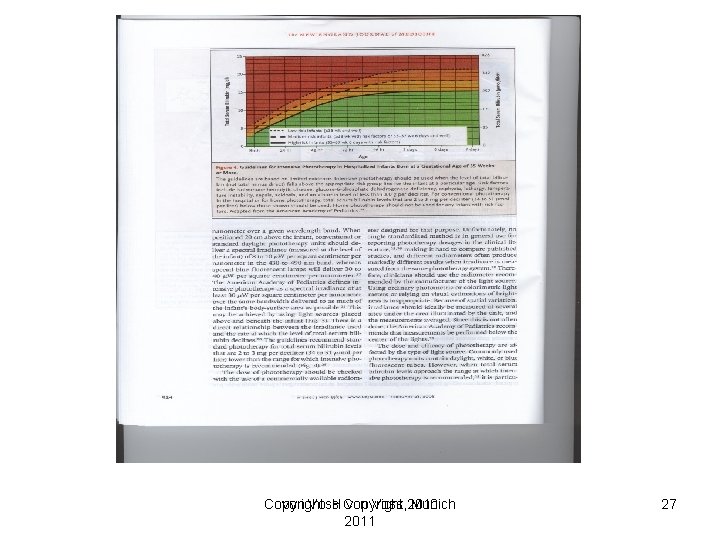
Therapy recommendations (American Academy of Ped. ) for hyperbilirubinemia – mg/ dl ; ()= µMol/ Liter) age (hours after birth) photo – therapy phototherapy Indication Photo – therapy 4 -6 Hours without pos. effects, exchange transfusion Exchancge transfusion 25 - 48 ≥ 12 (170) ≥ 15 (260) ≥ 20 (340) ≥ 25 (430) 49 - 72 ≥ 15 (260) ≥ 18 (310) ≥ 25 (430) ≥ 30 (510) ► 72 ≥ 17 (290) ≥ 20 (340) ≥ 25 (430) ≥ 30 (510) Copyright H von Voss, Munich 2011 von Voss Copyright 2010 26
Copyright von Voss H Copyright von Voss, 2010 Munich 2011 27
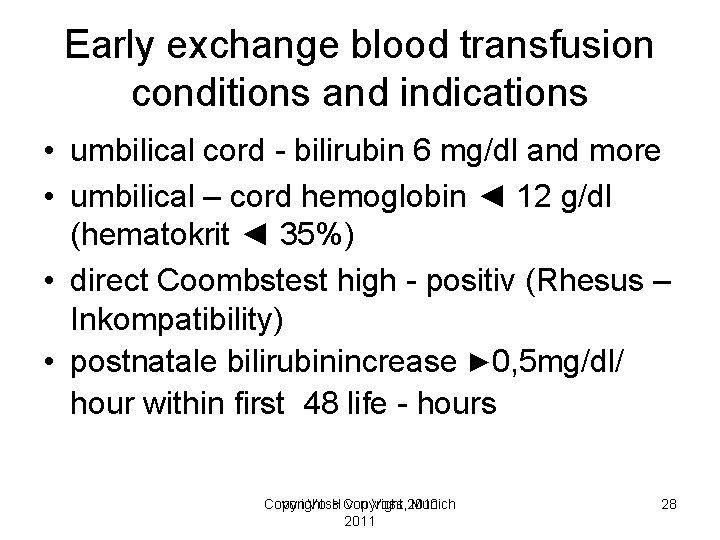
Early exchange blood transfusion conditions and indications • umbilical cord - bilirubin 6 mg/dl and more • umbilical – cord hemoglobin ◄ 12 g/dl (hematokrit ◄ 35%) • direct Coombstest high - positiv (Rhesus – Inkompatibility) • postnatale bilirubinincrease ▶ 0, 5 mg/dl/ hour within first 48 life - hours Copyright von Voss H Copyright von Voss, 2010 Munich 2011 28
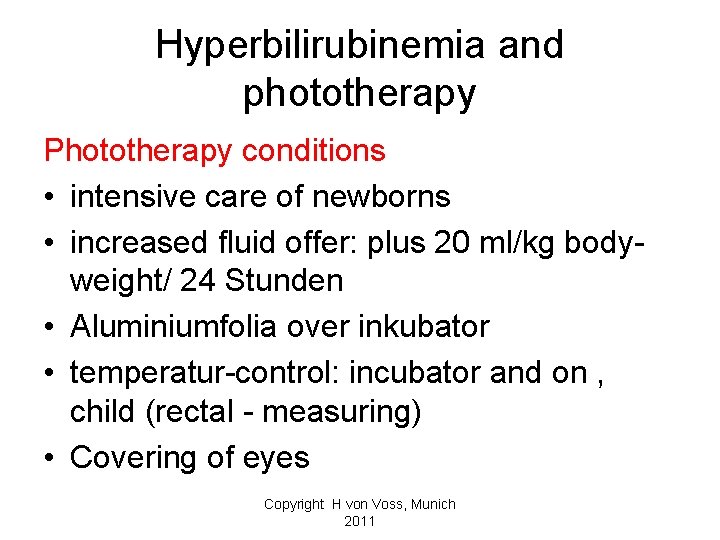
Hyperbilirubinemia and phototherapy Phototherapy conditions • intensive care of newborns • increased fluid offer: plus 20 ml/kg bodyweight/ 24 Stunden • Aluminiumfolia over inkubator • temperatur-control: incubator and on , child (rectal - measuring) • Covering of eyes Copyright H von Voss, Munich 2011
Part II Hyperbilirubinemia-Intoxication. Encephalopathy-Syndrome Copyright H von Voss, Munich 2011
Casus I Tim, now 11 years 4 th day of life: 31 mg % Bilirubin no exchange transfusion symptoms now: choreoathetosis, auditory neuropathy, learning disorder Copyright H von Voss, Munich 2011
Casus II Felix, now 17 years old along pregancy non identified rhesus incomaptibility BIRTH: hemoglobin 6 g%, bilirubin 9, 8 mg/dl acidosis p. H 6, 9; base – excess minus 19, Reanimation: hydrops congenitus symptoms now high intelligence (IQ ~130=, musician (guitarr), one siedes auditory neuropathy, epilepsia, loss of short-memory, severe orientation - disorder Copyright H von Voss, Munich 2011
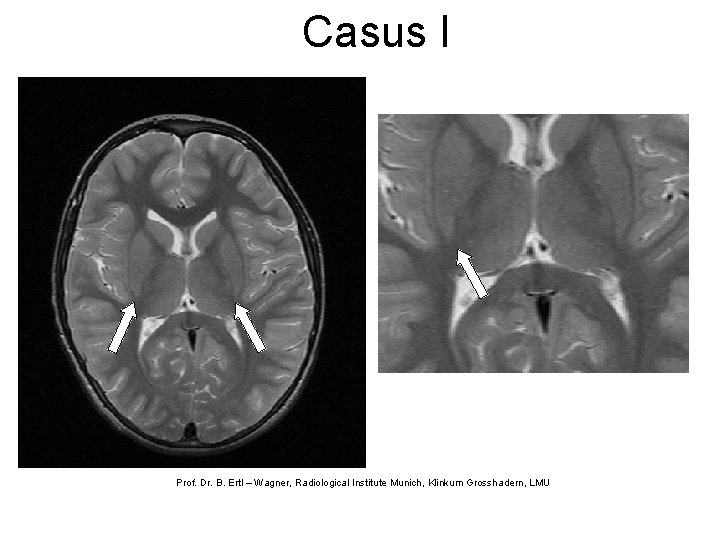
Casus I Prof. Dr. B. Ertl – Wagner, Radiological Institute Munich, Klinkum Grosshadern, LMU
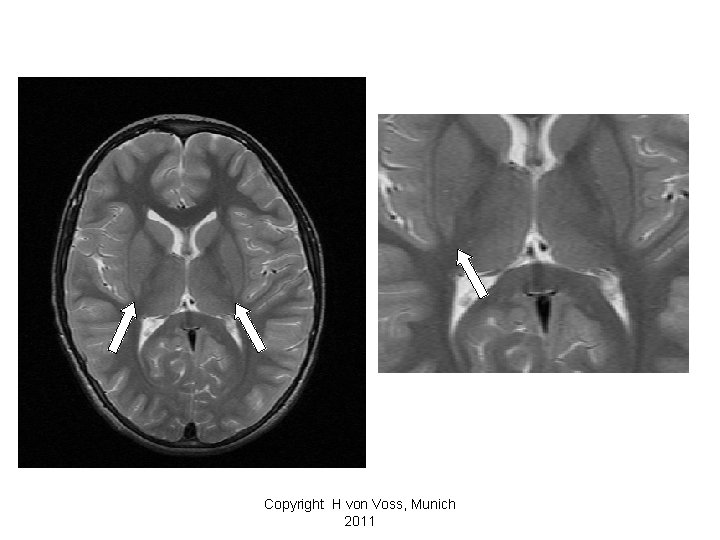
Copyright H von Voss, Munich 2011
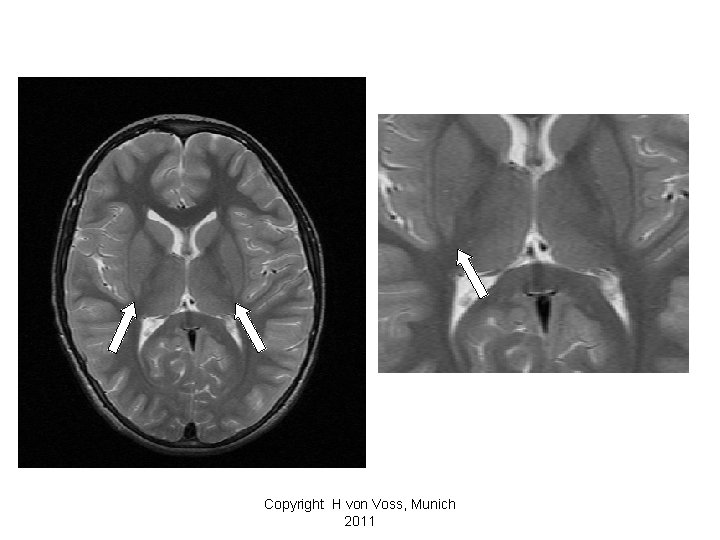
Copyright H von Voss, Munich 2011

Casus II Copyright H von Voss, Munich 2011
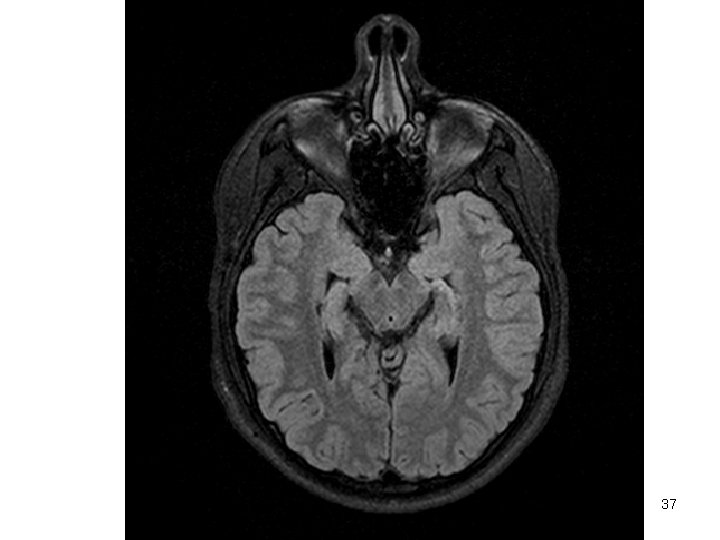
Copyright von Voss H Copyright von Voss, 2010 Munich 2011 37
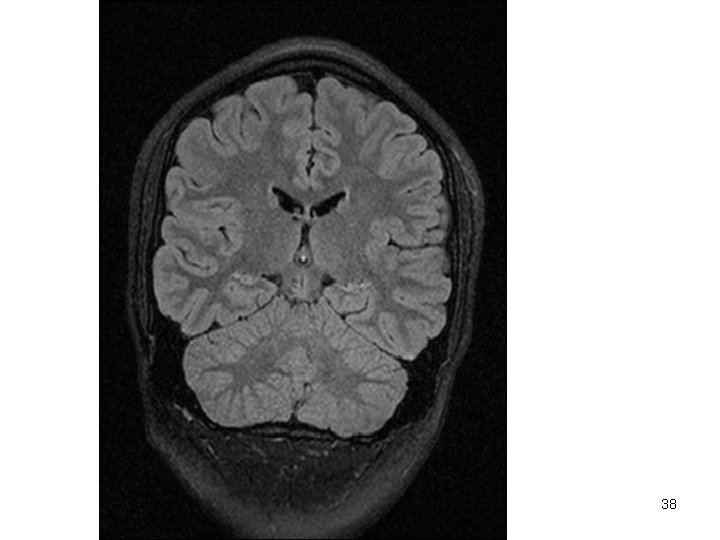
Copyright von Voss H Copyright von Voss, 2010 Munich 2011 38
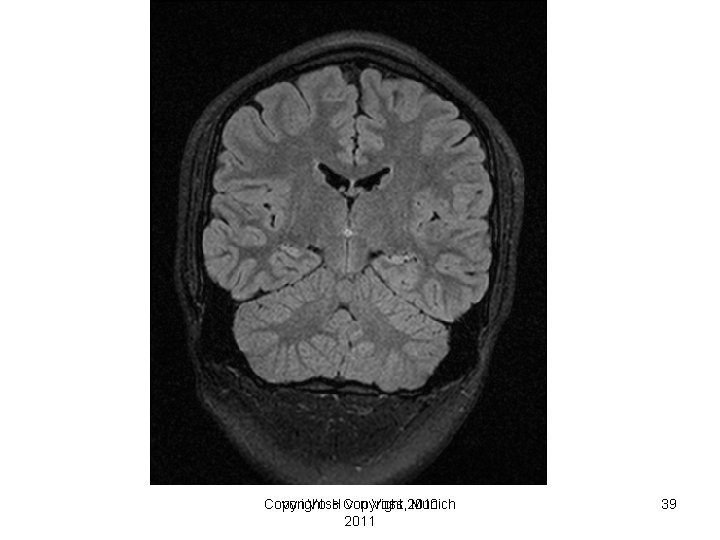
Copyright von Voss H Copyright von Voss, 2010 Munich 2011 39
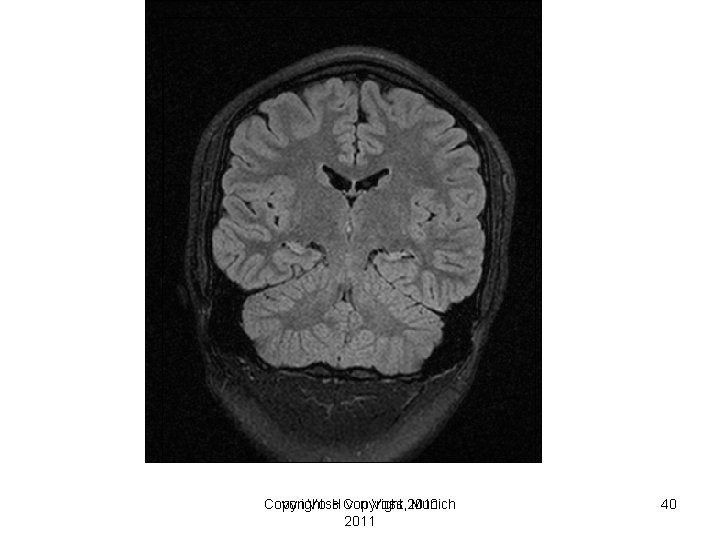
Copyright von Voss H Copyright von Voss, 2010 Munich 2011 40
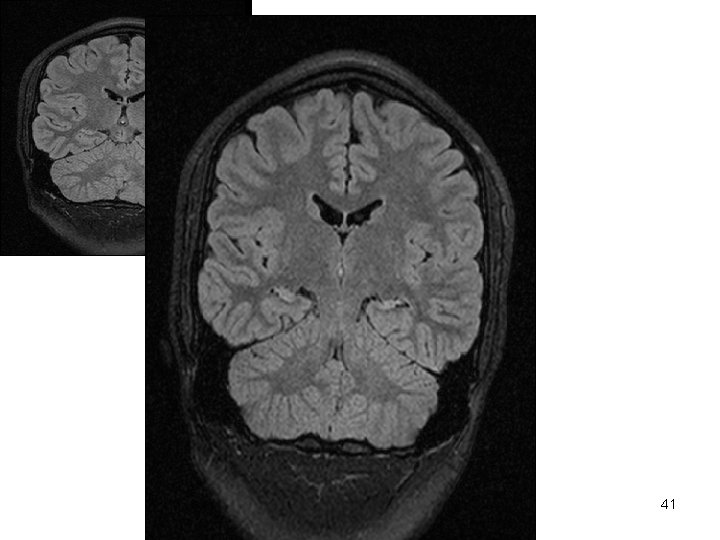
Copyright von Voss H Copyright von Voss, 2010 Munich 2011 41
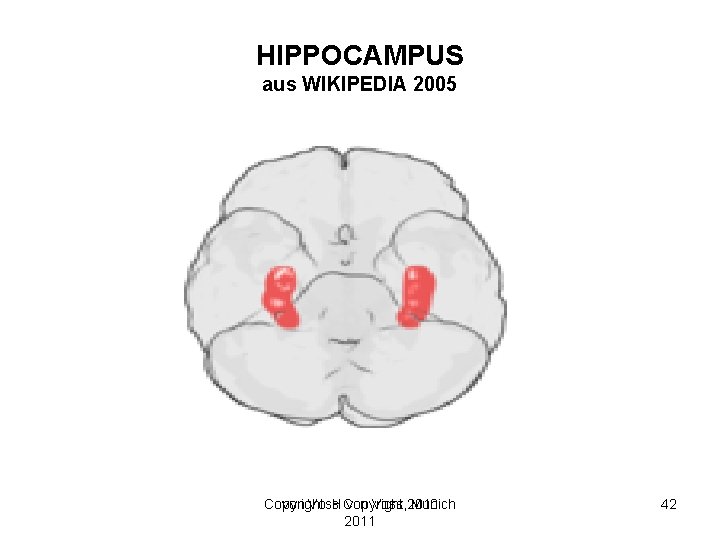
HIPPOCAMPUS aus WIKIPEDIA 2005 Copyright von Voss H Copyright von Voss, 2010 Munich 2011 42
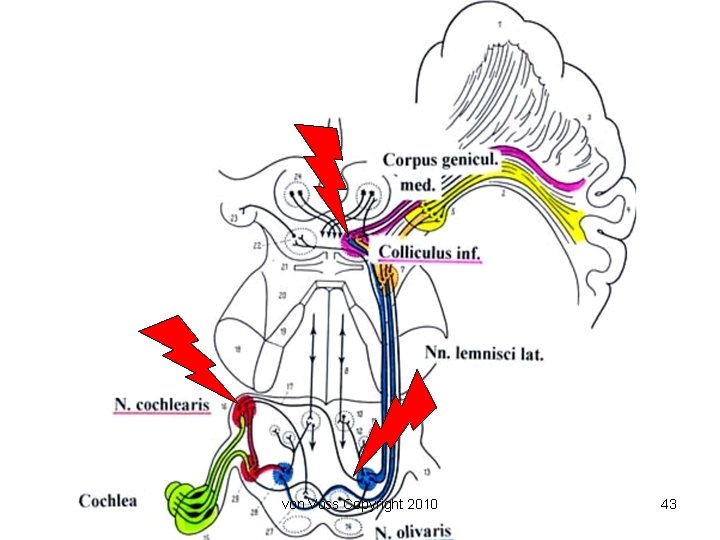
Copyright von Voss H Copyright von Voss, 2010 Munich 2011 43
HIPPOCAMPUS • Zum Hippocampus (= Teil des Telencephalons (Großhirn) gehören: ∎ Gyrus dentatus ∎ Cornu ammonis ∎ Subiculum Copyright von Voss H Copyright von Voss, 2010 Munich 2011 44
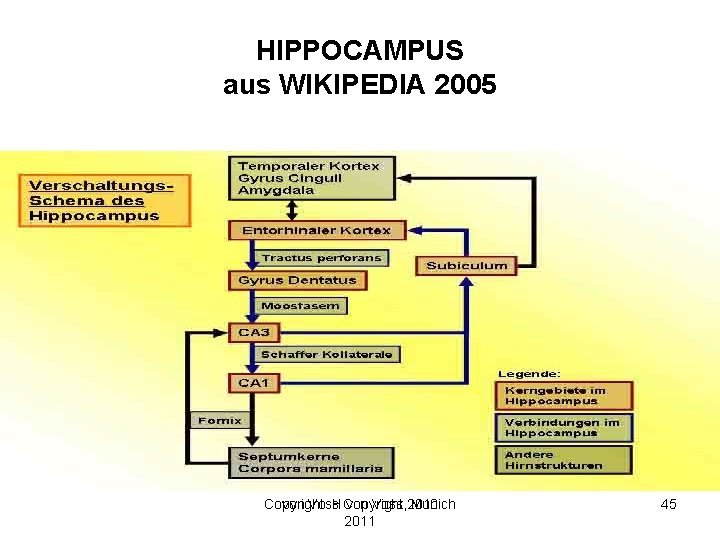
HIPPOCAMPUS aus WIKIPEDIA 2005 Copyright von Voss H Copyright von Voss, 2010 Munich 2011 45
Hippocampus - functions ∎ conduction of sensoric informations: Consolidation of memory, storage and transformation of short memory in parts of long-lasting memory ∎ orientation – abilities Copyright von Voss H Copyright von Voss, 2010 Munich 2011 46
Pedaudiological findings in children with Kernikterus- syndro. A. Nickisch, C. Massinger, H. von Voss Kinderzentrum München, Abteilung für Phoniatrie und Audiologie, Institut für Soziale Pädiatrie und Jugendmedizin der Ludwig-Maximilians-Universität München Copyright von Voss H Copyright von Voss, 2010 Munich 2011 47
Hyperbilirubinemia Bera unnormal in newborns Bilirubin ► 20 mg%: Latenzretardation (IPL III-V), mostly reversible after effective therapy (casus 2, 7, 18, 19) newborns mature bilirubin ► 24 mg% reversible (10) Copyright von Voss H Copyright von Voss, 2010 Munich 2011 48
Hyperbilirubinämia in newborns BERA- results - Bilirubin > 20 mg%: Latenz- retardation or missing results: 50% (9, 14) irreversible (7, 11) additiona. L neurological dysfunctions especially : choreoathetosis mental retardation(2, 6, 12, 14, 15) auditory Synapto-/Neuropathy (3, 14, 15) Bilirubinvalues are korrelating with the intensity of latence-reactions in BERA (2, 18, 20) Copyright von Voss H Copyright von Voss, 2010 Munich 2011 49
Hyperbilirubinemia in newborns auditory System shows early myelinisation, earlier than the motoric system Damage intensity depends on the time of bilirubin increase Perterms have a righ risk depending on Bilir. 20 -21 mg% (5) bzw. Bilir. von 12 -15 mg% (8, 15, 16, 17) Copyright von Voss H Copyright von Voss, 2010 Munich 2011 50
Results and recommendations Copyright H von Voss, Munich 2011
Which auditory results we find in children with Kernikterus-syndrome and hyperbilirubinemia >20 mg% within first days of life Copyright von Voss H Copyright von Voss, 2010 Munich 2011 52
patient - Group n = 15 children with Kernikterus (n=8) and/ or hyperbilirubinemia >20 mg% within first days of life (n=14) Control - group n = 15 children with hyperbilirubinämie 12, 5 -19, 5 mg% within first days of life (n=15) matched to pregnancy - duration Copyright von Voss H Copyright von Voss, 2010 Munich 2011 53
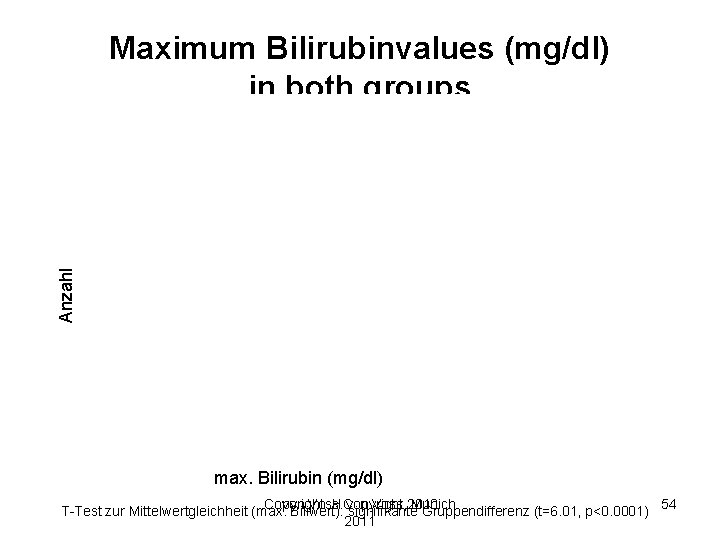
Anzahl Maximum Bilirubinvalues (mg/dl) in both groups max. Bilirubin (mg/dl) Copyright H Copyright von Voss, 2010 Munich von Voss 54 T-Test zur Mittelwertgleichheit (max. Biliwert): signifikante Gruppendifferenz (t=6. 01, p<0. 0001) 2011
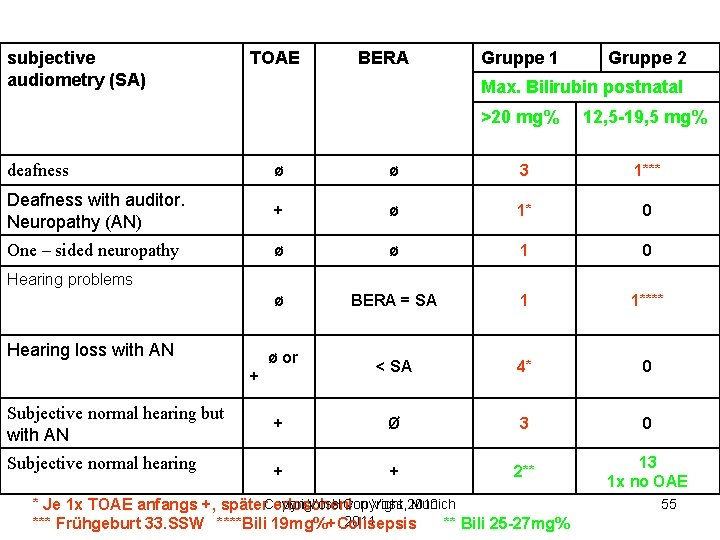
subjective audiometry (SA) TOAE BERA Gruppe 1 Gruppe 2 Max. Bilirubin postnatal >20 mg% 12, 5 -19, 5 mg% deafness ø ø 3 1*** Deafness with auditor. Neuropathy (AN) + ø 1* 0 One – sided neuropathy ø ø 1 0 ø BERA = SA 1 1**** < SA 4* 0 + Ø 3 0 + + 2** 13 1 x no OAE Hearing problems Hearing loss with AN ø or + Subjective normal hearing but with AN Subjective normal hearing von Voss H Copyright von Voss, 2010 Munich * Je 1 x TOAE anfangs +, später. Copyright erloschen! 2011 *** Frühgeburt 33. SSW ****Bili 19 mg%+Colisepsis ** Bili 25 -27 mg% 55
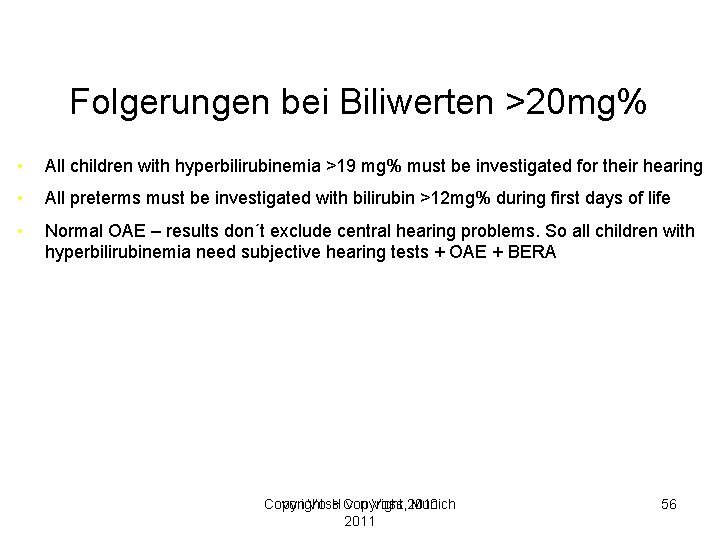
Folgerungen bei Biliwerten >20 mg% • All children with hyperbilirubinemia >19 mg% must be investigated for their hearing • All preterms must be investigated with bilirubin >12 mg% during first days of life • Normal OAE – results don´t exclude central hearing problems. So all children with hyperbilirubinemia need subjective hearing tests + OAE + BERA Copyright H Copyright von Voss, 2010 Munich von Voss 2011 56
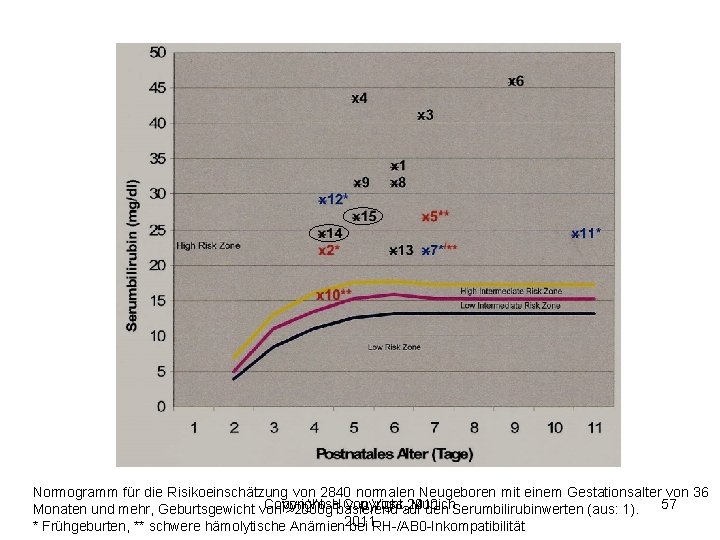
Normogramm für die Risikoeinschätzung von 2840 normalen Neugeboren mit einem Gestationsalter von 36 Copyright von Voss Hbasierend Copyright von Voss, auf 2010 Munich 57 Monaten und mehr, Geburtsgewicht von >2000 g den Serumbilirubinwerten (aus: 1). * Frühgeburten, ** schwere hämolytische Anämien 2011 bei RH-/AB 0 -Inkompatibilität
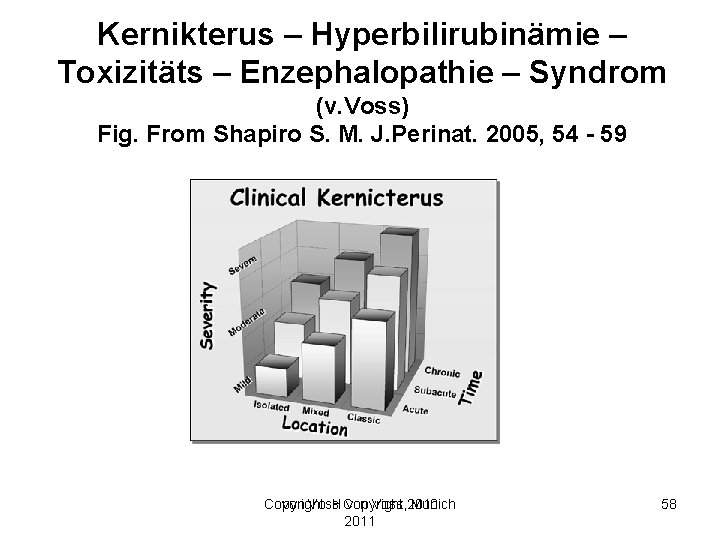
Kernikterus – Hyperbilirubinämie – Toxizitäts – Enzephalopathie – Syndrom (v. Voss) Fig. From Shapiro S. M. J. Perinat. 2005, 54 - 59 Copyright von Voss H Copyright von Voss, 2010 Munich 2011 58
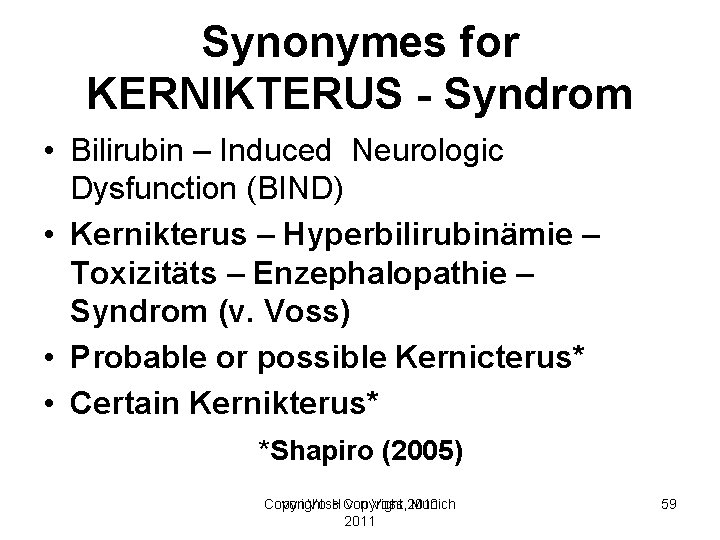
Synonymes for KERNIKTERUS - Syndrom • Bilirubin – Induced Neurologic Dysfunction (BIND) • Kernikterus – Hyperbilirubinämie – Toxizitäts – Enzephalopathie – Syndrom (v. Voss) • Probable or possible Kernicterus* • Certain Kernikterus* *Shapiro (2005) Copyright von Voss H Copyright von Voss, 2010 Munich 2011 59
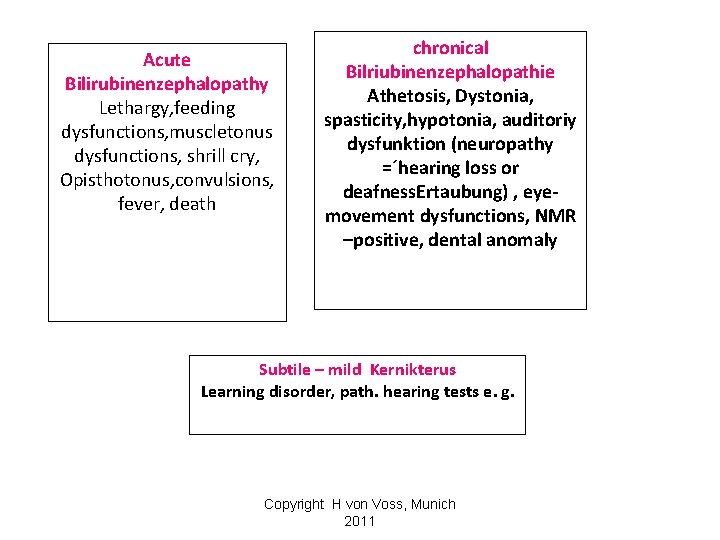
Acute Bilirubinenzephalopathy Lethargy, feeding dysfunctions, muscletonus dysfunctions, shrill cry, Opisthotonus, convulsions, fever, death chronical Bilriubinenzephalopathie Athetosis, Dystonia, spasticity, hypotonia, auditoriy dysfunktion (neuropathy =´hearing loss or deafness. Ertaubung) , eyemovement dysfunctions, NMR –positive, dental anomaly Subtile – mild Kernikterus Learning disorder, path. hearing tests e. g. Copyright H von Voss, Munich 2011

Thank you for invitation and your interest Copyright von Voss H Copyright von Voss, 2010 Munich 2011 61
- Slides: 61