
Hyper Inflation and the Dawes Plan Hyperinflation Abandoned
Hyper Inflation and the Dawes Plan
Hyperinflation �Abandoned gold standard 1914 Financed war with credit � 100% inflation, 1914 -1918 �Versailles hurt German ability to make money � 100% inflation January-May 1922 �Wealthy held money in stuf Real estate Gold Art Pianos
Hyperinflation �Currency has no inherent value like gold �Value based on faith �German’s lost faith in currency thus it lost value �Ordinary germans began holding wealth in stuff Watches Suits Shoes �German gov’t exacerbated problem by printing money
Ruhr Crisis, 1923 �France occupied Ruhr for non-payment of reparations �Sought to take payment in kind �Massive general strike and imprisonments �German gov’t printed more money to feed strikers �Over half of the government spending was financed by printing notes
Solution? �Ruhr crisis eased – futility of French position and foreign intervention �Rentenmark �Dawes Plan
Rentemark �“Secure mark” �Based on land, mortgage, industry- thus having value �Government poses limits on how much is made �November 15, 1923 the mark was stabilized at the rate of 1, 000, 000 paper marks for 1 gold mark
Miracle of the Rentenmark �People were desperate to believe in it �Partially backed by Dawes Plan Gov’t to gov’t loans Bank to bank loans US investment in German companies Readjust reparation payments
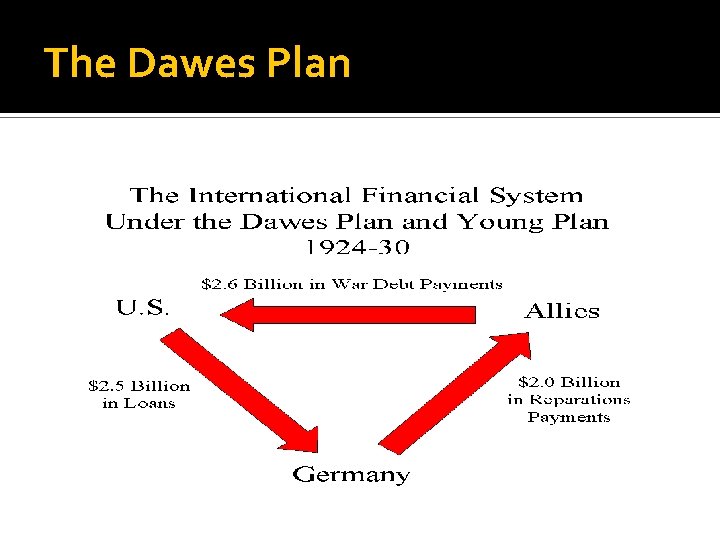
The Dawes Plan
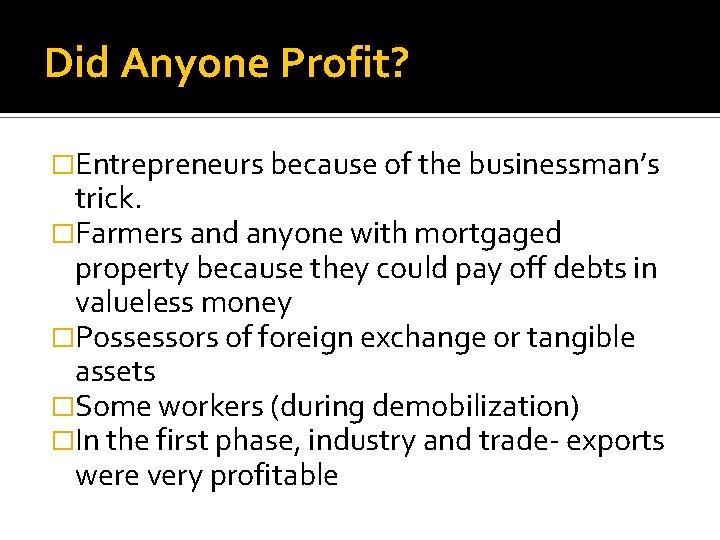
Did Anyone Profit? �Entrepreneurs because of the businessman’s trick. �Farmers and anyone with mortgaged property because they could pay off debts in valueless money �Possessors of foreign exchange or tangible assets �Some workers (during demobilization) �In the first phase, industry and trade- exports were very profitable
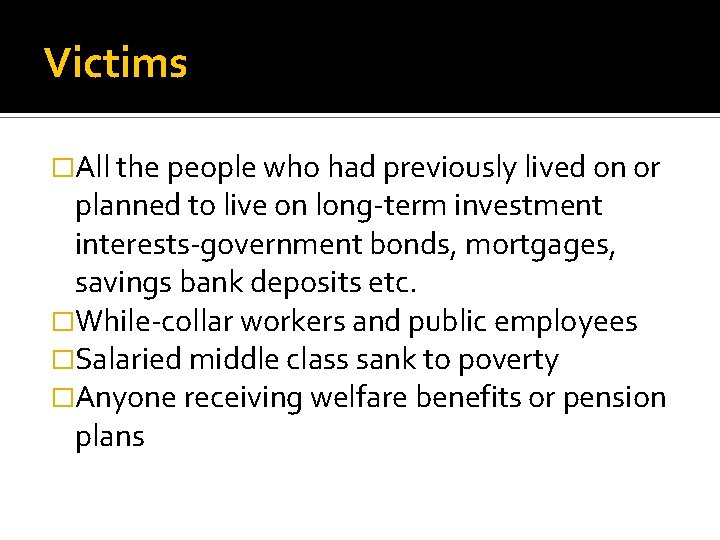
Victims �All the people who had previously lived on or planned to live on long-term investment interests-government bonds, mortgages, savings bank deposits etc. �While-collar workers and public employees �Salaried middle class sank to poverty �Anyone receiving welfare benefits or pension plans
- Slides: 10