
Hygiene in our home centre of our care










- Slides: 51
Hygiene in our home – centre of our care – a call for an integrated strategy Sally F Bloomfield International Scientific Forum on Home Hygiene, London School of Hygiene and Tropical Medicine Sept 2018 Hygiene Week, Denmark
Hygiene in home & everyday life • In March 2017, Hygiene in HEDL discussed by group of 25 experts (UK, Europe and US) at a meeting held at the Royal Society of Public Health, London, hosted by IFH. (Susanne and Lars) • Agreed to prepare a consensus paper summarising – why hygiene in home and everyday life is important – what needs to be done to change public attitudes to hygiene and their hygiene behaviour.
White paper on hygiene in home and everyday life The issues • Why is hygiene in HEDL important? • The human microbiome – vital role for human health Significant barriers to change which need to be overcome Proposing solutions • Targeted hygiene – a framework for addressing these issues Calls to action
Why is hygiene in home and everyday life important?
Why is hygiene in home and everyday life important? • Infectious disease circulating in the community - heavy burden on health and prosperity • Much preventable by good hygiene in homes and everyday lives – GI, RT, skin, eye infections • ID issues usually considered in isolation – only when looked at together the extent of hygiene preventable ID burden can be seen
RT & GI infections in the community • Often regarded as merely a “nuisance” - but – significant burden on economy - absence from work/school – serious/fatal for “at risk” groups • Common RT and IID mainly viral - not treatable by antibiotics, prevention through hygiene is key • • UK - 17 million cases of IID pa, 1 in 4 people Common cold - most frequent, infectious illness in humans.
ID risk in the community is increasing • Increasing “at risk” groups needing special care – Up to 1 in 5 people in the European community – Including - otherwise healthy - elderly, very young, pregnant – underlying disease: HIV/AIDS, diabetes • Increasing healthcare at home /in community – shorter hospital stays – home-based treatments: chemotherapy, dialysis etc – Much of healthcare is by family members who thus need good knowledge of hygiene
Emerging infections/ new strains • Prior to 1980 – Campylobacter, norovirus, Legionella, E. coli O 157 unheard of • Constant emergence of new strains. • Influenza “pandemic” strains • Health agencies regard hygiene as the first line of defense before other measures e. g vaccines can be put in place • Antibiotic resistant strains emerging & spreading in the community – Community MRSA strains – MDR G-ve
Antibiotic resistance & domestic hygiene • Antibiotic resistance is a global issue • Hygiene now seen as a central strategy to reducing AR alongside reduced prescribing/search for new antibiotics • Prevention through hygiene in HEDL: • reduces the need for antibiotic prescribing • Reduces “silent” spread of AR strains across community
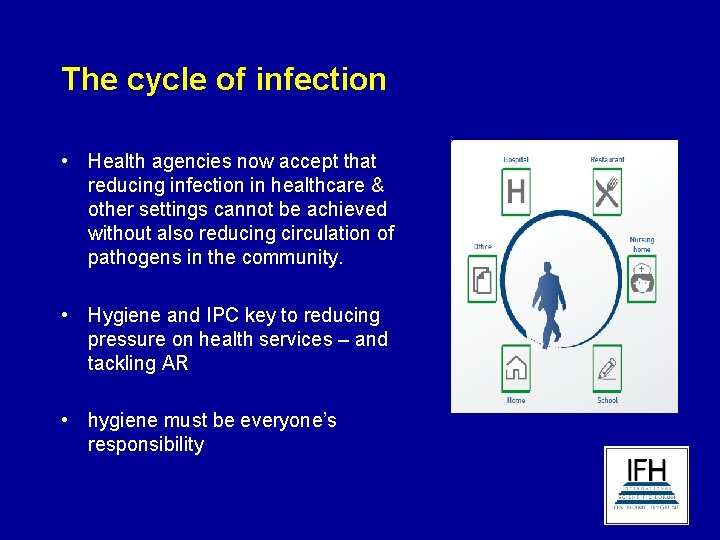
The cycle of infection • Health agencies now accept that reducing infection in healthcare & other settings cannot be achieved without also reducing circulation of pathogens in the community. • Hygiene and IPC key to reducing pressure on health services – and tackling AR • hygiene must be everyone’s responsibility
The human microbiome – bacteria are vital for human health
Why is the human microbiome vital for health? • Research now shows exposure to microbes is key, particularly in early life • Needed to build healthy, diverse human microbiota (gut, skin, RT etc) which in turn programmes immune system • Failure to sustain diverse microbiota associated with increasing range of diseases which have risen sharply in last 50 years: – Allergic/immune diseases – asthma, hay fever – autoimmune diseases (MS, type 1 diabetes, inflammatory bowel disease) – Other diseases -depression, obesity etc
What sort of microbes do we need exposure to? Which statement do you believe is true? Hygiene hypothesis 1989 – now largely discounted a) Children who have fewer infectious diseases are more prone to allergies etc Old Friends Mechanism 2003 b) Children deprived of exposure to “good bacteria” are more prone to allergies Research suggests that exposures we need are largely non harmful microbes (OFs) which inhabit our human, animal & natural world – diversity is key to programming the immune system NOT to react to allergens
Why have we lost exposure to vital microbes Which do you think are underlying cause/s? : • “being too clean” – living in over-sterile homes – Using too many antibacterial products etc Little supporting evidence (personal cleanliness? ) • Lifestyle changes: – – C-section – reduced exposure during delivery Bottle not breast feeding fewer siblings - reduced microbiota sharing Less outdoor activity Growing evidence to support this • Sustaining microbiome equally impt – diet and – Overuse of antibiotics
Addressing both issues? How do we address both issues - since at first sight they appear conflicting: – on one hand protecting against infectious diseases – on the other protecting against allergic & other diseases by sustaining exposure to OF microbes If exposure to infections is not needed to protect against allergies etc – this makes it easier
The public have become confused and distrustful about hygiene and hygiene issues.
People are sceptical about hygiene – Why is hygiene is still needed in our modern world – surely vaccines and antibiotics are enough • Infectious disease rarely starts at home – so home hygiene is not important • I don’t believe all this scaremongering about germs. If it’s as bad as they say – how come I am not sick all the time/still alive • We need exposure to harmful germs to keep our immune system strong
People don’t understand the difference between hygiene and cleanliness? Which statement do you think is correct? 1. Hygiene and cleanliness means the same thing i. e. keeping my home, myself & my family clean and free from dirt 2. Hygiene is more than just cleanliness. Its the cleaning and other things/actions we do to prevent spread of harmful microbes and stay healthy
People don’t understand the difference between hygiene and cleanliness? • Pilot study of 117 people - UK, DE, NL and US: • 70% said that hygiene was more than cleanliness – about health protection • 22% said hygienic and clean are the same thing • 8% said • clean meant cleaned with e. g detergent, • hygienic meant - treated with a disinfectant
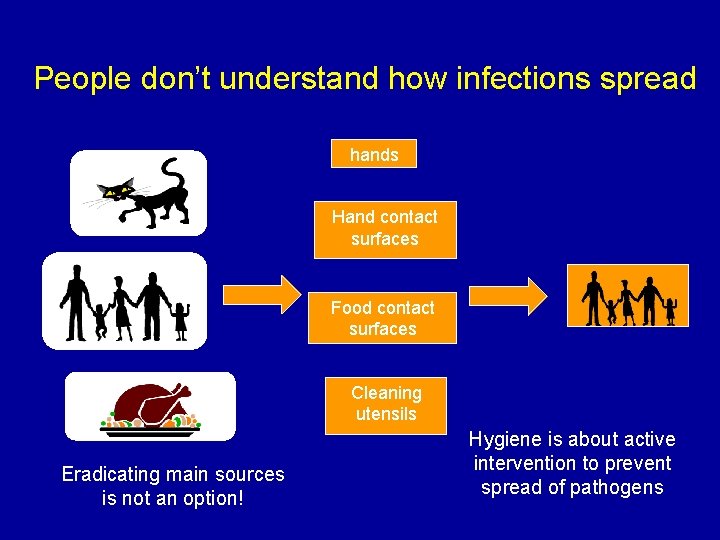
People don’t understand how infections spread Main sources of harmful microbes are places which are dirty: surfaces, floors, sinks, drains, toilets “By eliminating/ eradicating these sources through cleaning, my family is protected from infection” A clean surface is a surface free from harmful microbes.
People don’t understand how infections spread hands Hand contact surfaces Food contact surfaces Cleaning utensils Eradicating main sources is not an option! Hygiene is about active intervention to prevent spread of pathogens
People still believe the hygiene hypothesis red herring? We tend to believe • The microbe exposures we need are harmful microbes / children need exposure to infections • Thus – hygiene and cleanliness has caused the problem. • We have become too clean for our own good
Survey of UK and US media coverage • 36 media articles 1999 -2017 analyzed – 30/36 articles mentioned home or personal cleanliness as underlying cause of reduced microbe exposures. • From 2003 (i. e. OF mechanism proposed) – 15 articles prompted by “new” research showing “lifestyle factors” (C section, antibiotics etc) as underlying cause – 13 still mentioned “also home cleanliness” • But also – 64% cited antibacterials & hand sanitizers as contributory factor to reduced microbial exposure – In 14/23 articles this was quoted as an expert opinion
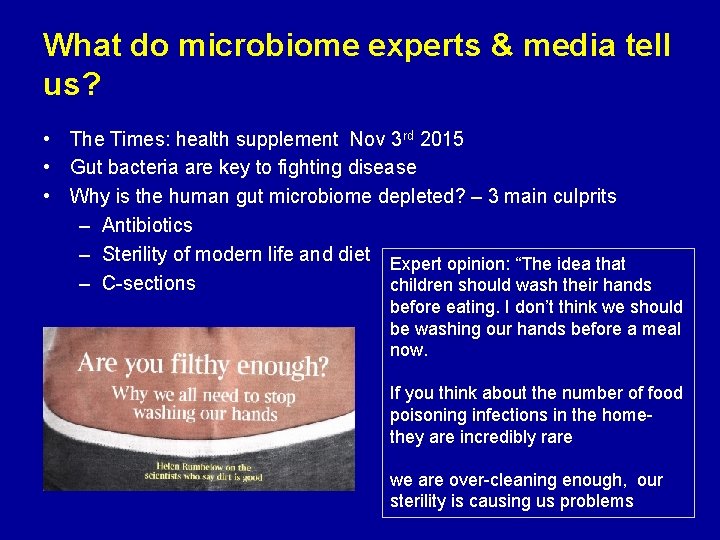
What do microbiome experts & media tell us? • The Times: health supplement Nov 3 rd 2015 • Gut bacteria are key to fighting disease • Why is the human gut microbiome depleted? – 3 main culprits – Antibiotics – Sterility of modern life and diet Expert opinion: “The idea that – C-sections children should wash their hands before eating. I don’t think we should be washing our hands before a meal now. If you think about the number of food poisoning infections in the home- they are incredibly rare we are over-cleaning enough, our sterility is causing us problems
Creating a balanced approach to hygiene issues
Need for a more balanced approach to hygiene vs sustainability issues • Sustainable use of resources is important • Hygiene involves use of – water, detergents, heat, disinfectants, mechanical action • How can we balance concerns about environment, toxicity, energy and water consumption etc against need to deliver effective hygiene • Lack of a unified voice advocating hygiene means e. g. environmental issues have tended to take precedence?
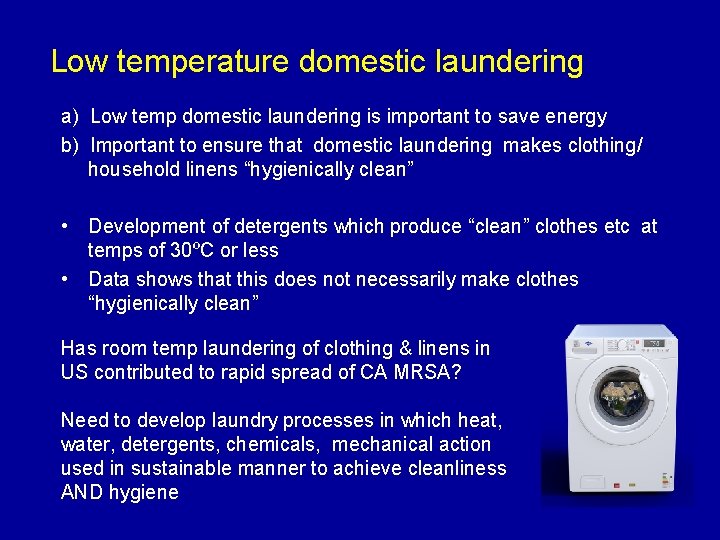
Low temperature domestic laundering a) Low temp domestic laundering is important to save energy b) Important to ensure that domestic laundering makes clothing/ household linens “hygienically clean” • Development of detergents which produce “clean” clothes etc at temps of 30ºC or less • Data shows that this does not necessarily make clothes “hygienically clean” Has room temp laundering of clothing & linens in US contributed to rapid spread of CA MRSA? Need to develop laundry processes in which heat, water, detergents, chemicals, mechanical action used in sustainable manner to achieve cleanliness AND hygiene
Is domestic use of disinfectant/ antibacterials an underlying cause of antibiotic resistance? • Lab tests show - exposing bacterial populations to disinfectants/ antibacterials can lead to reduced susceptibility to antibiotics • AR demonstrated in lab studies is “reduced susceptibility” not “resistance” No good evidence that domestic use of disinfectants is a cause of rise in AR in clinical practice As yet!
Survey of UK & US media coverage 1997 to 2017 • 23 media articles (1997 - 2017) + consumer feedback • Reflect opposition to disinfectants because of concern about AR. “Antibiotic resistance linked to common household disinfectant “. “Biocidal cleaning products linked to multidrug resistance in MRSA” “Soaps that fight germs may help to create superbugs” “Antibacterial cleaners are creating new super bugs” “Common disinfectant could breed superbugs”
A need to go back to basic principles? • To break chain of infection - need to ensure hygiene procedures are effective • Is it correct “hot soapy water is all you need”? • Strong evidence that soap & water can spread microbes – in some situations disinfectants needed: – Food hygiene: soap and water cleaning spreads campylobacter to hands and surfaces – Wiping surfaces contaminated with norovirus spreads virus to hands, cloths & other surfaces
Could disinfectant use help combat antibiotic resistance? • Indiscriminate use of antibacterial cleaning products unacceptable – but • Targeted disinfectant use could contribute to reducing antibiotic resistance by – Reducing need for antibiotic prescribing – Reducing spread of AR strains
Overcoming barriers to change Changing public attitudes: • We will have limited success in changing hygiene behaviour - unless and until we resolve public misunderstandings about hygiene and cleanliness Getting hygiene stakeholders to work together: • • How do we protect against ID whilst at same time protecting against allergic & other diseases by sustaining exposure to OF microbes How do we balance need for hygiene against competing/ conflicting issues – environment, antibiotic resistance.
Looking for solutions
Targeted hygiene - a framework for developing, promoting hygiene • IFH together with partners has been developing this approach to hygiene in the home and community since 1997 • Based on risk management - standard approach used in food and pharmaceuticals etc manufacturing
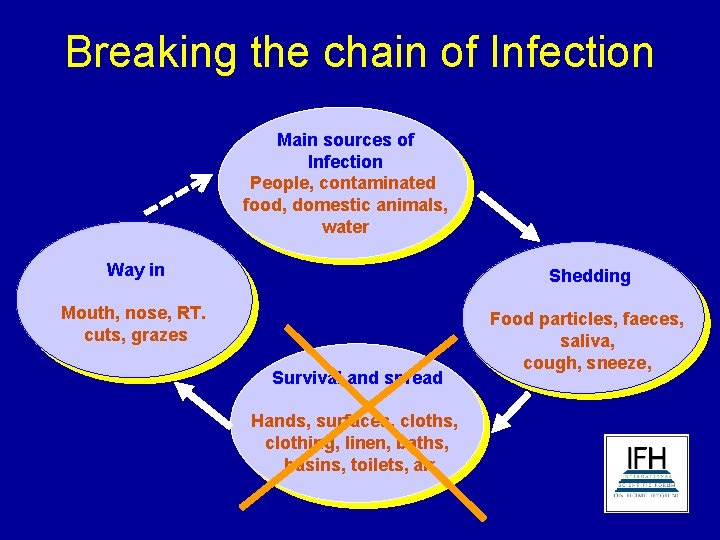
Breaking the chain of Infection Main sources of Infection People, contaminated food, domestic animals, water Way in Shedding Mouth, nose, RT. cuts, grazes Food particles, faeces, saliva, cough, sneeze, Survival and spread Hands, surfaces, clothing, linen, baths, basins, toilets, air
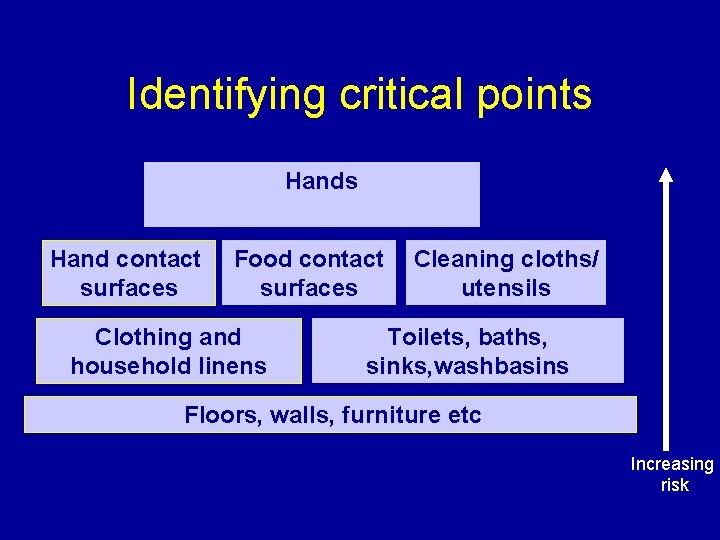
Identifying critical points Hands Hand contact surfaces Food contact Cleaning cloths/ surfaces utensils Clothing and household linens Toilets, baths, sinks, washbasins Floors, walls, furniture etc Increasing risk
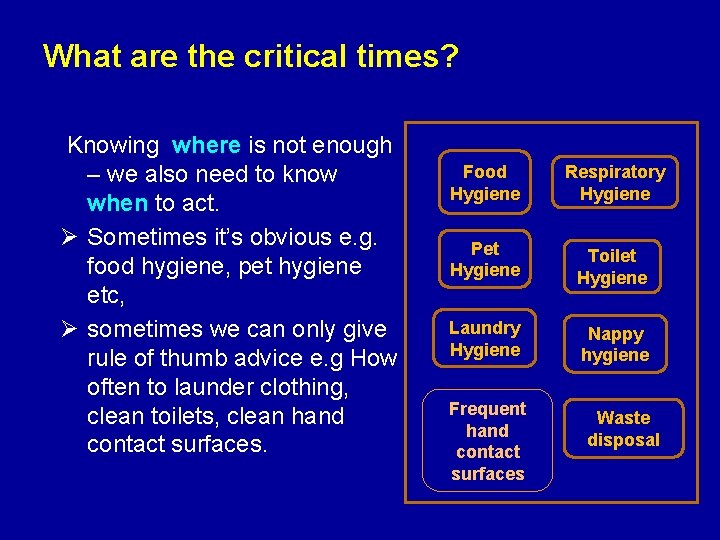
What are the critical times? Knowing where is not enough – we also need to know when to act. Ø Sometimes it’s obvious e. g. food hygiene, pet hygiene etc, Ø sometimes we can only give rule of thumb advice e. g How often to launder clothing, clean toilets, clean hand contact surfaces. Food Hygiene Respiratory Hygiene Pet Hygiene Toilet Hygiene Laundry Hygiene Nappy hygiene Frequent hand contact surfaces Waste disposal
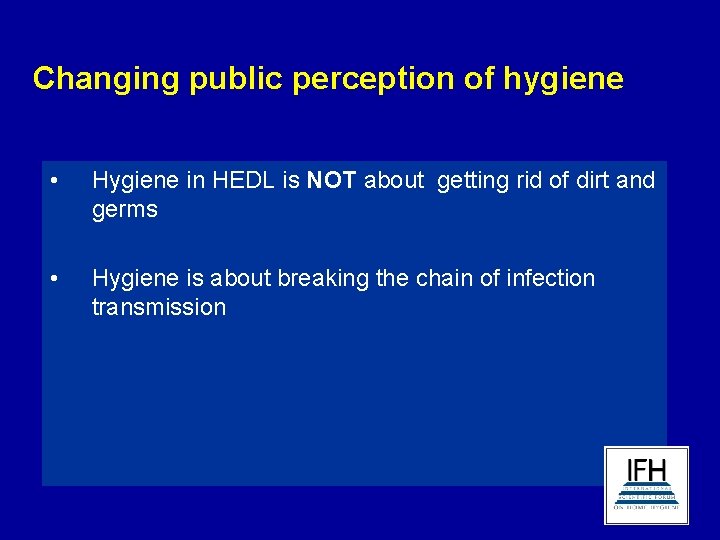
Changing public perception of hygiene • Hygiene in HEDL is NOT about getting rid of dirt and germs • Hygiene is about breaking the chain of infection transmission
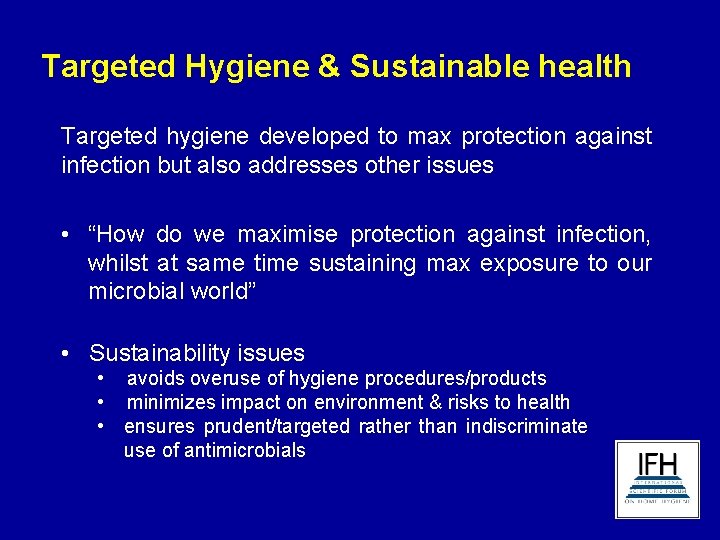
Targeted Hygiene & Sustainable health Targeted hygiene developed to max protection against infection but also addresses other issues • “How do we maximise protection against infection, whilst at same time sustaining max exposure to our microbial world” • Sustainability issues • avoids overuse of hygiene procedures/products • minimizes impact on environment & risks to health • ensures prudent/targeted rather than indiscriminate use of antimicrobials
Calls to action
1. Effective leadership for change – Although current investment in hygiene promotion provides a platform for change – strategies need to be integrated rather than developed independently – Developing an integrated approach requires effective leadership
2. Barriers to change : public attitudes & behaviour • Unless & until we resolve confusion about protecting against infection and sustaining exposure to vital microbes - we will not change hygiene behaviour • The public need – clear restatement of the importance of hygiene and what it is – a simple, plausible approach to hygiene based on breaking the chain of infection (targeted hygiene)
3. Barriers to change : the need for a common approach. Importance of hygiene must be given due recognition, relative to other issues • Scientists/ professionals/industry/ allergists, environmentalists, regulators, media need to – agree common approach – Stop ignoring evidence & embracing misinformation to downplay or exploit hygiene in favour of other agendas – Ensure consistent clear messaging to public
4. The need for a stronger evidence base for HEDL hygiene. • Lobbying for an effective approach to hygiene requires strong evidence base • Scientific framework for delivering effective hygiene needs strengthening through collaborative research by academia and the private sector.
White paper released October 17 th • Addresses key issues • Evidence base • Calls to action • Obtainable from: • www. ifh-homehygiene. org • www. rsph. org, uk
Additional slides
A gut transplant could give you a gut microbiome like Brad Pitt – buy now! • Could be a powerful way to motivate hygiene behaviour change? • I don’t want to upset my new gut microbiome so – I want to avoid getting infections – I want to avoid taking antibiotics – So – I am going to adopt good hygiene • Hygiene becomes part of a healthy lifestyle
Perhaps as the understanding of the human ecosystem and its evolved requirements increases, and targeted hygiene is developed that does not exclude essential organisms, human beings will learn to modulate our microbial exposures in ways that reduce developmental, inflammatory, and infectious disorders with less reliance on anti-inflammatory treatments, antibiotics, and vaccines.
“we are too clean for our own good” mantra is still being repeated • “Is our cleanliness zeal making us ill? ” – The Times 2008 • How DIRT can protect you against cancer – Daily Mail 2008 • Hypercleanliness may be making us sick – Washington Post 2013 • Ultra-clean homes could trigger childhood leukaemia – Telegraph 2018
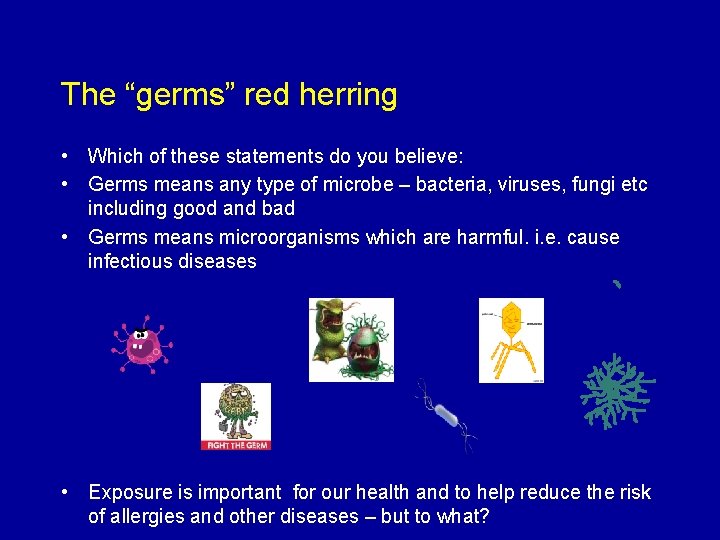
The “germs” red herring • Which of these statements do you believe: • Germs means any type of microbe – bacteria, viruses, fungi etc including good and bad • Germs means microorganisms which are harmful. i. e. cause infectious diseases • Exposure is important for our health and to help reduce the risk of allergies and other diseases – but to what?
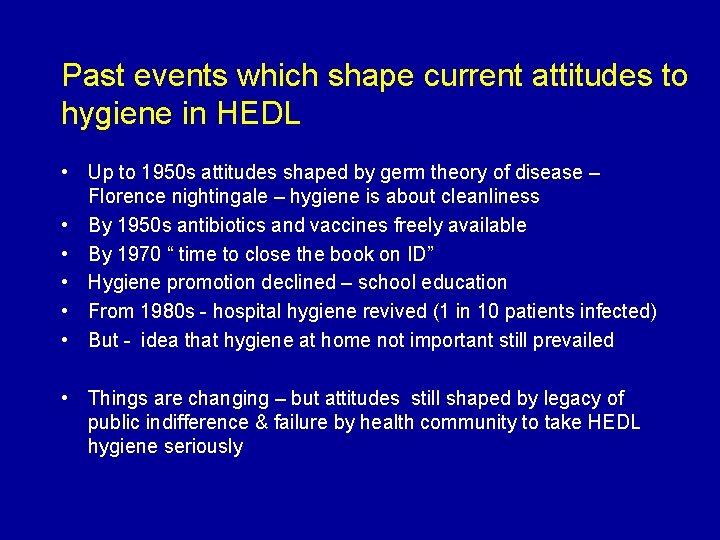
Past events which shape current attitudes to hygiene in HEDL • Up to 1950 s attitudes shaped by germ theory of disease – Florence nightingale – hygiene is about cleanliness • By 1950 s antibiotics and vaccines freely available • By 1970 “ time to close the book on ID” • Hygiene promotion declined – school education • From 1980 s - hospital hygiene revived (1 in 10 patients infected) • But - idea that hygiene at home not important still prevailed • Things are changing – but attitudes still shaped by legacy of public indifference & failure by health community to take HEDL hygiene seriously