
Hygiene In early Victorian times hospitals were very
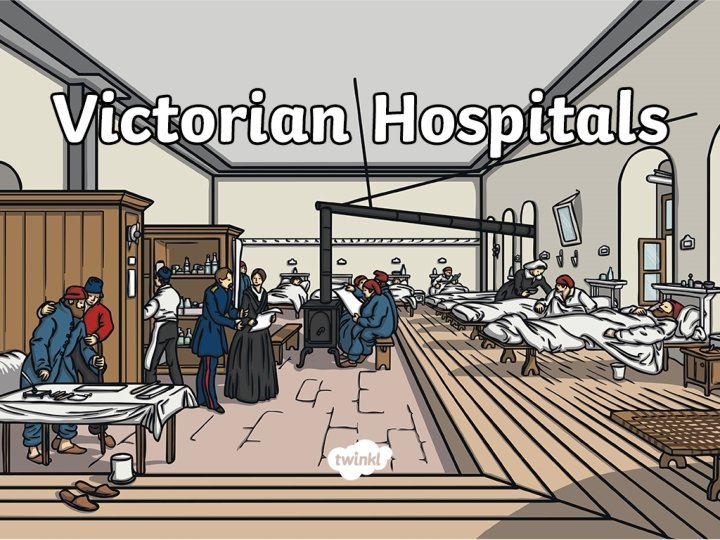
- Slides: 12
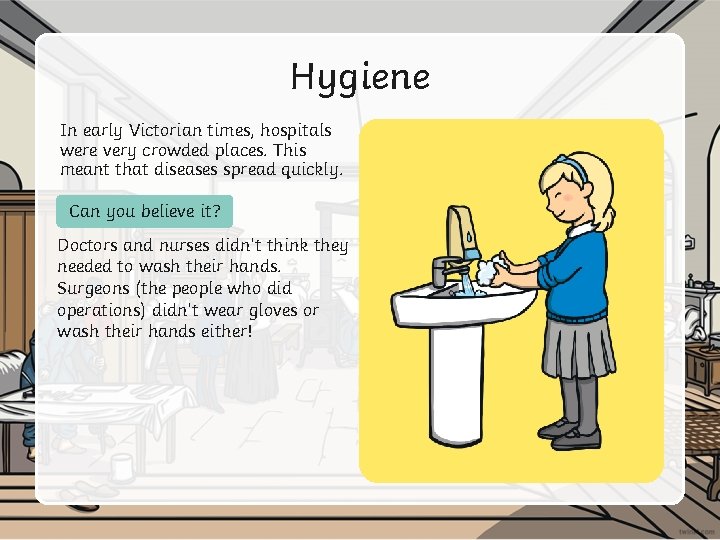
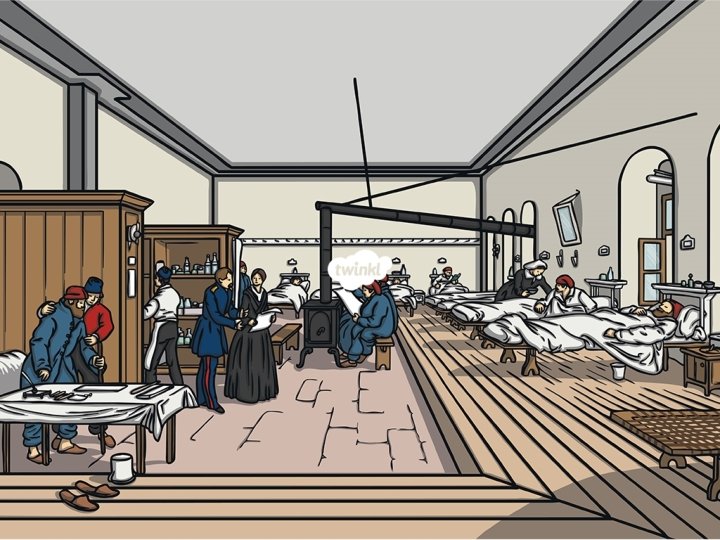
Hygiene In early Victorian times, hospitals were very crowded places. This meant that diseases spread quickly. Can you believe it? Doctors and nurses didn’t think they needed to wash their hands. Surgeons (the people who did operations) didn’t wear gloves or wash their hands either!
Medicine At the start of the Victorian times, doctors didn’t have much choice in medicines. They often used herbs to try to cure illnesses. Doctors also found it difficult to work out what a patient was suffering from. New medicines, such as anaesthetic and antiseptic, were discovered in the Victorian times. Anaesthetic Antiseptic This medicine is given to a patient to stop them feeling pain in an operation. This is used for cleaning wounds to stop infections. Before this, many patients died when their wounds got infected because hospitals were dirty.
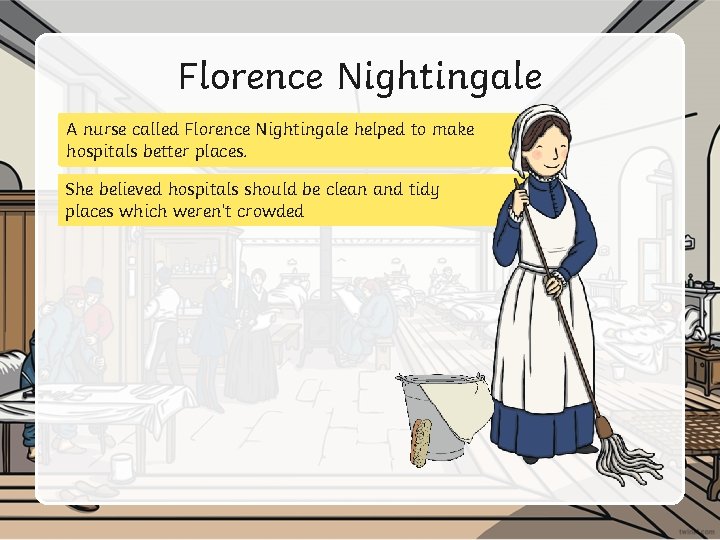
Florence Nightingale A nurse called Florence Nightingale helped to make hospitals better places. She believed hospitals should be clean and tidy places which weren’t crowded
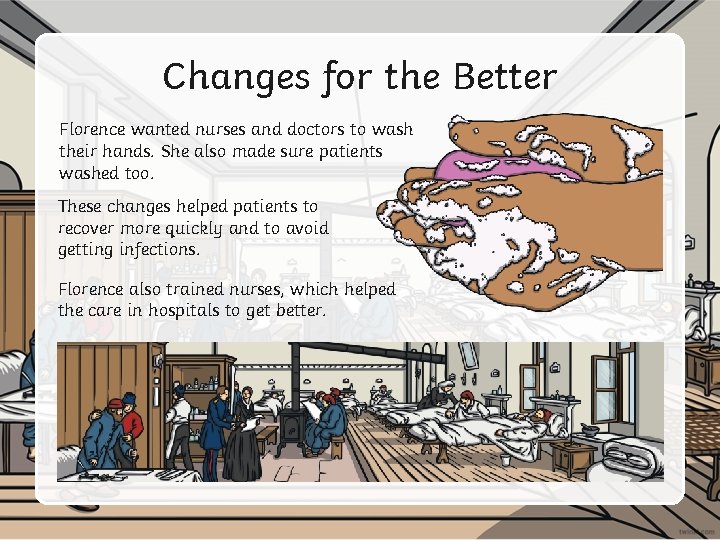
Changes for the Better Florence wanted nurses and doctors to wash their hands. She also made sure patients washed too. These changes helped patients to recover more quickly and to avoid getting infections. Florence also trained nurses, which helped the care in hospitals to get better.
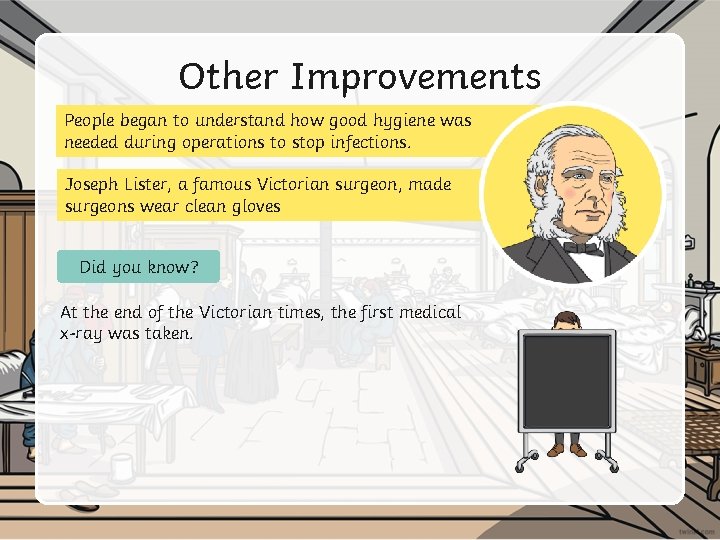
Other Improvements People began to understand how good hygiene was needed during operations to stop infections. Joseph Lister, a famous Victorian surgeon, made surgeons wear clean gloves Did you know? At the end of the Victorian times, the first medical x-ray was taken.
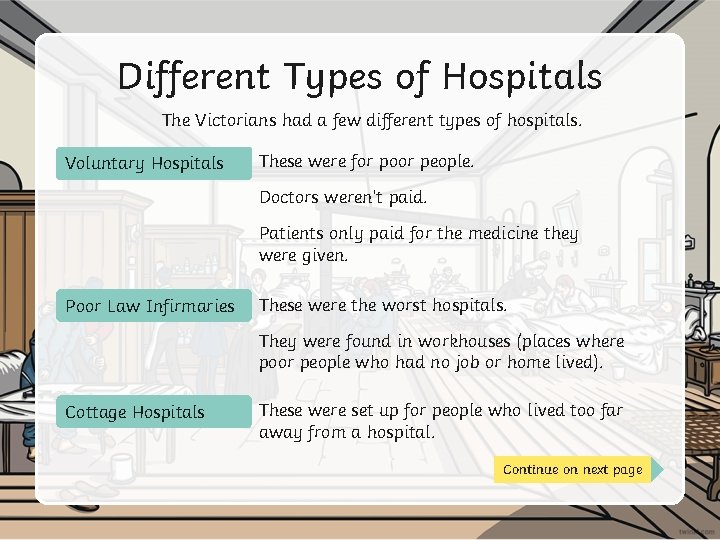
Different Types of Hospitals The Victorians had a few different types of hospitals. Voluntary Hospitals These were for poor people. Doctors weren’t paid. Patients only paid for the medicine they were given. Poor Law Infirmaries These were the worst hospitals. They were found in workhouses (places where poor people who had no job or home lived). Cottage Hospitals These were set up for people who lived too far away from a hospital. Continue on next page
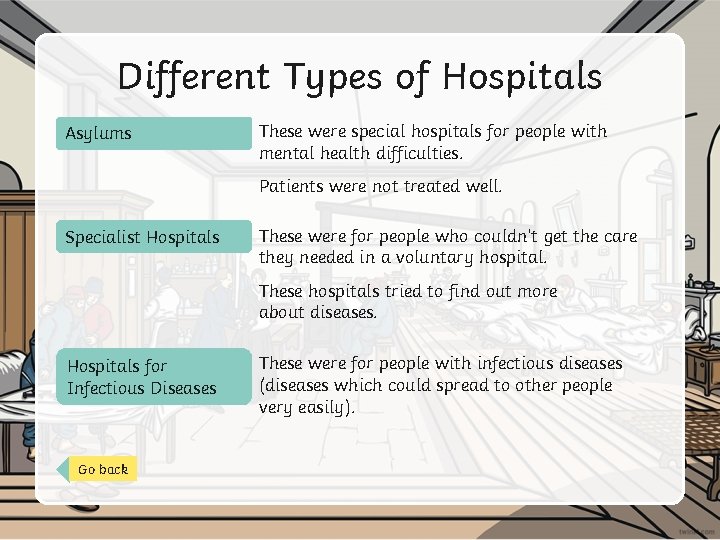
Different Types of Hospitals Asylums These were special hospitals for people with mental health difficulties. Patients were not treated well. Specialist Hospitals These were for people who couldn’t get the care they needed in a voluntary hospital. These hospitals tried to find out more about diseases. Hospitals for Infectious Diseases Go back These were for people with infectious diseases (diseases which could spread to other people very easily).
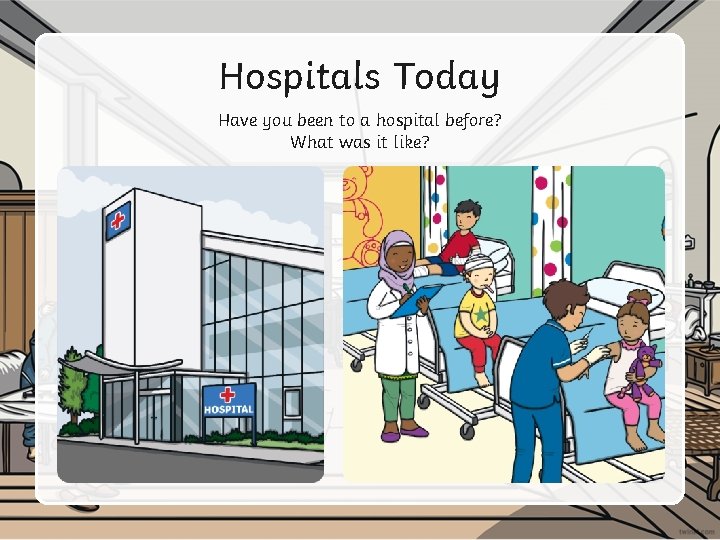
Hospitals Today Have you been to a hospital before? What was it like?
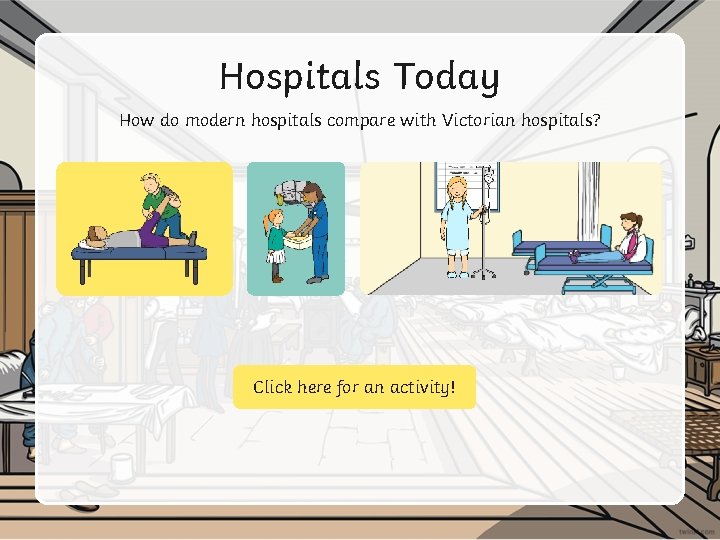
Hospitals Today How do modern hospitals compare with Victorian hospitals? Click here for an activity!
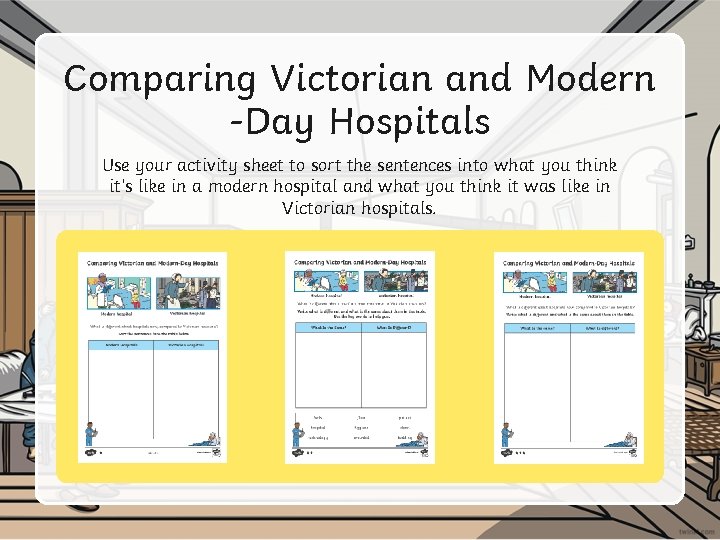
Comparing Victorian and Modern -Day Hospitals Use your activity sheet to sort the sentences into what you think it’s like in a modern hospital and what you think it was like in Victorian hospitals.