
Hygiene B 260 Fundamentals of Nursing Scientific Knowledge
Hygiene B 260: Fundamentals of Nursing
Scientific Knowledge Base Physical hygiene is necessary for comfort, safety, and well-being. Ill patients require assistance with personal hygiene. Several factors influence a patient’s hygiene practices, such as culture and age. Good hygiene techniques promote normal structure and function of tissues. Apply knowledge of pathophysiology to provide preventive hygiene care.
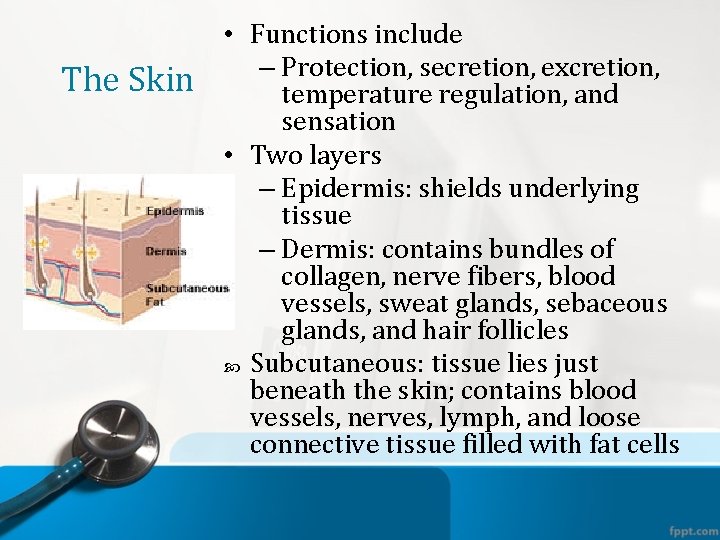
The Skin • Functions include – Protection, secretion, excretion, temperature regulation, and sensation • Two layers – Epidermis: shields underlying tissue – Dermis: contains bundles of collagen, nerve fibers, blood vessels, sweat glands, sebaceous glands, and hair follicles Subcutaneous: tissue lies just beneath the skin; contains blood vessels, nerves, lymph, and loose connective tissue filled with fat cells
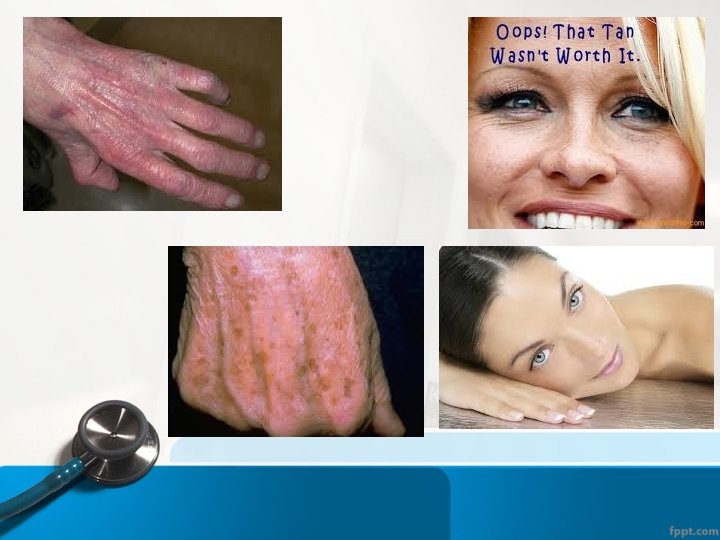
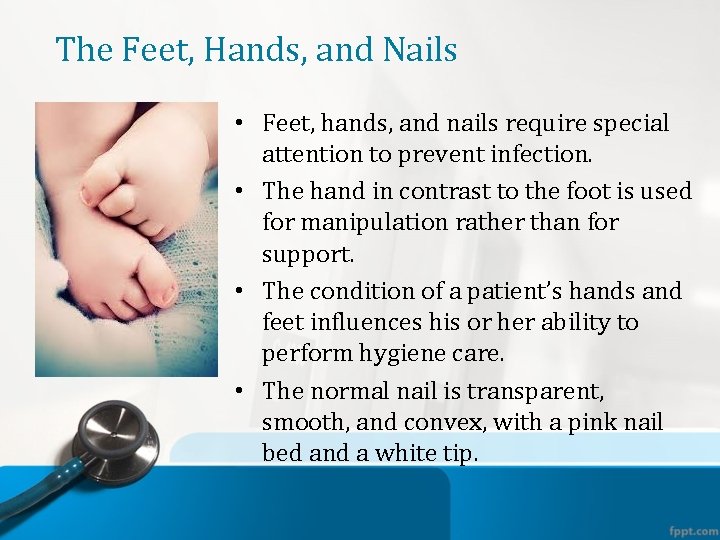
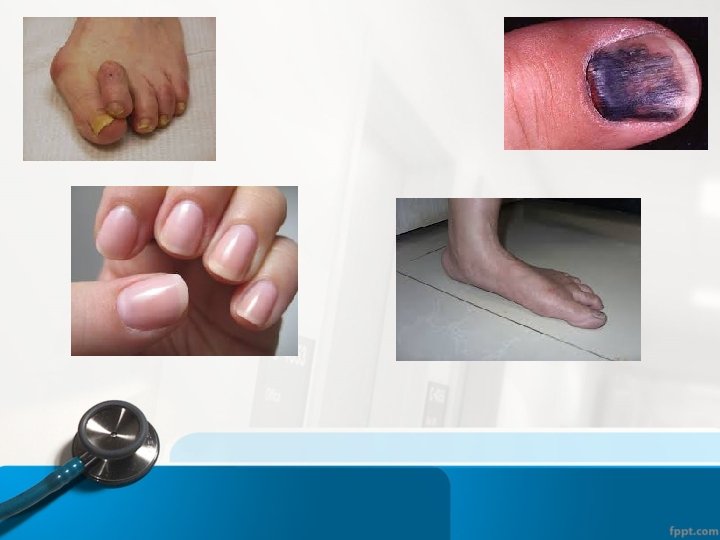
The Feet, Hands, and Nails • Feet, hands, and nails require special attention to prevent infection. • The hand in contrast to the foot is used for manipulation rather than for support. • The condition of a patient’s hands and feet influences his or her ability to perform hygiene care. • The normal nail is transparent, smooth, and convex, with a pink nail bed and a white tip.
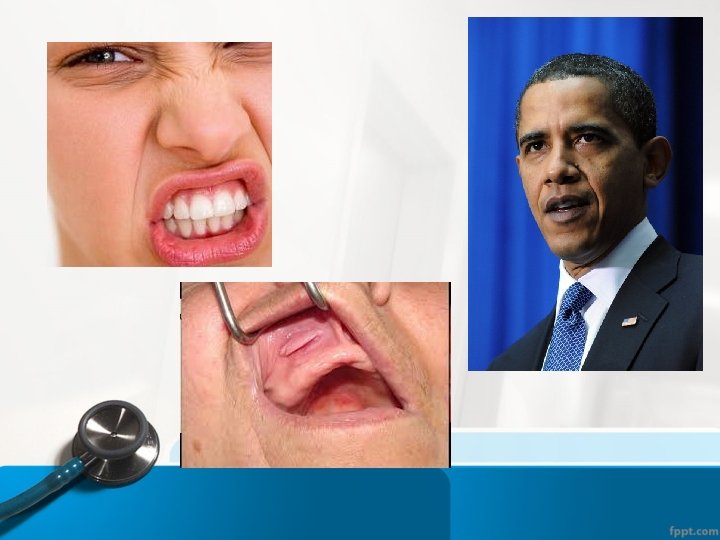
The Oral Cavity • Cavity is lined with mucous membranes. • Normal oral mucosa is light pink, soft, moist, smooth, and without lesions. • Medications, exposure to radiation, and mouth breathing can impair salivary secretion. • Xerostomia—dry mouth • Gingivitis—inflammation of the gums • Dental caries—tooth decay
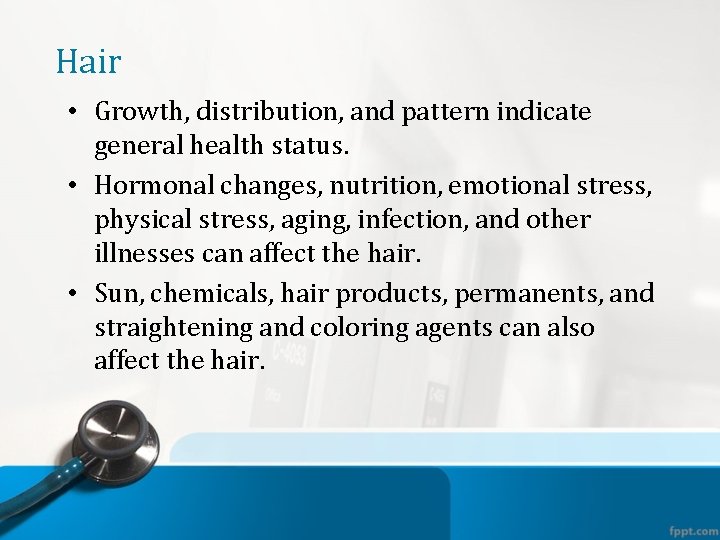
Hair • Growth, distribution, and pattern indicate general health status. • Hormonal changes, nutrition, emotional stress, physical stress, aging, infection, and other illnesses can affect the hair. • Sun, chemicals, hair products, permanents, and straightening and coloring agents can also affect the hair.
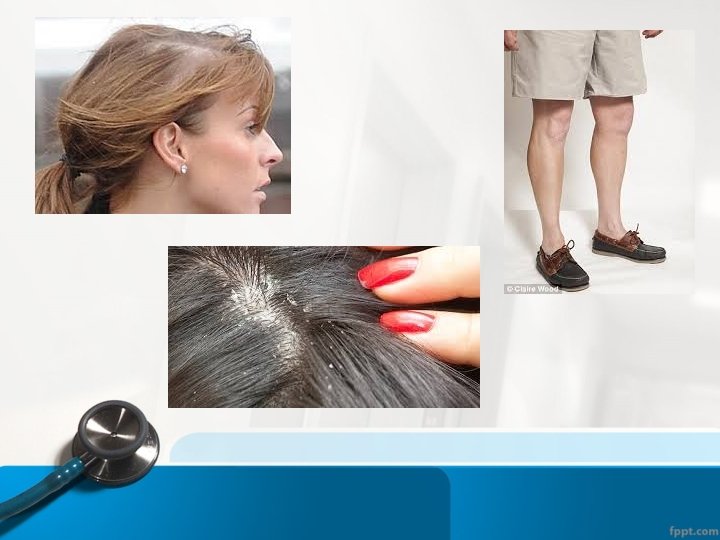
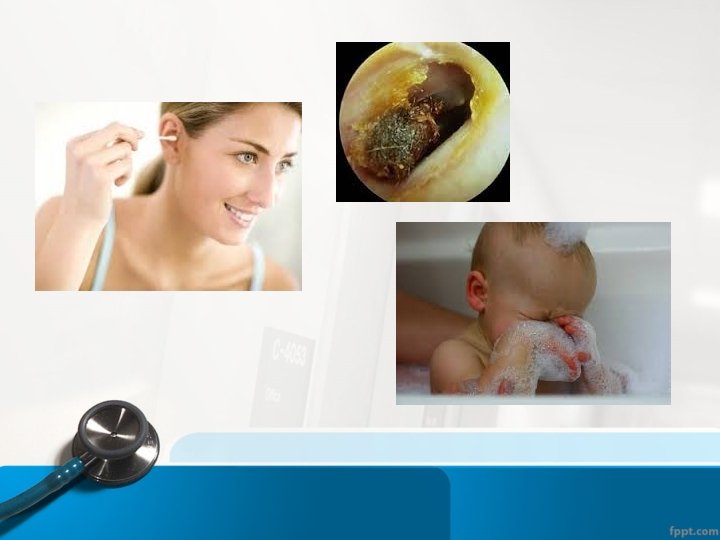
Eyes, Ears, and Nose • When hygiene care is provided, the eyes, ears, and nose require careful attention. • Clean the sensitive sensory tissues in a way that prevents injury and discomfort for a patient, such as by taking care to not get soap in his or her eyes. • The sense of smell is an important aid to appetite.
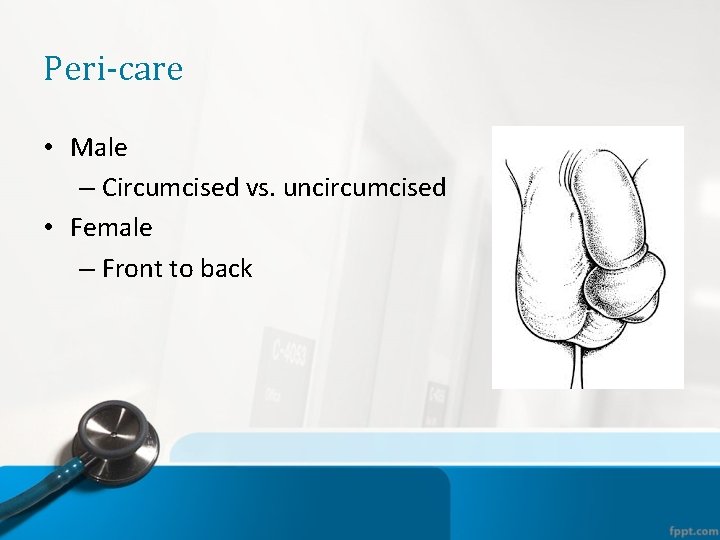
Peri-care • Male – Circumcised vs. uncircumcised • Female – Front to back
Nursing Knowledge Base • Factors influence a patient’s personal hygiene. • Use communication skills to promote therapeutic relationship. • During hygiene, assess: – Emotional status – Health promotion practices – Health care education needs
Factors Influencing Hygiene Social patterns Personal preferences Ethnic, social, and family influences on Dictate hygiene patterns practices Body image Socioeconomic status A person’s subjective concept of his or her Influences the type body appearance and extent of hygiene practices used
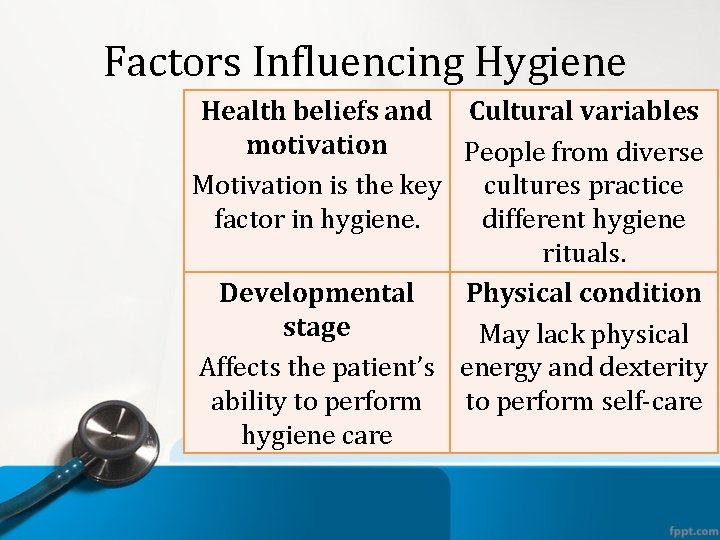
Factors Influencing Hygiene Health beliefs and Cultural variables motivation People from diverse Motivation is the key cultures practice factor in hygiene. different hygiene rituals. Developmental Physical condition stage May lack physical Affects the patient’s energy and dexterity ability to perform self-care hygiene care

https: //www. youtube. com/watch? v=_e_c. H 3 O t 0 Ck
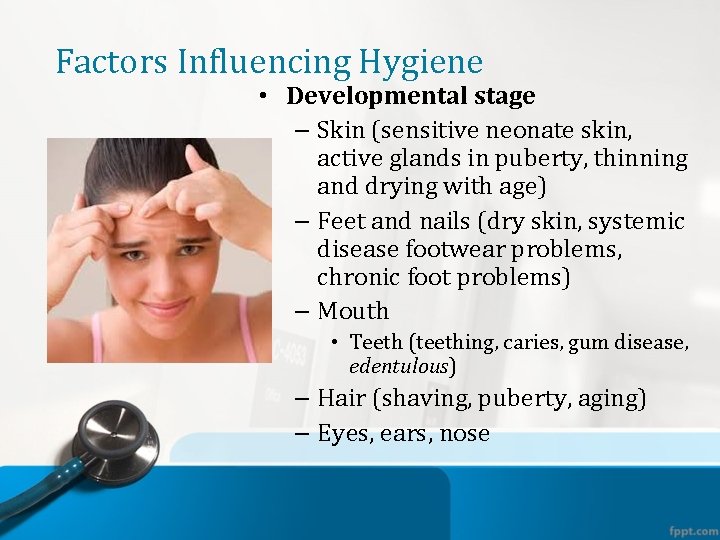
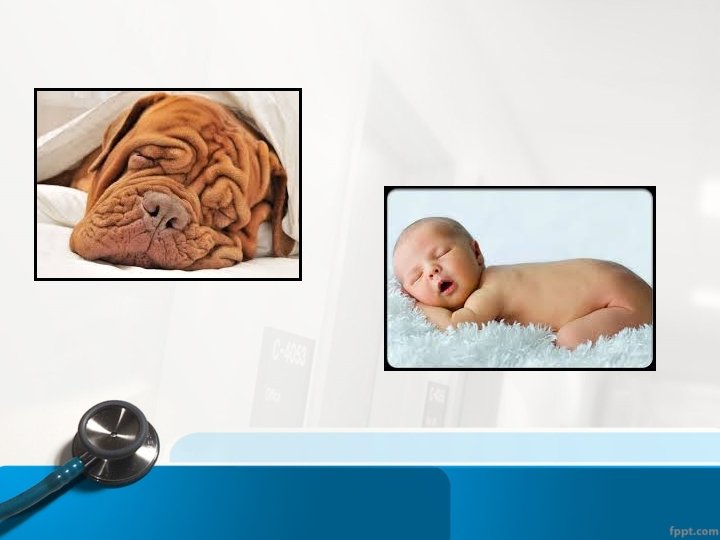
Factors Influencing Hygiene • Developmental stage – Skin (sensitive neonate skin, active glands in puberty, thinning and drying with age) – Feet and nails (dry skin, systemic disease footwear problems, chronic foot problems) – Mouth • Teeth (teething, caries, gum disease, edentulous) – Hair (shaving, puberty, aging) – Eyes, ears, nose
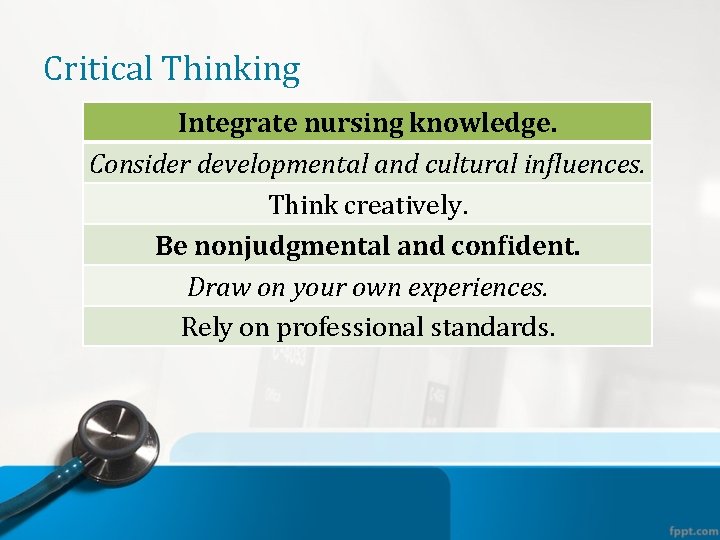
Critical Thinking Integrate nursing knowledge. Consider developmental and cultural influences. Think creatively. Be nonjudgmental and confident. Draw on your own experiences. Rely on professional standards.
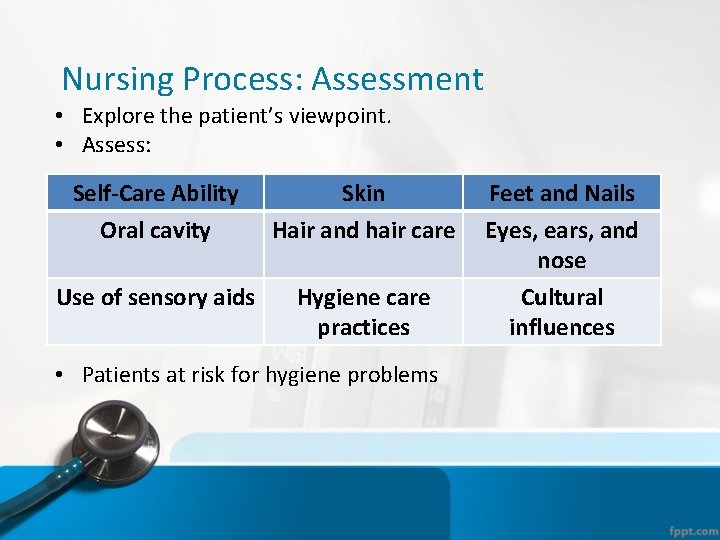
Nursing Process: Assessment • Explore the patient’s viewpoint. • Assess: Self-Care Ability Oral cavity Skin Hair and hair care Use of sensory aids Hygiene care practices • Patients at risk for hygiene problems Feet and Nails Eyes, ears, and nose Cultural influences
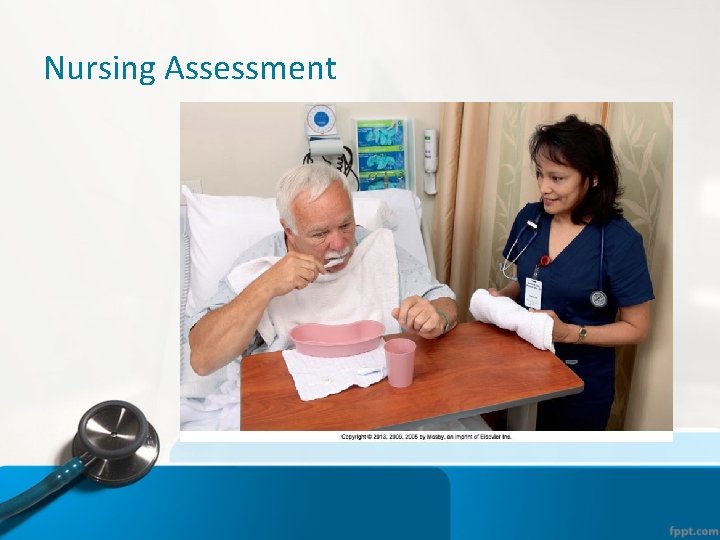
Nursing Assessment
Nursing Process: Diagnosis • Common diagnoses associated with hygiene: – Activity intolerance – Bathing self-care deficit – Dressing self-care deficit – Impaired physical mobility – Impaired oral mucous membrane – Ineffective health maintenance – Risk for infection • Use the patients’ actual alteration or the alteration for which they are at risk.
Nursing Process: Planning • Goals and outcomes – Partner with the patient and family – Measurable, achievable, individualized • Set priorities based on assistance required, extent of problems, nature of diagnoses • Teamwork and collaboration – Health care team members – Family – Community agencies
Implementation Use caring to reduce anxiety, promote comfort. Administer meds for symptoms before hygiene. Be alert for patient’s anxiety or fear Assist and prepare patients to perform hygiene as independently as possible. Teach techniques and signs of problems. Inform patients about community resources.
Implementation • Health promotion – Make instructions relevant. – Adapt instruction to patient’s facilities and resources. – Teach the patient ways to avoid injury. – Reinforce infection control practices. • Acute, restorative, and continuing care – Hygiene measures vary by patient needs and health care setting.
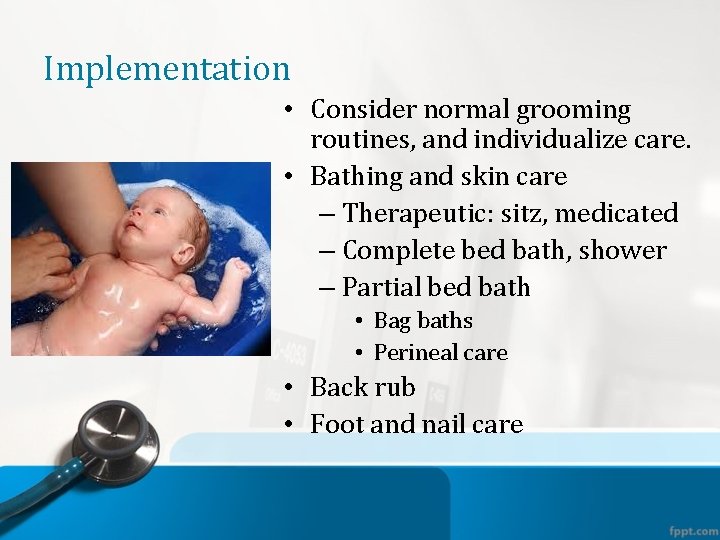
Implementation • Consider normal grooming routines, and individualize care. • Bathing and skin care – Therapeutic: sitz, medicated – Complete bed bath, shower – Partial bed bath • Bag baths • Perineal care • Back rub • Foot and nail care
Bath Guidelines Provide privacy. Maintain safety. Maintain warmth. Promote independence. Anticipate needs.
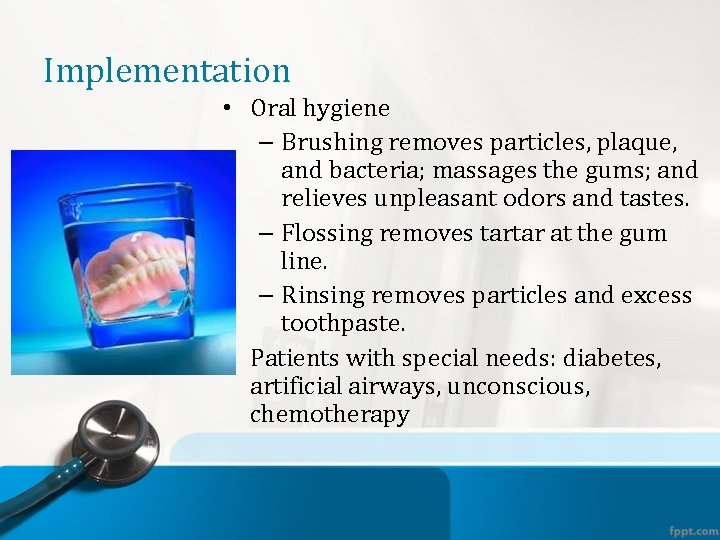
Implementation • Oral hygiene – Brushing removes particles, plaque, and bacteria; massages the gums; and relieves unpleasant odors and tastes. – Flossing removes tartar at the gum line. – Rinsing removes particles and excess toothpaste. • Patients with special needs: diabetes, artificial airways, unconscious, chemotherapy
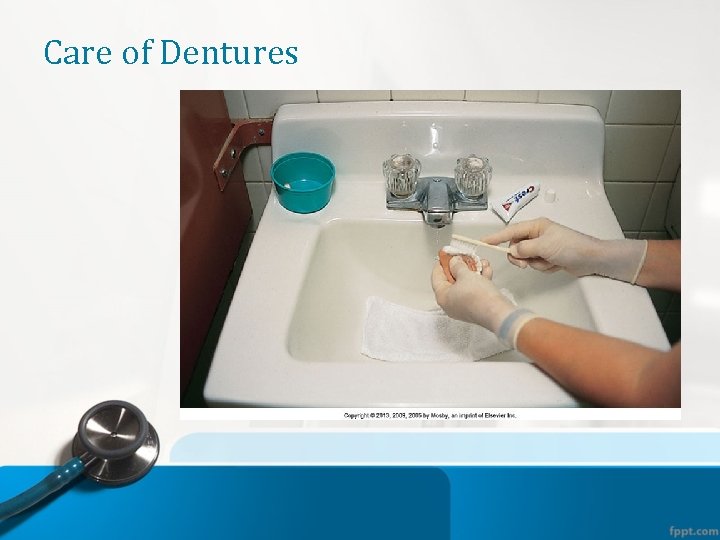
Care of Dentures
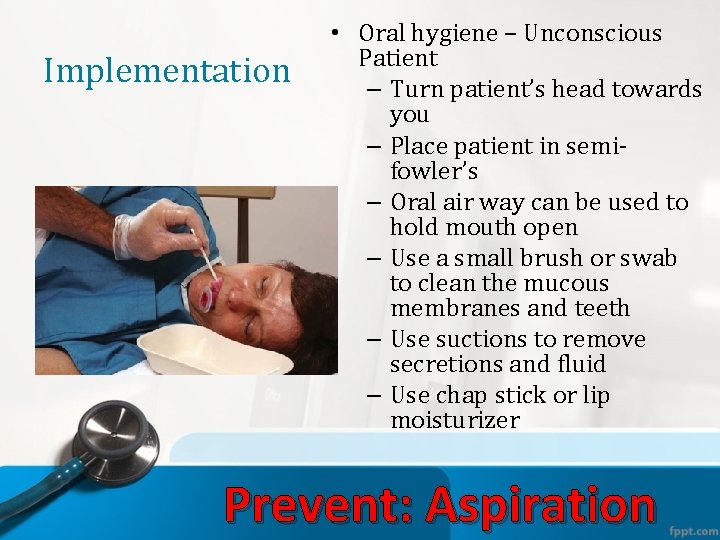
Implementation • Oral hygiene – Unconscious Patient – Turn patient’s head towards you – Place patient in semifowler’s – Oral air way can be used to hold mouth open – Use a small brush or swab to clean the mucous membranes and teeth – Use suctions to remove secretions and fluid – Use chap stick or lip moisturizer Prevent: Aspiration
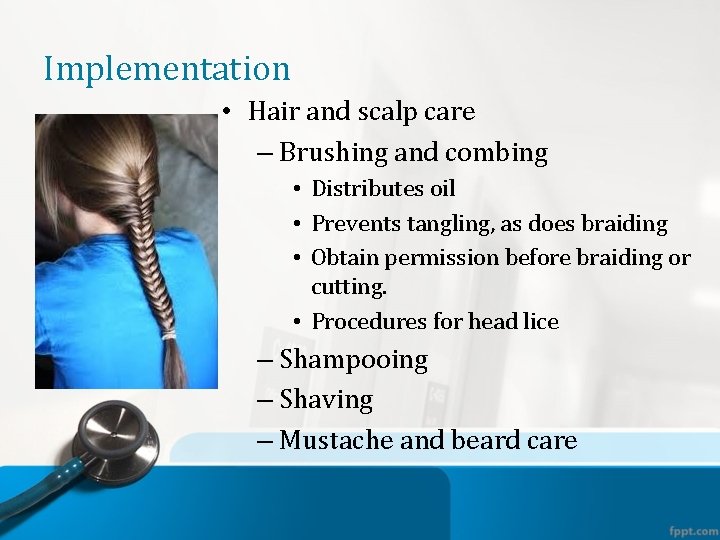
Implementation • Hair and scalp care – Brushing and combing • Distributes oil • Prevents tangling, as does braiding • Obtain permission before braiding or cutting. • Procedures for head lice – Shampooing – Shaving – Mustache and beard care
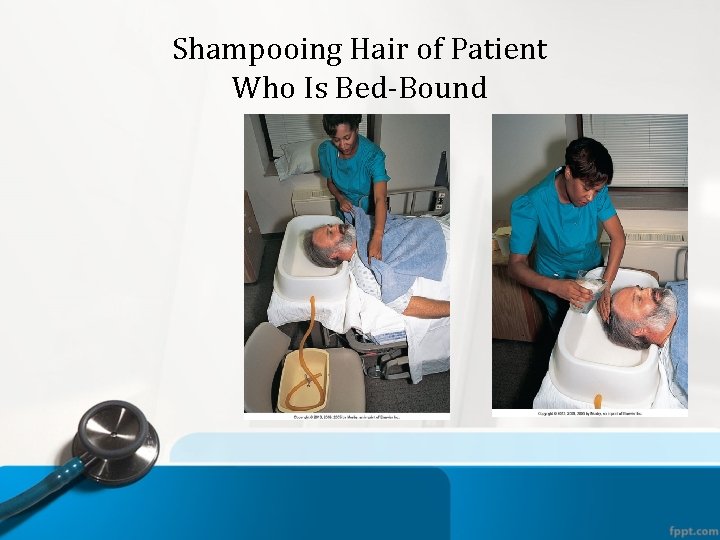
Shampooing Hair of Patient Who Is Bed-Bound
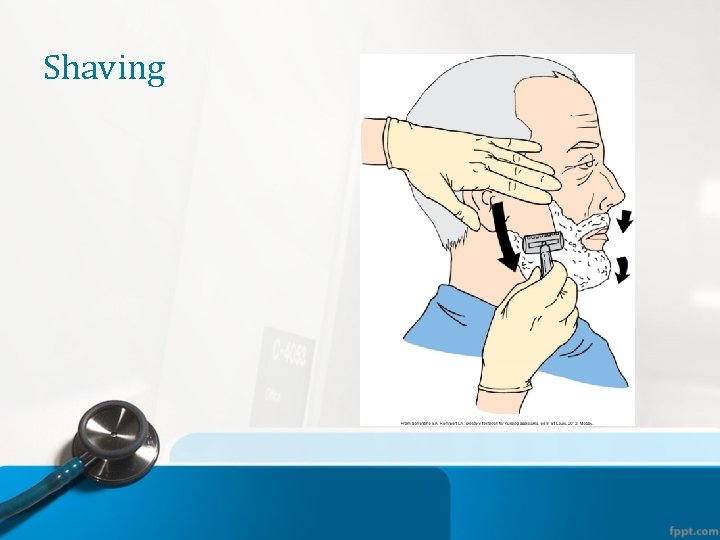
Shaving
Implementation • Care of the genitalia: • Can be embarrassing for the nurse and the patient. • Should not be overlooked because of embarrassment. • If the patient can do it themselves —let them. – Hand them the washcloth and ask if they would like to “finish their bath. ”
Peri-care • Those patients who may need the nurses assistance: – Vaginal or urethral discharge – Skin irritation – Catheter – Surgical dressings – Incontinent of urine or feces
Peri-care: Female • Wipe labia majora (outer) from front to back in downward motion using clean surface of wash cloth for each swipe. • Wipe labia minora (inner) from front to back in downward motion using clean surface of wash cloth for each swipe • Wipe down the center of the meatus from front to back. If catheter in place, clean around catheter in circular fashion, using clean surface of wash cloth for each swipe. • Wash inner thighs from proximal to distal
Peri-care: Female • Rinse with warm to tepid water using pour from peri-bottle if available. • Pat dry using clean towel in same order as wash • Remove bedpan if one is used • Verbalize turning patient on side to wash anal area from front to back and dry
Peri-care: Male • Retract foreskin of penis if uncircumcised • Wash around the urinary meatus in a circular motion, using clean surface of washcloth for each stroke and around the head of penis in circular motion • Wash down shaft of penis toward the thighs changing washcloth position with each stroke • Wash scrotum – front to back • Wash inner thighs
Peri-care: Male • Rinse with clean wash cloth or peribottle using warm water in same sequence as the wash • Dry with clean towel in the same sequence • Replace foreskin, as appropriate • Turn patient on side to wash anus from front to back and dry
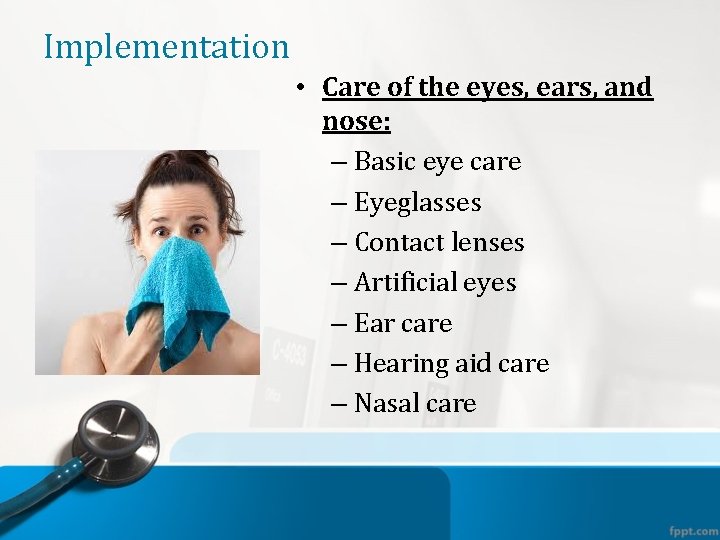
Implementation • Care of the eyes, ears, and nose: – Basic eye care – Eyeglasses – Contact lenses – Artificial eyes – Ear care – Hearing aid care – Nasal care
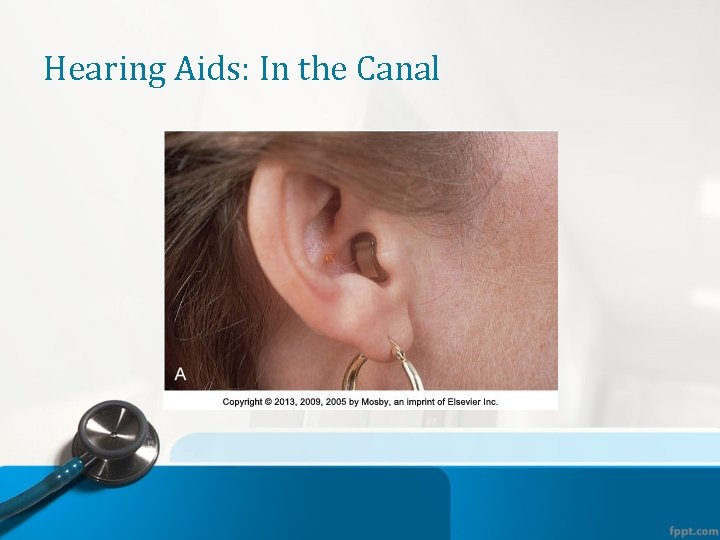
Hearing Aids: In the Canal
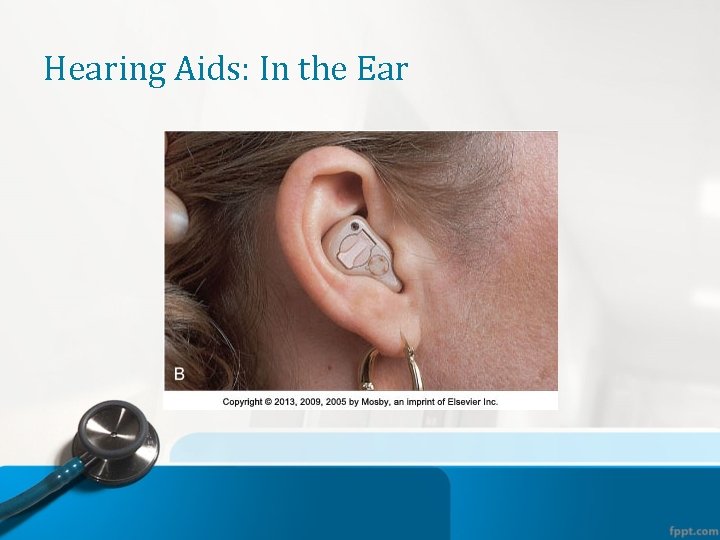
Hearing Aids: In the Ear
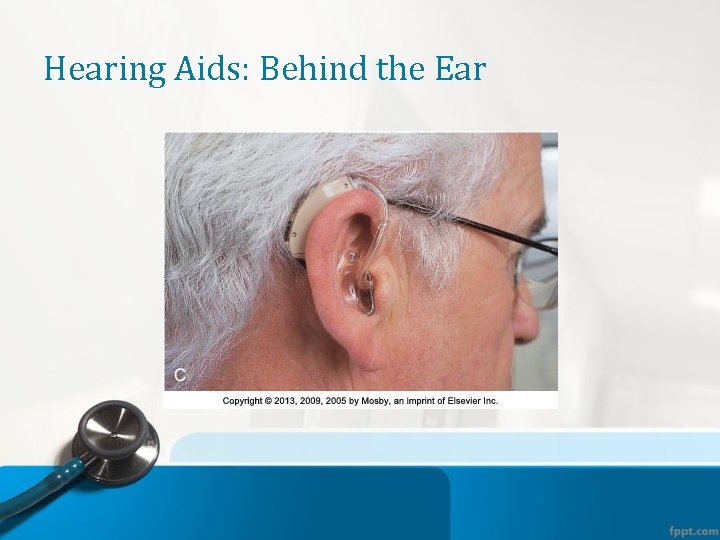
Hearing Aids: Behind the Ear
Implementation • Patient’s room environment – Maintaining comfort: temperature, noise, lighting, ventilation, odors – Beds • Features: raising, adjusting, side rails • Clean, comfortable, and safe – Bed making • Occupied • Unoccupied
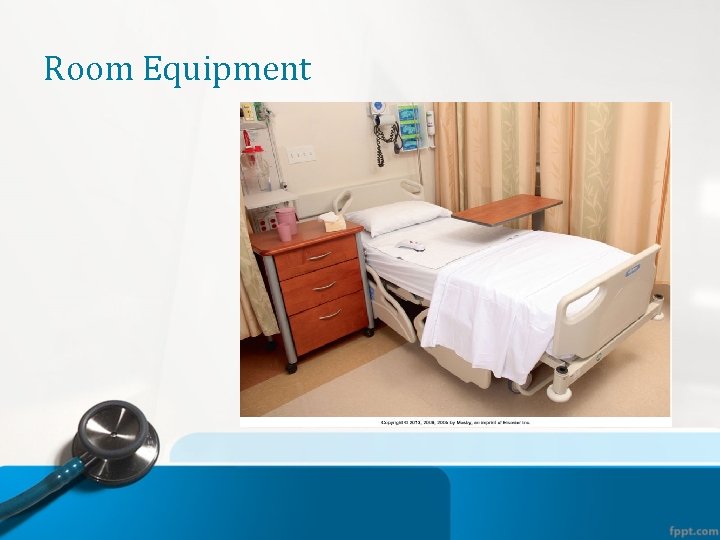
Room Equipment
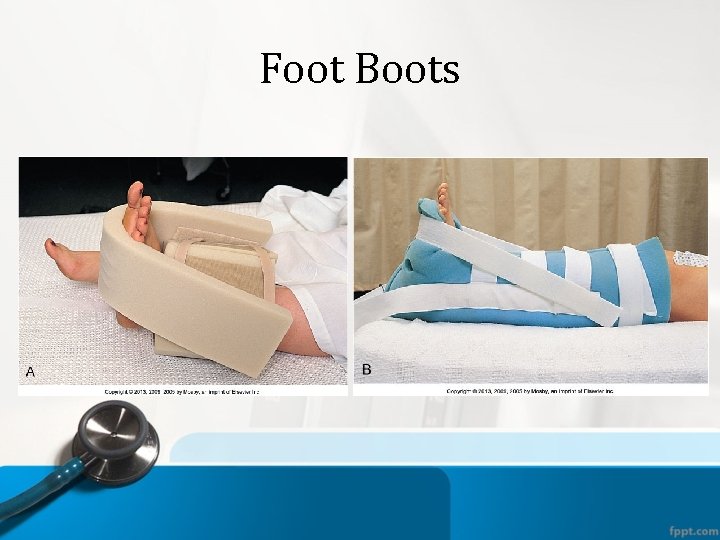
Foot Boots
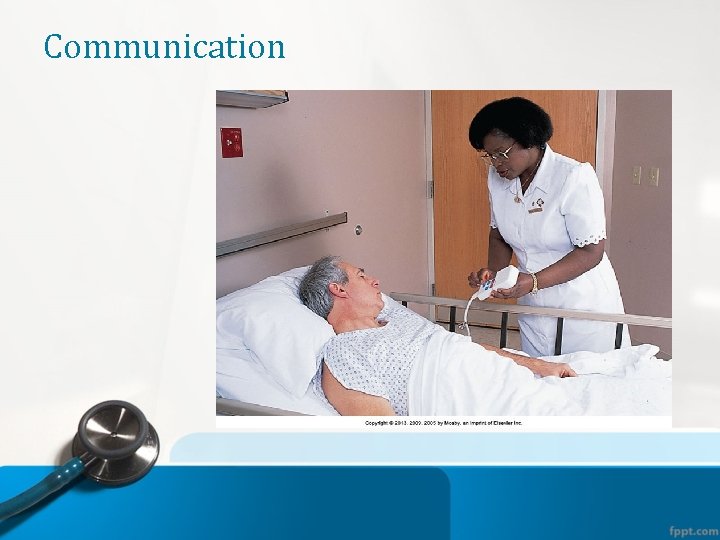
Communication
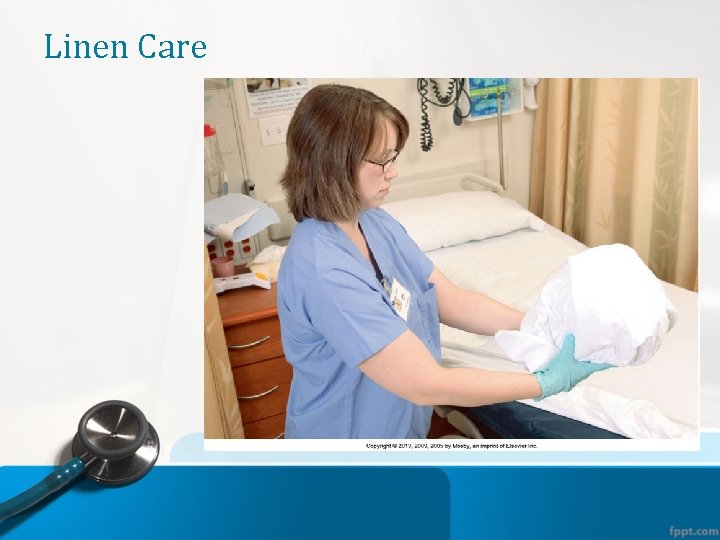
Linen Care
Evaluation Evaluate during and after each intervention. Observe for changes in patient’s behavior. Consider the patient’s perspective. Often it takes time, repeated measures, and a combination of interventions for improvement. • Expected outcomes met? • Patient’s expectations met? • Ask questions to determine appropriate changes to interventions. • •
Safety Guidelines Communicate clearly with team members. Incorporate patient’s priorities. Move from the cleanest to less clean areas. Use clean gloves for contact with nonintact skin, mucous membranes, secretions, excretions, or blood. • Test the temperature of water or solutions. • Use principles of body mechanics and safe patient handling. • Be sensitive to the invasion of privacy. • •
- Slides: 51