
Hydrothermal Vent Communities Hydrothermal vent discovery1977 Hydrothermal Vents

- Slides: 66
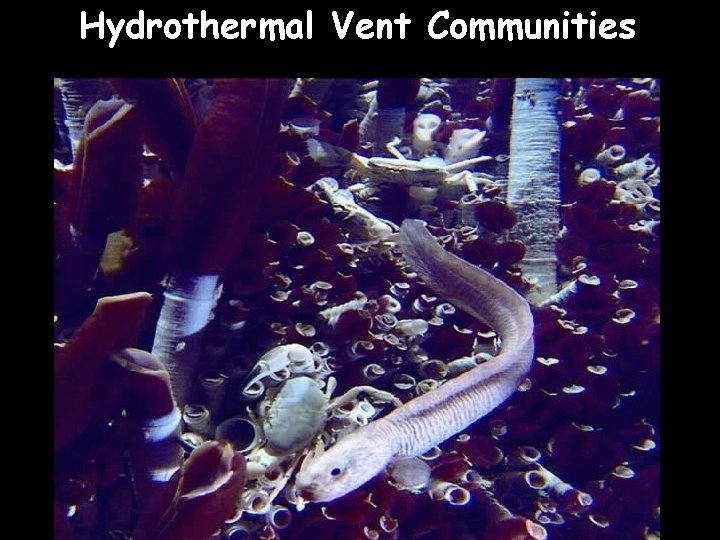
Hydrothermal Vent Communities
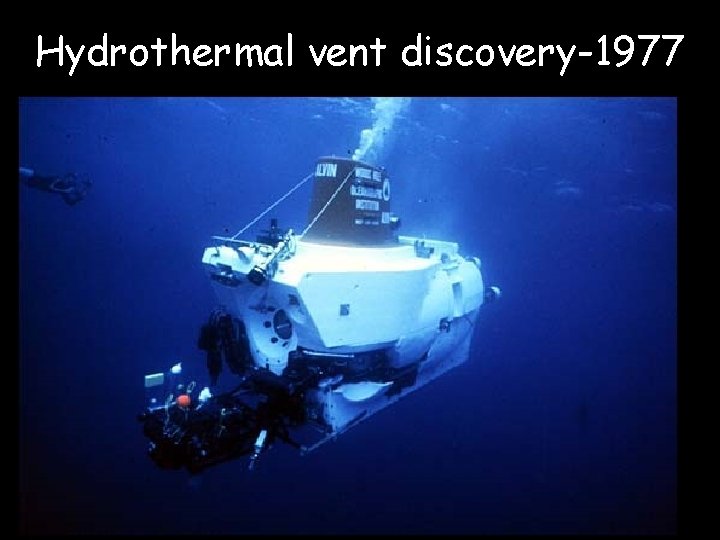
Hydrothermal vent discovery-1977
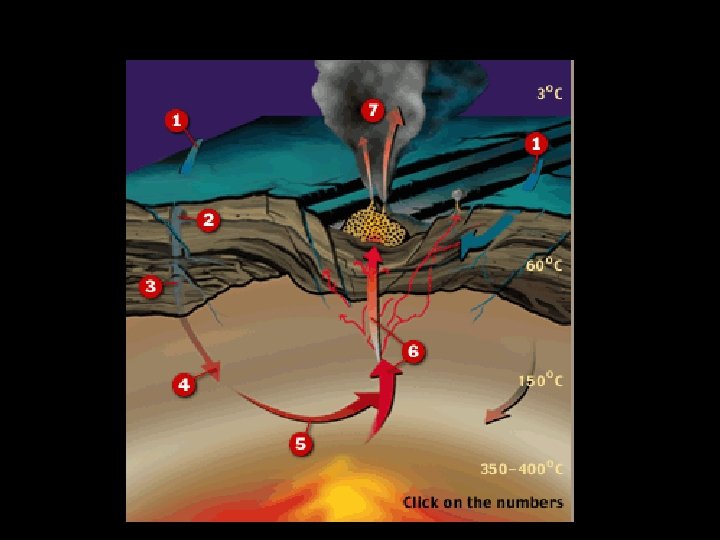
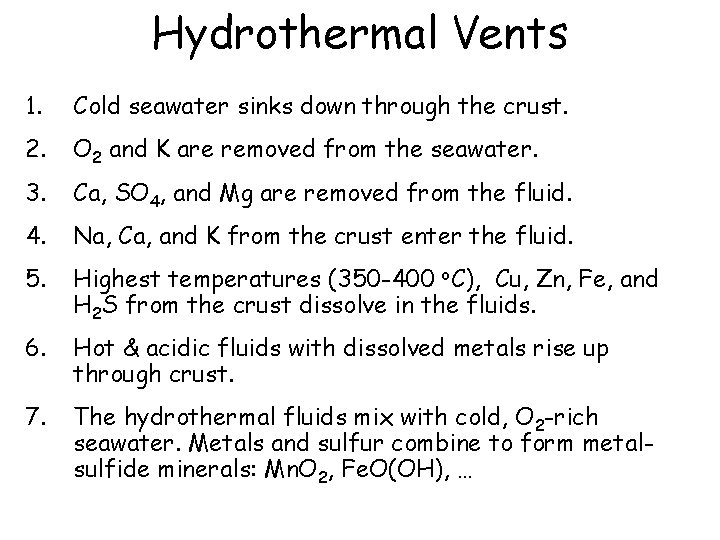
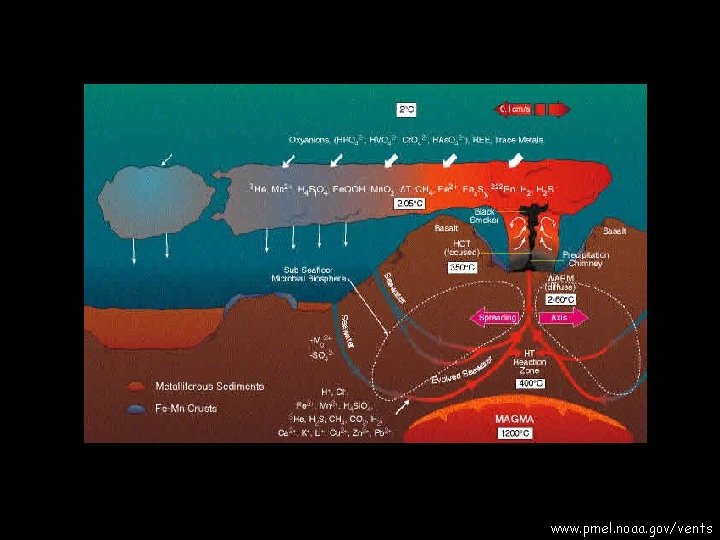
Hydrothermal Vents 1. Cold seawater sinks down through the crust. 2. O 2 and K are removed from the seawater. 3. Ca, SO 4, and Mg are removed from the fluid. 4. Na, Ca, and K from the crust enter the fluid. 5. Highest temperatures (350 -400 o. C), Cu, Zn, Fe, and H 2 S from the crust dissolve in the fluids. 6. Hot & acidic fluids with dissolved metals rise up through crust. 7. The hydrothermal fluids mix with cold, O 2 -rich seawater. Metals and sulfur combine to form metalsulfide minerals: Mn. O 2, Fe. O(OH), …
www. pmel. noaa. gov/vents
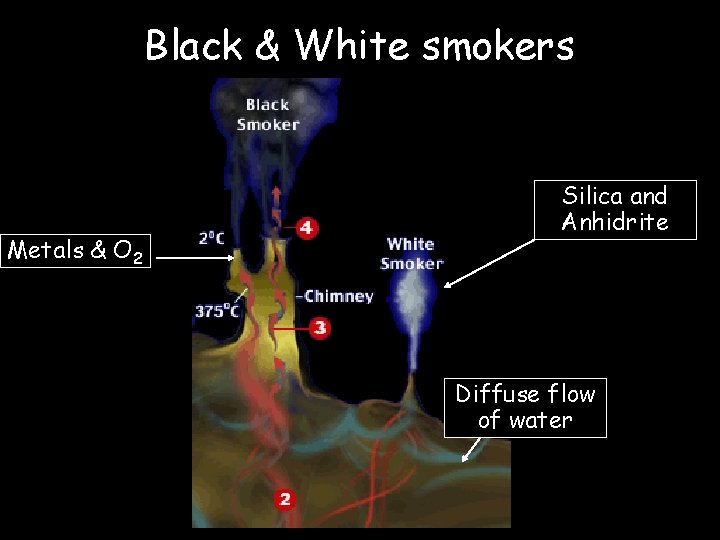
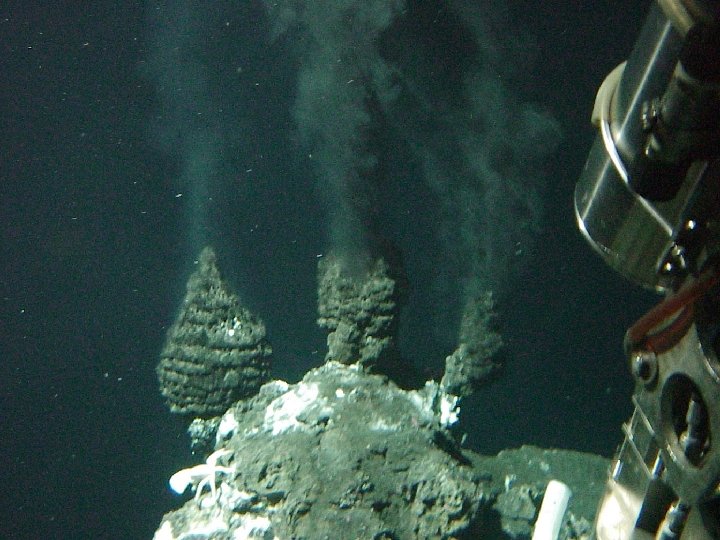
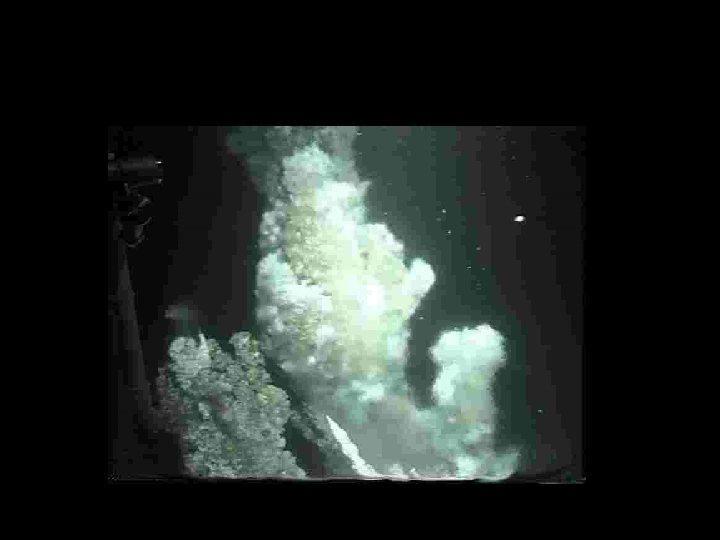
Black & White smokers Metals & O 2 Silica and Anhidrite Diffuse flow of water
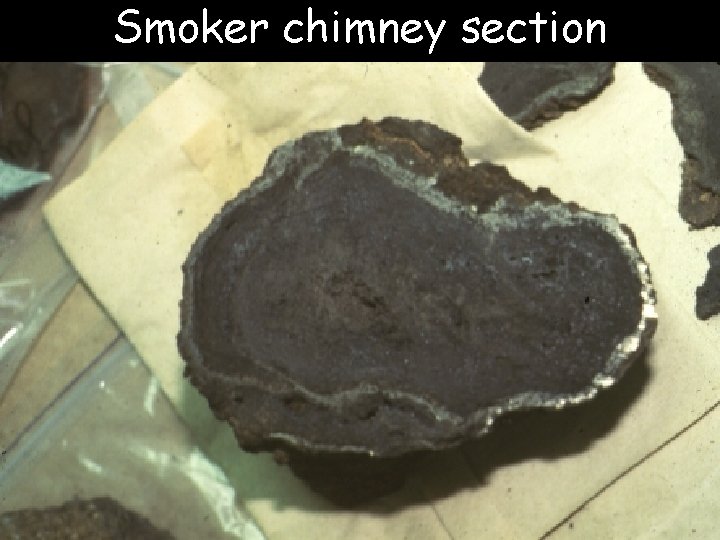
Smoker chimney section
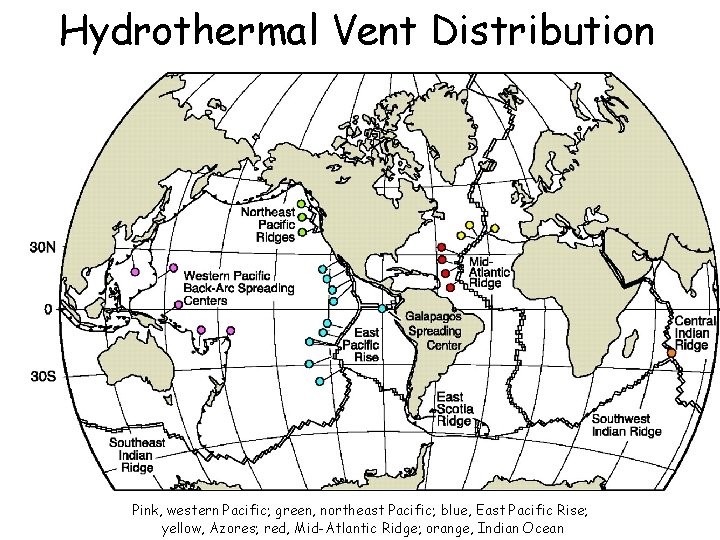
Hydrothermal Vent Distribution Pink, western Pacific; green, northeast Pacific; blue, East Pacific Rise; yellow, Azores; red, Mid-Atlantic Ridge; orange, Indian Ocean
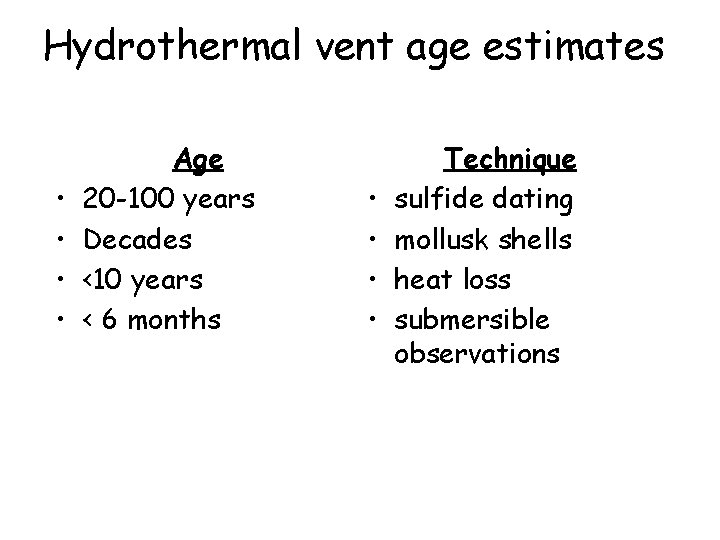
Hydrothermal vent age estimates • • Age 20 -100 years Decades <10 years < 6 months • • Technique sulfide dating mollusk shells heat loss submersible observations
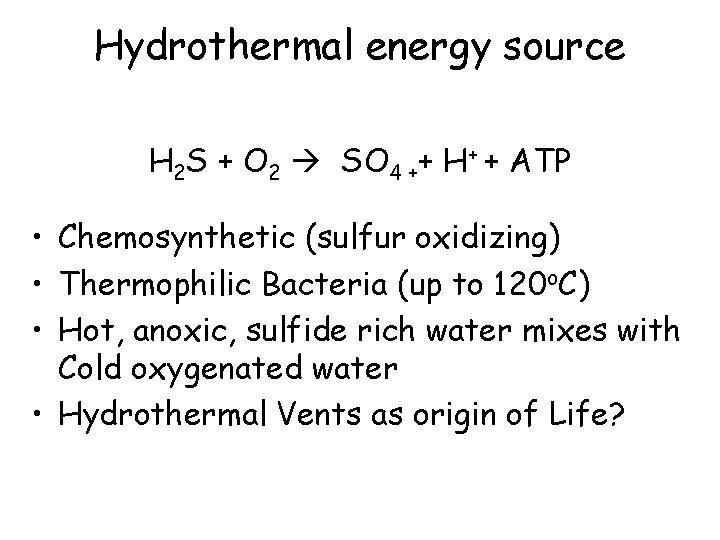
Hydrothermal energy source H 2 S + O 2 SO 4 ++ H+ + ATP • Chemosynthetic (sulfur oxidizing) • Thermophilic Bacteria (up to 120 o. C) • Hot, anoxic, sulfide rich water mixes with Cold oxygenated water • Hydrothermal Vents as origin of Life?
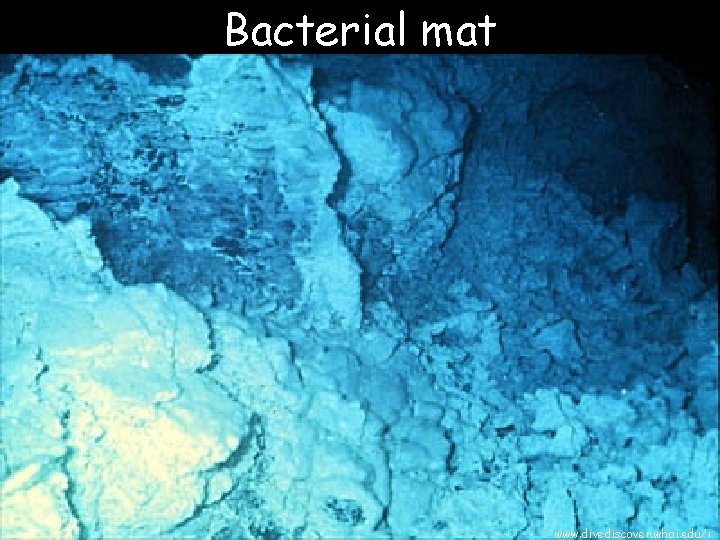
Bacterial mat www. divediscover. whoi. edu/i
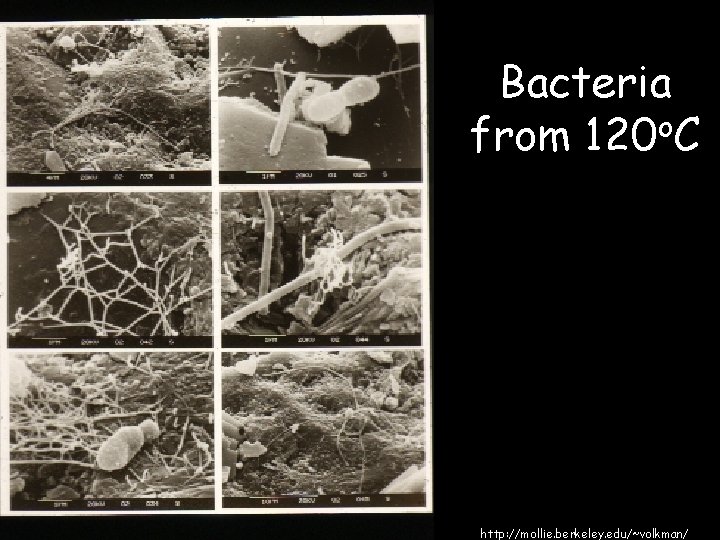
Bacteria from 120 o. C http: //mollie. berkeley. edu/~volkman/
Vent biological communities • BACTERIA (Bacteria and Archea) • 400 morphological invertebrate species – New species every 2 weeks during 25 years! • Evolutionary Origin – – Derived from surrounding Deep Sea Derived from Shallow Water species Many evolutionary radiations at species level Many vent taxa originated at other organically enriched environments (cold seeps and whale bones) • Vents as stable refugia from Global extinctions
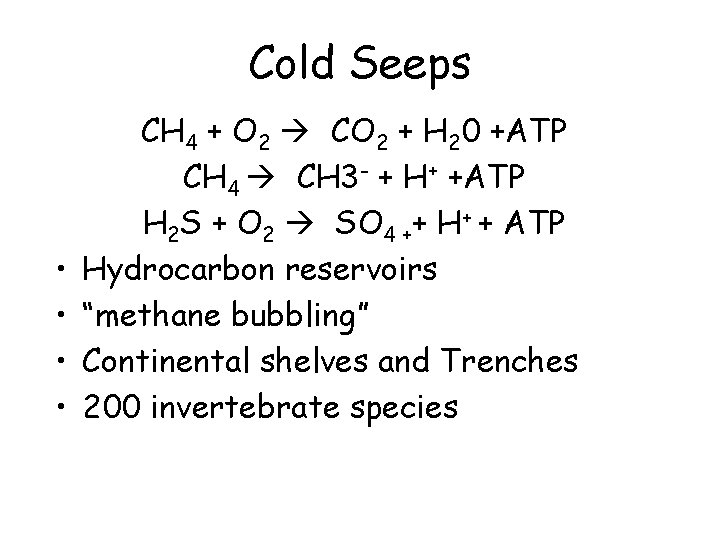
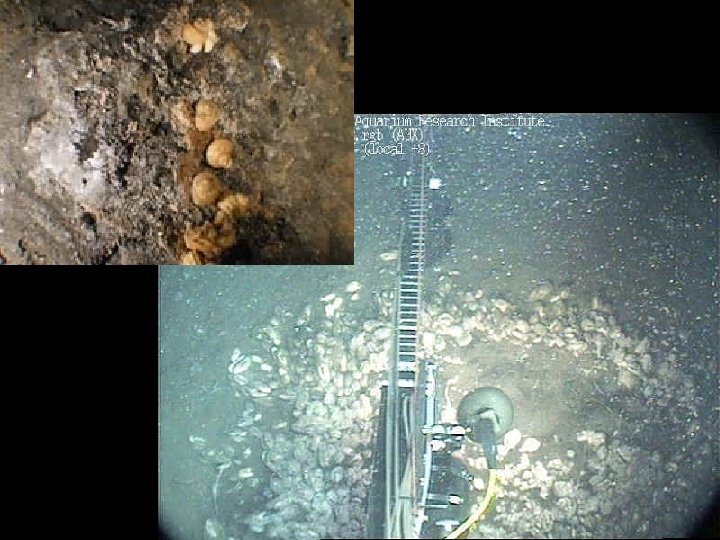
Cold Seeps • • CH 4 + O 2 CO 2 + H 20 +ATP CH 4 CH 3 - + H+ +ATP H 2 S + O 2 SO 4 ++ H+ + ATP Hydrocarbon reservoirs “methane bubbling” Continental shelves and Trenches 200 invertebrate species
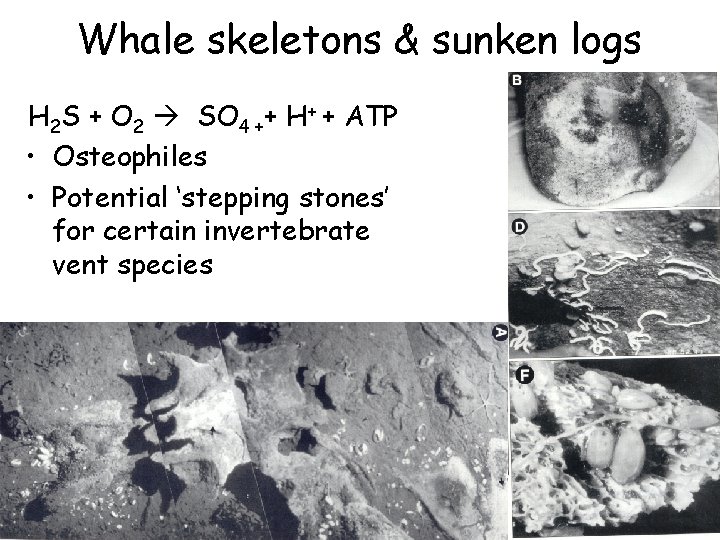
Whale skeletons & sunken logs H 2 S + O 2 SO 4 ++ H+ + ATP • Osteophiles • Potential ‘stepping stones’ for certain invertebrate vent species
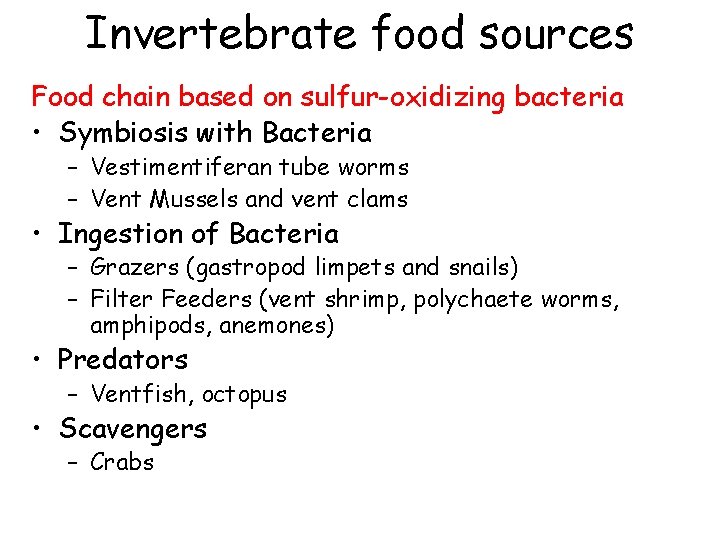
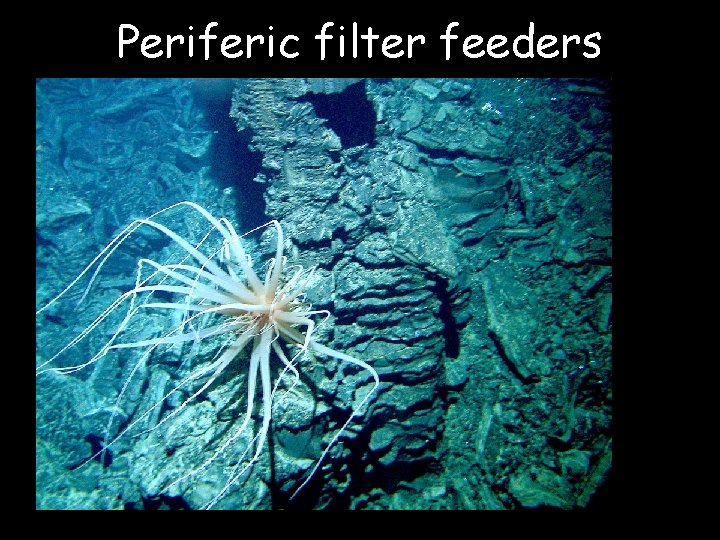
Invertebrate food sources Food chain based on sulfur-oxidizing bacteria • Symbiosis with Bacteria – Vestimentiferan tube worms – Vent Mussels and vent clams • Ingestion of Bacteria – Grazers (gastropod limpets and snails) – Filter Feeders (vent shrimp, polychaete worms, amphipods, anemones) • Predators – Ventfish, octopus • Scavengers – Crabs
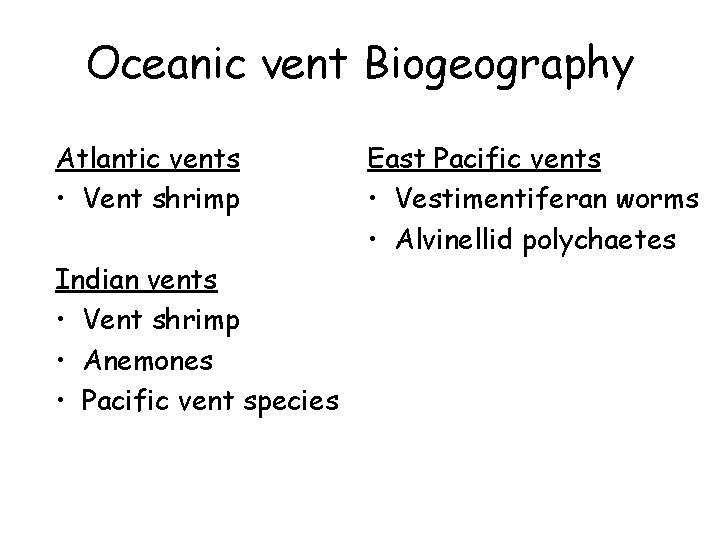
Oceanic vent Biogeography Atlantic vents • Vent shrimp Indian vents • Vent shrimp • Anemones • Pacific vent species East Pacific vents • Vestimentiferan worms • Alvinellid polychaetes
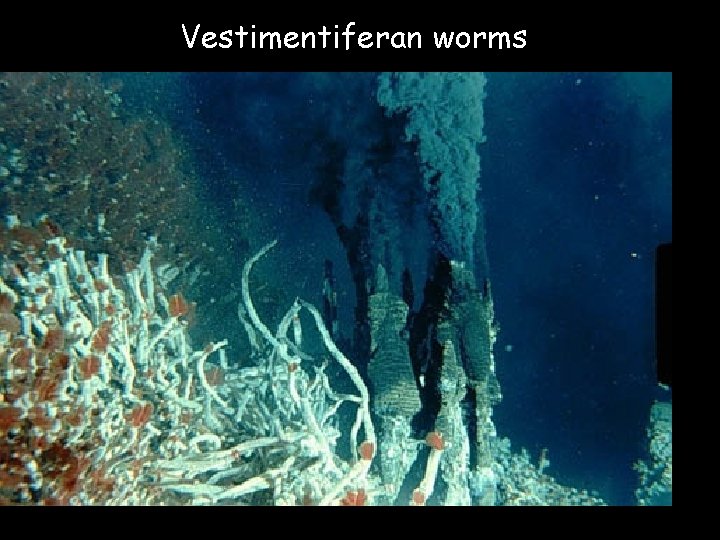
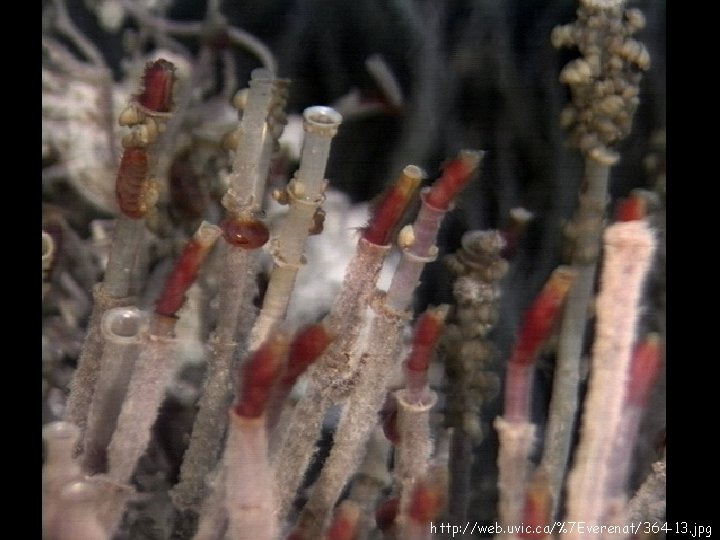
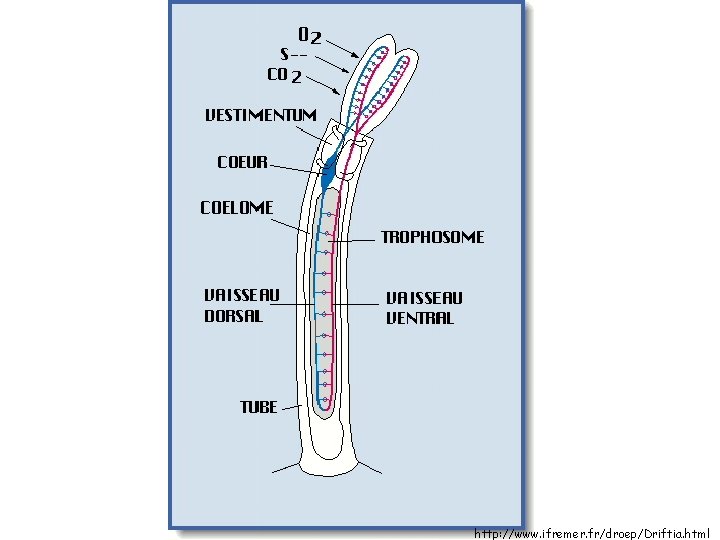
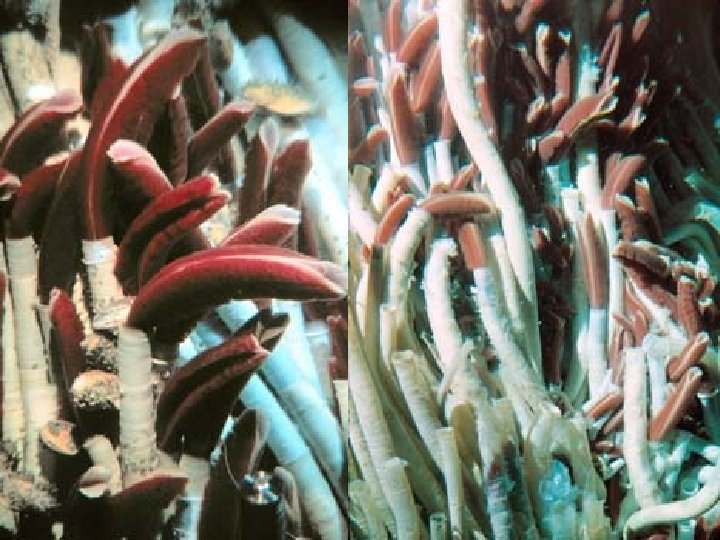
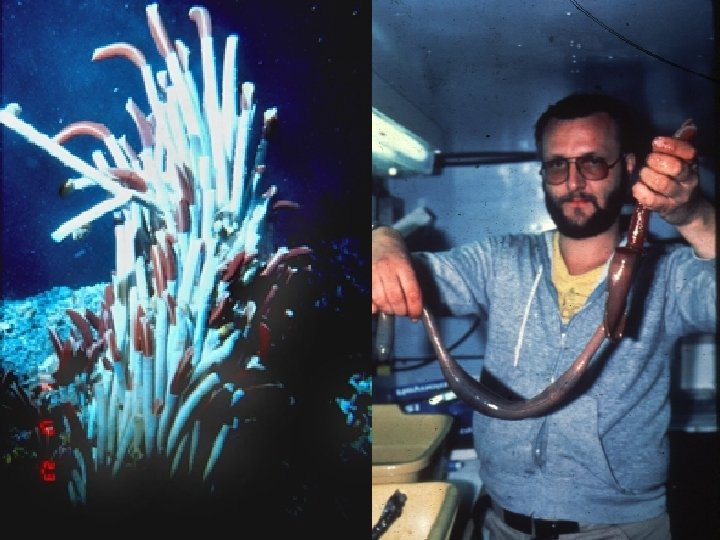
Vestimentiferan worms
http: //web. uvic. ca/%7 Everenat/364 -13. jpg
http: //www. ifremer. fr/droep/Driftia. html
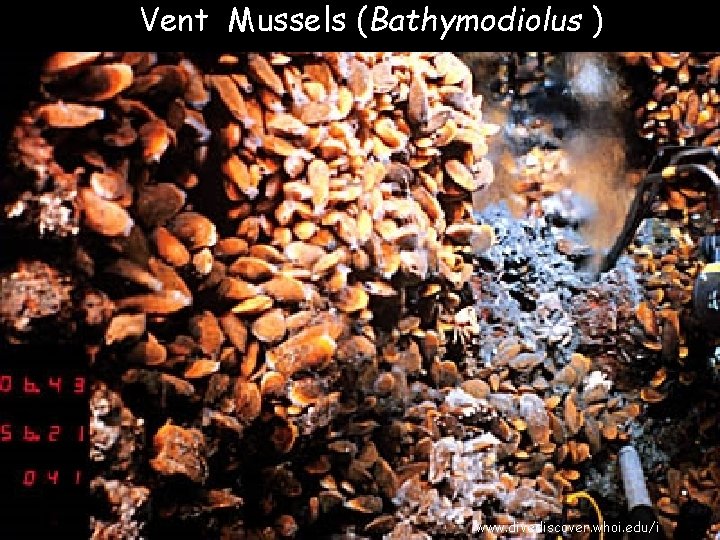
Vent Mussels (Bathymodiolus ) www. divediscover. whoi. edu/i
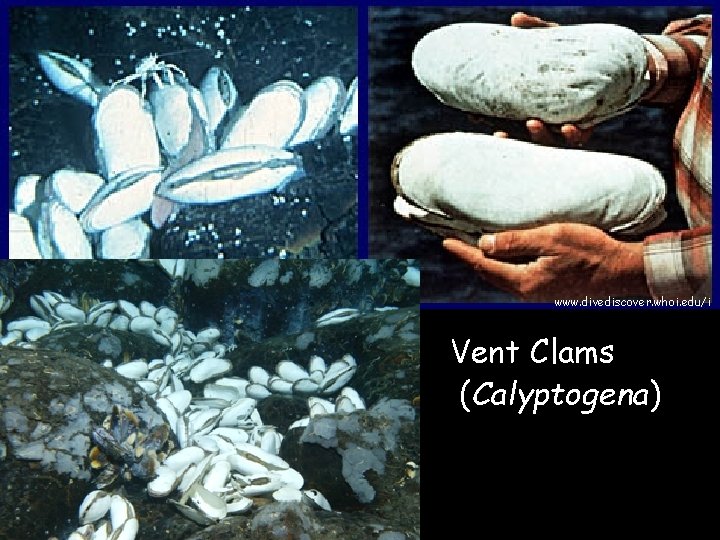
www. divediscover. whoi. edu/i Vent Clams (Calyptogena)
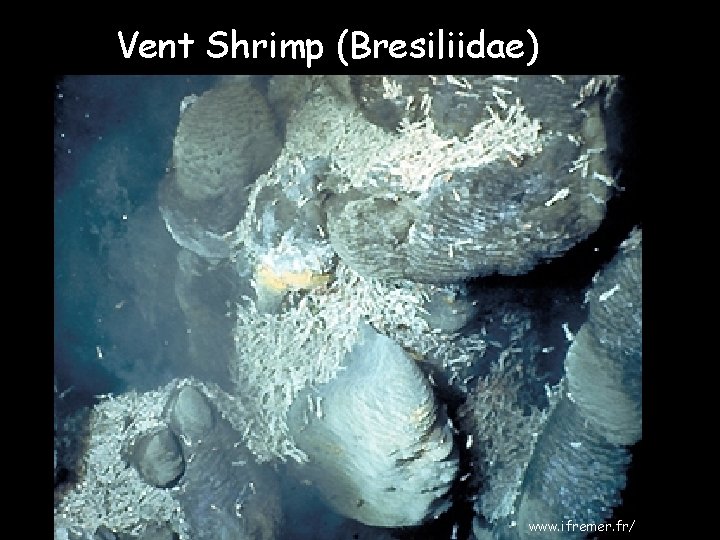
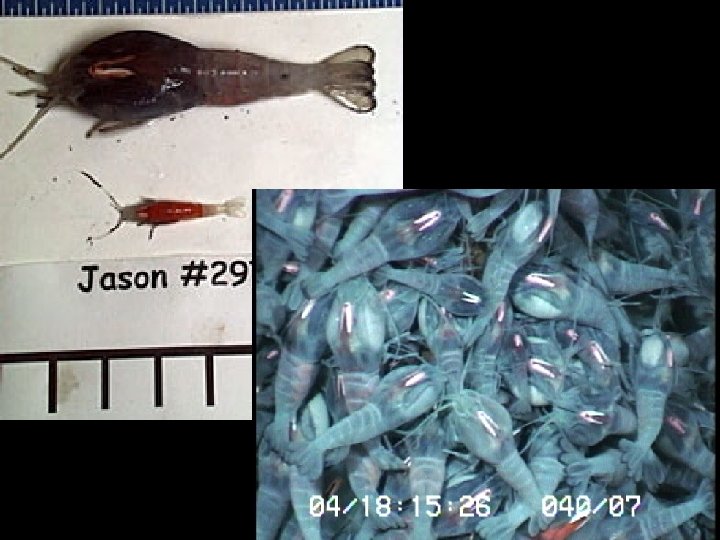
Vent Shrimp (Bresiliidae) www. ifremer. fr/
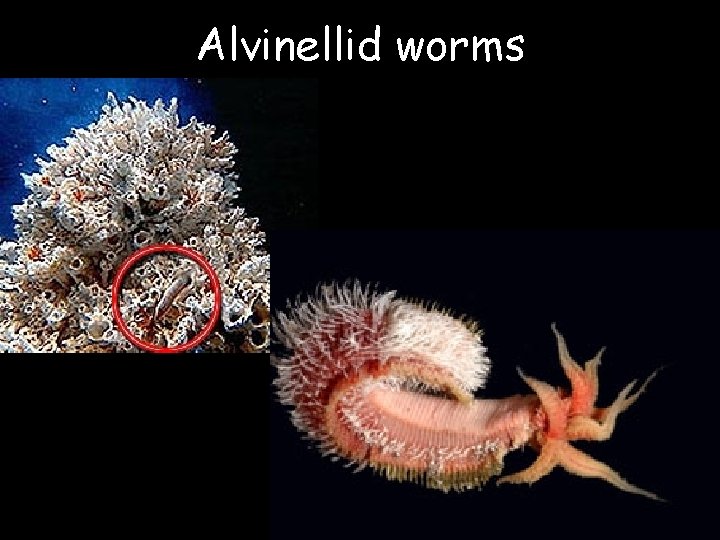
Alvinellid worms
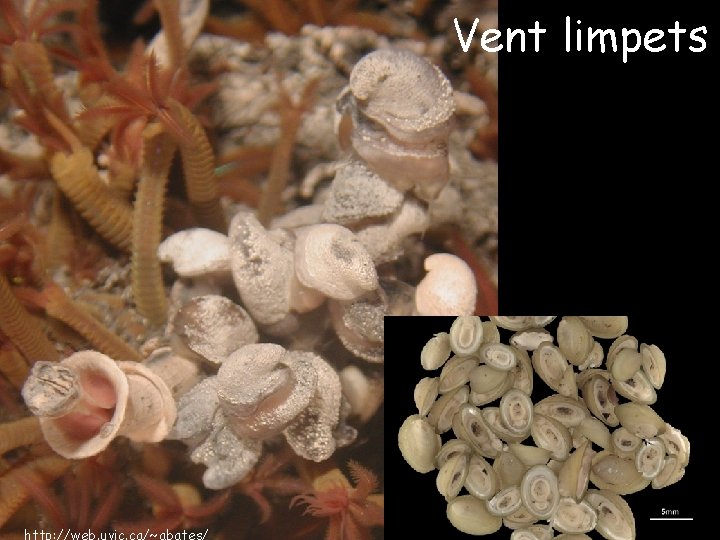
Vent limpets
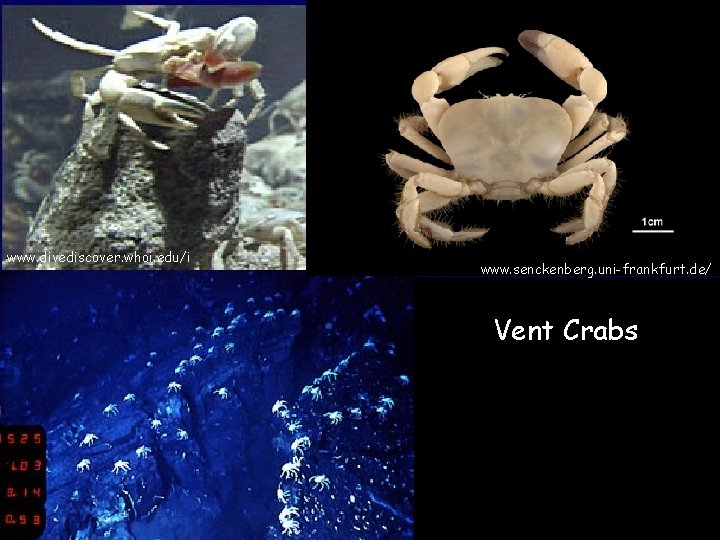
www. divediscover. whoi. edu/i www. senckenberg. uni-frankfurt. de/ Vent Crabs
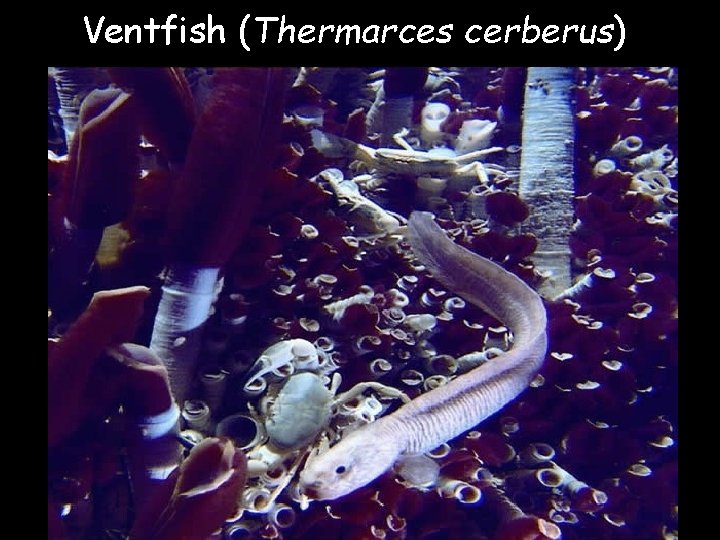
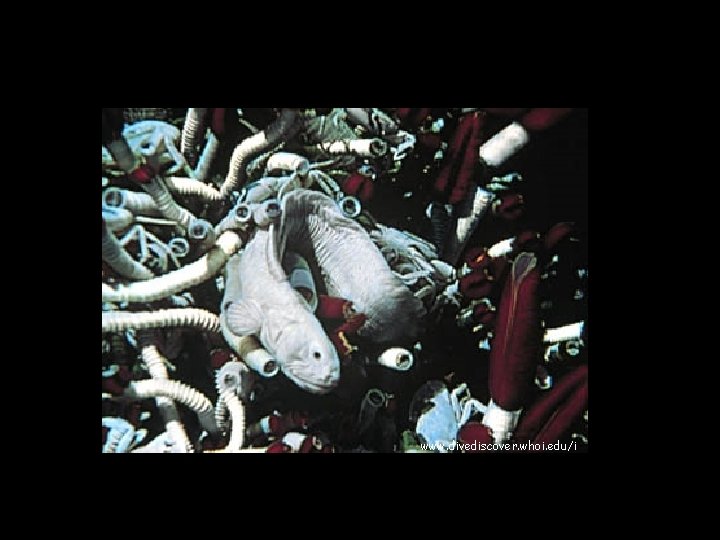
Ventfish (Thermarces cerberus)
www. divediscover. whoi. edu/i
Periferic filter feeders
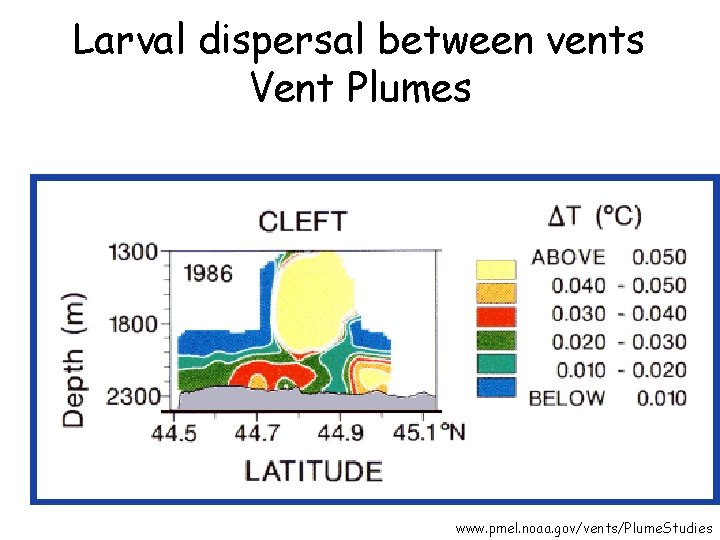
Larval dispersal between vents Vent Plumes www. pmel. noaa. gov/vents/Plume. Studies
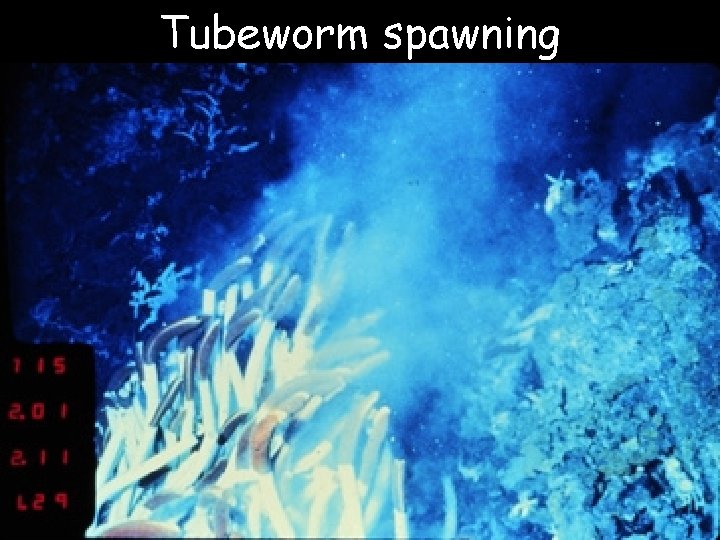
Tubeworm spawning
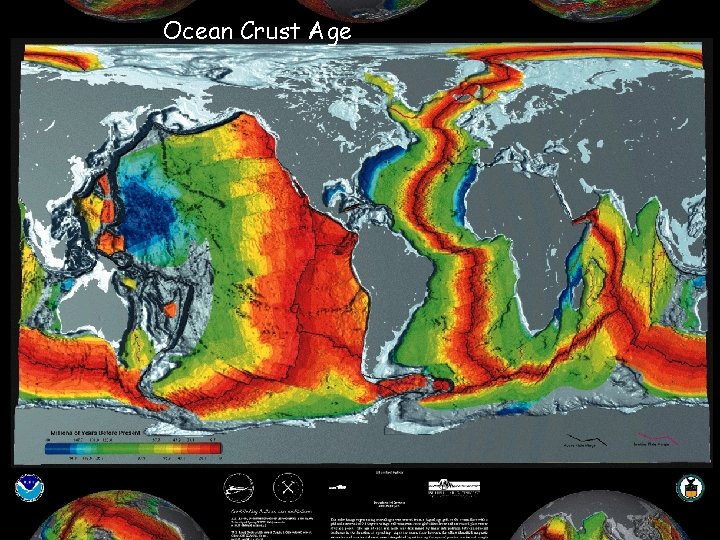
Ocean Crust Age
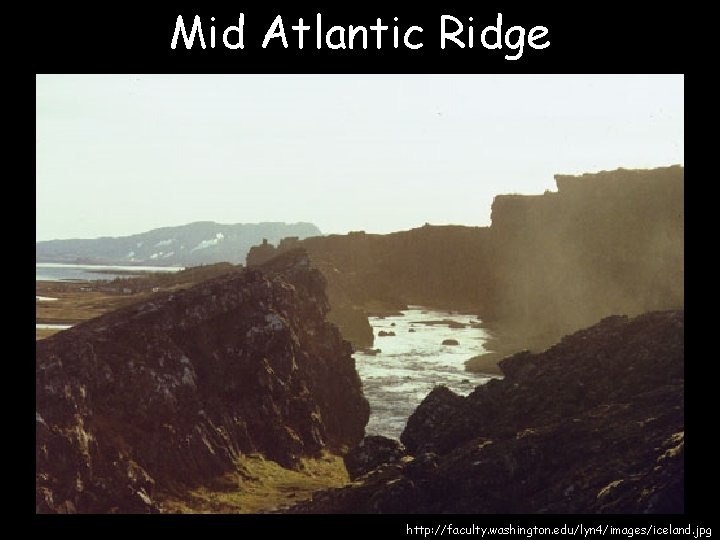
Mid Atlantic Ridge http: //faculty. washington. edu/lyn 4/images/iceland. jpg
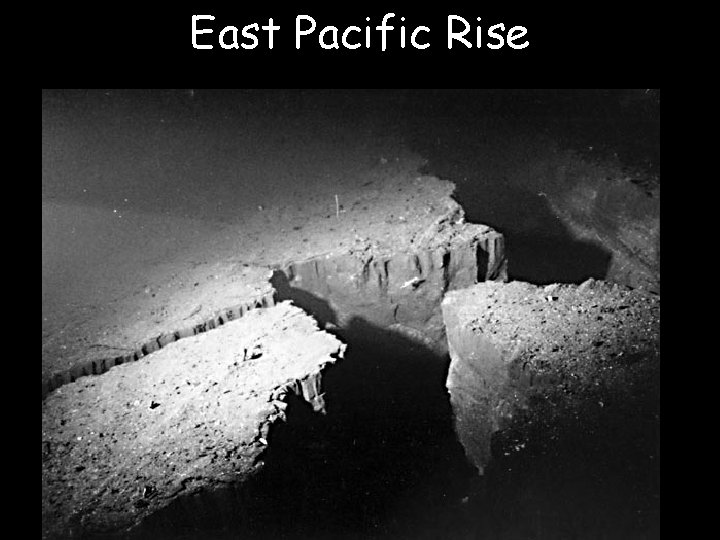
East Pacific Rise
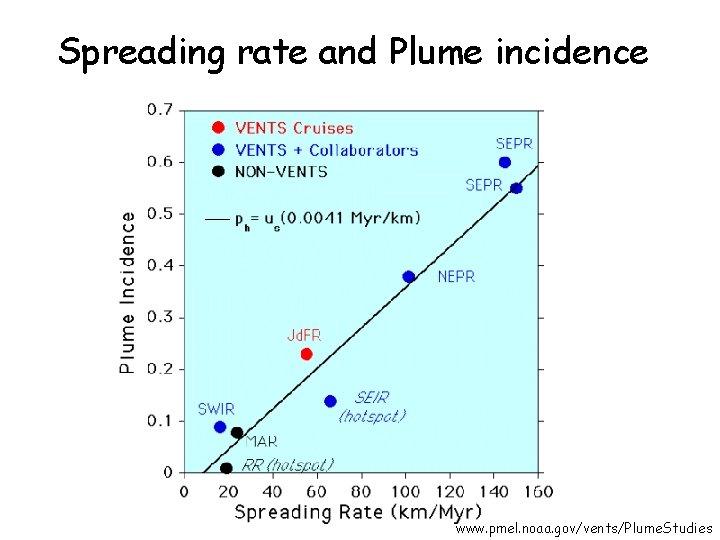
Spreading rate and Plume incidence www. pmel. noaa. gov/vents/Plume. Studies
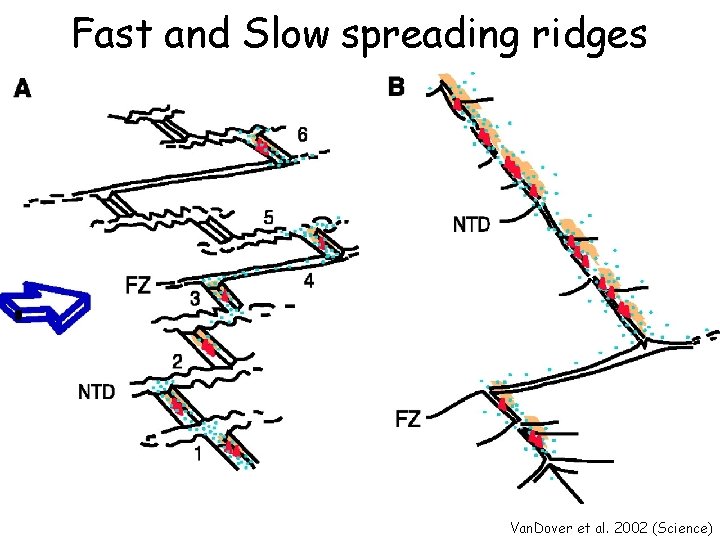
Fast and Slow spreading ridges Van. Dover et al. 2002 (Science)
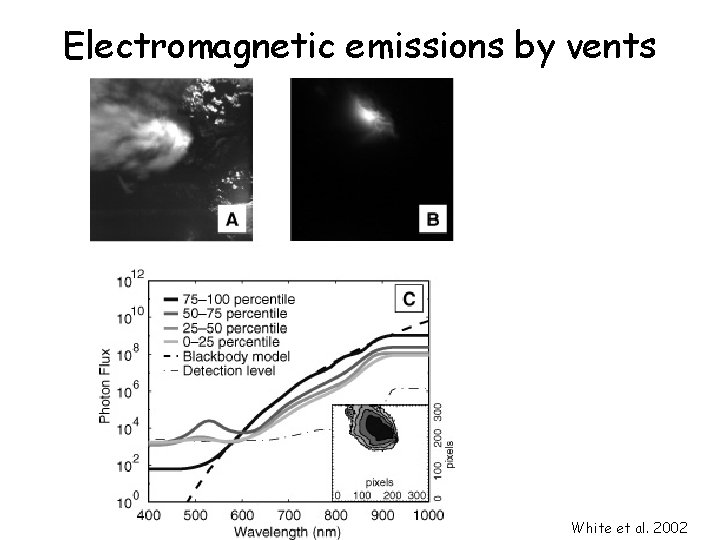
Electromagnetic emissions by vents White et al. 2002
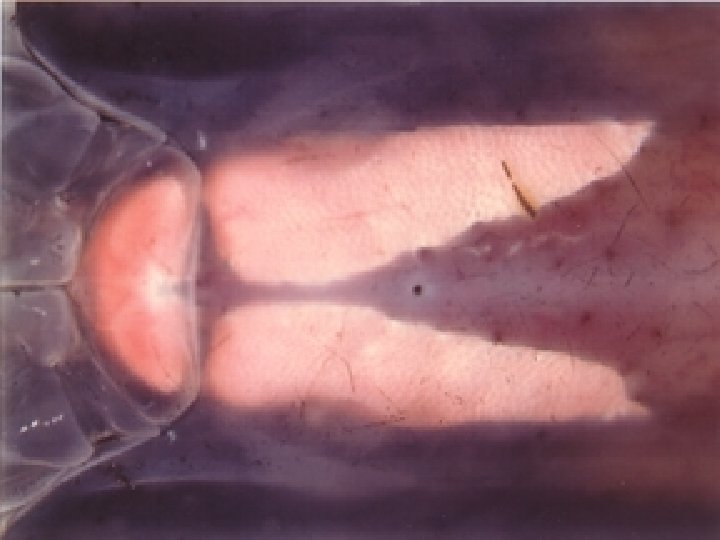
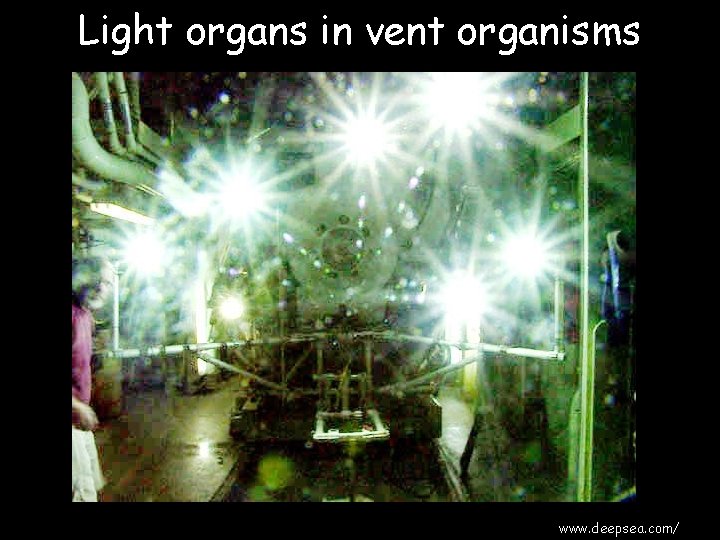
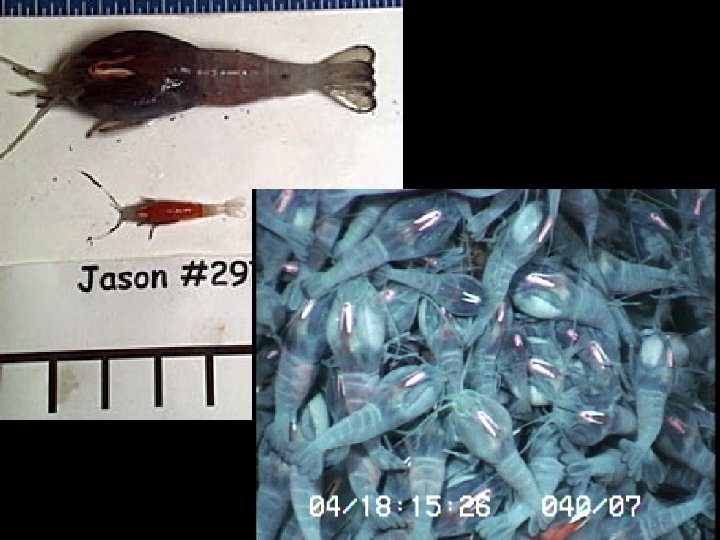
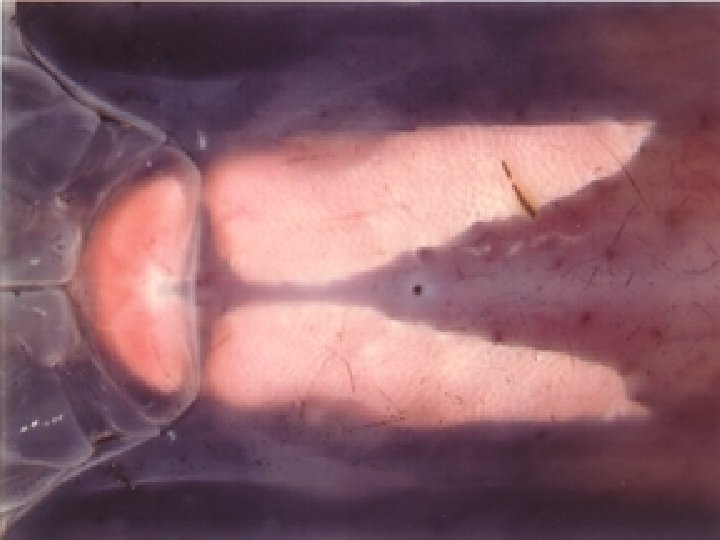
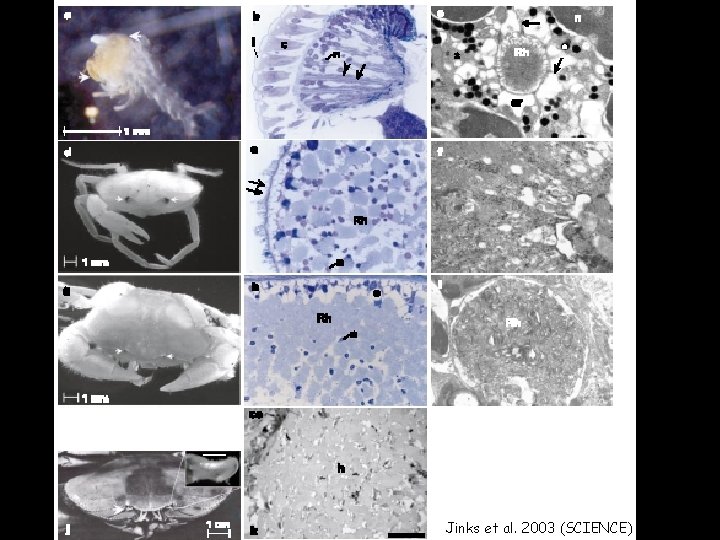
Light organs in vent organisms www. deepsea. com/
Jinks et al. 2003 (SCIENCE)
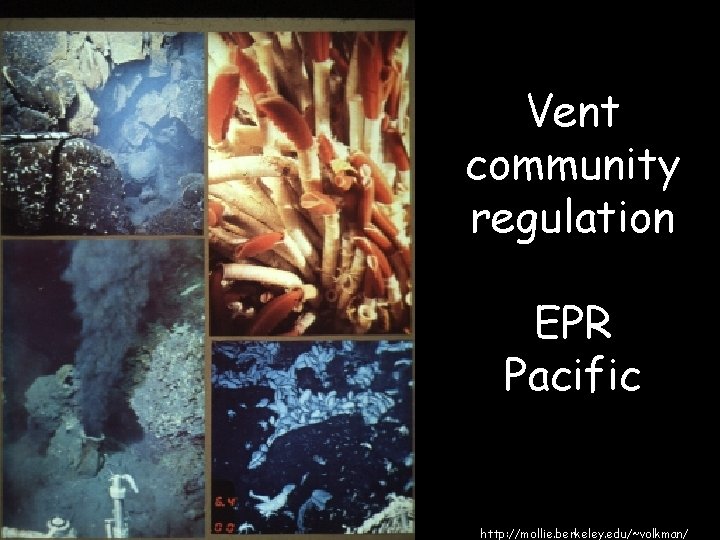
Vent community regulation EPR Pacific http: //mollie. berkeley. edu/~volkman/
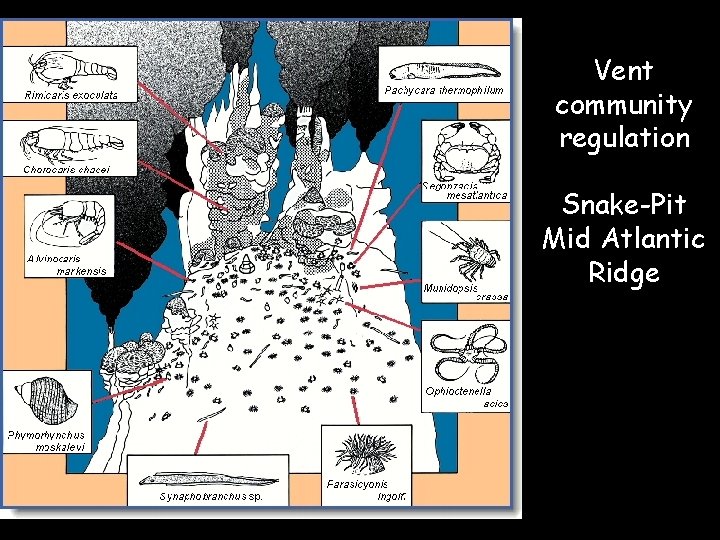
Vent community regulation Snake-Pit Mid Atlantic Ridge
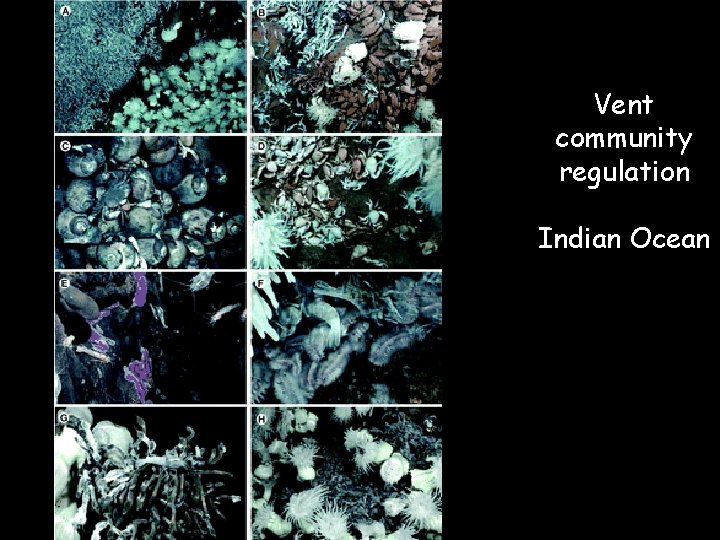
Vent community regulation Indian Ocean
Vent community regulation • Physical factors – Temperature • Ecological factors – – Competition Larval supply Predation Ecological cascading – Keystone predators
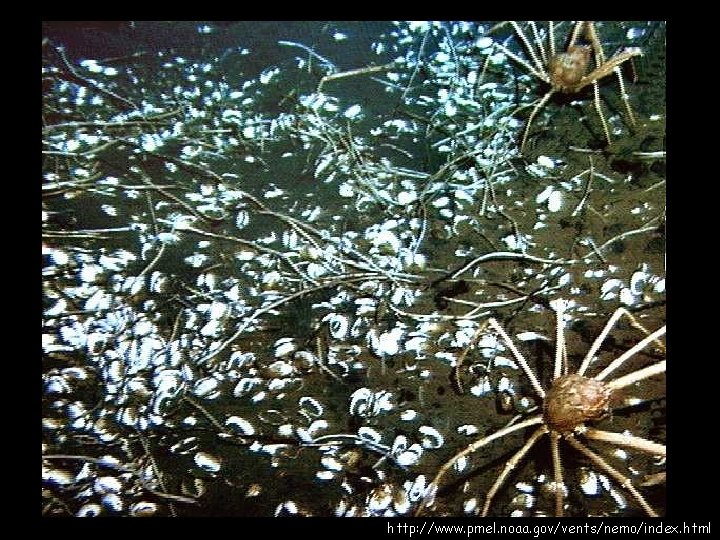
http: //www. pmel. noaa. gov/vents/nemo/index. html
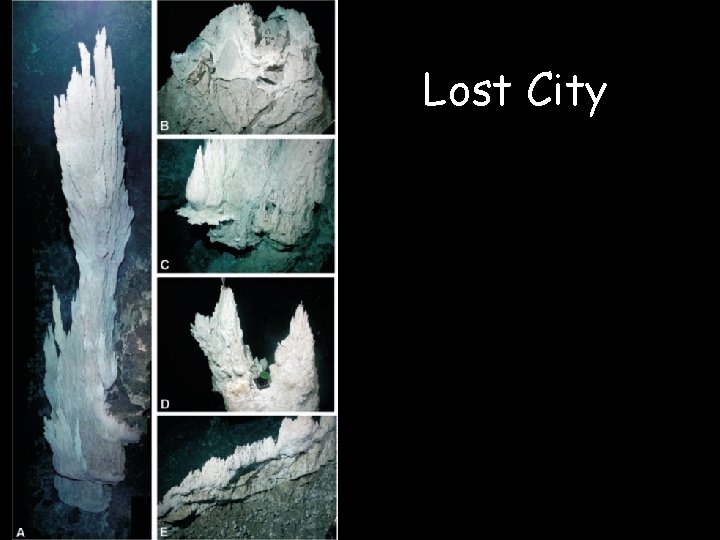
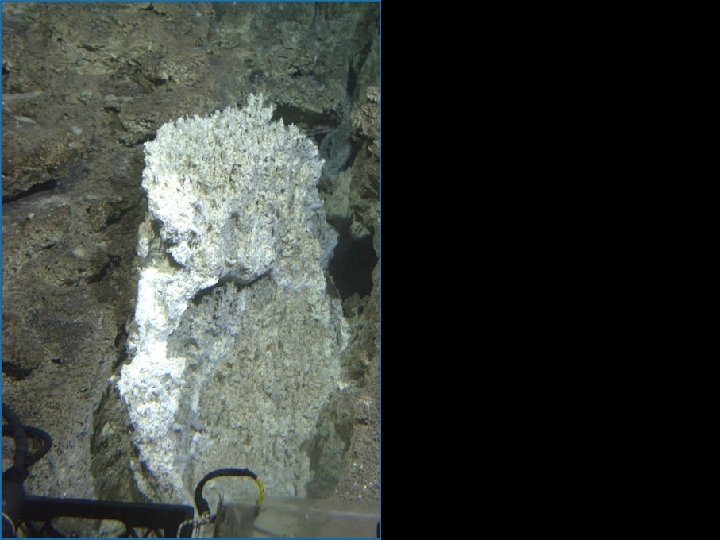
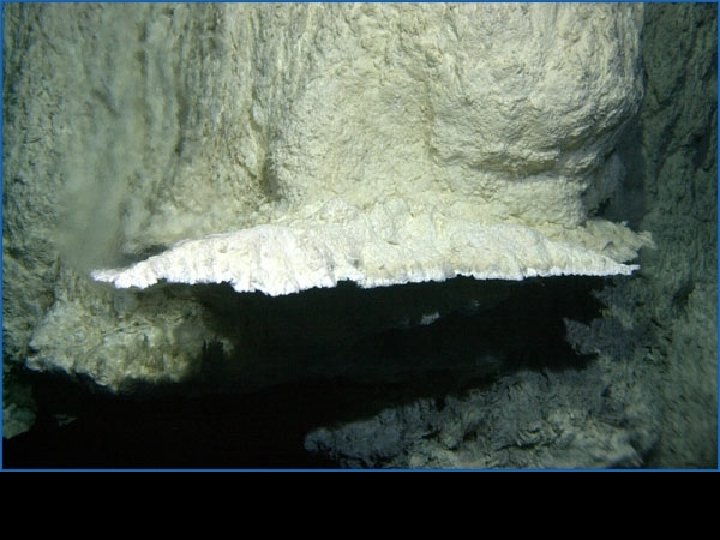
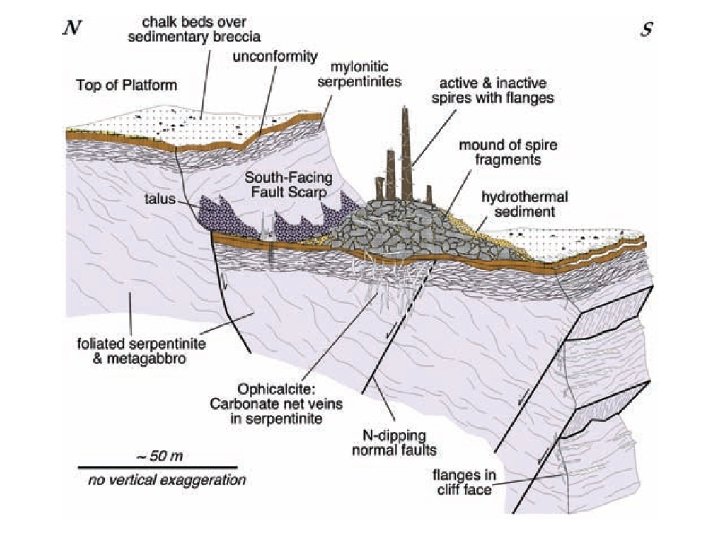
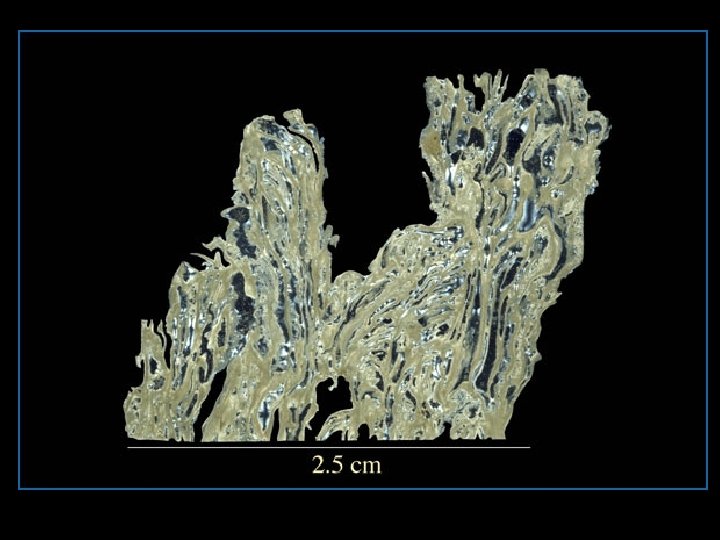
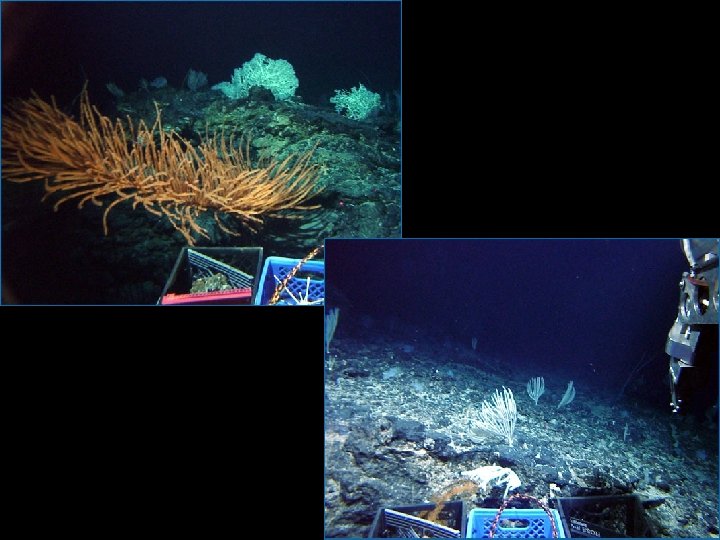
Lost City
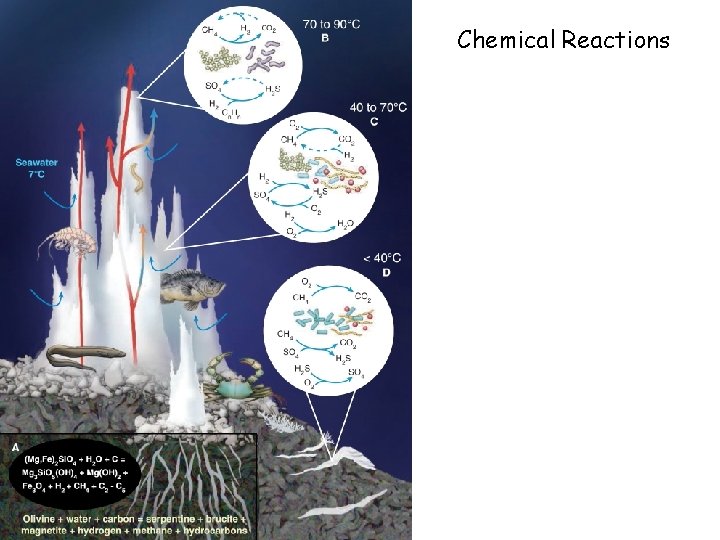
Chemical Reactions
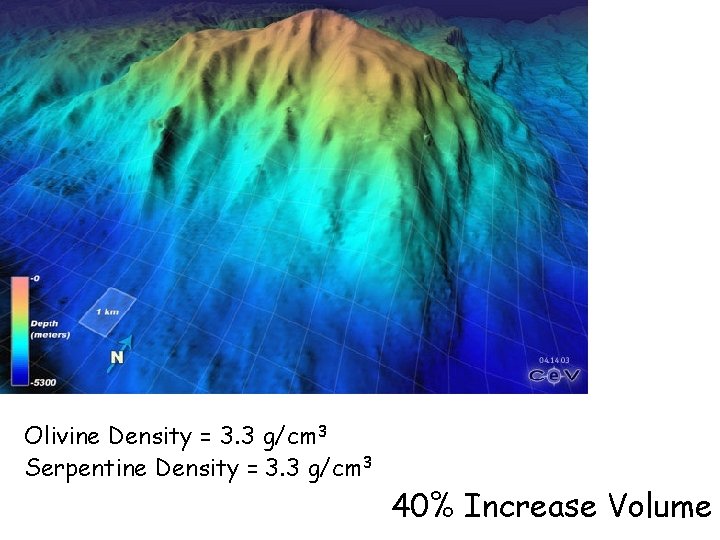
Olivine Density = 3. 3 g/cm 3 Serpentine Density = 3. 3 g/cm 3 40% Increase Volume
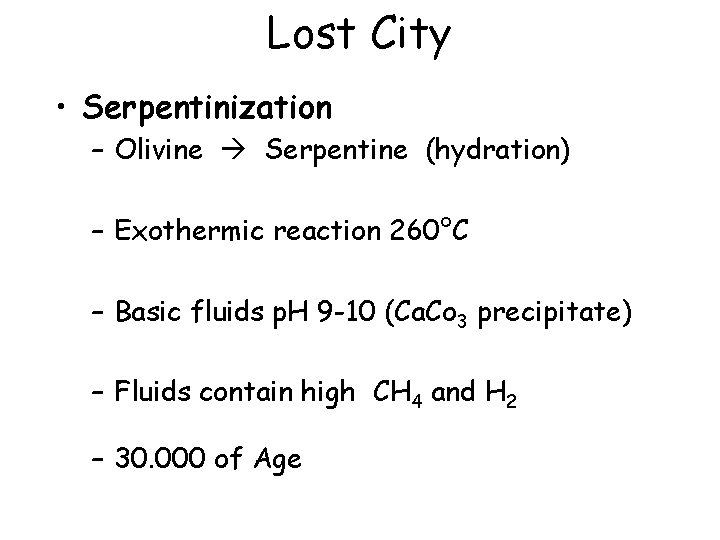
Lost City • Serpentinization – Olivine Serpentine (hydration) – Exothermic reaction 260°C – Basic fluids p. H 9 -10 (Ca. Co 3 precipitate) – Fluids contain high CH 4 and H 2 – 30. 000 of Age