
HYDROSPHERE Water Cycle OBJECTIVES Name the 3 major
HYDROSPHERE & Water Cycle
OBJECTIVES �Name the 3 major process in the water cycle �Describe the properties of ocean water �Describe the 2 types of ocean currents �Explain how the ocean regulates Earth’s temp. �Discuss the factors that continue life to the biosphere �Explain the difference b/w open & closed systems
Hydrosphere �Oceans �Lakes �Rivers �Wetlands �Polar icecaps Includes all of the water on or near Earth’s surface �Soil �Rock �Clouds �Layers beneath Earth’s surface
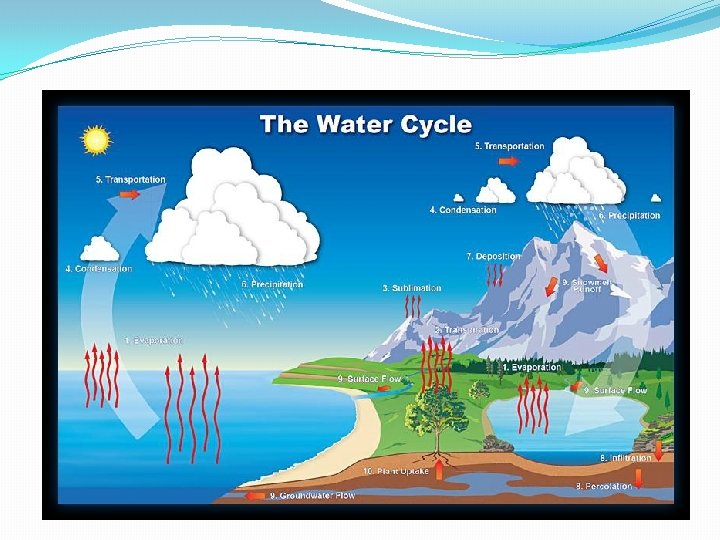
Water Cycle The continuous movement of water into the air, onto land, and then back to water sources �Evaporation – process by which liquid water is heated by the sun & rises to the atmosphere as water vapor �Condensation - water vapor forms water droplets on dust particles then form clouds �Precipitation - large droplets fall from clouds as rain, snow, sleet or hail
? For you �Estimate the % of Earth’s water that is SALT water? �Estimate the % of Earth’s water that is FRESH water? 97% 3%
Earth’s Oceans
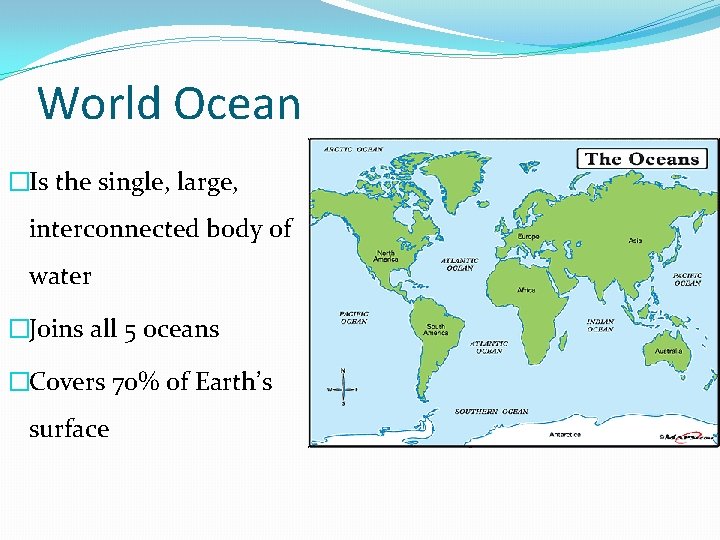
World Ocean �Is the single, large, interconnected body of water �Joins all 5 oceans �Covers 70% of Earth’s surface
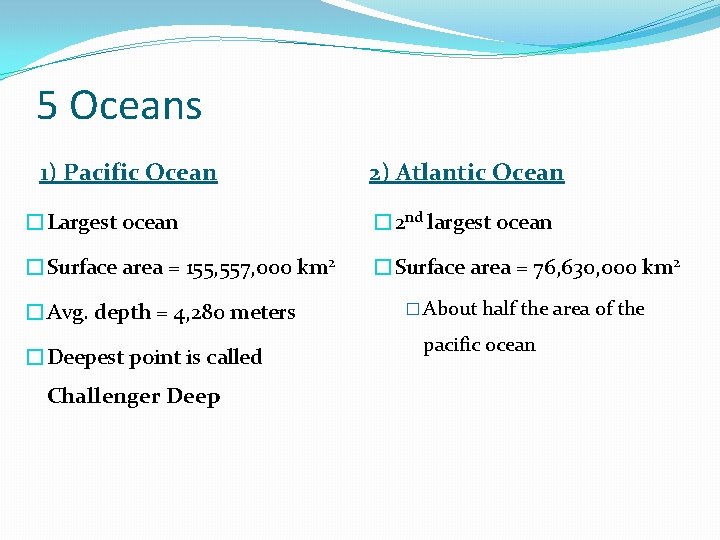
5 Oceans 1) Pacific Ocean 2) Atlantic Ocean �Largest ocean � 2 nd largest ocean �Surface area = 155, 557, 000 km 2 �Surface area = 76, 630, 000 km 2 �Avg. depth = 4, 280 meters �Deepest point is called Challenger Deep � About half the area of the pacific ocean
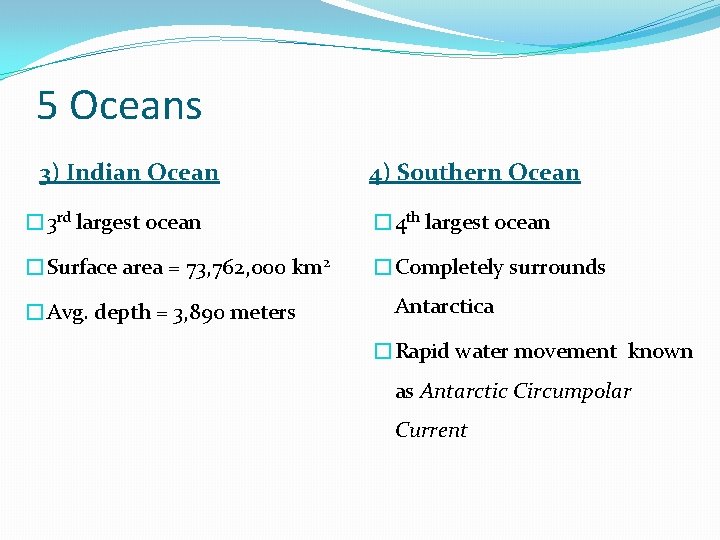
5 Oceans 3) Indian Ocean 4) Southern Ocean � 3 rd largest ocean � 4 th largest ocean �Surface area = 73, 762, 000 km 2 �Completely surrounds �Avg. depth = 3, 890 meters Antarctica �Rapid water movement known as Antarctic Circumpolar Current
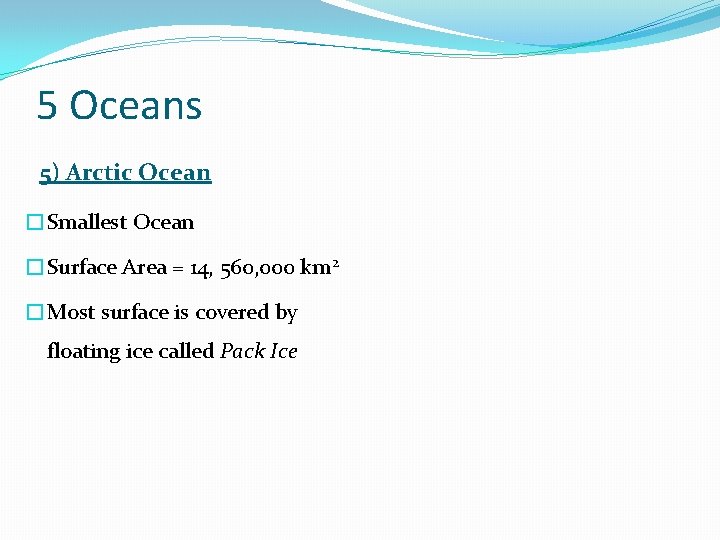
5 Oceans 5) Arctic Ocean �Smallest Ocean �Surface Area = 14, 560, 000 km 2 �Most surface is covered by floating ice called Pack Ice
For experiment next class �Bring in a shell or ocean material
Ocean Acidification http: //coralreef. noaa. gov/education/oa/resources/ocean_acid 2_nms. pdf http: //coralreef. noaa. gov/education/oa/curricula-activities. html
OBJECTIVES �Name the 3 major process in the water cycle �Describe the properties of ocean water �Describe the 2 types of ocean currents �Explain how the ocean regulates Earth’s temp. �Discuss the factors that continue life to the biosphere �Explain the difference b/w open & closed systems
Why is ocean water so salty? �Contains salts (Sodium Chloride, Na. Cl) �Salts have dissolved from rocks on land, which have been carried down rivers into the oceans over millions of years �Volcanic eruptions add salts too �Salinity is the concentration of all the dissolved salts it contains �Avg. salt content of ocean is about 3. 5 % by weight
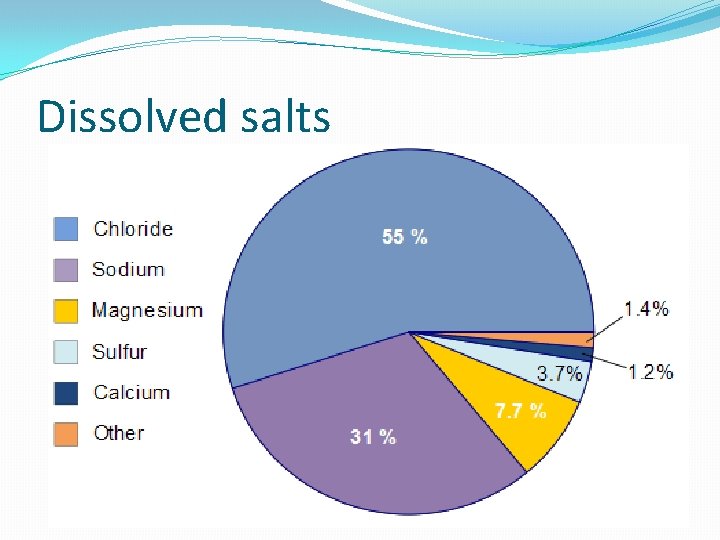
Dissolved salts
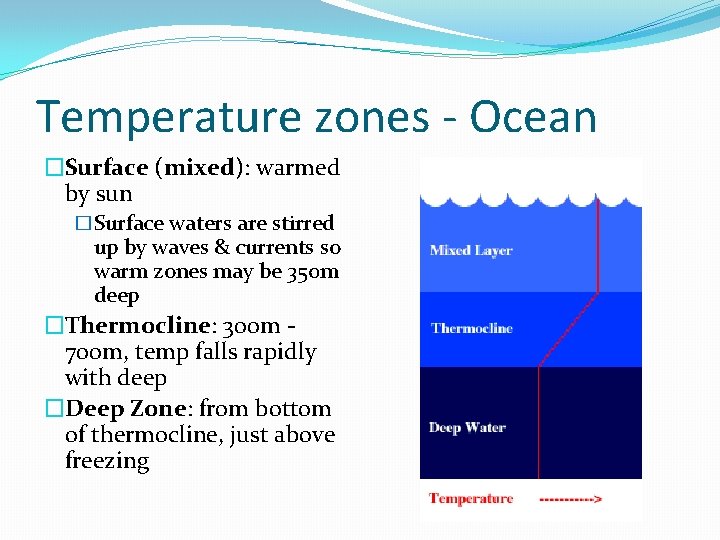
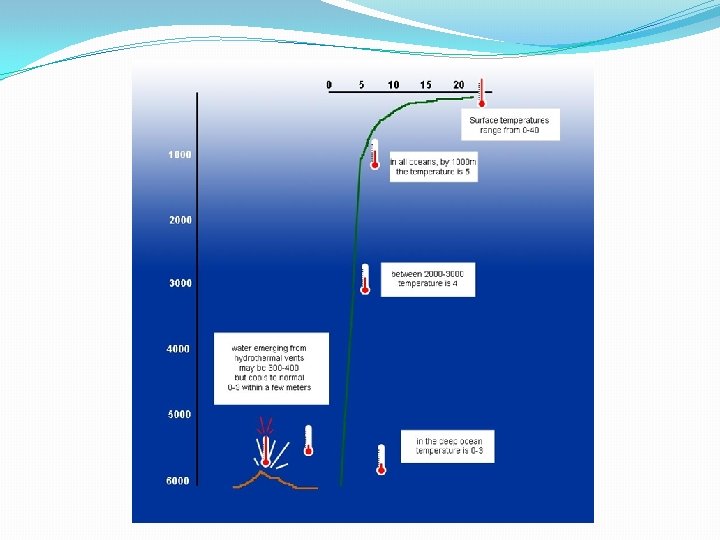
Temperature zones - Ocean �Surface (mixed): warmed by sun �Surface waters are stirred up by waves & currents so warm zones may be 350 m deep �Thermocline: 300 m 700 m, temp falls rapidly with deep �Deep Zone: from bottom of thermocline, just above freezing
Ocean is a Temp Regulator �Important function of the world ocean is to absorb & store E from sunlight �This regulates Earth’s temperature �World ocean absorbs over half the solar radiation that reaches Earth, so atmosphere temp changes slowly �If the ocean didn’t regulate atmospheric & surface temps. Earth would be too extreme for life
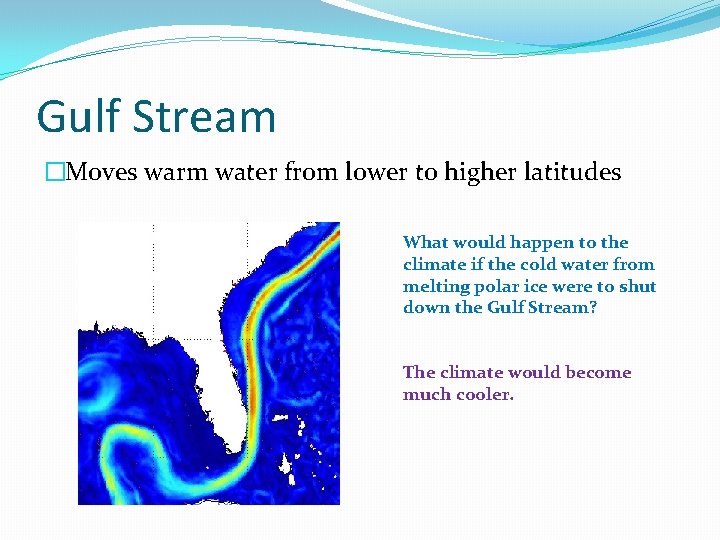
Gulf Stream �Moves warm water from lower to higher latitudes What would happen to the climate if the cold water from melting polar ice were to shut down the Gulf Stream? The climate would become much cooler.
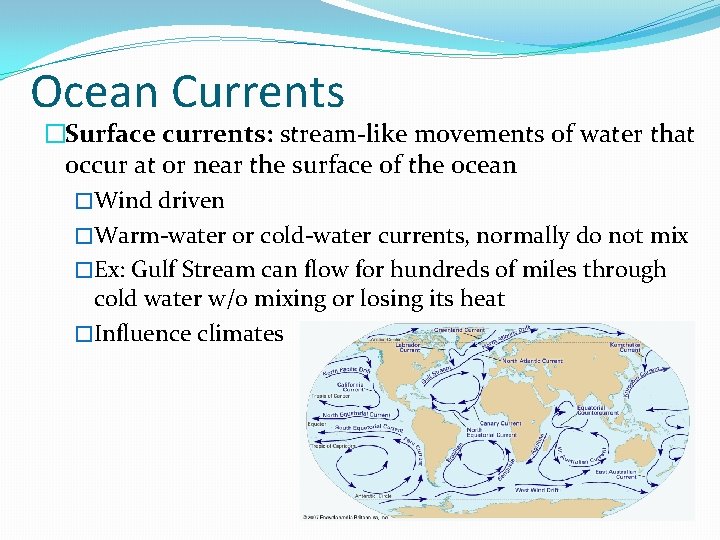
Ocean Currents �Surface currents: stream-like movements of water that occur at or near the surface of the ocean �Wind driven �Warm-water or cold-water currents, normally do not mix �Ex: Gulf Stream can flow for hundreds of miles through cold water w/o mixing or losing its heat �Influence climates
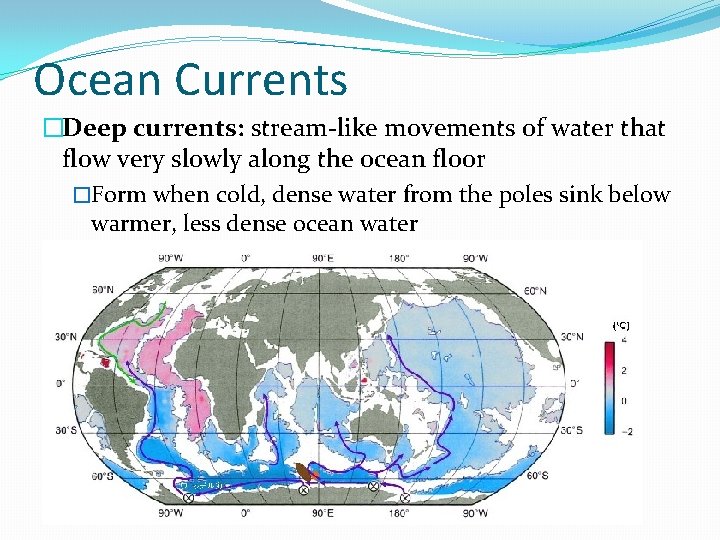
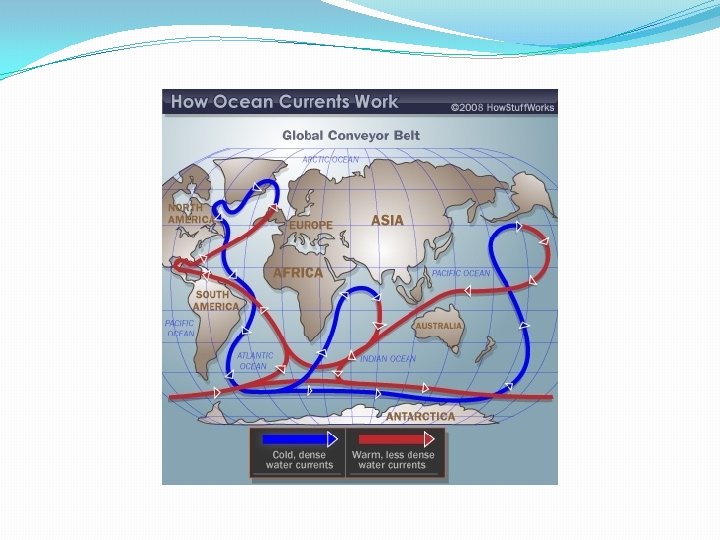
Ocean Currents �Deep currents: stream-like movements of water that flow very slowly along the ocean floor �Form when cold, dense water from the poles sink below warmer, less dense ocean water �Where is the COLDEST? �Coldest & densest located off the coast of Antarctica
Quick Lab – Deep ocean currents �Find a half sheet of paper for your answers. �Label paper with name, date, & title �Analysis questions – complete sentences! 1) What did you observe when the cold water was poured into the hot water? 2) Explain why this occurred and how it relates to ocean currents.
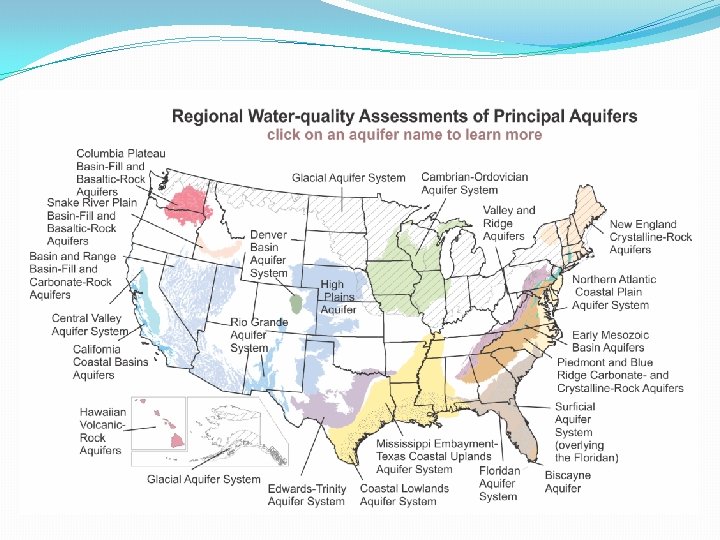
Fresh Water �Remember: What % of water is fresh? 3% �Found: �large ice caps & glaciers � Ex: the ice sheet that covers Antarctica is as large as the US �Lakes, rivers, wetlands, soil, rock, layers below the surface, & atmosphere �Groundwater: rain & melting snow sink into the ground & run off the land �< 1% of water on Earth, but needed for human survival �Aquifer: a rock layer that stores & allows the flow of ground- water
- Slides: 26