
Hydropower Water Hydrologic Cycle A clean renewable Energy
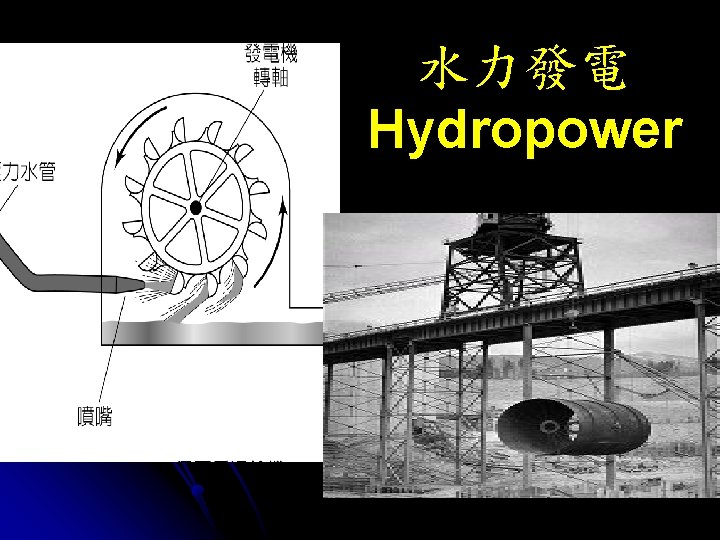
水力發電 Hydropower

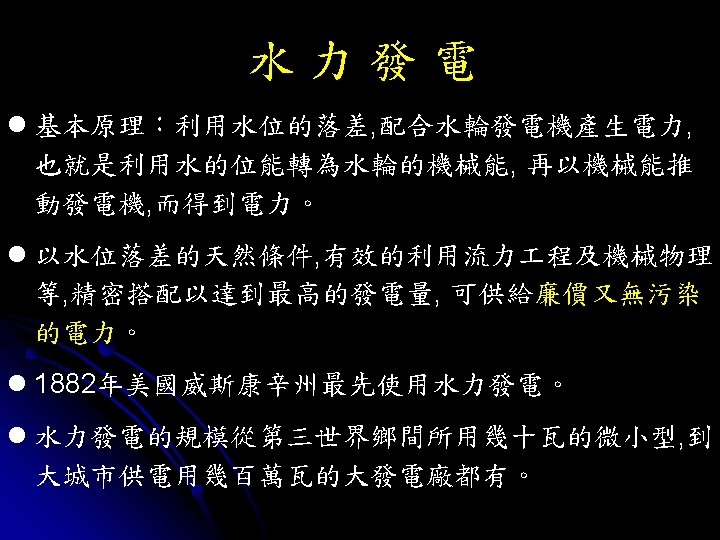
Water (Hydrologic) Cycle -A clean & renewable Energy Water constantly moves through a vast global cycle, evaporating from lakes and oceans, forming clouds, precipitating as rain or snow, then flowing back down to the ocean. The energy of this water cycle, which is driven by the sun, can be tapped to produce electricity or for mechanical tasks like grinding grain.

Water (Hydrologic) Cycle -A clean & renewable Energy l Hydropower uses a fuel –water- that is not reduced or used up in the process. l Because the water cycle is an endless, constantly recharging system. Hydropower is considered a renewable energy.


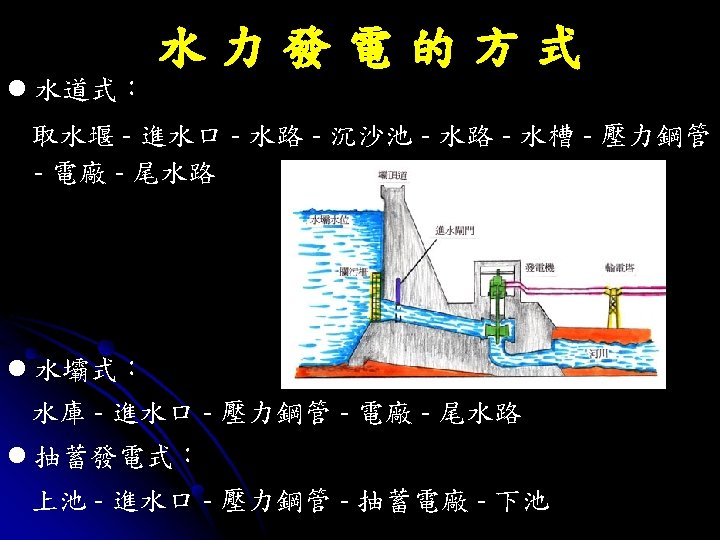
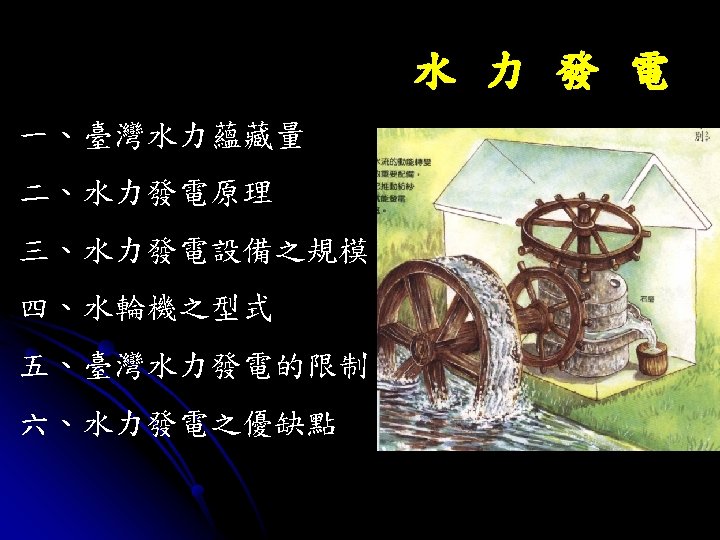
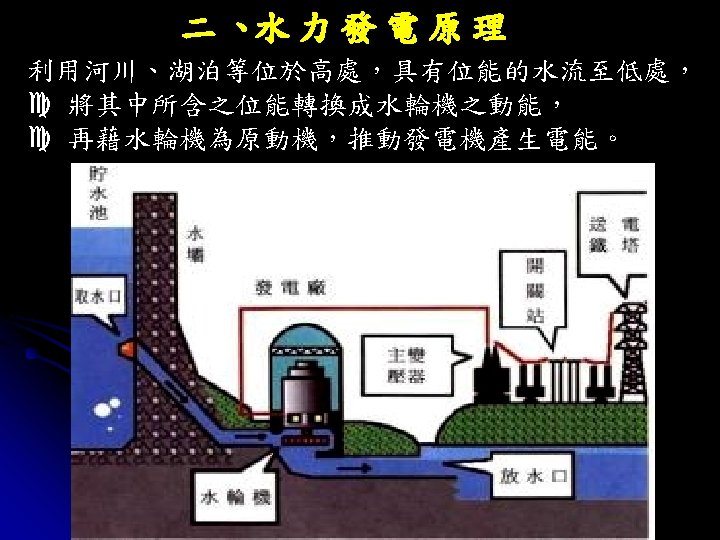
Hydroelectric power (水力發電) l. When flowing water is captured and turned into electricity, it is called hydroelectric power or hydropower. l. There are several types of hydroelectric facilities; they are all powered by the kinetic energy of flowing water as it moves downstream. l. Turbines and generators convert the energy into electricity, which is then fed into the electrical grid to be used in homes, businesses, and by industry.


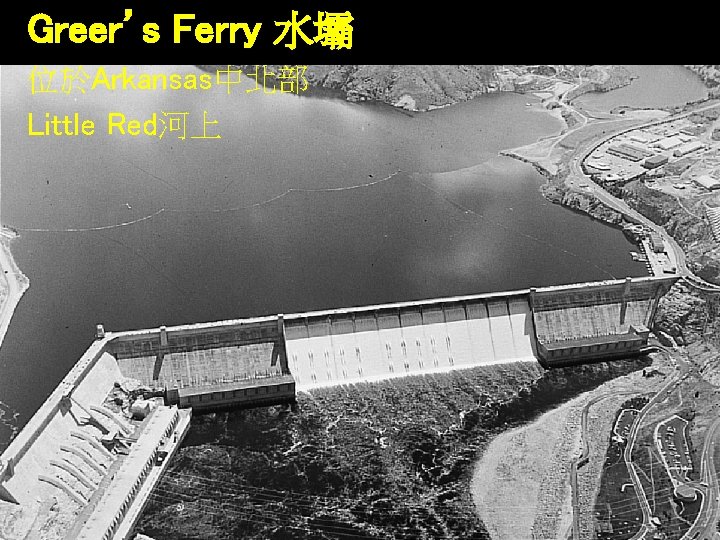
Greer’s Ferry 水壩 位於Arkansas中北部 Little Red河上

Link to web site: http: //www. fwee. org/walk. html

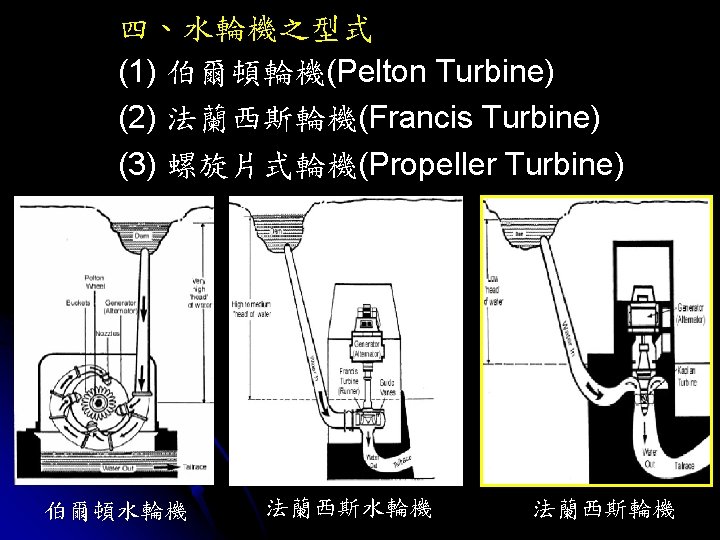
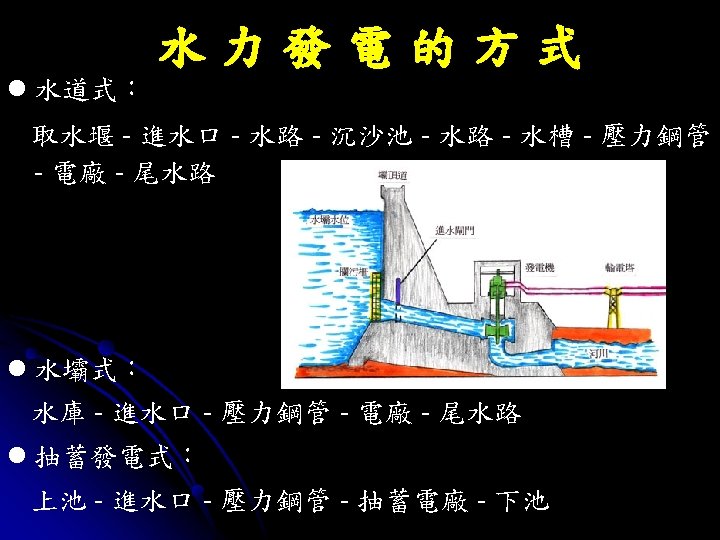
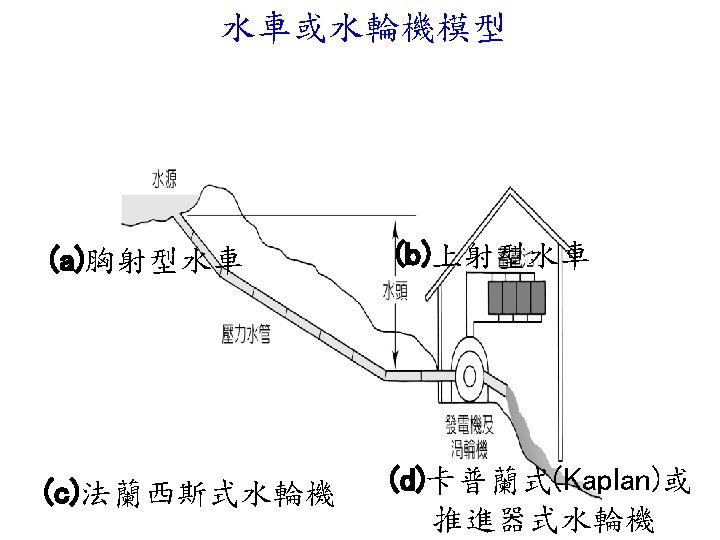
1. The Penstock (導水 管) - collects water from a lake, reservoir, or river. 2. Turbine (渦輪機、引擎) - A turbine spins as the force of falling water flows through the penstock.

3. The Powerhouse - The turbine, generator, & step-up transformer are located in the powerhouse. Turbine Blades 4. Turbine Blades The blades on this type of turbine (Kaplan) can be adjusted to make sure the turbine is as efficient as possible given the amount of water passing through the penstock.
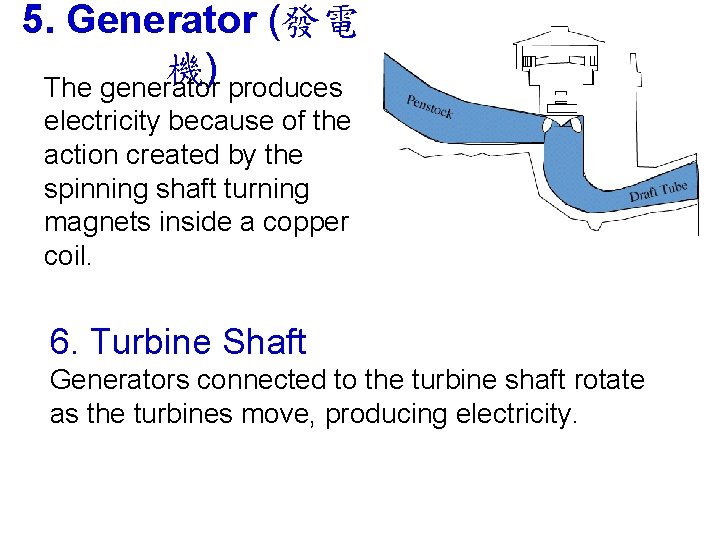
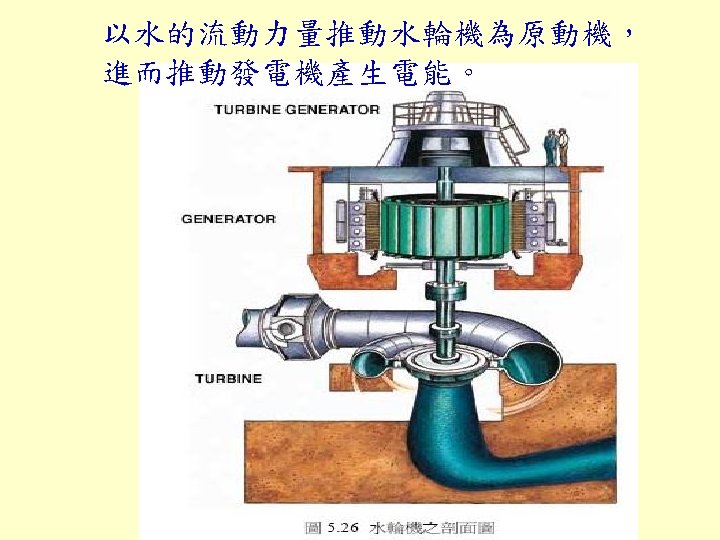
5. Generator (發電 機) The generator produces electricity because of the action created by the spinning shaft turning magnets inside a copper coil. 6. Turbine Shaft Generators connected to the turbine shaft rotate as the turbines move, producing electricity.
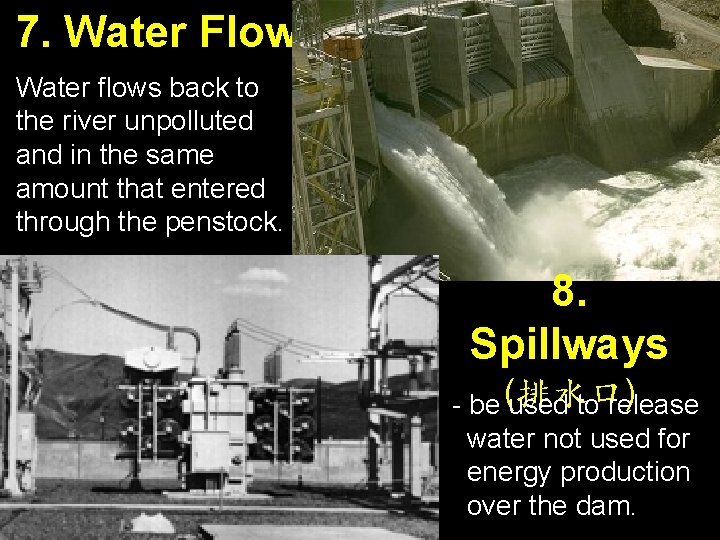
7. Water Flow Water flows back to the river unpolluted and in the same amount that entered through the penstock. 8. Spillways - be (排水口) used to release water not used for energy production over the dam.

9. Step-up Transformers (增壓變壓 器) - increase the voltage of the electricity produced by the generator to levels needed for the journey to our communities. 10. Transmission Lines (傳輸線) -carry the electricity to substations.

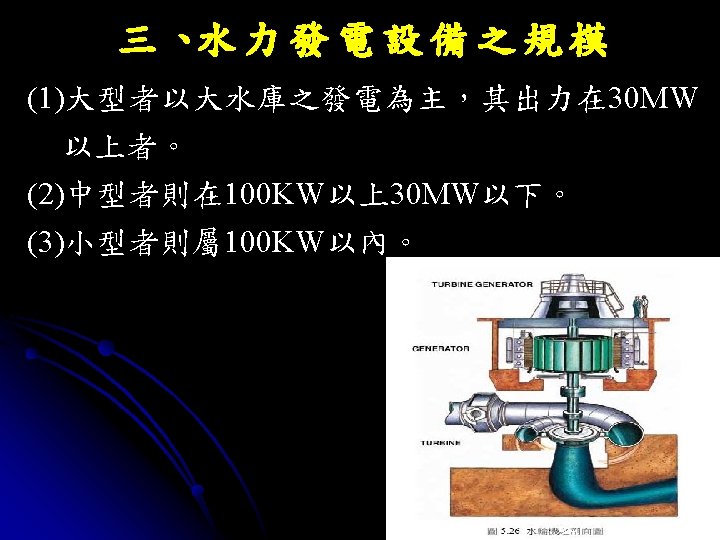
Hydropower Generator 1. Water flows through the dam and turns a large wheel called a turbine. The turbine turns a shaft which rotates a series of magnets past copper coils and a generator to produce electricity. The process produces clean renewable energy. 2. The Kaplan Head is the hydraulic associated with adjustable blades on the turbine. Adjustable blades operate efficiently despite variations in water flow and energy demands.
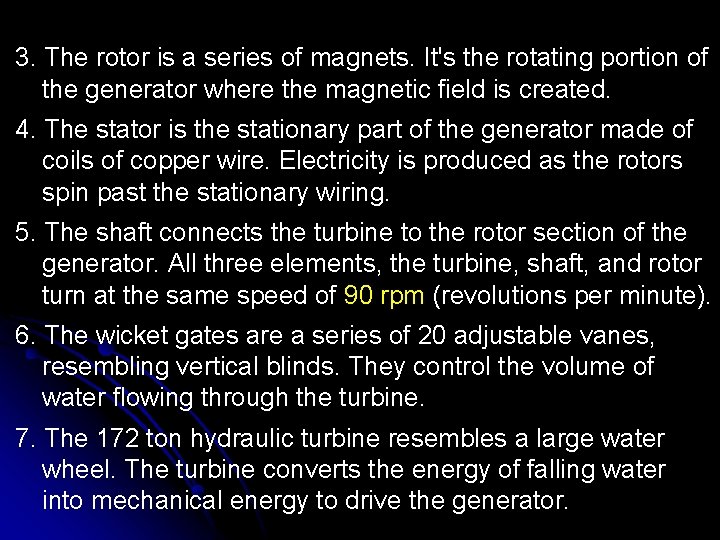
3. The rotor is a series of magnets. It's the rotating portion of the generator where the magnetic field is created. 4. The stator is the stationary part of the generator made of coils of copper wire. Electricity is produced as the rotors spin past the stationary wiring. 5. The shaft connects the turbine to the rotor section of the generator. All three elements, the turbine, shaft, and rotor turn at the same speed of 90 rpm (revolutions per minute). 6. The wicket gates are a series of 20 adjustable vanes, resembling vertical blinds. They control the volume of water flowing through the turbine. 7. The 172 ton hydraulic turbine resembles a large water wheel. The turbine converts the energy of falling water into mechanical energy to drive the generator.
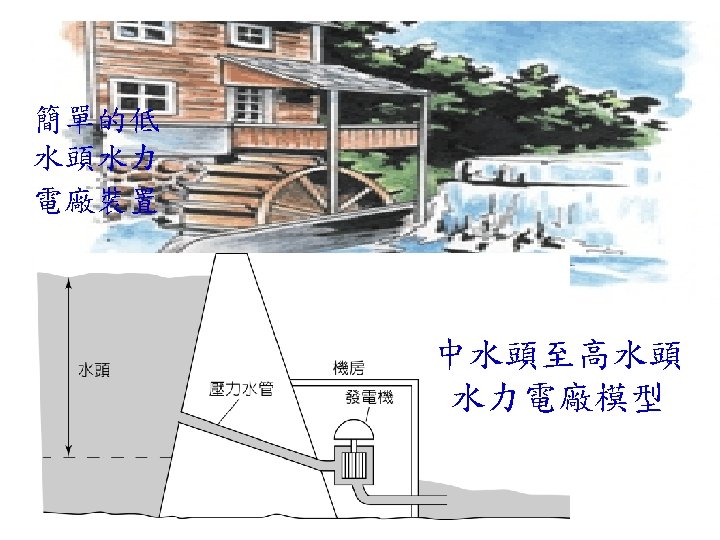
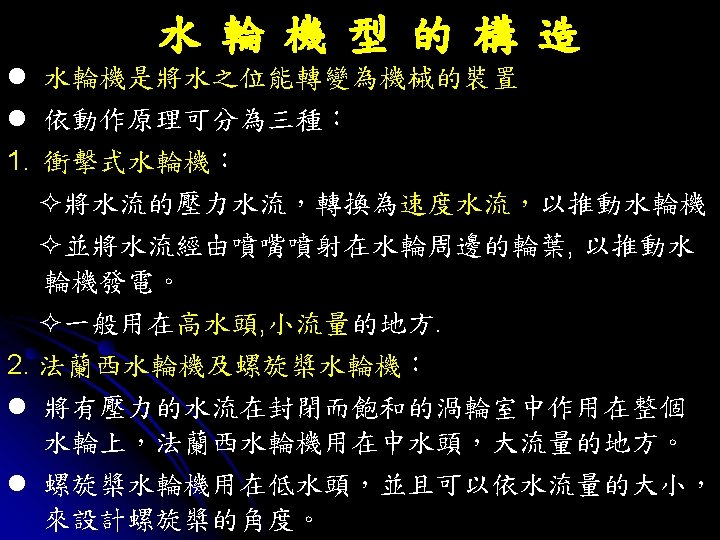


l Of the renewable energy sources that generate electricity, hydropower is the most often used. l It accounted for 7 percent of U. S. generation and 45 percent of renewable generation in 2003. l It is one of the oldest sources of energy and was used thousands of years ago to turn a paddle wheel for purposes such as grinding grain. l The first industrial use of hydropower to generate electricity occurred in 1880, when 16 brush-arc lamps were powered using a water turbine at the Wolverine Chair Factory in Grand Rapids, Michigan. l The first U. S. hydroelectric power plant opened on the Fox River near Appleton, Wisconsin, on September 30, 1882. l Until that time, coal was the only fuel used to produce electricity. l Because the source of hydropower is water, hydroelectric power plants must be located on a water source. l Therefore, it wasn’t until the technology to transmit electricity over long distances was developed that hydropower became widely used.
l. Over one-half (56 %) of the total U. S. hydroelectric capacity for electricity generation is concentrated in three States (Washington, California and Oregon) with ~31 % in Washington, the location of the Nation’s largest hydroelectric facility is the Grand Coulee Dam. l. It is important to note that only a small percentage of all dams in the United States produce electricity. Most dams were constructed solely to provide irrigation and flood control. 美國境內的水壩主要適用於灌溉和防洪用,僅少 部分水壩是用於水力發電用。


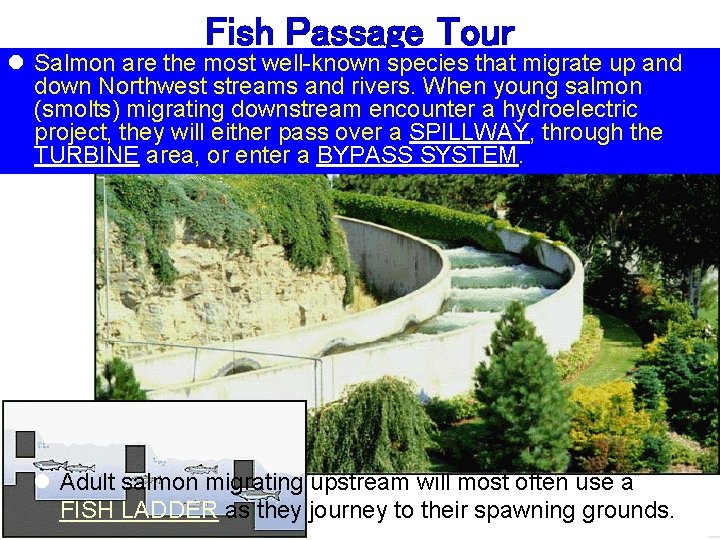
Fish Passage Tour l Salmon are the most well-known species that migrate up and down Northwest streams and rivers. When young salmon (smolts) migrating downstream encounter a hydroelectric project, they will either pass over a SPILLWAY, through the TURBINE area, or enter a BYPASS SYSTEM. l Adult salmon migrating upstream will most often use a FISH LADDER as they journey to their spawning grounds.

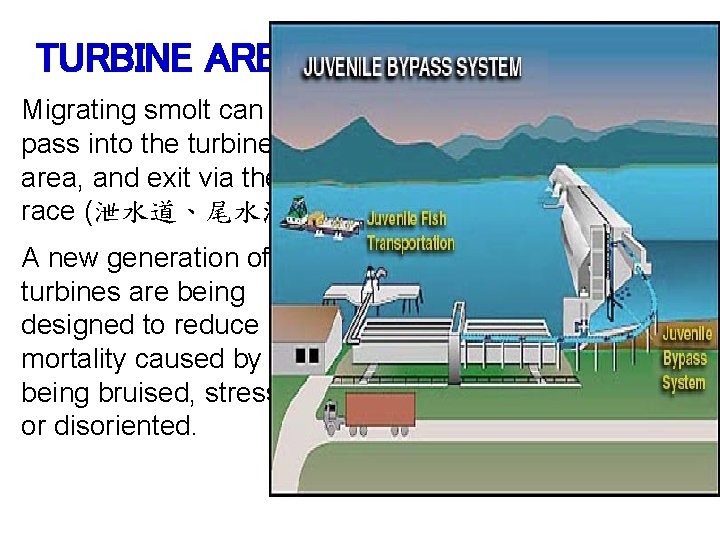
TURBINE AREA Migrating smolt can pass into the turbine area, and exit via the tail race (泄水道、尾水溝). A new generation of turbines are being designed to reduce mortality caused by fish being bruised, stressed or disoriented.
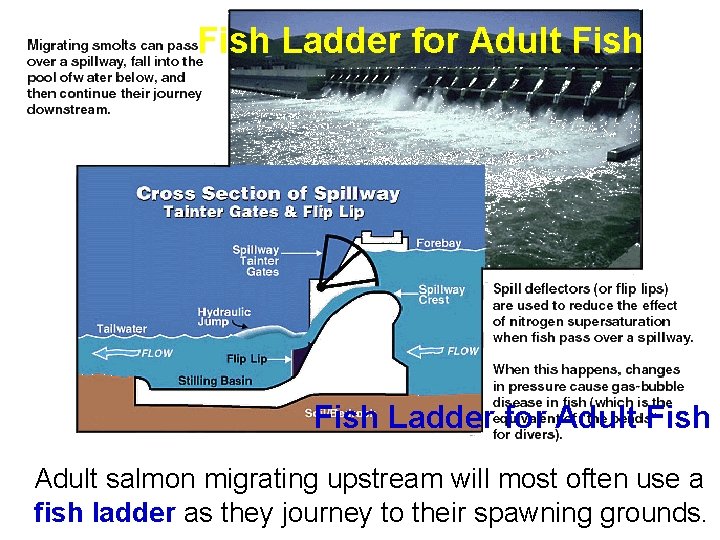
Fish Ladder for Adult Fish l Adult salmon migrating upstream will most often use a fish ladder as they journey to their spawning grounds.

JUVENILE FISH TRANSPORTATION The barging of smolt several miles downstream.
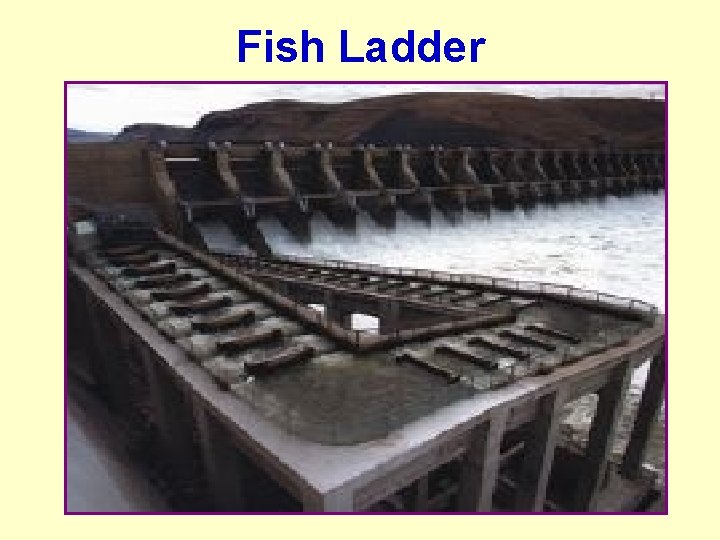
Fish Ladder
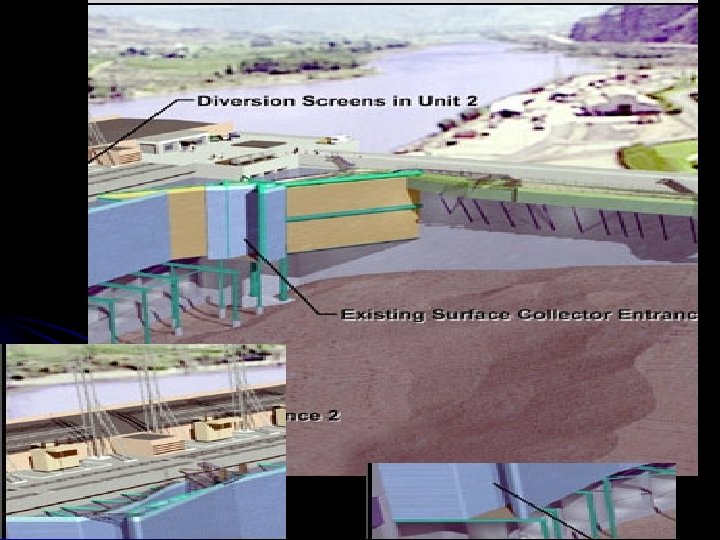
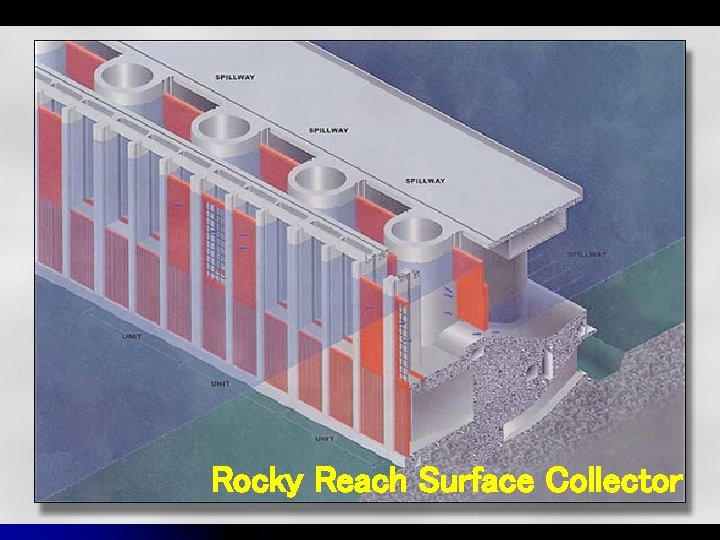
Rocky Reach Surface Collector
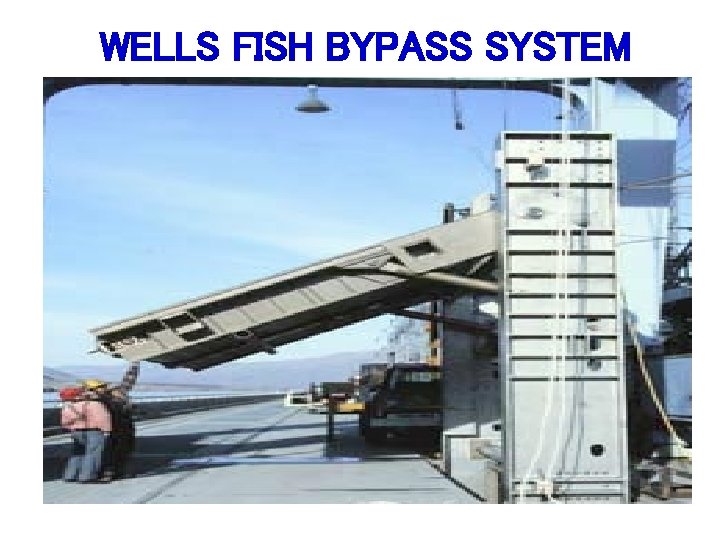
WELLS FISH BYPASS SYSTEM
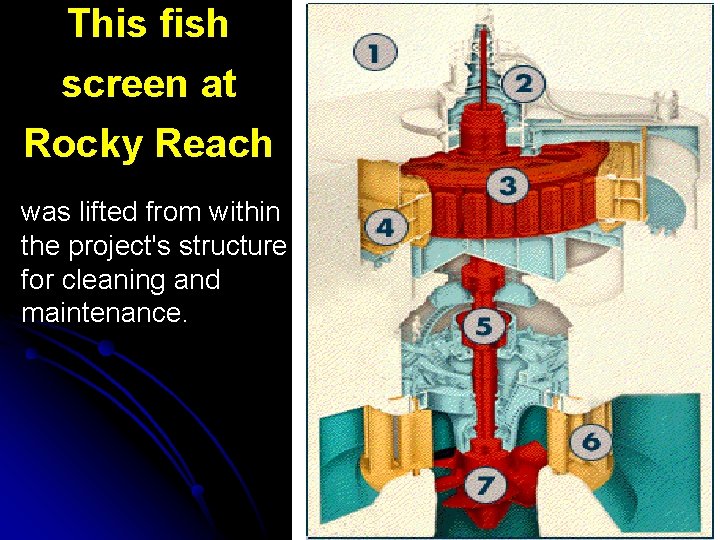
This fish screen at Rocky Reach was lifted from within the project's structure for cleaning and maintenance.
- Slides: 57