
Hydrological Modelling of Small Scale Processes in a

- Slides: 14
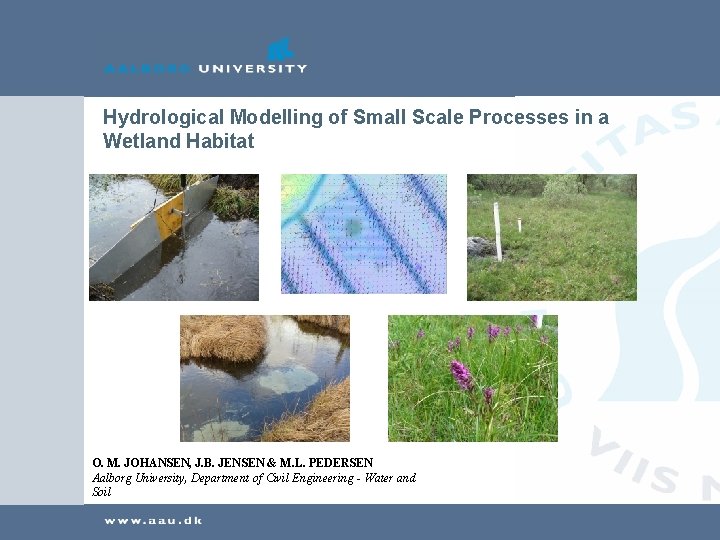
Hydrological Modelling of Small Scale Processes in a Wetland Habitat O. M. JOHANSEN, J. B. JENSEN & M. L. PEDERSEN Aalborg University, Department of Civil Engineering - Water and Soil
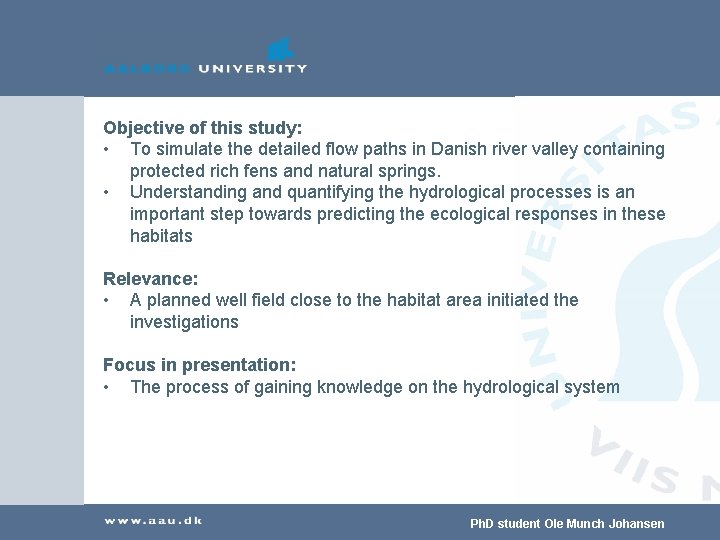
Objective of this study: • To simulate the detailed flow paths in Danish river valley containing protected rich fens and natural springs. • Understanding and quantifying the hydrological processes is an important step towards predicting the ecological responses in these habitats Relevance: • A planned well field close to the habitat area initiated the investigations Focus in presentation: • The process of gaining knowledge on the hydrological system Ph. D student Ole Munch Johansen
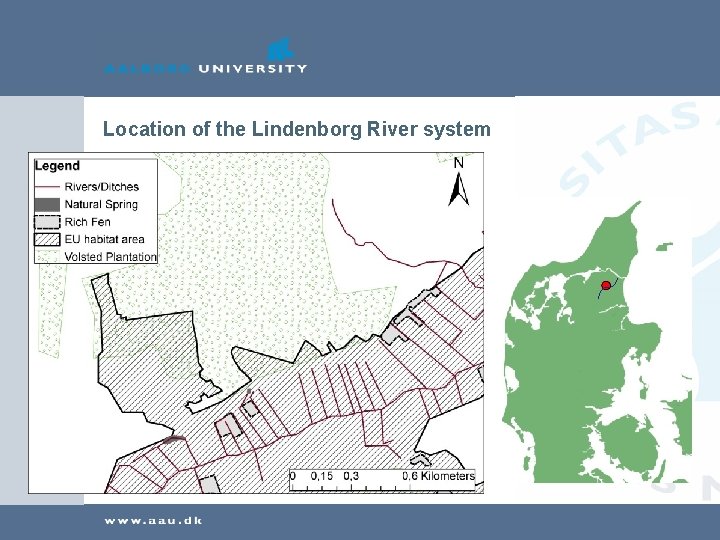
Location of the Lindenborg River system
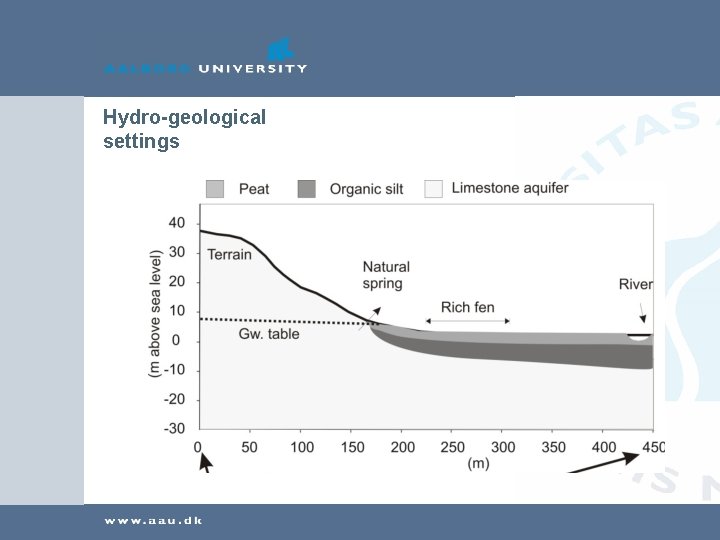
Hydro-geological settings
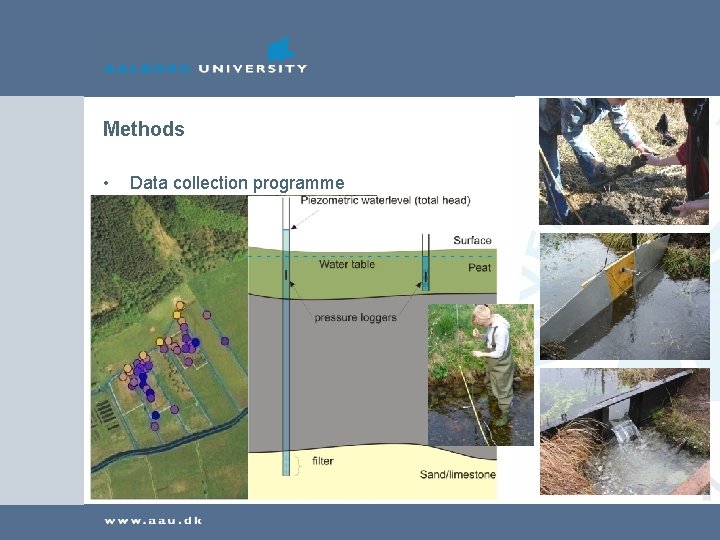
Methods • Data collection programme
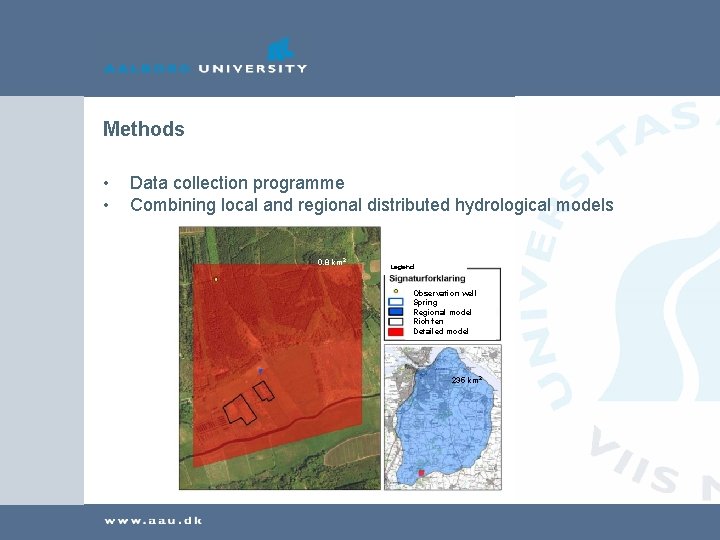
Methods • • Data collection programme Combining local and regional distributed hydrological models 0. 8 km 2 Legend Observation well Spring Regional model Rich fen Detailed model 235 km 2
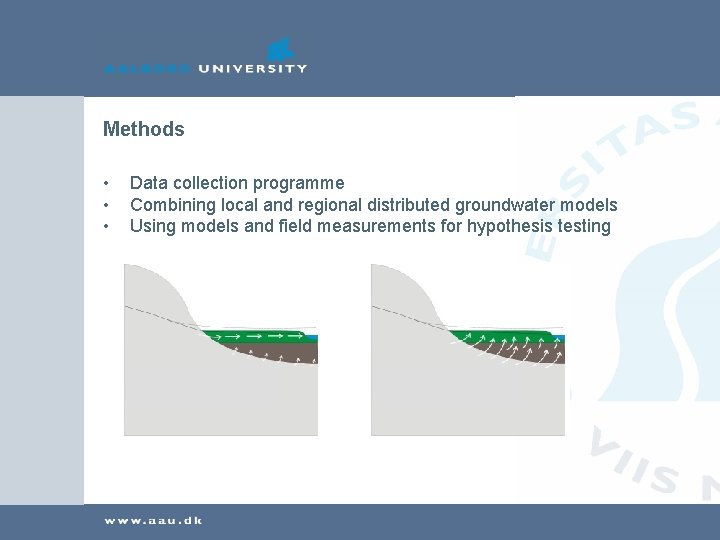
Methods • • • Data collection programme Combining local and regional distributed groundwater models Using models and field measurements for hypothesis testing
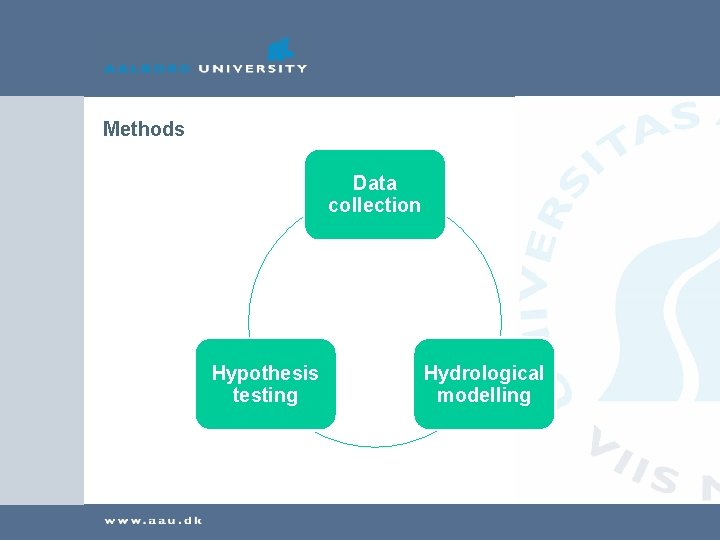
Methods Data collection Hypothesis testing Hydrological modelling
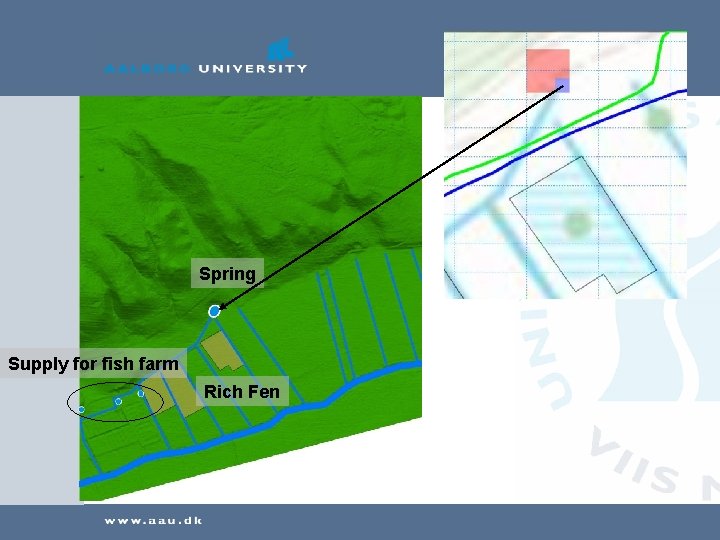
Spring Supply for fish farm Rich Fen
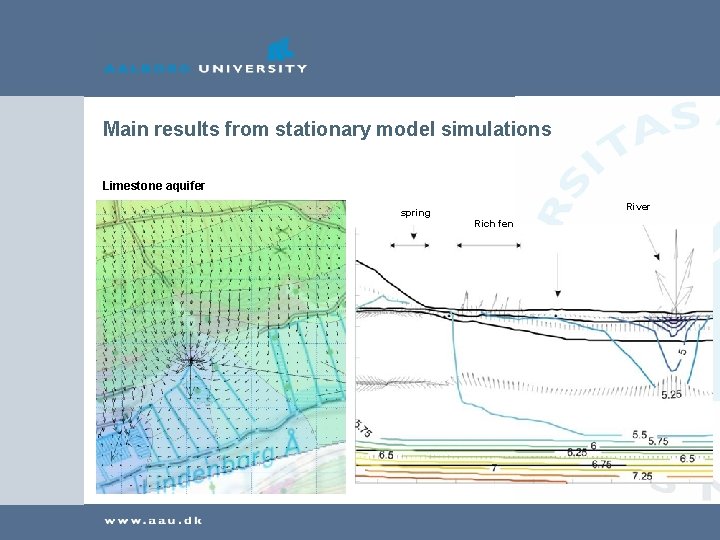
Main results from stationary model simulations Limestone aquifer River spring Rich fen
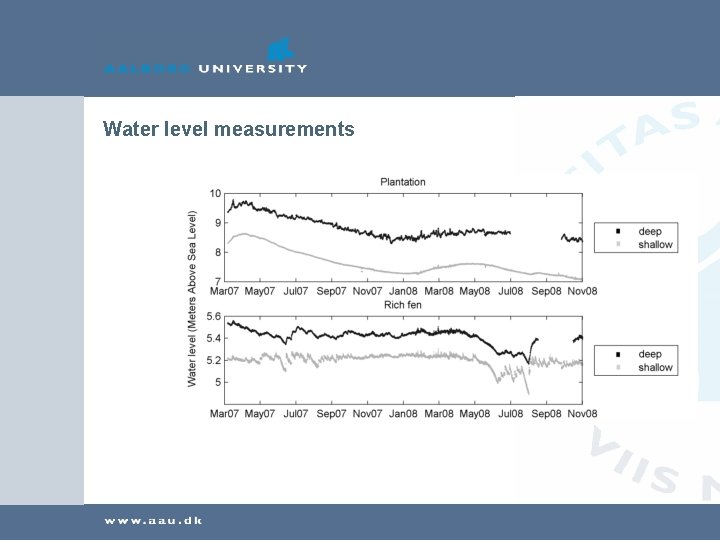
Water level measurements
Main results from stationary model simulations • Flow through rich fen: 1. 2 mm/day as average surface runoff -The flow is controlled by the vertical pressure gradient • 80 % of the discharge to the river comes from natural springs (and does not flow through the rich fens or the river valley deposits)
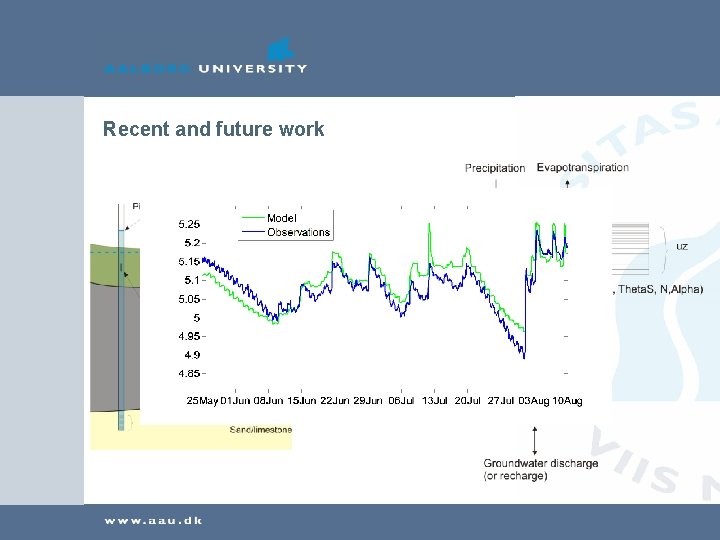
Recent and future work
Thank you!