
Hydrological data rescue benefits examples and future needs
Hydrological data rescue: benefits, examples and future needs Matt Fry (describing the work of many others) Centre for Ecology and Hydrology, UK RDA Plenary 10, Data Rescue Interest Group meeting
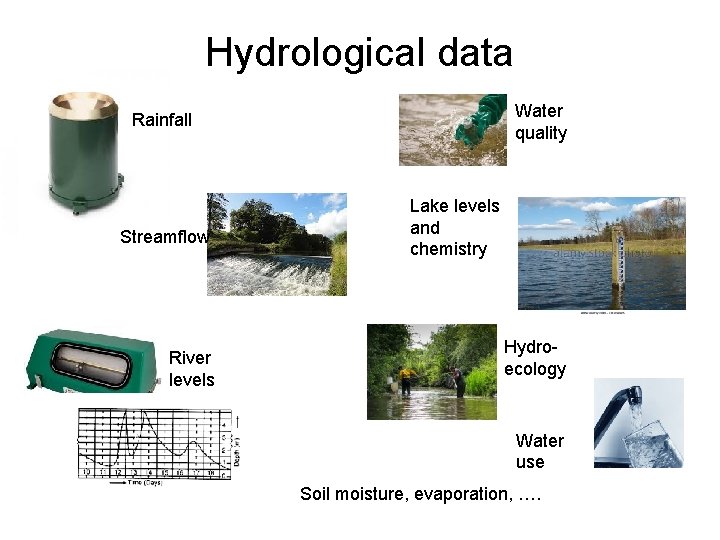
Hydrological data Water quality Rainfall Streamflow River levels Lake levels and chemistry Hydroecology Water use Soil moisture, evaporation, ….
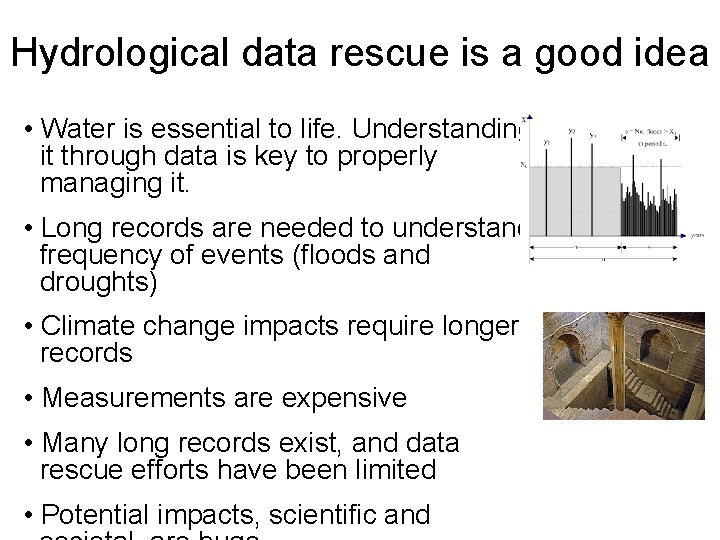
Hydrological data rescue is a good idea • Water is essential to life. Understanding it through data is key to properly managing it. • Long records are needed to understand frequency of events (floods and droughts) • Climate change impacts require longer records • Measurements are expensive • Many long records exist, and data rescue efforts have been limited • Potential impacts, scientific and
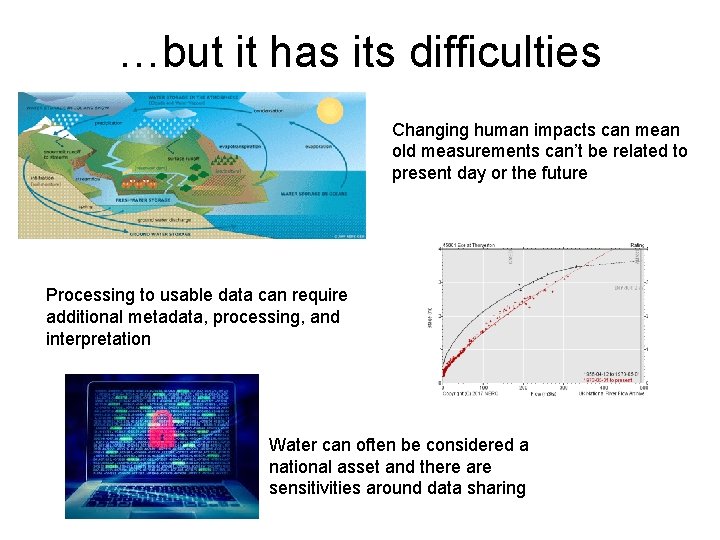
…but it has its difficulties Changing human impacts can mean old measurements can’t be related to present day or the future Processing to usable data can require additional metadata, processing, and interpretation Water can often be considered a national asset and there are sensitivities around data sharing

Some recent examples

Example: Historic Droughts project 1872 1891 1909 Pre-digitisation UK Met Office is digitising historic rain gauge data Now http: //historicdroughts. ceh. ac. uk CEH is reconstructing river flows through modelling using new (old) data to understand change in drought frequency
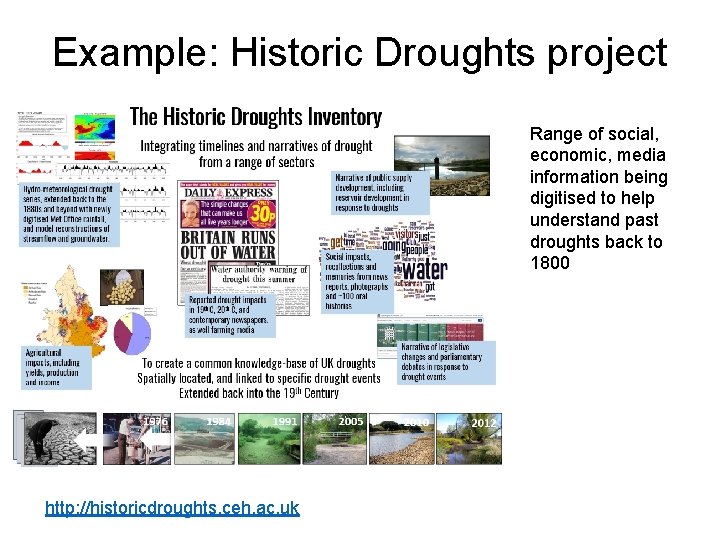
Example: Historic Droughts project Range of social, economic, media information being digitised to help understand past droughts back to 1800 http: //historicdroughts. ceh. ac. uk
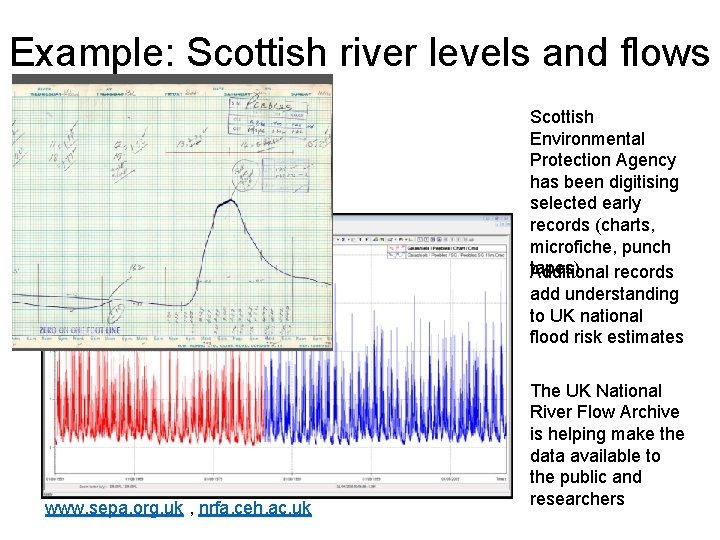
Example: Scottish river levels and flows Scottish Environmental Protection Agency has been digitising selected early records (charts, microfiche, punch tapes) Additional records add understanding to UK national flood risk estimates www. sepa. org. uk , nrfa. ceh. ac. uk The UK National River Flow Archive is helping make the data available to the public and researchers
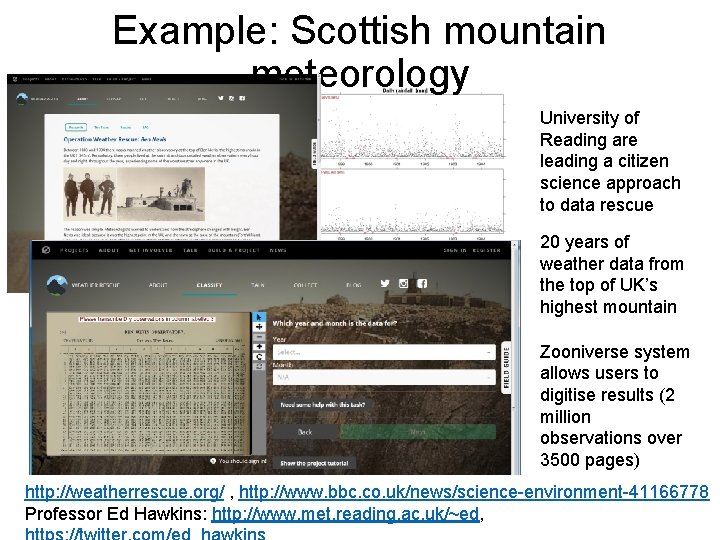
Example: Scottish mountain meteorology University of Reading are leading a citizen science approach to data rescue 20 years of weather data from the top of UK’s highest mountain Zooniverse system allows users to digitise results (2 million observations over 3500 pages) http: //weatherrescue. org/ , http: //www. bbc. co. uk/news/science-environment-41166778 Professor Ed Hawkins: http: //www. met. reading. ac. uk/~ed,
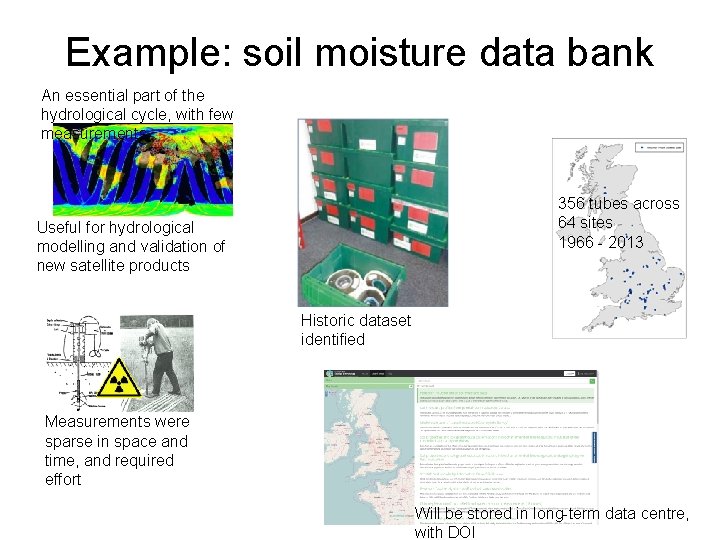
Example: soil moisture data bank An essential part of the hydrological cycle, with few measurements 356 tubes across 64 sites 1966 - 2013 Useful for hydrological modelling and validation of new satellite products Historic dataset identified Measurements were sparse in space and time, and required effort Will be stored in long-term data centre, with DOI
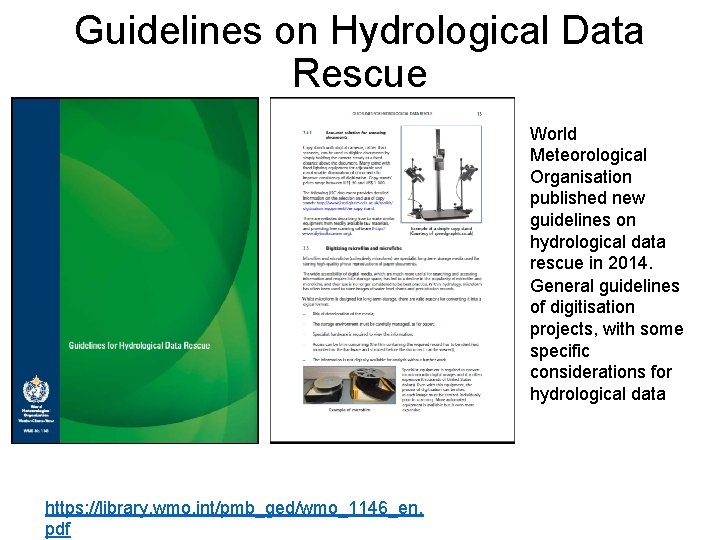
Guidelines on Hydrological Data Rescue World Meteorological Organisation published new guidelines on hydrological data rescue in 2014. General guidelines of digitisation projects, with some specific considerations for hydrological data https: //library. wmo. int/pmb_ged/wmo_1146_en. pdf
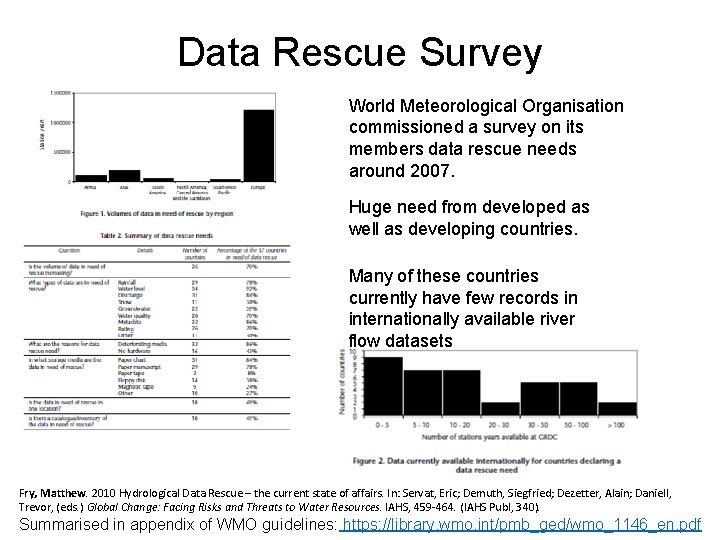
Data Rescue Survey World Meteorological Organisation commissioned a survey on its members data rescue needs around 2007. Huge need from developed as well as developing countries. Many of these countries currently have few records in internationally available river flow datasets Fry, Matthew. 2010 Hydrological Data Rescue – the current state of affairs. In: Servat, Eric; Demuth, Siegfried; Dezetter, Alain; Daniell, Trevor, (eds. ) Global Change: Facing Risks and Threats to Water Resources. IAHS, 459 -464. (IAHS Publ, 340). Summarised in appendix of WMO guidelines: https: //library. wmo. int/pmb_ged/wmo_1146_en. pdf
What can we do? • Better demonstrate the potential benefits and impacts of data rescue for water • Identify further detail on data rescue need and the potential benefits • Potentially following up data rescue survey needs, and asking for further examples? • Raise awareness of the need for this data rescue to be achieved • Identify avenues to make it happen • How can the IG Data Rescue take this forward?
- Slides: 13