
Hydrograph Pattern Identification Using Fuzzy Cluster Analysis Matt

- Slides: 11
Hydrograph Pattern Identification Using Fuzzy Cluster Analysis Matt Tonkin 1, Matt O’Connell 2, Vivek Bedekar 2 April 23, 2019 S. S. Papadopulos & Associates, Inc. 1. Williamsfield, IL 2. Bethesda, MD
Background • Calibration as a history-matching exercise assumes that observed data exhibit responses to forcing factors in proportion to the values for certain parameters that we wish to estimate. • On some occasions, such as regional models, there is a wealth of data but it is unclear which data show responses to which forcing factors. • This can make calibration an unfocused fitting exercise. 2
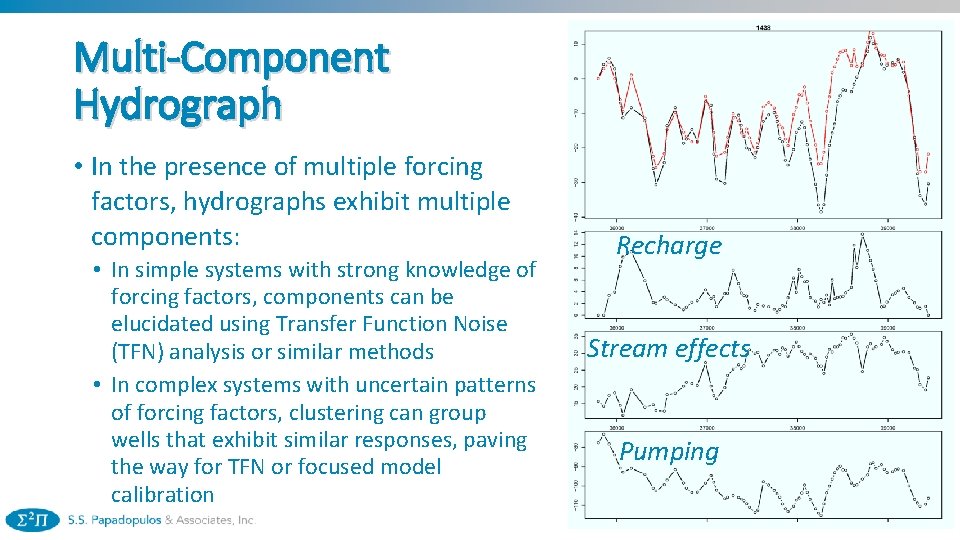
Multi-Component Hydrograph • In the presence of multiple forcing factors, hydrographs exhibit multiple components: • In simple systems with strong knowledge of forcing factors, components can be elucidated using Transfer Function Noise (TFN) analysis or similar methods • In complex systems with uncertain patterns of forcing factors, clustering can group wells that exhibit similar responses, paving the way for TFN or focused model calibration Recharge Stream effects Pumping 3
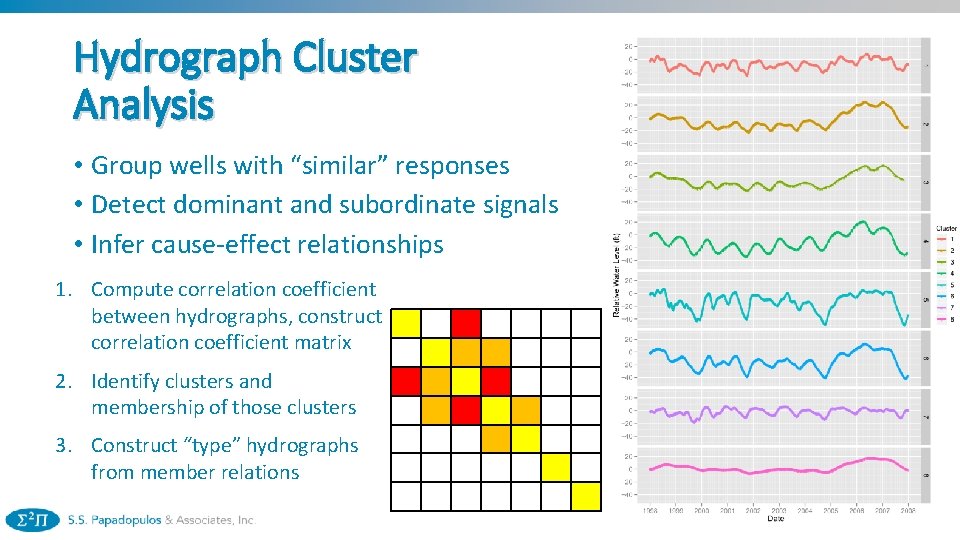
Hydrograph Cluster Analysis • Group wells with “similar” responses • Detect dominant and subordinate signals • Infer cause-effect relationships 1. Compute correlation coefficient between hydrographs, construct correlation coefficient matrix 2. Identify clusters and membership of those clusters 3. Construct “type” hydrographs from member relations
Initial Results with SVSIM Dataset 5
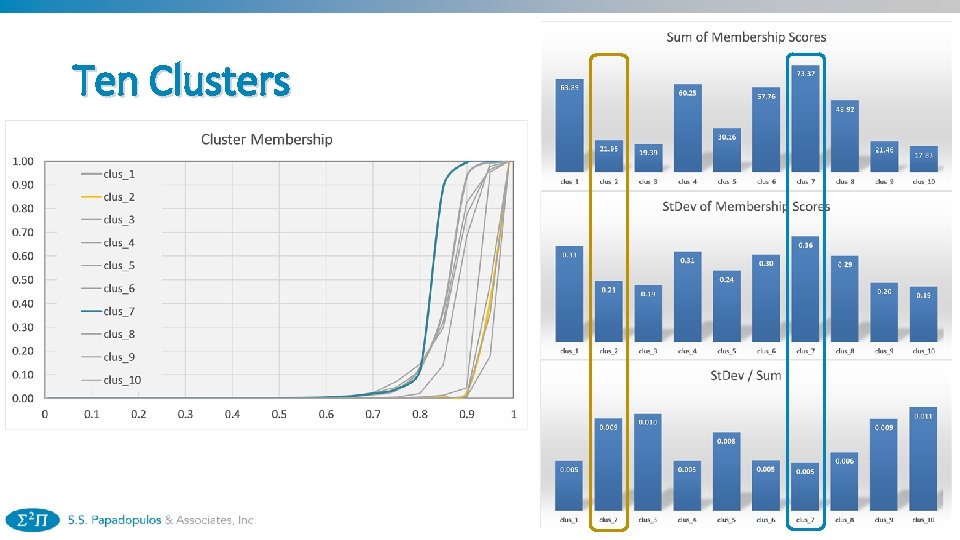
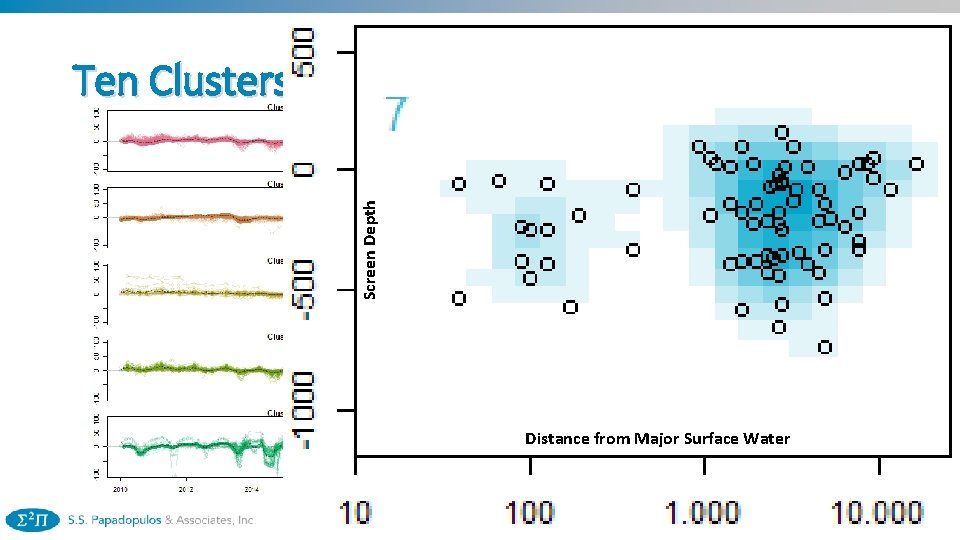
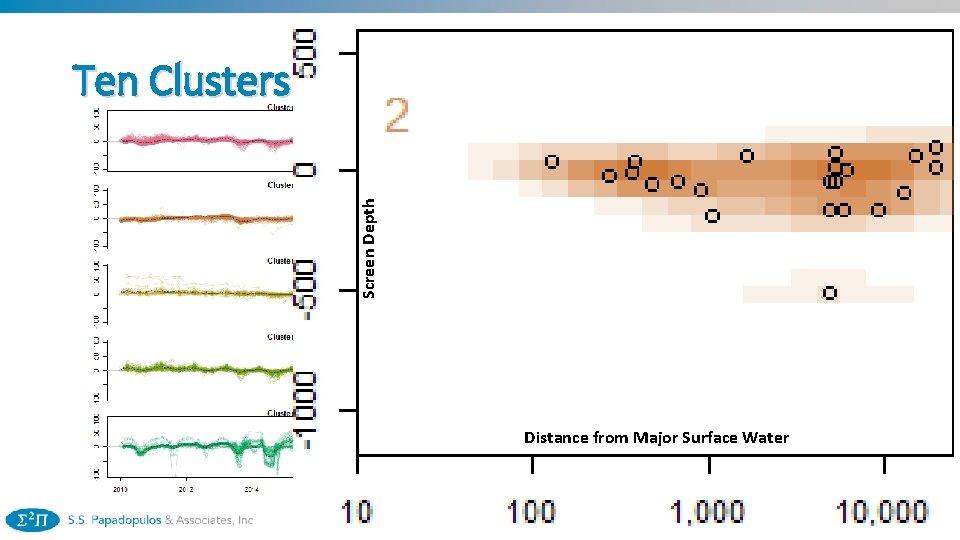
Ten Clusters • Several hundred hydrographs processed, from which ten clusters were identified for review • “Membership” of these clusters varies: • From large and diffuse to small and concentrated • With spatial location • With screened interval • With distance from surface water features
Ten Clusters 7
Screen Depth Ten Clusters Distance from Major Surface Water 8
Screen Depth Ten Clusters Distance from Major Surface Water 9
Next Steps • Detailed review of membership, location, screened intervals • Remove very partial records, interpolate time-series for remaining records • Re-calculate clusters • Define type hydrographs • Evaluate signal-response relationships
Thank you 11