
Hydrogen Cyanide in Service Michael Magda Livonia Fire

- Slides: 34
Hydrogen Cyanide in Service Michael Magda Livonia Fire & Rescue, Western Wayne County HMRT
Presentation Content § § Toxic gases generated by fire Hydrogen Cyanide in smoke Health effects of HCN Toxi. RAE II HCN monitor
Toxic Gases Generated by Fire
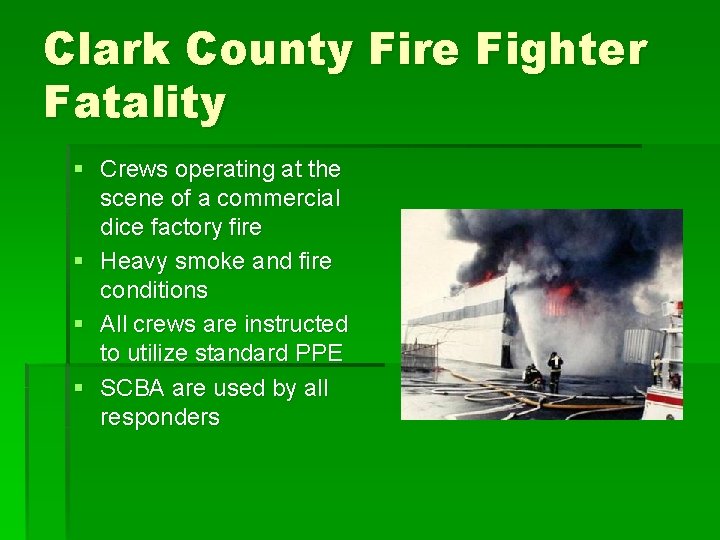
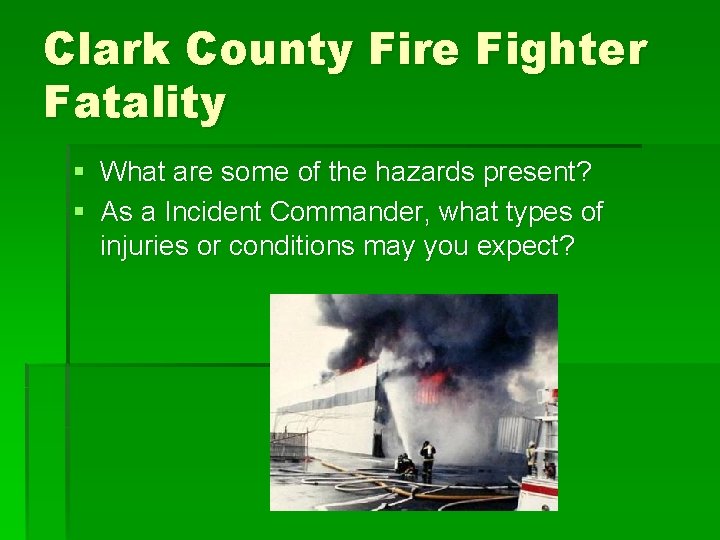
Clark County Fire Fighter Fatality § Crews operating at the scene of a commercial dice factory fire § Heavy smoke and fire conditions § All crews are instructed to utilize standard PPE § SCBA are used by all responders
Clark County Fire Fighter Fatality § What are some of the hazards present? § As a Incident Commander, what types of injuries or conditions may you expect?
Clark County Fire Fighter Fatality § All crews are ordered out of the structure. § As crews leave the factory, they remove their SCBA masks. § A Fire Captain removes his mask as he walks out of the smoke. He collapses outside the structure. § He is in cardiac arrest.
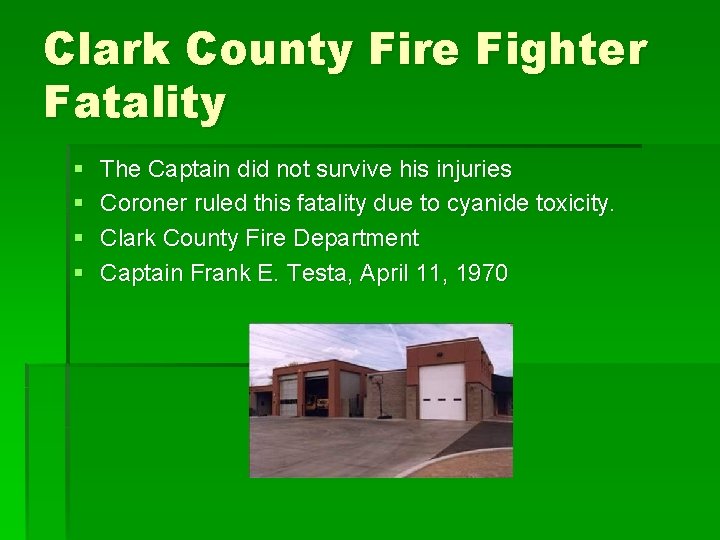
Clark County Fire Fighter Fatality § § The Captain did not survive his injuries Coroner ruled this fatality due to cyanide toxicity. Clark County Fire Department Captain Frank E. Testa, April 11, 1970
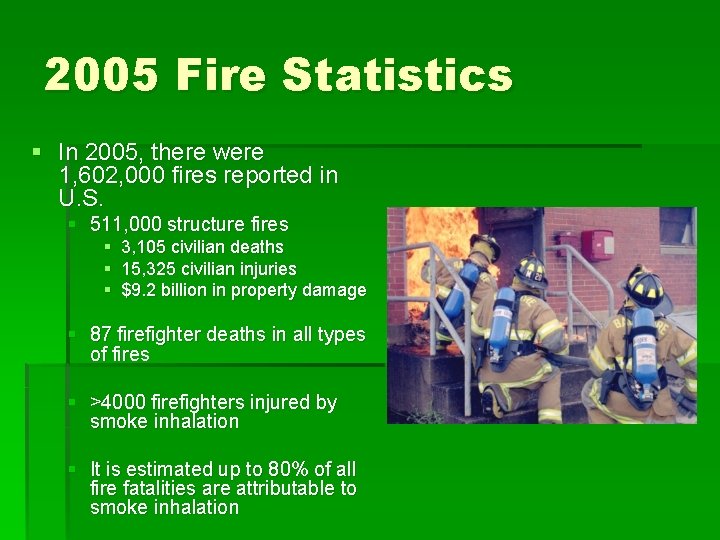
2005 Fire Statistics § In 2005, there were 1, 602, 000 fires reported in U. S. § 511, 000 structure fires § 3, 105 civilian deaths § 15, 325 civilian injuries § $9. 2 billion in property damage § 87 firefighter deaths in all types of fires § >4000 firefighters injured by smoke inhalation § It is estimated up to 80% of all fire fatalities are attributable to smoke inhalation
Anatomy of Fire Smoke § Toxic composition of smoke varies from fire to fire § § Nature of the burning materials Temperature Oxygen level Ventilation § Conditions of high temperature and low oxygen enhance degradation of synthetics quickening chemical release
Toxic Gases Generated by Fire § § § § Carbon Monoxide Carbon Dioxide Hydrogen Cyanide Hydrogen Chloride Nitrous Gases Phosgene Hydrogen Sulfide Sulfur Dioxide § § § § Acrolein Ammonia Formaldehyde Glutaraldehyde Acetaldehyde Benzene Various PNAs (polynuclear aromatic hydrocarbons)
Cyanide Toxicity in Smoke § Historically, carbon monoxide asphyxiation has been considered the primary cause of deaths of those overcome by smoke § Focus of gas monitoring § There is mounting evidence that hydrogen cyanide is directly responsible for many more deaths than previously assumed § Cumulative effect with CO worse than either individually
“ Cyanide toxicity from smoke inhalation in a structural or enclosed space fire is the most likely cause of cyanide toxicity that EMS & fire professionals will encounter” JEMS Communications Summer 2004
Hydrogen Cyanide in Smoke
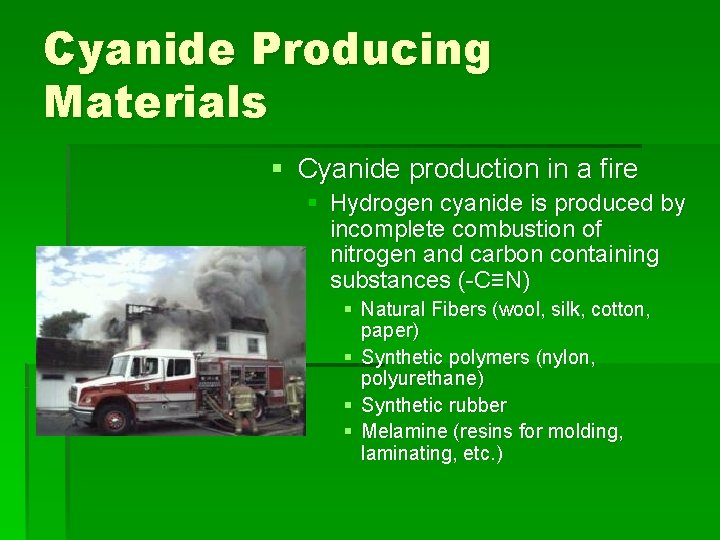
Cyanide Producing Materials § Cyanide production in a fire § Hydrogen cyanide is produced by incomplete combustion of nitrogen and carbon containing substances (-C≡N) § Natural Fibers (wool, silk, cotton, paper) § Synthetic polymers (nylon, polyurethane) § Synthetic rubber § Melamine (resins for molding, laminating, etc. )
HCN Releasing Polymers § Synthetic polymers found extensively in structures § § § Insulation Cushioning Carpets Bedding (mattresses and pillows) Building materials § Materials can burn up to 2 -3 times hotter and faster than natural materials § Quicker flashovers increase speed of HCN release
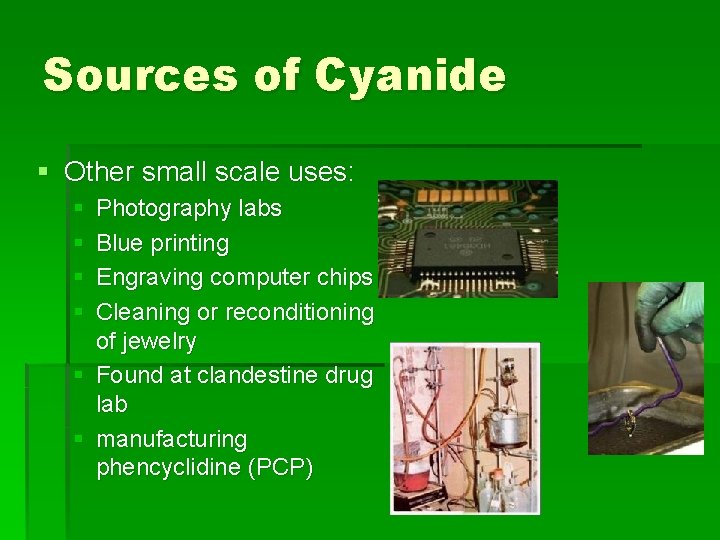
Sources of Cyanide § Other small scale uses: § § Photography labs Blue printing Engraving computer chips Cleaning or reconditioning of jewelry § Found at clandestine drug lab § manufacturing phencyclidine (PCP)
Key Cyanide Studies § Two independent studies performed on HCN toxicity § Paris France (1988 -89) § 109 fire victims( 66 survivors and 43 fatalities) 144 controlled individuals (drug intoxication and CO poisoning) § Dallas County Texas § 144 smoke inhalation patients at University of Texas Health Science Center Emergency Department 43 deceased individuals at Dallas County medical examiners office.
Key Cyanide Studies § Final Conclusion: § Cyanide and carbon monoxide were both important determinants of smoke inhalation - associated morbidity and mortality. § Cyanide concentrations were directly related to the probability of death. § Cyanide may have dominated over CO as a cause of death in some fire victims. § Cyanide and CO may have potentiated the toxic effects of one another
Health Effects of HCN
Health Effects of HCN § Small amounts are present in the environment and in humans. § Normal levels of whole blood are between 0 to 20 micrograms per deciliter (ug/dl). § Cyanide levels as low as 50 ug/dl in the blood have proven to be toxic, and blood cyanide levels of 250 – 300 ug/dl fatal. § Symptoms of cyanide poisoning mimic the signs and symptoms of a myocardial infarction.
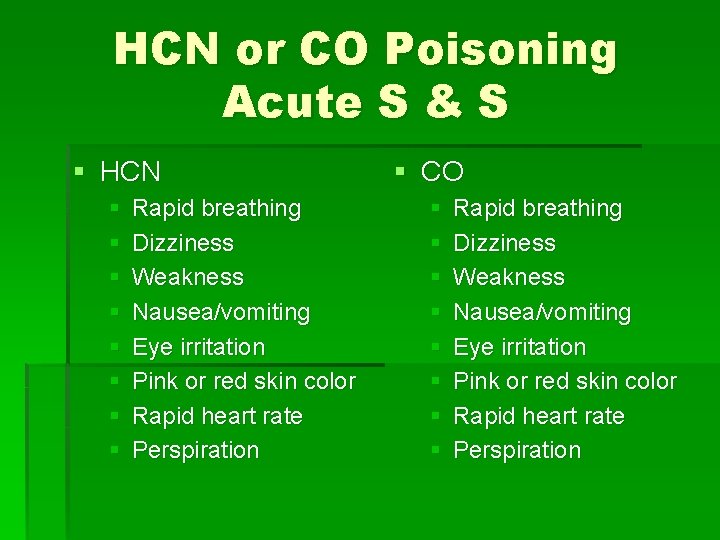
Early Signs and Symptoms § Early signs and symptoms of exposure to low concentrations of cyanide include: § Rapid breathing § Dizziness § Weakness § Nausea/vomiting § Eye irritation § Pink or red skin color § Rapid heart rate § Perspiration
HCN or CO Poisoning Acute S & S § HCN § CO § § § § Rapid breathing Dizziness Weakness Nausea/vomiting Eye irritation Pink or red skin color Rapid heart rate Perspiration
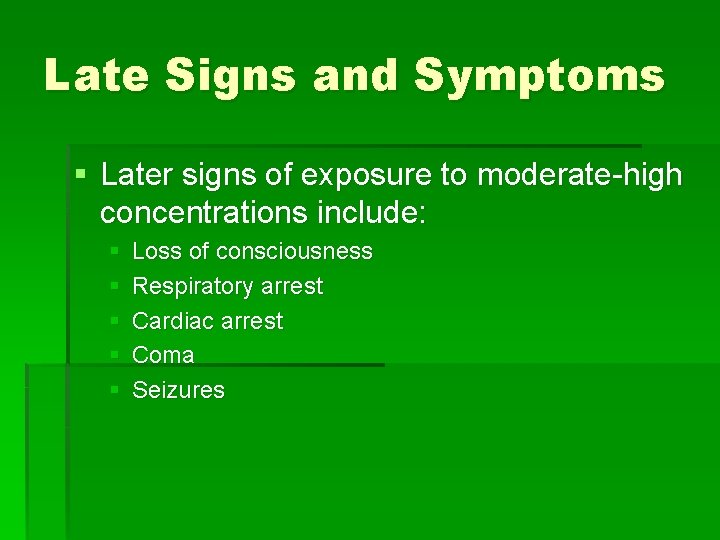
Late Signs and Symptoms § Later signs of exposure to moderate-high concentrations include: § § § Loss of consciousness Respiratory arrest Cardiac arrest Coma Seizures
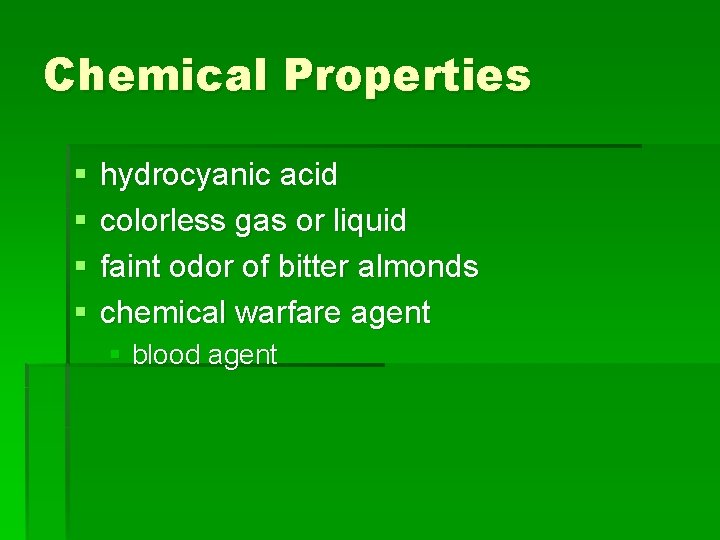
Chemical Properties § § hydrocyanic acid colorless gas or liquid faint odor of bitter almonds chemical warfare agent § blood agent
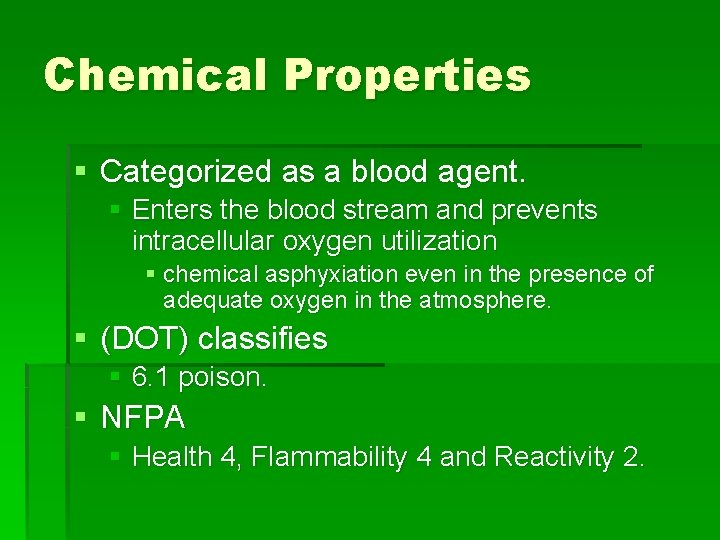
Chemical Properties § Categorized as a blood agent. § Enters the blood stream and prevents intracellular oxygen utilization § chemical asphyxiation even in the presence of adequate oxygen in the atmosphere. § (DOT) classifies § 6. 1 poison. § NFPA § Health 4, Flammability 4 and Reactivity 2.
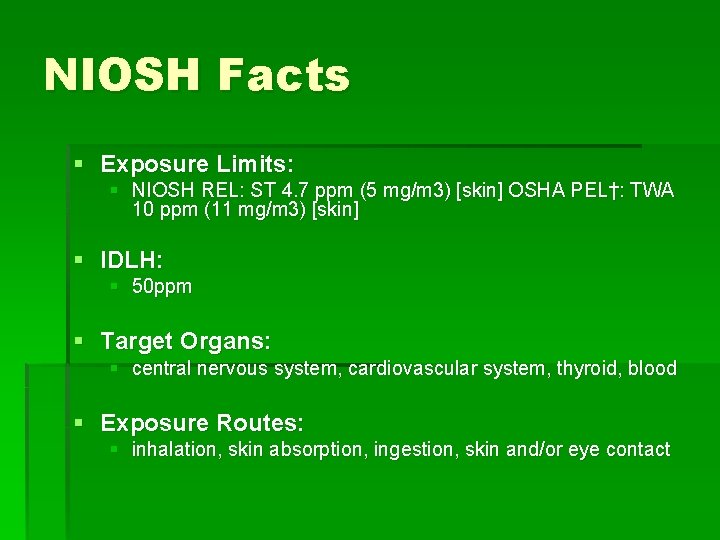
NIOSH Facts § Exposure Limits: § NIOSH REL: ST 4. 7 ppm (5 mg/m 3) [skin] OSHA PEL†: TWA 10 ppm (11 mg/m 3) [skin] § IDLH: § 50 ppm § Target Organs: § central nervous system, cardiovascular system, thyroid, blood § Exposure Routes: § inhalation, skin absorption, ingestion, skin and/or eye contact
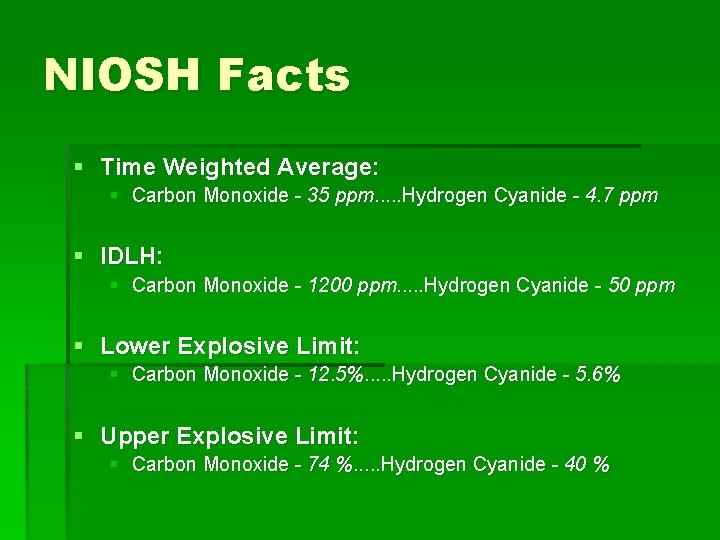
NIOSH Facts § Time Weighted Average: § Carbon Monoxide - 35 ppm. . . Hydrogen Cyanide - 4. 7 ppm § IDLH: § Carbon Monoxide - 1200 ppm. . . Hydrogen Cyanide - 50 ppm § Lower Explosive Limit: § Carbon Monoxide - 12. 5%. . . Hydrogen Cyanide - 5. 6% § Upper Explosive Limit: § Carbon Monoxide - 74 %. . . Hydrogen Cyanide - 40 %
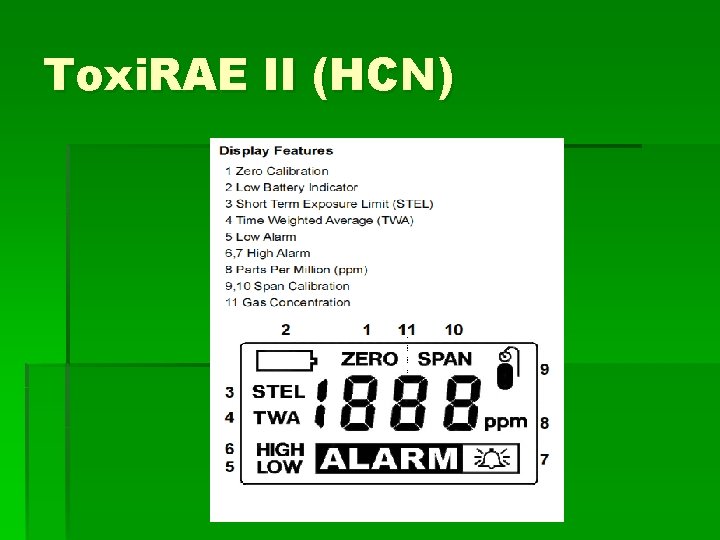
Toxi. RAE II HCN
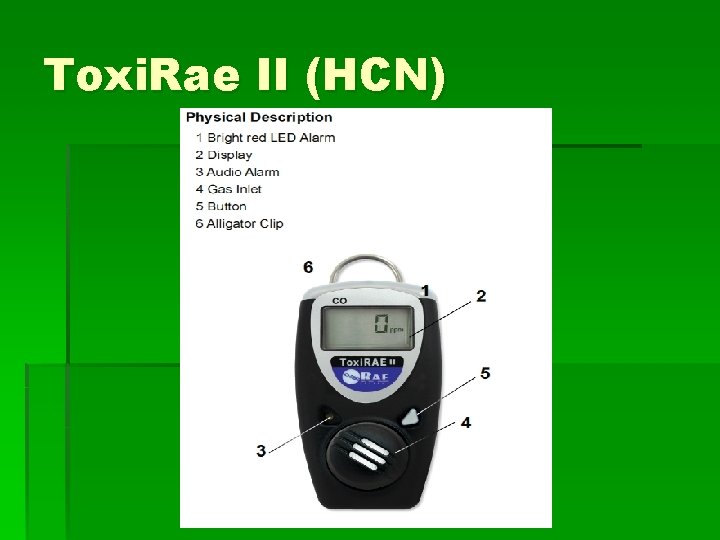
Toxi. Rae II (HCN)
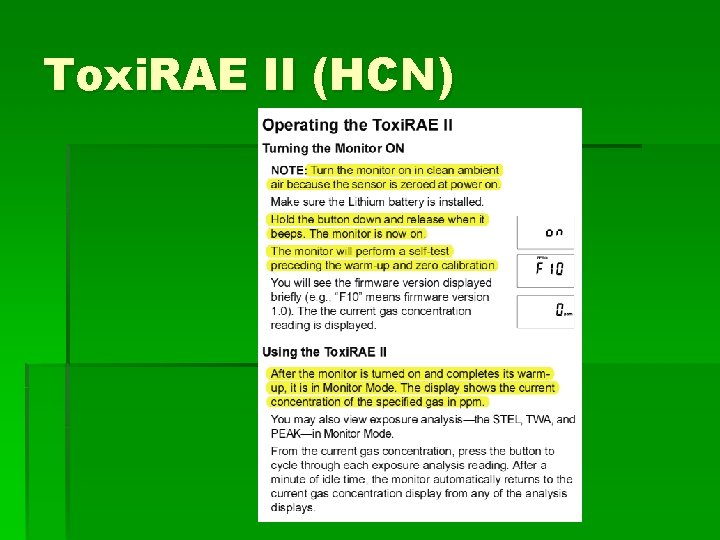
Toxi. RAE II (HCN)
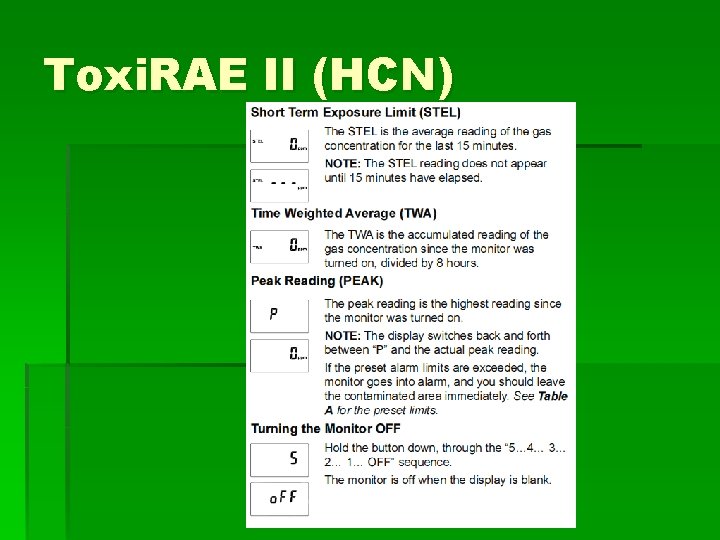
Toxi. RAE II (HCN)
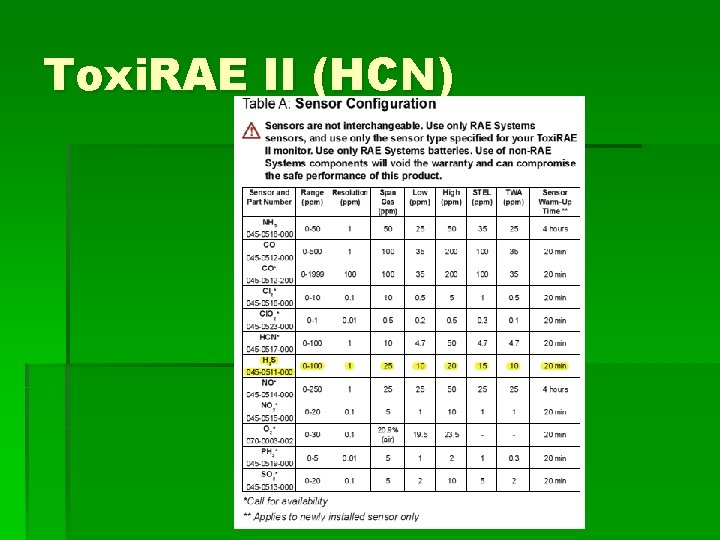
Toxi. RAE II (HCN)
Toxi. RAE II (HCN)
Toxi. RAE II (HCN) Questions!