
HYDROGEN CONTROL OF LARGE BOTTOM POURED FORGING INGOTS
, HYDROGEN CONTROL OF LARGE BOTTOM POURED FORGING INGOTS AT ELLWOOD QUALITY STEELS Bjorn Gabrielsson – Ellwood Group, Inc. Brendan Connolly – Ellwood Quality Steels Steve Lubinski – Ellwood Quality Steels Sean Cowden – Ellwood Quality Steels Hongliang Yang – ABB R&D Metallurgy
, Outline • • • Evolution of vacuum treatment of liquid steel New Castle Complex EQS Production Flow and KPI Sandwich Pouring of Ingots >47 Mton Hydrogen in Steel EQS Vacuum Station CFD Simulation Model Validation Hydrogen Pick-up during Bottom Pouring Conclusion
, Revolution of Vacuum Treatment of Liquid Steel • 1911 • • • 1950 1952 1955 1956 1958 1959 1964 1965 German chemist Albert Sievert published his work on the solubility of gases in metal Bochumer-Verein (Germany), first vacuum tank FAILED Bochumer-Verein (Germany), first stream degassing Air Liquide (France), development of porous plug Bethlehem Steel (USA), first multi-stage steam ejector vacuum pump Finkl (USA), VTD with He inert gas lance stirring Dortmand-Hoerder vacuum lift process (Germany) Ruhrstahl-Heraeus vacuum lift process (Germany) Germany/USA simultaneously developed ladle slide gates ASEA-SKF Process (Sweden), vacuum treatment with electromagnetic stirring THE REST HAS JUST BEEN A LONG EVOLUTION
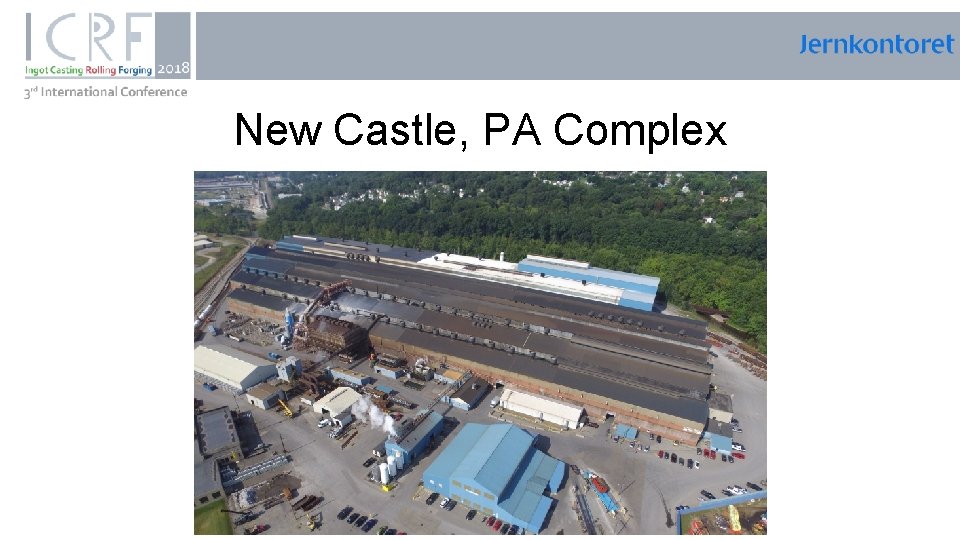
, New Castle, PA Complex
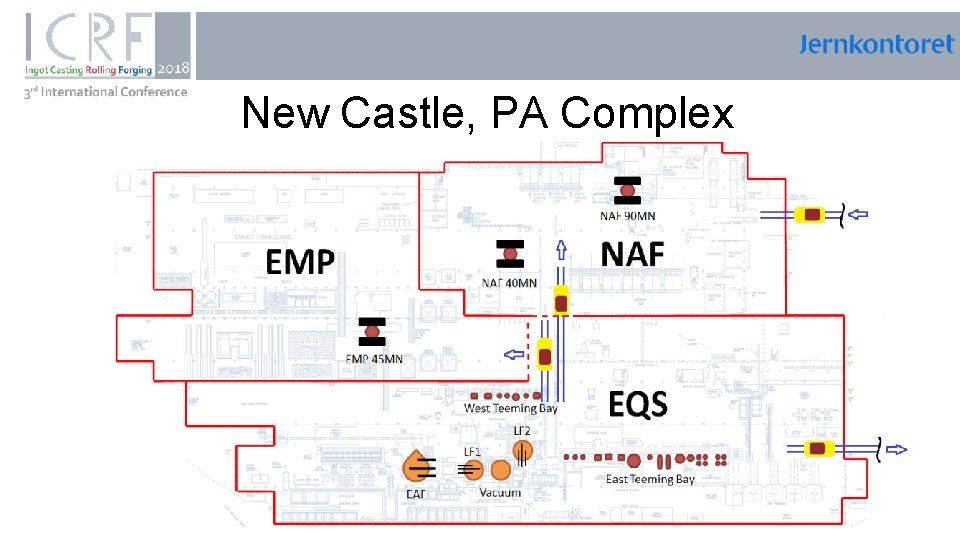
, New Castle, PA Complex

, EQS Production Flow and KPI Value EAF Gross T-T-T 52. 7 minutes/heat EAF Power On Time 36. 1 minutes/heat EAF Power Off Time 16. 6 minutes/heat Productivity 27. 3 heat/day Dec 1985 – August 2018 more than 8, 300, 000 Mton of forging and ring rolling ingots

, Sandwich Pouring Process for Ingots >47 Mton • Implemented at EQS in 2015 • Up to four ladles of steel into one ingot • Maximum ingot produced to date 170 Mton with 4 x ladles

, Hydrogen in Steel 1000000 14000 100000 12000 1000 3 ppm H 2 ppm H 100 1 ppm H 10 Volume, cm 3 Internal Pressure, bar 10000 8000 6000 4000 2000 1 0 0. 1 0 200 400 600 Temperature, K 800 100 kg steel 1 ppm H as H 2 gas 0. 9 ml liquid water, 18 drops
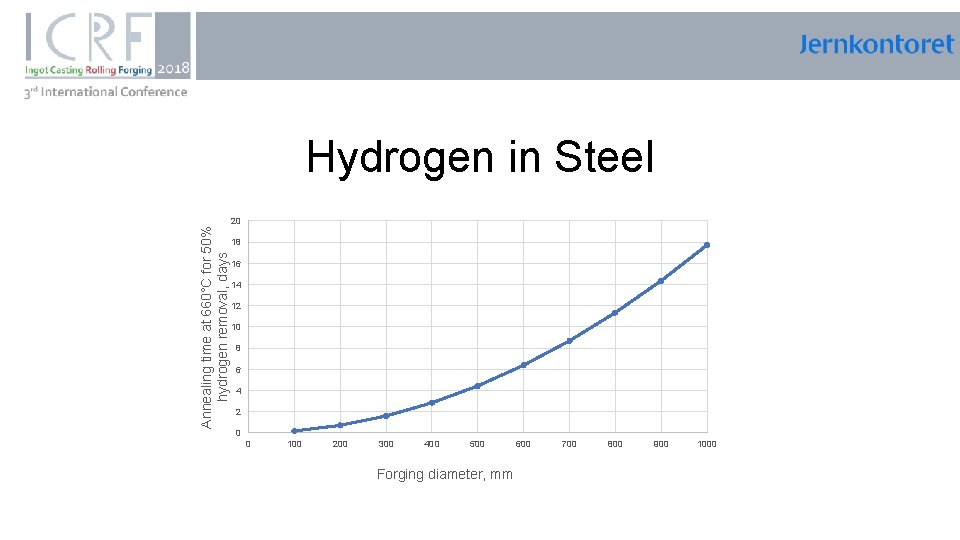
, Annealing time at 660°C for 50% hydrogen removal, days Hydrogen in Steel 20 18 16 14 12 10 8 6 4 2 0 0 100 200 300 400 500 Forging diameter, mm 600 700 800 900 1000

, EQS Vacuum Station
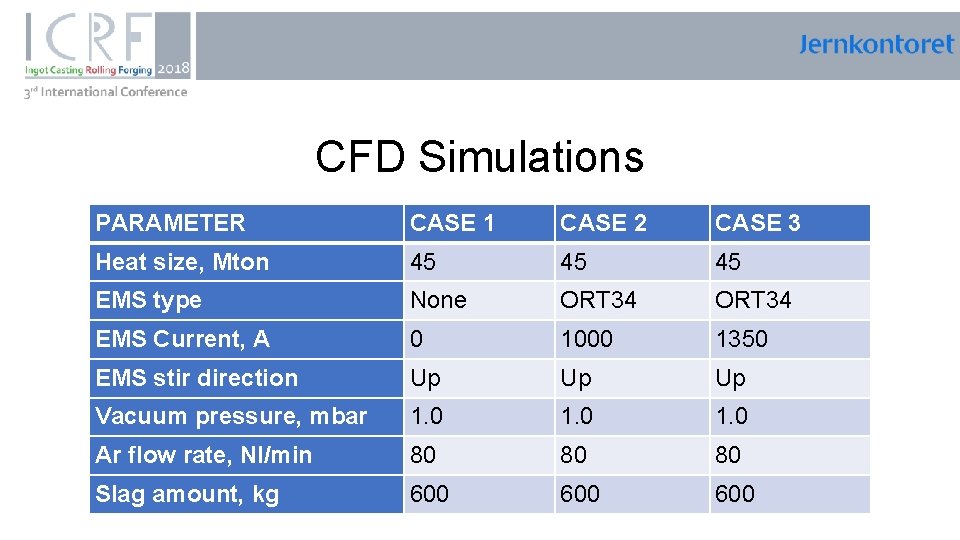
, CFD Simulations PARAMETER CASE 1 CASE 2 CASE 3 Heat size, Mton 45 45 45 EMS type None ORT 34 EMS Current, A 0 1000 1350 EMS stir direction Up Up Up Vacuum pressure, mbar 1. 0 Ar flow rate, Nl/min 80 80 80 Slag amount, kg 600 600

, CFD Simulations R/2

, CFD Simulations – Top Surface Velocity m/sec
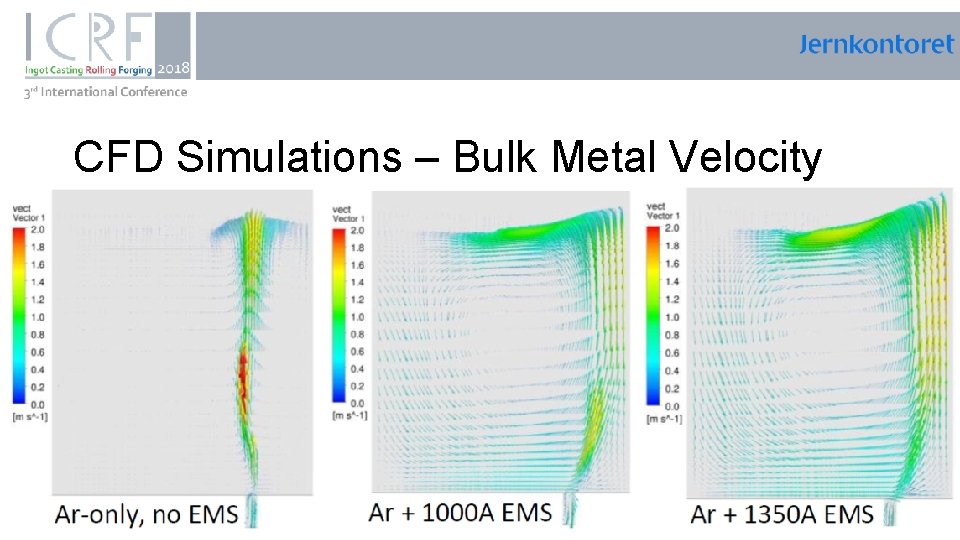
, CFD Simulations – Bulk Metal Velocity
, CFD Simulations – Argon Bubble Dispersion and Velocity m/sec

, CFD Simulations - Summary RESULT Stirring power density, W/ton CASE 1 -gas only) 65 (Ar CASE 2 -gas + 1000 A EMS) 600 (Ar CASE 3 (Ar-gas + 1350 A EMS) 700 Free metal surface, % 7. 4 22. 5 27. 9 Average surface velocity, m/s 0. 14 0. 41 0. 53 Average bulk metal velocity, m/s 0. 11 0. 48 0. 71 Bubble dispersion and residence time Low Medium High Thanks to increased stirring power: • Free metal surface 3. 8 times larger • Surface velocity 3. 8 times larger • Bulk metal velocity 6. 5 times larger • Argon bubble dispersion and retention time improved significantly

, Model Validation – Mixing Time
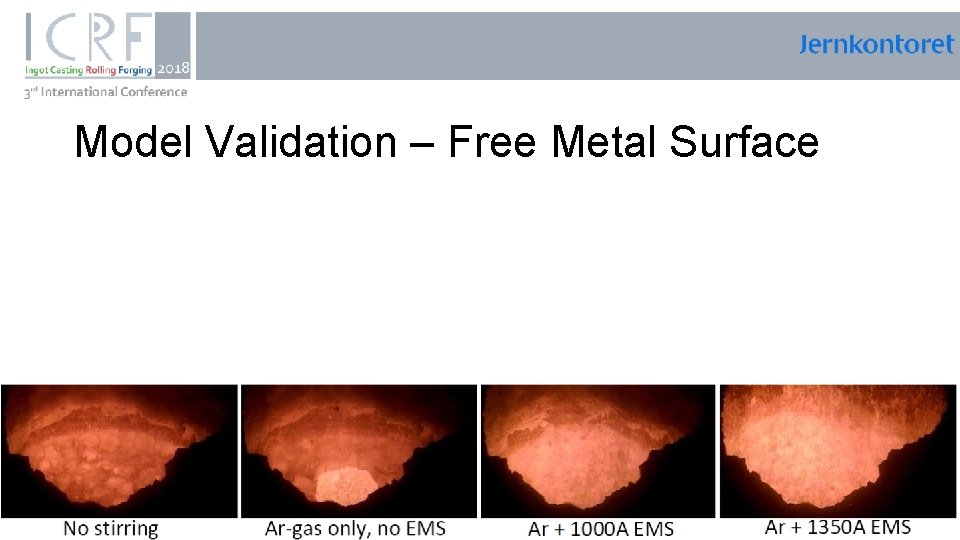
, Model Validation – Free Metal Surface
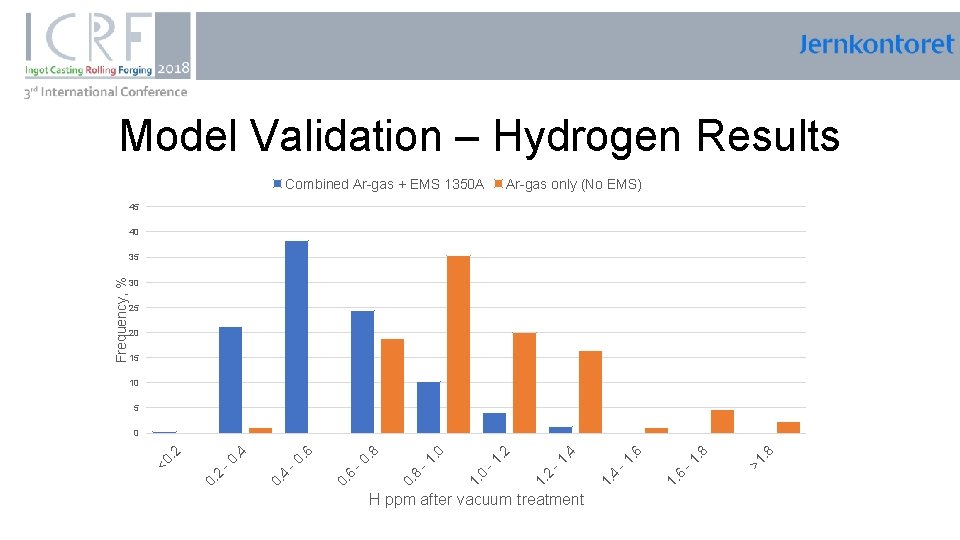
, Model Validation – Hydrogen Results Combined Ar-gas + EMS 1350 A Ar-gas only (No EMS) 45 40 30 25 20 15 10 5 H ppm after vacuum treatment . 8 >1 -1. 8 1. 6 -1. 6 1. 4 -1. 4 1. 2 -1. 2 1. 0 -1. 0 0. 8 -0. 8 0. 6 -0. 6 0. 4 -0. 4 0. 2 0 <0 Frequency, % 35
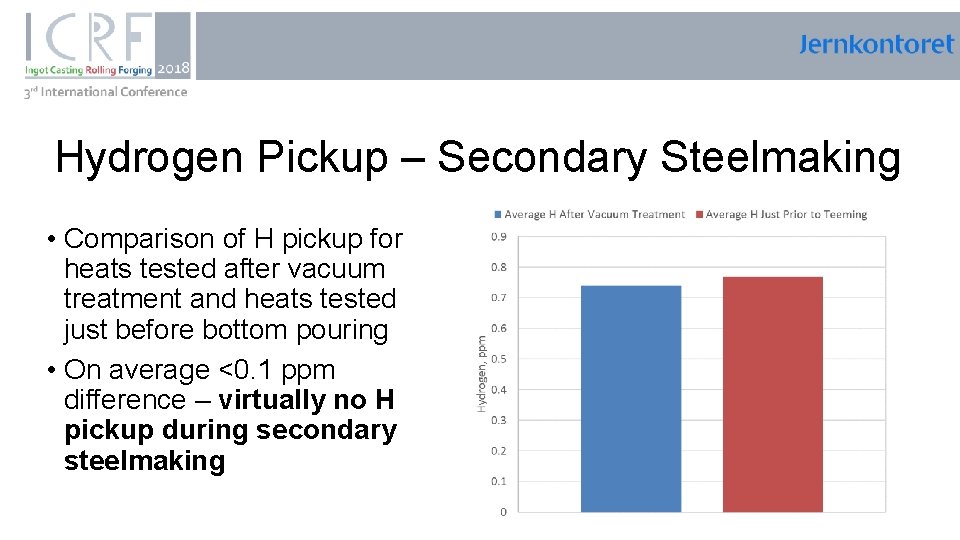
, Hydrogen Pickup – Secondary Steelmaking • Comparison of H pickup for heats tested after vacuum treatment and heats tested just before bottom pouring • On average <0. 1 ppm difference – virtually no H pickup during secondary steelmaking
, Hydrogen Pickup – Data Analysis • Data collection for > 30, 000 heats produced at EQS • Level 2 process control system combined with “Business Intelligence” software for massive data mining • Analysis of in-process and final hydrogen content against large set of possible variables
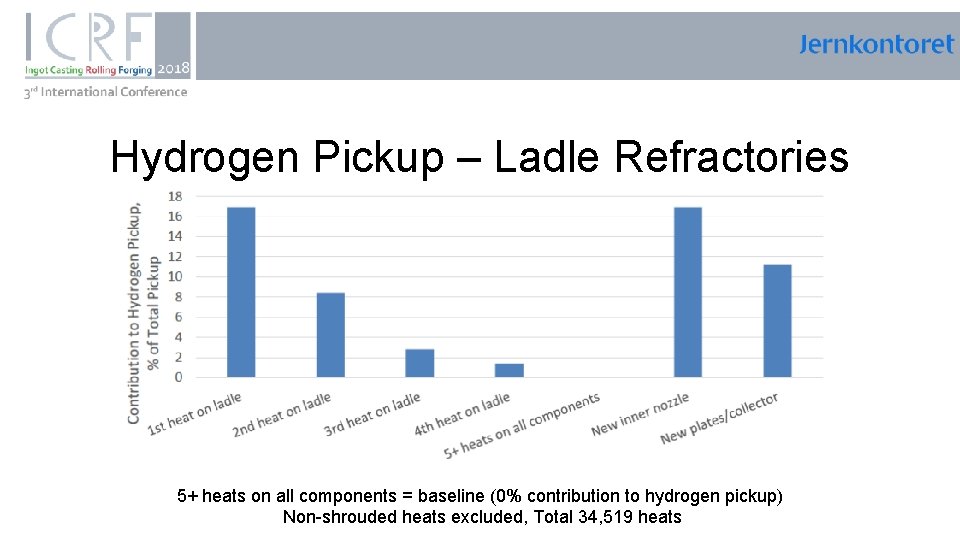
, Hydrogen Pickup – Ladle Refractories 5+ heats on all components = baseline (0% contribution to hydrogen pickup) Non-shrouded heats excluded, Total 34, 519 heats
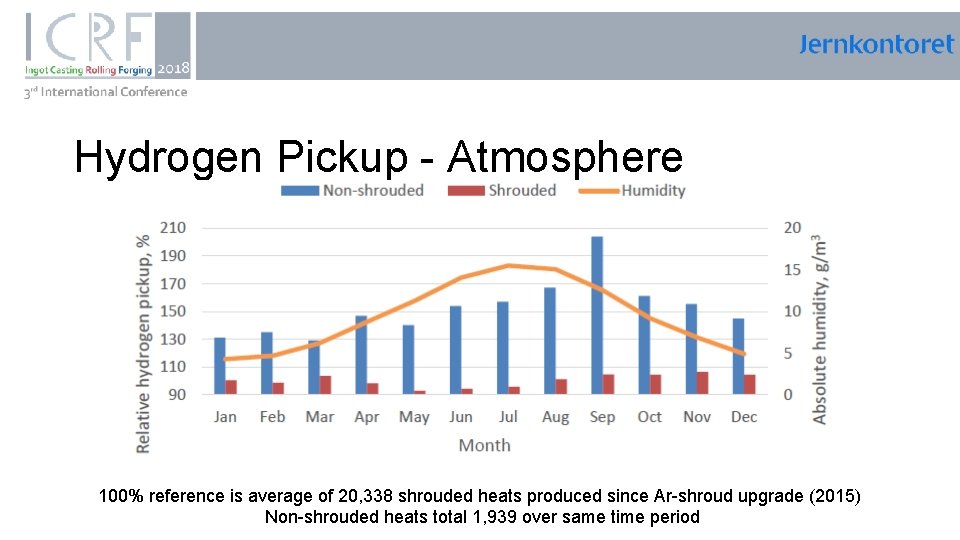
, Hydrogen Pickup - Atmosphere 100% reference is average of 20, 338 shrouded heats produced since Ar-shroud upgrade (2015) Non-shrouded heats total 1, 939 over same time period
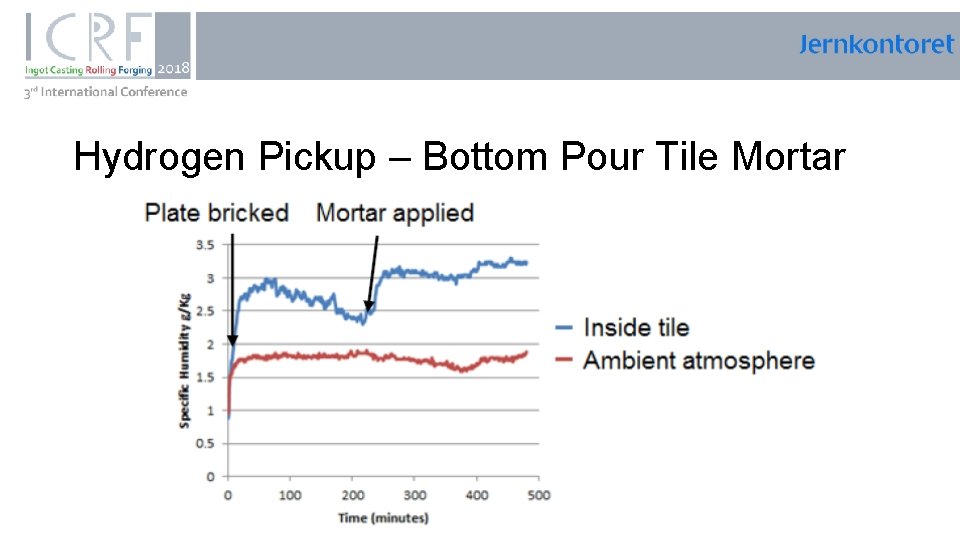
, Hydrogen Pickup – Bottom Pour Tile Mortar
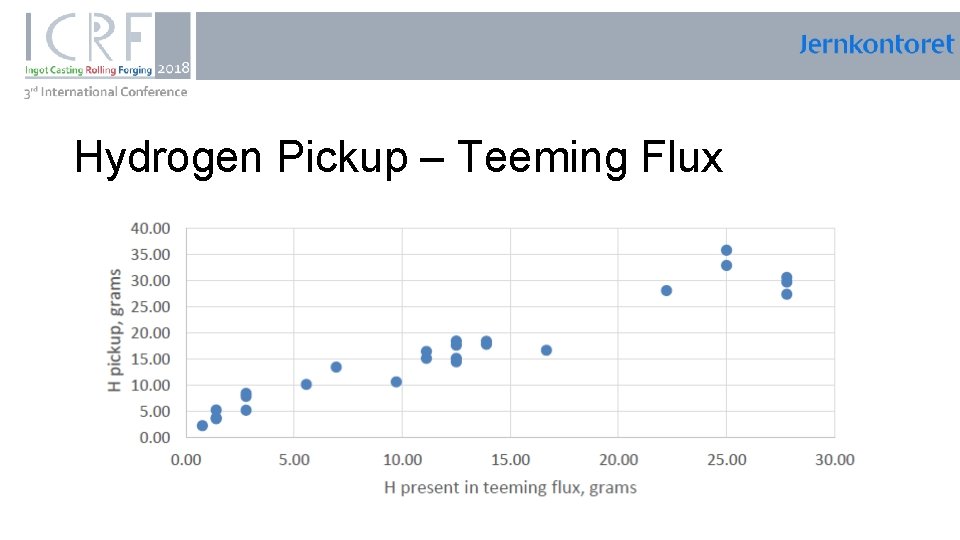
, Hydrogen Pickup – Teeming Flux
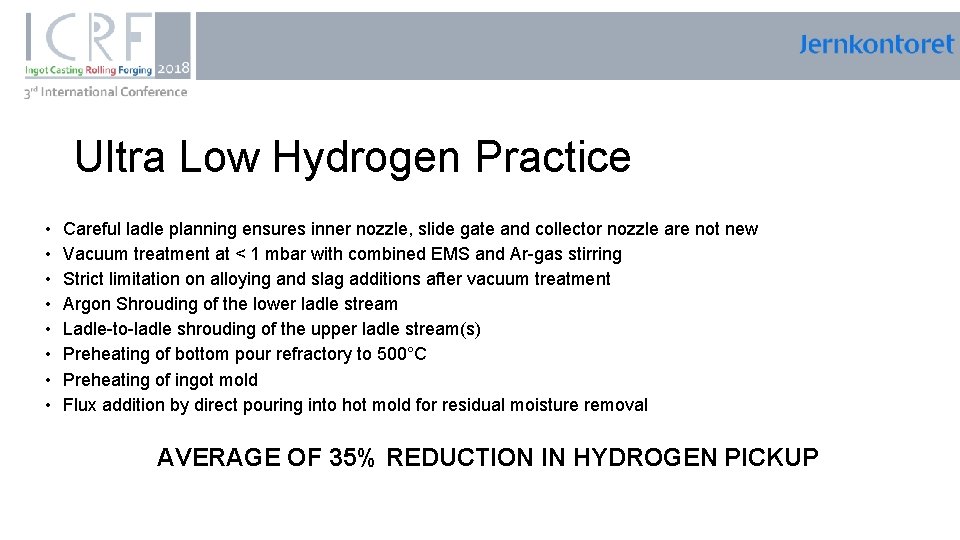
, Ultra Low Hydrogen Practice • • Careful ladle planning ensures inner nozzle, slide gate and collector nozzle are not new Vacuum treatment at < 1 mbar with combined EMS and Ar-gas stirring Strict limitation on alloying and slag additions after vacuum treatment Argon Shrouding of the lower ladle stream Ladle-to-ladle shrouding of the upper ladle stream(s) Preheating of bottom pour refractory to 500°C Preheating of ingot mold Flux addition by direct pouring into hot mold for residual moisture removal AVERAGE OF 35% REDUCTION IN HYDROGEN PICKUP

, Conclusion
, THANK YOU FOR YOUR KIND ATTENTION
- Slides: 28