
Hydrogels and Their Biomedical Uses 1 Overview n
Hydrogels and Their Biomedical Uses 1
Overview n Hydrogels – Structure – Swelling properties – Biomedical Uses

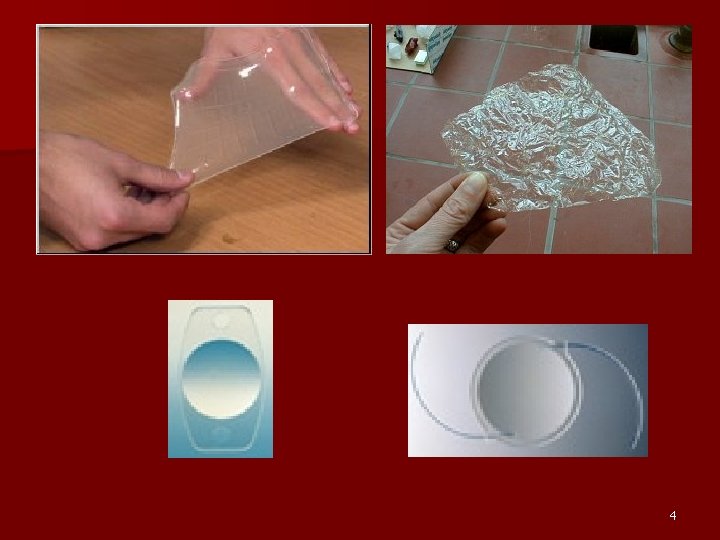
Common Hydrogels? n Can you think of hydrogels in your everyday life? - Contact Lenses - Jello (a collagen gel ~ 97% water) - Extracellular matrix components - Polysaccharides - DNA/RNA - Blood clot
4
Applications of Hydrogels n Soft contact lenses n Pills/capsules n Bioadhesive carriers n Implant coatings n Transdermal drug delivery n Electrophoresis gels n Wound healing n Chromatographic packaging material
Hydrogels “Hydrogels are water swollen, crosslinked polymeric structures produced by the simple reaction of one or more monomers or by association of bonds such as hydrogen bonds and strong van der Waals interactions between chains. ” -N. A. Peppas in Biomaterials Science (1996)
Other definitions Water insoluble, three dimensional network of polymeric chains that are crosslinked by chemical or physical bonding n Polymers capable of swelling substantially in aqueous conditions (eg hydrophilic) n Polymeric network in which water is dispersed throughout the structure n 7
Behavior of Hydrogels No flow when in the steady-state n By weight, gels are mostly liquid, yet they behave like solids n They can absorb large quantities of water – May absorb up to 1000 times their dry weight n Cross linkers within the fluid give a gel its structure (hardness) and contribute to stickiness (tack). n
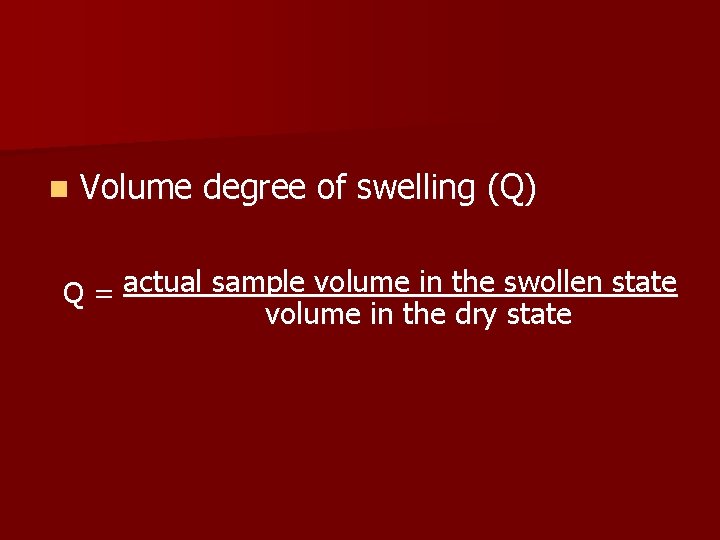
n Volume degree of swelling (Q) Q = actual sample volume in the swollen state volume in the dry state
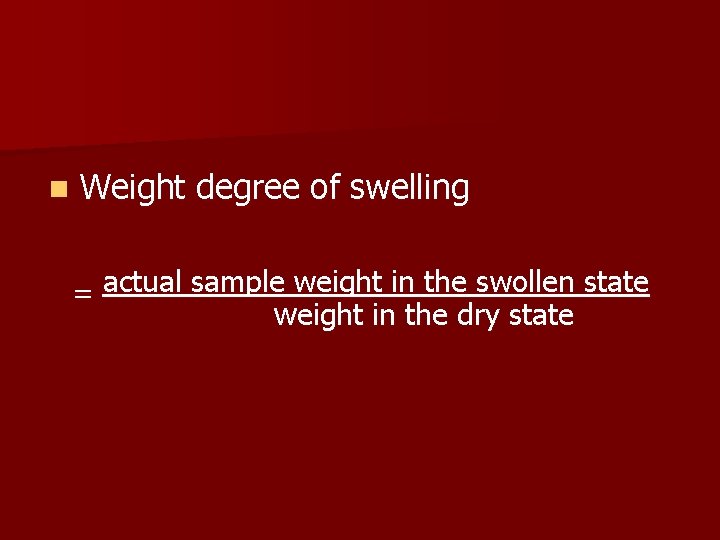
n Weight degree of swelling = actual sample weight in the swollen state weight in the dry state
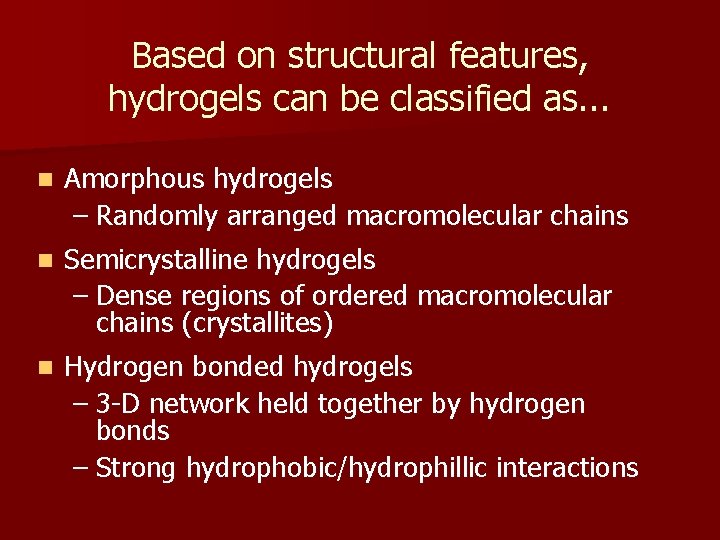
Based on structural features, hydrogels can be classified as. . . n Amorphous hydrogels – Randomly arranged macromolecular chains n Semicrystalline hydrogels – Dense regions of ordered macromolecular chains (crystallites) n Hydrogen bonded hydrogels – 3 -D network held together by hydrogen bonds – Strong hydrophobic/hydrophillic interactions
Based on crosslinkers features, hydrogels can be classified as. . . n Chemical n Physical
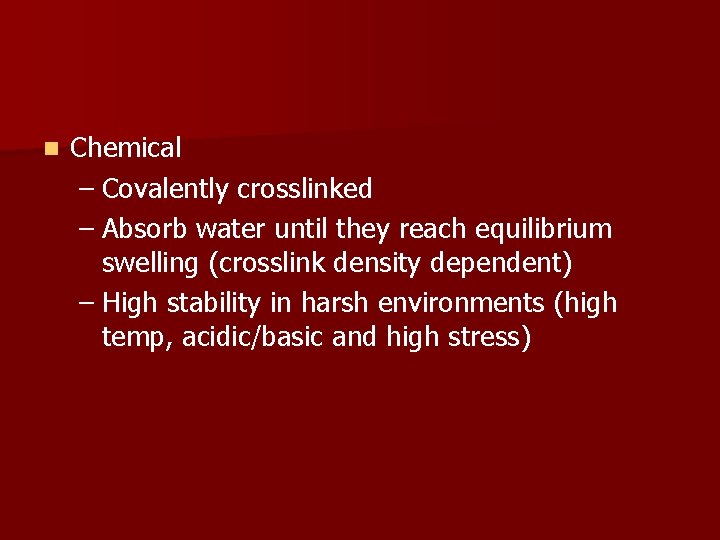
n Chemical – Covalently crosslinked – Absorb water until they reach equilibrium swelling (crosslink density dependent) – High stability in harsh environments (high temp, acidic/basic and high stress)
n Physical Non-covalently crosslinked § Disordered networks are held together by associative forces capable of forming noncovalent crosslinks (molecular entanglements, electrostatic interactions, hydrogen bonding, and hydrophobic interactions) – Weaker and more reversible forms of chain interaction – Respond to physical changes (temperature, p. H, ionic strength and stress)
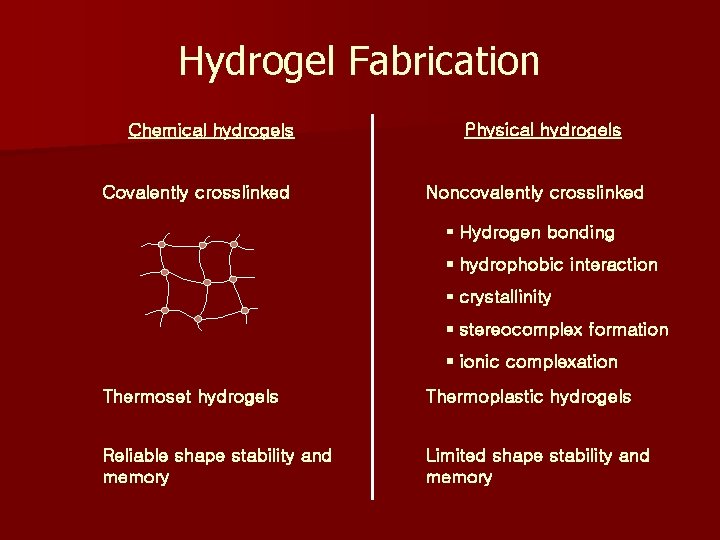
Hydrogel Fabrication Chemical hydrogels Covalently crosslinked Physical hydrogels Noncovalently crosslinked ▪ Hydrogen bonding ▪ hydrophobic interaction ▪ crystallinity ▪ stereocomplex formation ▪ ionic complexation Thermoset hydrogels Thermoplastic hydrogels Reliable shape stability and memory Limited shape stability and memory
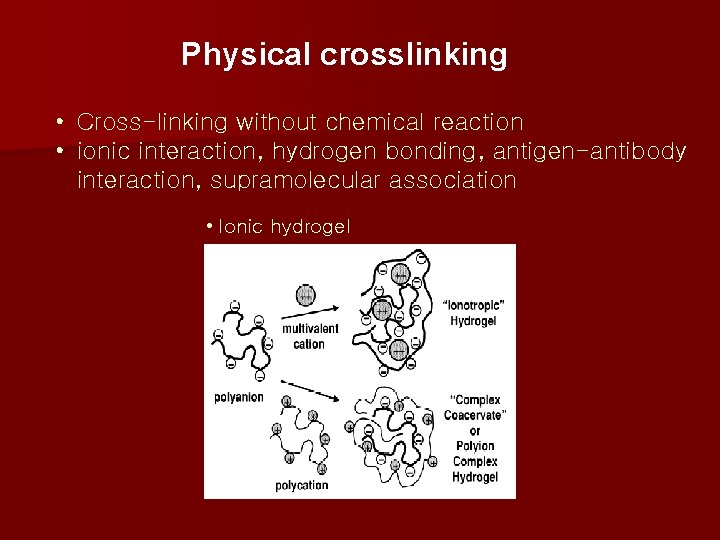
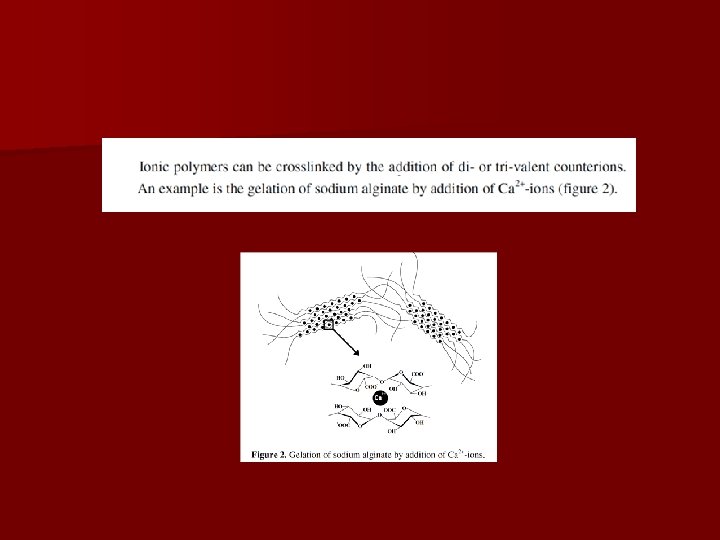
Physical crosslinking • Cross-linking without chemical reaction • ionic interaction, hydrogen bonding, antigen-antibody interaction, supramolecular association • Ionic hydrogel

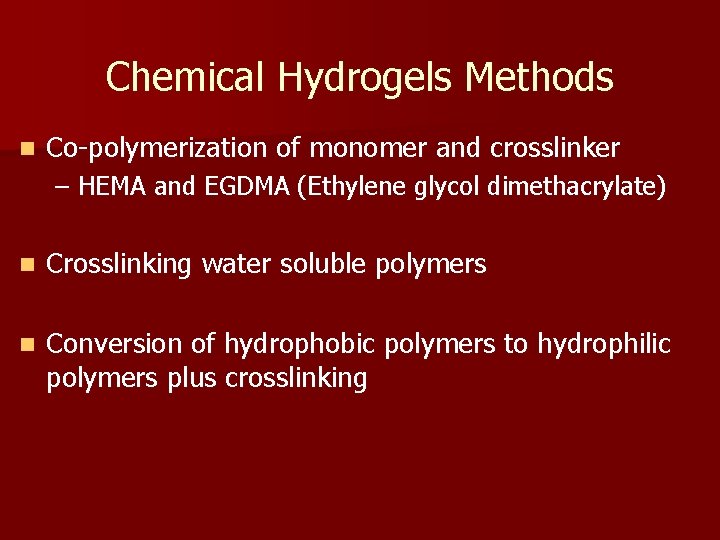
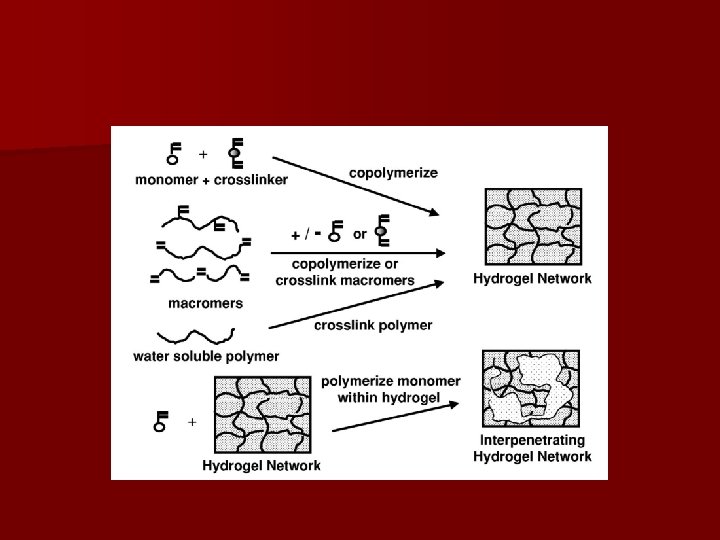
Chemical Hydrogels Methods n Co-polymerization of monomer and crosslinker – HEMA and EGDMA (Ethylene glycol dimethacrylate) n Crosslinking water soluble polymers n Conversion of hydrophobic polymers to hydrophilic polymers plus crosslinking
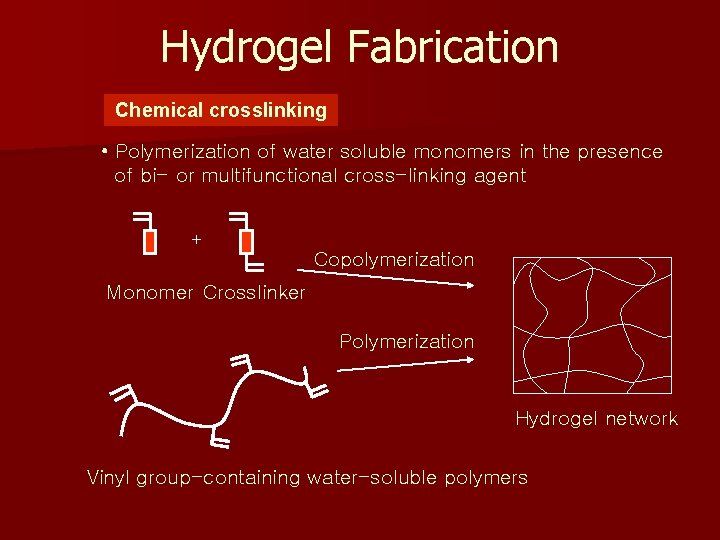
Hydrogel Fabrication Chemical crosslinking • Polymerization of water soluble monomers in the presence of bi- or multifunctional cross-linking agent + Copolymerization Monomer Crosslinker Polymerization Hydrogel network Vinyl group-containing water-soluble polymers
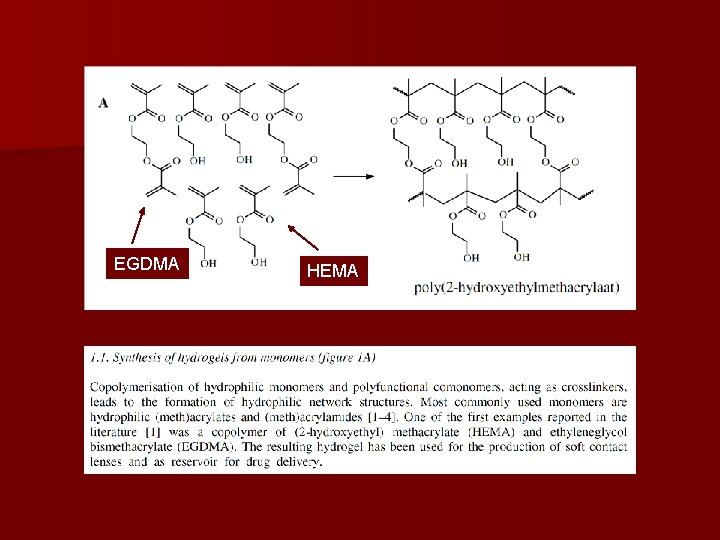
EGDMA HEMA
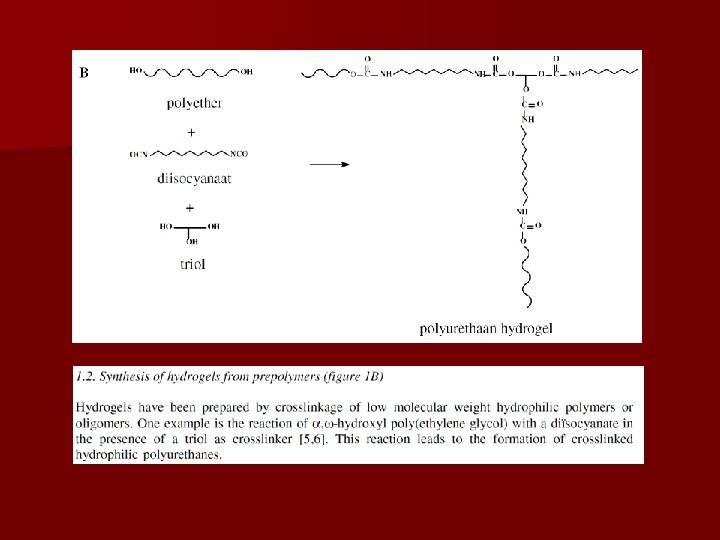
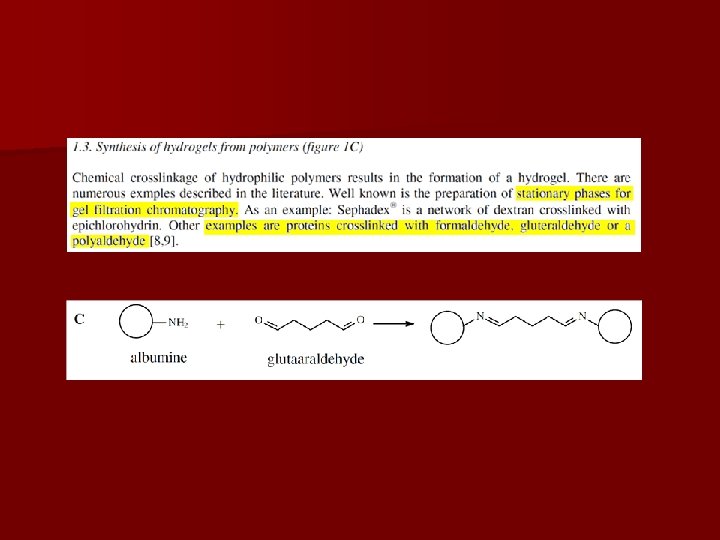
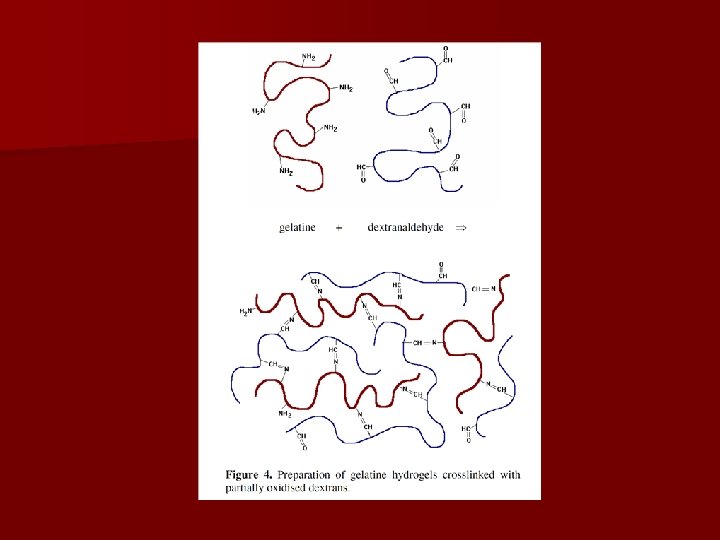
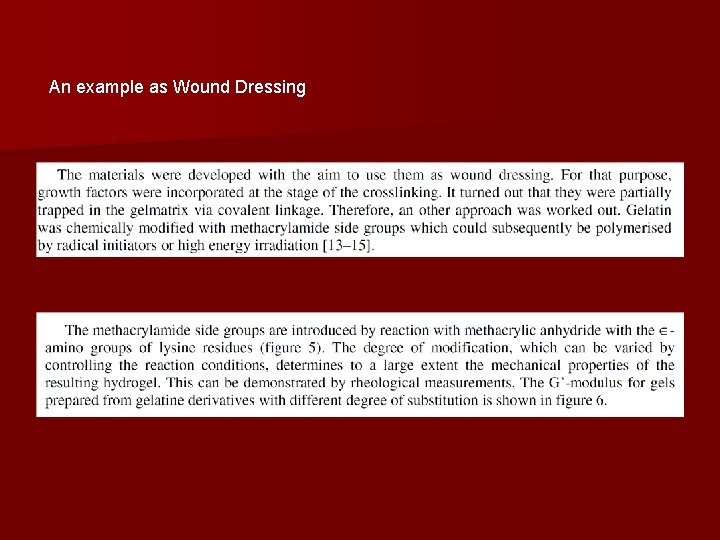
An example as Wound Dressing

Ref. :
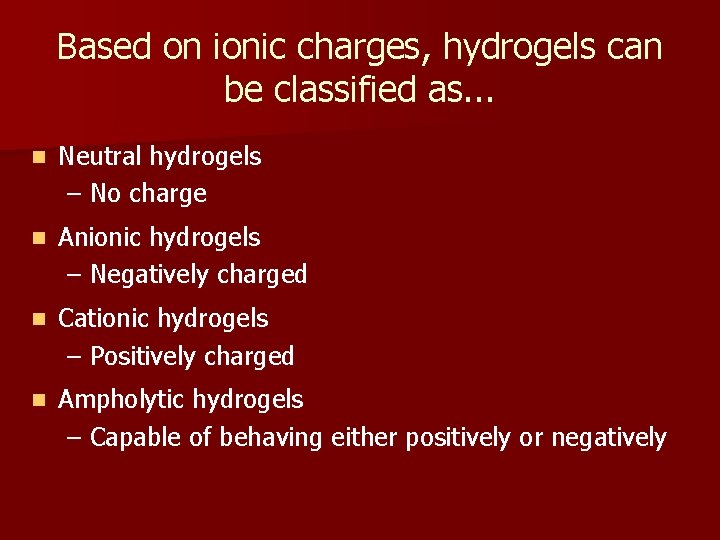
Based on ionic charges, hydrogels can be classified as. . . n Neutral hydrogels – No charge n Anionic hydrogels – Negatively charged n Cationic hydrogels – Positively charged n Ampholytic hydrogels – Capable of behaving either positively or negatively
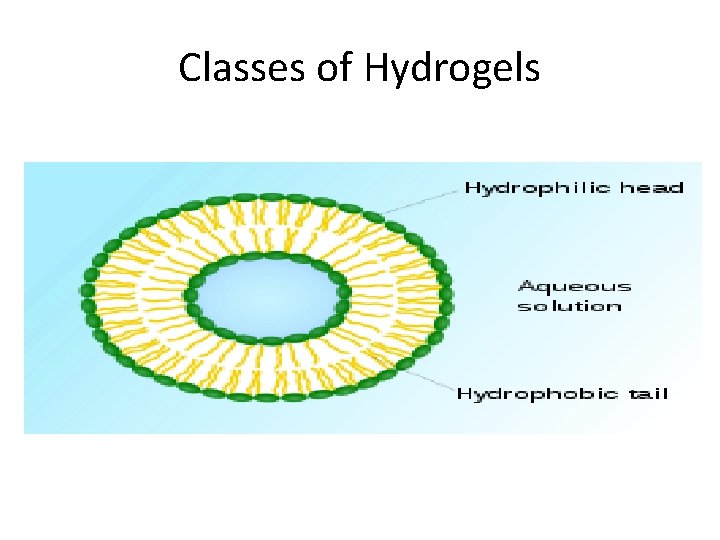
Classes of Hydrogels
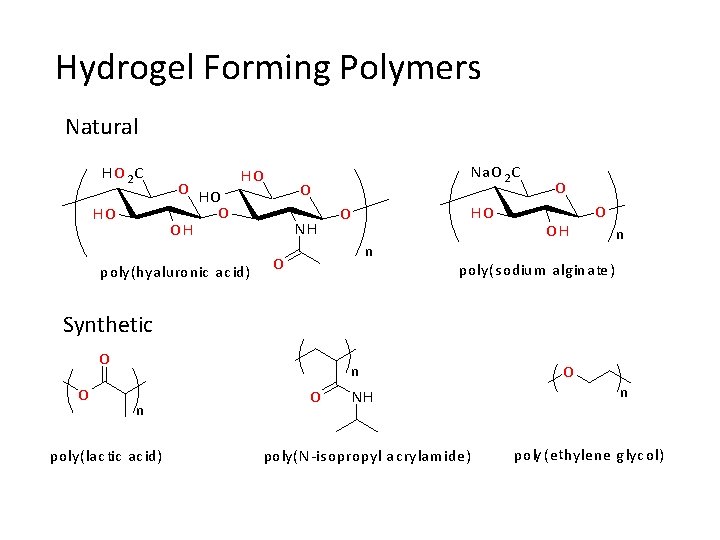
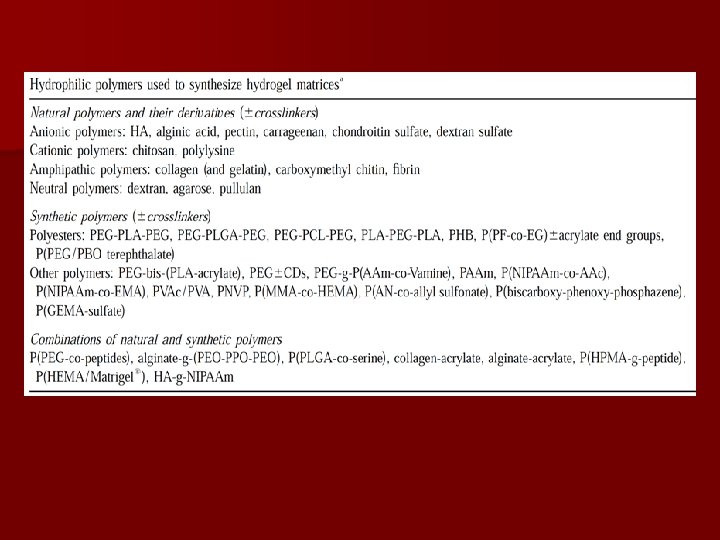
Hydrogel Forming Polymers Natural H O 2 C HO O OH HO poly(hyaluronic acid) Na. O 2 C O NH HO O n O O OH O n poly(s odium alginate) Synthetic O O n n poly(lactic acid) O NH poly(N-is opropyl acrylamide) O n poly (ethylene g lycol)
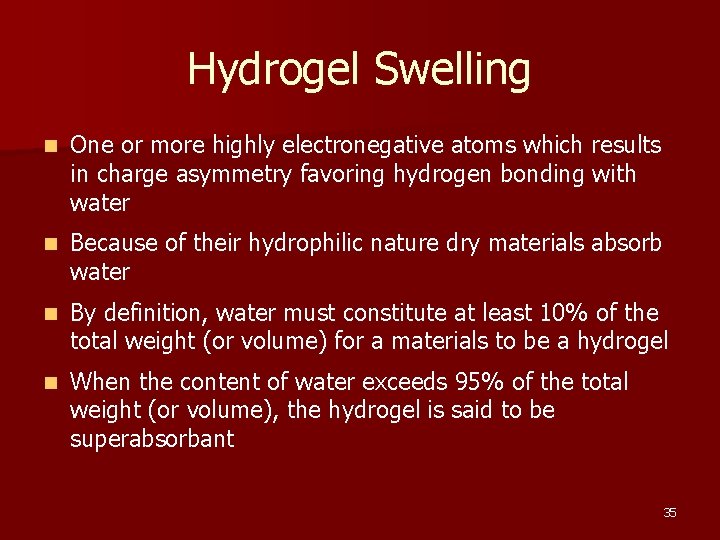
Hydrogel Swelling n One or more highly electronegative atoms which results in charge asymmetry favoring hydrogen bonding with water n Because of their hydrophilic nature dry materials absorb water n By definition, water must constitute at least 10% of the total weight (or volume) for a materials to be a hydrogel n When the content of water exceeds 95% of the total weight (or volume), the hydrogel is said to be superabsorbant 35
Important features of hydrogels – Usually comprised of highly polyionic polymers – Often exhibit large volumetric changes eg. highly compressed in secretory vesicle and expand rapidly and dramatically on release – Can undergo volumetric phase transitions in response to ionic concentrations (Ca++, H+), temperature, . . . – Volume is determined by combination of attractive and repulsive forces: § repulsive electrostatic, hydrophobic § attractive, hydrogen binding, cross-linking 36
Swelling. . . Thermodynamically Speaking n Network starts to swell due to thermodynamic compatibility of the polymer chains and water – Swelling in chemical (crosslinked) polymers is dependent on the solvent n Swelling force is counterbalanced by the retractive force induced by the crosslinks of the network n Swelling equilibrium is reached when these two forces are equal n Degree of swelling can be quantified by: • ratio of sample volume in the swollen state to volume in the dry state • weight degree of swelling: ratio of the weight of swollen sample to that of the dry sample
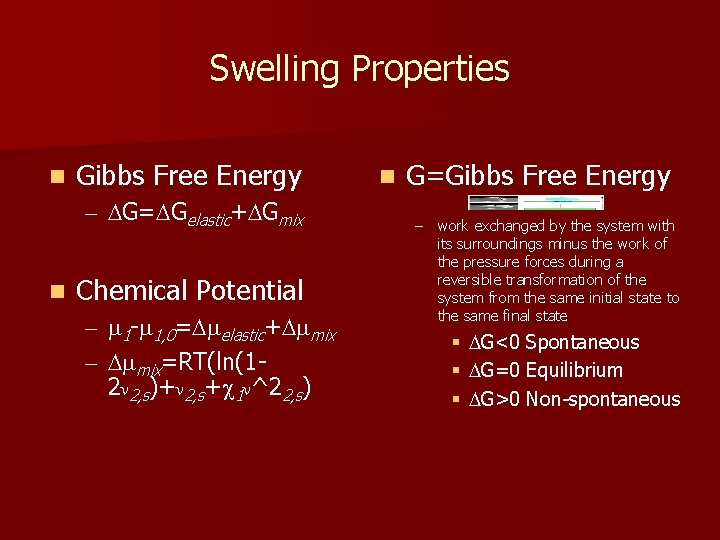
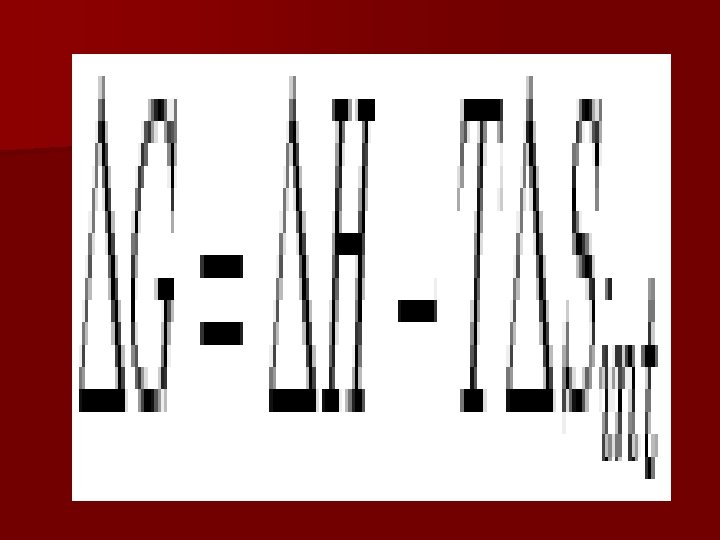
Swelling Properties n Gibbs Free Energy – DG=DGelastic+DGmix n Chemical Potential – m 1 -m 1, 0=Dmelastic+Dmmix – Dmmix=RT(ln(12 v 2, s)+v 2, s+c 1 v^22, s) n G=Gibbs Free Energy – work exchanged by the system with its surroundings minus the work of the pressure forces during a reversible transformation of the system from the same initial state to the same final state § DG<0 Spontaneous § DG=0 Equilibrium § DG>0 Non-spontaneous
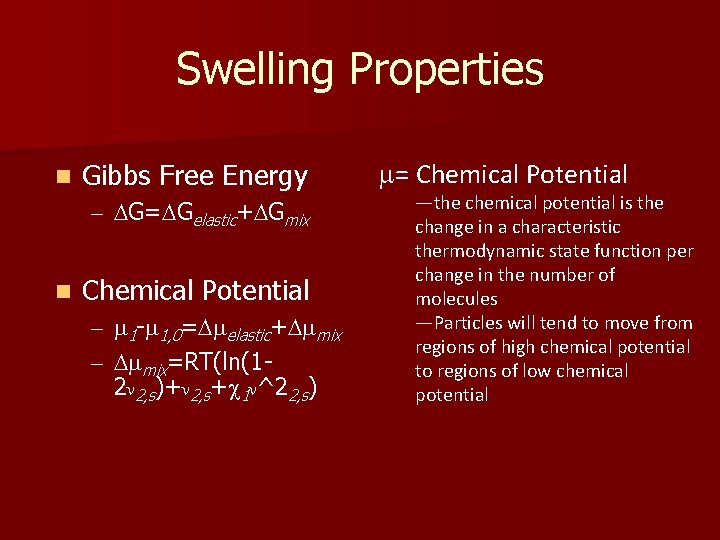
Swelling Properties n Gibbs Free Energy – DG=DGelastic+DGmix n Chemical Potential – m 1 -m 1, 0=Dmelastic+Dmmix – Dmmix=RT(ln(12 v 2, s)+v 2, s+c 1 v^22, s) m=n Chemical Potential G=Gibbs Free Energy ―the chemical potential is the – work exchanged by the system with change in a characteristic its surroundings minus the work of thermodynamic state function per the pressure forces during a change in the number of reversible transformation of the system from the same initial state to molecules the same final state ―Particles will tend to move from regions§ of. DG<0 Spontaneous high chemical potential to regions of low chemical § DG=0 Equilibrium potential § DG>0 Non-spontaneous
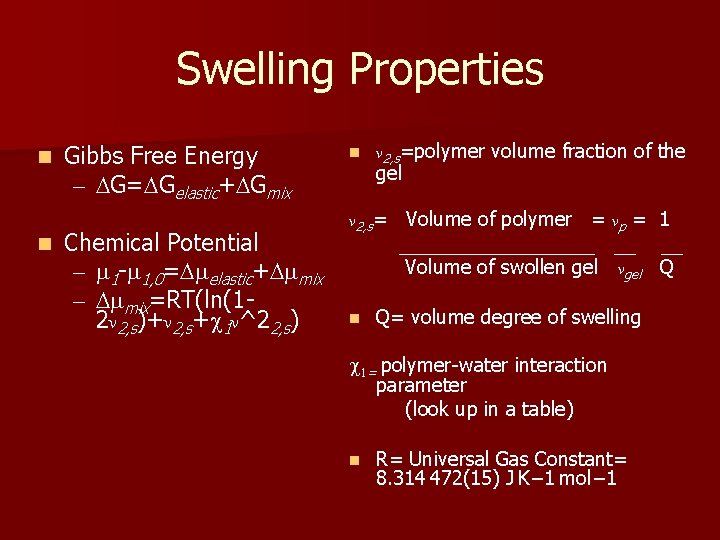
Swelling Properties n n Gibbs Free Energy – DG=DGelastic+DGmix Chemical Potential – m 1 -m 1, 0=Dmelastic+Dmmix – Dmmix=RT(ln(12 v 2, s)+v 2, s+c 1 v^22, s) n v 2, s=polymer volume fraction of the gel v 2, s= Volume of polymer = vp = 1 _________ __ Volume of swollen gel vgel Q n Q= volume degree of swelling c 1= polymer-water interaction parameter (look up in a table) n R= Universal Gas Constant= 8. 314 472(15) J K− 1 mol− 1
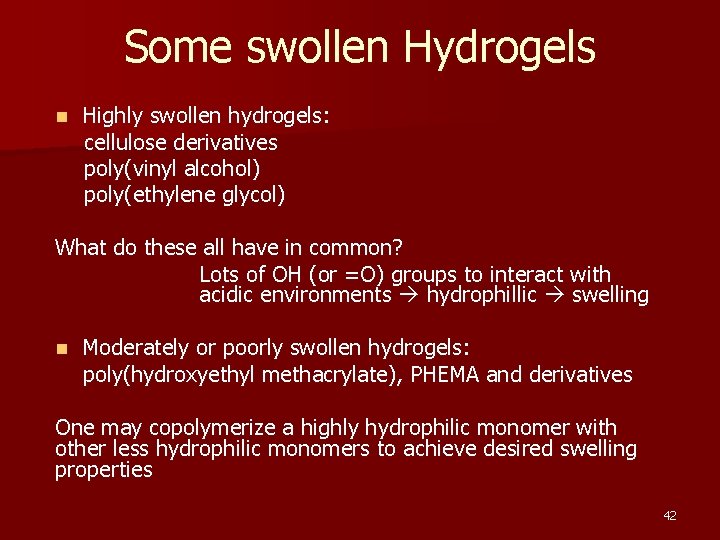
Some swollen Hydrogels n Highly swollen hydrogels: cellulose derivatives poly(vinyl alcohol) poly(ethylene glycol) What do these all have in common? Lots of OH (or =O) groups to interact with acidic environments hydrophillic swelling n Moderately or poorly swollen hydrogels: poly(hydroxyethyl methacrylate), PHEMA and derivatives One may copolymerize a highly hydrophilic monomer with other less hydrophilic monomers to achieve desired swelling properties 42
Contact Angle (wetability) Hydrophobic – “water hating” n Hydrophilic – “water loving” n n Why is this important to materials selection? – Do you want your eyes to be dried out by your contact lenses? Probably not… * Cool fact, fluorinated surfaces have the most hydrophobic properties and are deemed super-hydrophobic.
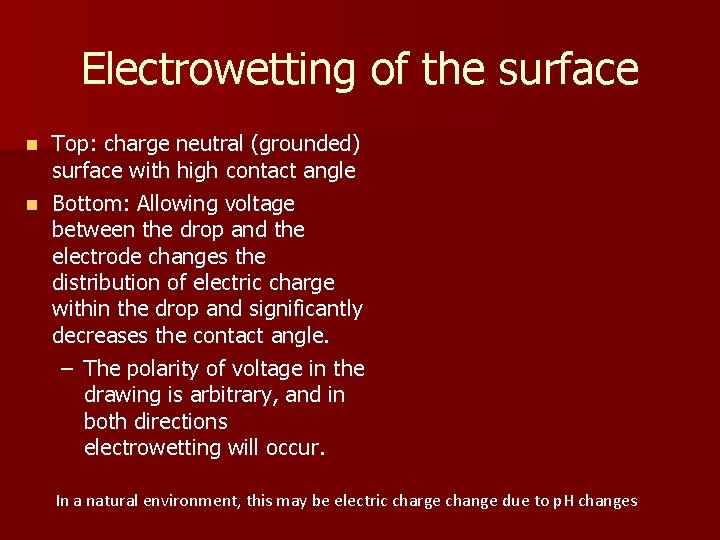
Electrowetting of the surface Top: charge neutral (grounded) surface with high contact angle n Bottom: Allowing voltage between the drop and the electrode changes the distribution of electric charge within the drop and significantly decreases the contact angle. – The polarity of voltage in the drawing is arbitrary, and in both directions electrowetting will occur. n In a natural environment, this may be electric charge change due to p. H changes
Other Important Properties n Solute diffusion coefficient through the hydrogel n Optical properties n Mechanical properties – Hydrophilic hydrogel surfaces are poor substrates for § Protein adsorption § Cell adsorption
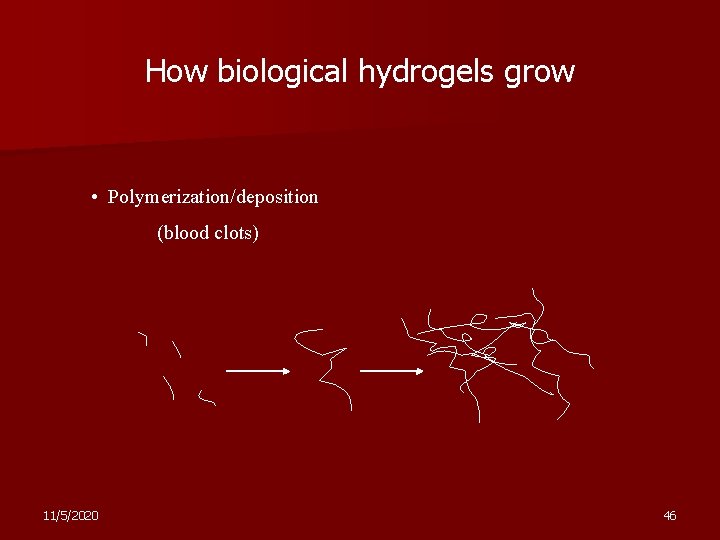
How biological hydrogels grow • Polymerization/deposition (blood clots) 11/5/2020 46
Environmentally Responsive Hydrogels – Hydrogels that exhibit swelling changes due to the external § p. H § Temperature § Ionic Concentration
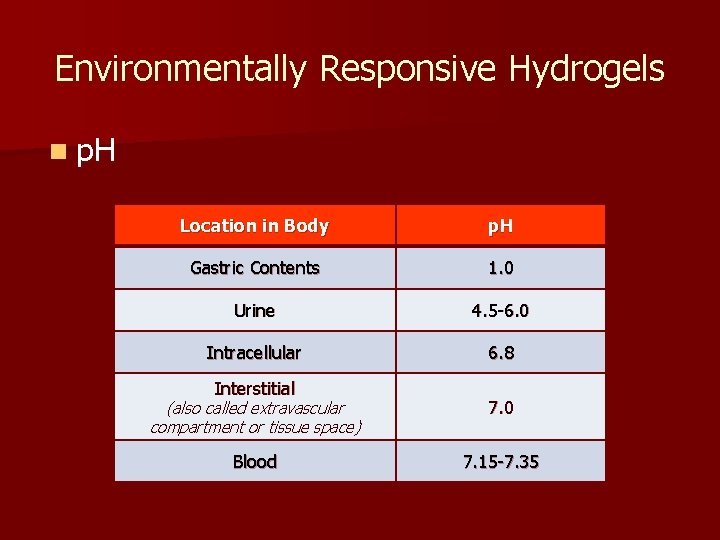
Environmentally Responsive Hydrogels n p. H Location in Body p. H Gastric Contents 1. 0 Urine 4. 5 -6. 0 Intracellular 6. 8 Interstitial (also called extravascular compartment or tissue space) 7. 0 Blood 7. 15 -7. 35
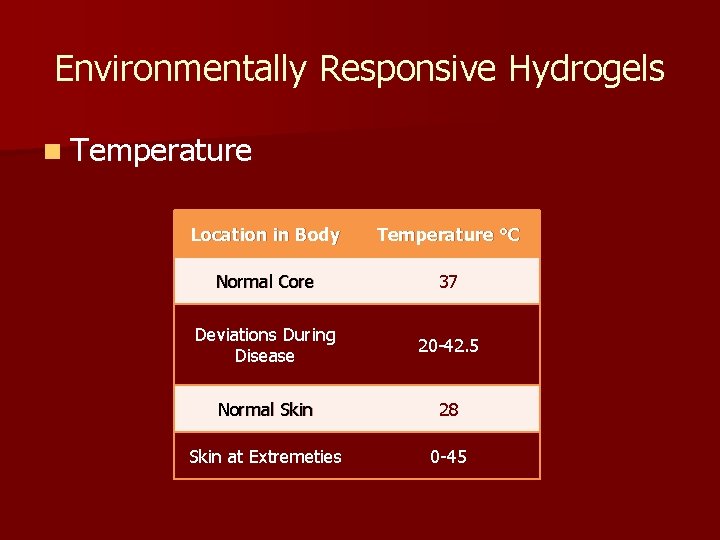
Environmentally Responsive Hydrogels n Temperature Location in Body Temperature °C Normal Core 37 Deviations During Disease 20 -42. 5 Normal Skin 28 Skin at Extremeties 0 -45
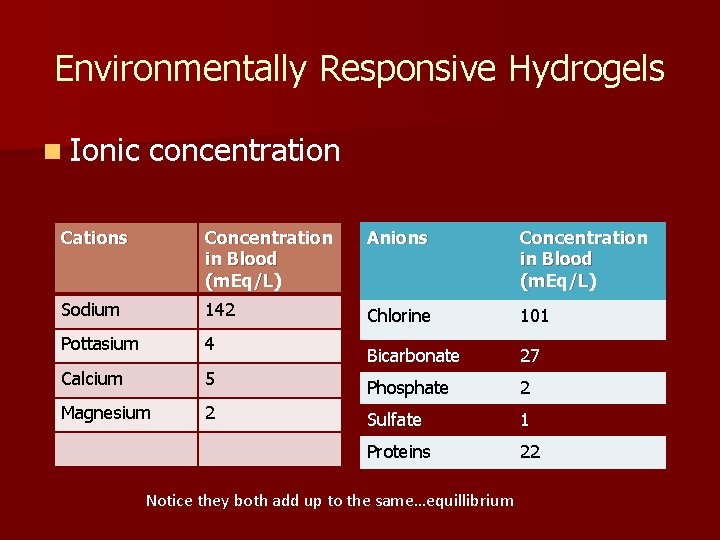
Environmentally Responsive Hydrogels n Ionic concentration Cations Concentration in Blood (m. Eq/L) Anions Concentration in Blood (m. Eq/L) Sodium 142 Chlorine 101 Pottasium 4 Bicarbonate 27 Calcium 5 Phosphate 2 Magnesium 2 Sulfate 1 Proteins 22 Notice they both add up to the same…equillibrium
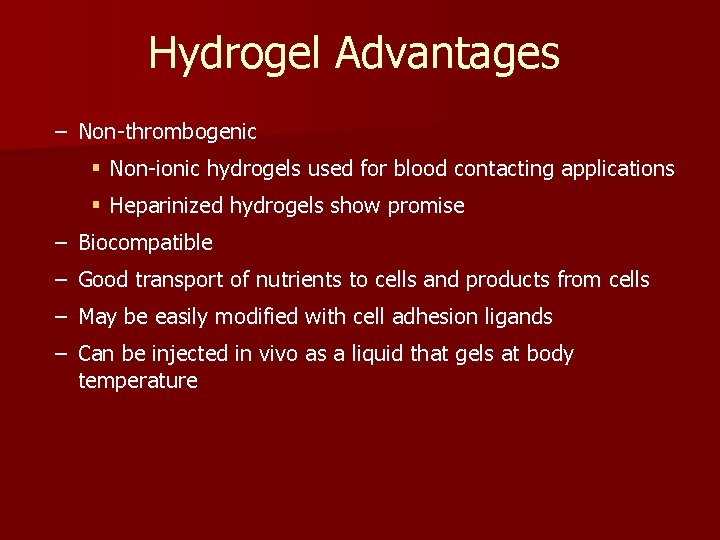
Hydrogel Advantages – Non-thrombogenic § Non-ionic hydrogels used for blood contacting applications § Heparinized hydrogels show promise – Biocompatible – Good transport of nutrients to cells and products from cells – May be easily modified with cell adhesion ligands – Can be injected in vivo as a liquid that gels at body temperature
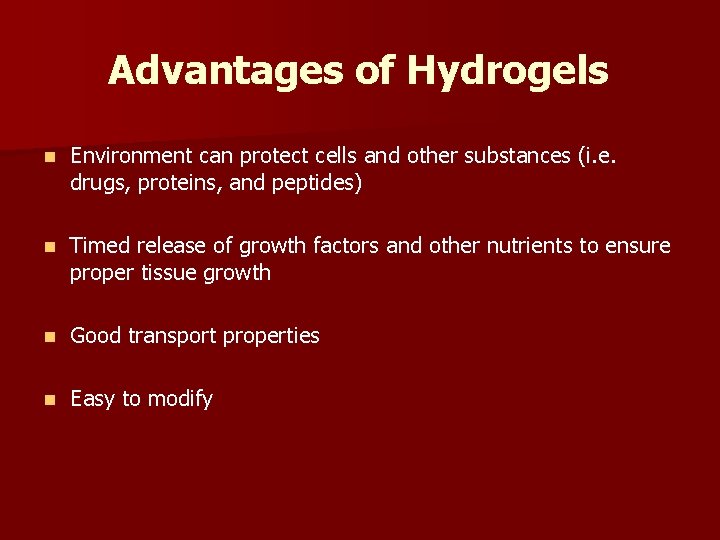
Advantages of Hydrogels n Environment can protect cells and other substances (i. e. drugs, proteins, and peptides) n Timed release of growth factors and other nutrients to ensure proper tissue growth n Good transport properties n Easy to modify
Disadvantages of Hydrogels n Low mechanical strength n Hard to handle n Difficult to load n difficult to be sterilized
Types of Hydrogels n Natural Polymers – Dextran, Chitosan, Collagen, Dextran Sulfate – Advantages § § § Generally have high biocompatibility Intrinsic cellular interactions Biodegradable Cell controlled degradability Low toxicity byproducts – Disadvantages § Mechanical Strength § Batch variation § Animal derived materials may pass on viruses
Types of Hydrogels n Synthetic Polymers – PEG-PLA-PEG, Poly (vinyl alcohol) – Advantages Precise control and mass produced Can be tailored to give a wide range of properties (can be designed to meet specific needs) § Low immunogenecity § Minimize risk of biological pathogens or contaminants § § – Disadvantages § Low biodegradability § Can include toxic substances n Combination of natural and synthetic – Collagen-acrylate, P (PEG-co-peptides)
Properties of Hydrogels n Pore Size n Fabrication techniques n Shape and surface/volume ratio n H 2 O content n Strength n Swelling activation
Why Hydrogels? n Tissue Engineering – Scaffolds for tissue engineering n Cell Culture Systems n Drug Delivery – Time released delivery n Contact Lenses
Biomedical Uses for Hydrogels n Common – – – — Scaffolds in tissue engineering. Sustained-release delivery systems Hydrogels that are responsive to specific molecules, such as glucose or antigens can be used as biosensors. Disposable diapers where they "capture" urine, or in sanitary napkins Contact lenses (silicone hydrogels, polyacrylamides) Medical electrodes using hydrogels composed of cross linked polymers (PEO, poly. AMPS and polyvinylpyrrolidone) Lubricating surface coating used with catheters, drainage tubes and gloves
Biomedical Uses for Hydrogels n Less common uses include – Breast implants – Dressings for healing of burn or other hard-to-heal wounds. Wound gels are excellent for helping to create or maintain a moist environment. – Reservoirs in topical drug delivery; particularly ionic drugs – Artificial tendon and cartilage – Wound healing dressings (Vigilon®, Hydron®, Gelperm®) § non-antigenic, flexible wound cover § permeable to water and metabolites – – – Artificial kidney membranes Artificial skin Maxillofacial and sexual organ reconstruction materials Vocal cord replacement Butt injections 59

Headlines
Ref. : Smart Polymers: Hydrogels and Shape Memory Polymers Dr. Jenny Amos February 19, 2009
- Slides: 60