
Hydrodynamic Interactions of an Unmanned Underwater Vehicle Operating


- Slides: 20
Hydrodynamic Interactions of an Unmanned Underwater Vehicle Operating in Close Proximity to a Moving Submarine LT Brady Hammond
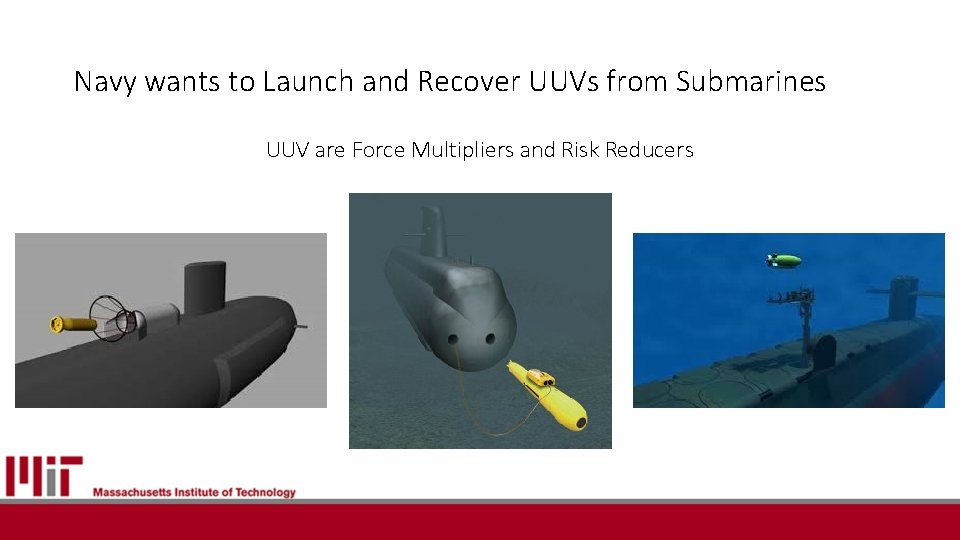
Navy wants to Launch and Recover UUVs from Submarines UUV are Force Multipliers and Risk Reducers
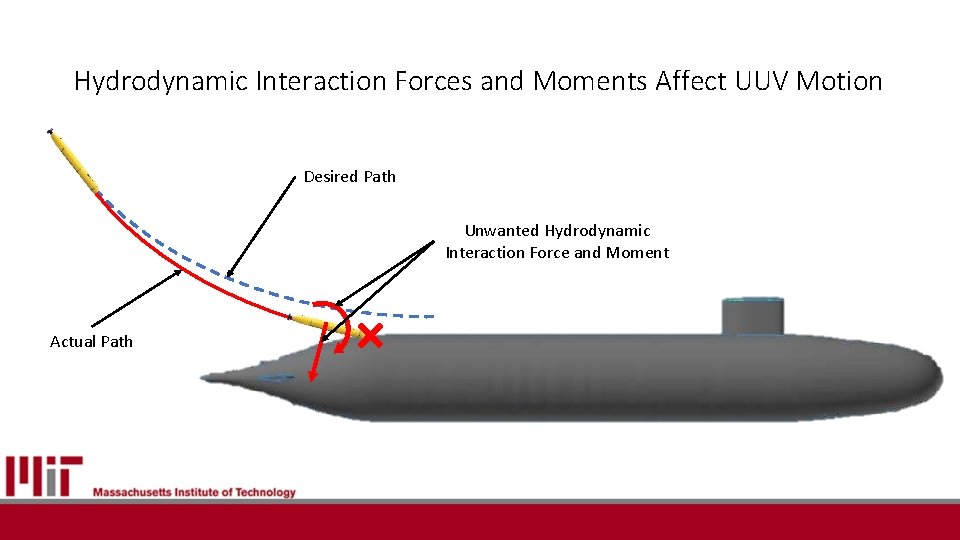
Hydrodynamic Interaction Forces and Moments Affect UUV Motion Desired Path Unwanted Hydrodynamic Interaction Force and Moment Actual Path
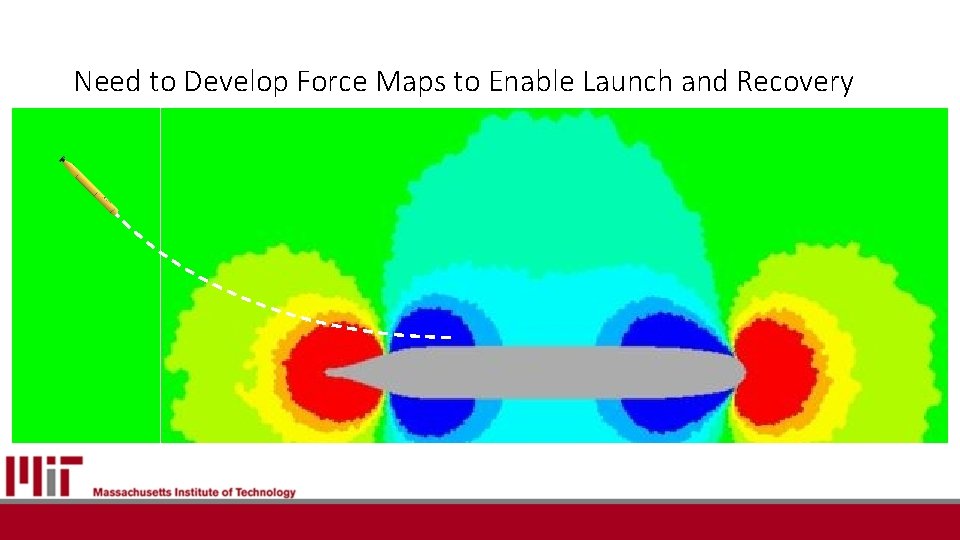
Need to Develop Force Maps to Enable Launch and Recovery
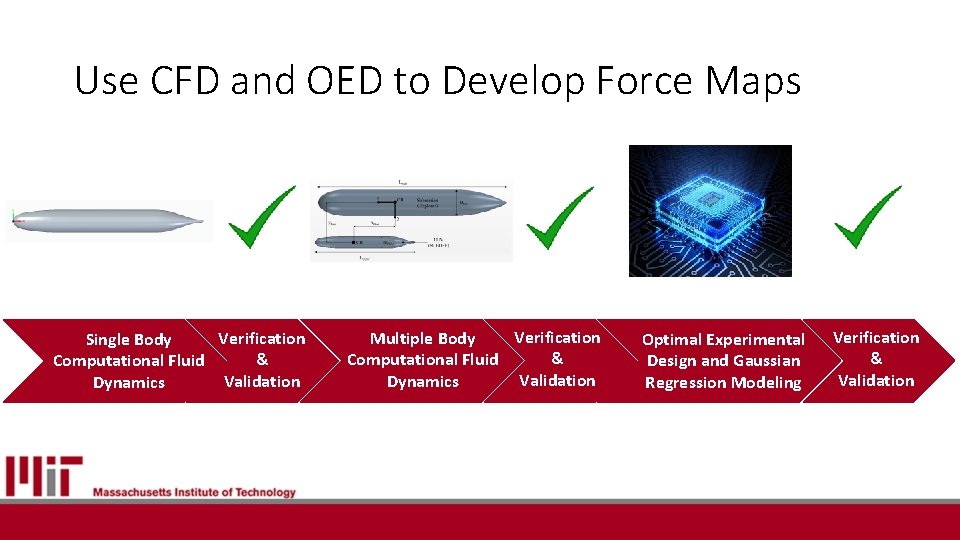
Use CFD and OED to Develop Force Maps Verification Single Body & Computational Fluid Validation Dynamics Verification Multiple Body & Computational Fluid Validation Dynamics Optimal Experimental Design and Gaussian Regression Modeling Verification & Validation
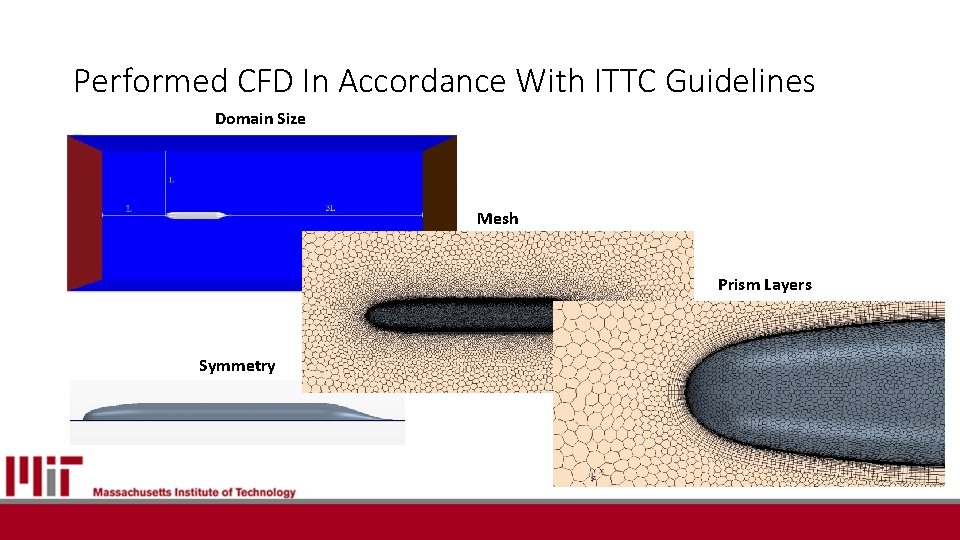
Performed CFD In Accordance With ITTC Guidelines Domain Size Mesh Prism Layers Symmetry
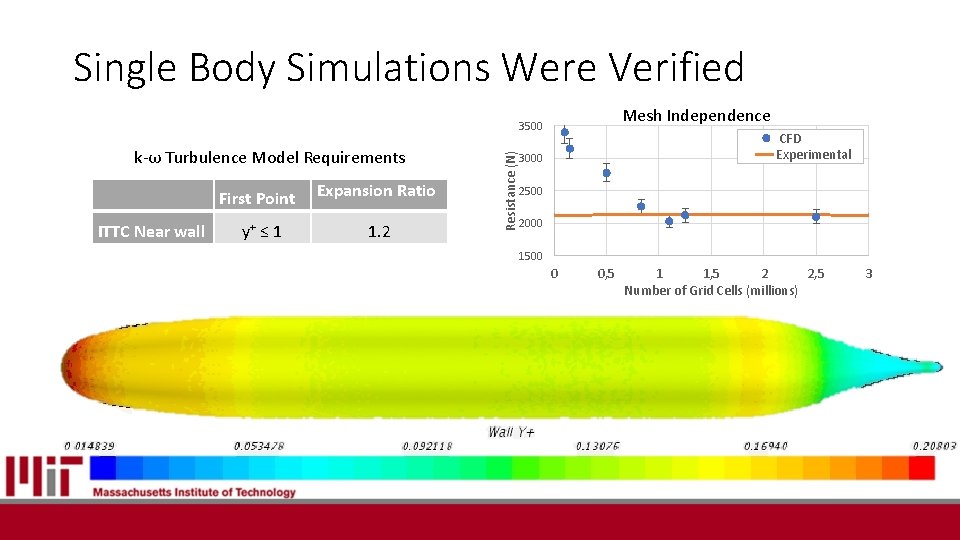
Single Body Simulations Were Verified Mesh Independence k-ω Turbulence Model Requirements ITTC Near wall First Point Expansion Ratio y+ ≤ 1 1. 2 Resistance (N) 3500 CFD Experimental 3000 2500 2000 1500 0 0, 5 1 1, 5 2 2, 5 Number of Grid Cells (millions) 3
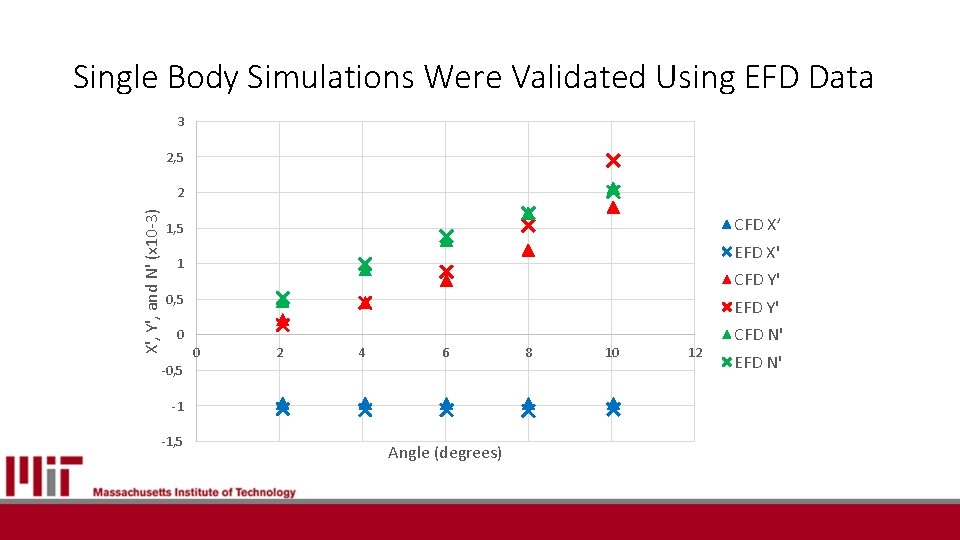
Single Body Simulations Were Validated Using EFD Data 3 2, 5 X', Y', and N' (x 10 -3) 2 CFD X’ 1, 5 EFD X' 1 CFD Y' 0, 5 EFD Y' 0 CFD N' 0 2 4 6 -0, 5 -1 -1, 5 Angle (degrees) 8 10 12 EFD N'
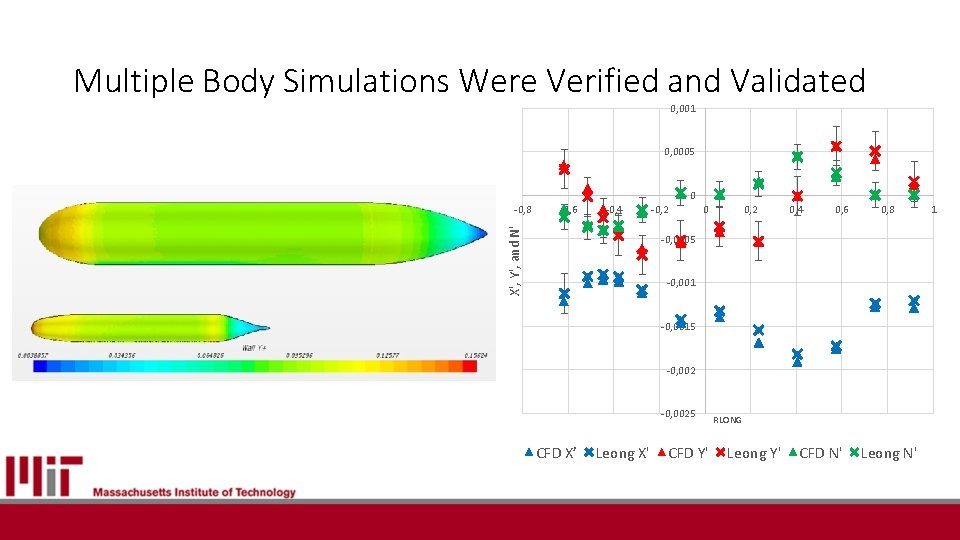
Multiple Body Simulations Were Verified and Validated 0, 001 0, 0005 0 -0, 6 -0, 4 X', Y', and N' -0, 8 -0, 2 0, 4 0, 6 0, 8 -0, 0005 -0, 0015 -0, 0025 CFD X’ Leong X' CFD Y' RLONG Leong Y' CFD N' Leong N' 1
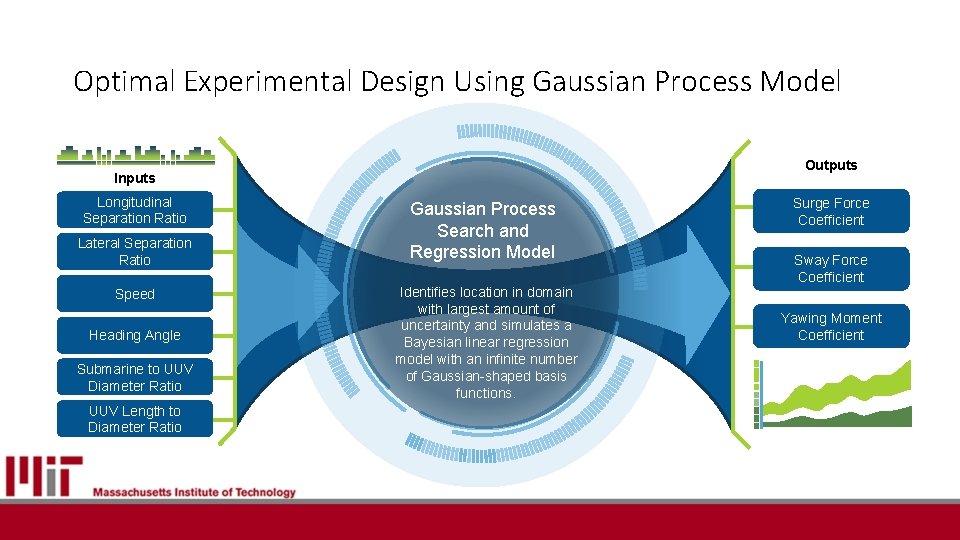
Optimal Experimental Design Using Gaussian Process Model Outputs Inputs Longitudinal Separation Ratio Lateral Separation Ratio Speed Heading Angle Submarine to UUV Diameter Ratio UUV Length to Diameter Ratio Gaussian Process Search and Regression Model Identifies location in domain with largest amount of uncertainty and simulates a Bayesian linear regression model with an infinite number of Gaussian-shaped basis functions. Surge Force Coefficient Sway Force Coefficient Yawing Moment Coefficient
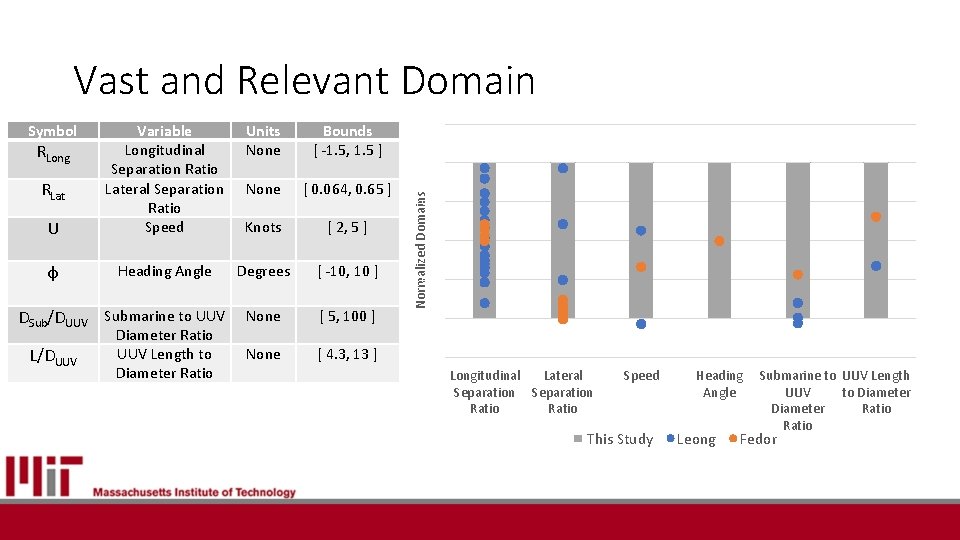
Vast and Relevant Domain U Variable Longitudinal Separation Ratio Lateral Separation Ratio Speed φ Heading Angle RLong RLat DSub/DUUV Submarine to UUV L/DUUV Diameter Ratio UUV Length to Diameter Ratio Units None Bounds [ -1. 5, 1. 5 ] None [ 0. 064, 0. 65 ] Knots [ 2, 5 ] Degrees [ -10, 10 ] None [ 5, 100 ] None [ 4. 3, 13 ] 0, 5 1, 5 2, 5 3, 5 4, 5 5, 5 6, 5 1 1, 25 1 Normalized Domains Symbol 1, 25 0, 75 0, 25 0 0 -0, 25 Longitudinal Lateral Separation Ratio Speed This Study Heading Angle Leong Submarine to UUV Length UUV to Diameter Ratio Fedor
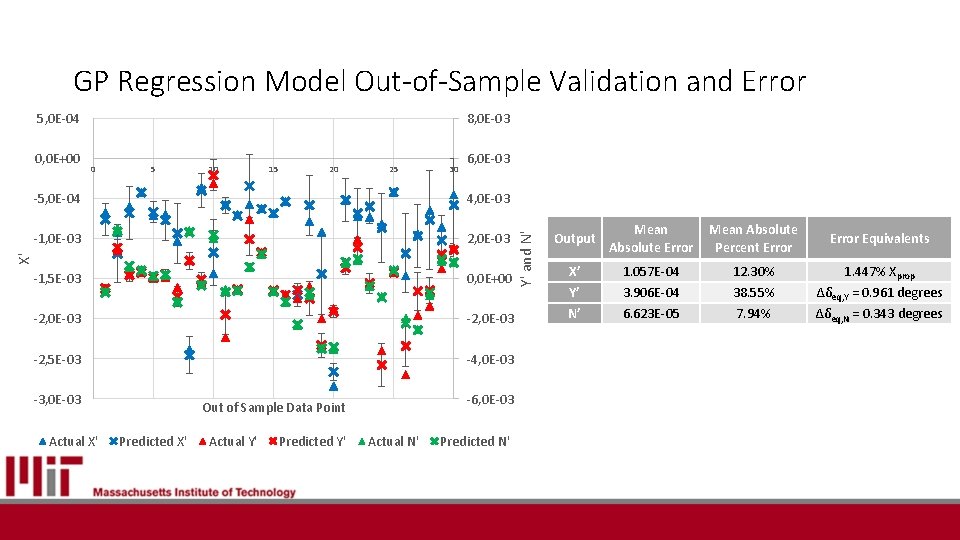
GP Regression Model Out-of-Sample Validation and Error 0, 0 E+00 8, 0 E-03 0 5 10 15 20 25 30 6, 0 E-03 4, 0 E-03 -1, 0 E-03 2, 0 E-03 -1, 5 E-03 0, 0 E+00 -2, 0 E-03 -2, 5 E-03 -4, 0 E-03 X' -5, 0 E-04 -3, 0 E-03 Actual X' -6, 0 E-03 Out of Sample Data Point Predicted X' Actual Y' Predicted Y' Actual N' Predicted N' Y' and N' 5, 0 E-04 Output Mean Absolute Error Mean Absolute Percent Error Equivalents X’ 1. 057 E-04 12. 30% 1. 447% Xprop Y’ 3. 906 E-04 38. 55% Δδeq, Y = 0. 961 degrees N’ 6. 623 E-05 7. 94% Δδeq, N = 0. 343 degrees
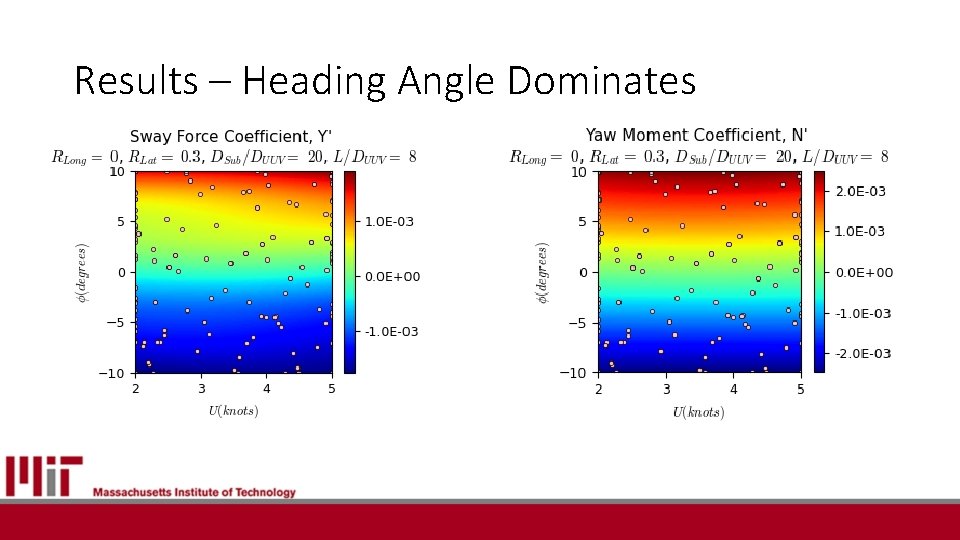
Results – Heading Angle Dominates
Results – Short UUVs have large Surge Coefficients
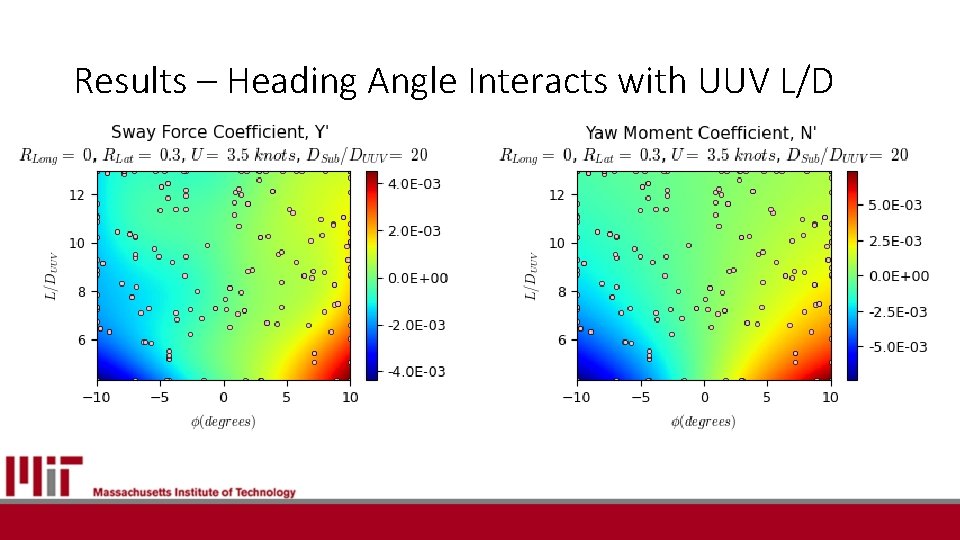
Results – Heading Angle Interacts with UUV L/D
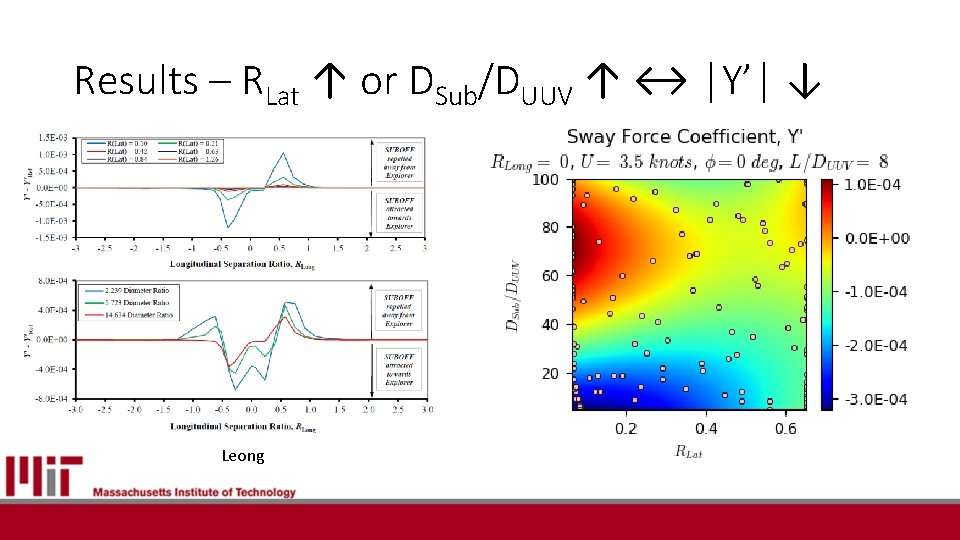
Results – RLat ↑ or DSub/DUUV ↑ ↔ │Y’│ ↓ Leong
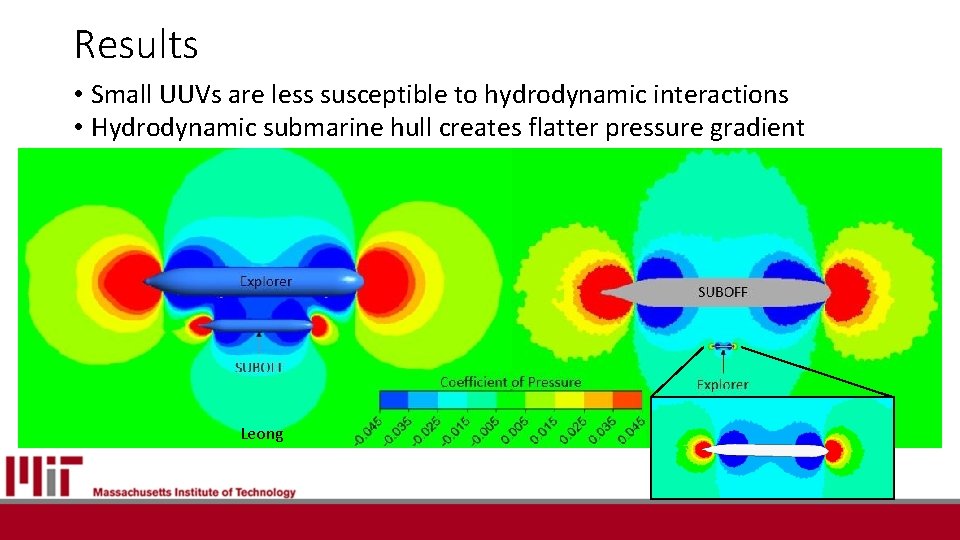
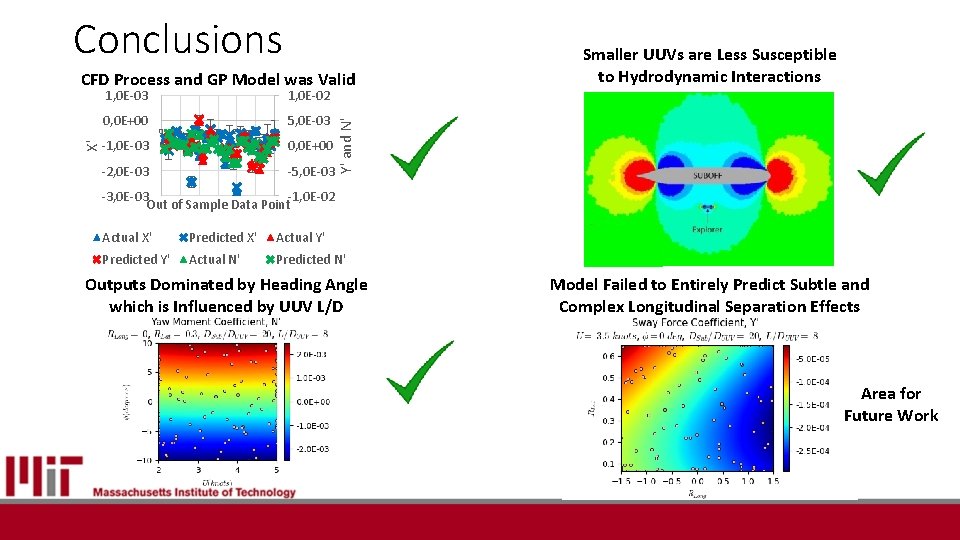
Results • Small UUVs are less susceptible to hydrodynamic interactions • Hydrodynamic submarine hull creates flatter pressure gradient Leong
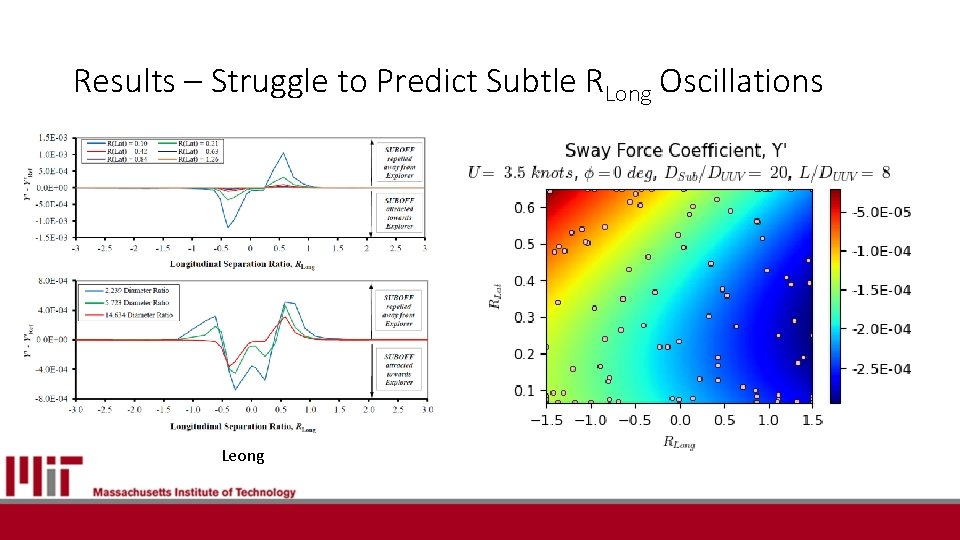
Results – Struggle to Predict Subtle RLong Oscillations Leong
Conclusions CFD Process and GP Model was Valid X' 0, 0 E+00 1, 0 E-02 0 5 10 15 20 25 30 5, 0 E-03 -1, 0 E-03 0, 0 E+00 -2, 0 E-03 -5, 0 E-03 Y' and N' 1, 0 E-03 Smaller UUVs are Less Susceptible to Hydrodynamic Interactions -3, 0 E-03 -1, 0 E-02 Out of Sample Data Point Actual X' Predicted X' Actual Y' Predicted Y' Actual N' Predicted N' Outputs Dominated by Heading Angle which is Influenced by UUV L/D Model Failed to Entirely Predict Subtle and Complex Longitudinal Separation Effects Area for Future Work
Questions?