
HYDROCARBON RELEASE PREVENTION Major Accident Hazards and Safety
HYDROCARBON RELEASE PREVENTION Major Accident Hazards and Safety & Environmental Critical Elements
What will this presentation help us understand? • What Major Accidents are and the hazards that cause them • What are Safety and Environmental Critical Elements (SECEs) and why it is important that we manage and maintain them
Working in Hazardous Environments • Everyone needs to know the hazards associated with the work environment • All areas of a site have specific hazards that have potential to kill people • Understanding these hazards is vital
Major Accident Hazards (MAHs) Examples of Major Accident Hazards include: • • • Fire Release of hydrocarbons Loss of well control Toxic gases Loss of buoyancy / structural stability Collisions (helicopters, vessels)

Major Accidents are defined as: • Death or serious injury due to fire, explosion or dangerous chemical release • Major damage to structure or plant (inc. a well blowout) • Collision of ship or helicopter with the installation • Failure of diving operations’ life support systems • Any other event involving death or serious injury to 5 or more people

Examples of Major Accidents
Major Accidents • How do we prevent a Major Accident? • If the worst does happen, how do we minimise the danger to personnel?
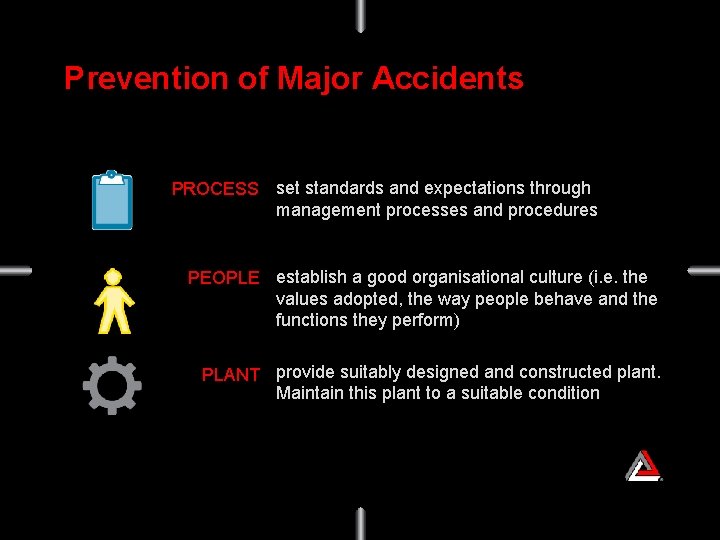
Prevention of Major Accidents PROCESS set standards and expectations through management processes and procedures PEOPLE establish a good organisational culture (i. e. the values adopted, the way people behave and the functions they perform) PLANT provide suitably designed and constructed plant. Maintain this plant to a suitable condition

Barriers to Major Accidents

Safety and Environmental Critical Elements (SECEs) • SECEs are key plant and equipment which help avoid an incident occurring or, if it does, help reduce the impact of the resulting accident • A list of SECEs on each offshore facility can be found in a document called the ‘Safety Case’ • The Safety Case is periodically updated and a copy can be found with your OIM or electronically • SECEs keep us safe!
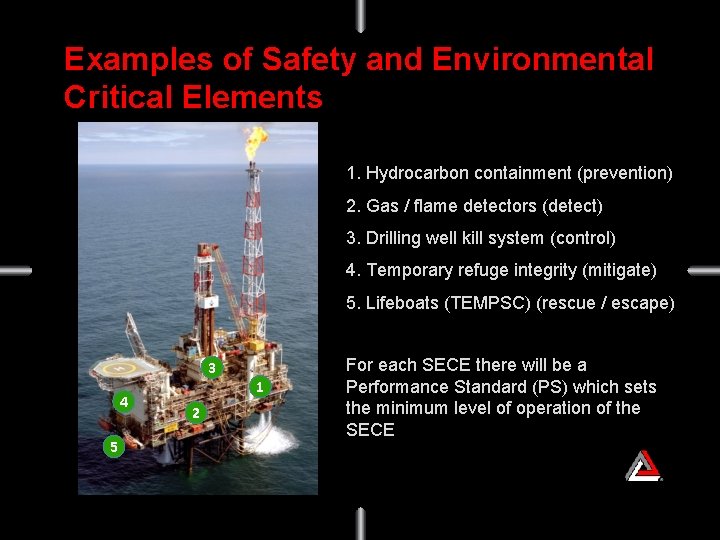
Examples of Safety and Environmental Critical Elements 1. Hydrocarbon containment (prevention) 2. Gas / flame detectors (detect) 3. Drilling well kill system (control) 4. Temporary refuge integrity (mitigate) 5. Lifeboats (TEMPSC) (rescue / escape) 3 4 5 2 1 For each SECE there will be a Performance Standard (PS) which sets the minimum level of operation of the SECE
How do we know these SECE meet their Performance Standards? • Each SECE must reliably perform its function to the requirements defined in its Performance Standard • Maintenance Routines ensure that SECEs continue to perform to their PSs Inspection and testing routines assure us that SECEs work when we need them
Independent Competent Person (ICP) or Independent Verification Body (IVB) • An ICP is appointed by the Duty Holder to doublecheck our SCEs are working • This is a legal requirement • Who is our ICP? Checks undertaken by an independent body to ensure that our SECEs are fit for purpose
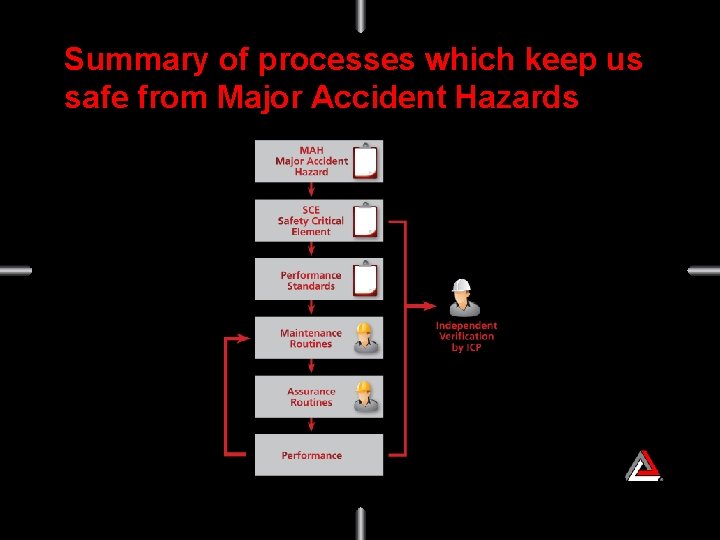
Summary of processes which keep us safe from Major Accident Hazards

What can we do? • Recognise that we work in a Major Accident Hazard environment • Familiarise ourselves with hazards and SECEs on board our installation • Ensure these SECEs are maintained and corners are not cut in the maintenance of this vital equipment • Ensure defects are reported and rectified
Four points to take home • Major Accident Hazards can potentially cause deaths or serious injuries • Safety Critical Elements (SCEs) are essential to prevent major accidents occurring • These SCEs must meet Performance Standards which are checked by us and by an Independent Competent Person (ICP) • Everyone is contributing to making and keeping the worksite safe
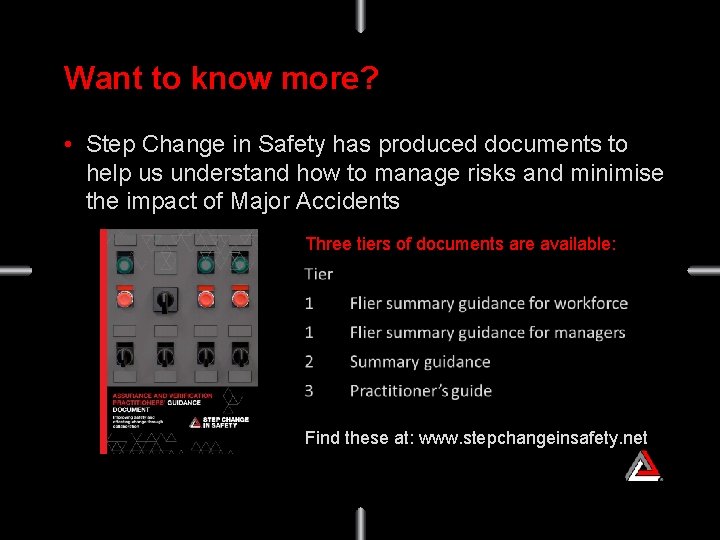
Want to know more? • Step Change in Safety has produced documents to help us understand how to manage risks and minimise the impact of Major Accidents Three tiers of documents are available: Find these at: www. stepchangeinsafety. net
HYDROCARBON RELEASE PREVENTION
- Slides: 19