
hydroacoustic signal and tsunami wave generated by sea
hydro-acoustic signal and tsunami wave generated by sea floor motion Chierici, F. , L. Pignagnoli, and D. Embriaco, (2009), Modelling of the hydro-acoustic signal and tsunami wave generated by sea floor motion including a porous seabed, J. Geophys. Res. , doi: 10. 1029/2009 JC 005522, in press. 1
NEAREST (coordinator: dr. Zitellini, ISMAR – CNR) Integrated observation from NEAR shore sourc. ES of Tsunamis: toward an early warning system EC Project (FP 6, 2006 -2009) http: //nearest. bo. ismar. cnr. it ISMAR-CNR, Italy University of Lisbon, Portugal Consejo Superior de Investigaciones Cientificas, Spain Alfred Wegener Institut, Germany University of West Bretagne, France INGV, Italy Technische Fachhochschule-Berlin, Germany Istituto Andaluz de Geofisica, Spain Istituto de Meteorologia, Portugal Centre National pour la Recherche Scientif. et Techn. , Morocco 2 XISTOS Development S. A. , France
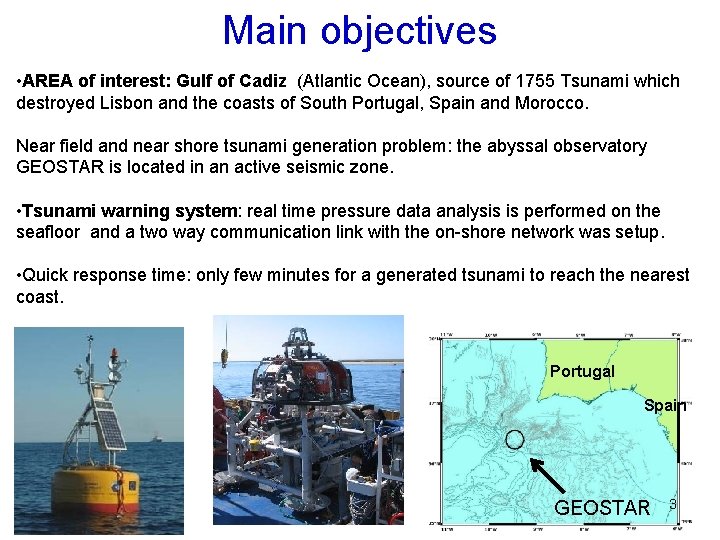
Main objectives • AREA of interest: Gulf of Cadiz (Atlantic Ocean), source of 1755 Tsunami which destroyed Lisbon and the coasts of South Portugal, Spain and Morocco. Near field and near shore tsunami generation problem: the abyssal observatory GEOSTAR is located in an active seismic zone. • Tsunami warning system: real time pressure data analysis is performed on the seafloor and a two way communication link with the on-shore network was setup. • Quick response time: only few minutes for a generated tsunami to reach the nearest coast. Portugal Spain GEOSTAR 3
Outline 1) A innovative Tsunameter have been developed in the Framework of NEAREST project (it will be installed on board SN 1 abyssal station. A new software for the remote control of the tsunameter and of SN 1 abyssal station has been designed and implemented). 2) A new model and relative results of tsunami generation in compressible water column overlying a porous sea bed (extended) 4
A new tsunami detector prototype, able to operate in generation areas , has been developed and operated successfully for 1 year at 3200 m depth 5
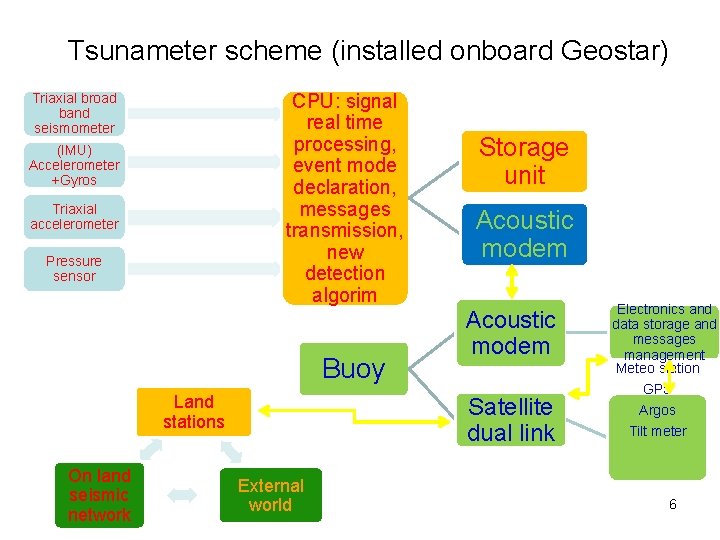
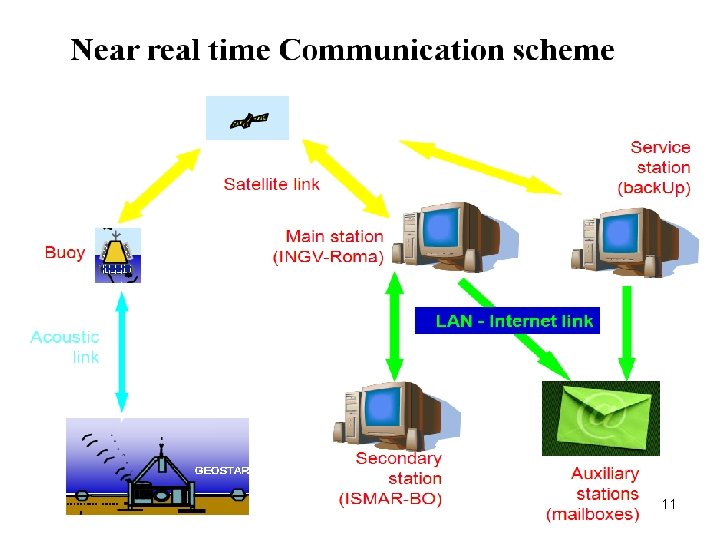
Tsunameter scheme (installed onboard Geostar) CPU: signal real time processing, event mode declaration, messages transmission, new detection algorim Triaxial broad band seismometer (IMU) Accelerometer +Gyros Triaxial accelerometer Pressure sensor Buoy Land stations On land seismic network Storage unit Acoustic modem Satellite dual link External world Electronics and data storage and messages management Meteo station GPS Argos Tilt meter 6
Tsunami Detection Procedure Trigger on Pressure and Seismic events • Seismometer: trigger on strong seismic event (STA/LTA) • Pressure: for the detection of sea level anomalies (Tsunamis wave); TDA declares the event on processed sea level data testing them against a prescribed threshold 7
A new real-time tsunami detection algorithm , based on localization concept (de-tide and filtering) has been developed and operated successfully from september 2007 to august 2008 in the Gulf of Cadiz 8
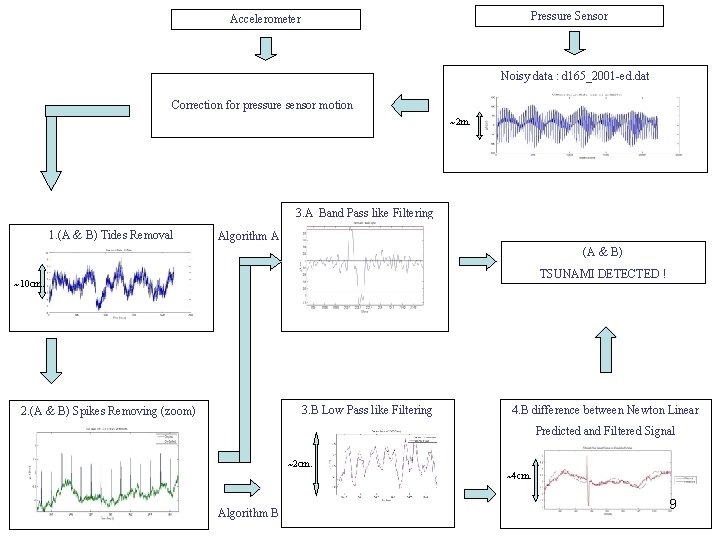
Pressure Sensor Accelerometer Noisy data : d 165_2001 -ed. dat Correction for pressure sensor motion ~2 m. 3. A Band Pass like Filtering 1. (A & B) Tides Removal Algorithm A (A & B) TSUNAMI DETECTED ! ~10 cm. 3. B Low Pass like Filtering 2. (A & B) Spikes Removing (zoom) 4. B difference between Newton Linear Predicted and Filtered Signal ~2 cm. ~4 cm. Algorithm B 9
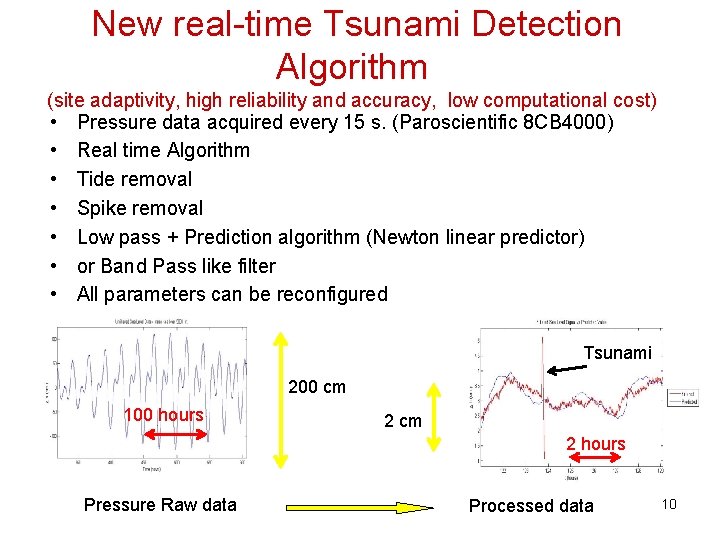
New real-time Tsunami Detection Algorithm (site adaptivity, high reliability and accuracy, low computational cost) • Pressure data acquired every 15 s. (Paroscientific 8 CB 4000) • Real time Algorithm • Tide removal • Spike removal • Low pass + Prediction algorithm (Newton linear predictor) • or Band Pass like filter • All parameters can be reconfigured Tsunami 200 cm 100 hours 2 cm 2 hours Pressure Raw data Processed data 10
11
EXAMPLE OF GEOSTAR DATA FILE 12
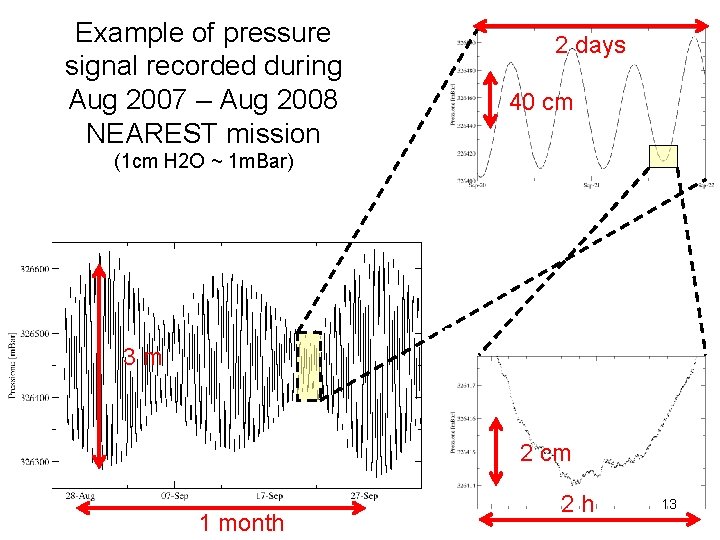
Example of pressure signal recorded during Aug 2007 – Aug 2008 NEAREST mission 2 days 40 cm (1 cm H 2 O ~ 1 m. Bar) 3 m 2 cm 1 month 2 h 13
A new tsunami generation model has been developed that use the water compressibility coupled with porous sediment 14
MODEL FOR TUSNAMI GENERATION 1) 2 -D model of tsunami generation in compressible water column overlying a porous sea bed 2) Results, in particular concerning the acoustic wave induced within the water column by the sea floor motion 3) Application to Real Case: Tokachi-Oki 2003 Event 15
1. MODEL 2 -D Vertical X-Z frame of reference z x h WATER COLUMN hs POROUS SEDIMENT 16
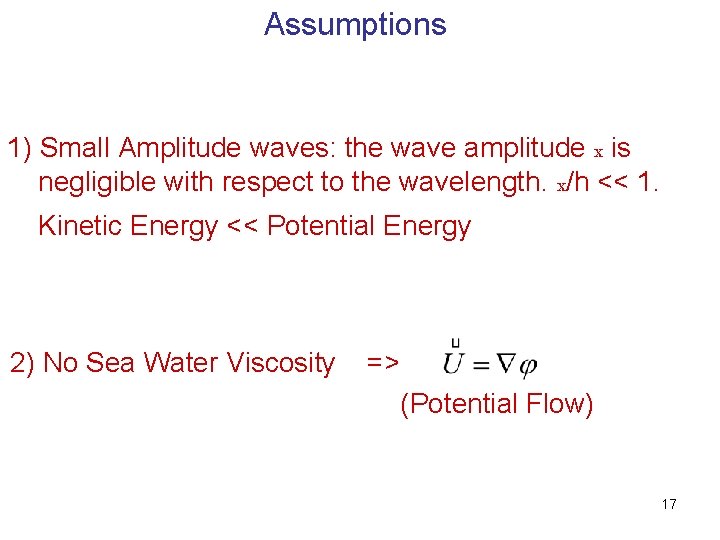
Assumptions 1) Small Amplitude waves: the wave amplitude x is negligible with respect to the wavelength. x/h << 1. Kinetic Energy << Potential Energy 2) No Sea Water Viscosity => (Potential Flow) 17
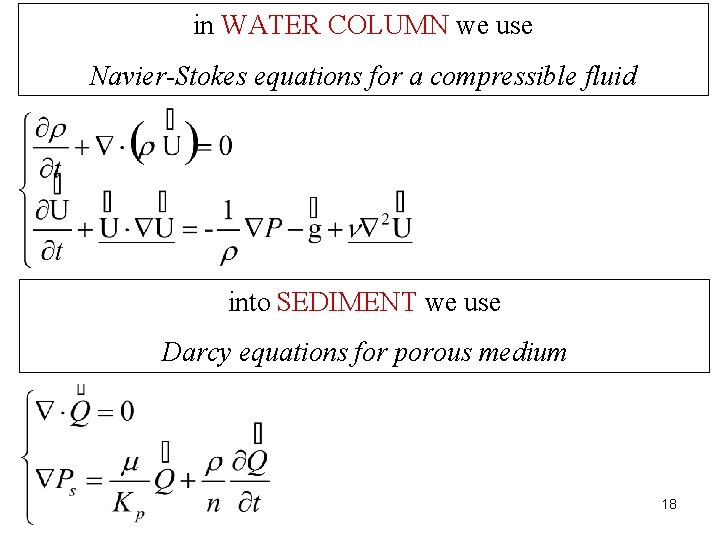
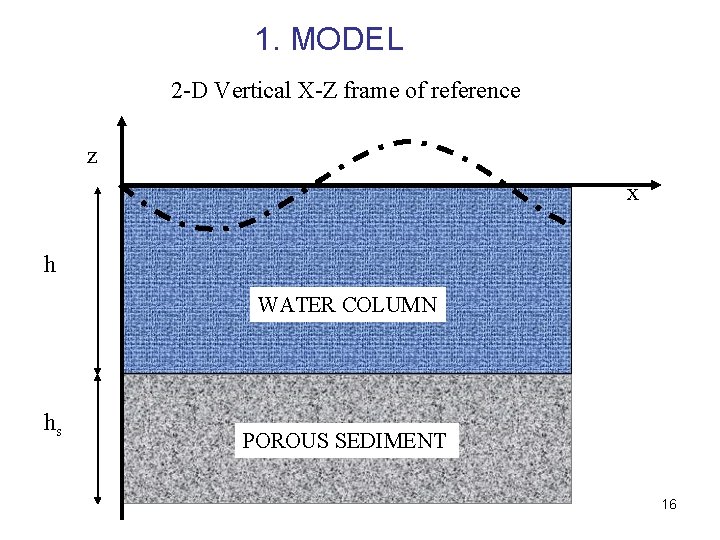
in WATER COLUMN we use Navier-Stokes equations for a compressible fluid into SEDIMENT we use Darcy equations for porous medium 18
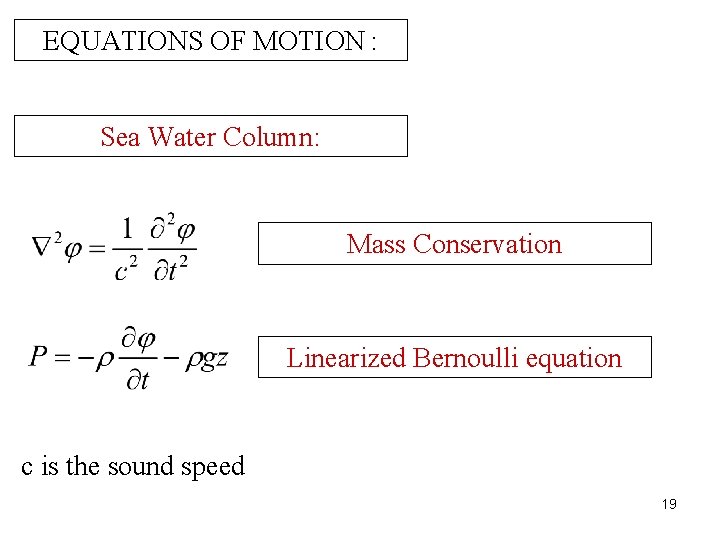
EQUATIONS OF MOTION : Sea Water Column: Mass Conservation Linearized Bernoulli equation c is the sound speed 19
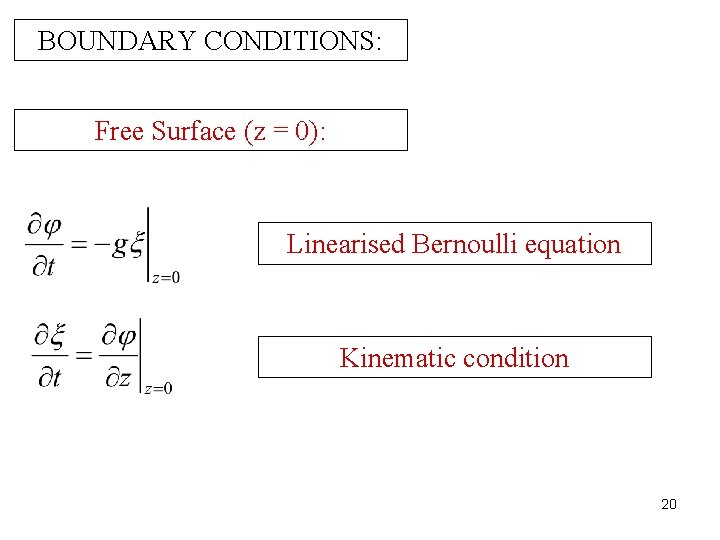
BOUNDARY CONDITIONS: Free Surface (z = 0): Linearised Bernoulli equation Kinematic condition 20
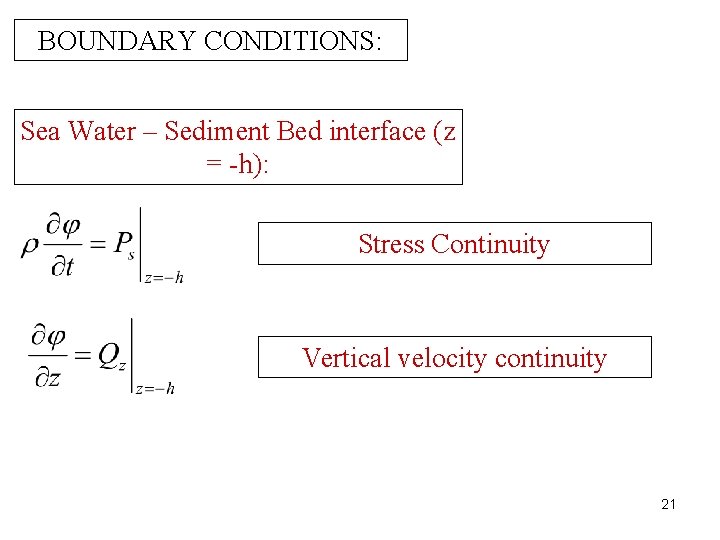
BOUNDARY CONDITIONS: Sea Water – Sediment Bed interface (z = -h): Stress Continuity Vertical velocity continuity 21
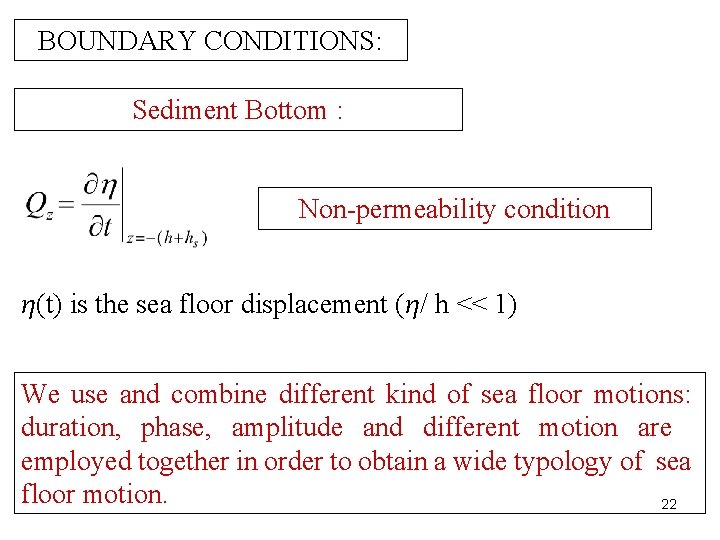
BOUNDARY CONDITIONS: Sediment Bottom : Non-permeability condition η(t) is the sea floor displacement (η/ h << 1) We use and combine different kind of sea floor motions: duration, phase, amplitude and different motion are employed together in order to obtain a wide typology of sea floor motion. 22
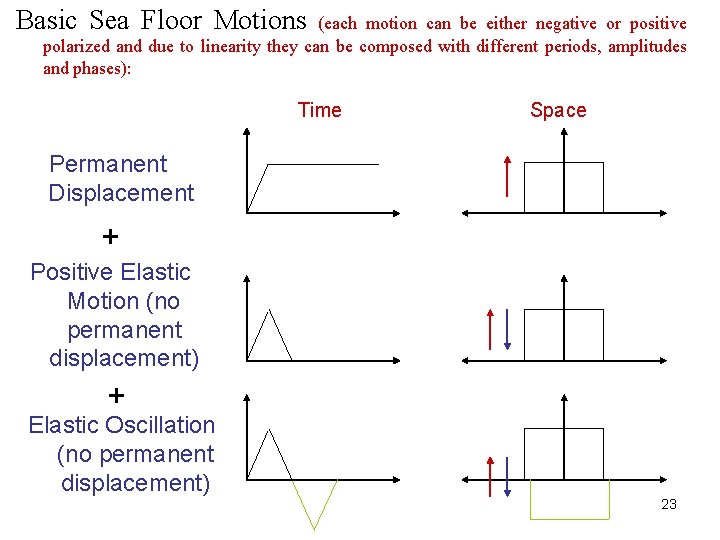
Basic Sea Floor Motions (each motion can be either negative or positive polarized and due to linearity they can be composed with different periods, amplitudes and phases): Time Space Permanent Displacement + Positive Elastic Motion (no permanent displacement) + Elastic Oscillation (no permanent displacement) 23
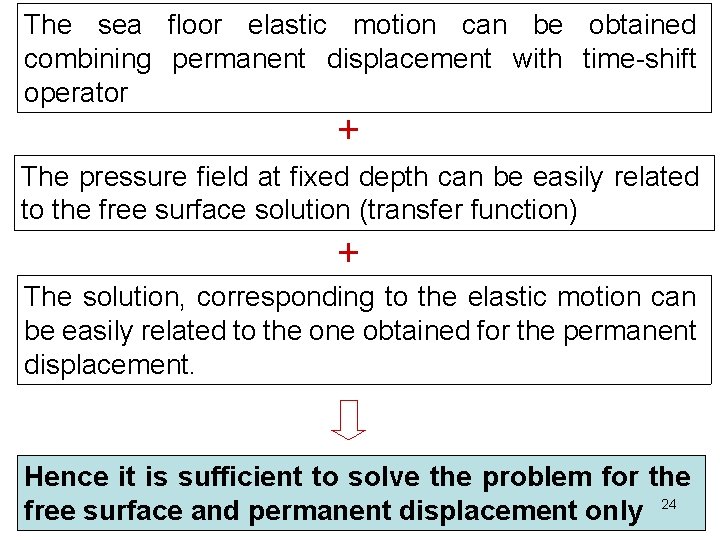
The sea floor elastic motion can be obtained combining permanent displacement with time-shift operator + The pressure field at fixed depth can be easily related to the free surface solution (transfer function) + The solution, corresponding to the elastic motion can be easily related to the one obtained for the permanent displacement. Hence it is sufficient to solve the problem for the free surface and permanent displacement only 24
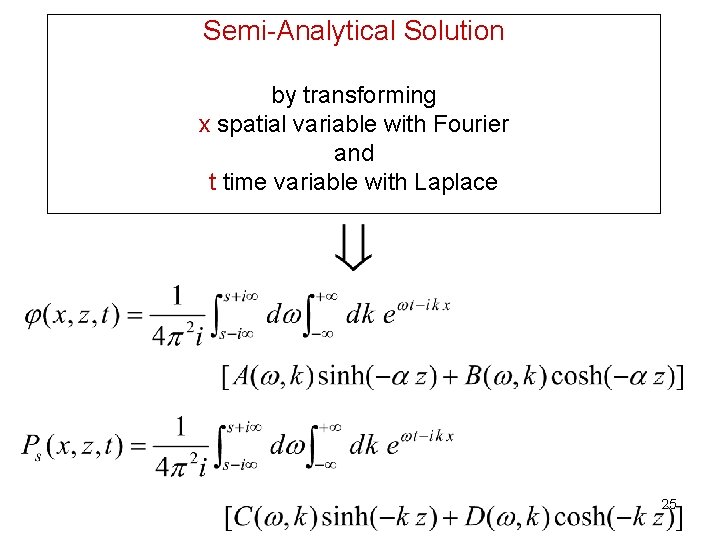
Semi-Analytical Solution by transforming x spatial variable with Fourier and t time variable with Laplace 25
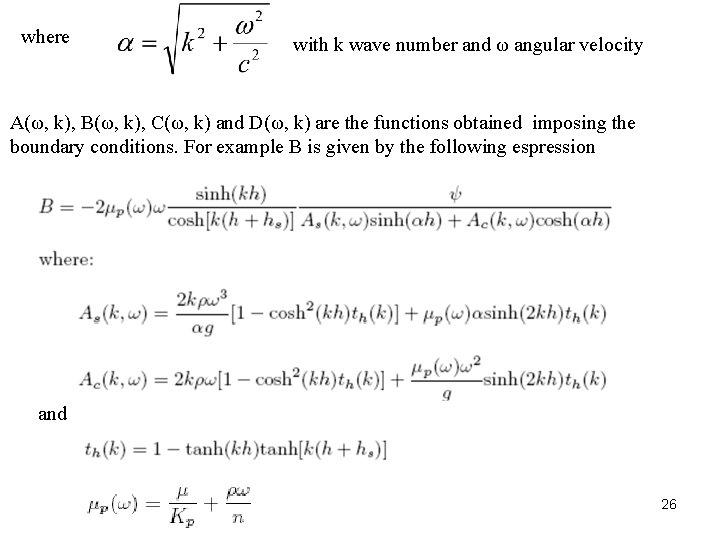
where with k wave number and ω angular velocity A(ω, k), B(ω, k), C(ω, k) and D(ω, k) are the functions obtained imposing the boundary conditions. For example B is given by the following espression and 26
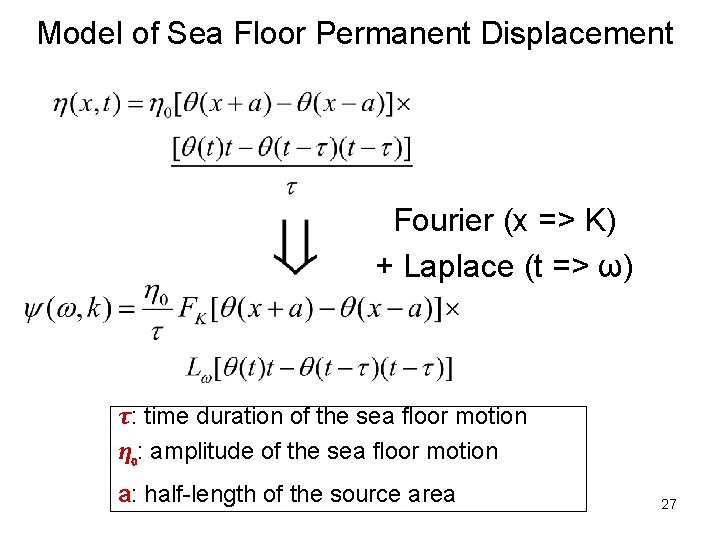
Model of Sea Floor Permanent Displacement Fourier (x => K) + Laplace (t => ω) τ: time duration of the sea floor motion η 0: amplitude of the sea floor motion a: half-length of the source area 27
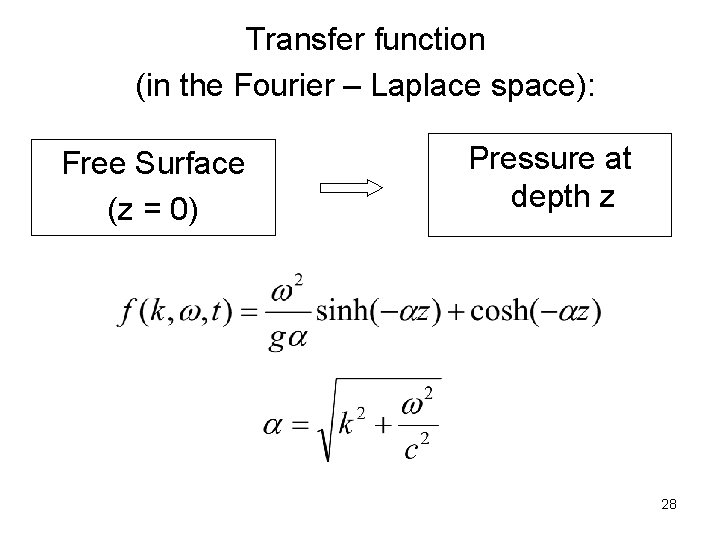
Transfer function (in the Fourier – Laplace space): Free Surface (z = 0) Pressure at depth z 28
2. RESULTS The solved model allows us to study: i) The pressure and velocity fields (in the water column and in the porous sediment) ii) The free surface signal (from the velocity vertical component at the air-water interface) at different distances from the source. 29
In this model, the sea floor motion causes a modulated hydro acoustic wave 30
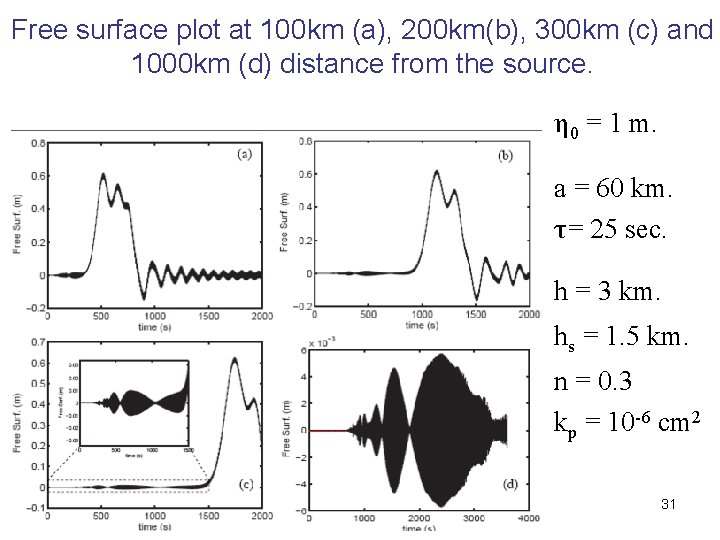
Free surface plot at 100 km (a), 200 km(b), 300 km (c) and 1000 km (d) distance from the source. η 0 = 1 m. a = 60 km. τ= 25 sec. h = 3 km. hs = 1. 5 km. n = 0. 3 kp = 10 -6 cm 2 31
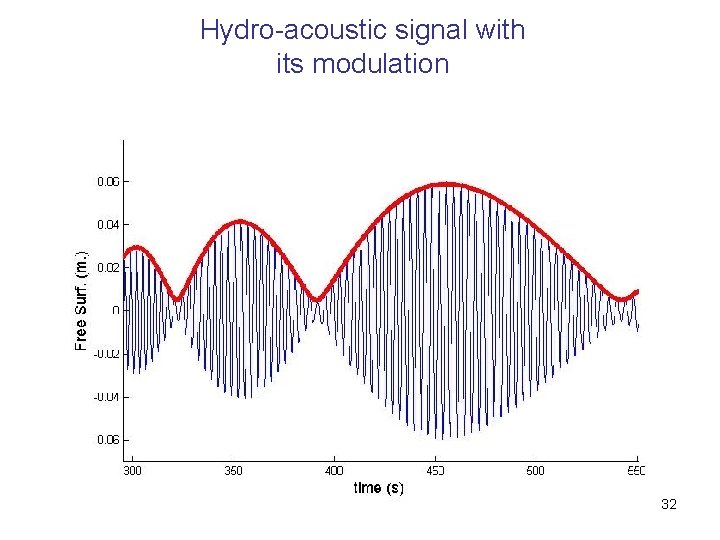
Hydro-acoustic signal with its modulation 32
We found that this wave, travelling much faster than tsunami wave, can propagate far outside the source area and carries information about source main parameters as velocity, amplitude and extension of the source area 33
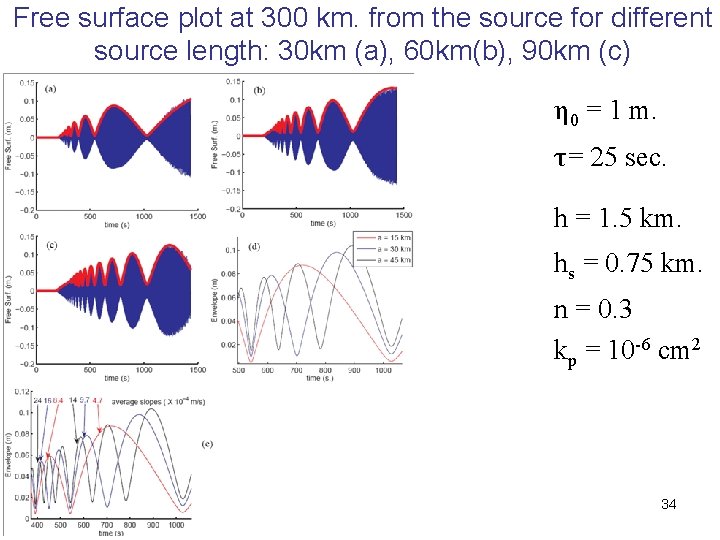
Free surface plot at 300 km. from the source for different source length: 30 km (a), 60 km(b), 90 km (c) η 0 = 1 m. τ= 25 sec. h = 1. 5 km. hs = 0. 75 km. n = 0. 3 kp = 10 -6 cm 2 34
Free surface plot at 300 km. from the source for different source velocity: 1 m/s (a), 0. 2 m/s (b), 0. 1 m/s (c) η 0 = 1 m. h = 1. 5 km. hs = 0. 75 km. n = 0. 3 kp = 10 -6 cm 2 35
“INTERFERING” CASE: Free surface plot for different source time duration: 4 s (a), 8 s (b), 12 s (c) , 16 s (d) τ= n (4 h/c) n = 1, 2, … η 0 = 1 m. h = 1. 5 km. hs = 0. 75 km. n = 0. 3 kp = 10 -6 cm 2 36
INTERFERING CASE: Comparison of Modulation Pulse Slope 37
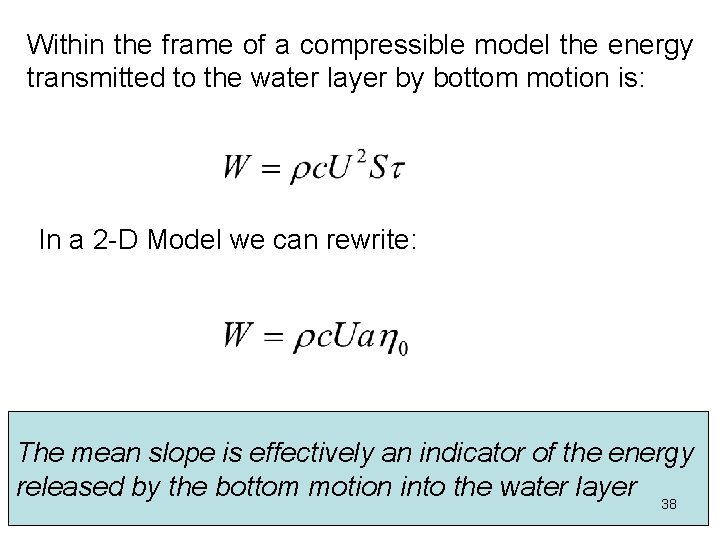
Within the frame of a compressible model the energy transmitted to the water layer by bottom motion is: In a 2 -D Model we can rewrite: The mean slope is effectively an indicator of the energy released by the bottom motion into the water layer 38
In other word this modulated acoustic signal can be regarded as tsunami precursor and it could be used in new tsunami early warning systems! 39
Non seismic tsunamigenic submarine landslide could also produce hydro acoustic waves 40
CONSIDERATIONS 1) The source information carried by the acoustic wave is present in the very first pulses. 2) In this sense the modulated acoustic waves act like a Tsunami precursor !!! and could be used for Tsunami Early Warning purpose 3) The porous sediment acts as low pass filter 4) Darcy equation does not consider compressibility in the sediment 41
Two layer model To consider the effect of sediment compressibility the porous sediment is treated as fluid-like, homogeneous and isotropic medium. The sediment effective viscosity, take into account inter-granular friction within the 42 sediment itself. (Buckingham 1998)
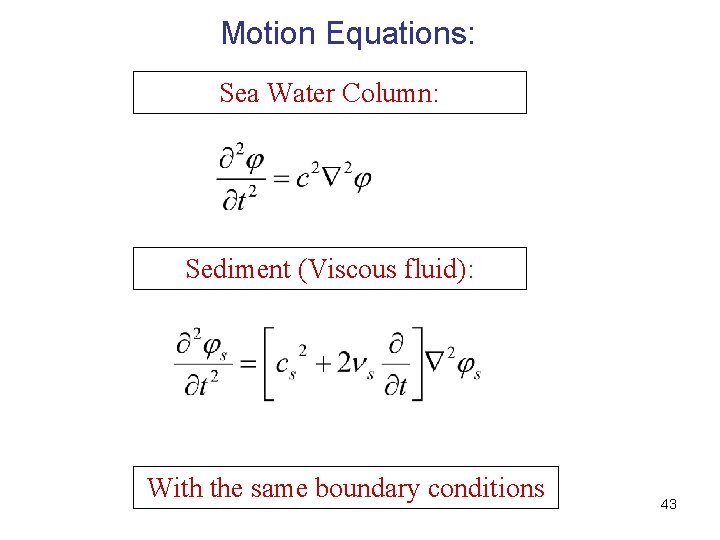
Motion Equations: Sea Water Column: Sediment (Viscous fluid): With the same boundary conditions 43
2003 Tokachi-Oki event 44
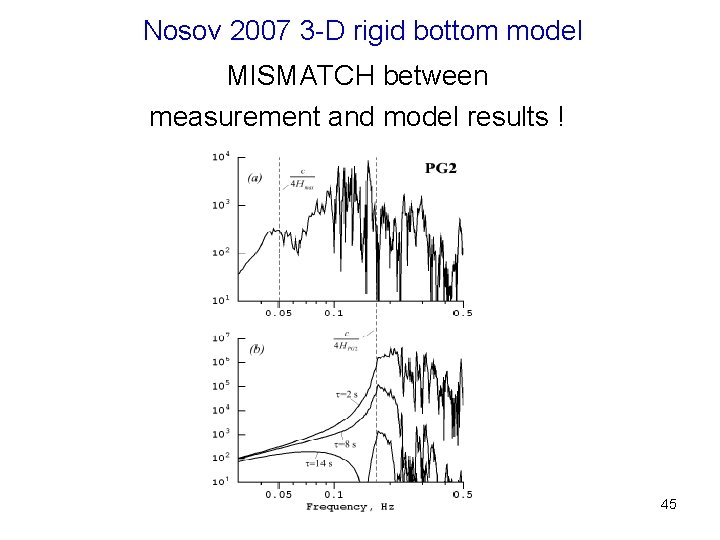
Nosov 2007 3 -D rigid bottom model MISMATCH between measurement and model results ! 45
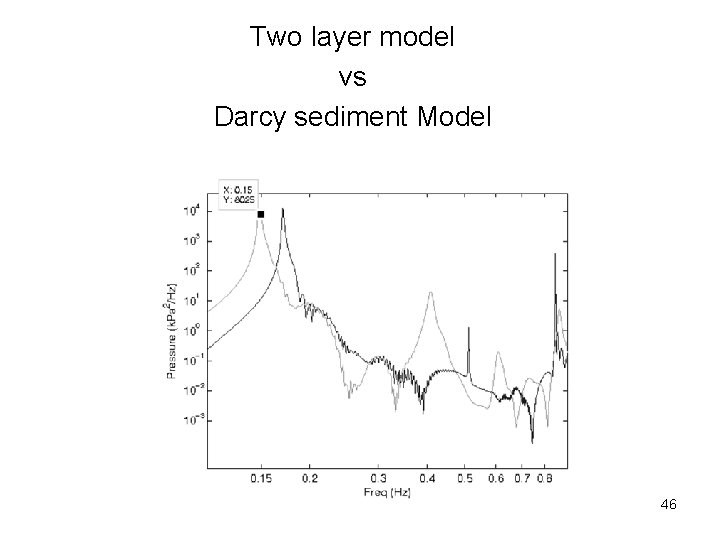
Two layer model vs Darcy sediment Model 46
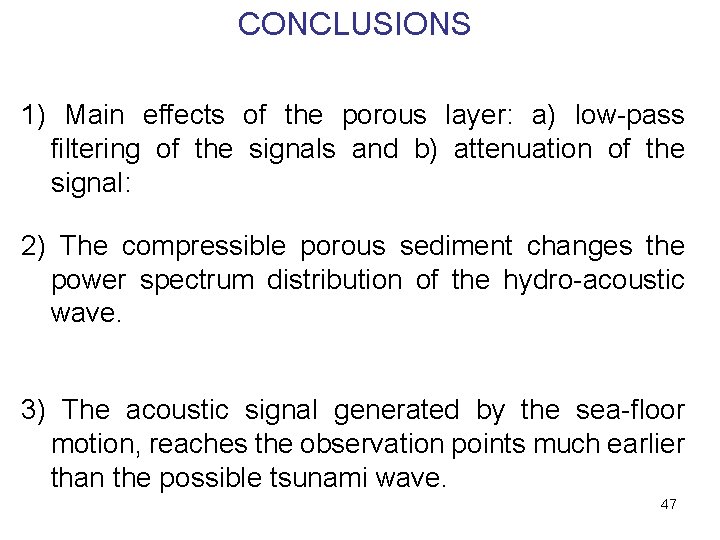
CONCLUSIONS 1) Main effects of the porous layer: a) low-pass filtering of the signals and b) attenuation of the signal: 2) The compressible porous sediment changes the power spectrum distribution of the hydro-acoustic wave. 3) The acoustic signal generated by the sea-floor motion, reaches the observation points much earlier than the possible tsunami wave. 47
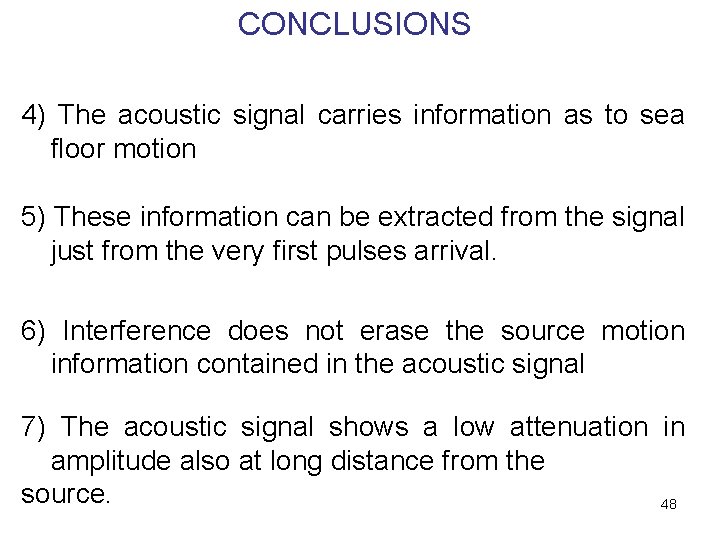
CONCLUSIONS 4) The acoustic signal carries information as to sea floor motion 5) These information can be extracted from the signal just from the very first pulses arrival. 6) Interference does not erase the source motion information contained in the acoustic signal 7) The acoustic signal shows a low attenuation in amplitude also at long distance from the source. 48
If detected these hydro-acoustic waves can lead to the design of a new tsunami early warning system based on tsunami precursors 49
OνDE hydro-acoustic antennas equipped with suitable low frequency hydrophones might be a good candidate for the detector and for the basic element of a possible hydro-acoustic tsunami early warning system 50

51
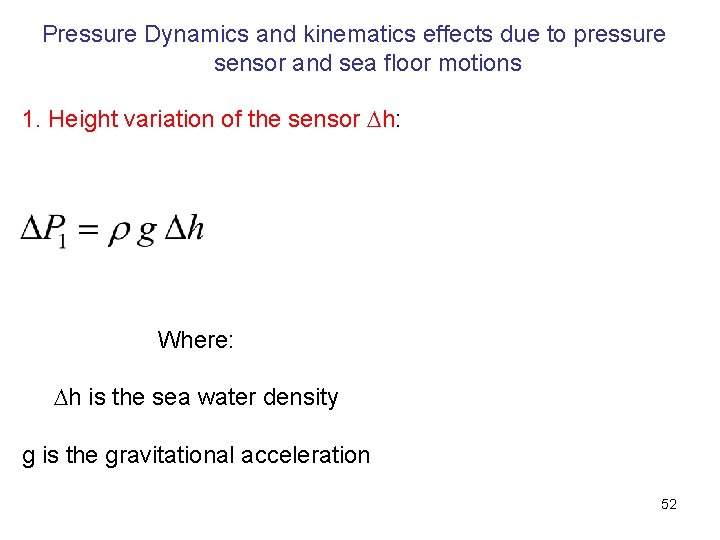
Pressure Dynamics and kinematics effects due to pressure sensor and sea floor motions 1. Height variation of the sensor h: Where: h is the sea water density g is the gravitational acceleration 52
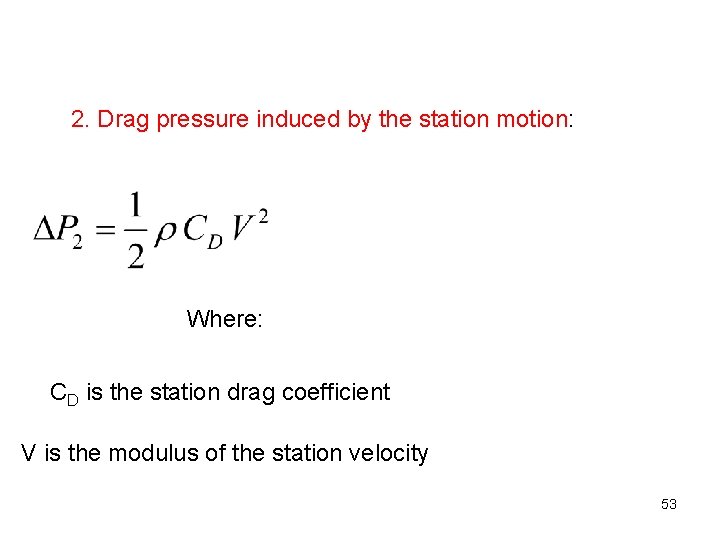
2. Drag pressure induced by the station motion: Where: CD is the station drag coefficient V is the modulus of the station velocity 53
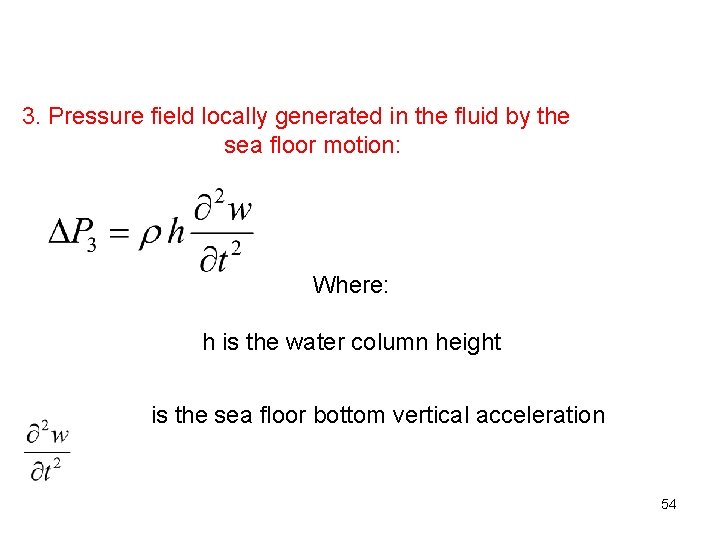
3. Pressure field locally generated in the fluid by the sea floor motion: Where: h is the water column height is the sea floor bottom vertical acceleration 54
- Slides: 54