
Hydro Power Plant Prepared by Nimesh Gajjar Introduction
Hydro Power Plant Prepared by: Nimesh Gajjar
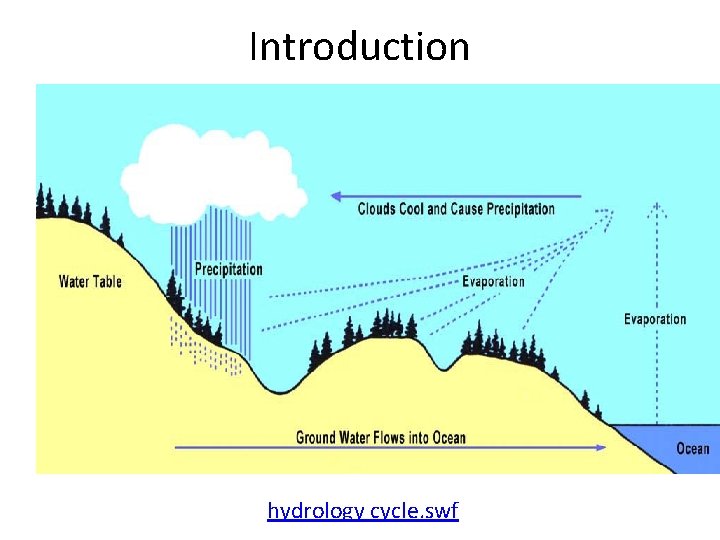
Introduction hydrology cycle. swf
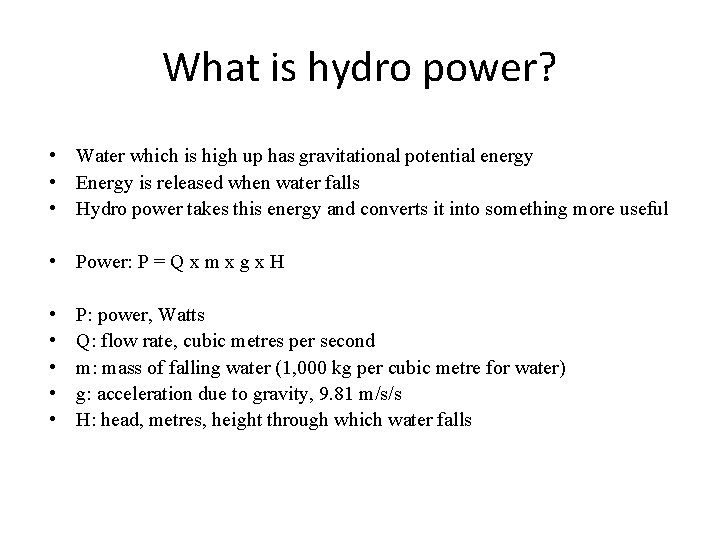
What is hydro power? • Water which is high up has gravitational potential energy • Energy is released when water falls • Hydro power takes this energy and converts it into something more useful • Power: P = Q x m x g x H • • • P: power, Watts Q: flow rate, cubic metres per second m: mass of falling water (1, 000 kg per cubic metre for water) g: acceleration due to gravity, 9. 81 m/s/s H: head, metres, height through which water falls
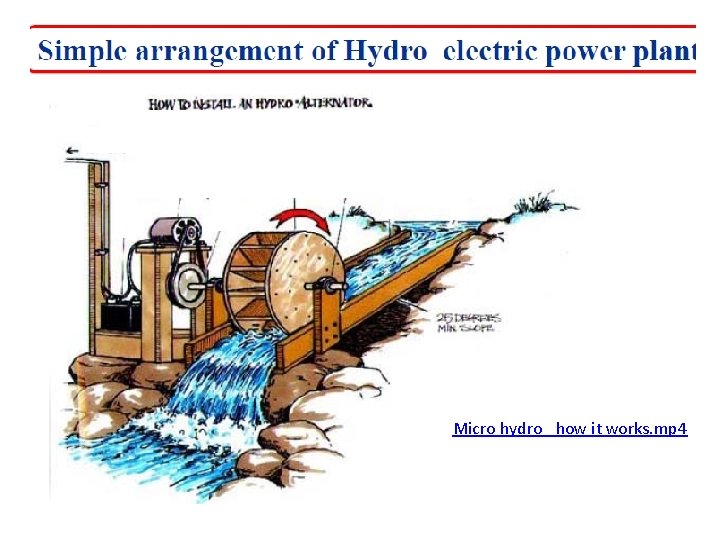
Micro hydro_ how it works. mp 4
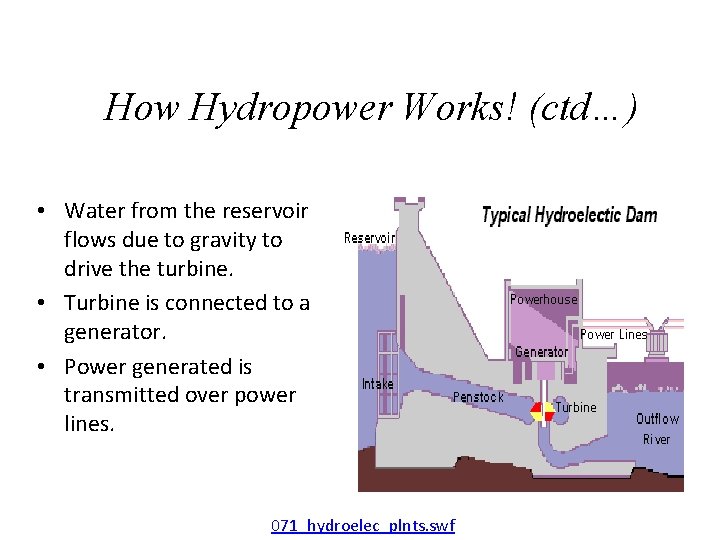
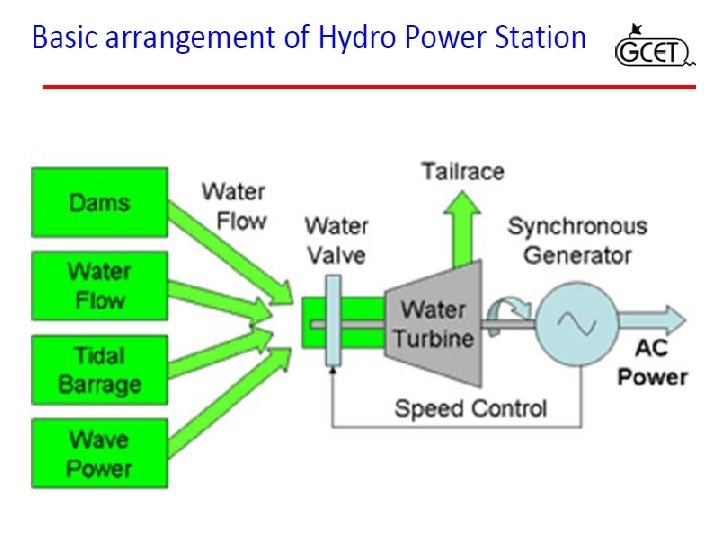
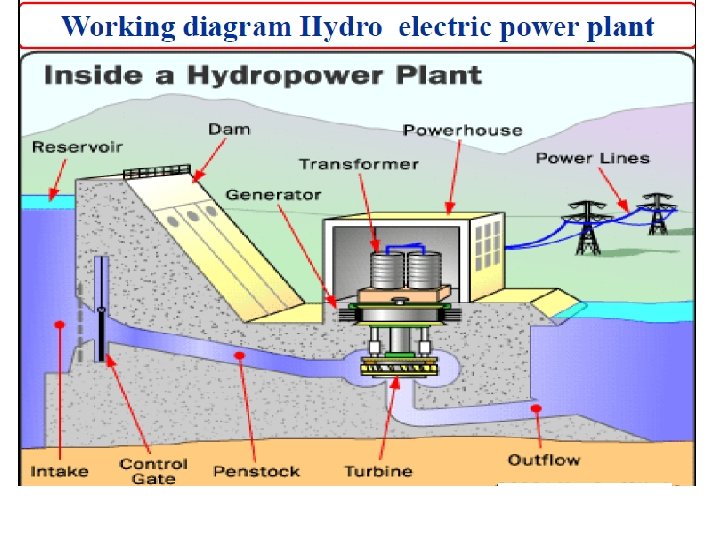
How Hydropower Works! (ctd…) • Water from the reservoir flows due to gravity to drive the turbine. • Turbine is connected to a generator. • Power generated is transmitted over power lines. 071_hydroelec_plnts. swf
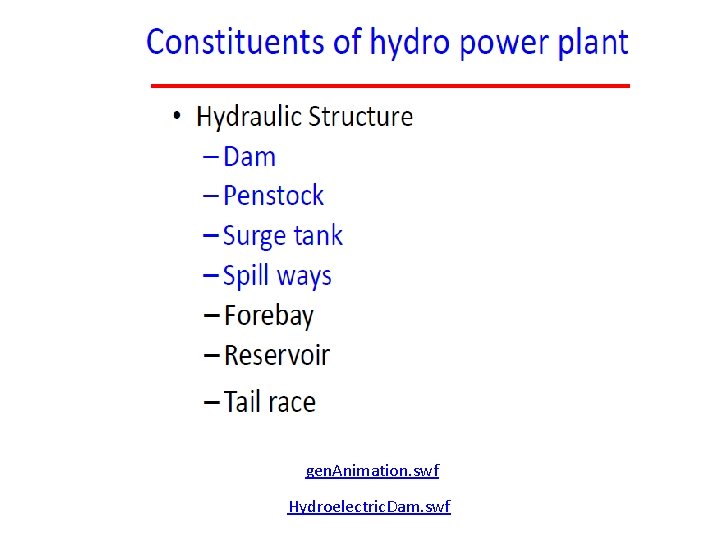
gen. Animation. swf Hydroelectric. Dam. swf
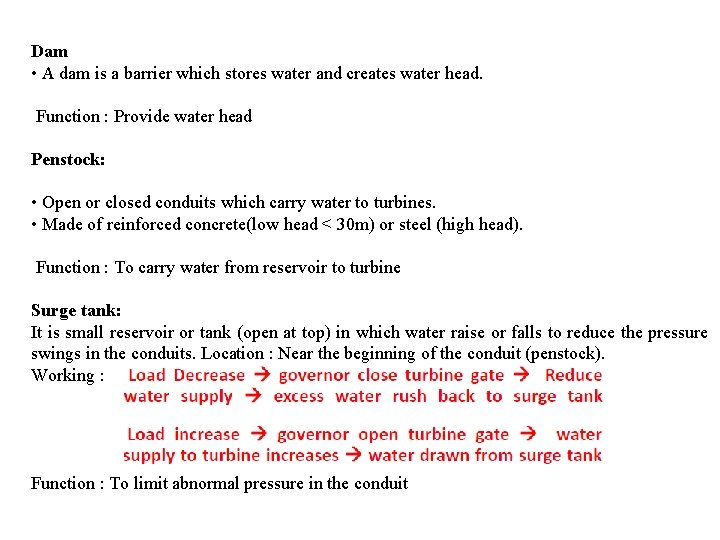
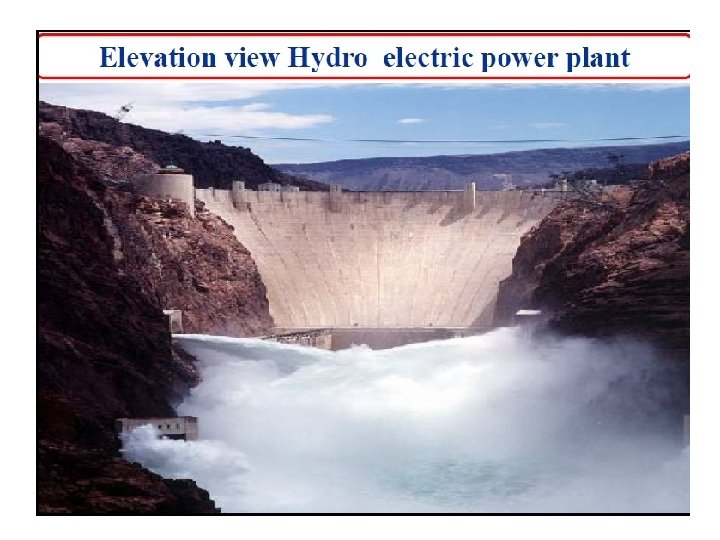
Dam • A dam is a barrier which stores water and creates water head. Function : Provide water head Penstock: • Open or closed conduits which carry water to turbines. • Made of reinforced concrete(low head < 30 m) or steel (high head). Function : To carry water from reservoir to turbine Surge tank: It is small reservoir or tank (open at top) in which water raise or falls to reduce the pressure swings in the conduits. Location : Near the beginning of the conduit (penstock). Working : Function : To limit abnormal pressure in the conduit
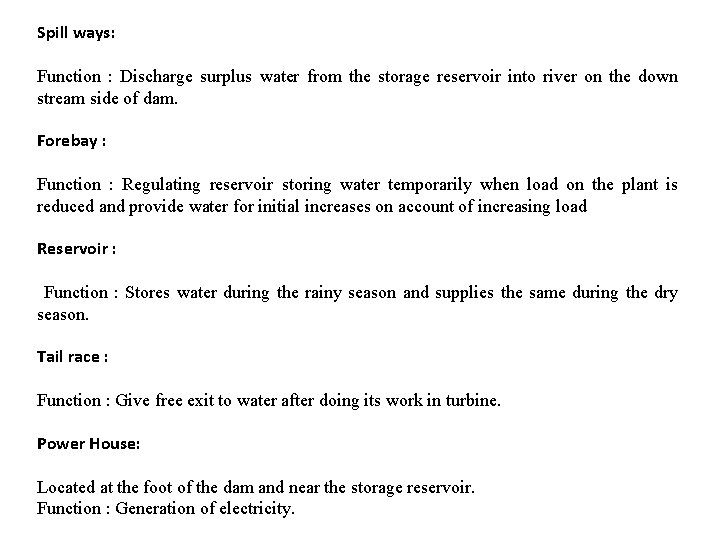
Spill ways: Function : Discharge surplus water from the storage reservoir into river on the down stream side of dam. Forebay : Function : Regulating reservoir storing water temporarily when load on the plant is reduced and provide water for initial increases on account of increasing load Reservoir : Function : Stores water during the rainy season and supplies the same during the dry season. Tail race : Function : Give free exit to water after doing its work in turbine. Power House: Located at the foot of the dam and near the storage reservoir. Function : Generation of electricity.
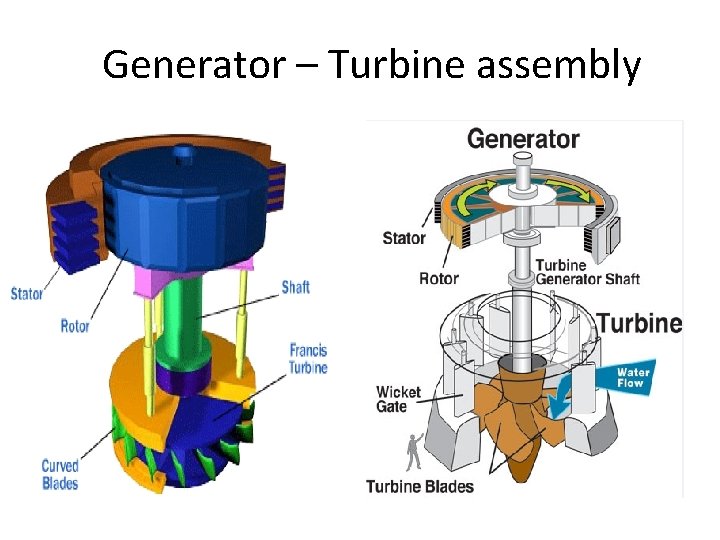
Generator – Turbine assembly
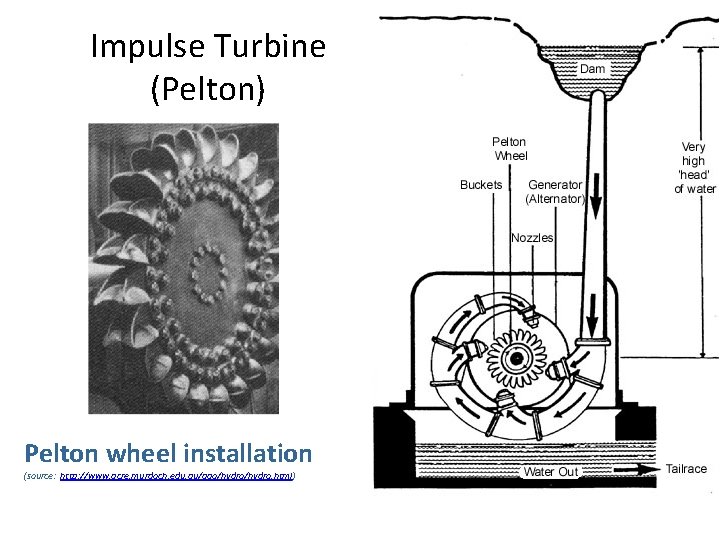
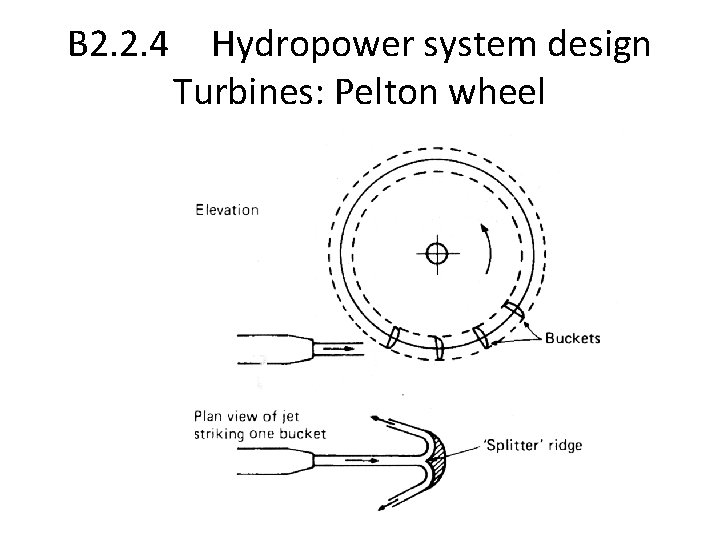
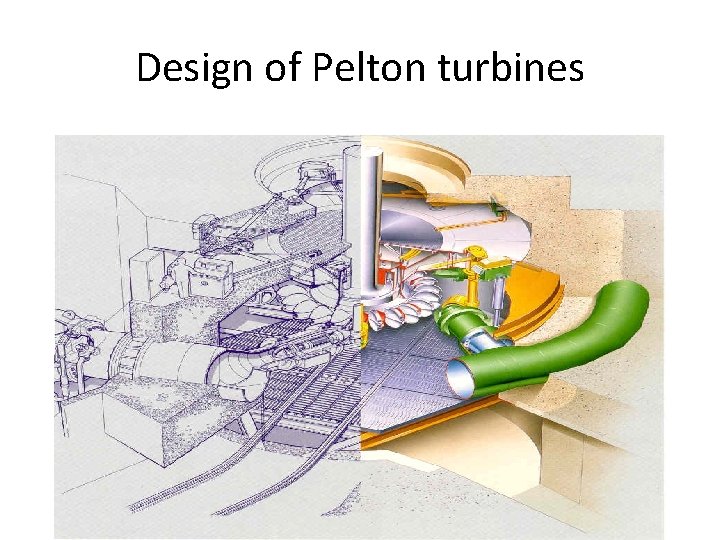
Impulse Turbine (Pelton) Pelton wheel installation (source: http: //www. acre. murdoch. edu. au/ago/hydro. html)
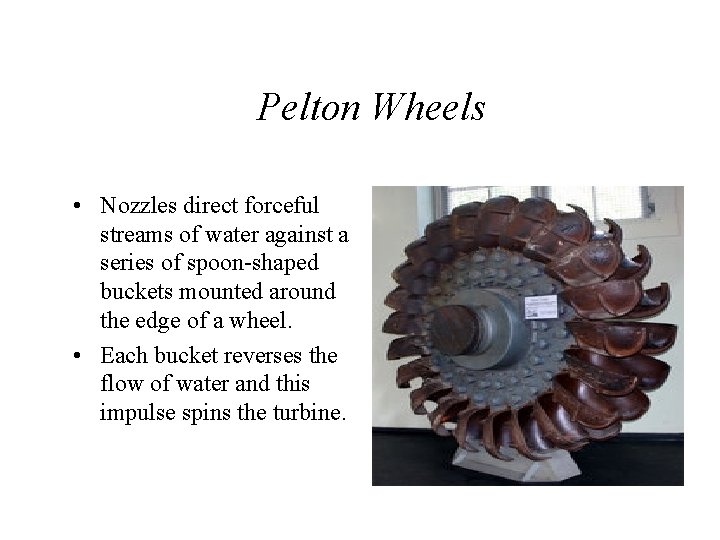
Pelton Wheels • Nozzles direct forceful streams of water against a series of spoon-shaped buckets mounted around the edge of a wheel. • Each bucket reverses the flow of water and this impulse spins the turbine.
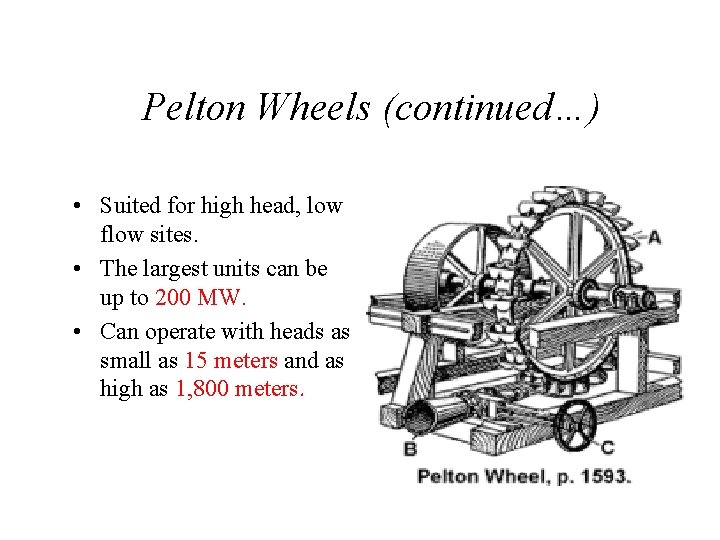
Pelton Wheels (continued…) • Suited for high head, low flow sites. • The largest units can be up to 200 MW. • Can operate with heads as small as 15 meters and as high as 1, 800 meters.
B 2. 2. 4 Hydropower system design Turbines: Pelton wheel
Design of Pelton turbines
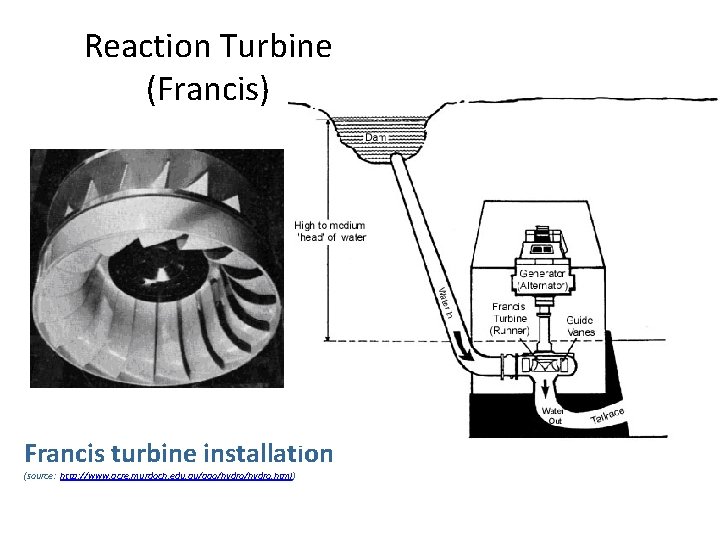
Reaction Turbines • Combined action of pressure and moving water. • Runner placed directly in the water stream flowing over the blades rather than striking each individually. • lower head and higher flows than compared with the impulse turbines.
Reaction Turbine (Francis) Francis turbine installation (source: http: //www. acre. murdoch. edu. au/ago/hydro. html)
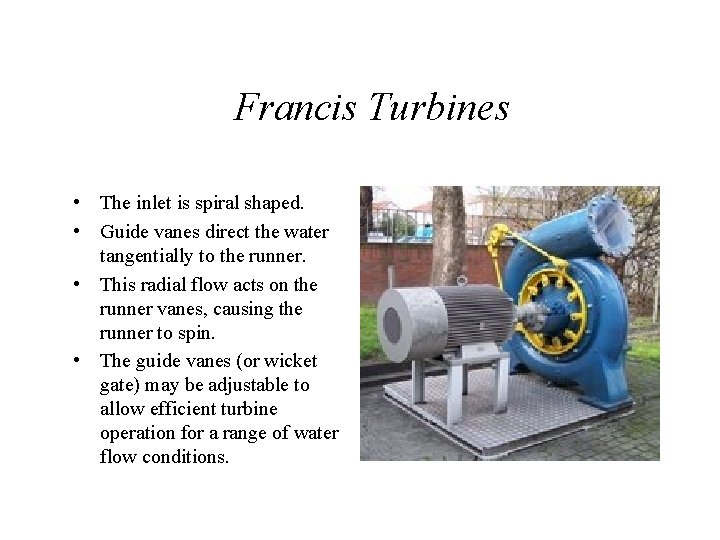
Francis Turbines • The inlet is spiral shaped. • Guide vanes direct the water tangentially to the runner. • This radial flow acts on the runner vanes, causing the runner to spin. • The guide vanes (or wicket gate) may be adjustable to allow efficient turbine operation for a range of water flow conditions.
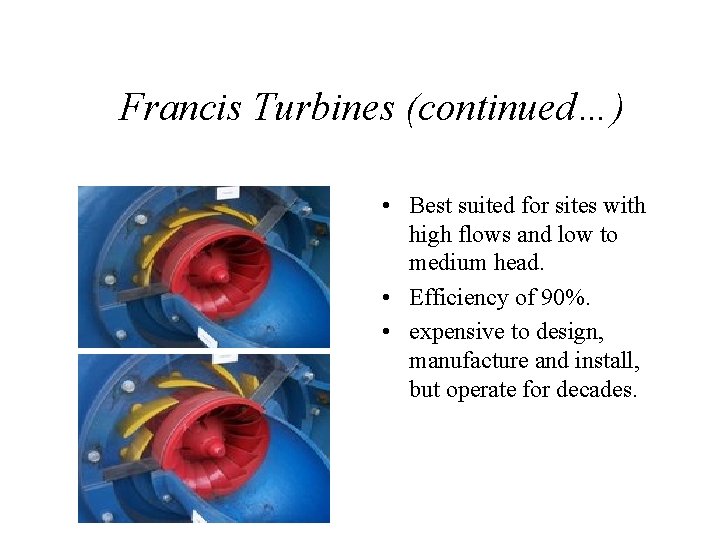
Francis Turbines (continued…) • Best suited for sites with high flows and low to medium head. • Efficiency of 90%. • expensive to design, manufacture and install, but operate for decades.
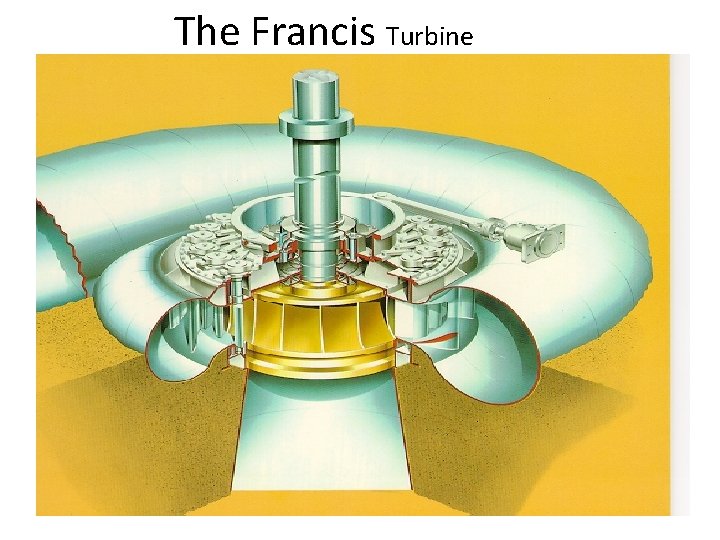
The Francis Turbine
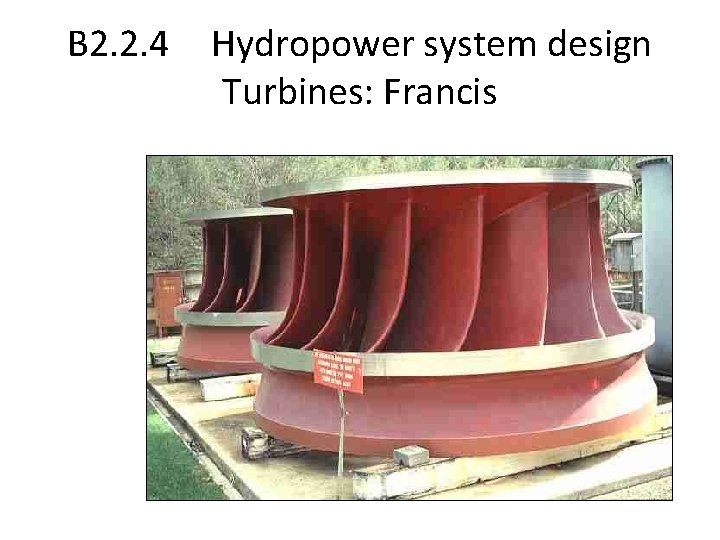
B 2. 2. 4 Hydropower system design Turbines: Francis
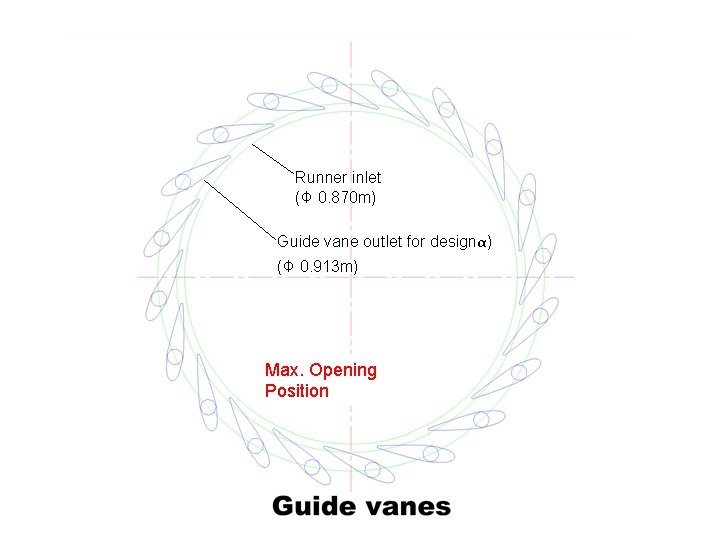
Runner inlet (Φ 0. 870 m) Guide vane outlet for designα) (Φ 0. 913 m) Closed Max. Opening Position
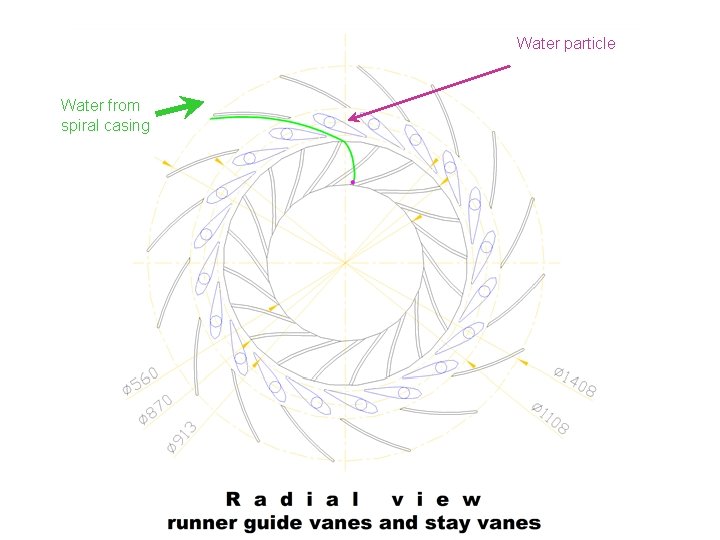
Water particle Water from spiral casing
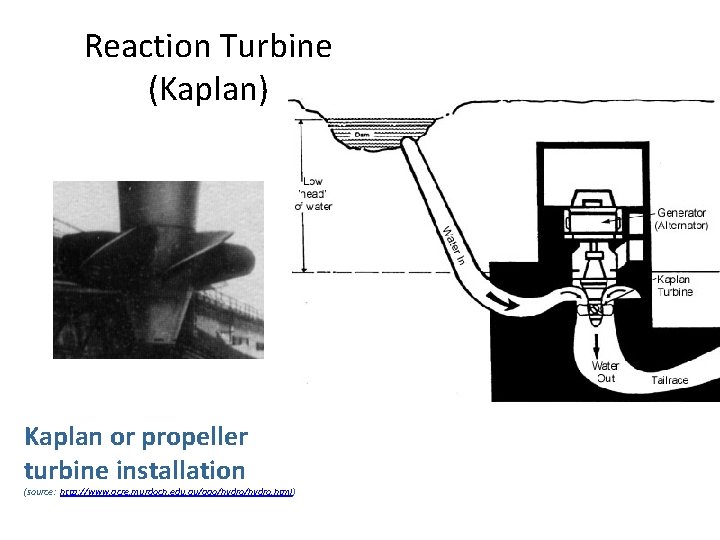
Reaction Turbine (Kaplan) Kaplan or propeller turbine installation (source: http: //www. acre. murdoch. edu. au/ago/hydro. html)
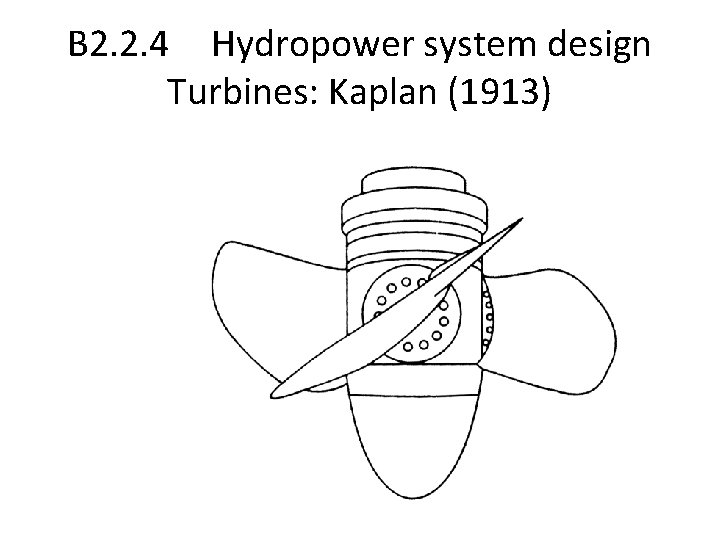
B 2. 2. 4 Hydropower system design Turbines: Kaplan (1913)
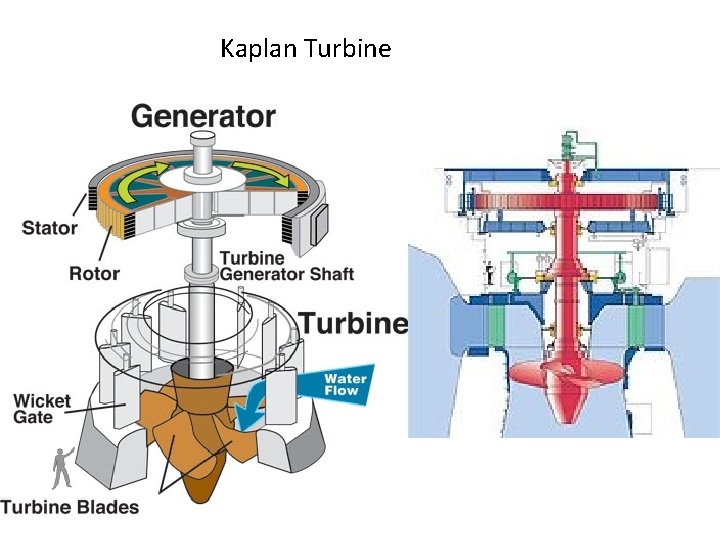
Kaplan Turbine
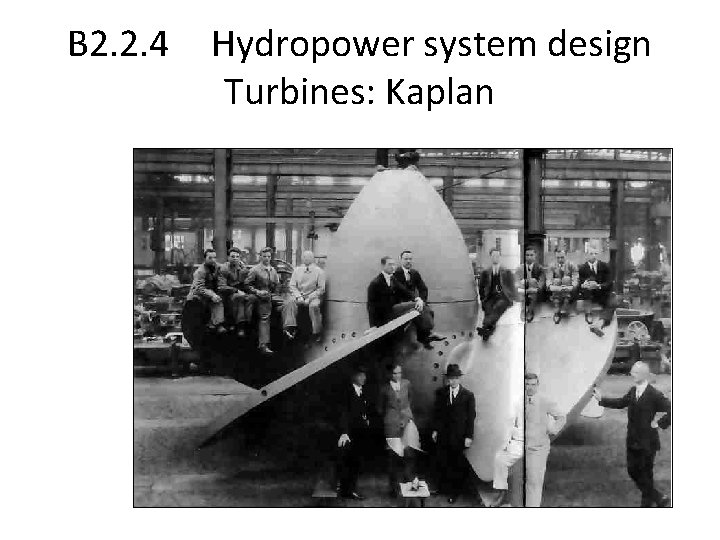
B 2. 2. 4 Hydropower system design Turbines: Kaplan
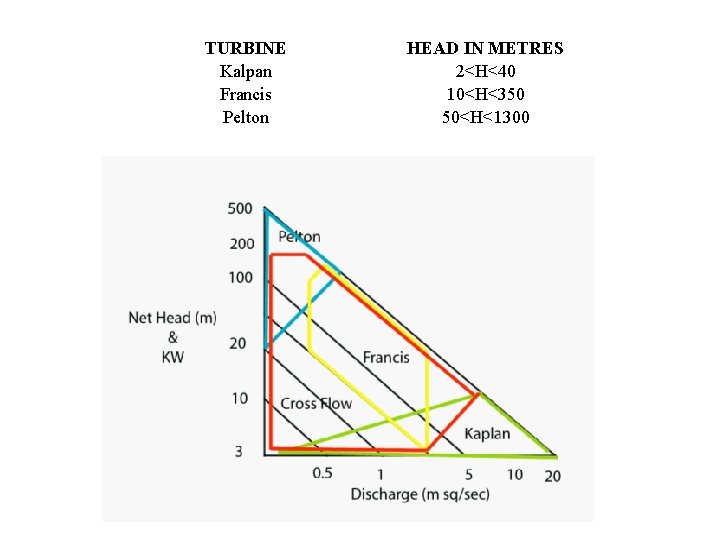
TURBINE Kalpan Francis Pelton HEAD IN METRES 2<H<40 10<H<350 50<H<1300
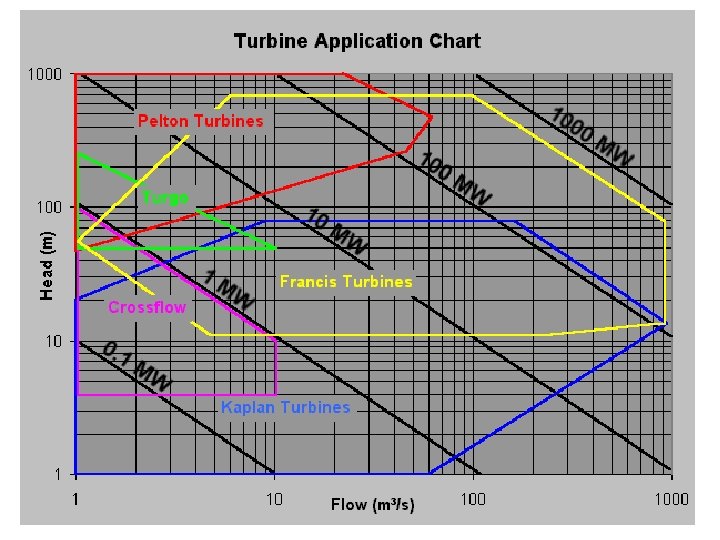
Turbine vs head/flow • Graphic showing turbine vs head and flo
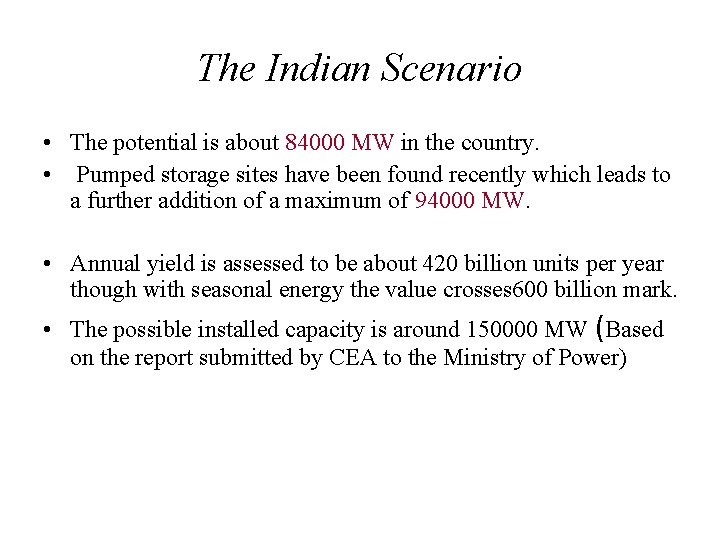
The Indian Scenario • The potential is about 84000 MW in the country. • Pumped storage sites have been found recently which leads to a further addition of a maximum of 94000 MW. • Annual yield is assessed to be about 420 billion units per year though with seasonal energy the value crosses 600 billion mark. • The possible installed capacity is around 150000 MW (Based on the report submitted by CEA to the Ministry of Power)
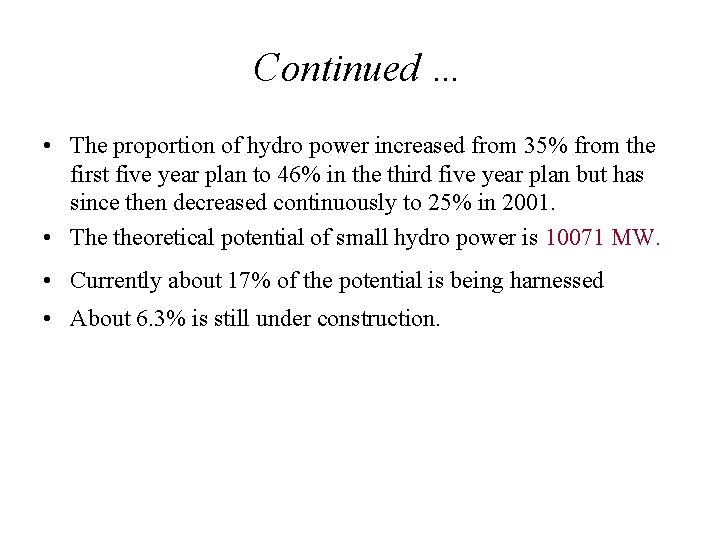
Continued … • The proportion of hydro power increased from 35% from the first five year plan to 46% in the third five year plan but has since then decreased continuously to 25% in 2001. • The theoretical potential of small hydro power is 10071 MW. • Currently about 17% of the potential is being harnessed • About 6. 3% is still under construction.

• fullhydroelectric. swf • Hydro. flv • wmmed 100. wmv
- Slides: 41