
Hydraulics Training E I S Why Choose Hydraulics
- Slides: 22
Hydraulics Training E. I. S
Why Choose Hydraulics Alternatives Hydraulics • Pneumatics : - Low forcesimple response • Mechanical: • Electro-Mechanical: • Resonance Systems: - • Vast range of force capability • Responsive • Versatile
Hydraulic System Components • • Pumps Filters Ring Mains Coolers Actuators Valves Controllers Safety
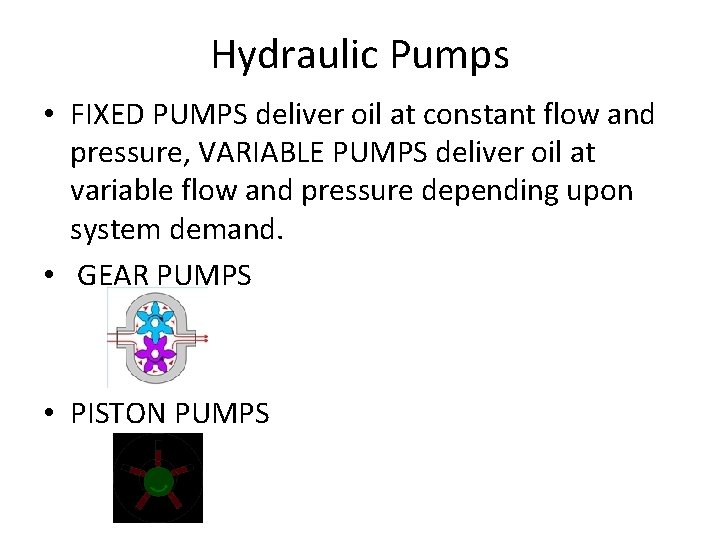
Hydraulic Pumps • FIXED PUMPS deliver oil at constant flow and pressure, VARIABLE PUMPS deliver oil at variable flow and pressure depending upon system demand. • GEAR PUMPS • PISTON PUMPS
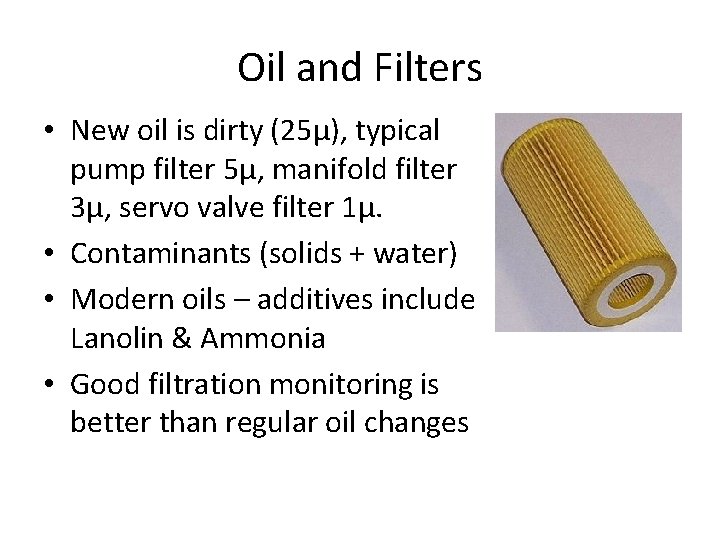
Oil and Filters • New oil is dirty (25μ), typical pump filter 5μ, manifold filter 3μ, servo valve filter 1μ. • Contaminants (solids + water) • Modern oils – additives include Lanolin & Ammonia • Good filtration monitoring is better than regular oil changes
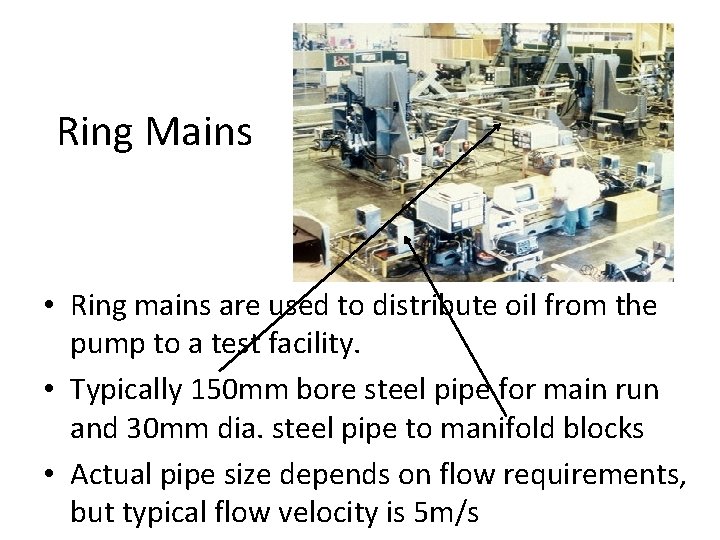
Ring Mains • Ring mains are used to distribute oil from the pump to a test facility. • Typically 150 mm bore steel pipe for main run and 30 mm dia. steel pipe to manifold blocks • Actual pipe size depends on flow requirements, but typical flow velocity is 5 m/s
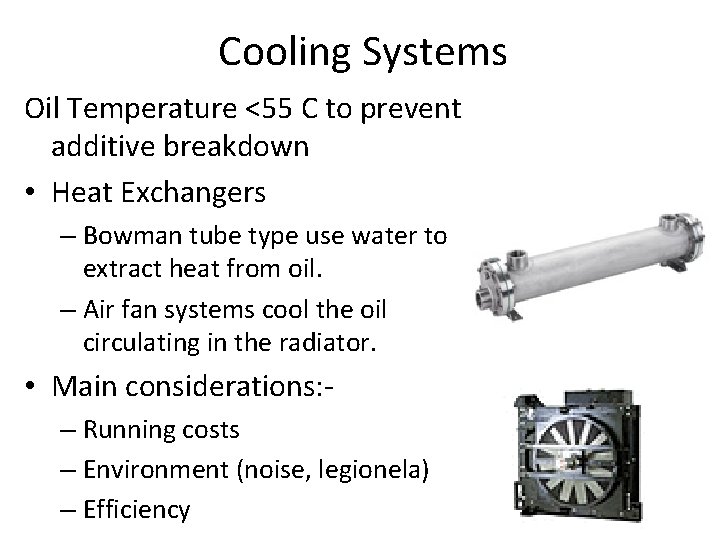
Cooling Systems Oil Temperature <55 C to prevent additive breakdown • Heat Exchangers – Bowman tube type use water to extract heat from oil. – Air fan systems cool the oil circulating in the radiator. • Main considerations: – Running costs – Environment (noise, legionela) – Efficiency
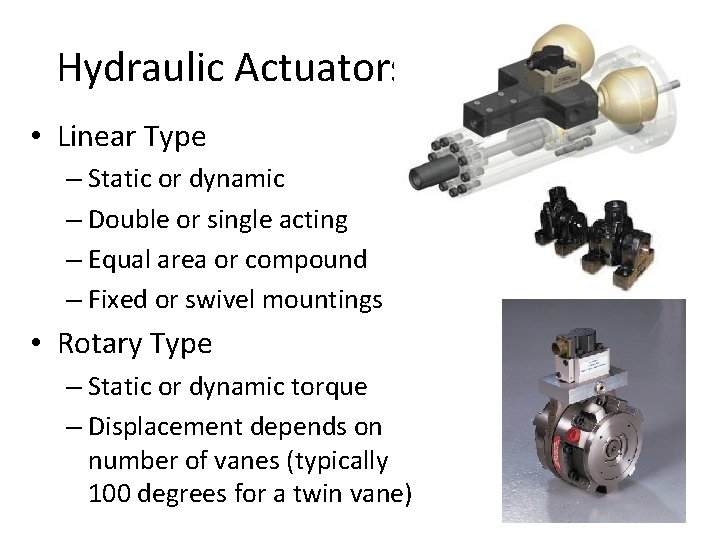
Hydraulic Actuators • Linear Type – Static or dynamic – Double or single acting – Equal area or compound – Fixed or swivel mountings • Rotary Type – Static or dynamic torque – Displacement depends on number of vanes (typically 100 degrees for a twin vane)
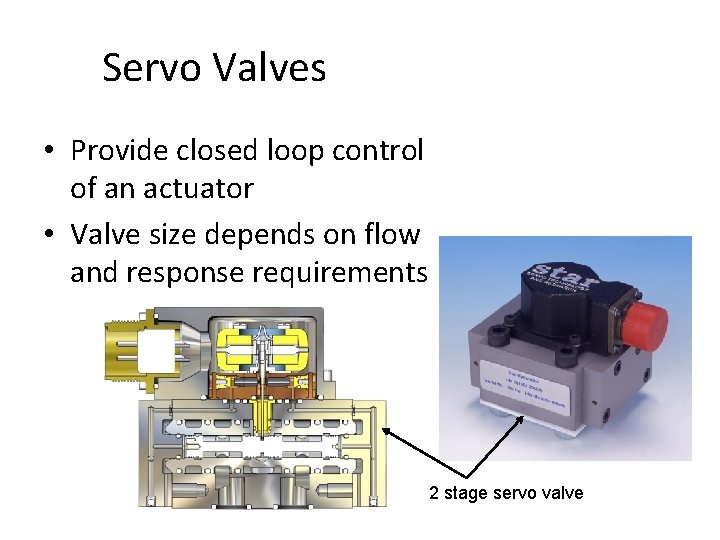
Servo Valves • Provide closed loop control of an actuator • Valve size depends on flow and response requirements 2 stage servo valve
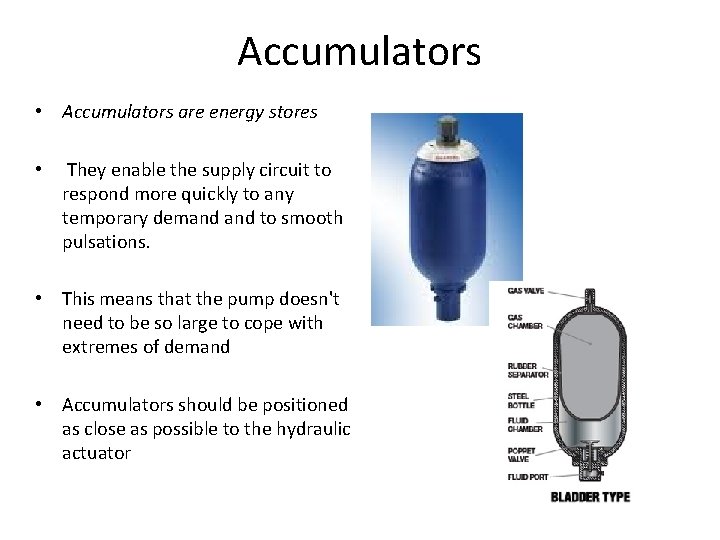
Accumulators • Accumulators are energy stores • They enable the supply circuit to respond more quickly to any temporary demand to smooth pulsations. • This means that the pump doesn't need to be so large to cope with extremes of demand • Accumulators should be positioned as close as possible to the hydraulic actuator
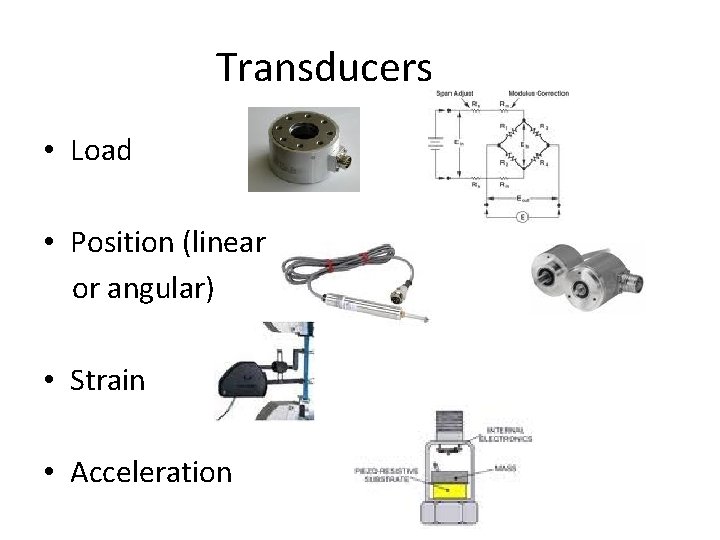
Transducers • Load • Position (linear or angular) • Strain • Acceleration
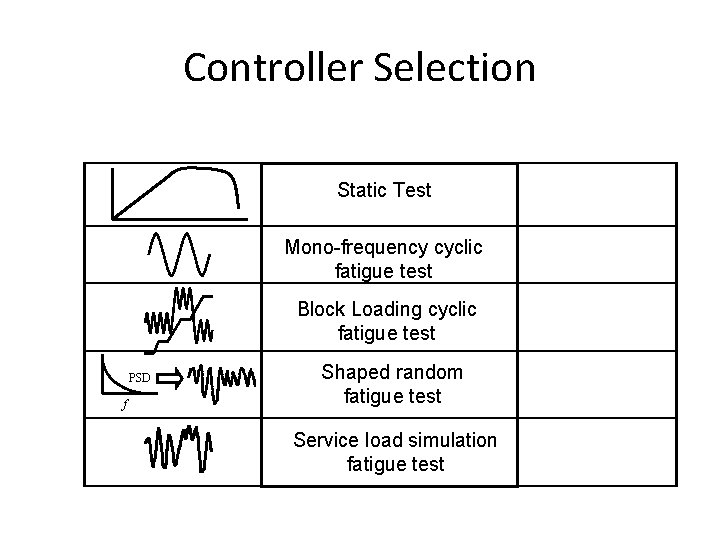
Servo Controllers • Can be Analogue or Digital, normally 10 V fsd • P. I. D (Proportional, Integral, Differential) control. • Feedback can be Load, Strain, Position or Acceleration depending on the test spec. • Signal output types: – Static – Simple constant amplitude – Complex real time
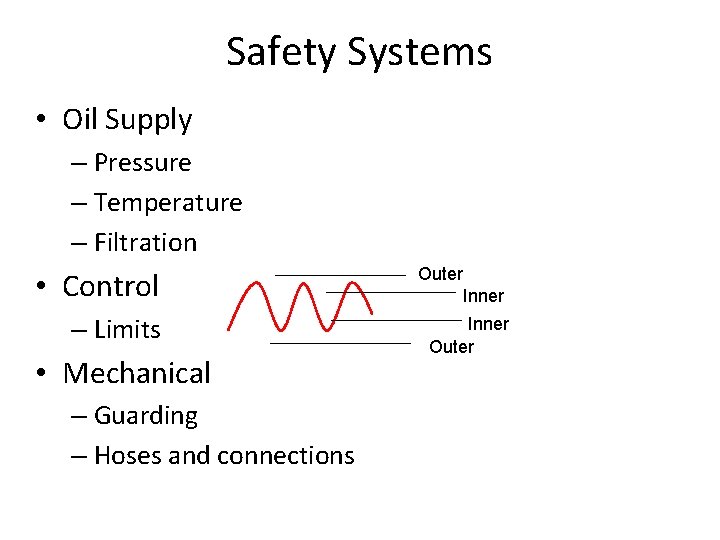
Safety Systems • Oil Supply – Pressure – Temperature – Filtration • Control – Limits • Mechanical – Guarding – Hoses and connections Outer Inner Outer
System Specifications • • • Test Requirements Actuator Sizing / Performance Calcs. Oil Flow Requirements Cooling Requirements Control & Monitoring Electrical Supplies
Environmental Considerations • • Floor Loading Bed Plates Seismic Blocks Ventilation Noise & Vibration Accommodation / Access Health & Safety
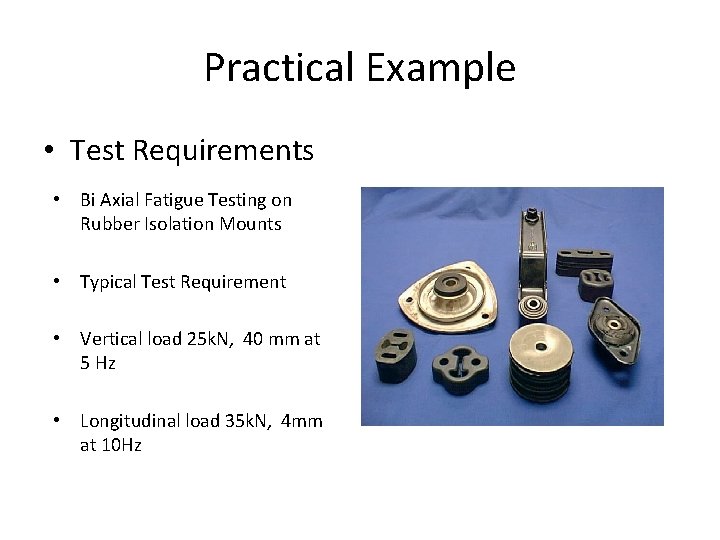
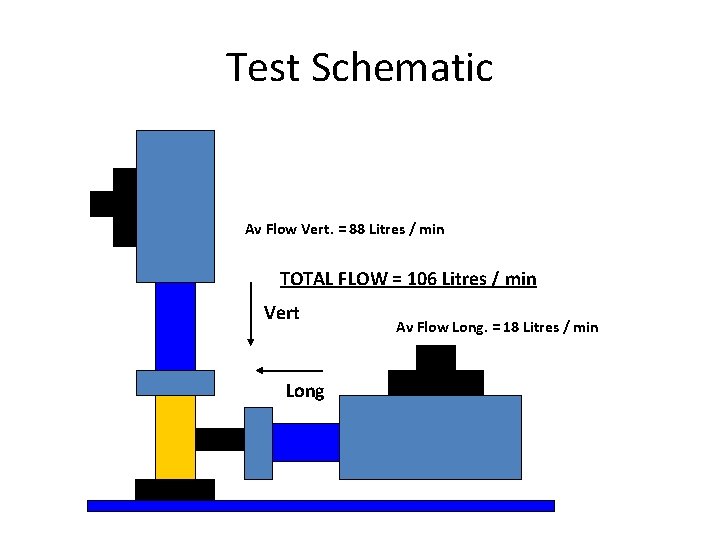
Practical Example • Test Requirements • Bi Axial Fatigue Testing on Rubber Isolation Mounts • Typical Test Requirement • Vertical load 25 k. N, 40 mm at 5 Hz • Longitudinal load 35 k. N, 4 mm at 10 Hz
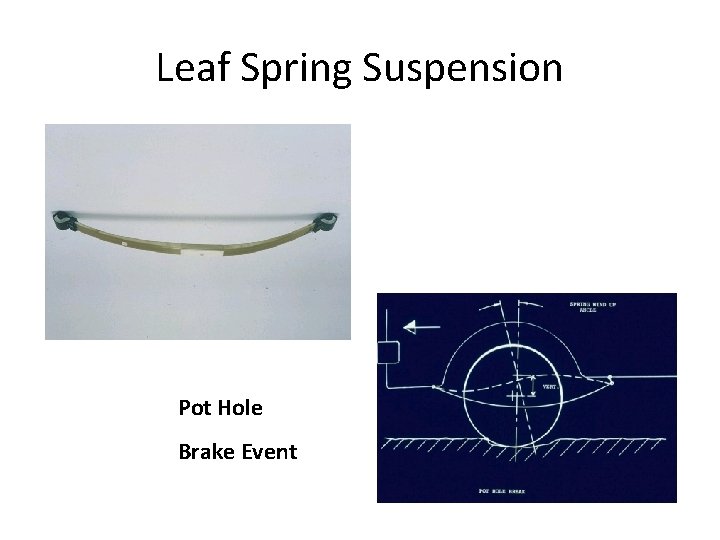
Leaf Spring Suspension Pot Hole Brake Event
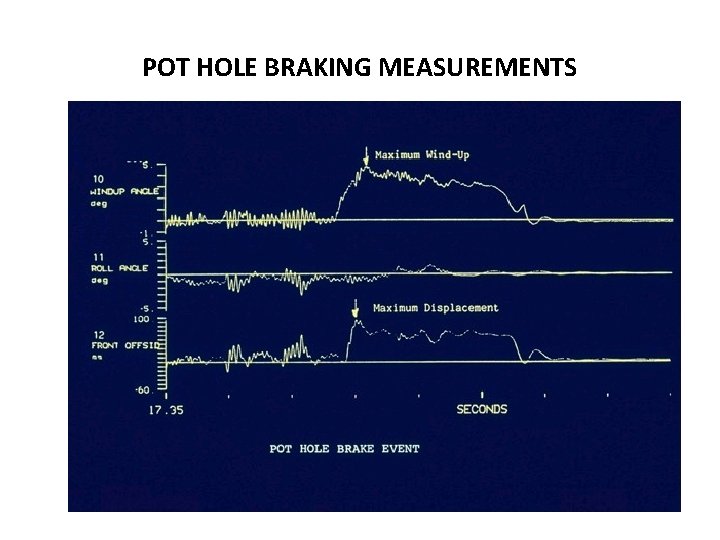
POT HOLE BRAKING MEASUREMENTS
Test Schematic Av Flow Vert. = 88 Litres / min TOTAL FLOW = 106 Litres / min Vert Long Av Flow Long. = 18 Litres / min
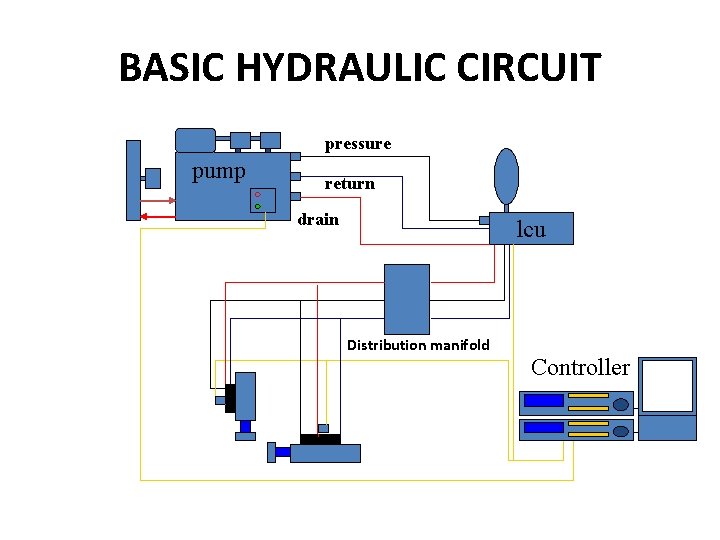
BASIC HYDRAULIC CIRCUIT pressure pump return drain lcu Distribution manifold Controller
Controller Selection Static Test Mono-frequency cyclic fatigue test Block Loading cyclic fatigue test PSD f Shaped random fatigue test Service load simulation fatigue test
Summary of Considerations 1. What components are going to be tested (now & future) 2. What is the complete test specification (simple or complex) 3. How are the results to be presented 4. Details of site installation (space, power supplies) 5. Hydraulic installation (Cooling, hose lengths, cables) 6. Complete equipment list for supply 7. Calibration requirements 8. Training requirements for engineers and technicians 9. Installation & commissioning agreements 10. Acceptance test details