
Hydraulic Systems The Basics Basic Principles Liquids Have
Hydraulic Systems The Basics
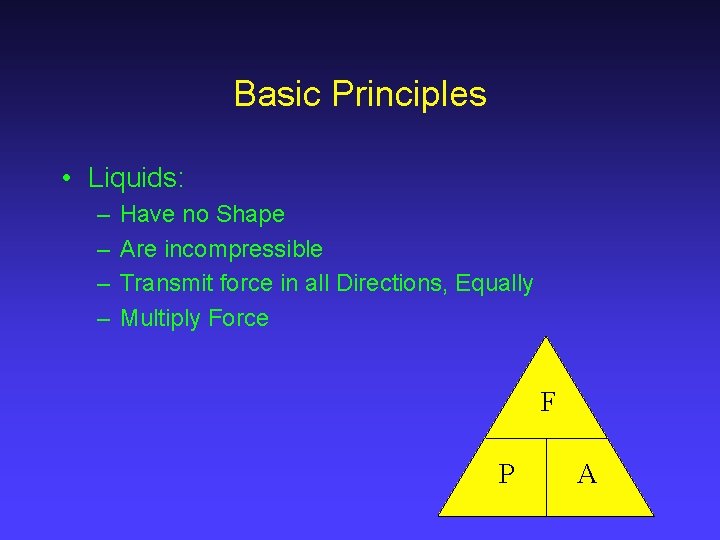
Basic Principles • Liquids: – – Have no Shape Are incompressible Transmit force in all Directions, Equally Multiply Force F P A
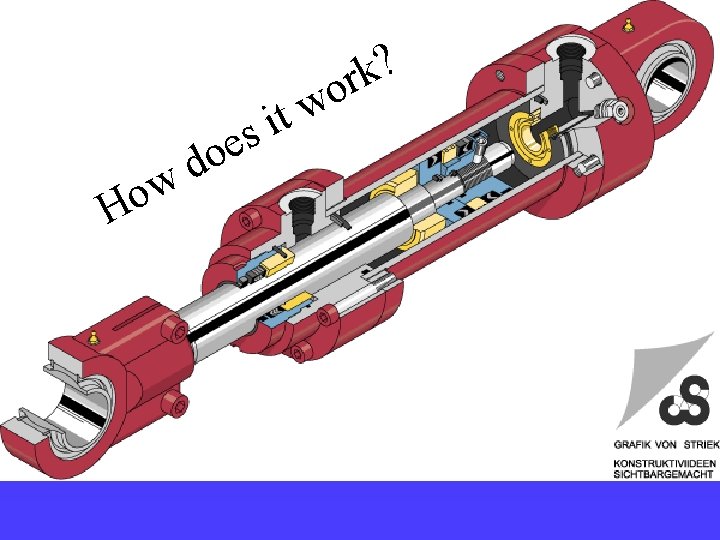
? k or w o H w t i s e o d
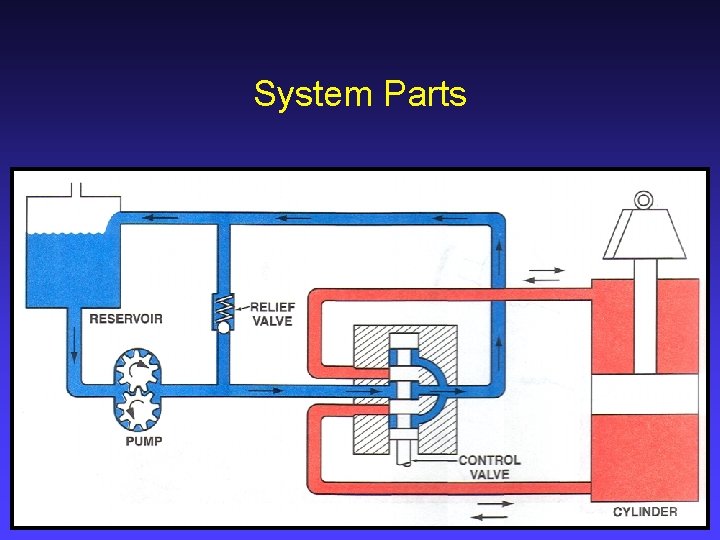
System Parts
Advantages & Disadvantages of Hydraulics • Advantages: – Flexibility – Multiplication of Force – Simplicity – Compact – Economy – Safety • Disadvantages: – Efficiency – Cleanliness
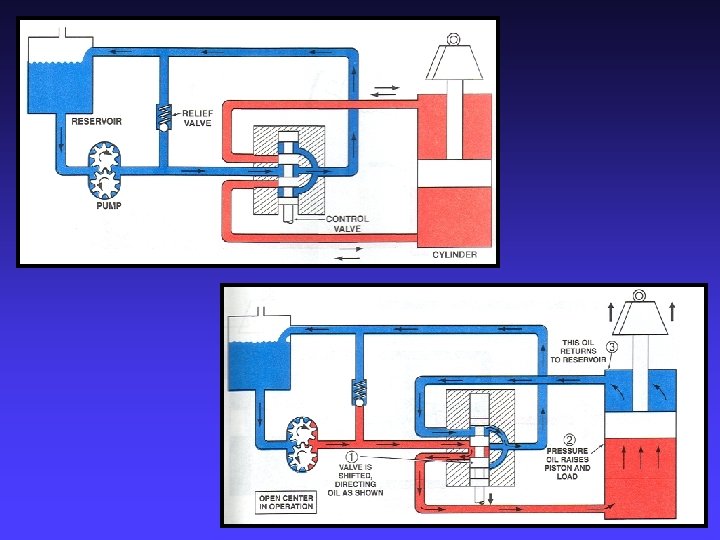
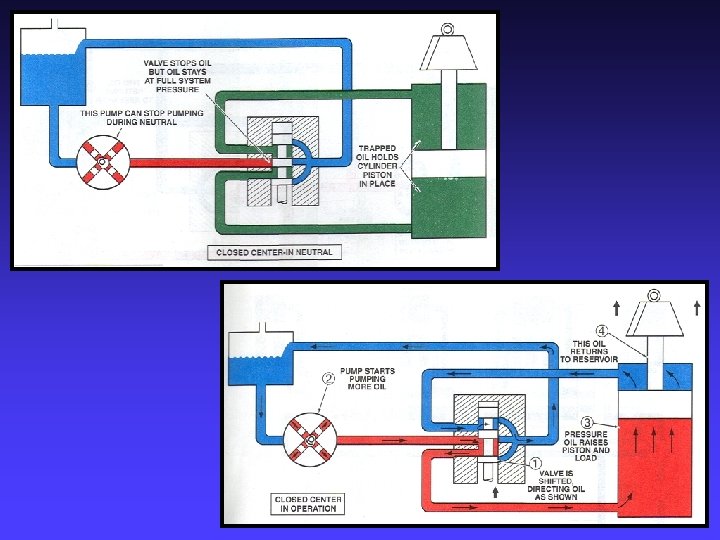
Primary Hydraulic Systems • Open-Center Systems: – Oil is pumped constantly, excess oil is returned to the reservoir. • Closed-Center Systems: – Oil is pumped on demand, control valve stops oil flow.
Open-Center Systems • • Simplistic Inexpensive Ineffective with Multiple Applications Variations of Open-Center Systems: – Open-Center with a Series Connection – Open-Center with a Series Parallel Connection – Open-Center with a Flow Divider
Closed-Center Systems • • • No Relief Valves Needed Application can be tailored by restricting flow Specialized functions have more support Multiple functions can be used at the same time Variations of Closed-Center Systems: – Closed-Center with Fixed Displacement Pump and Accumulator – Closed-Center with Variable Displacement Pump
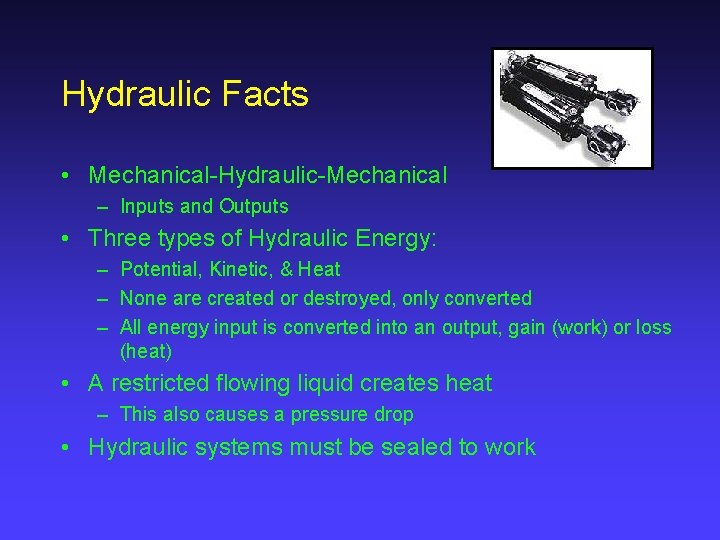
Hydraulic Facts • Mechanical-Hydraulic-Mechanical – Inputs and Outputs • Three types of Hydraulic Energy: – Potential, Kinetic, & Heat – None are created or destroyed, only converted – All energy input is converted into an output, gain (work) or loss (heat) • A restricted flowing liquid creates heat – This also causes a pressure drop • Hydraulic systems must be sealed to work
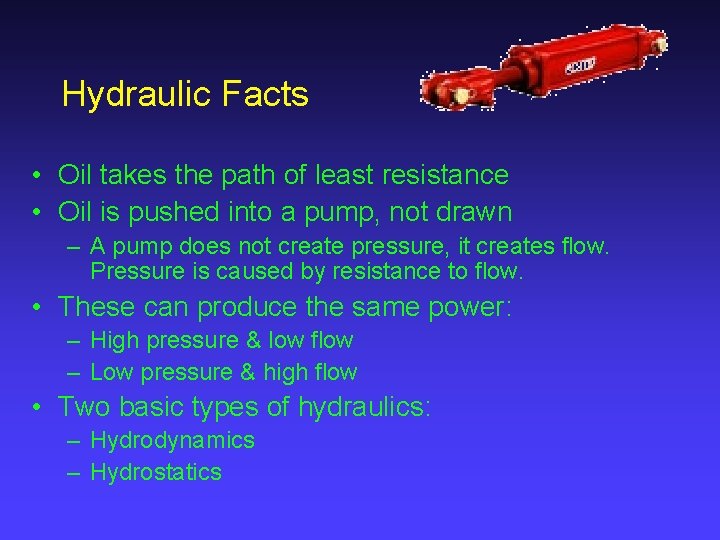
Hydraulic Facts • Oil takes the path of least resistance • Oil is pushed into a pump, not drawn – A pump does not create pressure, it creates flow. Pressure is caused by resistance to flow. • These can produce the same power: – High pressure & low flow – Low pressure & high flow • Two basic types of hydraulics: – Hydrodynamics – Hydrostatics
- Slides: 12