
Hydraulic Pneumatic and Electrical Telemetry Systems ZANKHANA MEHTA


- Slides: 49
Hydraulic , Pneumatic and Electrical Telemetry Systems ZANKHANA MEHTA
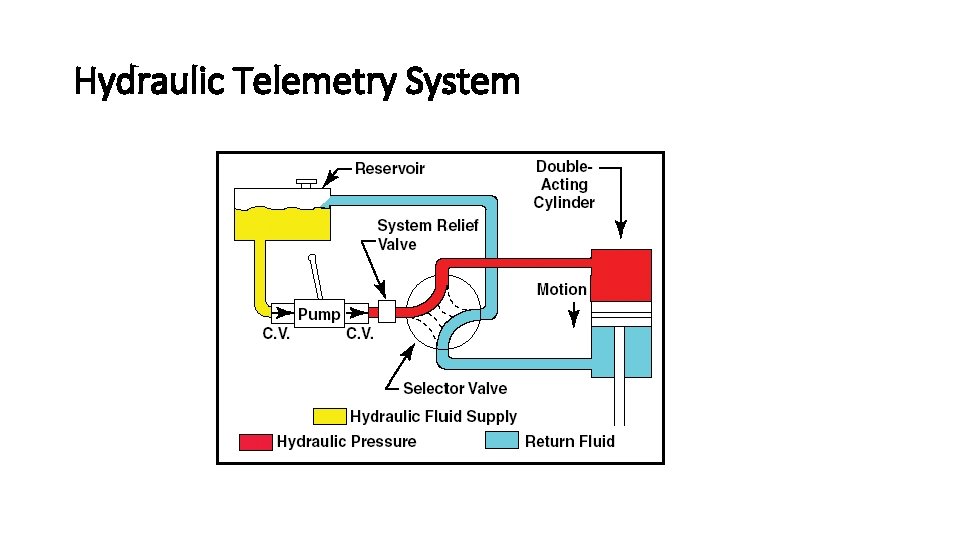
Hydraulic Telemetry System
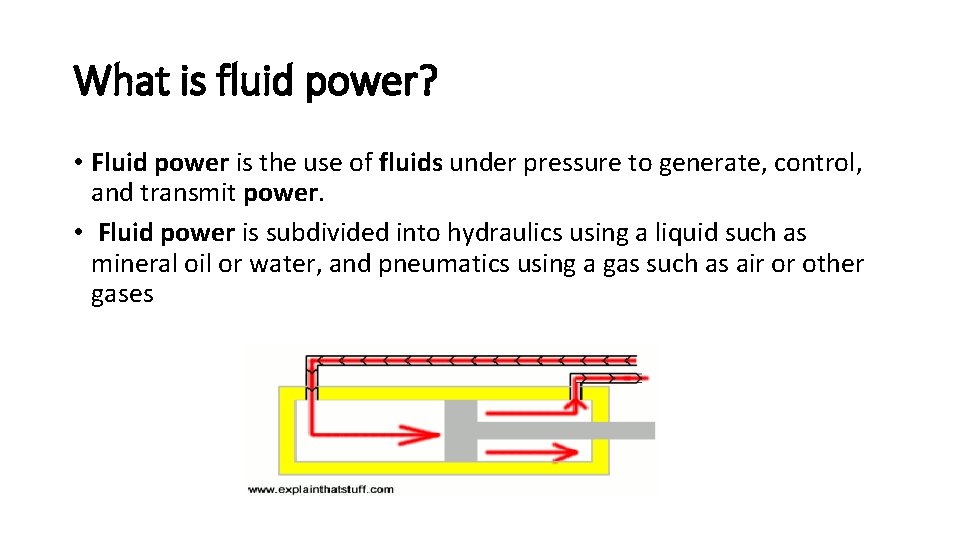
What is fluid power? • Fluid power is the use of fluids under pressure to generate, control, and transmit power. • Fluid power is subdivided into hydraulics using a liquid such as mineral oil or water, and pneumatics using a gas such as air or other gases
ADVANTAGES OF FLUID POWER • safety in hazardous environments because they are inherently spark-free and can tolerate high temperatures. • force or torque can be held constant — this is unique to fluid power transmission • high torque at low speed — unlike electric motors, pneumatic and hydraulic motors can produce high torque while operating at low rotational speeds. Some fluid power motors can even maintain torque at zero speed without overheating • pressurized fluids can be transmitted over long distances and through complex machine configurations with only a small loss in power • multi-functional control — a single hydraulic pump or air compressor can provide power to many cylinders, motors, or other actuators • elimination of complicated mechanical trains of gears, chains, belts, cams, and linkages • motion can be almost instantly reversed
TYPES OF HYDRAULIC FLUIDS: • Petroleum based Fluid • Synthetic Fluid • Water based FLuid
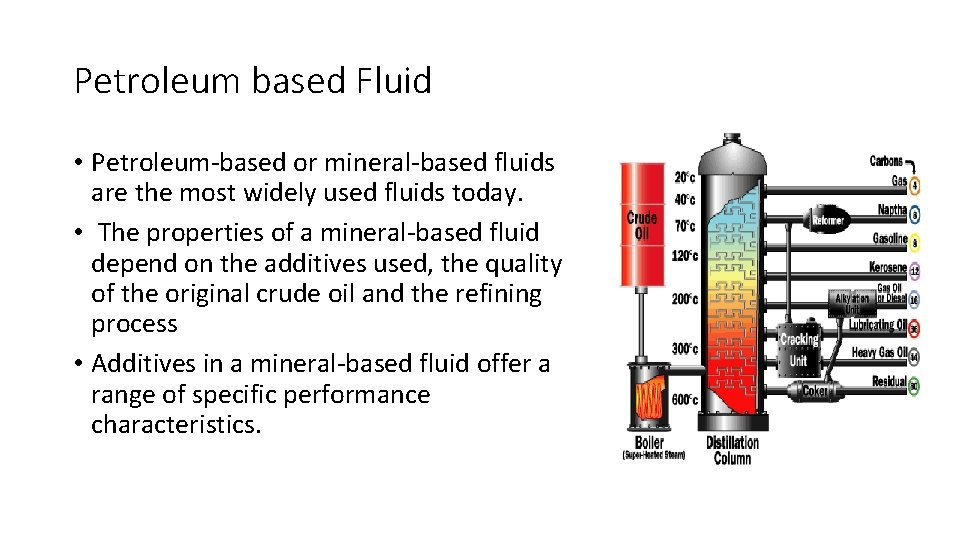
Petroleum based Fluid • Petroleum-based or mineral-based fluids are the most widely used fluids today. • The properties of a mineral-based fluid depend on the additives used, the quality of the original crude oil and the refining process • Additives in a mineral-based fluid offer a range of specific performance characteristics.
Synthetic Fluid • Synthetic fluids are man-made lubricants and many offer excellent lubrication characteristics in highpressure and high- temperature systems. • Some of the advantages of synthetic fluids may include fire-resistance , lower friction, and thermal stability. • The disadvantage to these types of fluids is that they are usually more expensive than conventional fluids, they may be slightly toxic and require special disposal, and they are often not compatible with standard seal materials.
Water based FLuid • Water-based fluids are used for fire-resistance due to their high-water content. • Water-based fluids can provide suitable lubrication characteristics but need to be monitored closely to avoid problems. • Because water-based fluids are used in applications when fire resistance is needed, these systems and the atmosphere around the systems can be hot. Elevated temperatures cause the water in the fluids to evaporate, which causes the viscosity to rise. • Occasionally, distilled water will have to be added to the system to correct the balance of the fluid. • Whenever these fluids are used, several system components must be checked for compatibility, including pumps, filters, plumbing, fittings and seal materials. • Water-based fluids can be more expensive than conventional petroleum-based fluids and have other disadvantages (for example, lower wear resistance) that must be weighed against the advantage of fire-resistance.
Components used in Hydraulic Transmissions Reservoir, Strainers, Filters, Hydraulic Pumps- Centrifugal, reciprocating and Rotary Lines -Types of tubes and pipes, fittings and connectors for impulse line tubing, • Sealing Devices • Direction Control Valve • • •
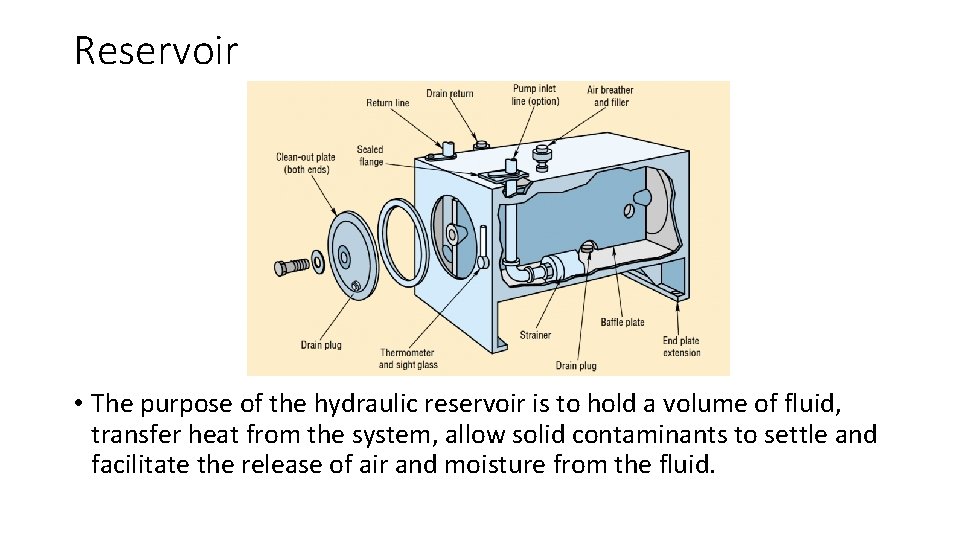
Reservoir • The purpose of the hydraulic reservoir is to hold a volume of fluid, transfer heat from the system, allow solid contaminants to settle and facilitate the release of air and moisture from the fluid.
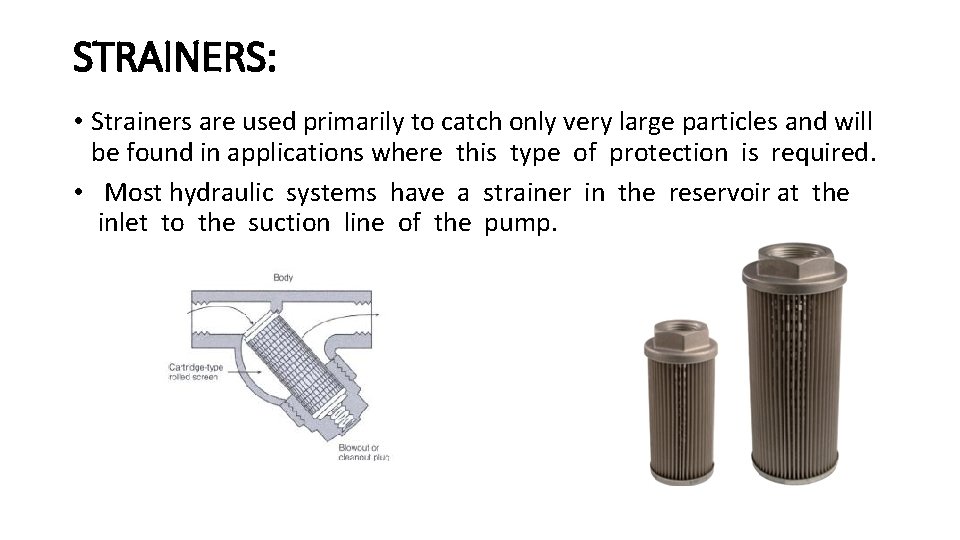
STRAINERS: • Strainers are used primarily to catch only very large particles and will be found in applications where this type of protection is required. • Most hydraulic systems have a strainer in the reservoir at the inlet to the suction line of the pump.
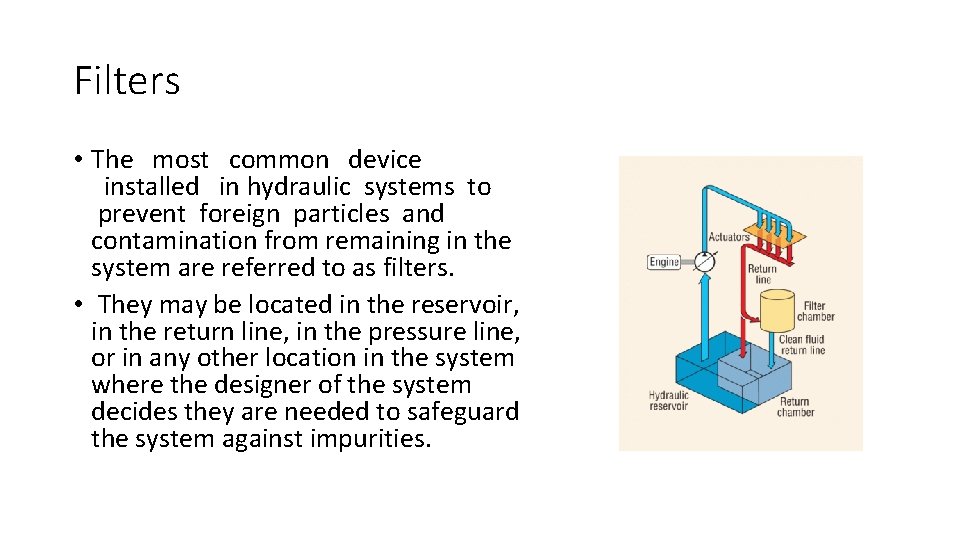
Filters • The most common device installed in hydraulic systems to prevent foreign particles and contamination from remaining in the system are referred to as filters. • They may be located in the reservoir, in the return line, in the pressure line, or in any other location in the system where the designer of the system decides they are needed to safeguard the system against impurities.
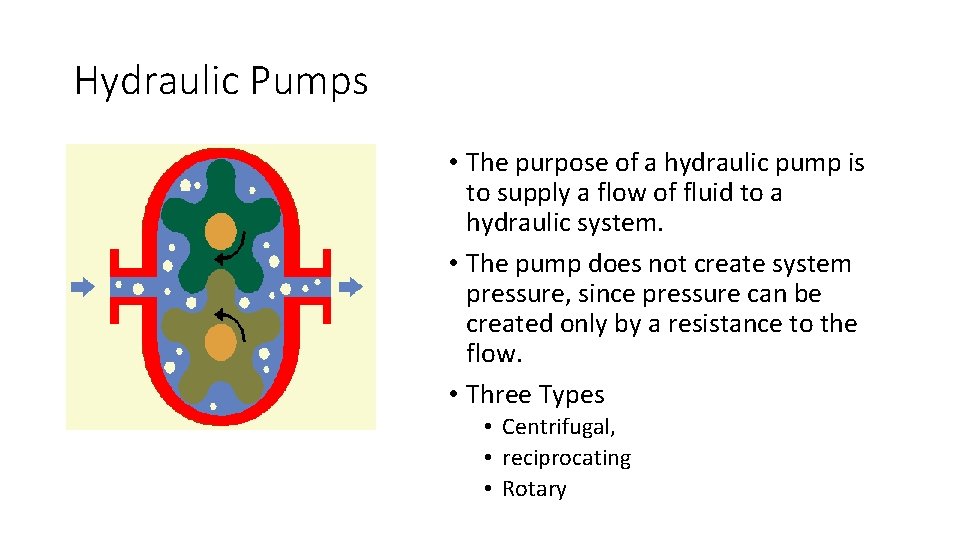
Hydraulic Pumps • The purpose of a hydraulic pump is to supply a flow of fluid to a hydraulic system. • The pump does not create system pressure, since pressure can be created only by a resistance to the flow. • Three Types • Centrifugal, • reciprocating • Rotary
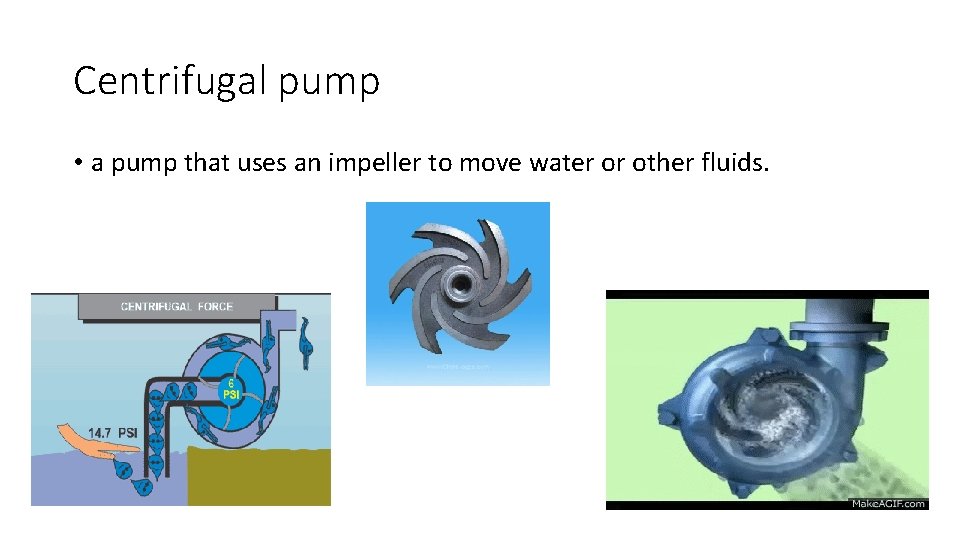
Centrifugal pump • a pump that uses an impeller to move water or other fluids.
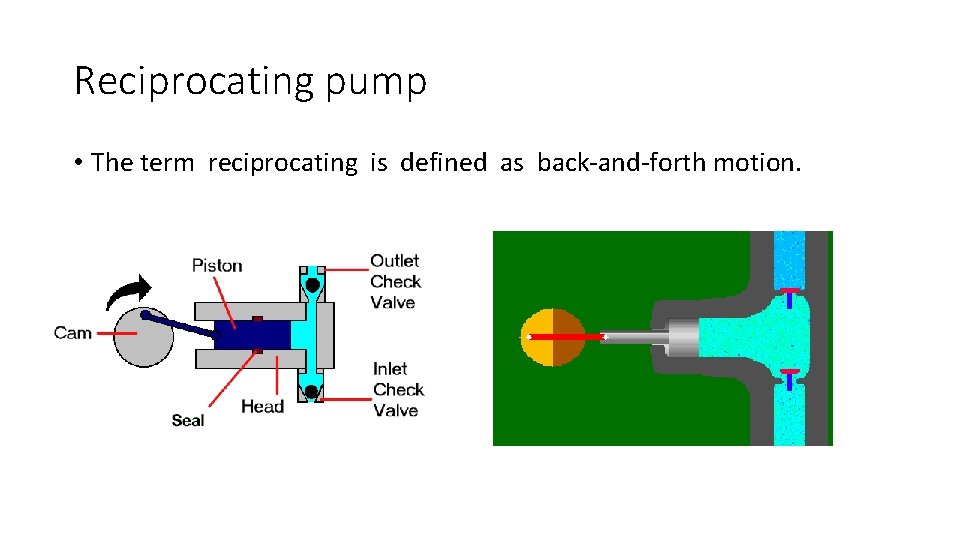
Reciprocating pump • The term reciprocating is defined as back-and-forth motion.
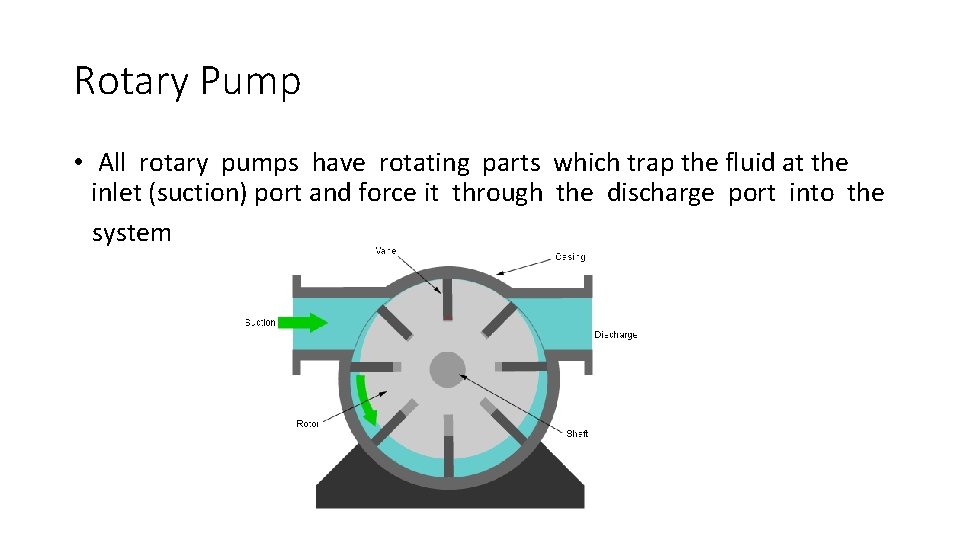
Rotary Pump • All rotary pumps have rotating parts which trap the fluid at the inlet (suction) port and force it through the discharge port into the system
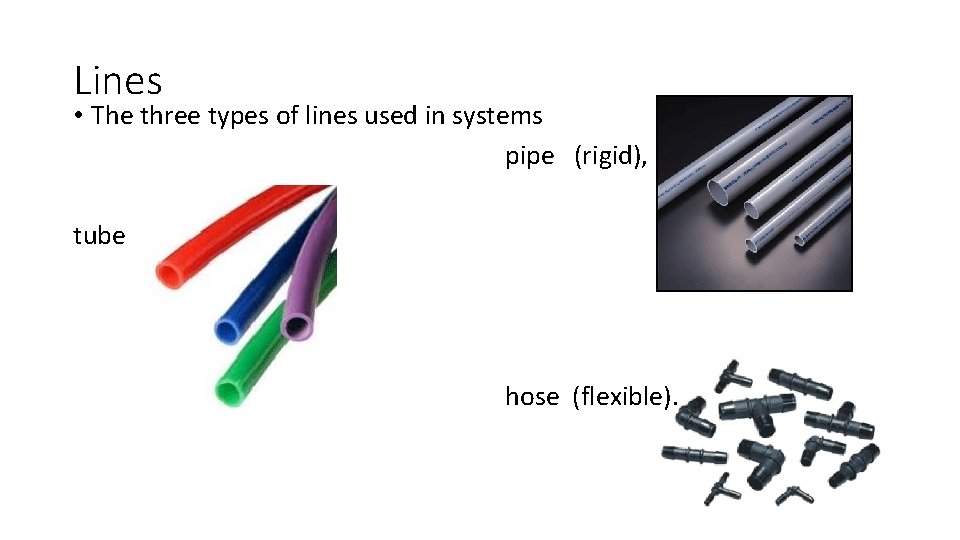
Lines • The three types of lines used in systems pipe (rigid), tube hose (flexible).
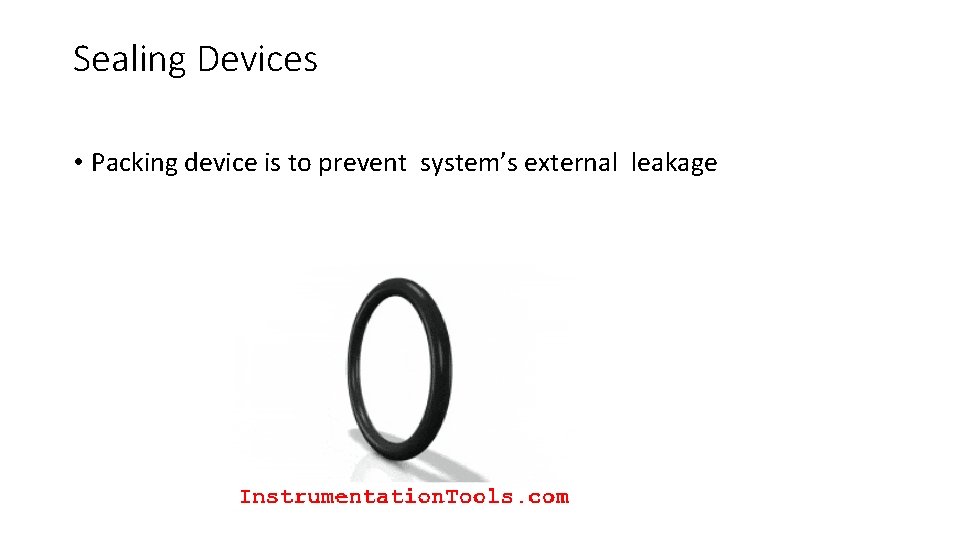
Sealing Devices • Packing device is to prevent system’s external leakage
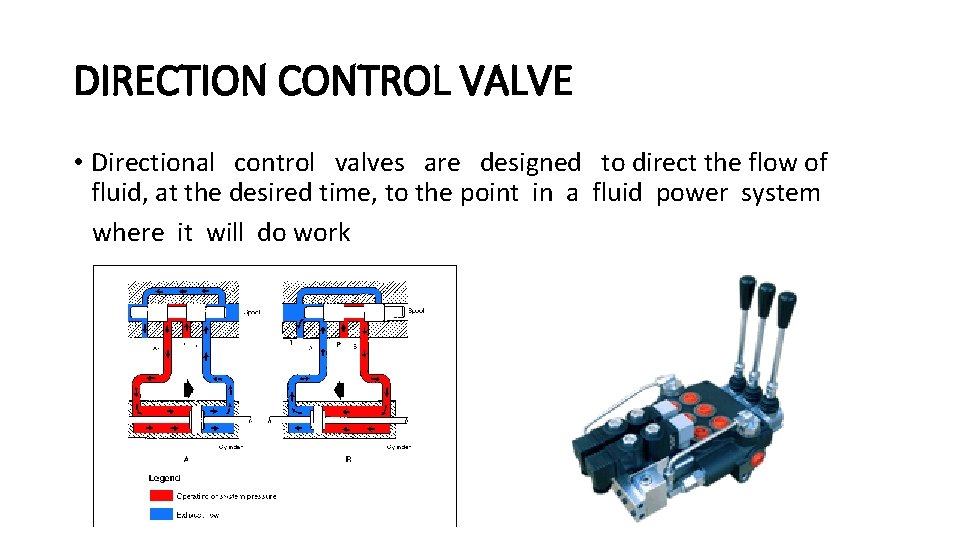
DIRECTION CONTROL VALVE • Directional control valves are designed to direct the flow of fluid, at the desired time, to the point in a fluid power system where it will do work
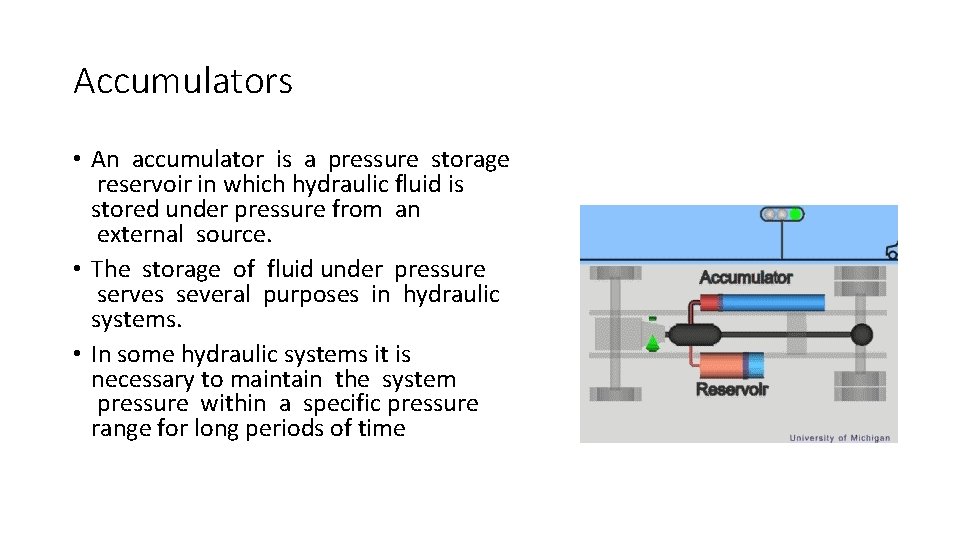
Accumulators • An accumulator is a pressure storage reservoir in which hydraulic fluid is stored under pressure from an external source. • The storage of fluid under pressure serves several purposes in hydraulic systems. • In some hydraulic systems it is necessary to maintain the system pressure within a specific pressure range for long periods of time
Types of Accumulator • Piston type • Bag or bladder type • Direct-contact gas-to-fluid type • Diaphragm type
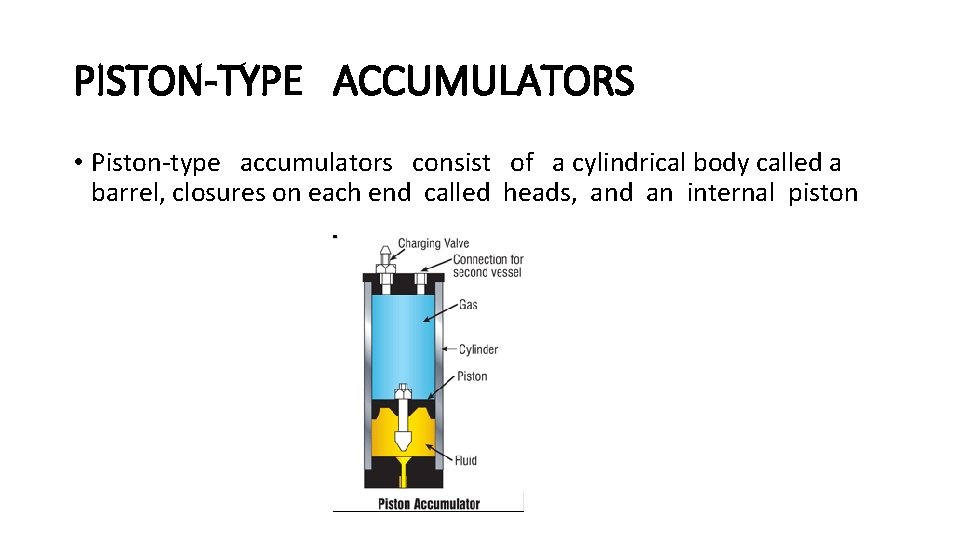
PISTON-TYPE ACCUMULATORS • Piston-type accumulators consist of a cylindrical body called a barrel, closures on each end called heads, and an internal piston
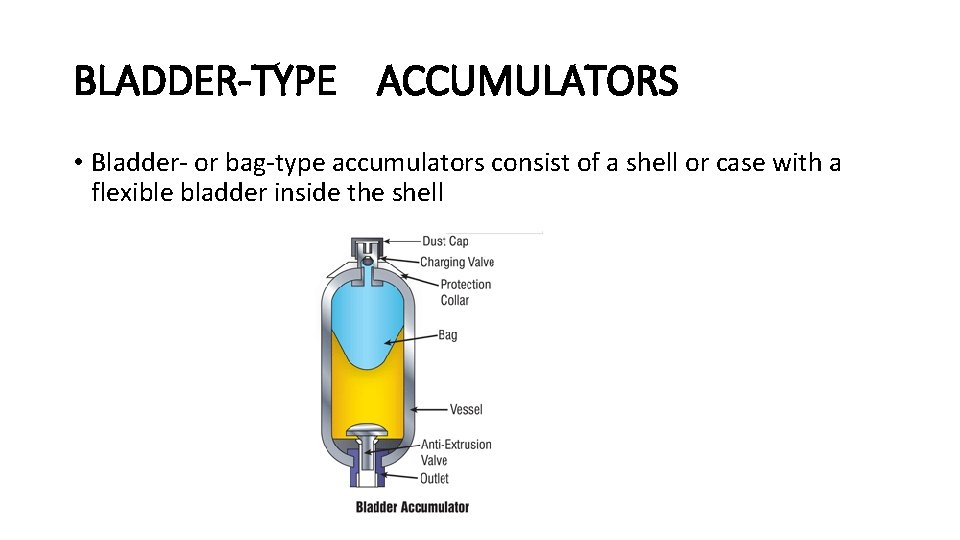
BLADDER-TYPE ACCUMULATORS • Bladder- or bag-type accumulators consist of a shell or case with a flexible bladder inside the shell
DIRECT-CONTACT GAS-TO-FLUID ACCUMULATORS: • Direct-contact gas-to-fluid accumulators generally are used in very large installations where it would be very expensive to require a piston-or bladder-type accumulator
DIAPHRAGM TYPE ACCUMULATOR • The diaphragm-type accumulator is constructed in two halves which are either screwed or bolted together. • A synthetic rubber diaphragm is installed between both halves, making two chambers
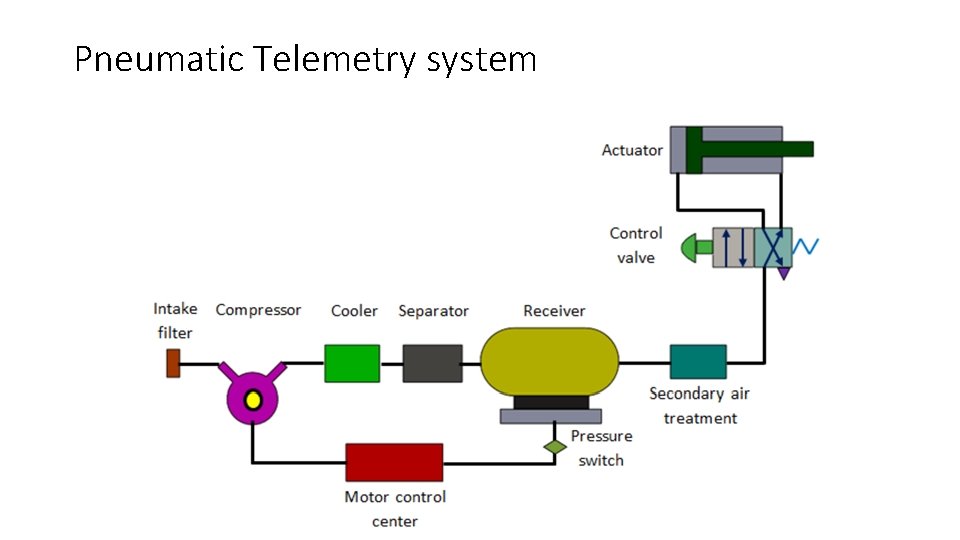
Pneumatic Telemetry system
Components of Pneumatic Telemetry system: • • • Receiver tank, Strainers, Filters Compressor - Centrifugal, reciprocating and Rotary Lines -Types of Tubes and Pipes Fittings and connectors for Impulse Line tubing, Sealing Devices Junction boxes, Enclosures, clamps-P- U type, Numbering / Tagging system Direction Control Valve - Types
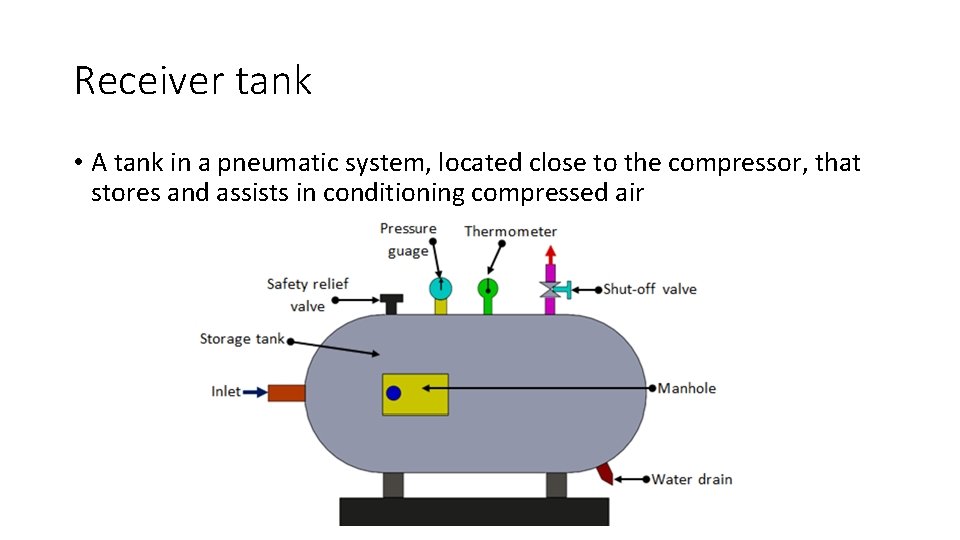
Receiver tank • A tank in a pneumatic system, located close to the compressor, that stores and assists in conditioning compressed air
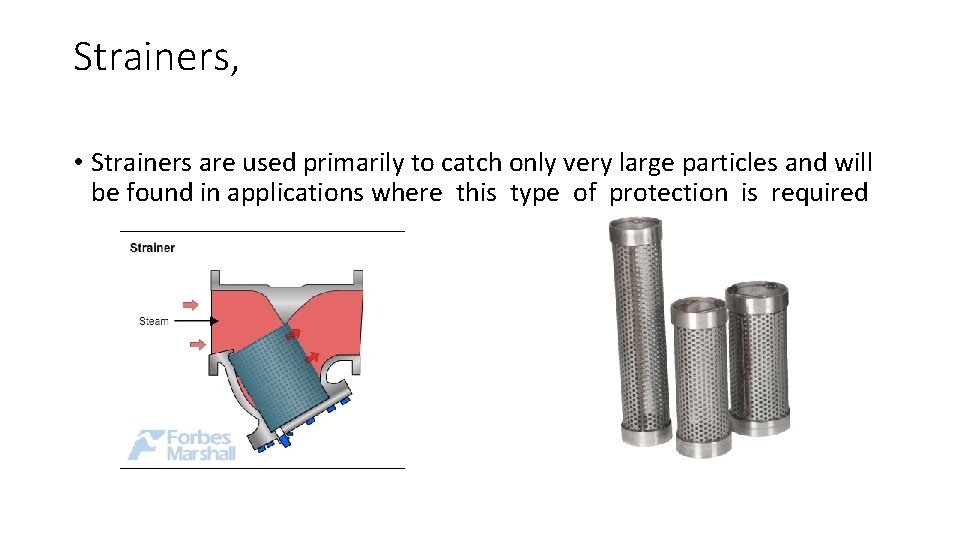
Strainers, • Strainers are used primarily to catch only very large particles and will be found in applications where this type of protection is required
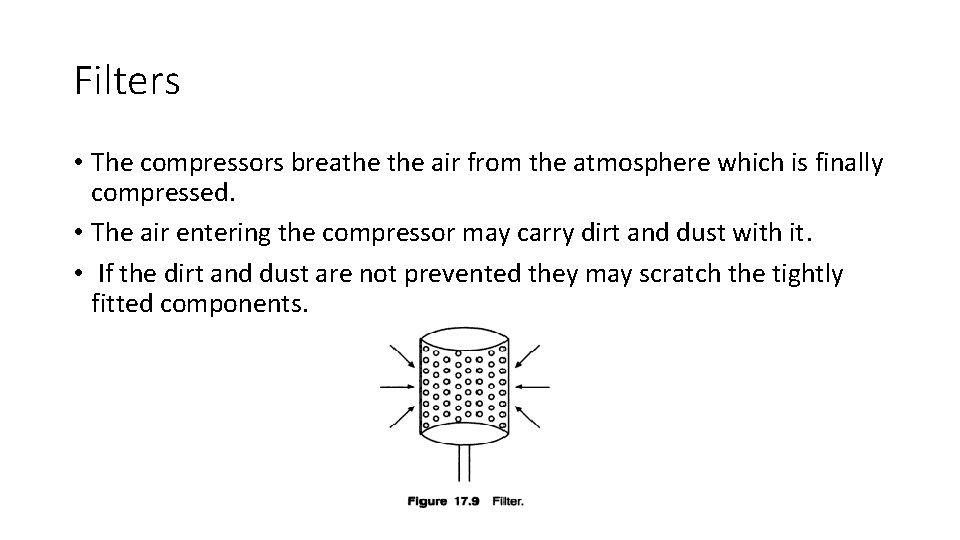
Filters • The compressors breathe air from the atmosphere which is finally compressed. • The air entering the compressor may carry dirt and dust with it. • If the dirt and dust are not prevented they may scratch the tightly fitted components.
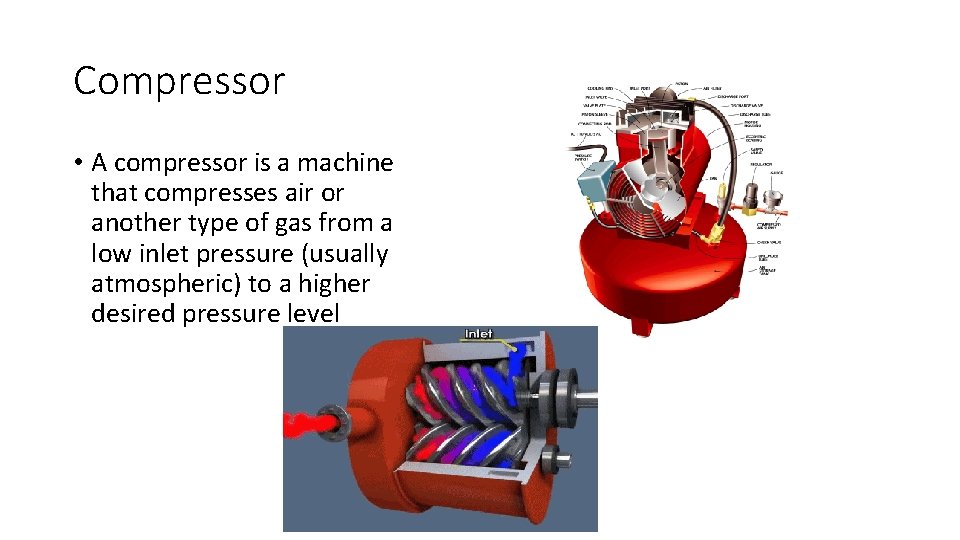
Compressor • A compressor is a machine that compresses air or another type of gas from a low inlet pressure (usually atmospheric) to a higher desired pressure level
Types of Compressor • Centrifugal • Reciprocating • Rotary
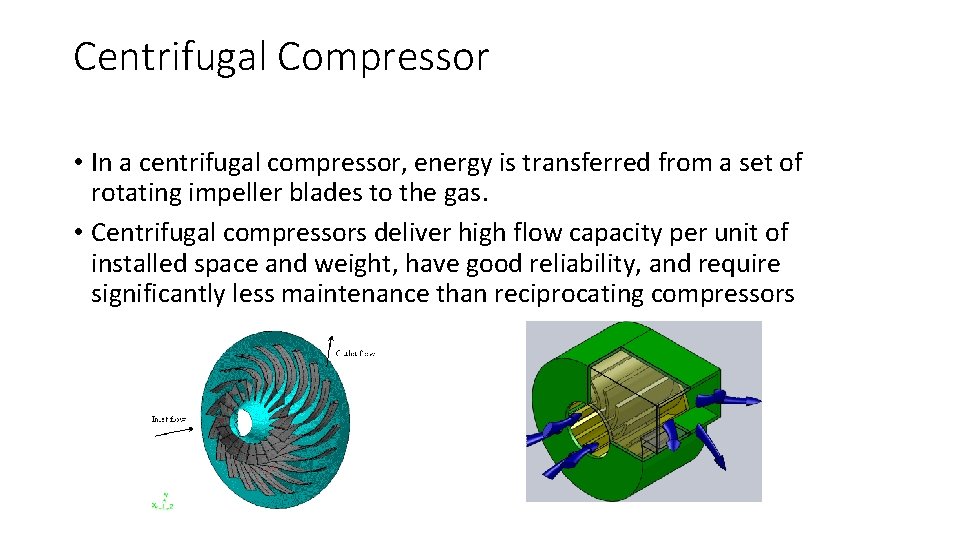
Centrifugal Compressor • In a centrifugal compressor, energy is transferred from a set of rotating impeller blades to the gas. • Centrifugal compressors deliver high flow capacity per unit of installed space and weight, have good reliability, and require significantly less maintenance than reciprocating compressors
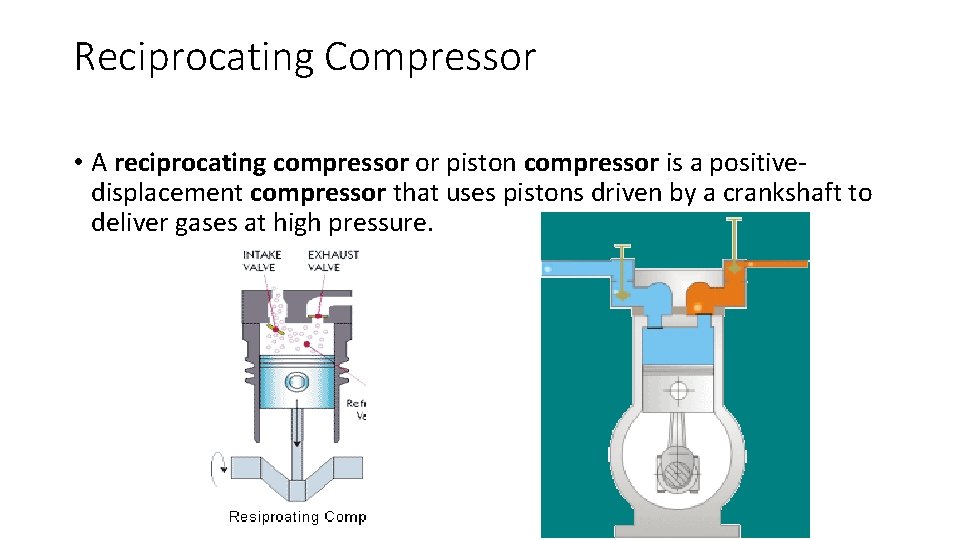
Reciprocating Compressor • A reciprocating compressor or piston compressor is a positivedisplacement compressor that uses pistons driven by a crankshaft to deliver gases at high pressure.
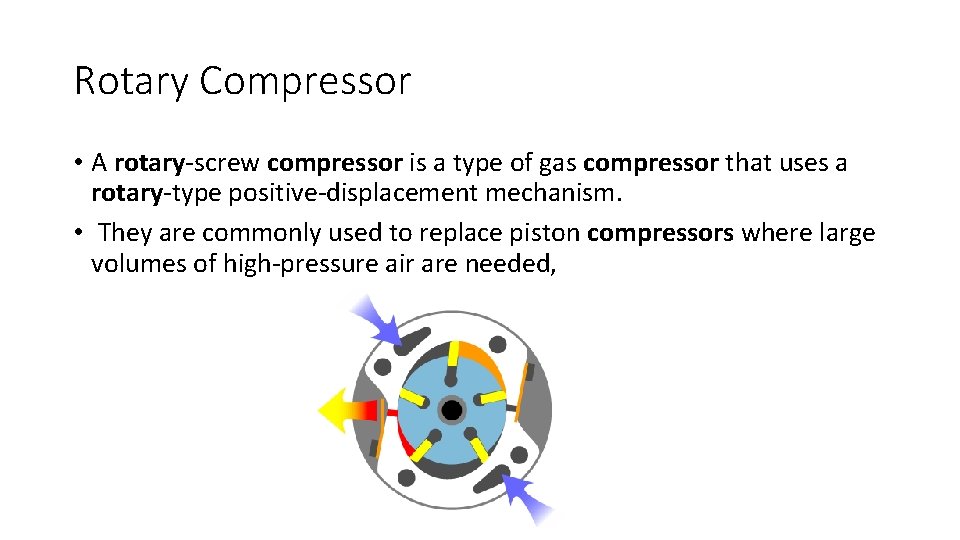
Rotary Compressor • A rotary-screw compressor is a type of gas compressor that uses a rotary-type positive-displacement mechanism. • They are commonly used to replace piston compressors where large volumes of high-pressure air are needed,
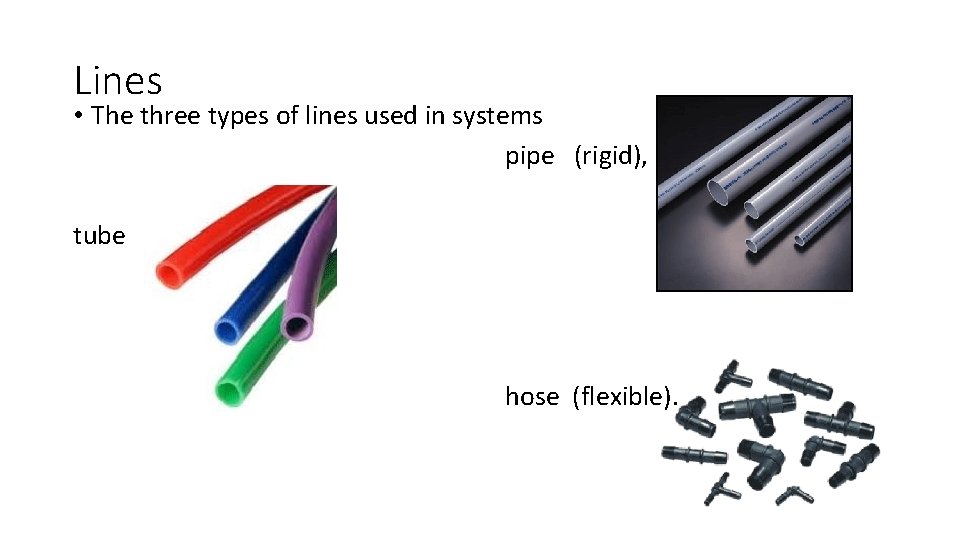
Lines • The three types of lines used in systems pipe (rigid), tube hose (flexible).
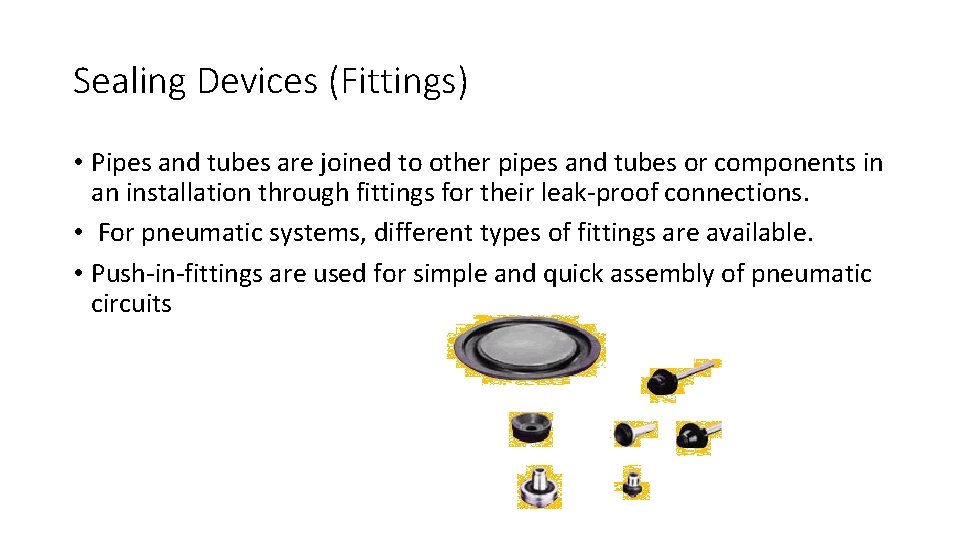
Sealing Devices (Fittings) • Pipes and tubes are joined to other pipes and tubes or components in an installation through fittings for their leak-proof connections. • For pneumatic systems, different types of fittings are available. • Push-in-fittings are used for simple and quick assembly of pneumatic circuits
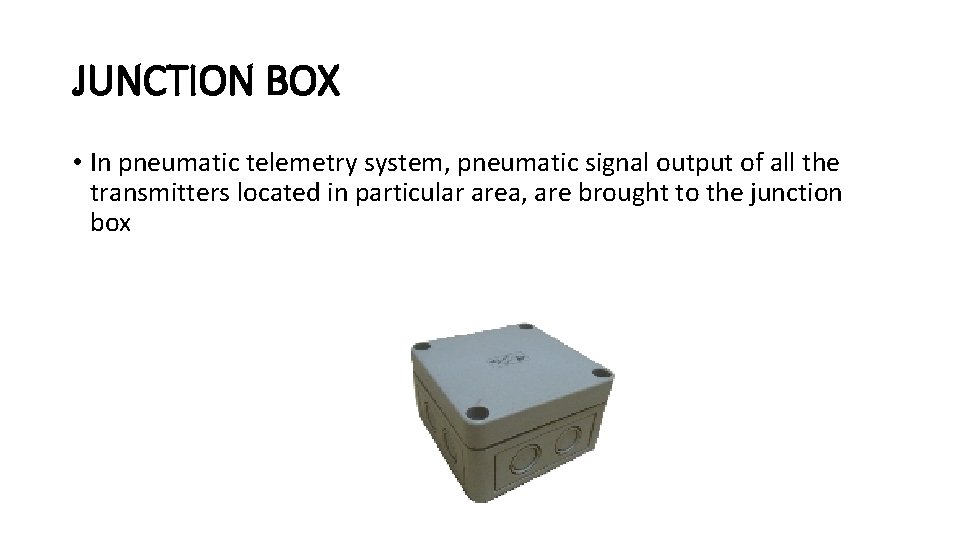
JUNCTION BOX • In pneumatic telemetry system, pneumatic signal output of all the transmitters located in particular area, are brought to the junction box
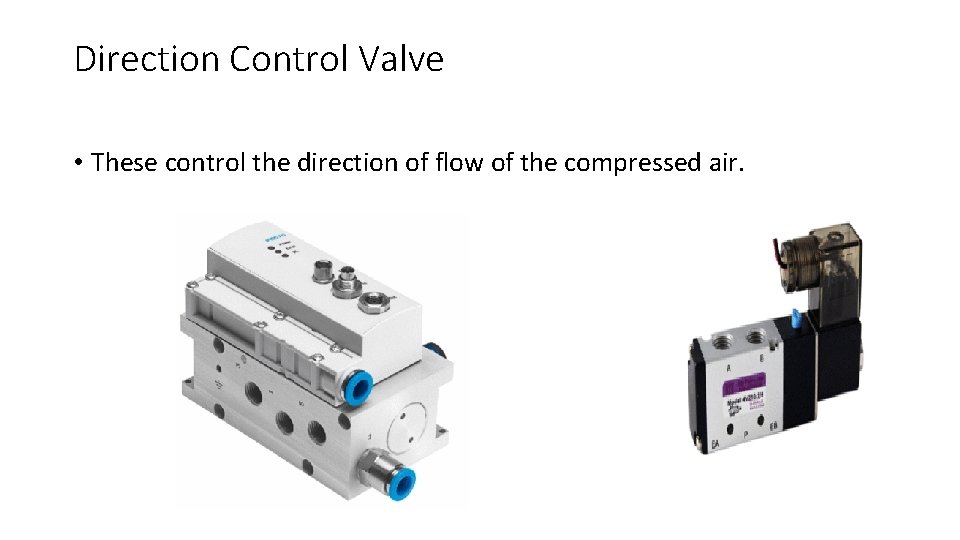
Direction Control Valve • These control the direction of flow of the compressed air.
ELECTRICAL TELEMETRY
Components of Electrical Telemetry • Cables, • Junction boxes, • Enclosures, • connectors • clamps • Numbering/ Tagging system, • Terminals Terminating types (Soldered-unsoldered (screwed , pressed, crimped )
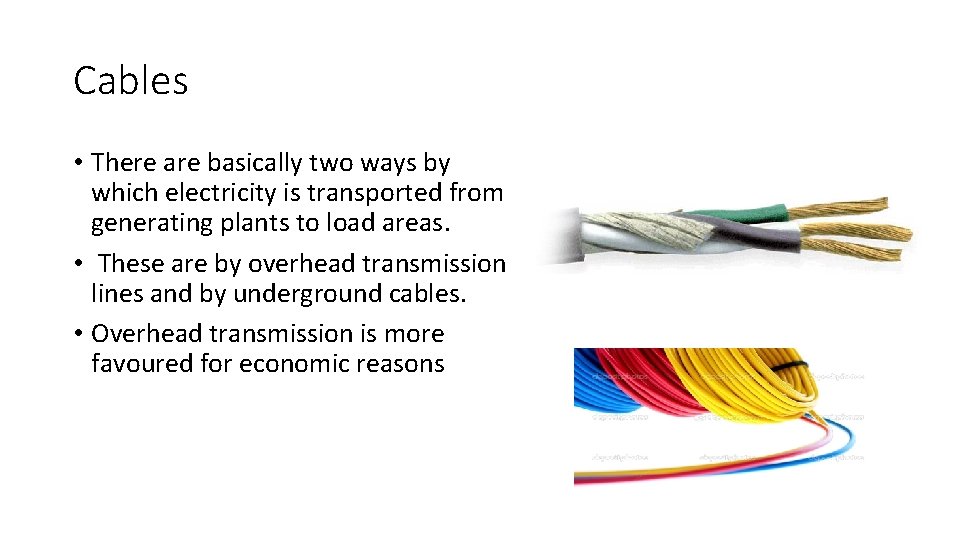
Cables • There are basically two ways by which electricity is transported from generating plants to load areas. • These are by overhead transmission lines and by underground cables. • Overhead transmission is more favoured for economic reasons
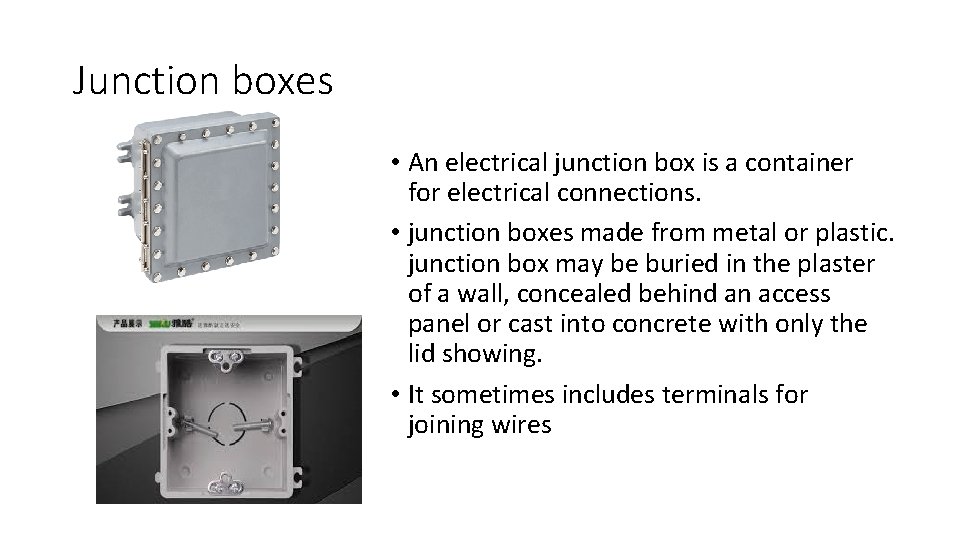
Junction boxes • An electrical junction box is a container for electrical connections. • junction boxes made from metal or plastic. junction box may be buried in the plaster of a wall, concealed behind an access panel or cast into concrete with only the lid showing. • It sometimes includes terminals for joining wires
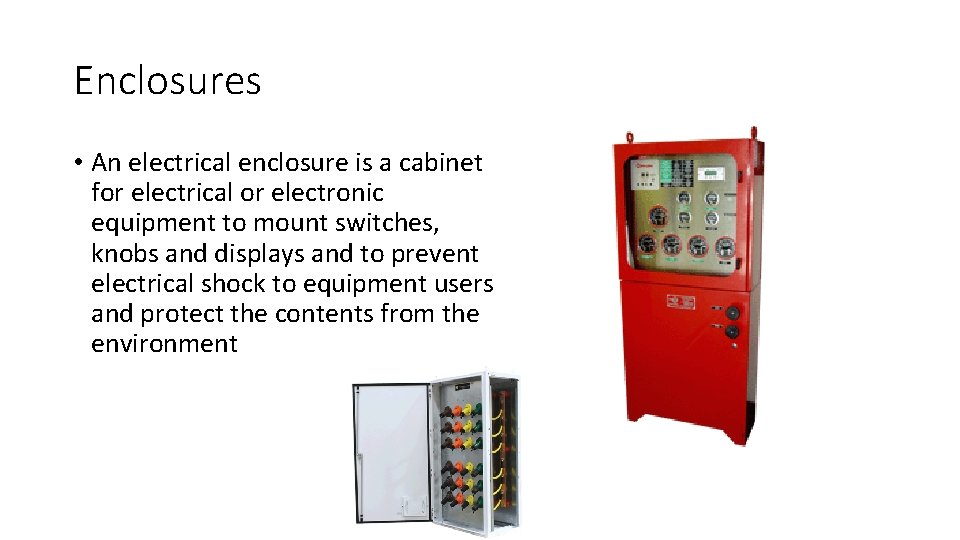
Enclosures • An electrical enclosure is a cabinet for electrical or electronic equipment to mount switches, knobs and displays and to prevent electrical shock to equipment users and protect the contents from the environment
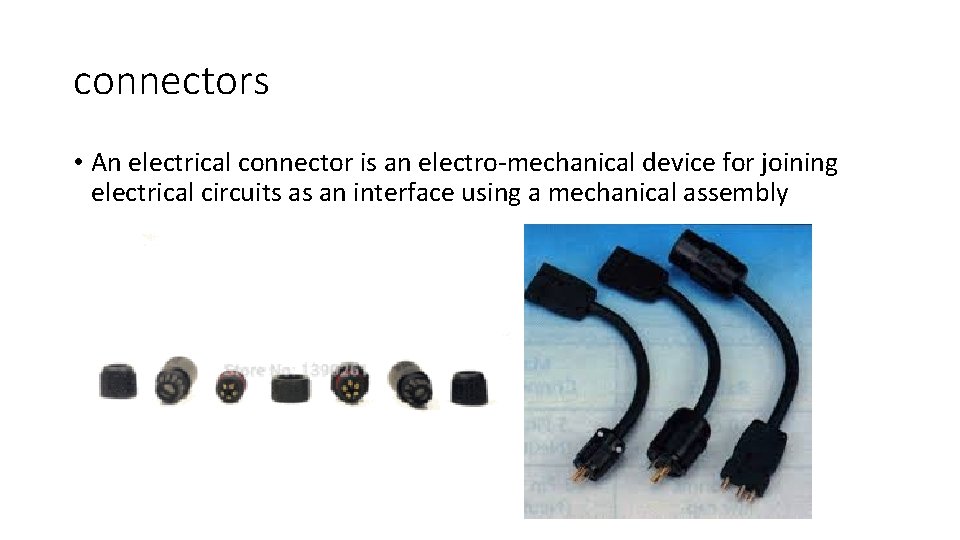
connectors • An electrical connector is an electro-mechanical device for joining electrical circuits as an interface using a mechanical assembly
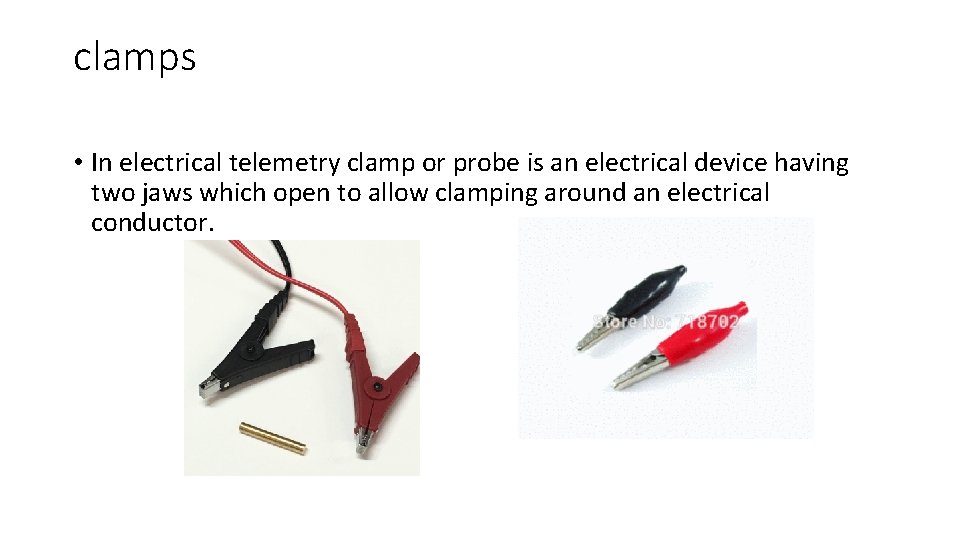
clamps • In electrical telemetry clamp or probe is an electrical device having two jaws which open to allow clamping around an electrical conductor.
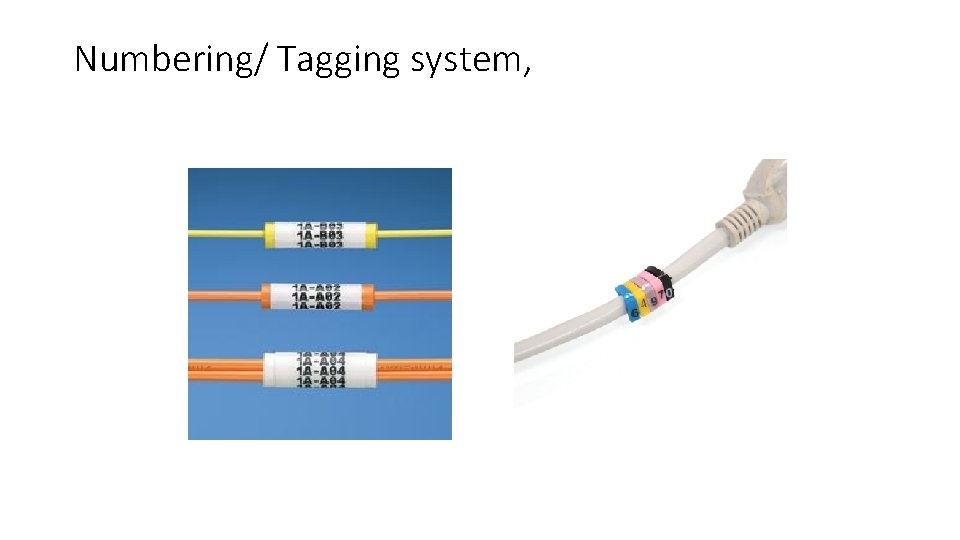
Numbering/ Tagging system,
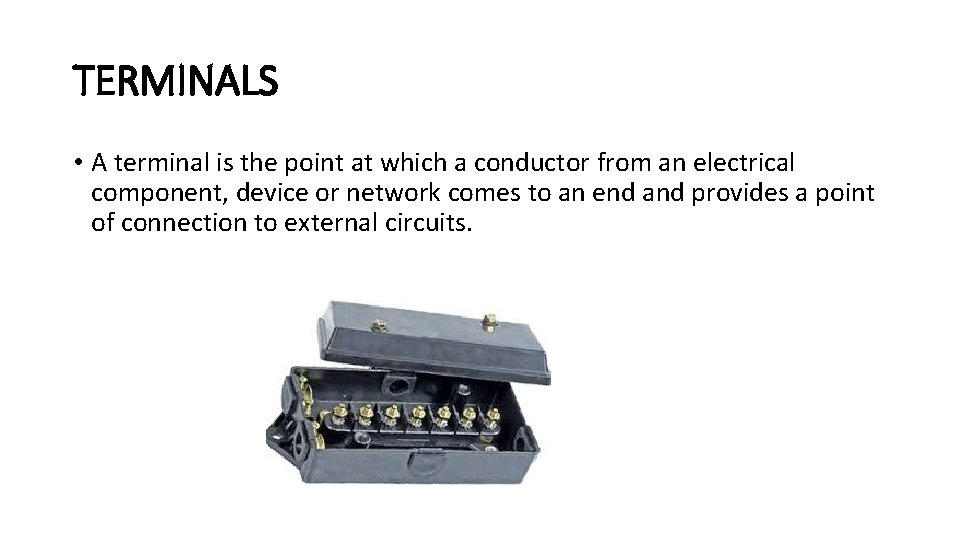
TERMINALS • A terminal is the point at which a conductor from an electrical component, device or network comes to an end and provides a point of connection to external circuits.
Thank You!!!!