
HYDRAS By Emily Harding Table of Contents 1
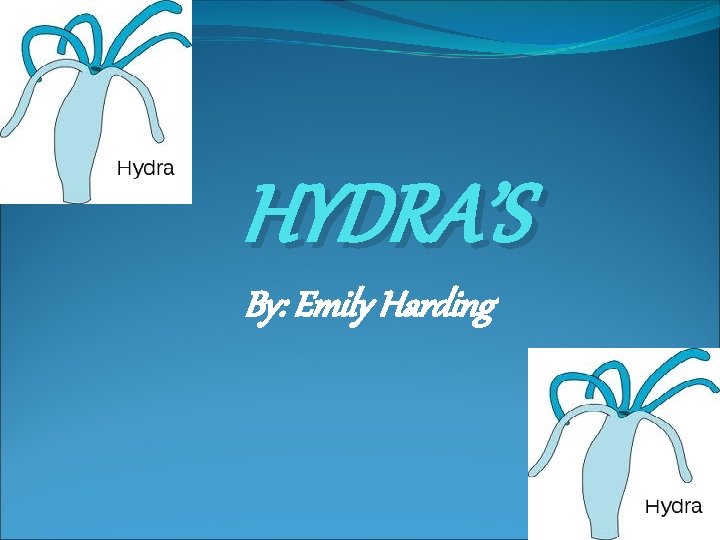
HYDRA’S By: Emily Harding
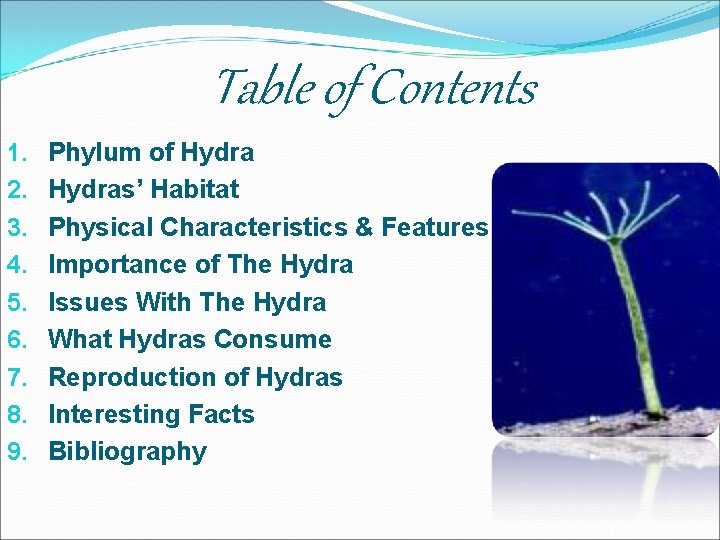
Table of Contents 1. 2. 3. 4. 5. 6. 7. 8. 9. Phylum of Hydras’ Habitat Physical Characteristics & Features Importance of The Hydra Issues With The Hydra What Hydras Consume Reproduction of Hydras Interesting Facts Bibliography
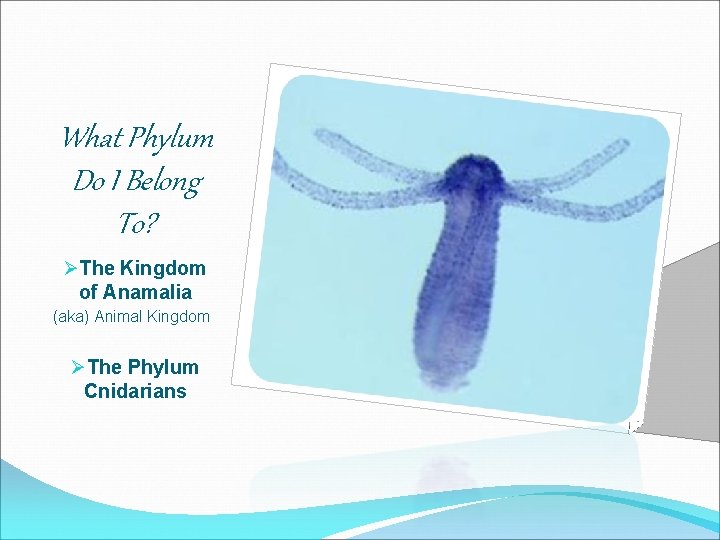
What Phylum Do I Belong To? ØThe Kingdom of Anamalia (aka) Animal Kingdom ØThe Phylum Cnidarians
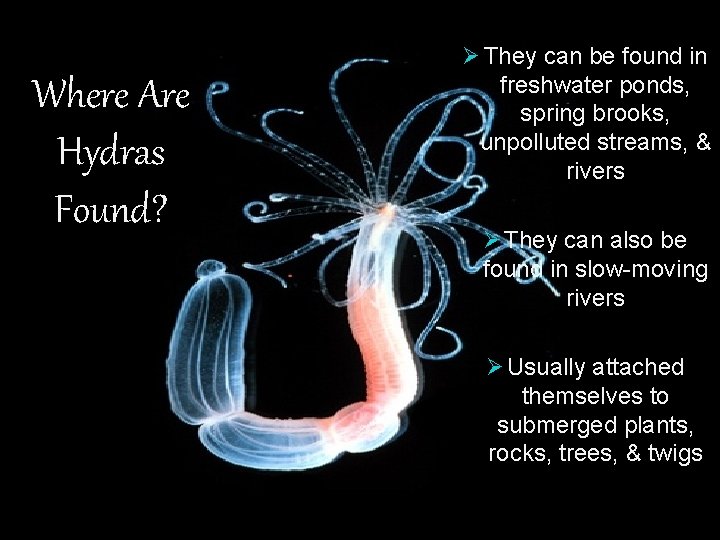
Where Are Hydras Found? Ø They can be found in freshwater ponds, spring brooks, unpolluted streams, & rivers Ø They can also be found in slow-moving rivers Ø Usually attached themselves to submerged plants, rocks, trees, & twigs
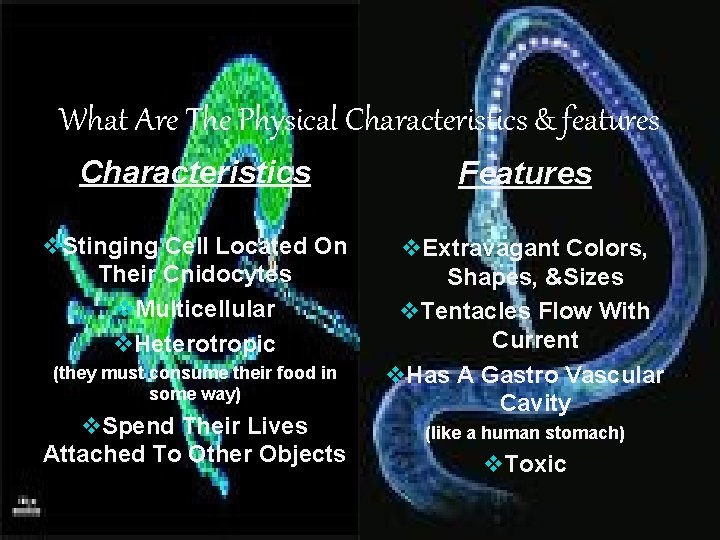
What Are The Physical Characteristics & features Characteristics Features v. Stinging Cell Located On Their Cnidocytes v. Multicellular v. Heterotropic v Extravagant Colors, Shapes, &Sizes v Tentacles Flow With Current v Has A Gastro Vascular Cavity (they must consume their food in some way) v. Spend Their Lives Attached To Other Objects (like a human stomach) v Toxic
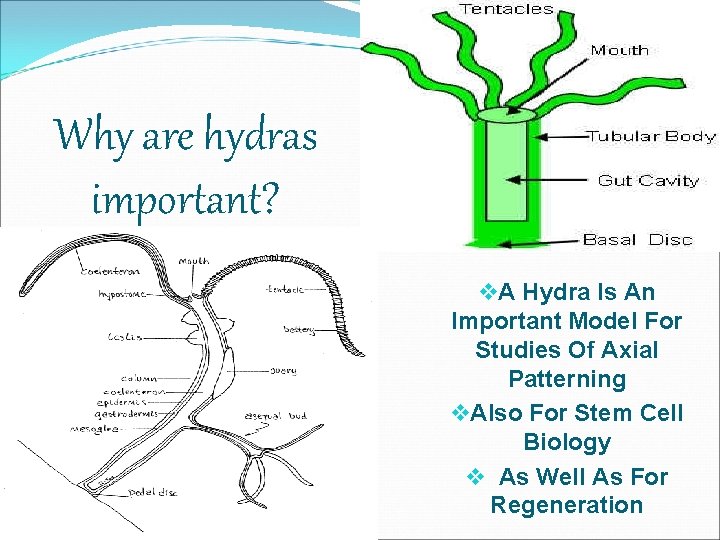
Why are hydras important? v. A Hydra Is An Important Model For Studies Of Axial Patterning v. Also For Stem Cell Biology v As Well As For Regeneration
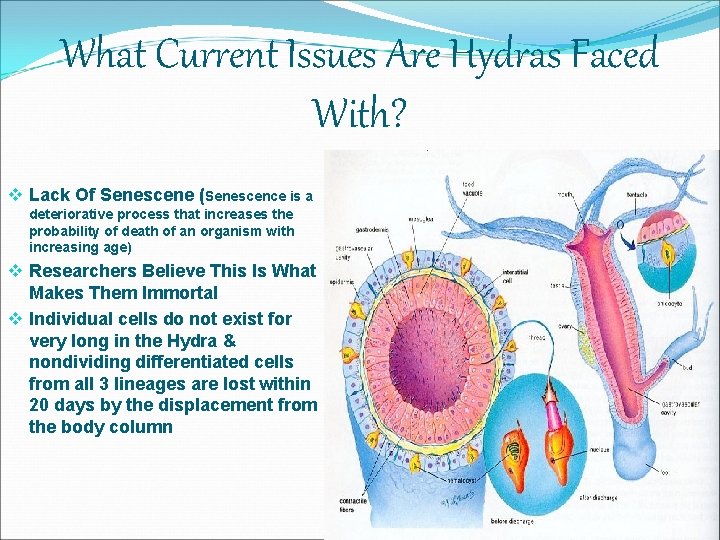
What Current Issues Are Hydras Faced With? v Lack Of Senescene (Senescence is a deteriorative process that increases the probability of death of an organism with increasing age) v Researchers Believe This Is What Makes Them Immortal v Individual cells do not exist for very long in the Hydra & nondividing differentiated cells from all 3 lineages are lost within 20 days by the displacement from the body column

What Do Hydras Consume? Ø Strictly Carnivorous Which Eats Many Different Kinds Of Small Metazoans (like annelids, copepods, cladocerans, & insects) Ø Capture Their Food By Paralyzing & Killing Their Food Organism By Means Of Nematocysts Ø Prey Brought To Mouth By Tentacles & Taken In Which Is Star-Shaped Or Circular Ø Digestion Is Both Extra & Intracellular

How do hydras reproduce? Ø The Common Asexual Method Of Reproduction By Hydras Is Budding Ø Buds Originate At The Junction Of The Stalk & Gastric Regions Ø Bud Begins as a semi-circular out pouching that eventually extends, becomes cylindrical, and develops tentacles Ø The Bud Then Pinches Off & A New Individual Becomes Independent Ø Buds Are Produced Every Two To Three Days Under Favorable Conditions
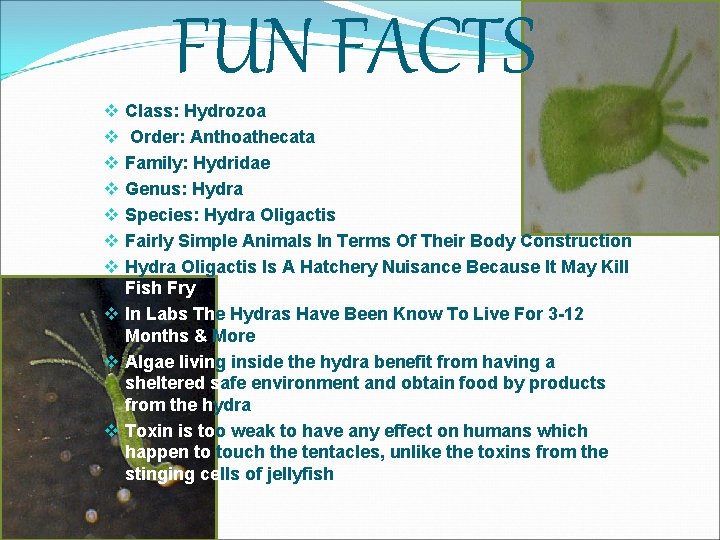
FUN FACTS Class: Hydrozoa Order: Anthoathecata Family: Hydridae Genus: Hydra Species: Hydra Oligactis Fairly Simple Animals In Terms Of Their Body Construction Hydra Oligactis Is A Hatchery Nuisance Because It May Kill Fish Fry v In Labs The Hydras Have Been Know To Live For 3 -12 Months & More v Algae living inside the hydra benefit from having a sheltered safe environment and obtain food by products from the hydra v Toxin is too weak to have any effect on humans which happen to touch the tentacles, unlike the toxins from the stinging cells of jellyfish v v v v
Bibliography http: //www. countrysideinfo. co. uk/hydra. htm http: //www. biologycorner. com/worksheets/articles/hydra. html http: //animaldiversity. ummz. umich. edu/accounts/Hydra_oligactis / http: //www. geochembio. com/biology/organisms/hydra/ http: //www. devbio. biology. gatech. edu/? page_id=491
- Slides: 11