
Hybridization The Blending of Orbitals 11 DP Chemistry
Hybridization The Blending of Orbitals 11 DP Chemistry (AHL)
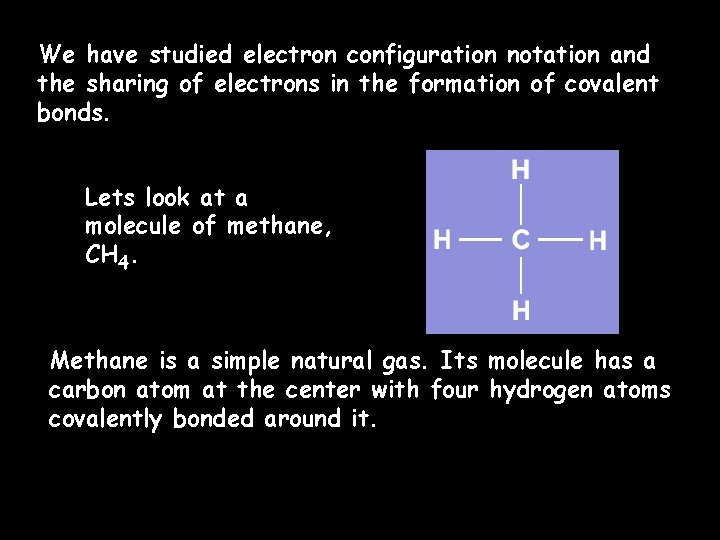
We have studied electron configuration notation and the sharing of electrons in the formation of covalent bonds. Lets look at a molecule of methane, CH 4. Methane is a simple natural gas. Its molecule has a carbon atom at the center with four hydrogen atoms covalently bonded around it.
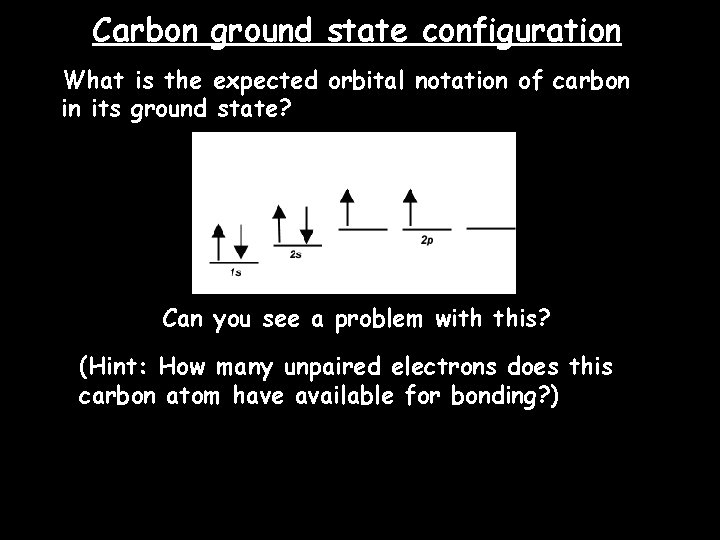
Carbon ground state configuration What is the expected orbital notation of carbon in its ground state? Can you see a problem with this? (Hint: How many unpaired electrons does this carbon atom have available for bonding? )
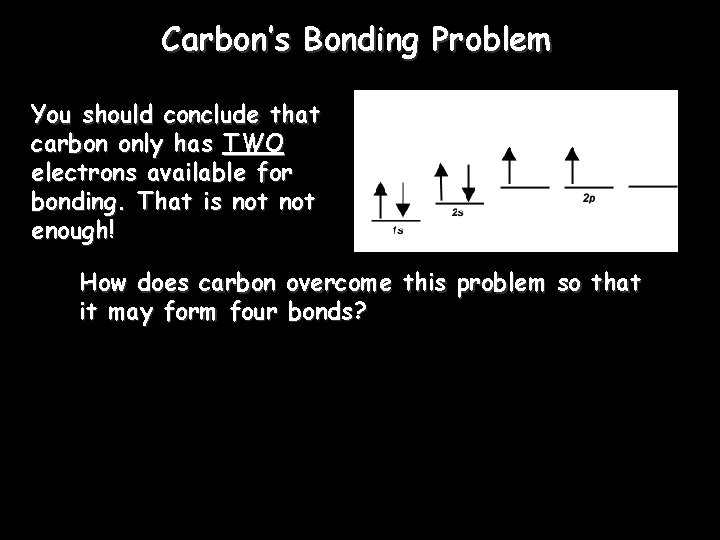
Carbon’s Bonding Problem You should conclude that carbon only has TWO electrons available for bonding. That is not enough! How does carbon overcome this problem so that it may form four bonds?

Carbon’s Empty Orbital The first thought that chemists had was that carbon promotes one of its 2 s electrons… …to the empty 2 p orbital.
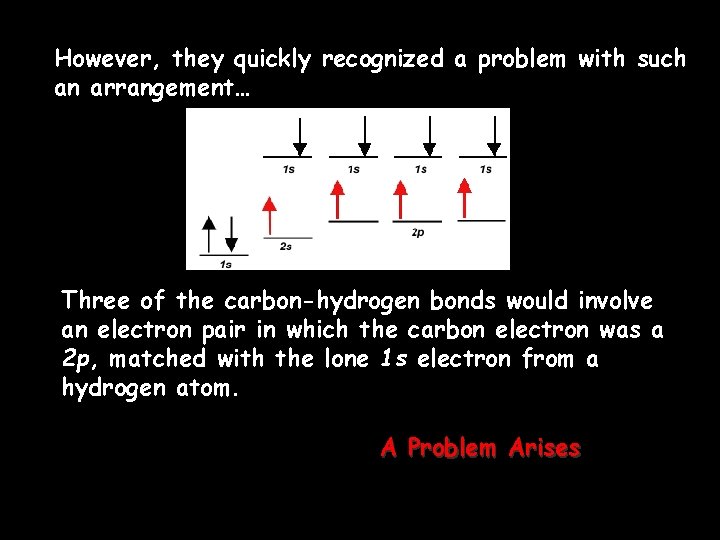
However, they quickly recognized a problem with such an arrangement… Three of the carbon-hydrogen bonds would involve an electron pair in which the carbon electron was a 2 p, matched with the lone 1 s electron from a hydrogen atom. A Problem Arises
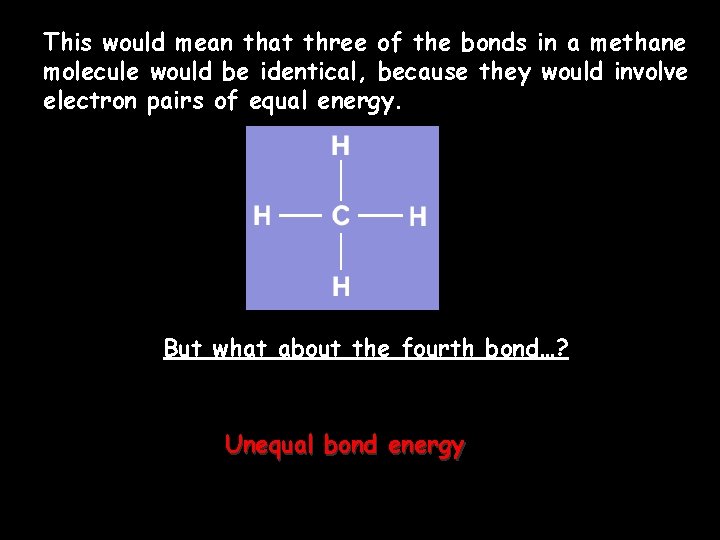
This would mean that three of the bonds in a methane molecule would be identical, because they would involve electron pairs of equal energy. But what about the fourth bond…? Unequal bond energy
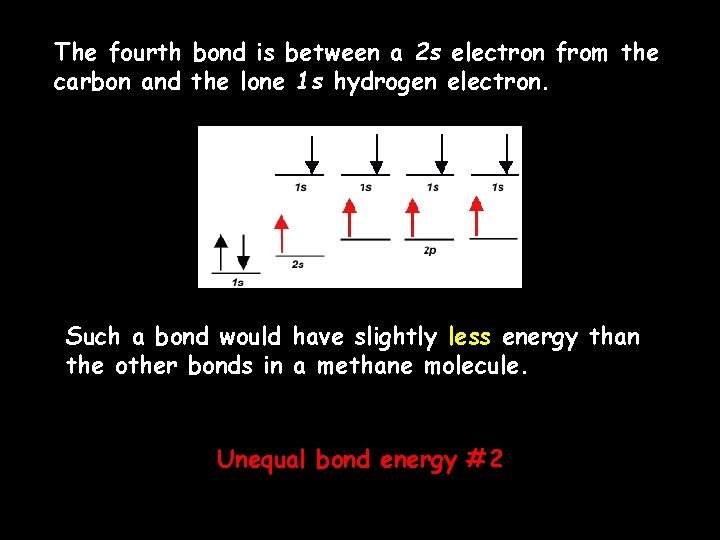
The fourth bond is between a 2 s electron from the carbon and the lone 1 s hydrogen electron. Such a bond would have slightly less energy than the other bonds in a methane molecule. Unequal bond energy #2

This bond would be slightly different in character than the other three bonds in methane. This difference would be measurable to a chemist by determining the bond length and bond energy. But is this what they observe? Unequal bond energy #3
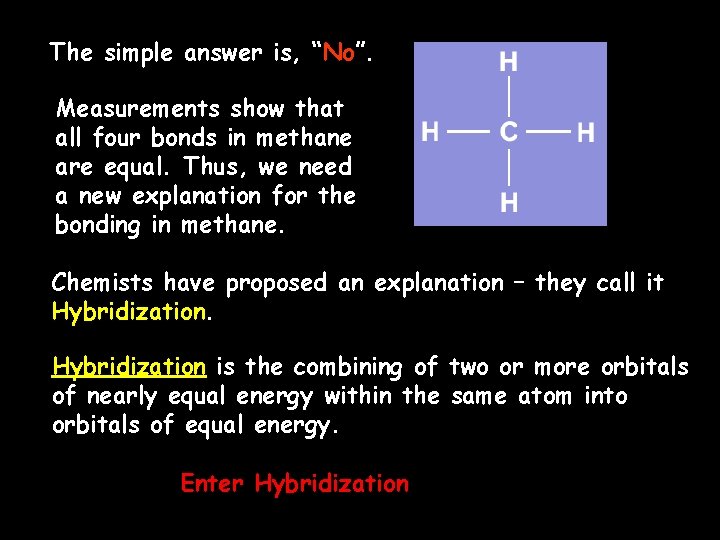
The simple answer is, “No”. Measurements show that all four bonds in methane are equal. Thus, we need a new explanation for the bonding in methane. Chemists have proposed an explanation – they call it Hybridization is the combining of two or more orbitals of nearly equal energy within the same atom into orbitals of equal energy. Enter Hybridization
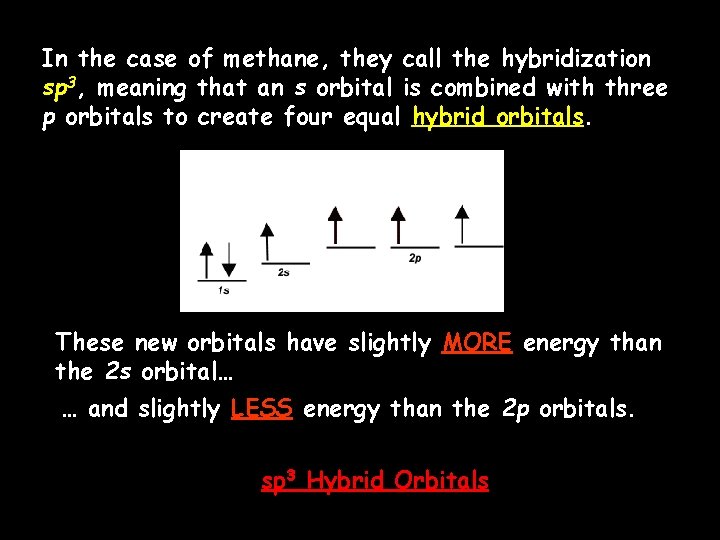
In the case of methane, they call the hybridization sp 3, meaning that an s orbital is combined with three p orbitals to create four equal hybrid orbitals. These new orbitals have slightly MORE energy than the 2 s orbital… … and slightly LESS energy than the 2 p orbitals. sp 3 Hybrid Orbitals
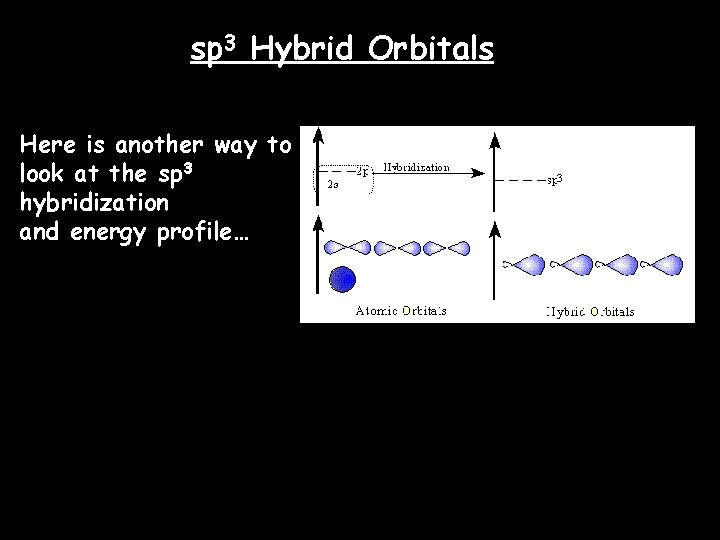
sp 3 Hybrid Orbitals Here is another way to look at the sp 3 hybridization and energy profile…
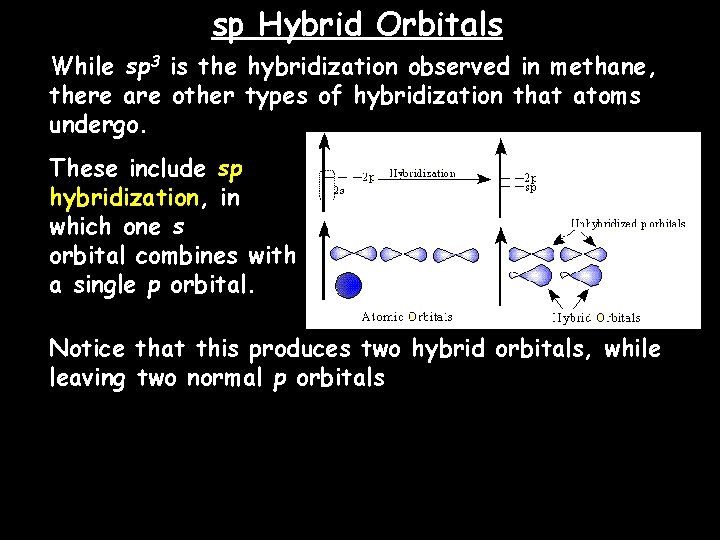
sp Hybrid Orbitals While sp 3 is the hybridization observed in methane, there are other types of hybridization that atoms undergo. These include sp hybridization, in which one s orbital combines with a single p orbital. Notice that this produces two hybrid orbitals, while leaving two normal p orbitals
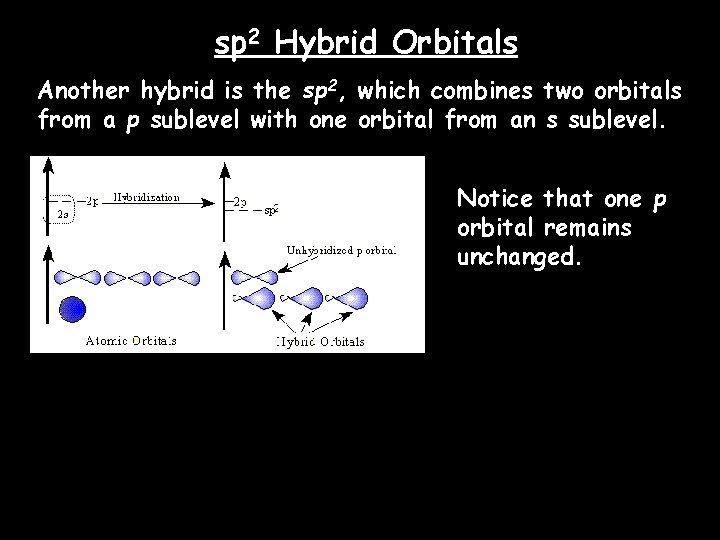
sp 2 Hybrid Orbitals Another hybrid is the sp 2, which combines two orbitals from a p sublevel with one orbital from an s sublevel. Notice that one p orbital remains unchanged.
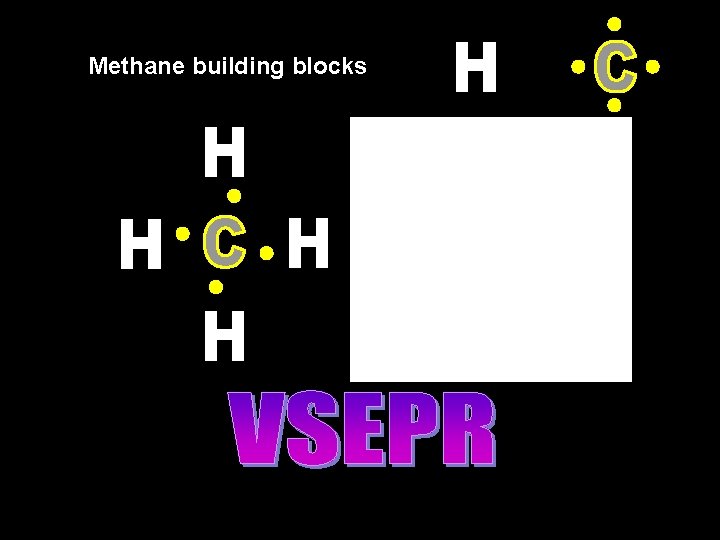
Methane building blocks
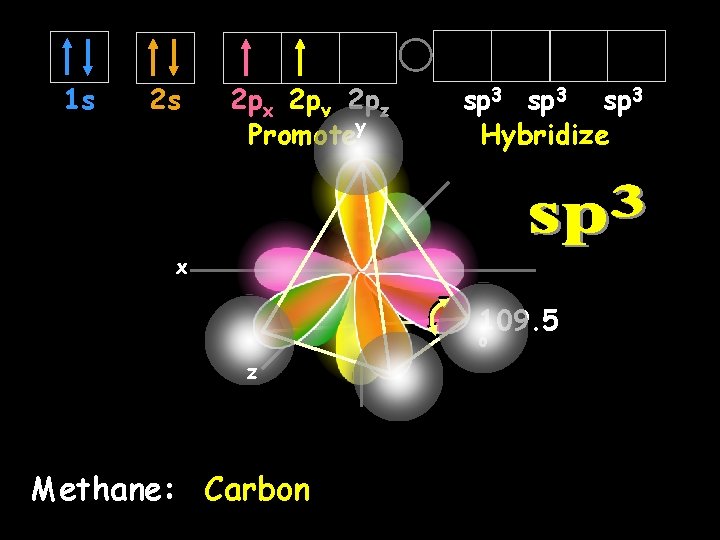
1 s 2 s 2 px 2 py 2 pz Promotey sp 3 Hybridize x 109. 5 o z Methane: Carbon
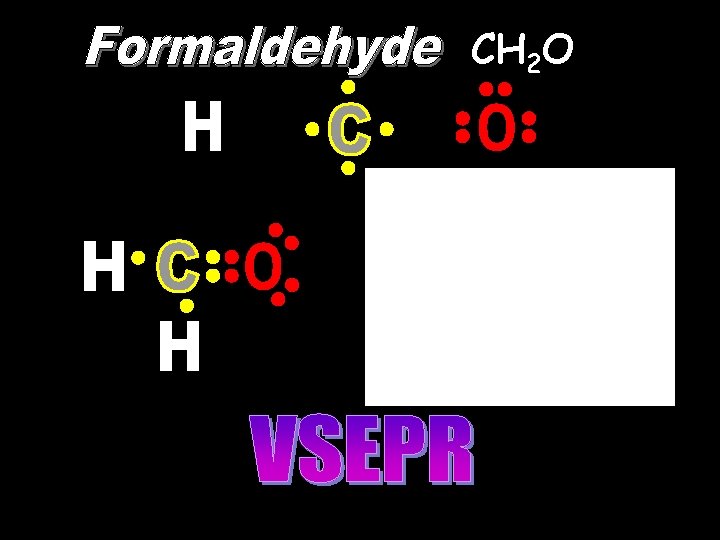
CH 2 O 120 o
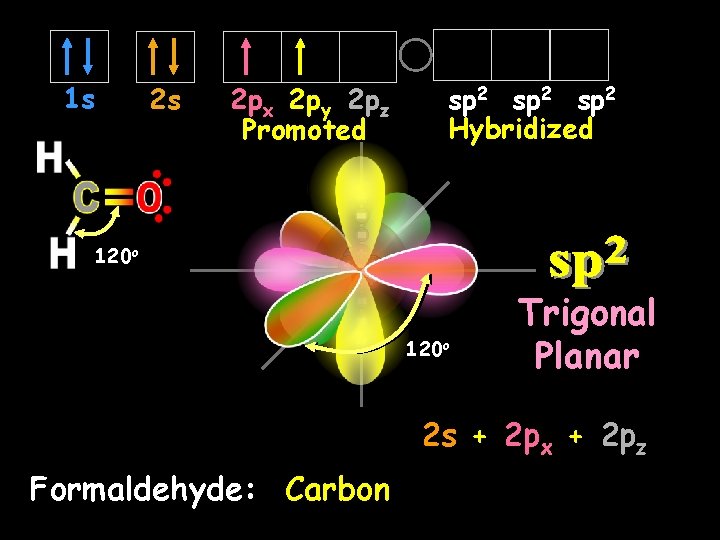
1 s 2 s 2 px 2 py 2 pz Promoted sp 2 Hybridized 120 o Trigonal Planar 2 s + 2 px + 2 pz Formaldehyde: Carbon
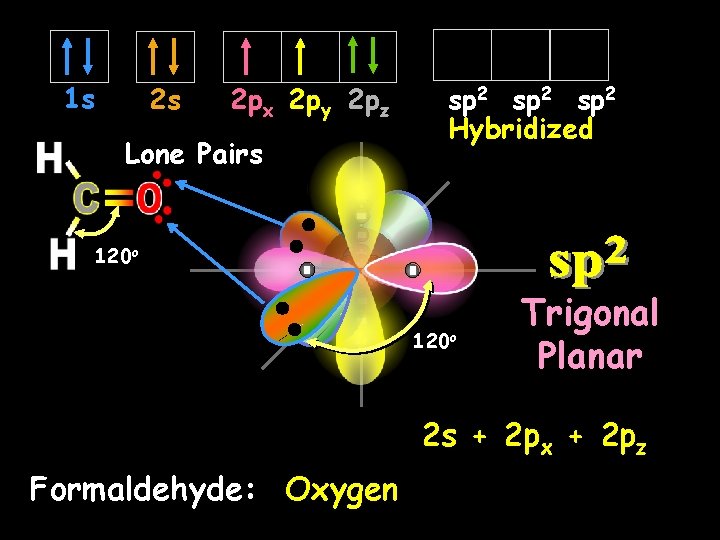
1 s 2 s 2 px 2 py 2 pz Lone Pairs sp 2 Hybridized 120 o Trigonal Planar 2 s + 2 px + 2 pz Formaldehyde: Oxygen

Formaldehyde bonds are formed by the sideways overlapping of p orbitals (weaker) Sigma bond 2 Lone Pairs bonds are formed by the axial (end to end) overlapping of s or p orbitals (stronger)
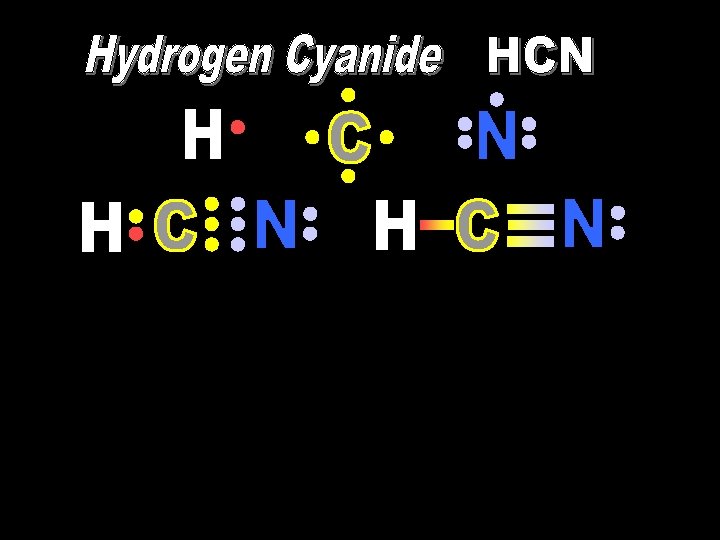
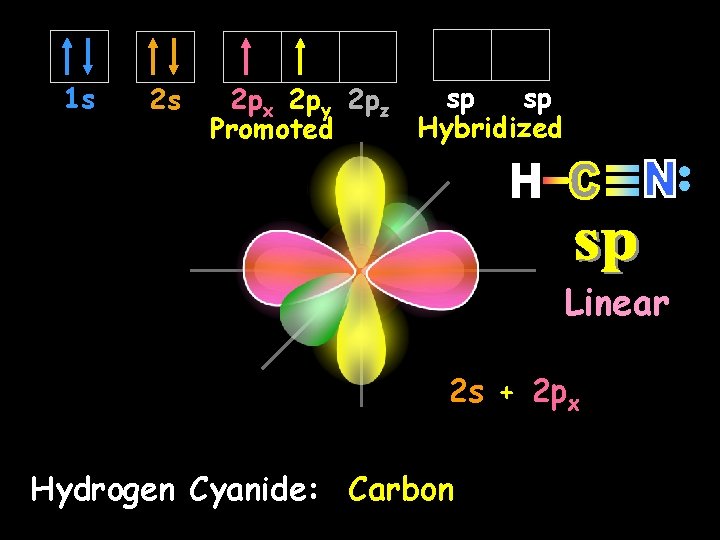
1 s 2 s sp sp 2 px 2 py 2 pz Hybridized Promoted Linear 2 s + 2 px Hydrogen Cyanide: Carbon
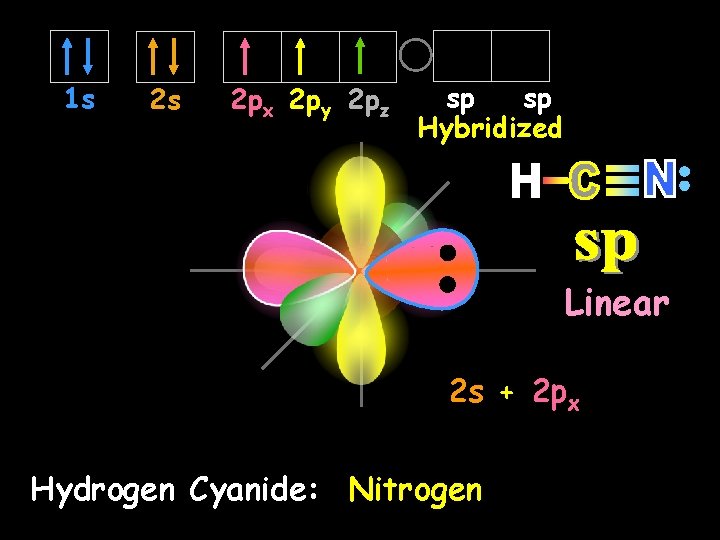
1 s 2 s 2 px 2 py 2 pz sp sp Hybridized Linear 2 s + 2 px Hydrogen Cyanide: Nitrogen
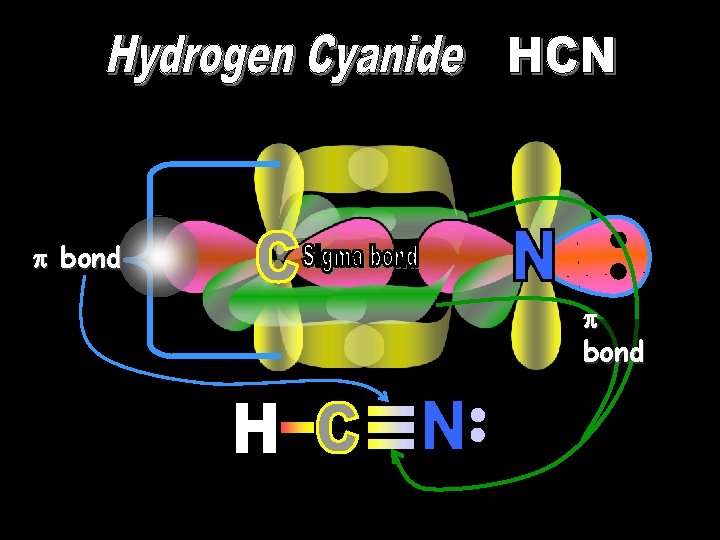
bond
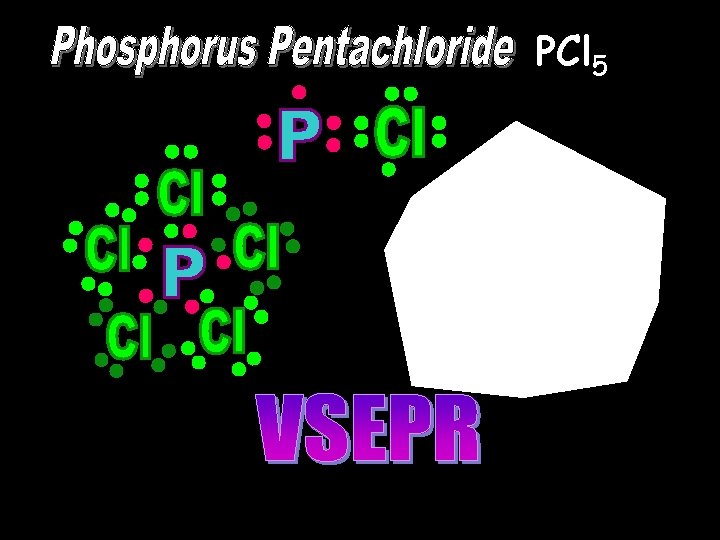
PCl 5
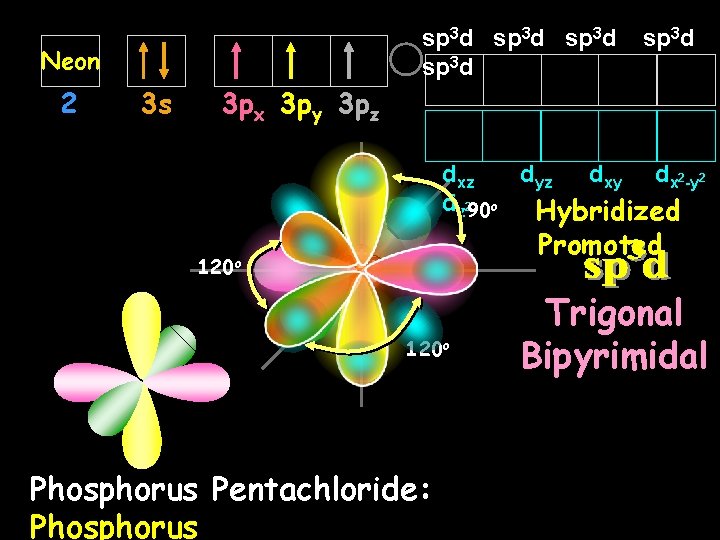
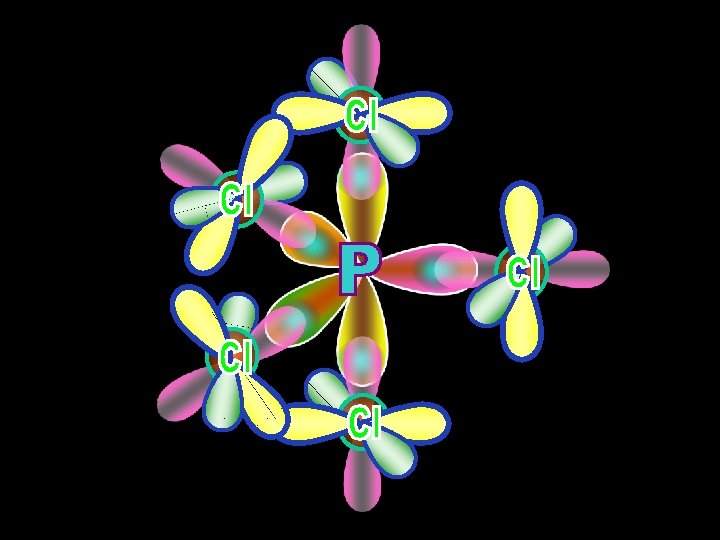
sp 3 d Neon 2 3 s sp 3 d 3 px 3 py 3 pz dxz dyz dxy dx 2 -y 2 dz 290 o Hybridized Promoted 120 o Phosphorus Pentachloride: Phosphorus Trigonal Bipyrimidal
- Slides: 27