
Hybrid Orbitals 14 2 Atomic orbitals can mix
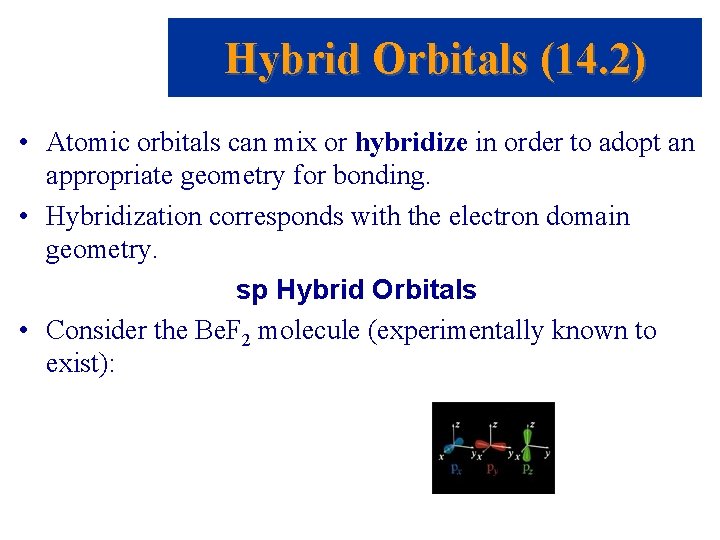
Hybrid Orbitals (14. 2) • Atomic orbitals can mix or hybridize in order to adopt an appropriate geometry for bonding. • Hybridization corresponds with the electron domain geometry. sp Hybrid Orbitals • Consider the Be. F 2 molecule (experimentally known to exist):
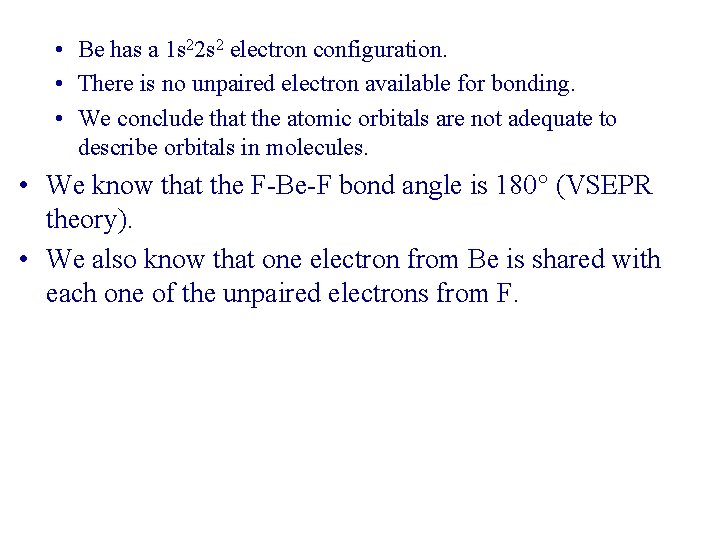
• Be has a 1 s 22 s 2 electron configuration. • There is no unpaired electron available for bonding. • We conclude that the atomic orbitals are not adequate to describe orbitals in molecules. • We know that the F-Be-F bond angle is 180 (VSEPR theory). • We also know that one electron from Be is shared with each one of the unpaired electrons from F.

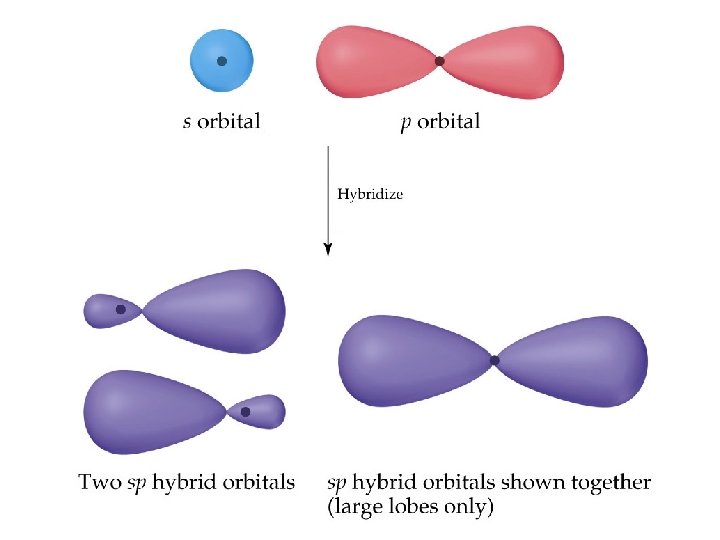
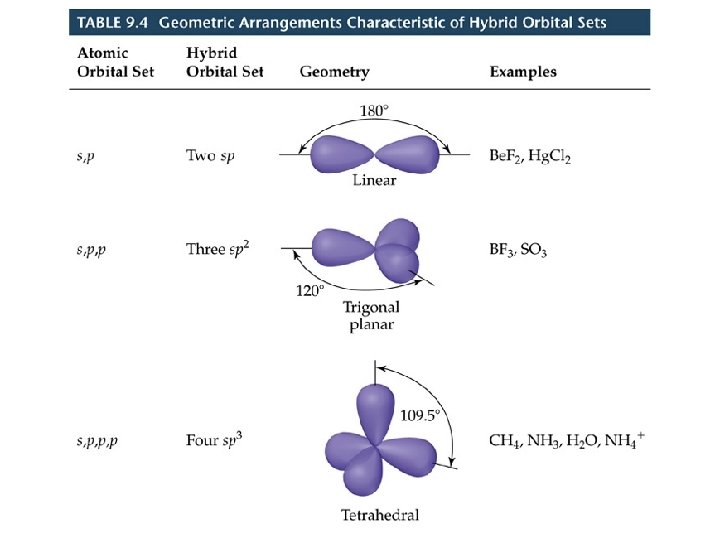
• We assume that the Be orbitals in the Be-F bond are 180 apart. • We could promote an electron from the 2 s orbital on Be to the 2 p orbital to get two unpaired electrons for bonding. • BUT the geometry is still not explained. • We can solve the problem by allowing the 2 s and one 2 p orbital on Be to mix or form a hybrid orbital. . • The hybrid orbital comes from an s and a p orbital and is called an sp hybrid orbital. (14. 2. 2) • The lobes of sp hybrid orbitals are 180º apart.
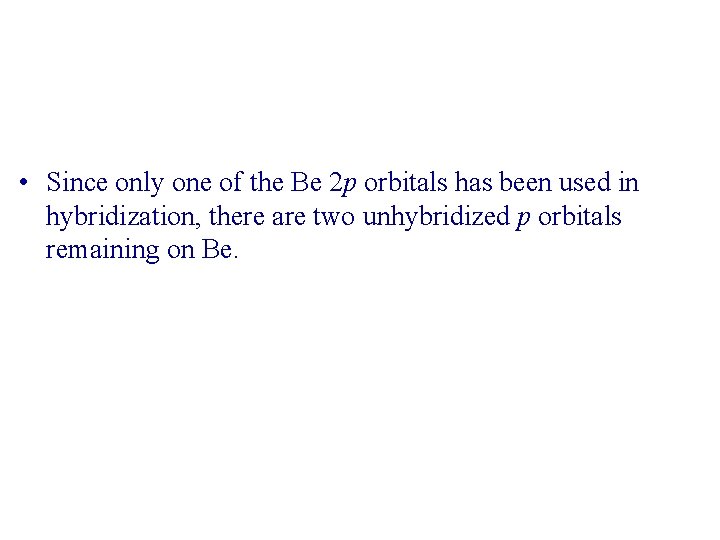
• Since only one of the Be 2 p orbitals has been used in hybridization, there are two unhybridized p orbitals remaining on Be.
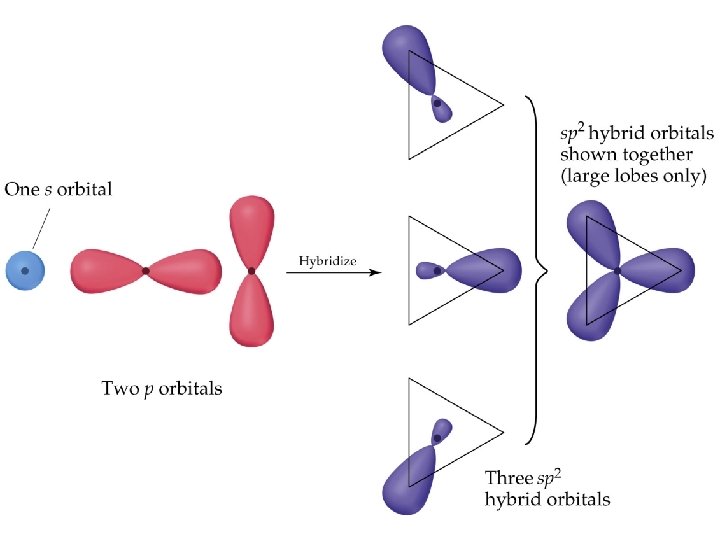
• • sp 2 and sp 3 Hybrid Orbitals Important: when we mix n atomic orbitals we must get n hybrid orbitals. sp 2 hybrid orbitals are formed with one s and two p orbitals. (Therefore, there is one unhybridized p orbital remaining. ) The large lobes of sp 2 hybrids lie in a trigonal plane. All molecules with trigonal planar electron pair geometries have sp 2 orbitals on the central atom.
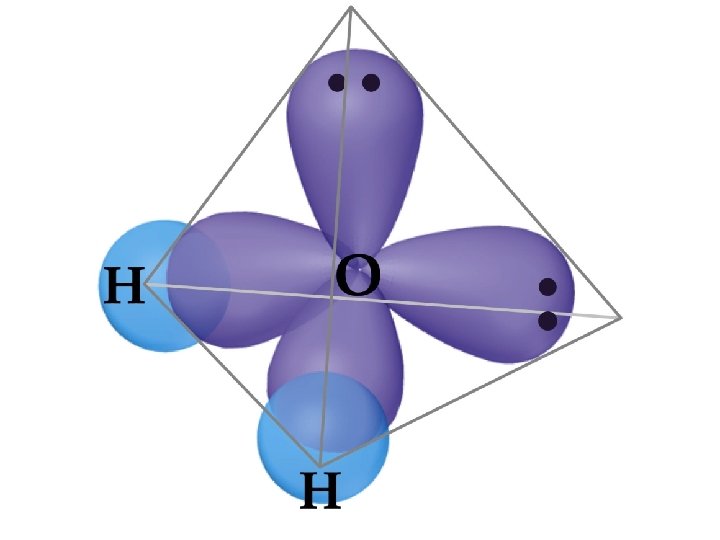
• • sp 2 and sp 3 Hybrid Orbitals sp 3 Hybrid orbitals are formed from one s and three p orbitals. Therefore, there are four large lobes. Each lobe points towards the vertex of a tetrahedron. The angle between the large lobs is 109. 5. All molecules with tetrahedral electron pair geometries are sp 3 hybridized.
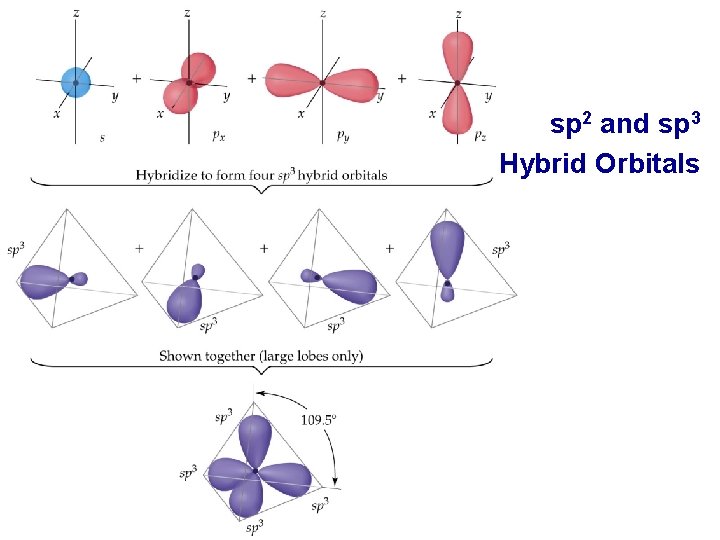
sp 2 and sp 3 Hybrid Orbitals
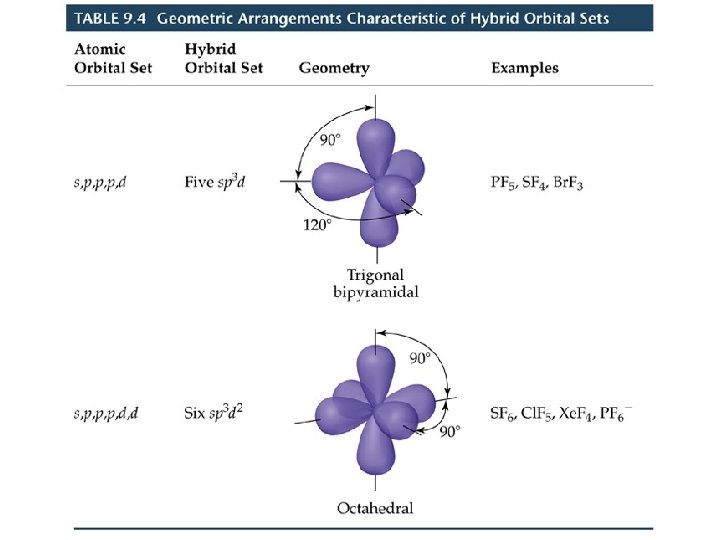
• • Hybridization Involving d Orbitals Since there are only three p-orbitals, trigonal bipyramidal and octahedral electron domain geometries must involve d-orbitals. Trigonal bipyramidal electron domain geometries require sp 3 d hybridization. Octahedral electron domain geometries require sp 3 d 2 hybridization. Note the electron domain geometry from VSEPR theory determines the hybridization.
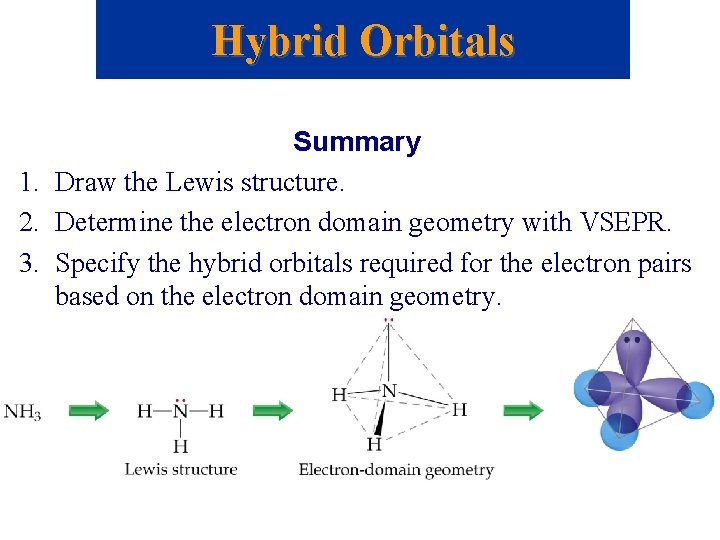
Hybrid Orbitals Summary 1. Draw the Lewis structure. 2. Determine the electron domain geometry with VSEPR. 3. Specify the hybrid orbitals required for the electron pairs based on the electron domain geometry.
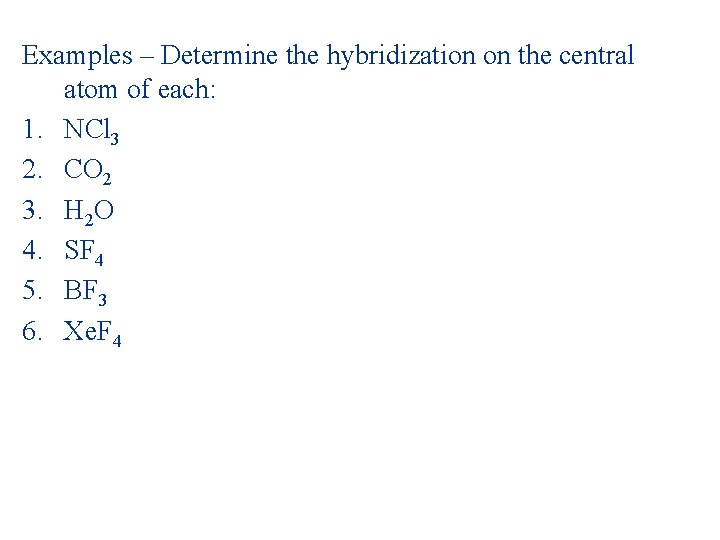
Examples – Determine the hybridization on the central atom of each: 1. NCl 3 2. CO 2 3. H 2 O 4. SF 4 5. BF 3 6. Xe. F 4
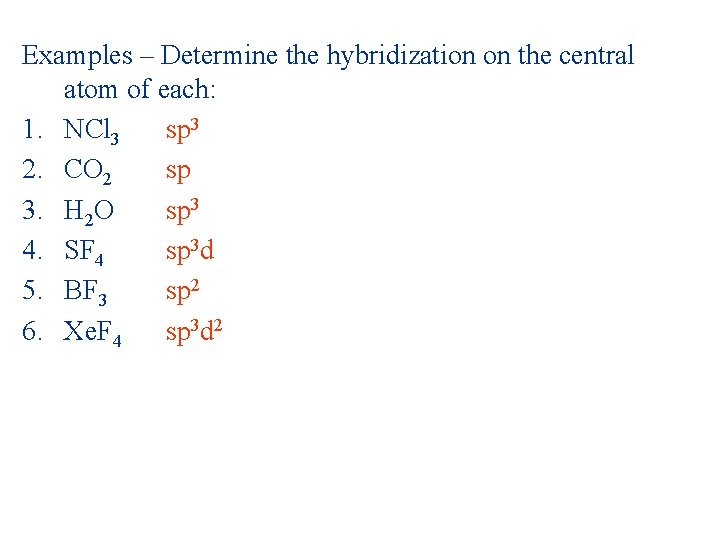
Examples – Determine the hybridization on the central atom of each: 1. NCl 3 sp 3 2. CO 2 sp 3. H 2 O sp 3 4. SF 4 sp 3 d 5. BF 3 sp 2 6. Xe. F 4 sp 3 d 2
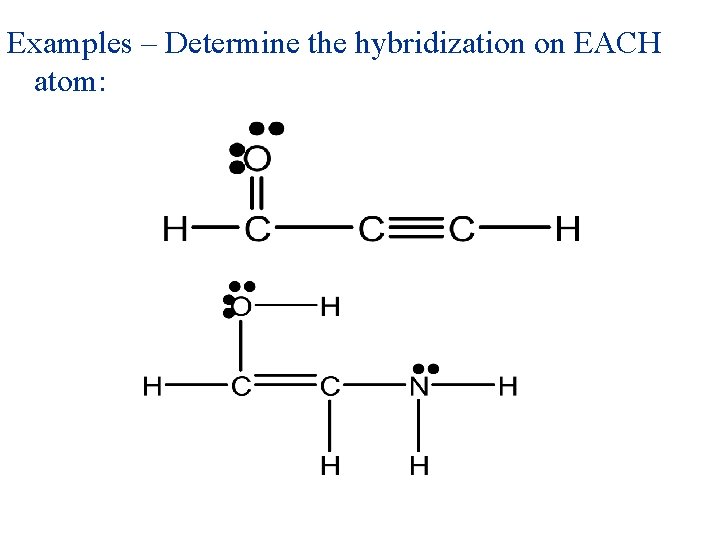
Examples – Determine the hybridization on EACH atom:
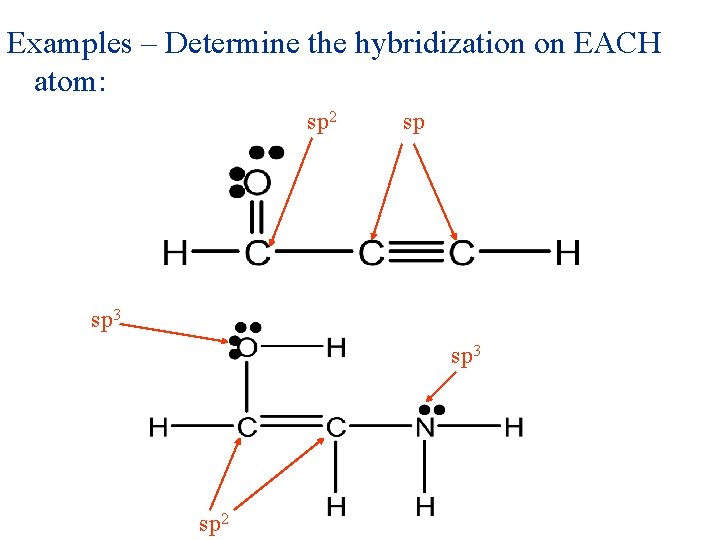
Examples – Determine the hybridization on EACH atom: sp 2 sp sp 3 sp 2
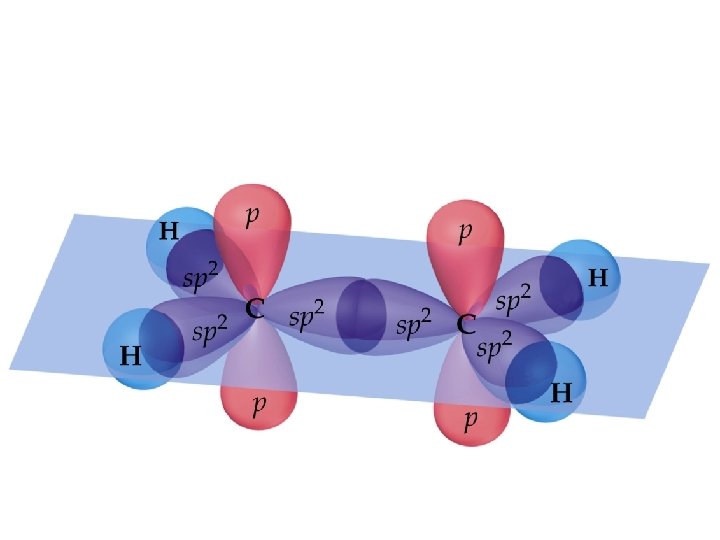
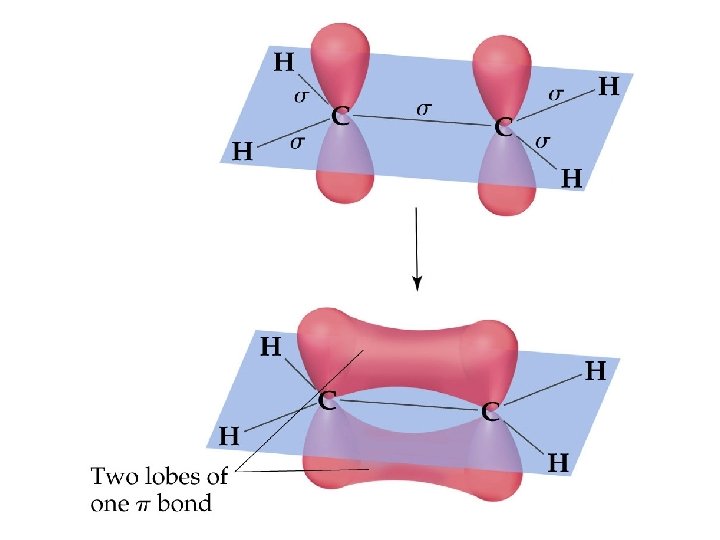
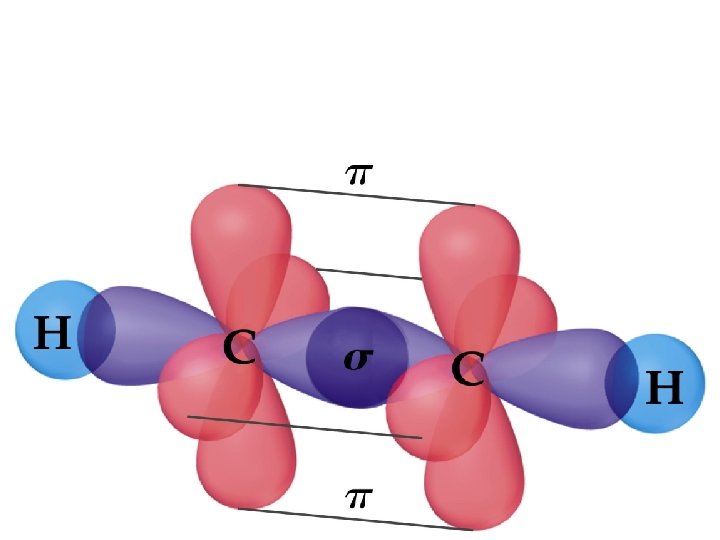
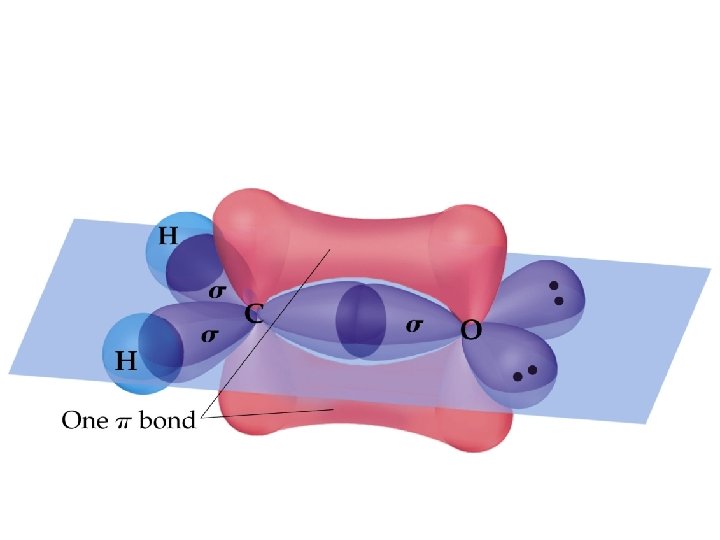
Sigma and Pi Bonds (14. 2. 1) • -Bonds: electron density lies on the axis between the nuclei. End-to-end overlap of orbitals (often hybridized orbitals) • All single bonds are -bonds. • -Bonds: electron density lies above and below the plane of the nuclei. Sideways overlap of orbitals (usually p orbitals) • A double bond consists of one -bond and one -bond. • A triple bond has one -bond and two -bonds. • Often, the p-orbitals involved in -bonding come from unhybridized orbitals.
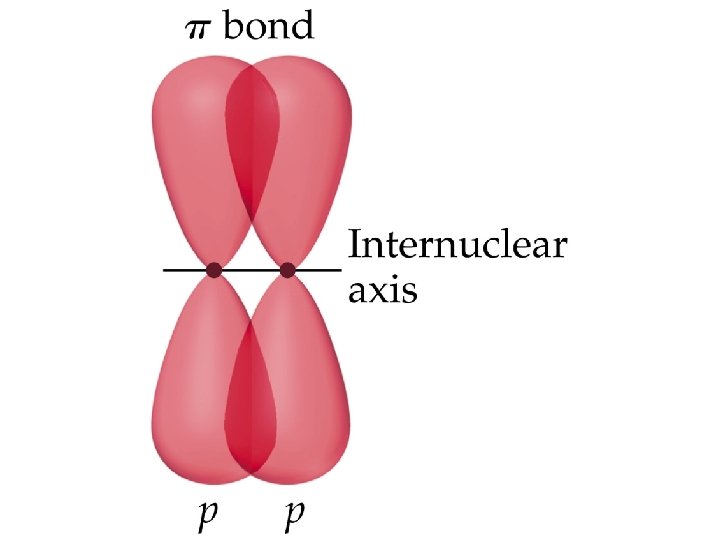
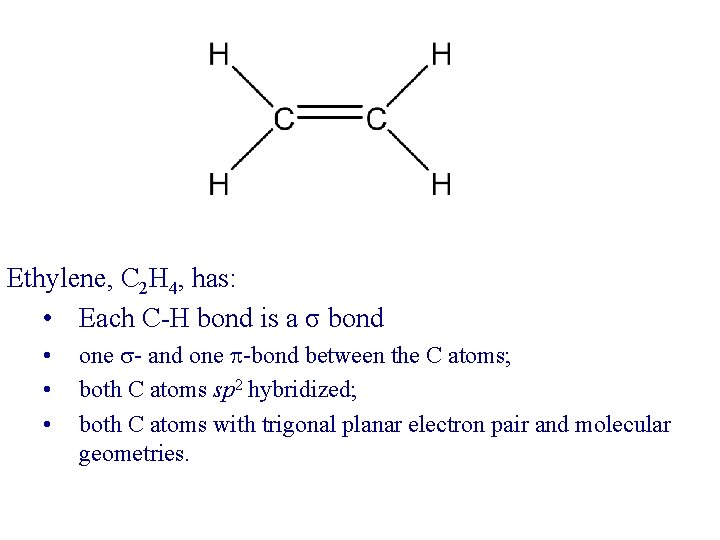
Ethylene, C 2 H 4, has: • Each C-H bond is a σ bond • • • one - and one -bond between the C atoms; both C atoms sp 2 hybridized; both C atoms with trigonal planar electron pair and molecular geometries.
• When triple bonds form (e. g. N 2) one -bond is always above and below and the other is in front and behind the plane of the nuclei.
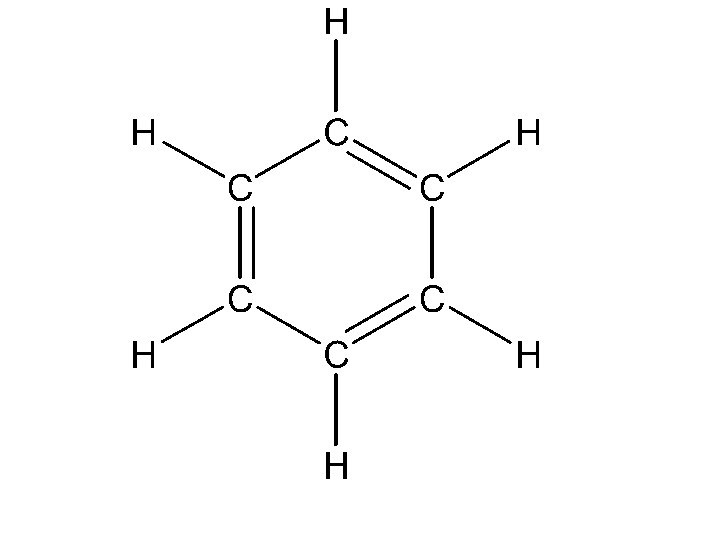
Delocalized p Bonding – Resonance (14. 3) • In the case of benzene • there are 6 C-C bonds, 6 C-H bonds, • each C atom is sp 2 hybridized, • and there are 6 unhybridized p orbitals, one on each C atom.
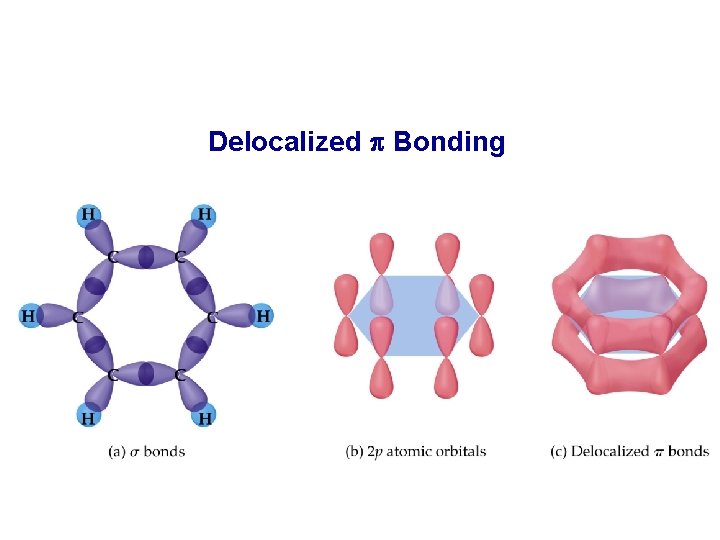
Delocalized p Bonding
• In benzene there are two options for the 3 bonds • localized between C atoms or • delocalized over the entire ring (i. e. the electrons are shared by all 6 C atoms). • Experimentally, all C-C bonds are the same length in benzene. • Therefore, all C-C bonds are of the same type (recall single bonds are longer than double bonds).
• • • General Conclusions Every two atoms share at least 2 electrons. Two electrons between atoms on the same axis as the nuclei are bonds. (14. 2. 1) -Bonds are always localized. If two atoms share more than one pair of electrons, the second and third pair form -bonds. (14. 2. 1) When resonance structures are possible, delocalization is also possible.
Bond Order • Bond Order = total number of covalent bonds between 2 atoms • • Bond order = 1 for single bond. Bond order = 2 for double bond. Bond order = 3 for triple bond. Fractional bond orders are possible (with resonance)
Examples – Draw Lewis Structures (including resonance). Determine the total number of σ and π bonds in the molecule, and the bond order of each bond: 1. O 3 2. SO 3 3. CO 2
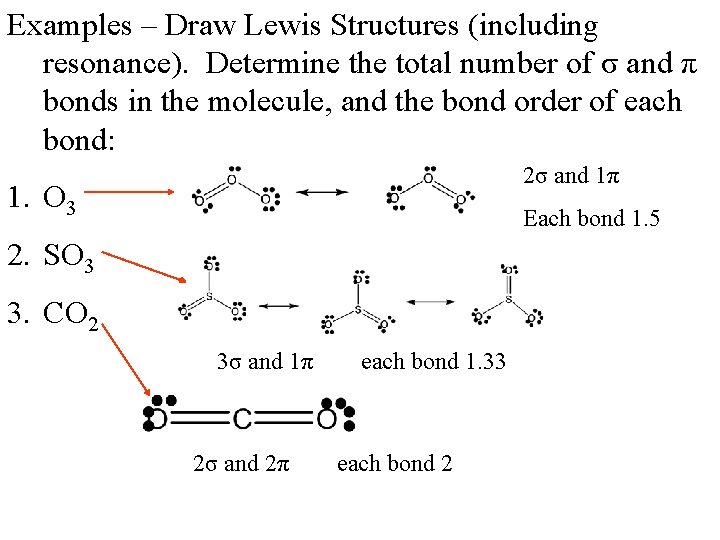
Examples – Draw Lewis Structures (including resonance). Determine the total number of σ and π bonds in the molecule, and the bond order of each bond: 2σ and 1π 1. O 3 Each bond 1. 5 2. SO 3 3. CO 2 3σ and 1π 2σ and 2π each bond 1. 33 each bond 2
- Slides: 34