
Hybrid and Electric Vehicles An overview q Gyanesh
Hybrid and Electric Vehicles An overview q Gyanesh Tiwari q Govind Kumar q Arpit Jain 1
Content Why fuel efficiency is important Environmental impacts and public concerns A short history of electric and hybrid technology How hybrid and electric cars work Why they are fuel efficient Advantages and issues Technological challenges Next generation of green vehicles Q&A 2
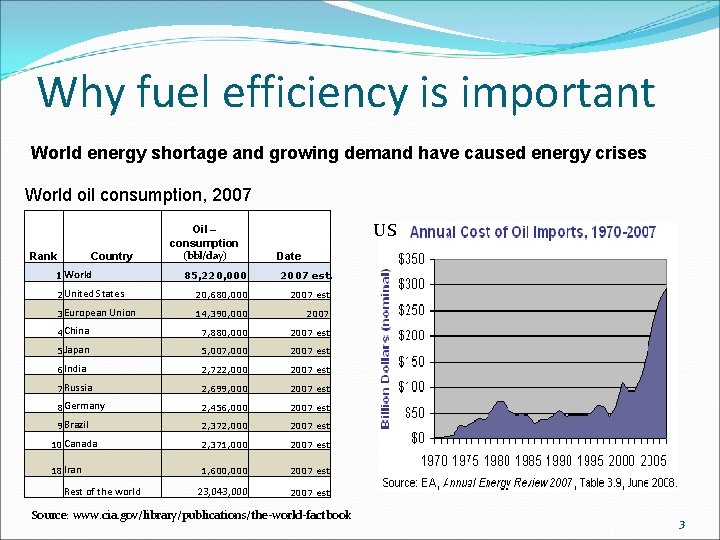
Why fuel efficiency is important World energy shortage and growing demand have caused energy crises World oil consumption, 2007 Rank Country 1 World Oil – consumption (bbl/day) US Date 85, 220, 000 2007 est. 2 United States 20, 680, 000 2007 est. 3 European Union 14, 390, 000 2007 4 China 7, 880, 000 2007 est. 5 Japan 5, 007, 000 2007 est. 6 India 2, 722, 000 2007 est. 7 Russia 2, 699, 000 2007 est. 8 Germany 2, 456, 000 2007 est. 9 Brazil 2, 372, 000 2007 est. 10 Canada 2, 371, 000 2007 est. 18 Iran 1, 600, 000 2007 est. 23, 043, 000 2007 est. Rest of the world Source: www. cia. gov/library/publications/the-world-factbook 3

Why fuel efficiency is important • Oil Reserves are diminishing • New data shows Canada has world second largest oil reserves after Saudi Arabia 4
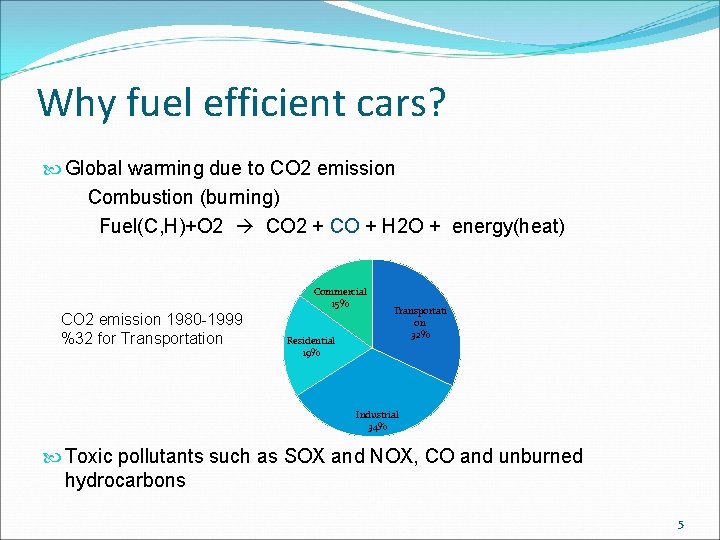
Why fuel efficient cars? Global warming due to CO 2 emission Combustion (burning) Fuel(C, H)+O 2 CO 2 + CO + H 2 O + energy(heat) Commercial 15% CO 2 emission 1980 -1999 %32 for Transportation Residential 19% Transportati on 32% Industrial 34% Toxic pollutants such as SOX and NOX, CO and unburned hydrocarbons 5
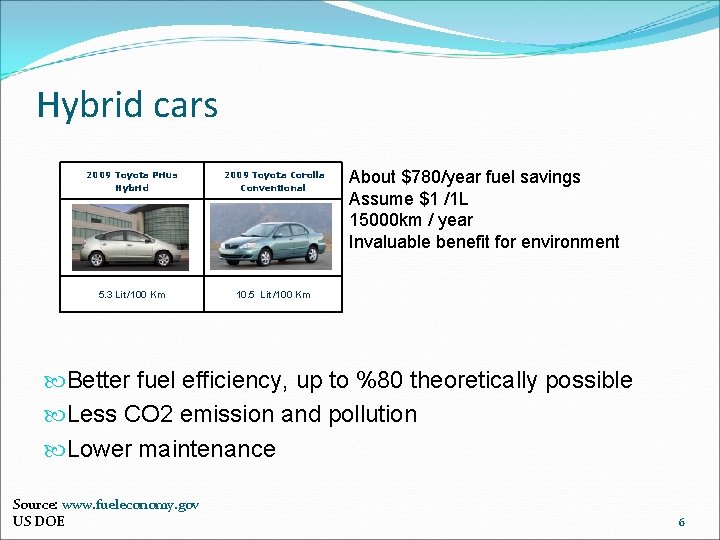
Hybrid cars 2009 Toyota Prius Hybrid 2009 Toyota Corolla Conventional 5. 3 Lit/100 Km 10. 5 Lit/100 Km About $780/year fuel savings Assume $1 /1 L 15000 km / year Invaluable benefit for environment Better fuel efficiency, up to %80 theoretically possible Less CO 2 emission and pollution Lower maintenance Source: www. fueleconomy. gov US DOE 6
A short history of hybrid & electric cars 1825 Steam Engine Car, British inventor Goldsworthy 85 miles round trip took 10 hours (14 km/h) 1870 First electric car was build in Scotland 1897 The London Electric Cab Company used a 40 -cell battery and 3 horsepower electric motor, Could be driven 50 miles between charges 1898 The German Dr. Porsche, at age 23, Built the world's first front-wheel- drive Porsche's second car was a hybrid, using an internal combustion engine to spin a generator that provided power to electric motors located in the wheel hubs. On battery alone, the car could travel nearly 40 miles Source: www. hybridcars. com/history 7
A short history of hybrid & electric cars 1900 US car companies made 1, 681 steam, 1, 575 electric and 936 gasoline cars. In a poll, electric was the first choice, followed by steam 1904 Henry Ford overcame the gasoline engine issues: noise, vibration, and odor Produced low-priced, lightweight, gas-powered vehicles Within a few years, the Electric Vehicle Company failed 1997 -99 Toyota, Audi, Honda, Ford, GM followed by other main car manufactures introduced new generation of electric and hybrid cars 2004 The Toyota Prius II won 2004 Car of the Year Awards from Motor Trend Magazine and the North American Auto Show. Toyota was surprised by the demand pumped up its production from 36, 000 to 47, 000 for the U. S Source: www. hybridcars. com/history 8
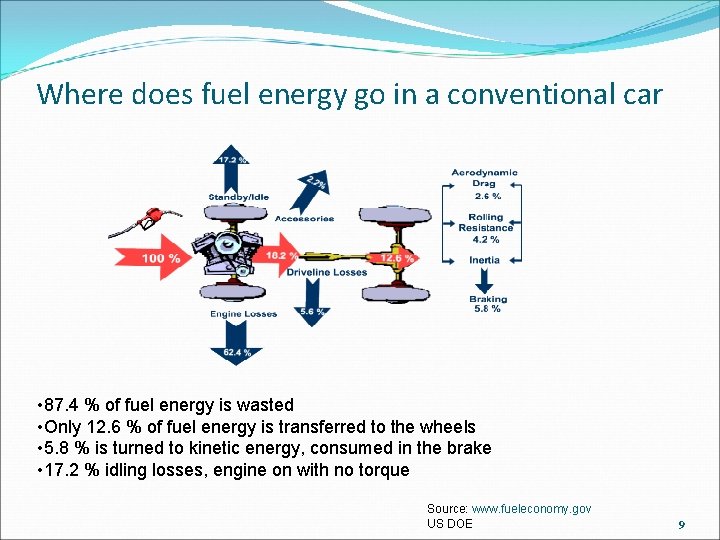
Where does fuel energy go in a conventional car • 87. 4 % of fuel energy is wasted • Only 12. 6 % of fuel energy is transferred to the wheels • 5. 8 % is turned to kinetic energy, consumed in the brake • 17. 2 % idling losses, engine on with no torque Source: www. fueleconomy. gov US DOE 9
How hybrids save fuel Engine is turned off at: Stops Lower speed (say less that 15 km/h), an electric motor drives the car until speed reaches a certain limit, then engine kicks in When vehicle is stopping or going downhill, engine is turned off, Regenerative braking is applied 2. When engine operates in an inefficient mode(e. g. at very high or very low engine speeds), the electric motor kicks in and assists engine. Engine is driven to its optimum operating zone 3. Engine can be made smaller, due to electric motor assistance 1. 10
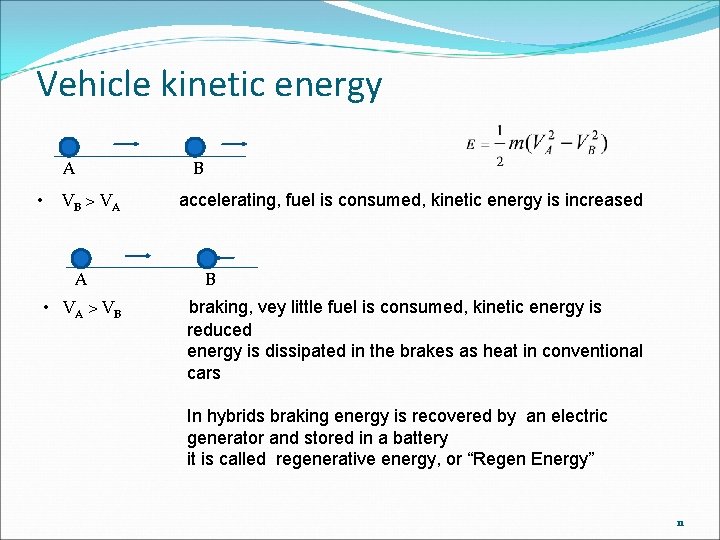
Vehicle kinetic energy A • V B > VA A • VA > VB B accelerating, fuel is consumed, kinetic energy is increased B braking, vey little fuel is consumed, kinetic energy is reduced energy is dissipated in the brakes as heat in conventional cars In hybrids braking energy is recovered by an electric generator and stored in a battery it is called regenerative energy, or “Regen Energy” 11
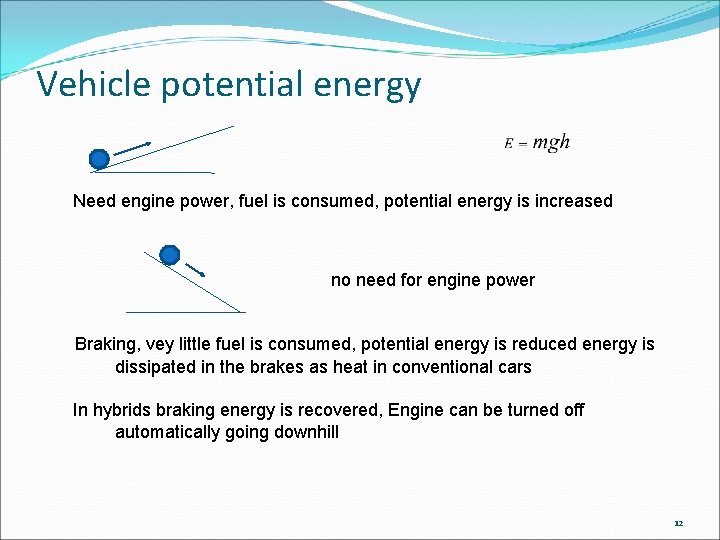
Vehicle potential energy Need engine power, fuel is consumed, potential energy is increased no need for engine power Braking, vey little fuel is consumed, potential energy is reduced energy is dissipated in the brakes as heat in conventional cars In hybrids braking energy is recovered, Engine can be turned off automatically going downhill 12
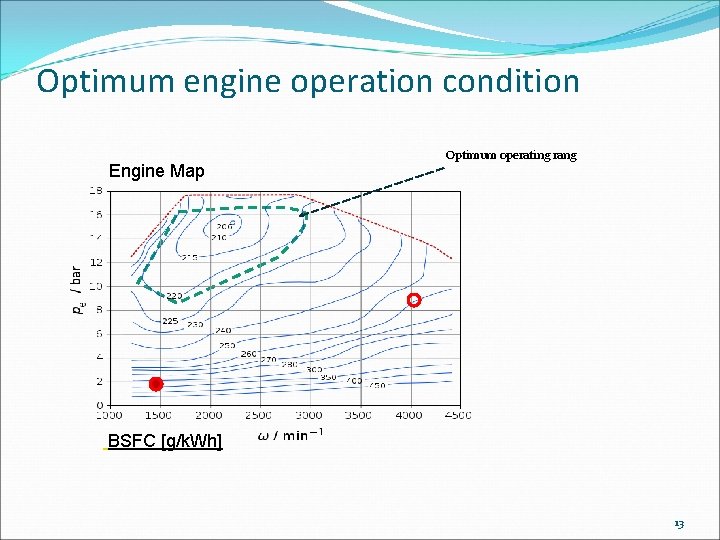
Optimum engine operation condition Engine Map Optimum operating rang BSFC [g/k. Wh] 13

How Hybrids work Click on the link below to see a hybrid animation Hybrid Demo 14
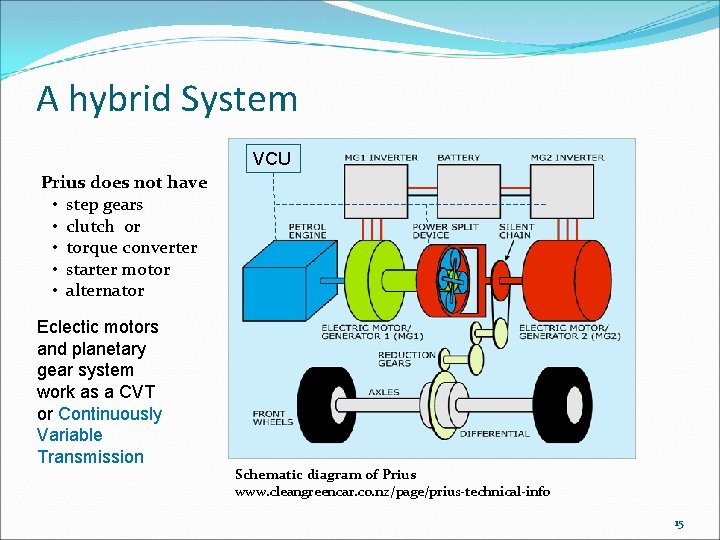
A hybrid System VCU Prius does not have • step gears • clutch or • torque converter • starter motor • alternator Eclectic motors and planetary gear system work as a CVT or Continuously Variable Transmission Schematic diagram of Prius www. cleangreencar. co. nz/page/prius-technical-info 15
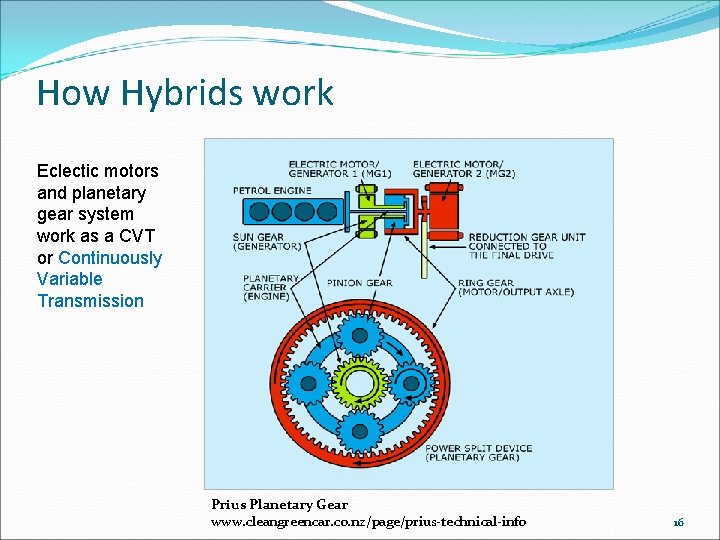
How Hybrids work Eclectic motors and planetary gear system work as a CVT or Continuously Variable Transmission Prius Planetary Gear www. cleangreencar. co. nz/page/prius-technical-info 16
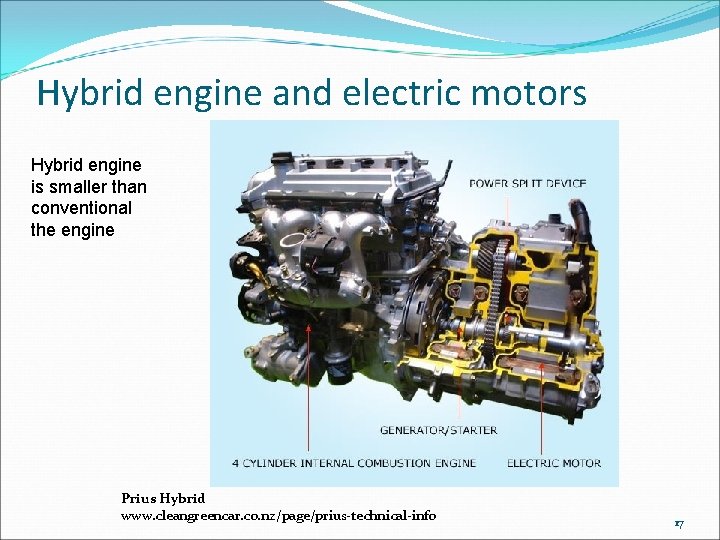
Hybrid engine and electric motors Hybrid engine is smaller than conventional the engine Prius Hybrid www. cleangreencar. co. nz/page/prius-technical-info 17
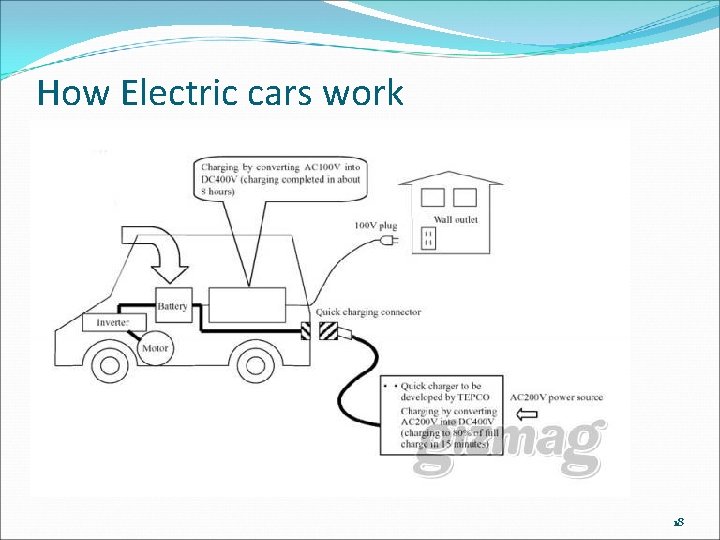
How Electric cars work 18
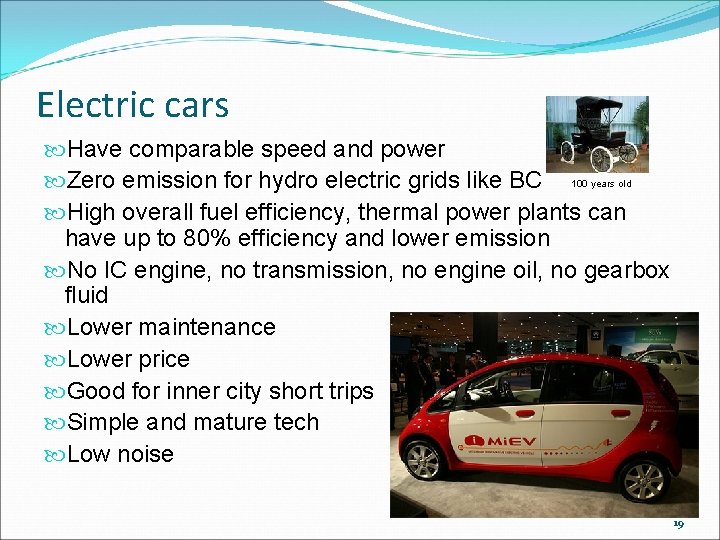
Electric cars Have comparable speed and power Zero emission for hydro electric grids like BC 100 years old High overall fuel efficiency, thermal power plants can have up to 80% efficiency and lower emission No IC engine, no transmission, no engine oil, no gearbox fluid Lower maintenance Lower price Good for inner city short trips Simple and mature tech Low noise 19
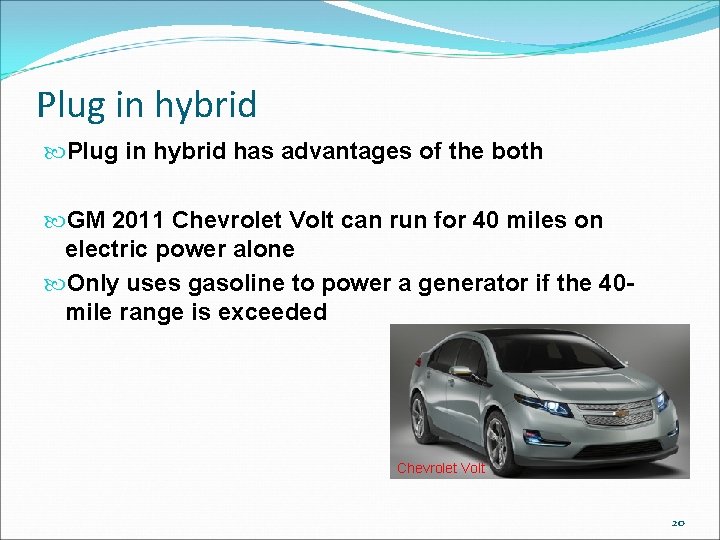
Plug in hybrid has advantages of the both GM 2011 Chevrolet Volt can run for 40 miles on electric power alone Only uses gasoline to power a generator if the 40 mile range is exceeded Chevrolet Volt 20
Hybrid cars issues Currently more expensive than conventional Heavier than conventional, due to battery pack and electric motors weight Limited battery life Expensive battery pack if you want to replace it Safety issues, high voltage battery and fuel Reliability, still under study, More complex computer controlled systems May have drivability issues Expensive to repair 21
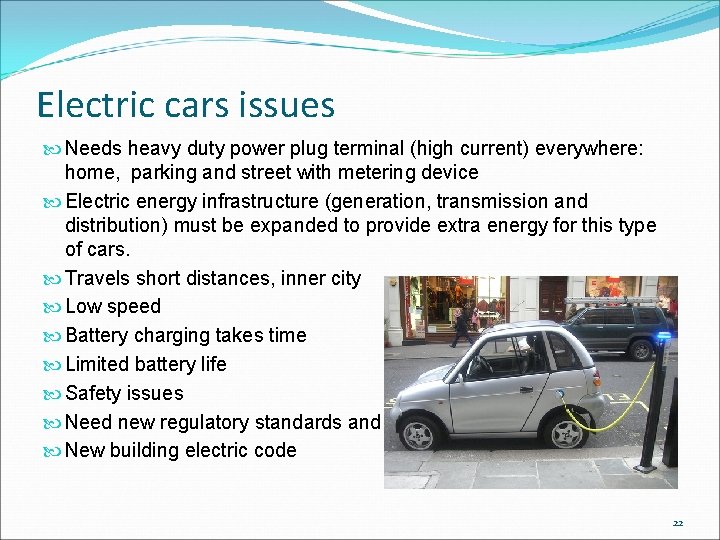
Electric cars issues Needs heavy duty power plug terminal (high current) everywhere: home, parking and street with metering device Electric energy infrastructure (generation, transmission and distribution) must be expanded to provide extra energy for this type of cars. Travels short distances, inner city Low speed Battery charging takes time Limited battery life Safety issues Need new regulatory standards and New building electric code 22
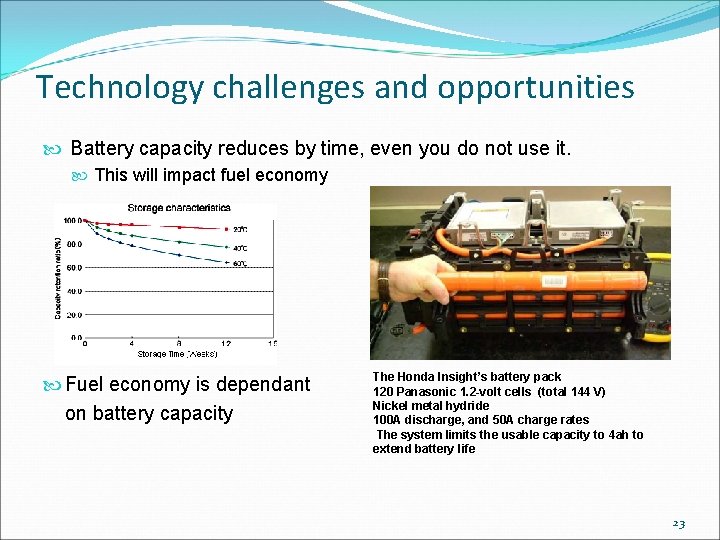
Technology challenges and opportunities Battery capacity reduces by time, even you do not use it. This will impact fuel economy Fuel economy is dependant on battery capacity The Honda Insight’s battery pack 120 Panasonic 1. 2 -volt cells (total 144 V) Nickel metal hydride 100 A discharge, and 50 A charge rates The system limits the usable capacity to 4 ah to extend battery life 23
Technology challenges and opportunities Time of battery changing is long(plug in hybrid) Batteries are heavy (100 kg extra weight consumes 2 L/100 km more) Batteries are expensive Low performance in hot or cold temperatures also may damage the battery Very sensitive to overcharge/undercharge(Battery life reduces dramatically) Contain toxic heavy metals, disposal issue Opportunity for researchers: Advance research projects on batteries are supported by governments and industries 24
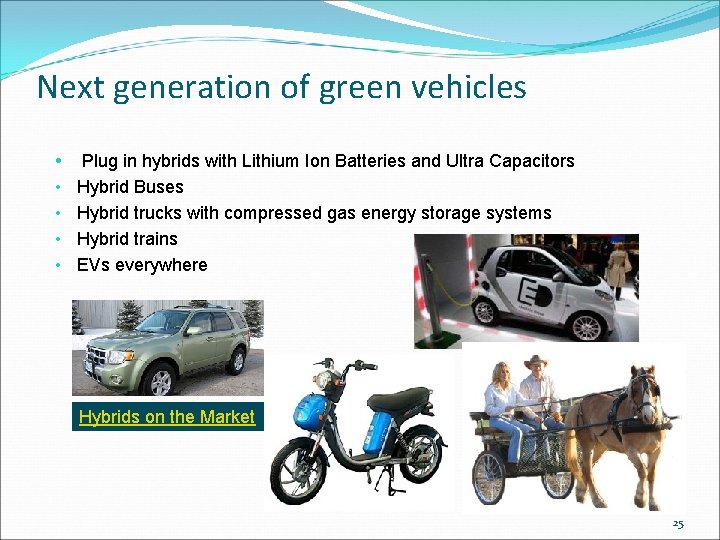
Next generation of green vehicles • Plug in hybrids with Lithium Ion Batteries and Ultra Capacitors • • Hybrid Buses Hybrid trucks with compressed gas energy storage systems Hybrid trains EVs everywhere Hybrids on the Market 25
Fail safe systems A fail safe system? 26
- Slides: 26