
HWRF Model Sensitivity to Nonhydrostatic Effects Hurricane Diagnostics
![Hurricane Wilma October 18, 2005 00 Z HWRF run [Maclay (2008)]](https://slidetodoc.com/presentation_image/36ff90bf1f3a9b7c59e2f9020c70417b/image-5.jpg "Hurricane Wilma October 18, 2005 00 Z HWRF run [Maclay (2008)]")
![Vertical Velocity Mean vertical velocity [m/s] Standard Deviation Boundaries [m/s]](https://slidetodoc.com/presentation_image/36ff90bf1f3a9b7c59e2f9020c70417b/image-12.jpg "Vertical Velocity Mean vertical velocity [m/s] Standard Deviation Boundaries [m/s]")
![Horizontal Velocity Mean horizontal velocity [m/s] Standard Deviation Boundaries [m/s]](https://slidetodoc.com/presentation_image/36ff90bf1f3a9b7c59e2f9020c70417b/image-13.jpg "Horizontal Velocity Mean horizontal velocity [m/s] Standard Deviation Boundaries [m/s]")
- Slides: 24
HWRF Model Sensitivity to Non-hydrostatic Effects Hurricane Diagnostics and Verification Workshop May 4, 2009 Katherine S. Maclay Colorado State University Department of Atmospheric Science
Outline n n n n n Motivations Model and data available Governing equations Energy principles Vertical velocity values Horizontal velocity values Epsilon values Conclusions Future Work
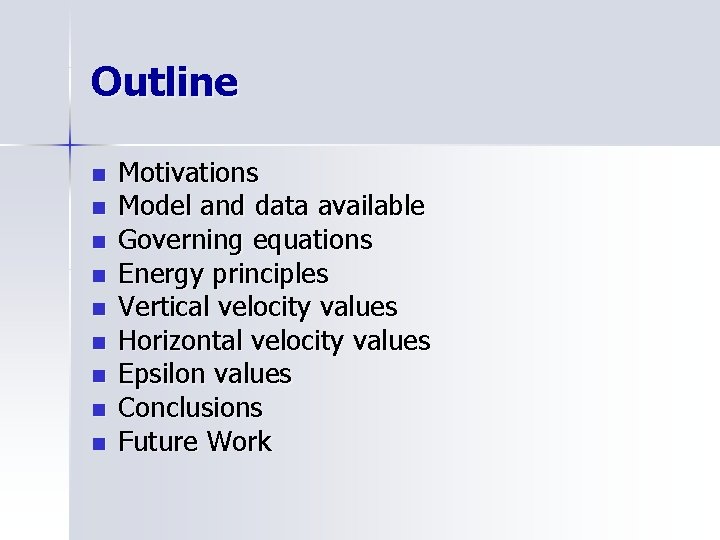
Looking for answers… …via energy budget and PV field analysis of HWRF modeled Tropical Cyclone n Internal and external influences on TC structure change – Better understanding of heating and wind structure relationships – Extratropical transition n Do the findings support/dispute observations and theories?
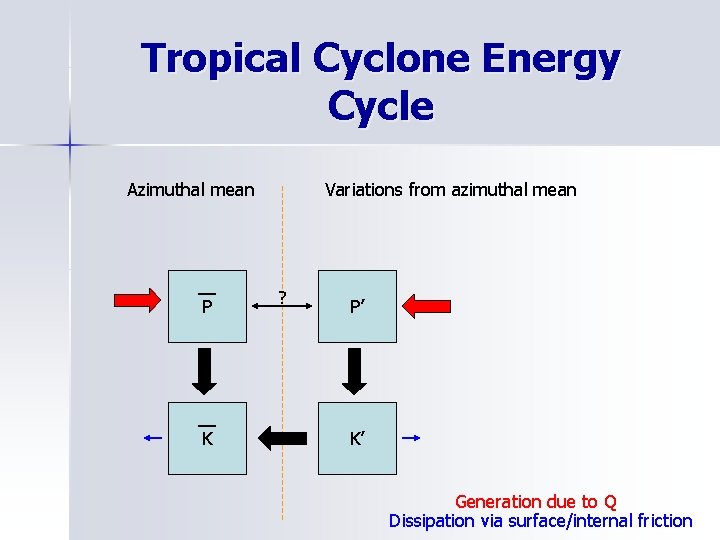
Tropical Cyclone Energy Cycle Azimuthal mean P K Variations from azimuthal mean ? P’ K’ Generation due to Q Dissipation via surface/internal friction
Hurricane Wilma October 18, 2005 00 Z HWRF run [Maclay (2008)]
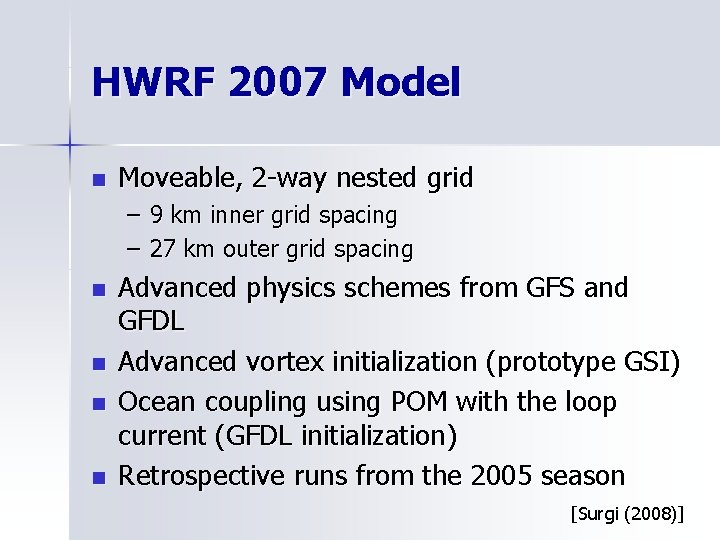
HWRF 2007 Model n Moveable, 2 -way nested grid – 9 km inner grid spacing – 27 km outer grid spacing n n Advanced physics schemes from GFS and GFDL Advanced vortex initialization (prototype GSI) Ocean coupling using POM with the loop current (GFDL initialization) Retrospective runs from the 2005 season [Surgi (2008)]
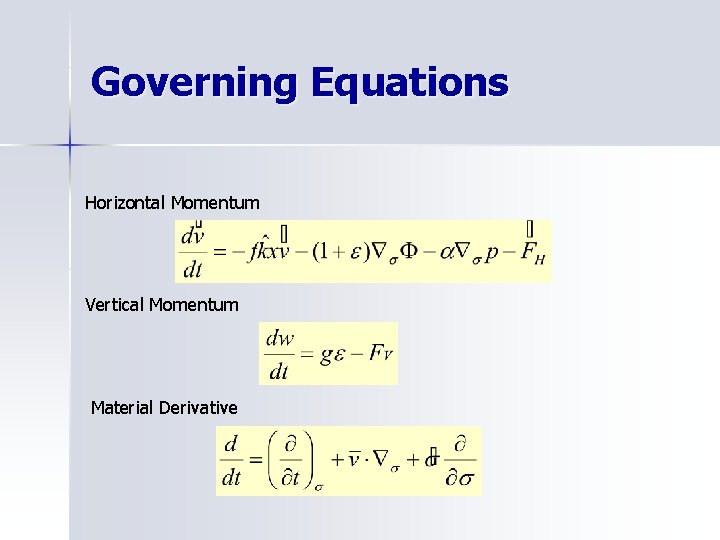
Governing Equations Horizontal Momentum Vertical Momentum Material Derivative
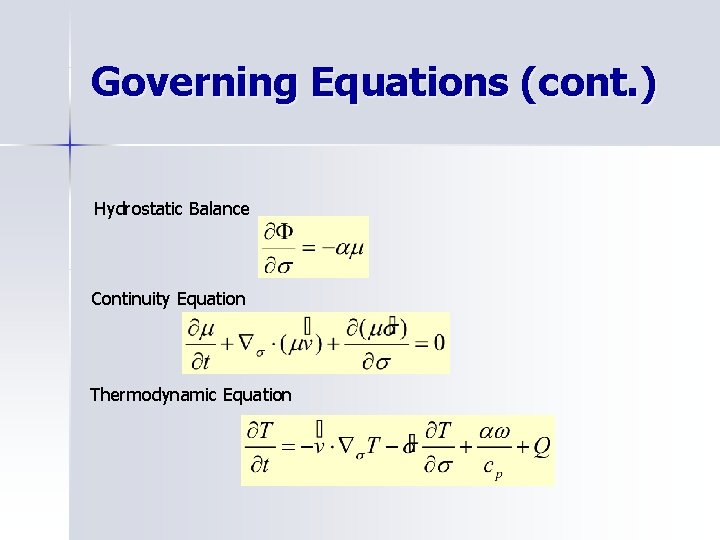
Governing Equations (cont. ) Hydrostatic Balance Continuity Equation Thermodynamic Equation
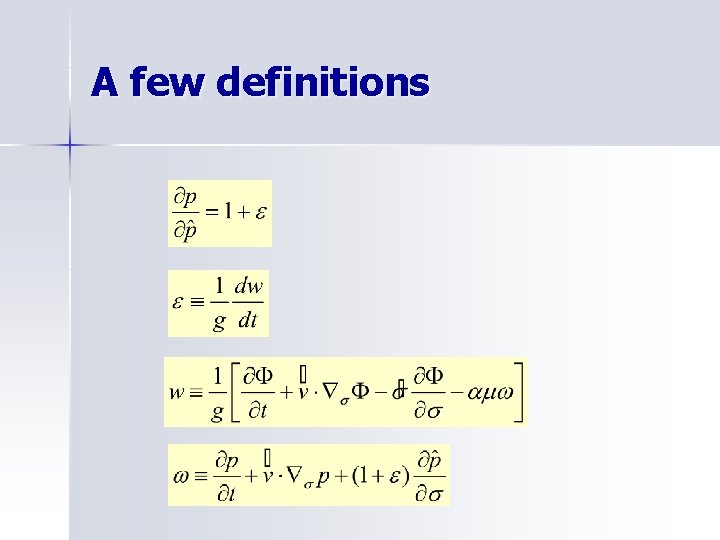
A few definitions
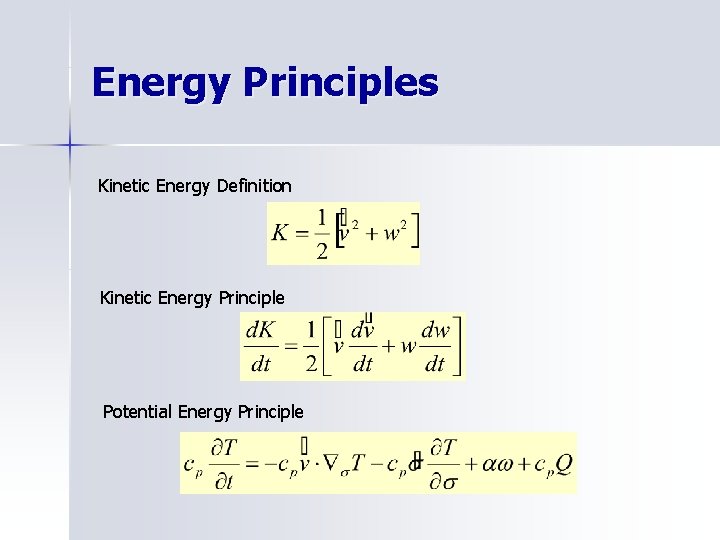
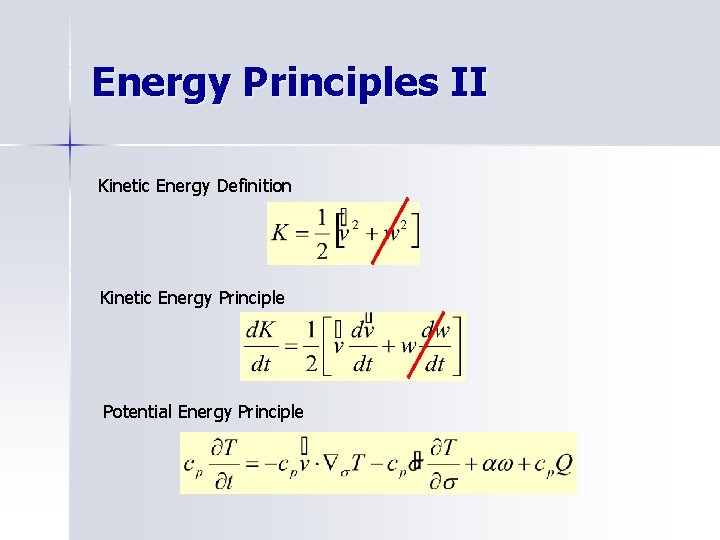
Energy Principles Kinetic Energy Definition Kinetic Energy Principle Potential Energy Principle
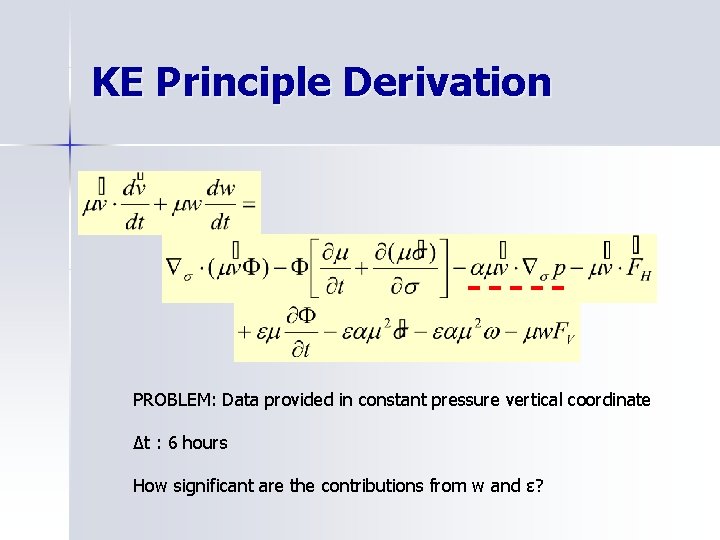
KE Principle Derivation PROBLEM: Data provided in constant pressure vertical coordinate ∆t : 6 hours How significant are the contributions from w and ε?
Vertical Velocity Mean vertical velocity [m/s] Standard Deviation Boundaries [m/s]
Horizontal Velocity Mean horizontal velocity [m/s] Standard Deviation Boundaries [m/s]
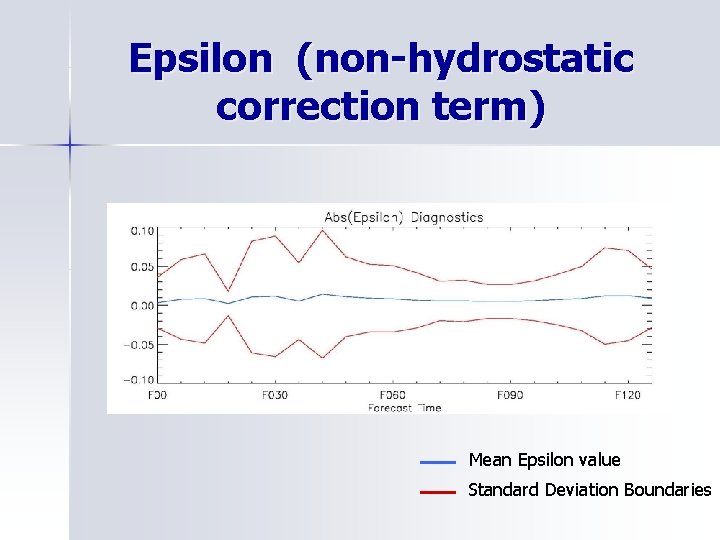
Epsilon (non-hydrostatic correction term) Mean Epsilon value Standard Deviation Boundaries
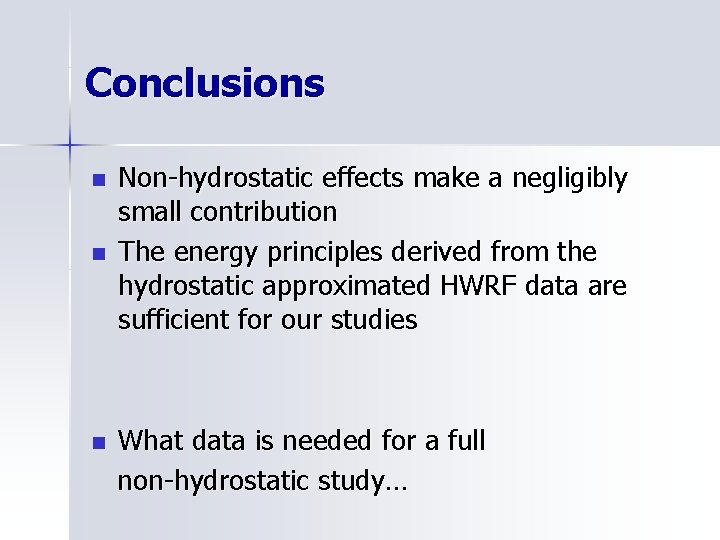
Conclusions n n n Non-hydrostatic effects make a negligibly small contribution The energy principles derived from the hydrostatic approximated HWRF data are sufficient for our studies What data is needed for a full non-hydrostatic study…
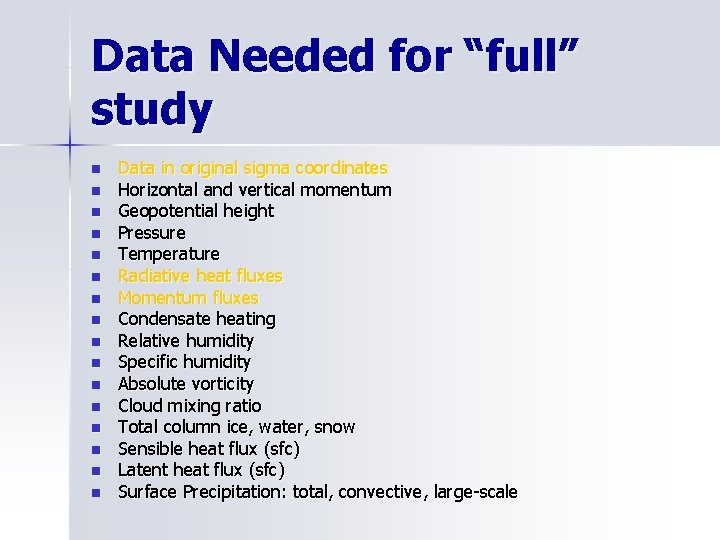
Data Needed for “full” study n n n n Data in original sigma coordinates Horizontal and vertical momentum Geopotential height Pressure Temperature Radiative heat fluxes Momentum fluxes Condensate heating Relative humidity Specific humidity Absolute vorticity Cloud mixing ratio Total column ice, water, snow Sensible heat flux (sfc) Latent heat flux (sfc) Surface Precipitation: total, convective, large-scale
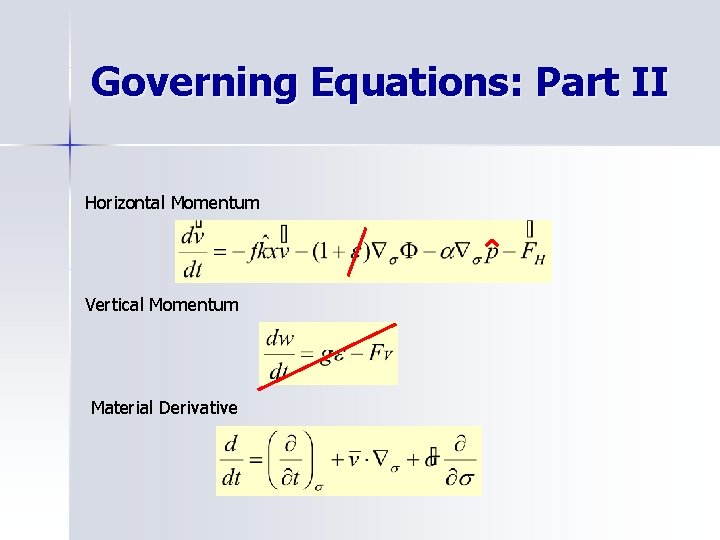
Governing Equations: Part II Horizontal Momentum Vertical Momentum Material Derivative
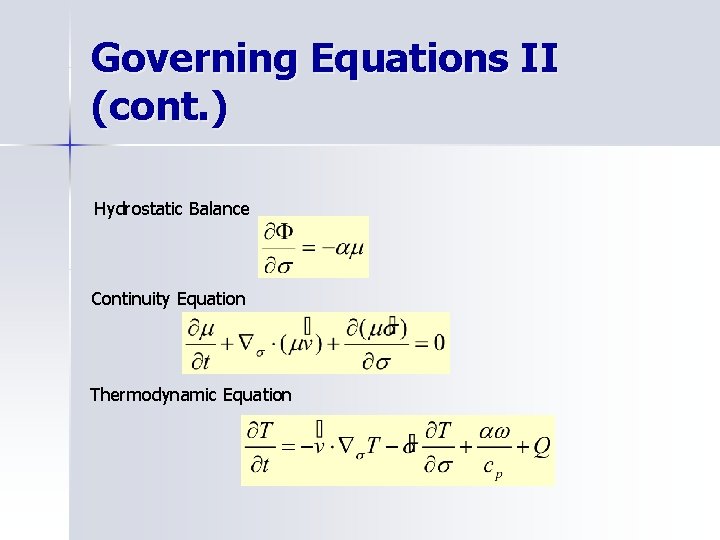
Governing Equations II (cont. ) Hydrostatic Balance Continuity Equation Thermodynamic Equation
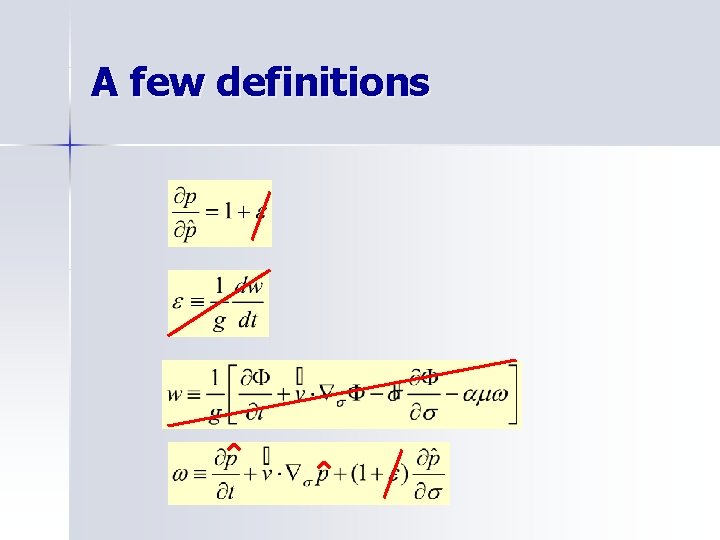
A few definitions
Energy Principles II Kinetic Energy Definition Kinetic Energy Principle Potential Energy Principle
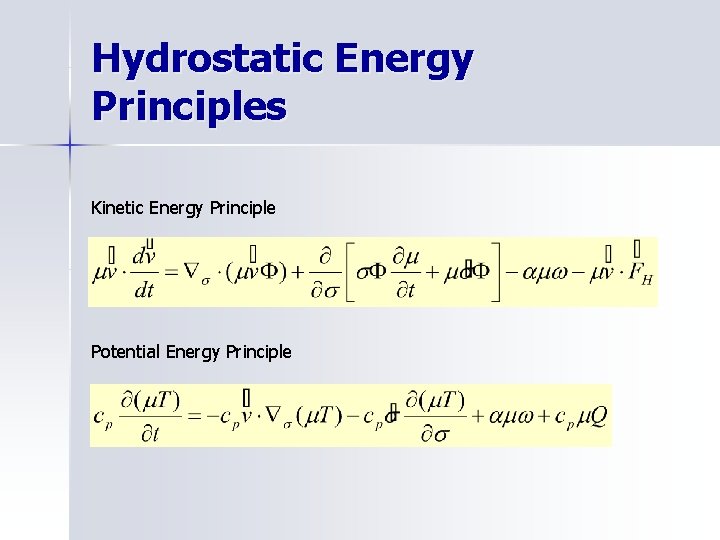
Hydrostatic Energy Principles Kinetic Energy Principle Potential Energy Principle
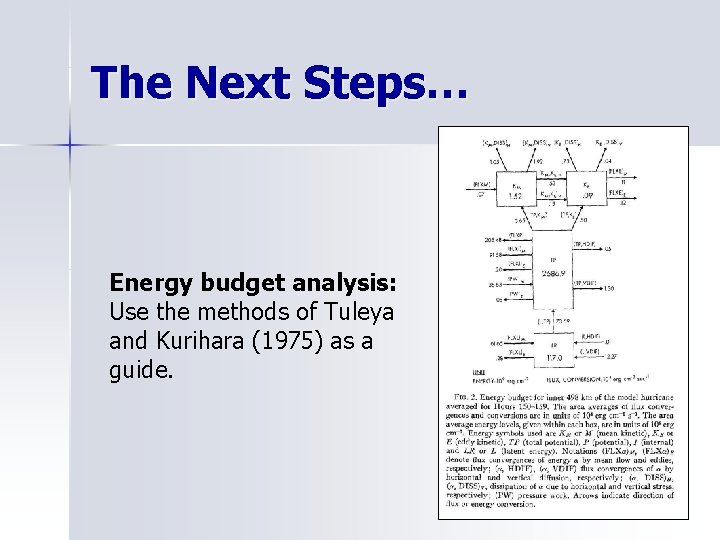
The Next Steps… Energy budget analysis: Use the methods of Tuleya and Kurihara (1975) as a guide.
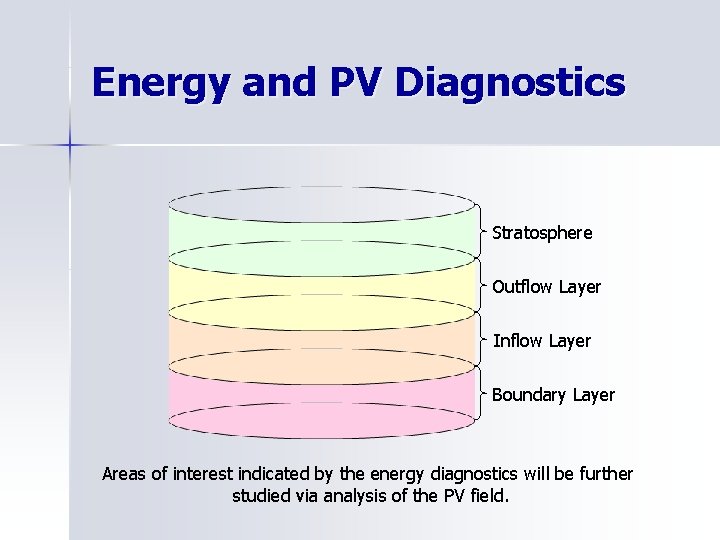
Energy and PV Diagnostics Stratosphere Outflow Layer Inflow Layer Boundary Layer Areas of interest indicated by the energy diagnostics will be further studied via analysis of the PV field.
References • Maclay, K. S. , M. De. Maria, T. Vonder Haar, 2008: Tropical cyclone size evolution. Mon. Wea. Rev. , ? ? ? . • Surgi, N, 2008: Advancement of the HWRF for next generation hurricane prediction at NCEP’s Environmental Modeling Center. , 28 th Conf. on Hurricanes and Trop. Meteor. http: //ams. confex. com/ams/28 Hurricanes/techprogram/paper_137876. htm. • Tuleya, R. , and Y. Kurihara, 1975: The energy and angular momentum budgets of a three-dimensional tropical cyclone model. J. Atmos. Sci. , 32, 287 -301.