
HW 1 6 MEMBRANES PHOSPHOLIPID BILAYER Link to
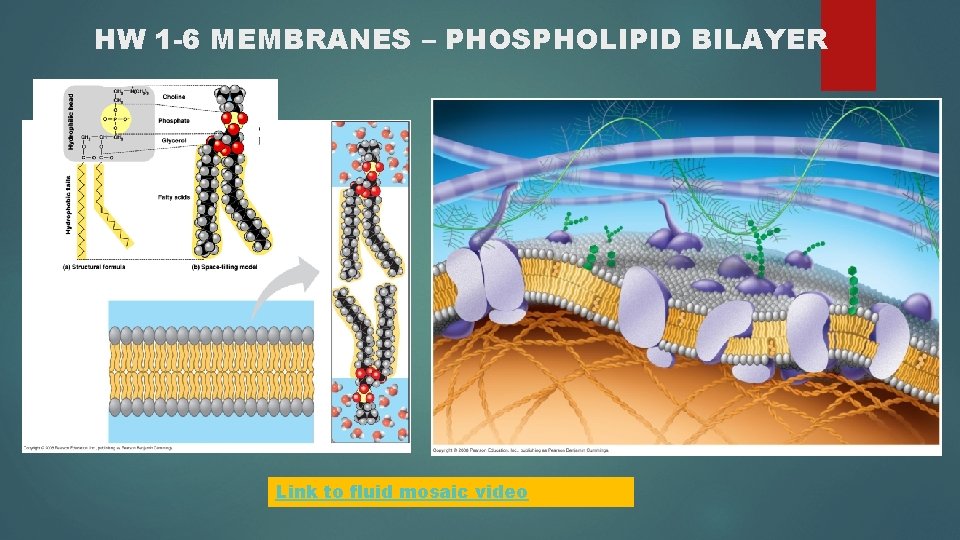
HW 1 -6 MEMBRANES – PHOSPHOLIPID BILAYER Link to fluid mosaic video
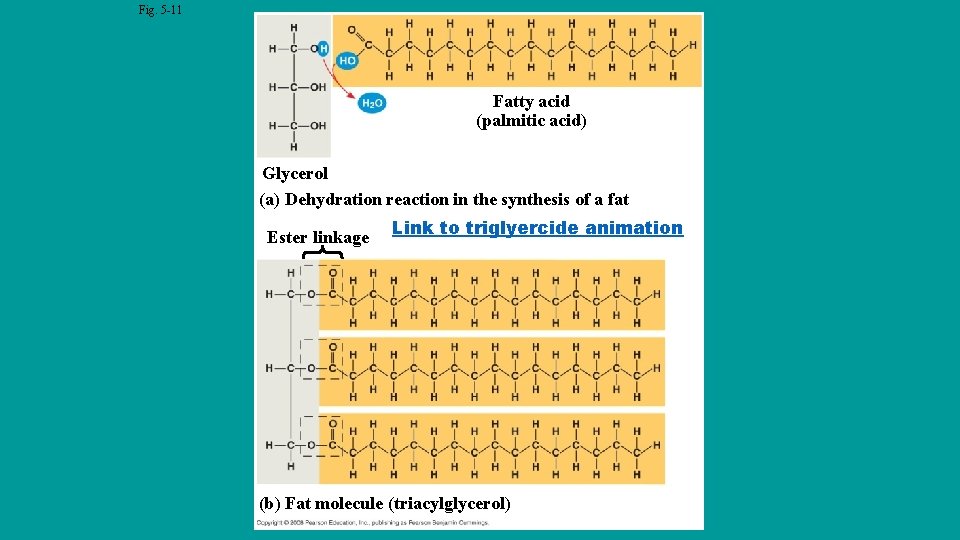
Fig. 5 -11 Fatty acid (palmitic acid) Glycerol (a) Dehydration reaction in the synthesis of a fat Ester linkage Link to triglyercide animation (b) Fat molecule (triacylglycerol)
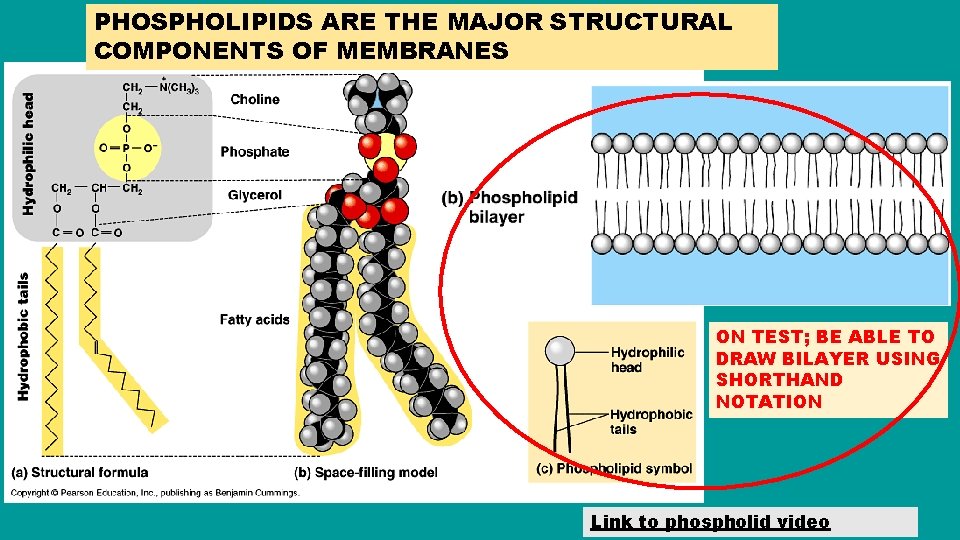
PHOSPHOLIPIDS ARE THE MAJOR STRUCTURAL COMPONENTS OF MEMBRANES ON TEST; BE ABLE TO DRAW BILAYER USING SHORTHAND NOTATION Link to phospholid video
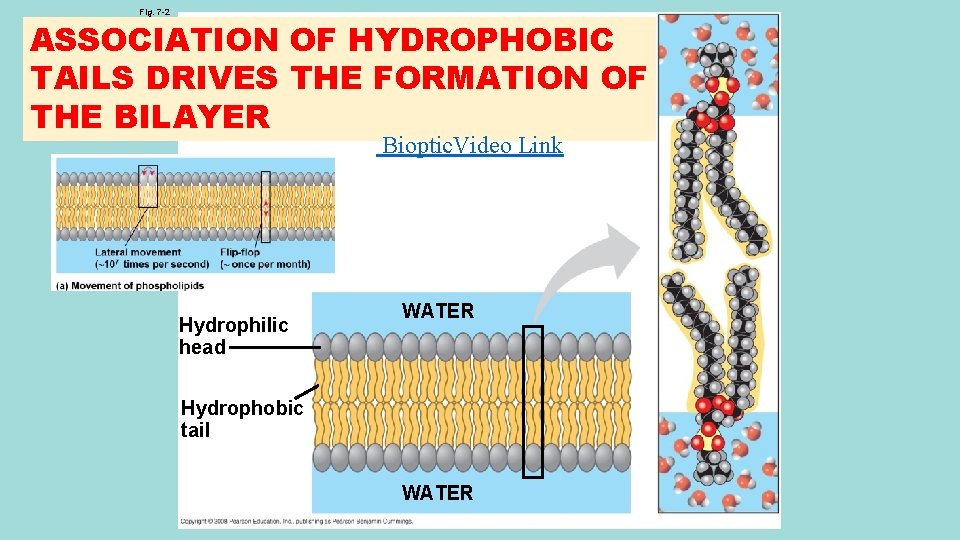
Fig. 7 -2 ASSOCIATION OF HYDROPHOBIC TAILS DRIVES THE FORMATION OF THE BILAYER Bioptic. Video Link Hydrophilic head WATER Hydrophobic tail WATER
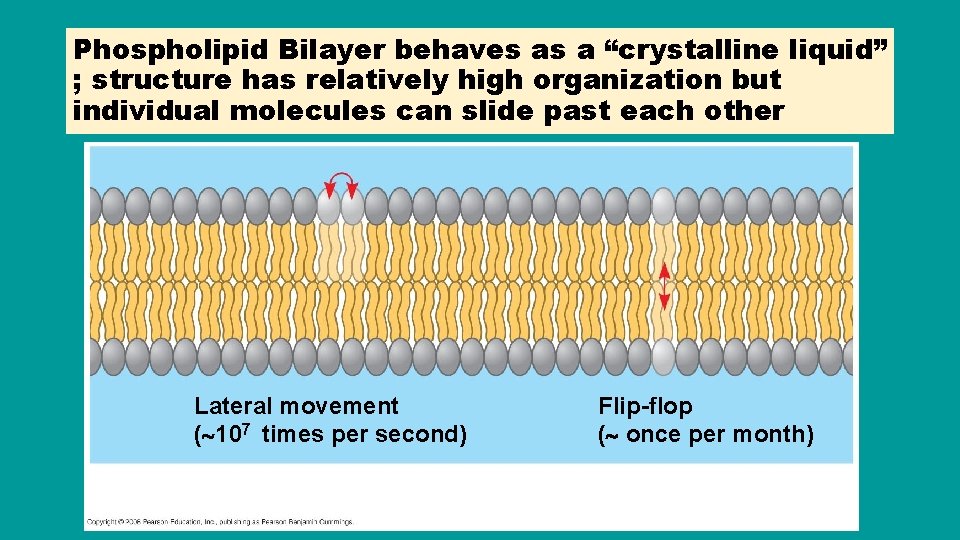
Phospholipid Bilayer behaves as a “crystalline liquid” ; structure has relatively high organization but individual molecules can slide past each other Lateral movement ( 107 times per second) Flip-flop ( once per month)
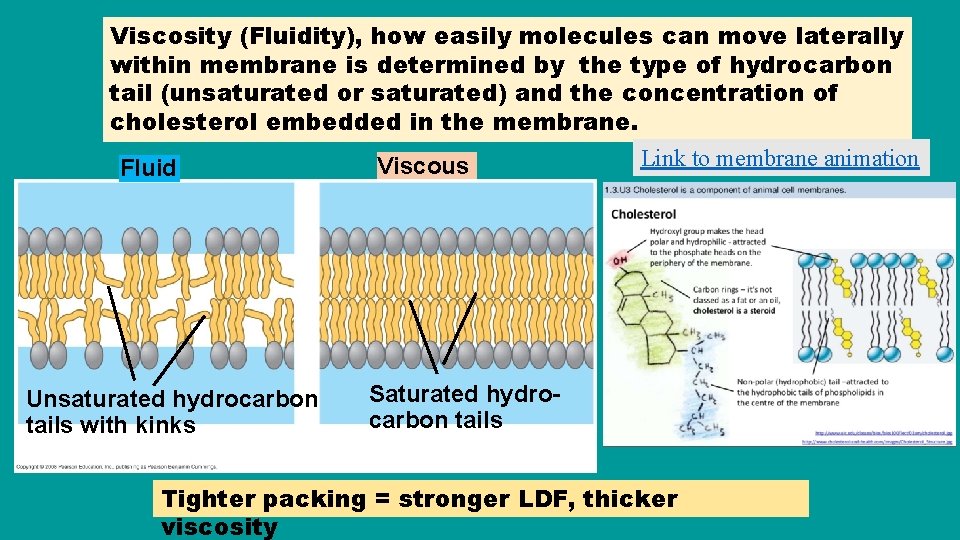
Viscosity (Fluidity), how easily molecules can move laterally within membrane is determined by the type of hydrocarbon tail (unsaturated or saturated) and the concentration of cholesterol embedded in the membrane. Link to membrane animation Viscous Fluid Unsaturated hydrocarbon tails with kinks Saturated hydrocarbon tails Tighter packing = stronger LDF, thicker viscosity
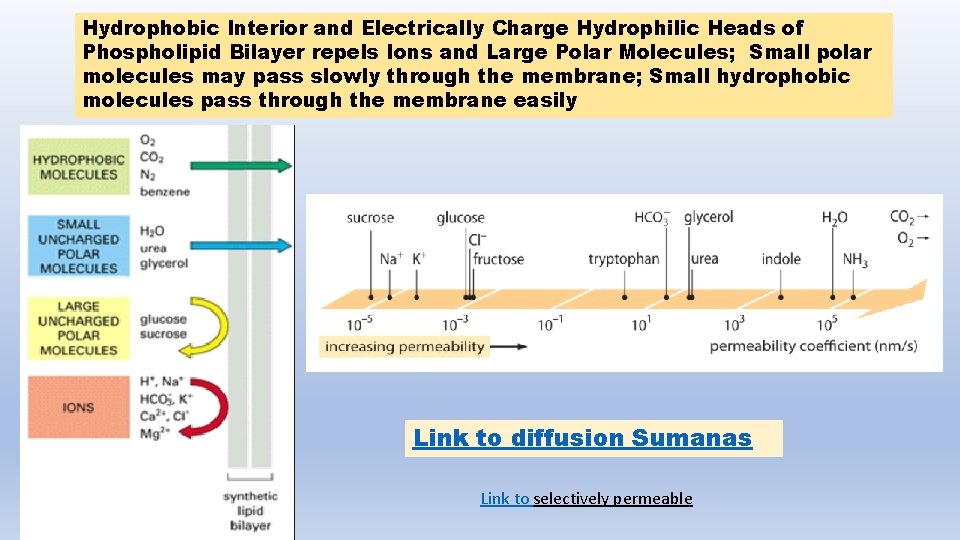
Hydrophobic Interior and Electrically Charge Hydrophilic Heads of Phospholipid Bilayer repels Ions and Large Polar Molecules; Small polar molecules may pass slowly through the membrane; Small hydrophobic molecules pass through the membrane easily Link to diffusion Sumanas Link to selectively permeable
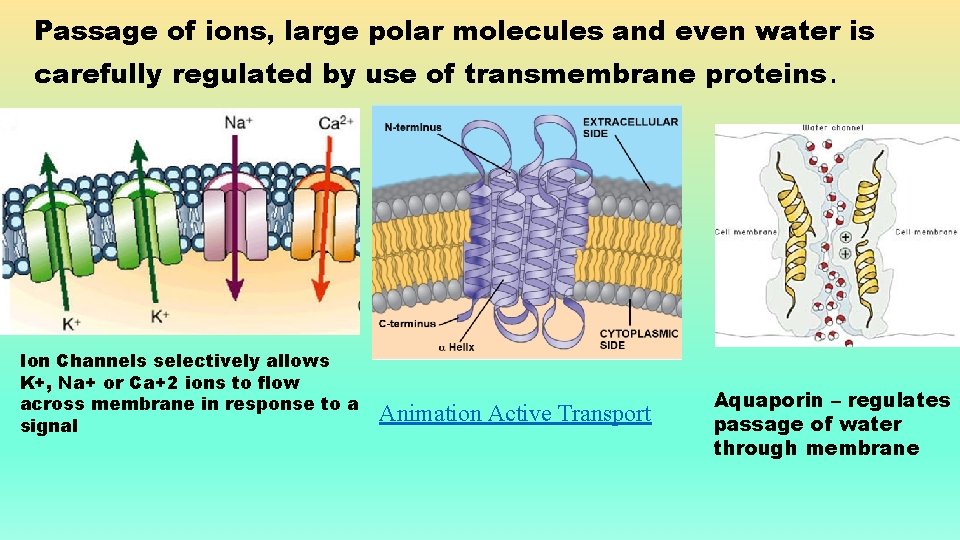
Passage of ions, large polar molecules and even water is carefully regulated by use of transmembrane proteins Ion Channels selectively allows K+, Na+ or Ca+2 ions to flow across membrane in response to a signal Animation Active Transport . Aquaporin – regulates passage of water through membrane
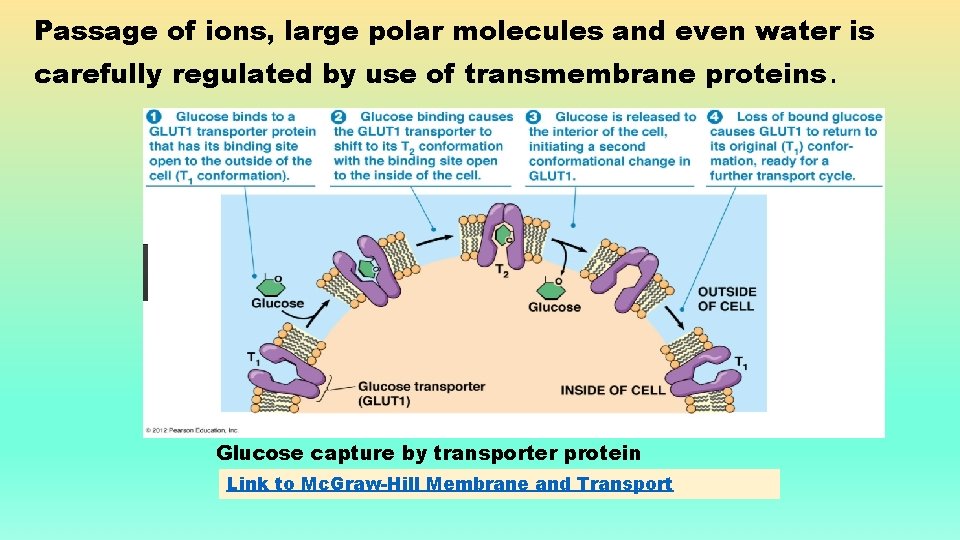
Passage of ions, large polar molecules and even water is carefully regulated by use of transmembrane proteins Glucose capture by transporter protein Link to Mc. Graw-Hill Membrane and Transport .
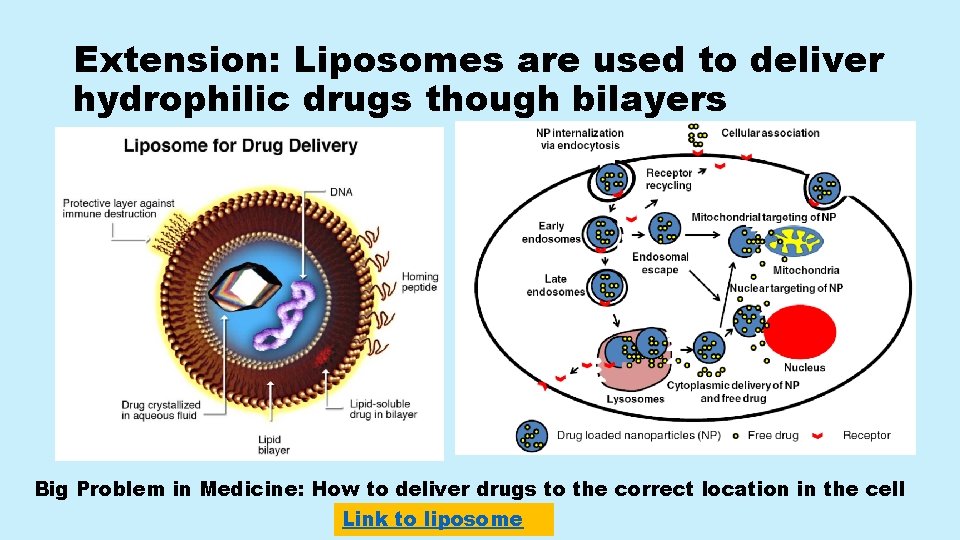
Extension: Liposomes are used to deliver hydrophilic drugs though bilayers Big Problem in Medicine: How to deliver drugs to the correct location in the cell Link to liposome
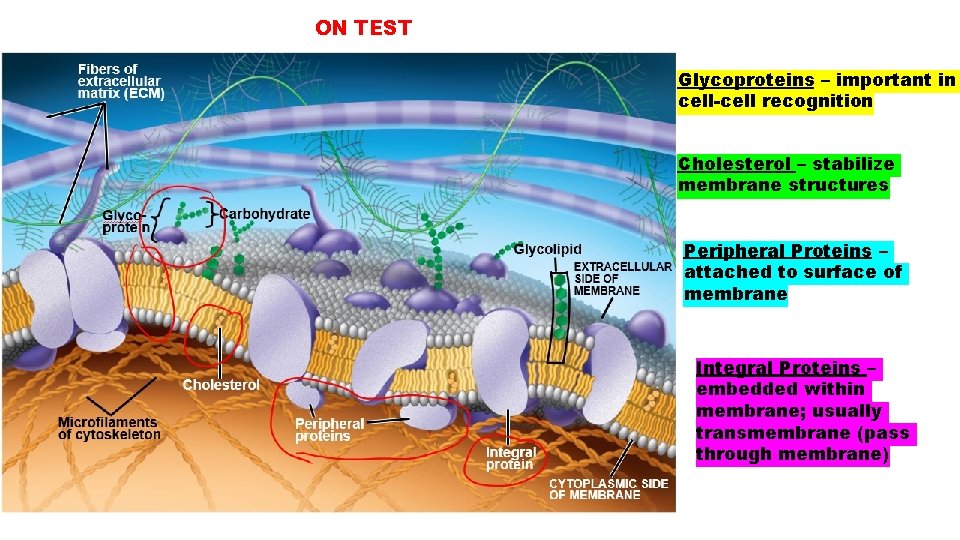
ON TEST Glycoproteins – important in cell-cell recognition Cholesterol – stabilize membrane structures Peripheral Proteins – attached to surface of membrane Integral Proteins – embedded within membrane; usually transmembrane (pass through membrane)
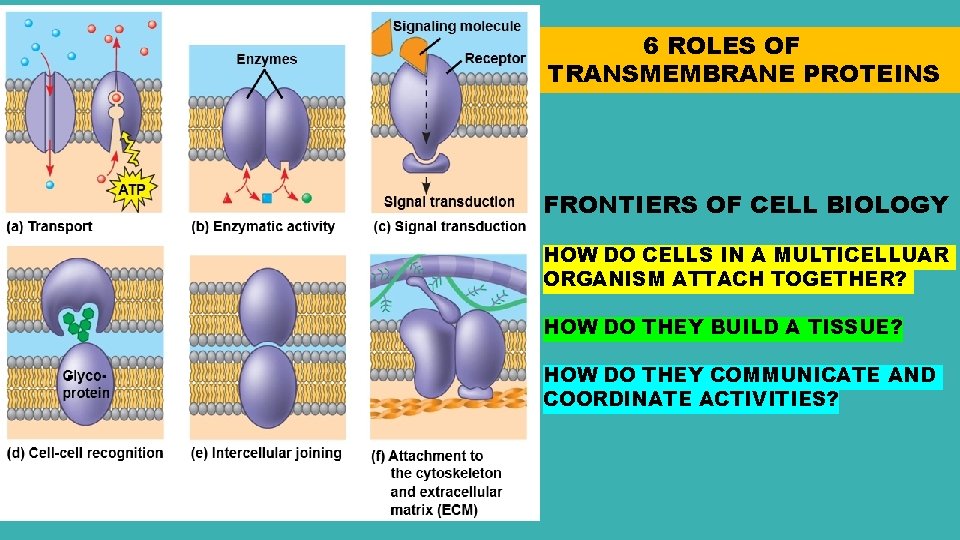
6 ROLES OF TRANSMEMBRANE PROTEINS FRONTIERS OF CELL BIOLOGY HOW DO CELLS IN A MULTICELLUAR ORGANISM ATTACH TOGETHER? HOW DO THEY BUILD A TISSUE? HOW DO THEY COMMUNICATE AND COORDINATE ACTIVITIES?
- Slides: 12