
HVAC 240 COMPRESSORS 12272021 1 Compressor Functions Pumps


- Slides: 49
HVAC 240 COMPRESSORS 12/27/2021 1
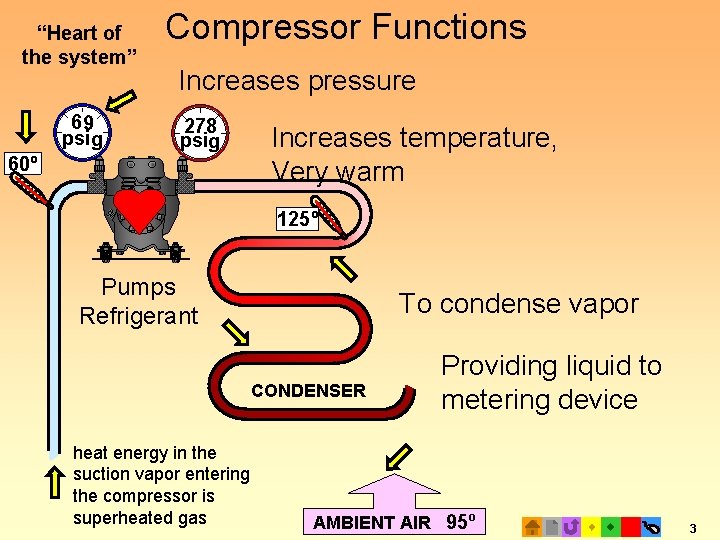
Compressor Functions ü Pumps refrigerant vapor The “heart” of the system ü Increases refrigerant pressure Raises suction pressure to discharge pressure ü Increases refrigerant temperature Raises suction temperature above ambient temperature High temperature vapor can be cooled by ambient Vapor is condensed into liquid for metering device 2
“Heart of the system” 69 psig Compressor Functions Increases pressure 278 psig 60º Increases temperature, Very warm 125º Pumps Refrigerant To condense vapor CONDENSER heat energy in the suction vapor entering the compressor is superheated gas Providing liquid to metering device AMBIENT AIR 95 o 3
Types of compressors • • • Reciprocating* Rotary Scroll Centrifugal Screw * NOTE: LIQUID ENTERING THE COMPRESSION CHAMBER OF A RECIPROCATING COMPRESSOR CAN DAMAGE VALVES AND PISTON RINGS (23. 9) 4
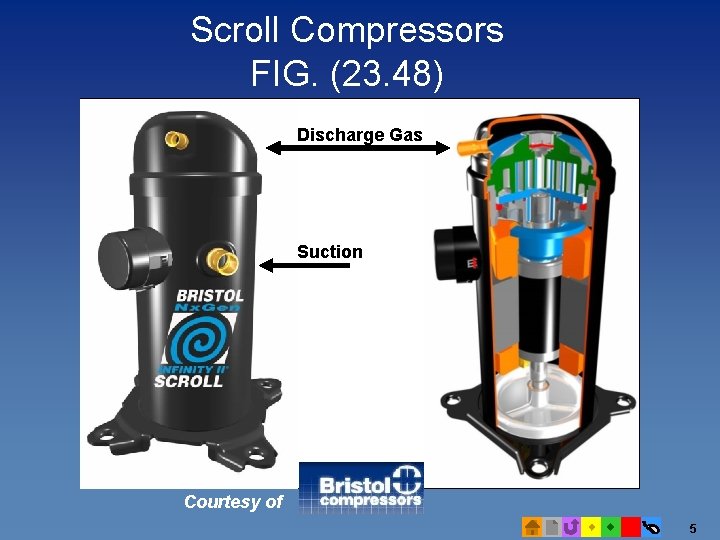
Scroll Compressors FIG. (23. 48) Discharge Gas Suction Courtesy of 5
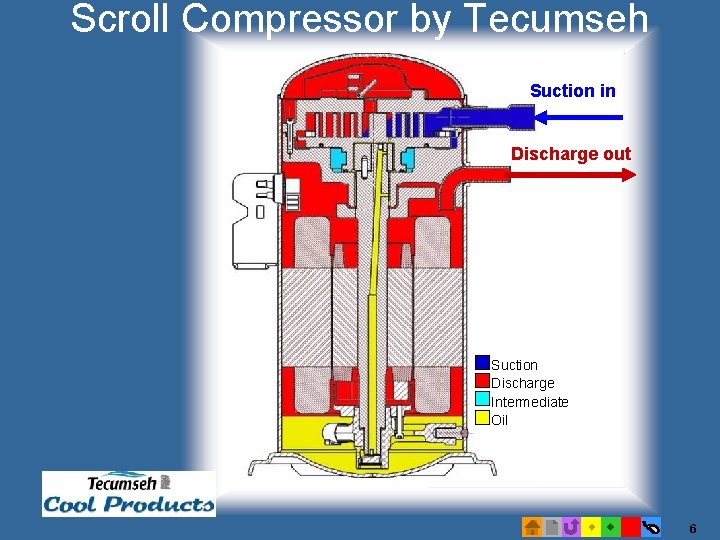
Scroll Compressor by Tecumseh Suction in Discharge out Suction Discharge Intermediate Oil 6
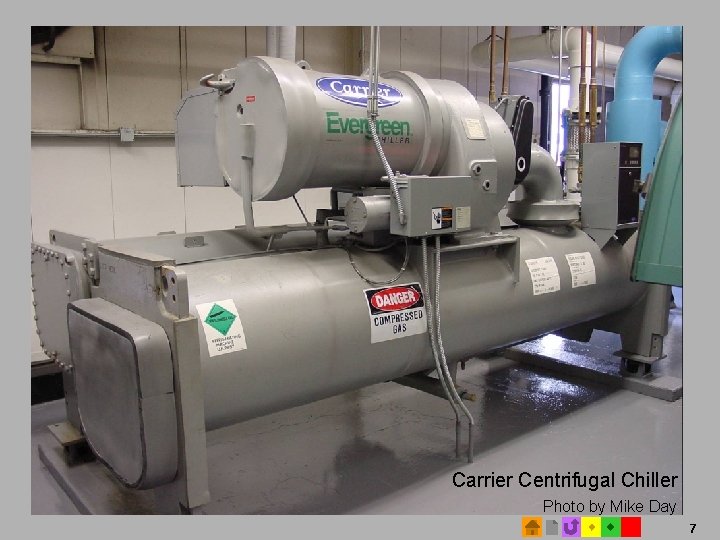
Carrier Centrifugal Chiller Photo by Mike Day 7
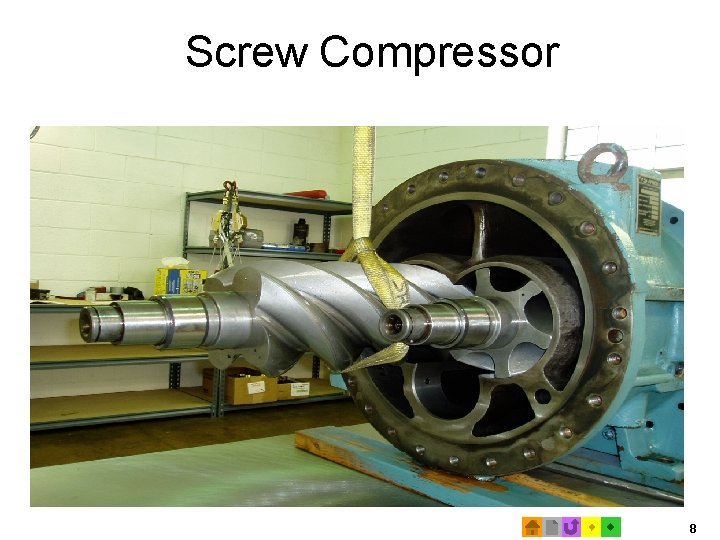
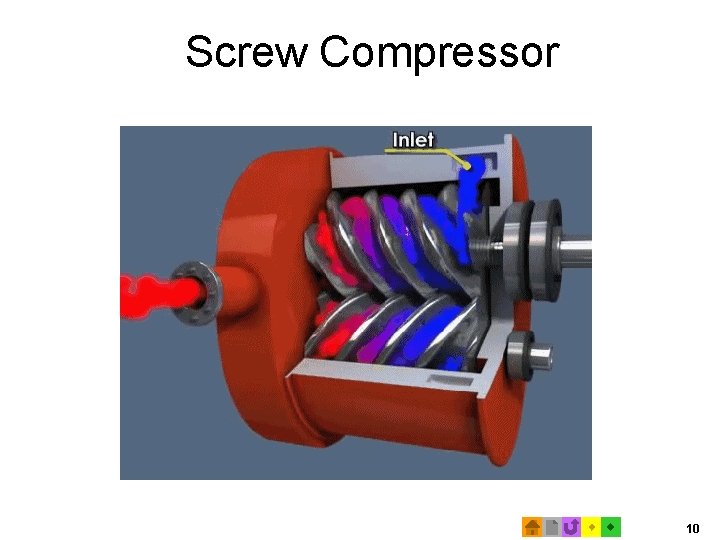
Screw Compressor 8
12/27/2021 9
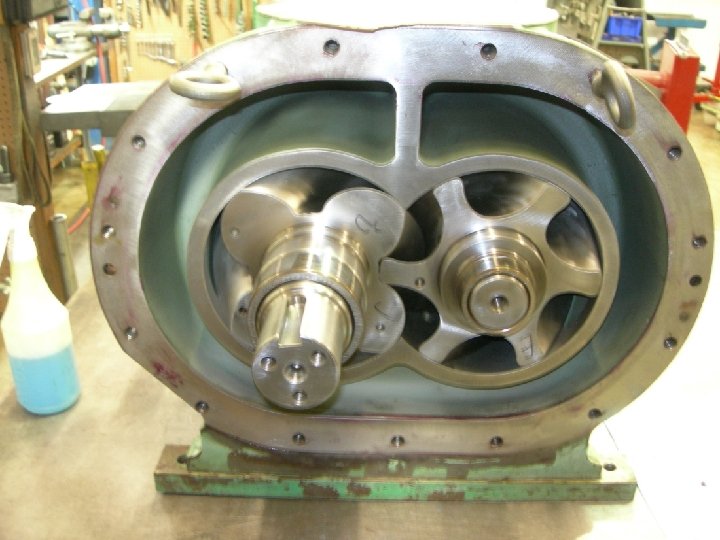
Screw Compressor 10
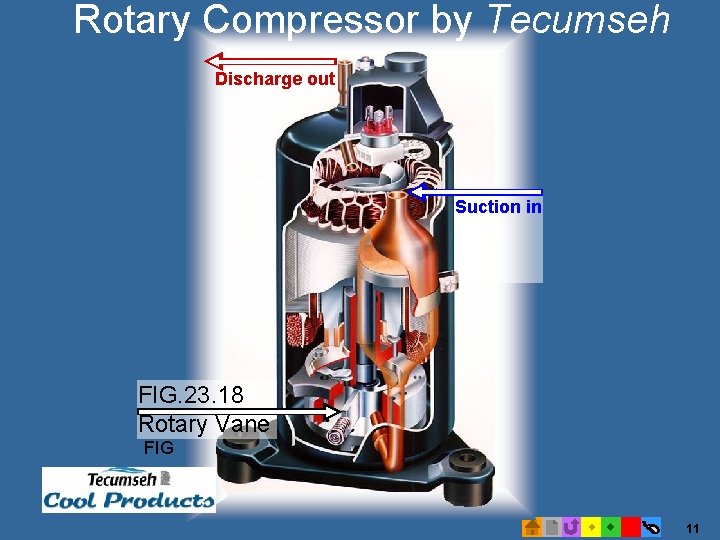
Rotary Compressor by Tecumseh Discharge out Suction in FIG. 23. 18 Rotary Vane FIG 11
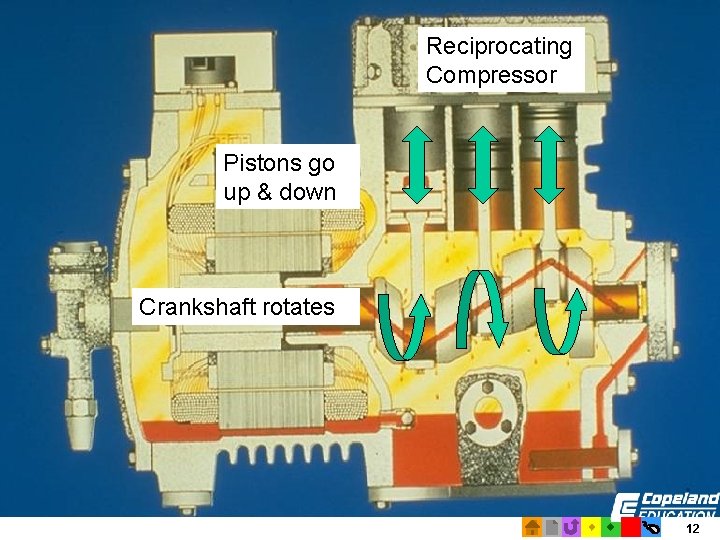
Reciprocating Compressor Pistons go up & down Crankshaft rotates 12
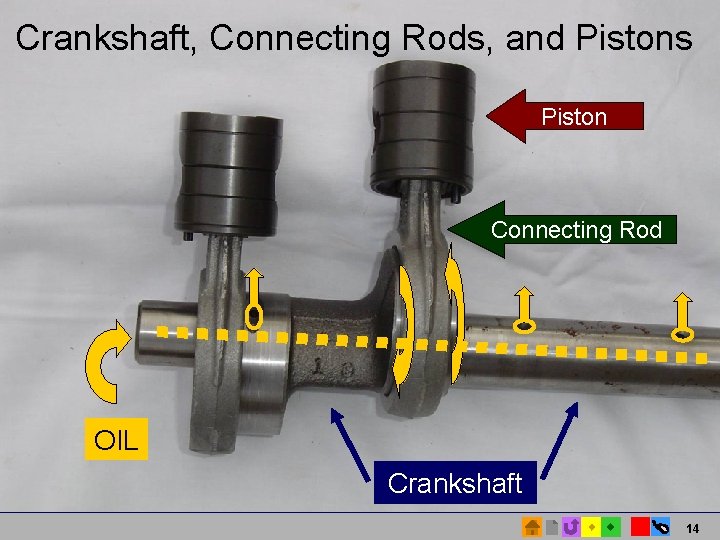
Lubrication of crankshaft and rods Crankshaft: Hollow center for oil supply Holes in crankshaft lubricate bearing surfaces Connecting rods: Connect the crankshaft to the piston NOTE: The compressor must be running up to speed before the lubrication is fully effective 13
Crankshaft, Connecting Crankshaft. Rods, oiling and Pistons Piston Connecting Rod OIL Crankshaft 14
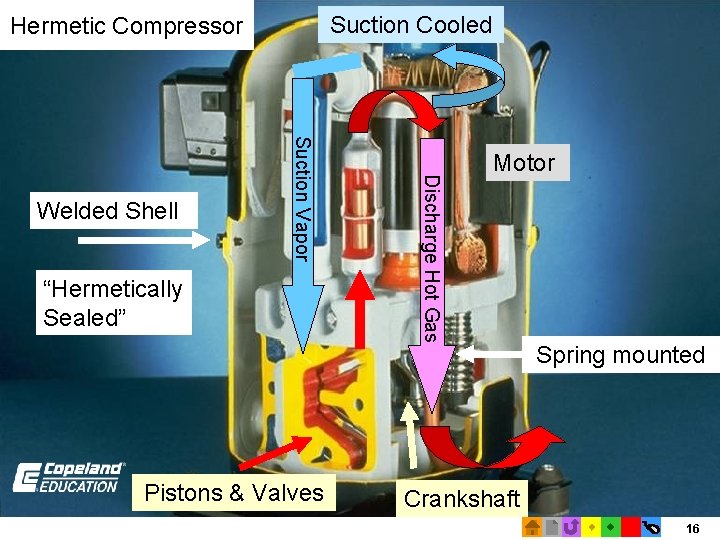
Hermetic compressor • Hermetic - ancient Greek word for “secret”, airtight container. • Welded into a steel shell • Internal springs • Suction cooled motor • Vertical shaft 15
Suction Cooled Hermetic Compressor “Hermetically Sealed” Pistons & Valves Discharge Hot Gas Suction Vapor Welded Shell Motor Spring mounted Crankshaft 16
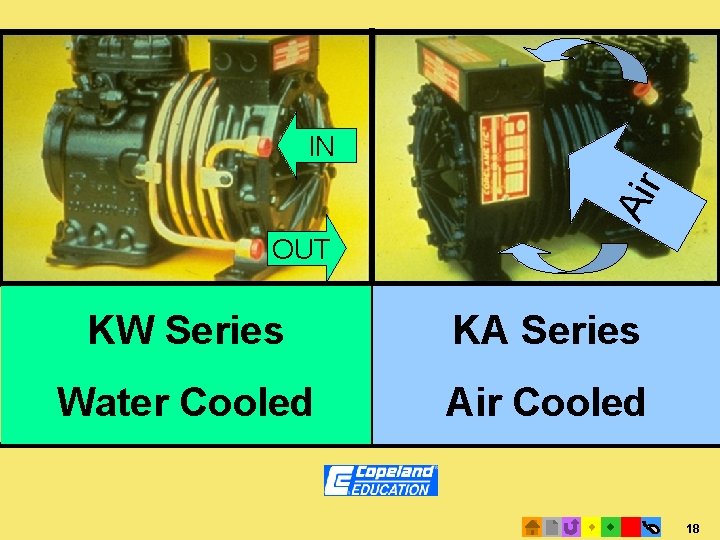
Semi-hermetic compressors • Cast iron shell is bolted together, not welded • Some service repairs on job: Valve plates and oil changes Rebuild oil pump • Can be rebuilt by factory • Air cooled, suction cooled, and water cooled • Lubrication by splash or pump • External spring mounted 17
Water & Air Cooled Air IN OUT KW Series KA Series Water Cooled Air Cooled 18
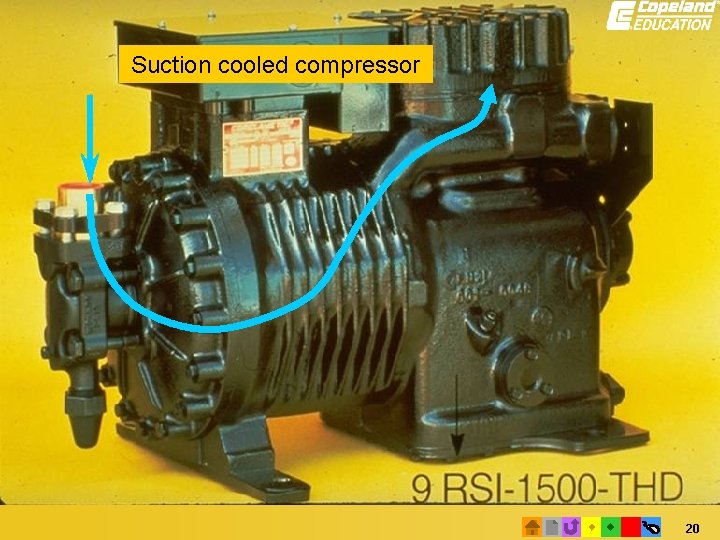
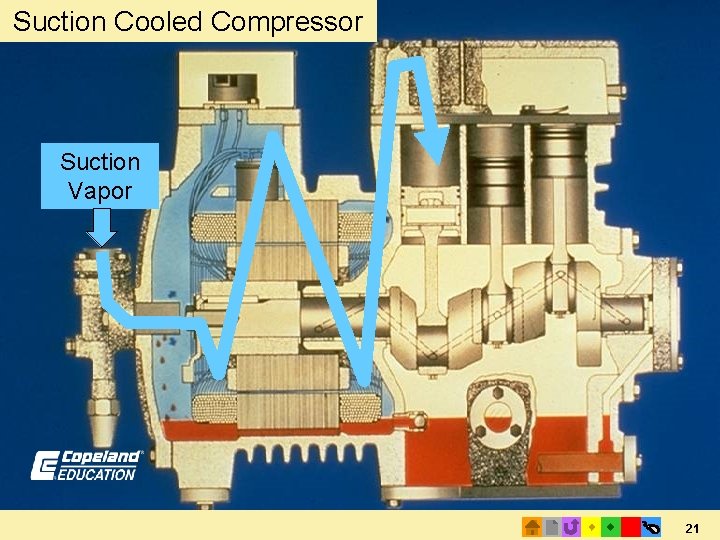
Suction Cooled compressors Suction service valve on bell end of compressor Vapor passes over motor, cooling it. 19
Suction cooled compressor 20
Suction Cooled Compressor Suction Vapor 21
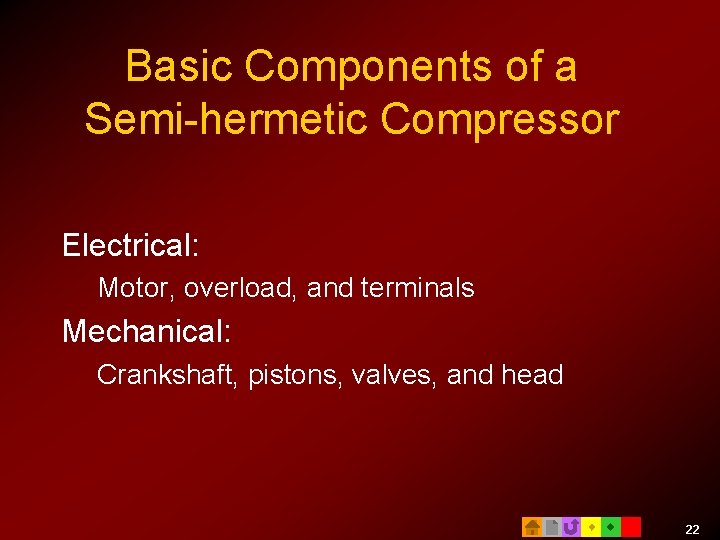
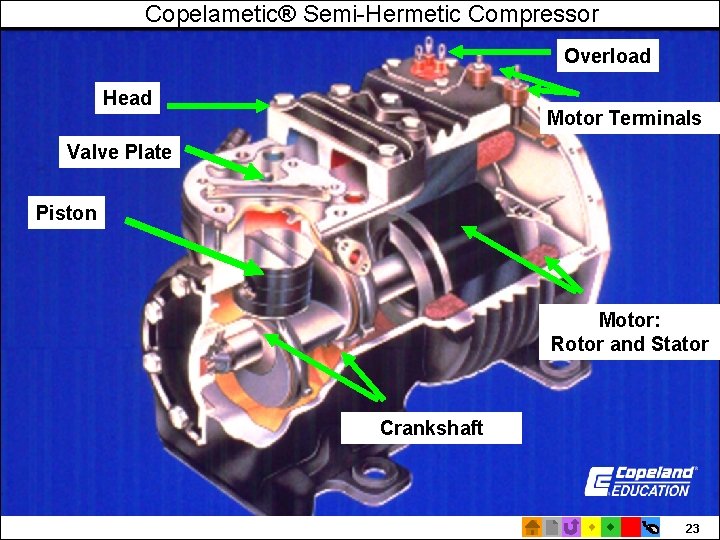
Basic Components of a Semi-hermetic Compressor Electrical: Motor, overload, and terminals Mechanical: Crankshaft, pistons, valves, and head 22
Copelametic® Semi-Hermetic Compressor Overload Head Motor Terminals Valve Plate Piston Motor: Rotor and Stator Crankshaft 23
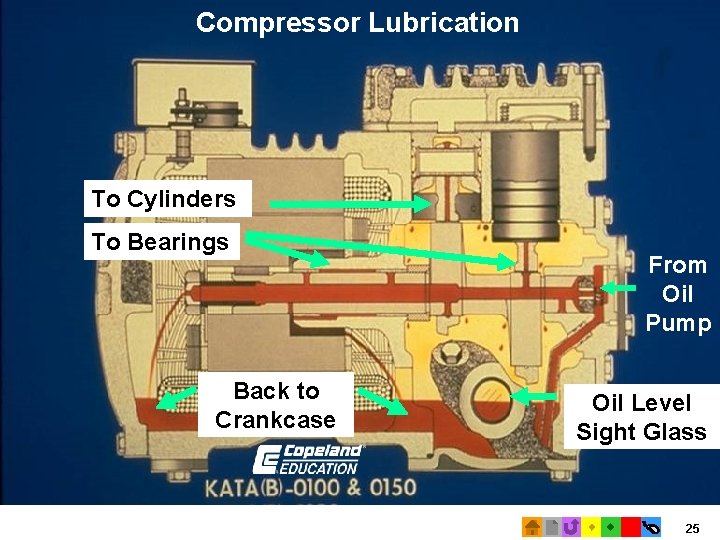
Lubrication There MUST be an oil film on every load bearing surface!!!! 24
Compressor Lubrication To Cylinders To Bearings Back to Crankcase From Oil Pump Oil Level Sight Glass 25
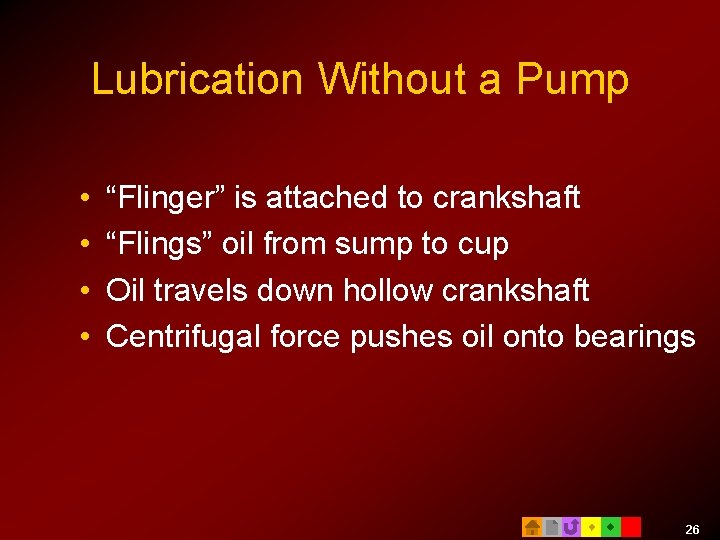
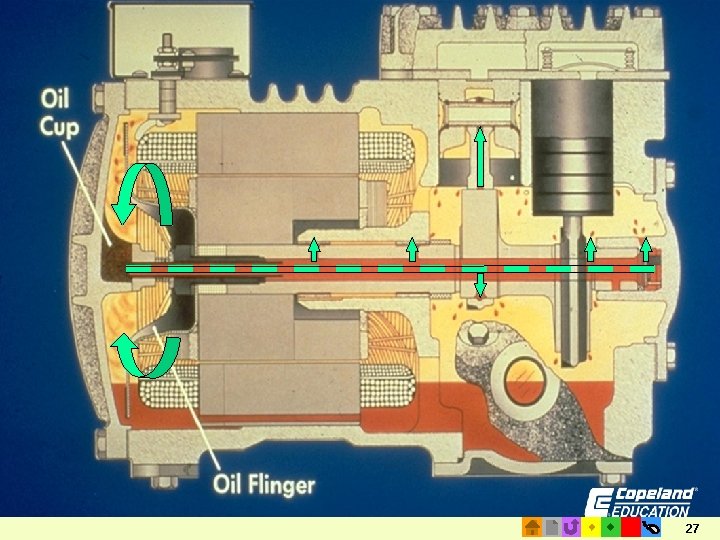
Lubrication Without a Pump • • “Flinger” is attached to crankshaft “Flings” oil from sump to cup Oil travels down hollow crankshaft Centrifugal force pushes oil onto bearings 26
Oil Flinger 27
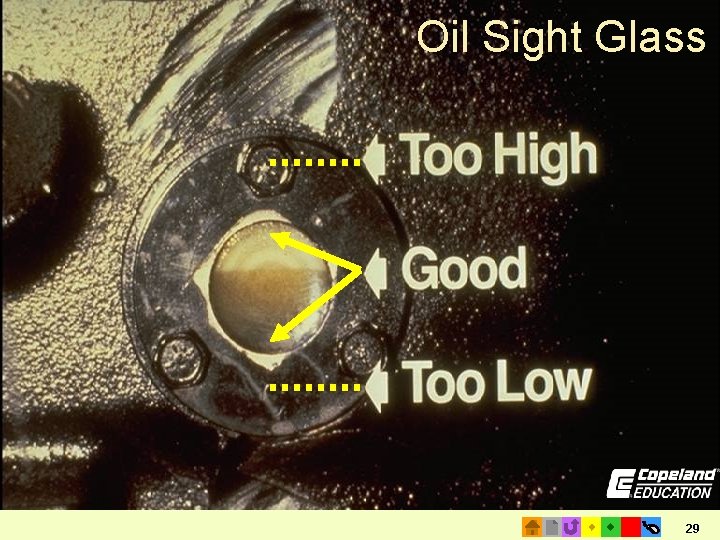
Proper level of oil • Crankcase must have enough oil • Level of oil in sight glass must be visible Too high: Can’t see top of oil Too low: Can’t see any oil Good: Anywhere in sight glass 28
Oil Sight Glass 29
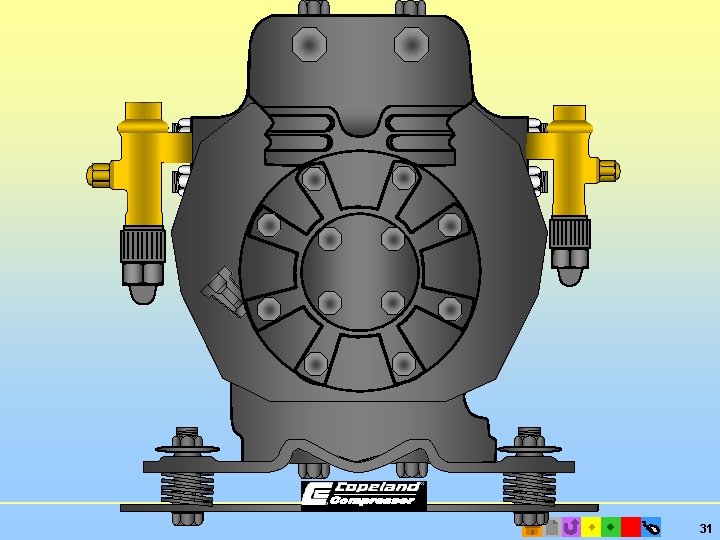
Compressor Operation: Intake stroke Piston drops • Lowers pressure in cylinder • Pulls intake valve open • Vapor is sucked into cylinder 30
Suction vapor “sucked” into compressor Valve opens Piston Downstroke 31
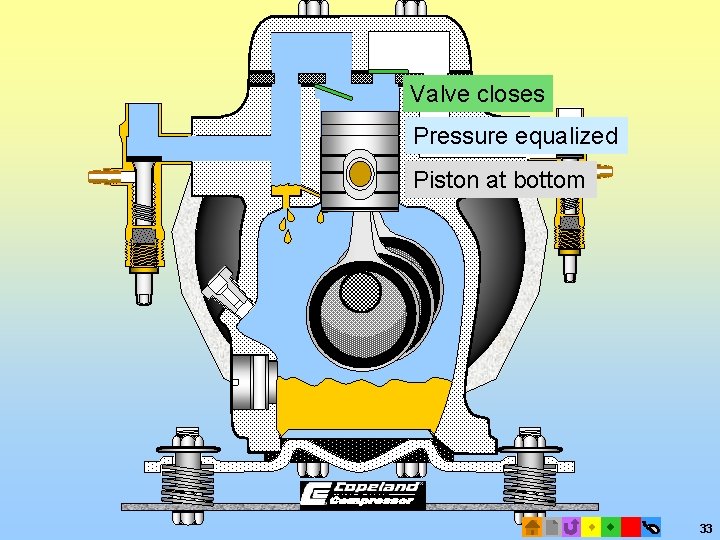
End of Intake Stroke Piston at bottom • Cylinder pressures equalize • Intake valve closes 32
Valve closes Pressure equalized Piston at bottom 33
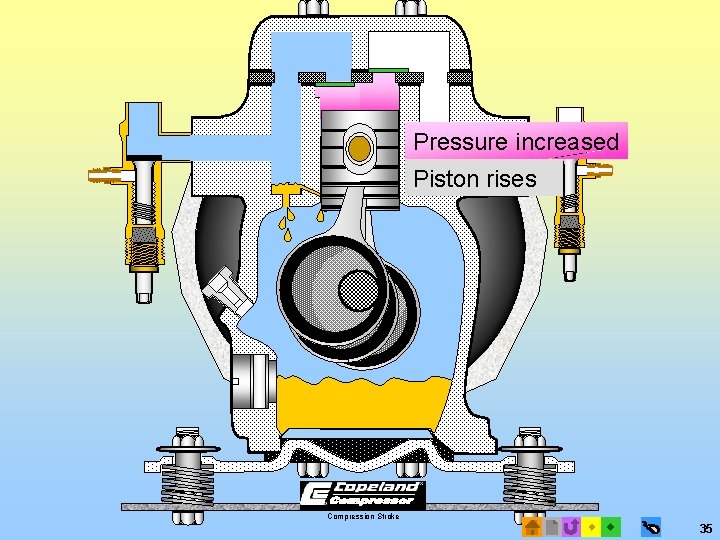
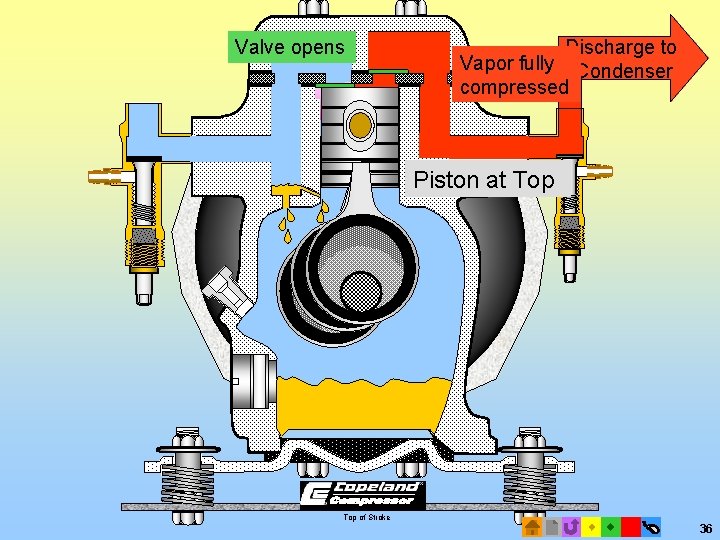
Compression Stroke Piston rises • Increases pressure in cylinder • Rising to discharge pressure • Discharge valve opens 34
Pressure increased Piston rises Compression Stroke 35
Valve opens Discharge to Vapor fully Condenser compressed Piston at Top of Stroke 36
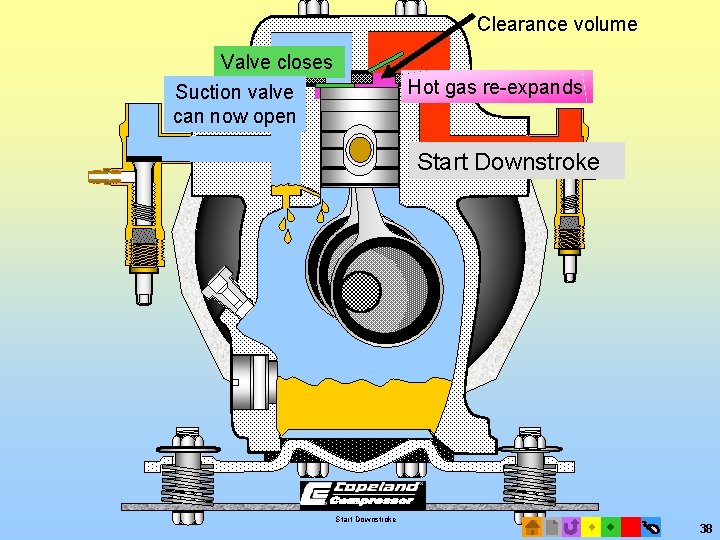
Compressor Operation: Compression Stroke Piston at top • Cylinder pressures equalize • Discharge valve closes • Small amount of discharge gas remains (This is called “clearance volume”) 37
Clearance volume Valve closes Suction valve can now open Hot gas re-expands Start Downstroke 38
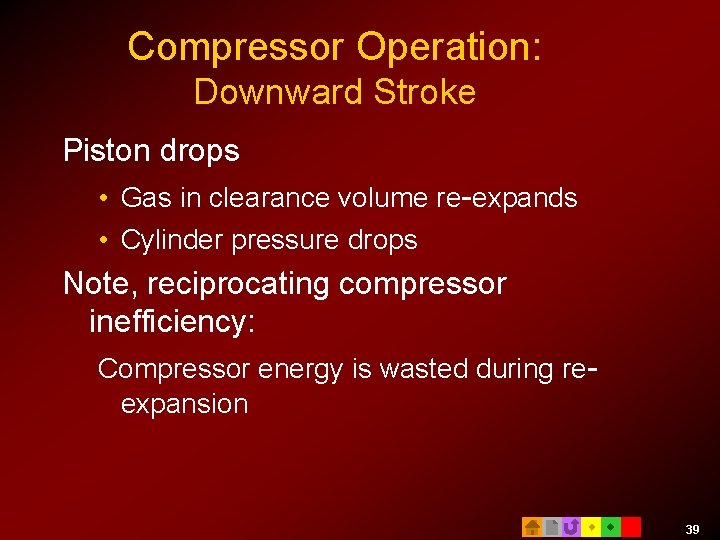
Compressor Operation: Downward Stroke Piston drops • Gas in clearance volume re-expands • Cylinder pressure drops Note, reciprocating compressor inefficiency: Compressor energy is wasted during reexpansion 39
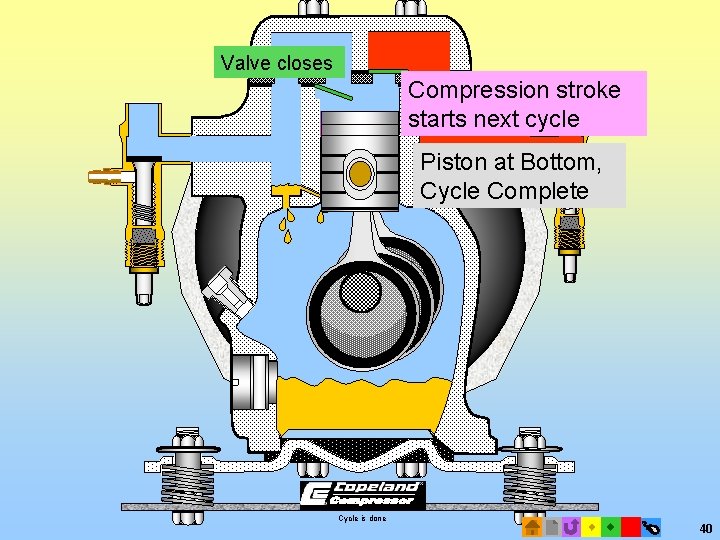
Valve closes Compression stroke starts next cycle Piston at Bottom, Cycle Complete Cycle is done 40
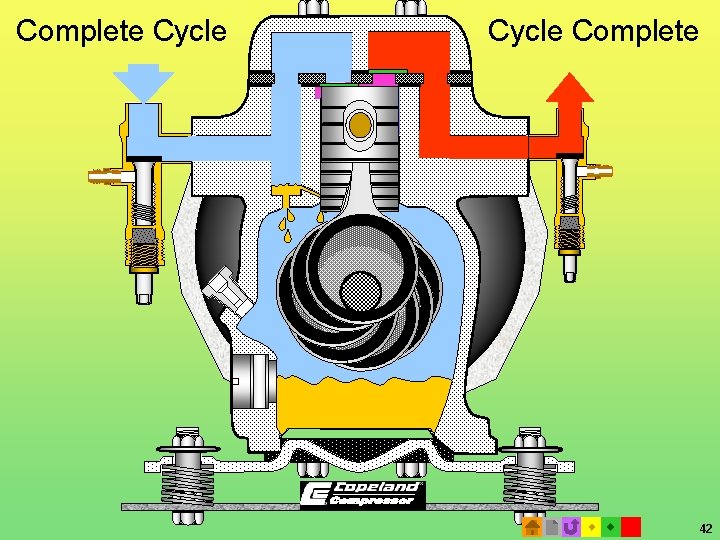
Complete Compressor Cycle Each cycle: Suction • And re-expansion Compression • And discharge Following are 3 continuous cycles: 41
Complete Cycle Complete 42
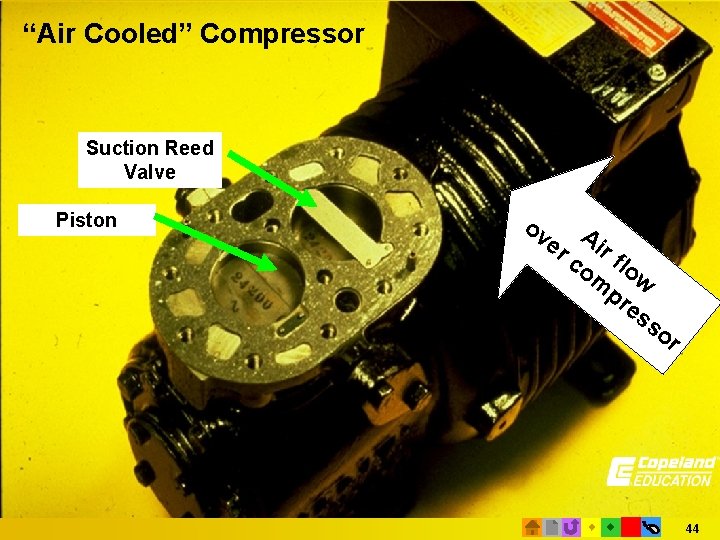
Valve Plates and Heads The following slide shows: • Valve plate and head removed • Suction reed valve and pistons 43
“Air Cooled” Compressor Suction Reed Valve Piston ov e Ai rc rf om low pr es so r 44
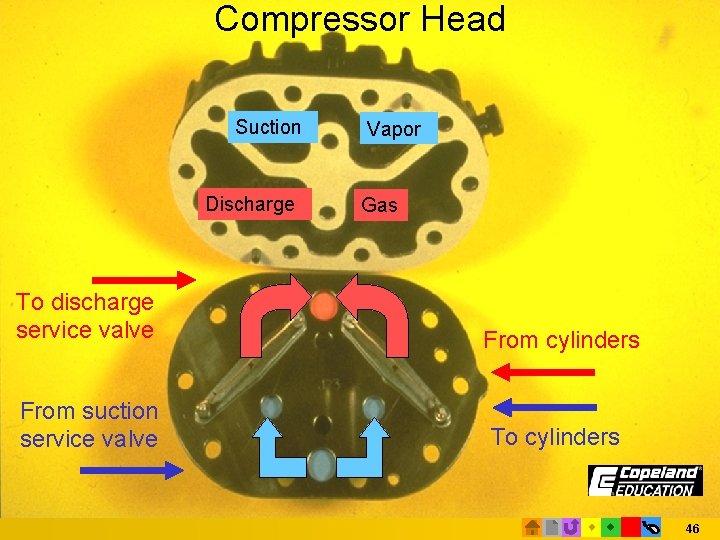
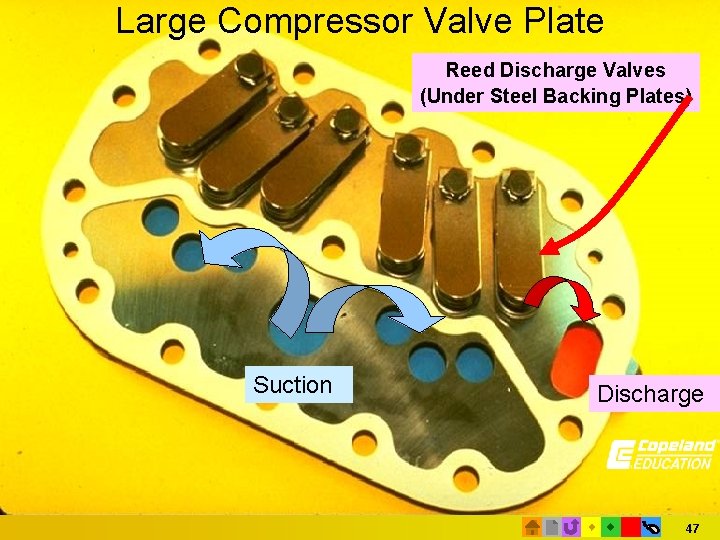
Valve Plates and Heads The following 2 slides show: • Top of valve plate showing discharge reeds • Bottom of head showing suction and discharge areas. Note: RED is for discharge, BLUE for suction 45
Compressor Head Suction Discharge Vapor Gas To discharge service valve From cylinders From suction service valve To cylinders 46
Large Compressor Valve Plate Reed Discharge Valves (Under Steel Backing Plates) Suction Discharge 47
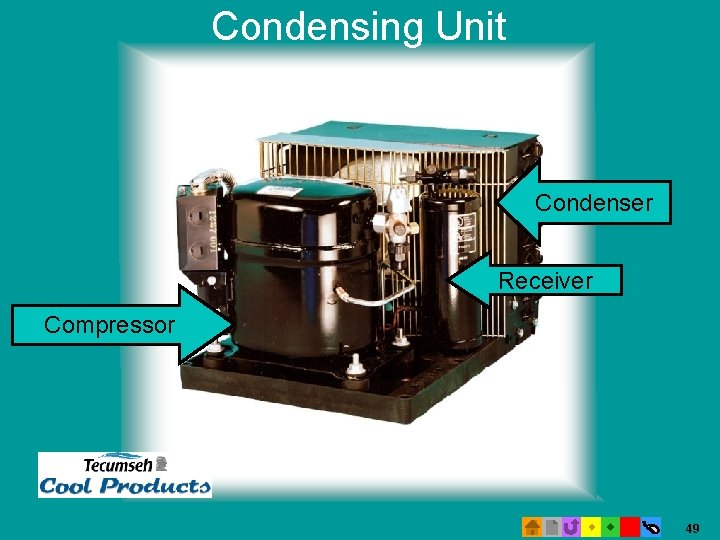
Condensing units Package compressor and condenser together. Contains: condenser compressor fan electrical controls And accessories: ØReceiver ØPressure controls ØEtc. 48
Condensing Unit Condenser Receiver Compressor 49