
HVAC 100 UNIT 24 METERING DEVICES 1 24
- Slides: 37
HVAC 100 UNIT 24 METERING DEVICES 1
24. 1 Metering Devices • Regulates the flow of refrigerant to evaporator • Provide pressure drop from high side to the low side • Lowers the boiling point of the refrigerant 2
Metering Devices Three most common types: 1. TXV OR TEV: Meters the refrigerant to the evaporator by using thermal sensing. (FIG. 24. 4 a) FIXED BORE 1. Capillary tube: the diameter and length of the tube determine how much liquid will pass. (FIG. 24. 49 a) 2. Piston: Meters the flow of refrigerant 3
24. 2 Thermostatic Expansion Valves TEVs can modulate the amount of refrigerant flowing to evaporator • • • Responds to suction line temperature Maintains suction line SH Modulates with the load When the evaporator load increases so does the flow When the evaporator load decreases so does the flow 4
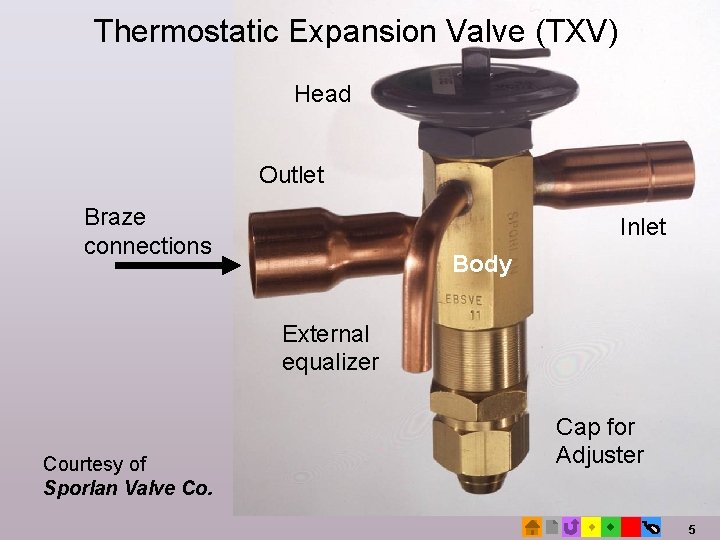
Thermostatic Expansion Valve (TXV) Head Outlet Braze connections Inlet Body External equalizer Courtesy of Sporlan Valve Co. Cap for Adjuster 5
Fixed Bore Metering Device Provides consistent pressure drop • Condensing pressure to evaporator pressure • Maintains refrigerant flow • Good for units with relatively stable load conditions • More common in residential & small lowend refrigeration 6
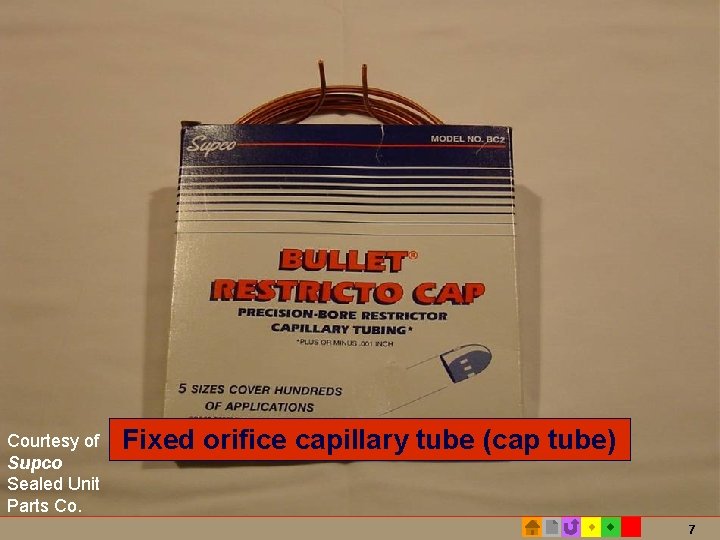
Fixed orifice capillary tube Courtesy of Supco Sealed Unit Parts Co. Fixed orifice capillary tube (cap tube) 7
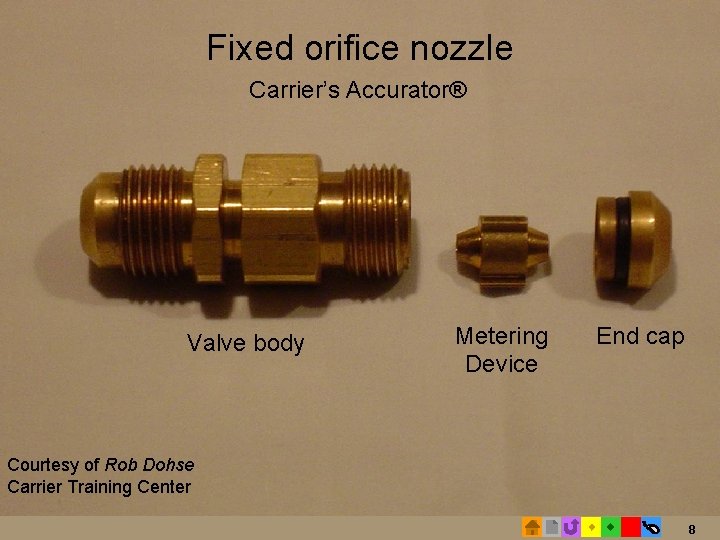
Fixed orifice nozzle Carrier’s Accurator® Valve body Metering Device End cap Courtesy of Rob Dohse Carrier Training Center 8
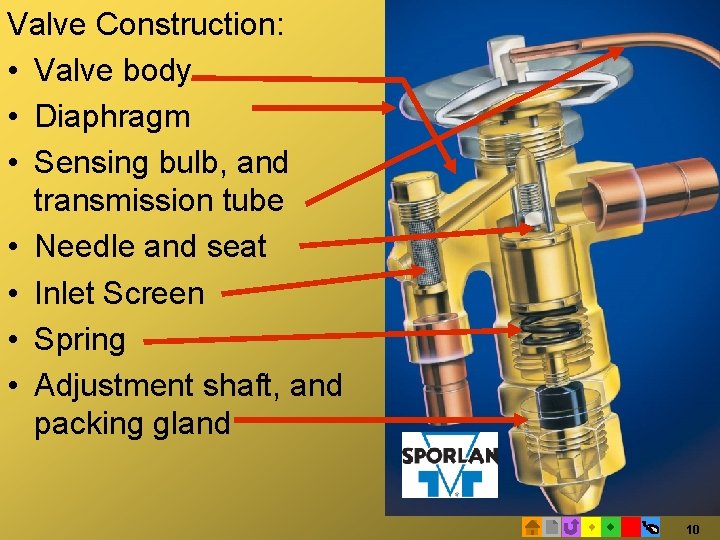
TXV Cut-Away View Shows internal parts of a TEV 9
Valve Construction: • Valve body • Diaphragm • Sensing bulb, and transmission tube • Needle and seat • Inlet Screen • Spring • Adjustment shaft, and packing gland Valve Construction 10
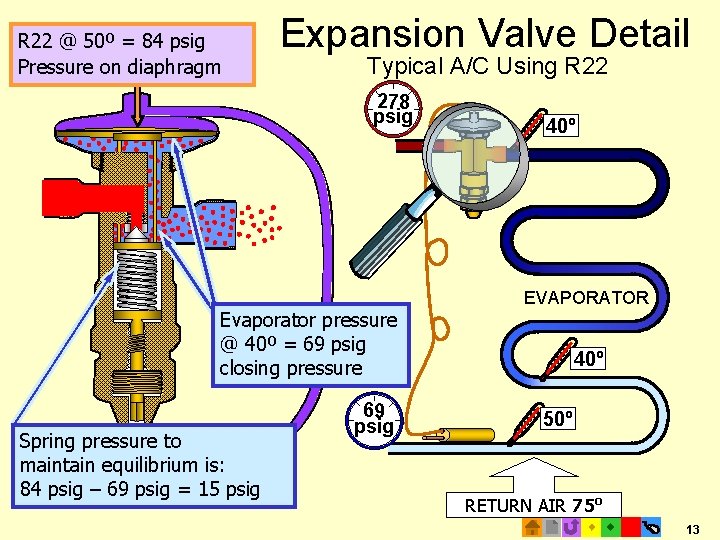
TXV Operation • Meters refrigerant • Maintains superheat Opening force: Bulb pressure Closing forces: Evaporator pressure Adjustable spring pressure NOTE: if the bulb develops a leak, the bulb pressure will reduce and the valve will close 1. 2. 11
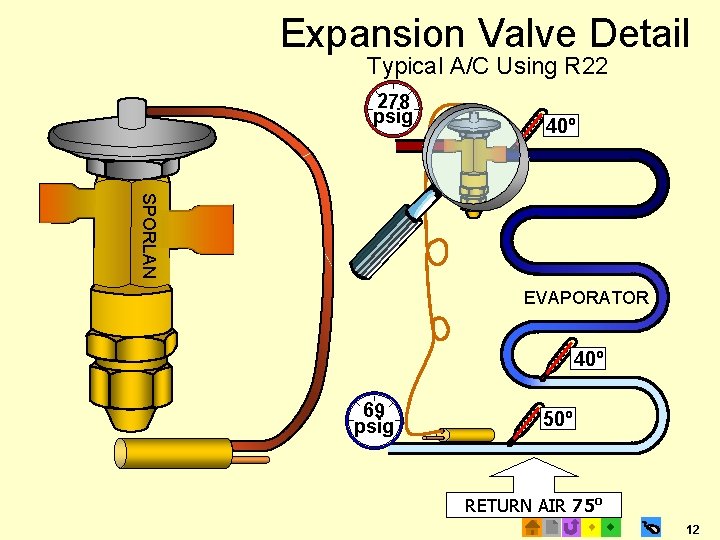
Expansion Valve Detail Typical A/C Using R 22 278 psig 40º SPORLAN EVAPORATOR 40º 69 psig 50º RETURN AIR 75 o 12
R 22 @ 50º = 84 psig Pressure on diaphragm Expansion Valve Detail Typical A/C Using R 22 278 psig Evaporator pressure @ 40º = 69 psig closing pressure Spring pressure to maintain equilibrium is: 84 psig – 69 psig = 15 psig 69 psig 40º EVAPORATOR 40º 50º RETURN AIR 75 o 13
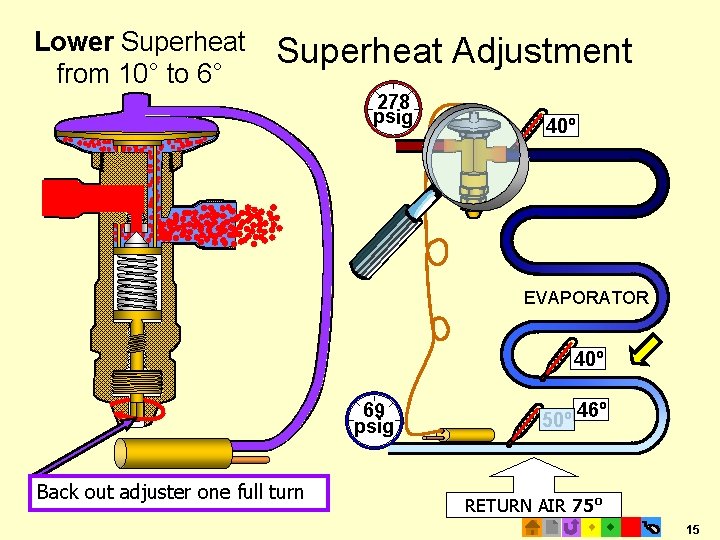
Adjusting Superheat To lower superheat: • Decrease spring pressure • Increases refrigerant in evaporator 14
Lower Superheat from 10° to 6° Superheat Adjustment 278 psig 40º EVAPORATOR 40º 69 psig Back out adjuster one full turn 50º 46º RETURN AIR 75 o 15
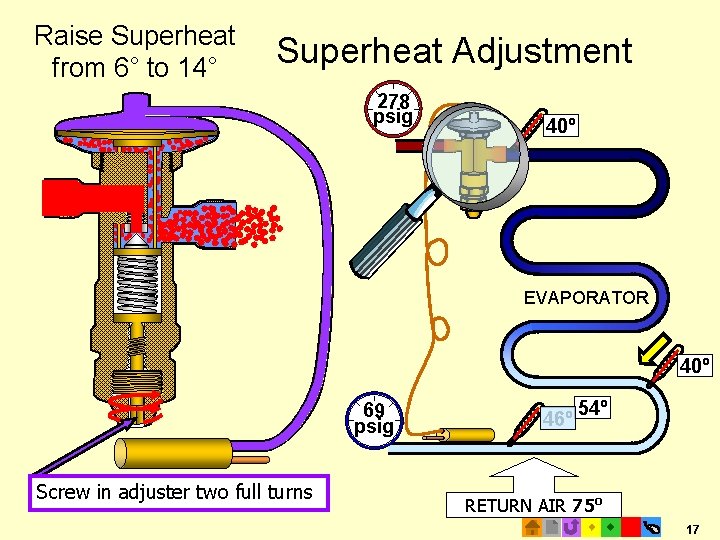
Adjusting Superheat Increase superheat: • Increase spring pressure • Decreases refrigerant in evaporator 16
Raise Superheat from 6° to 14° Superheat Adjustment 278 psig 40º EVAPORATOR 40º 69 psig Screw in adjuster two full turns 46º 54º RETURN AIR 75 o 17
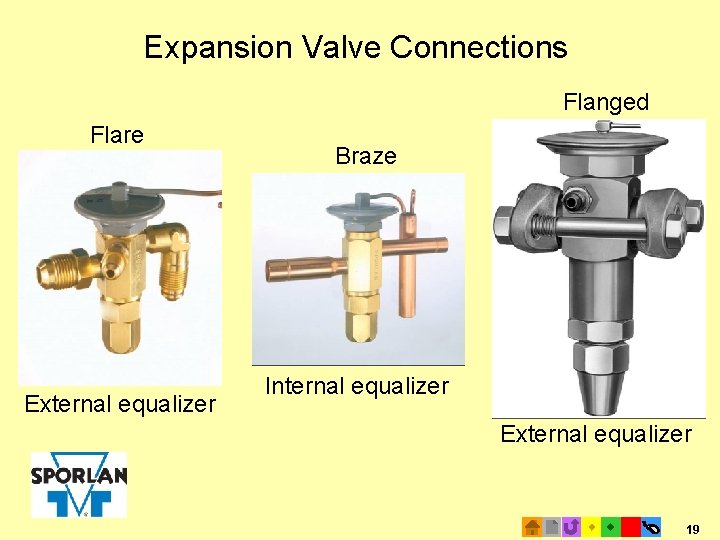
Identifying the Valve Connections: • Flare, Braze, and flanged 18
Expansion Valve Connections Flanged Flare External equalizer Braze Internal equalizer External equalizer 19
Sensing Bulb Placement Must sense true suction temperature – Not bottom of pipe – Not top of pipe 20
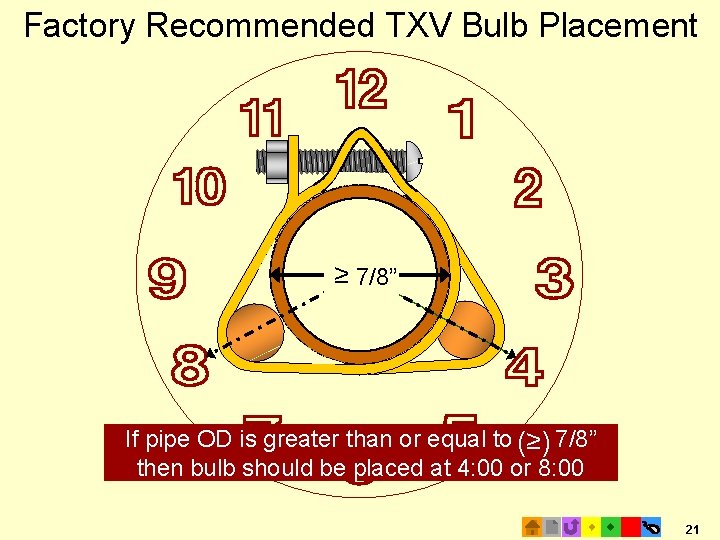
Factory Recommended TXV Bulb Placement ≥ 7/8” If pipe OD is greater than or equal to (≥) ( ) 7/8” then bulb should be placed at 4: 00 or 8: 00 21
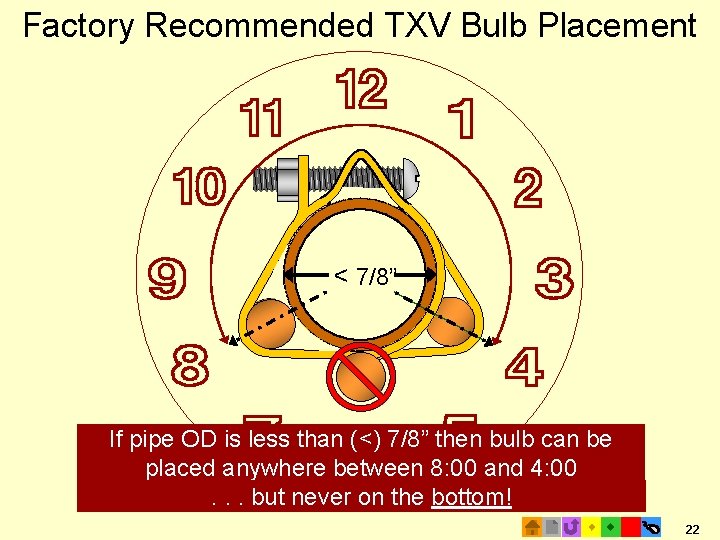
Factory Recommended TXV Bulb Placement < 7/8” If pipe OD is less than (<) 7/8” then bulb can be placed anywhere between 8: 00 and 4: 00. . . but never on the bottom! 22
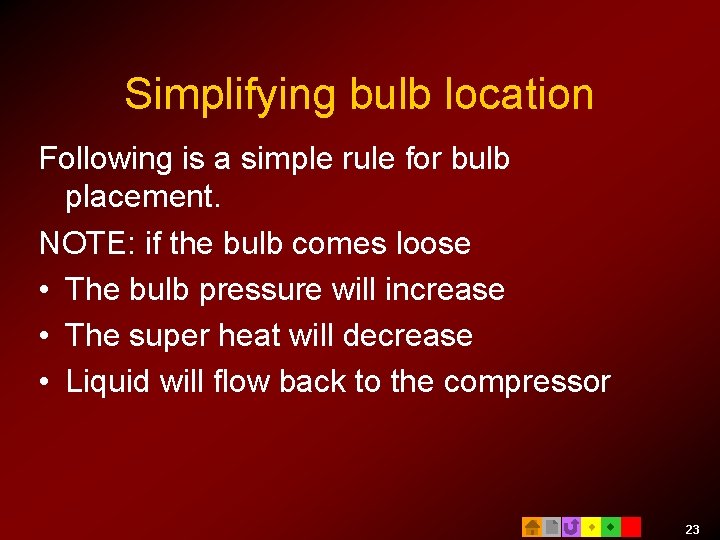
Simplifying bulb location Following is a simple rule for bulb placement. NOTE: if the bulb comes loose • The bulb pressure will increase • The super heat will decrease • Liquid will flow back to the compressor 23
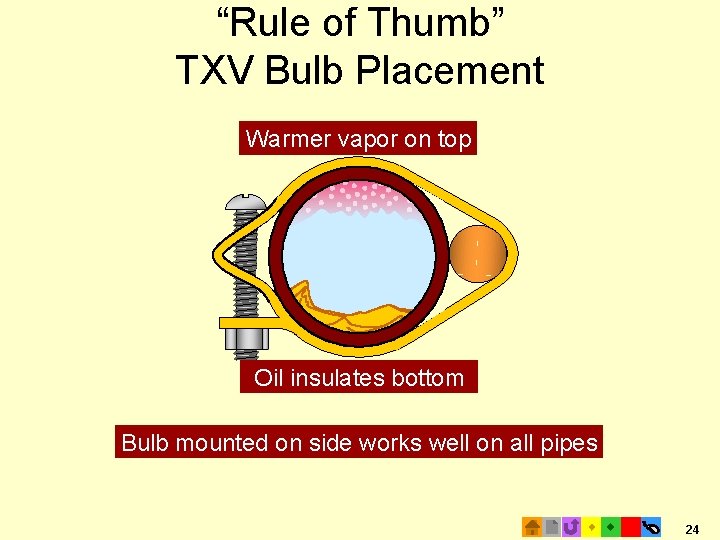
“Rule of Thumb” TXV Bulb Placement Warmer vapor on top Oil insulates bottom Bulb mounted on side works well on all pipes 24
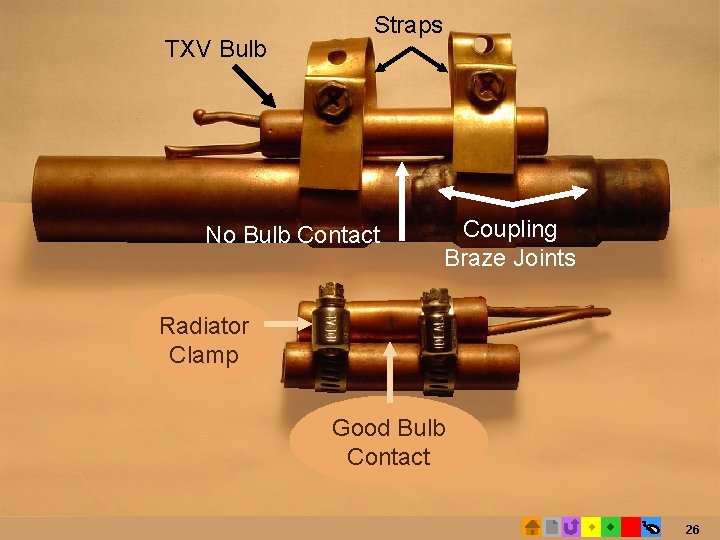
More suggestions on bulbs Make sure it is on a flat surface of pipe Use stainless steel hose clamps: – Easier to install – Easy to service – Don’t corrode 25
TXV Bulb Straps Picture of bulbs and clamps No Bulb Contact Coupling Braze Joints Radiator Clamp Good Bulb Contact 26
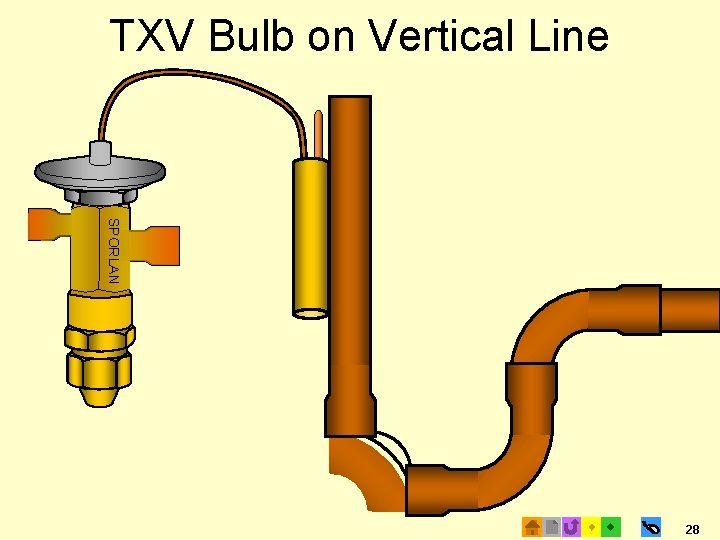
More on Mounting TXV Bulbs Best on horizontal suction line in between the evaporator and the compressor. If you must put on vertical line: • Oil in line may affect operation • Transmission tube must come out top of bulb 27
TXV Bulb on Vertical Line SPORLAN 28
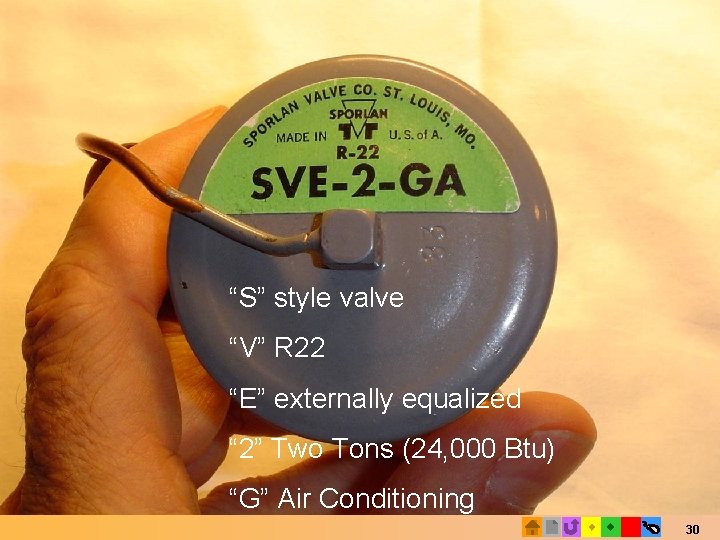
“Reading” a Valve Understand the numbering system, and you will know the valve. 29
Picture of SVE-2 -GA valve “S” style valve “V” R 22 “E” externally equalized “ 2” Two Tons (24, 000 Btu) “G” Air Conditioning 30
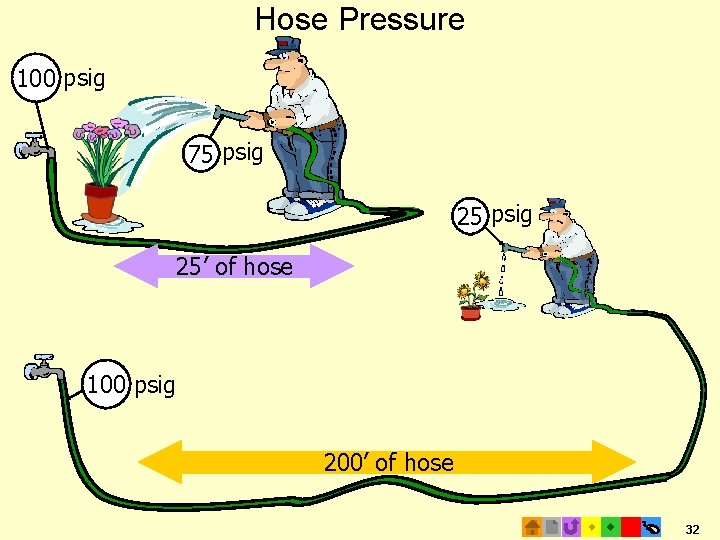
Capillary tubes (cap tubes) A fixed bore metering device Regulates refrigerant flow by pressure drop Pressure drop is based on: • Cap tube length • Internal diameter of tubing 31
Hose Pressure 100 psig 75 psig 25’ of hose 100 psig 200’ of hose 32
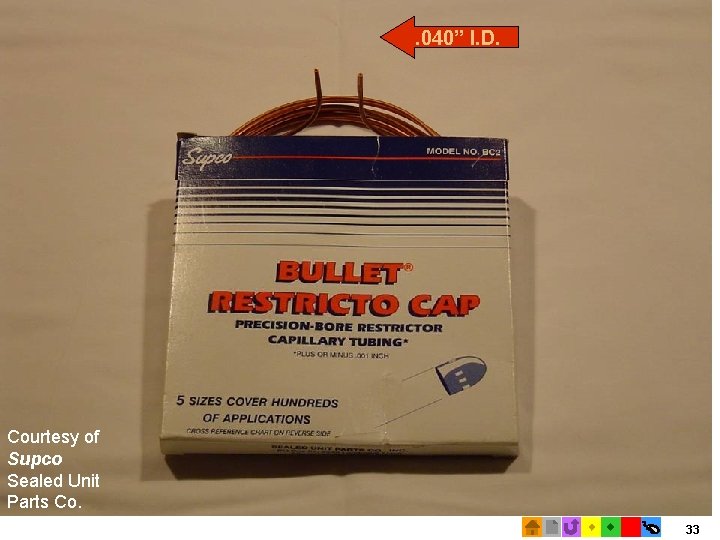
. 040” I. D. Picture of Supco capillary tube Courtesy of Supco Sealed Unit Parts Co. 33
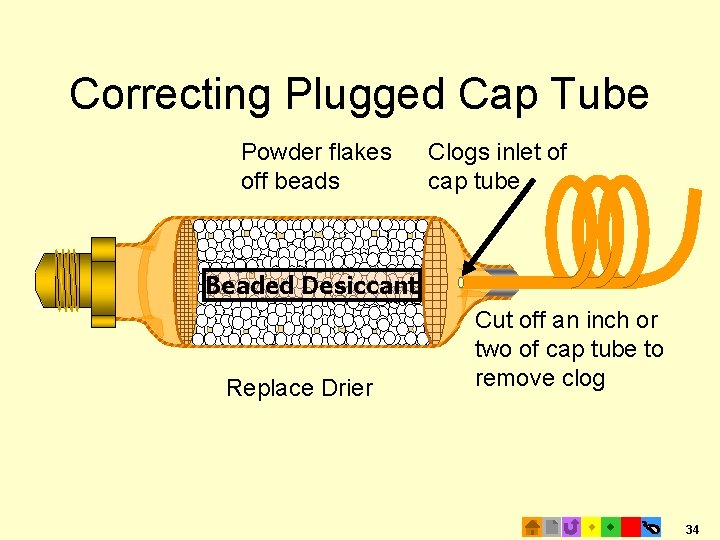
Correcting Plugged Cap Tube Powder flakes off beads Clogs inlet of cap tube Beaded Desiccant Replace Drier Cut off an inch or two of cap tube to remove clog 34
Cutting cap tubes § Do not use tubing cutters § Use a file to score it, then snap it § J/B also makes special cutters 35
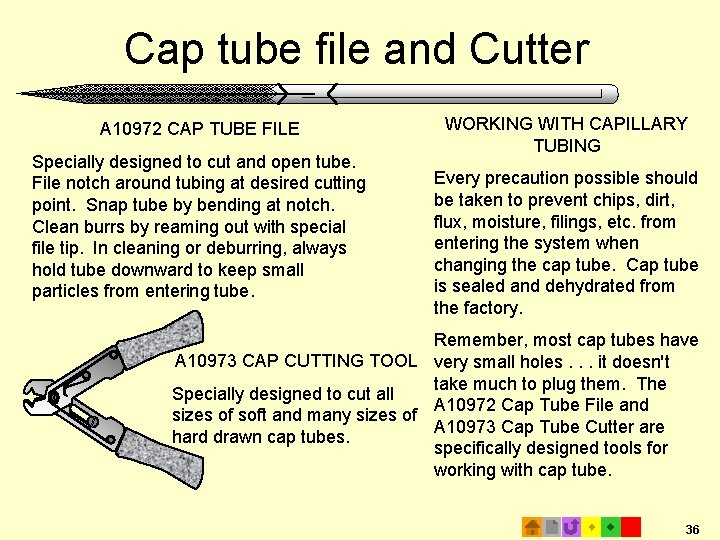
Cap tube file and Cutter A 10972 CAP TUBE FILE Specially designed to cut and open tube. File notch around tubing at desired cutting point. Snap tube by bending at notch. Clean burrs by reaming out with special file tip. In cleaning or deburring, always hold tube downward to keep small particles from entering tube. WORKING WITH CAPILLARY TUBING Every precaution possible should be taken to prevent chips, dirt, flux, moisture, filings, etc. from entering the system when changing the cap tube. Cap tube is sealed and dehydrated from the factory. Remember, most cap tubes have A 10973 CAP CUTTING TOOL very small holes. . . it doesn't take much to plug them. The Specially designed to cut all A 10972 Cap Tube File and sizes of soft and many sizes of A 10973 Cap Tube Cutter are hard drawn cap tubes. specifically designed tools for working with cap tube. 36
Critically Charged System • Any unit with a fixed bore metering device – Exact charge is critical or efficiency &/or capacity is diminished – “Topping off” the charge is not recommended – Tech should recover the refrigerant & weigh in correct (exact) charge 37