
Hurricanes Wind speed in excess of 119 kilometers
- Slides: 17
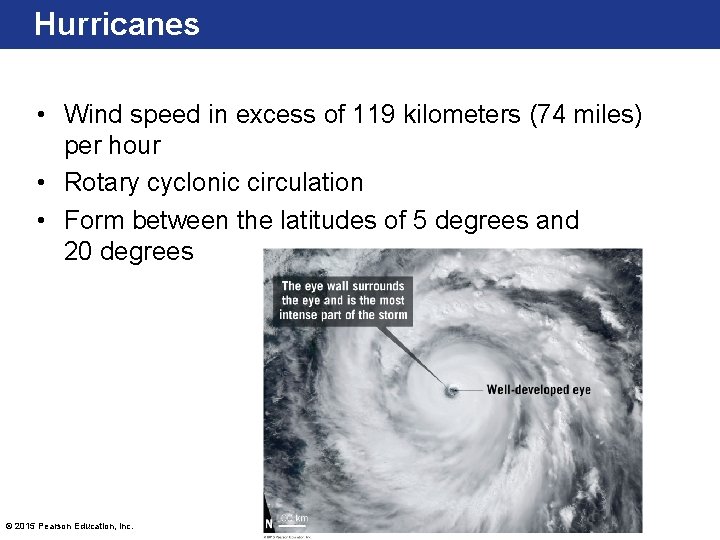
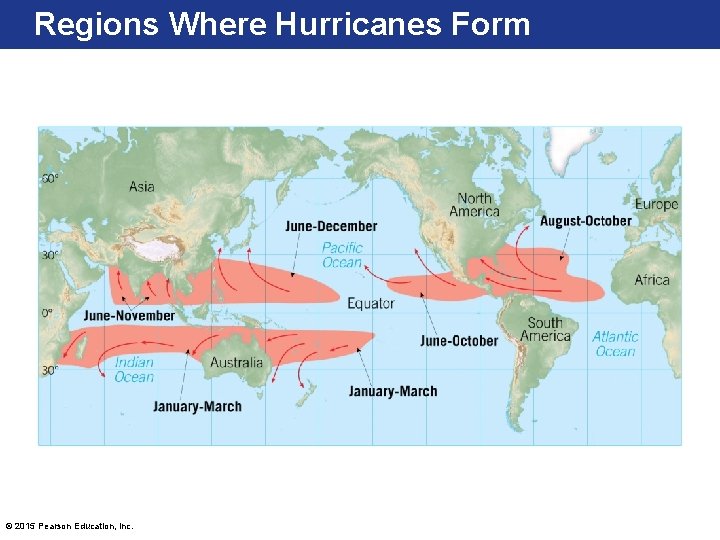
Hurricanes • Wind speed in excess of 119 kilometers (74 miles) per hour • Rotary cyclonic circulation • Form between the latitudes of 5 degrees and 20 degrees © 2015 Pearson Education, Inc.
Regions Where Hurricanes Form © 2015 Pearson Education, Inc.
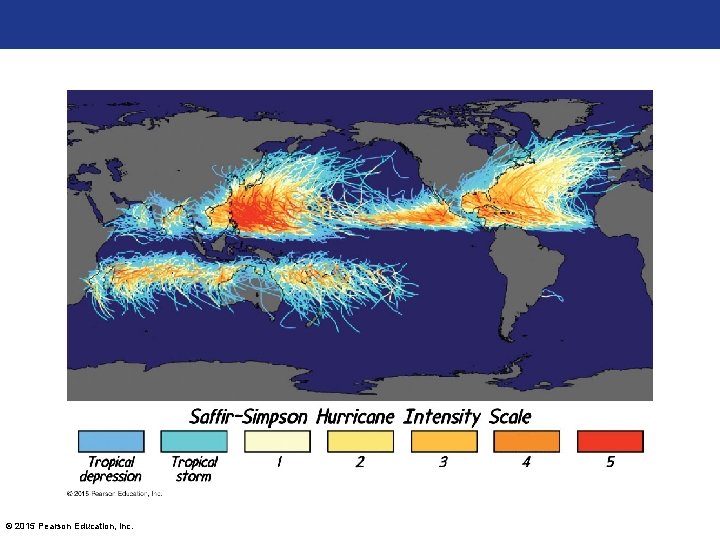
© 2015 Pearson Education, Inc.
Hurricanes • Known as – Typhoons in the western Pacific – Cyclones in the Indian Ocean • North Pacific has the greatest number per year © 2015 Pearson Education, Inc.
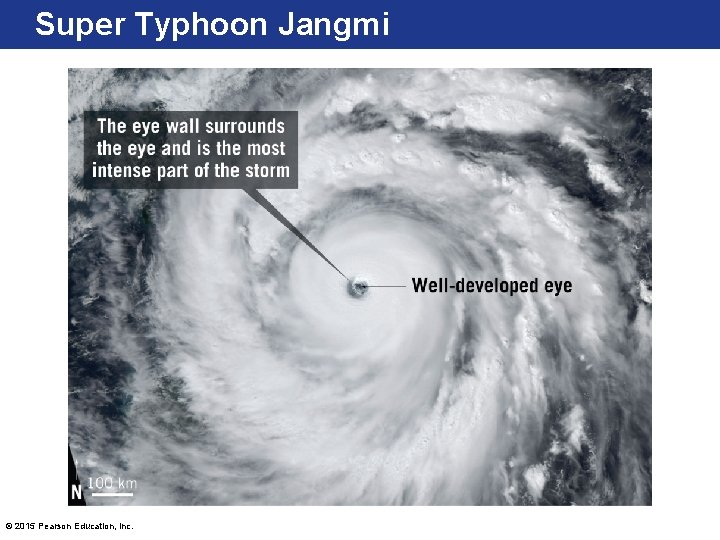
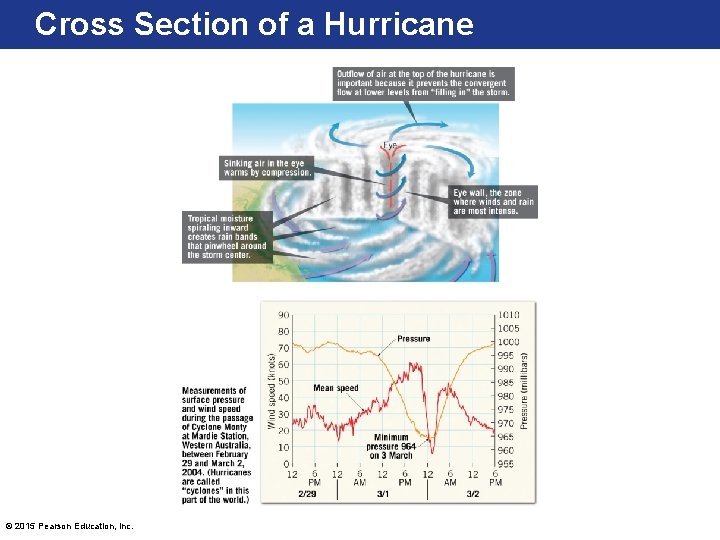
Hurricanes • Parts of a hurricane – Eye wall • • • Near the center Rising air Intense convective activity Wall of cumulonimbus clouds Greatest wind speeds Heaviest rainfall © 2015 Pearson Education, Inc.
Hurricanes • Parts of a hurricane – Eye • • • At the very center About 20 kilometers (12. 5 miles) diameter Precipitation ceases Winds subsides Air gradually descends and heats by compression Warmest part of the storm © 2015 Pearson Education, Inc.
Super Typhoon Jangmi © 2015 Pearson Education, Inc.
Cross Section of a Hurricane © 2015 Pearson Education, Inc.
Hurricanes • Wind speeds reach 300 km/hr • Generate 50 foot waves at sea © 2015 Pearson Education, Inc.
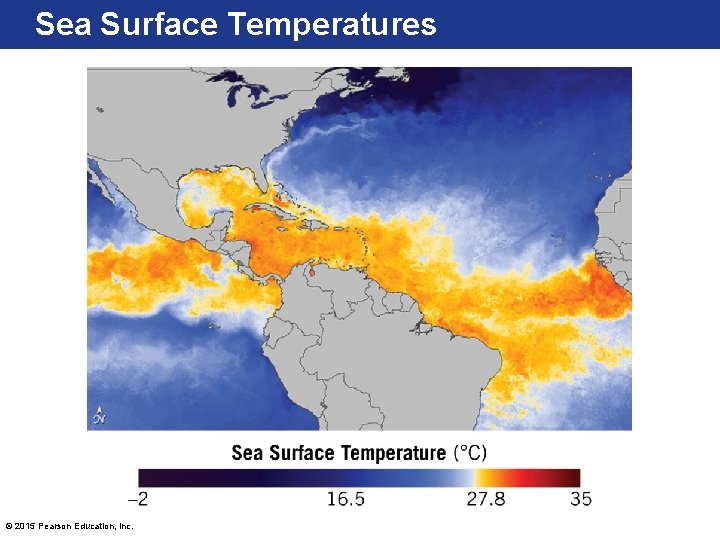
Hurricanes • Hurricane formation and decay – Form in all tropical waters except the • South Atlantic and • Eastern South Pacific – Energy comes from condensing water vapor – Develop most often in late summer when warm water temperatures provide energy and moisture © 2015 Pearson Education, Inc.
Sea Surface Temperatures © 2015 Pearson Education, Inc.
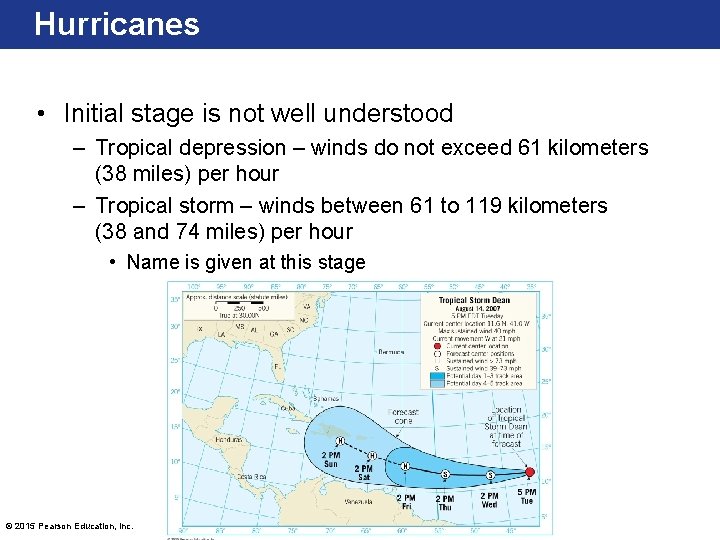
Hurricanes • Initial stage is not well understood – Tropical depression – winds do not exceed 61 kilometers (38 miles) per hour – Tropical storm – winds between 61 to 119 kilometers (38 and 74 miles) per hour • Name is given at this stage © 2015 Pearson Education, Inc.
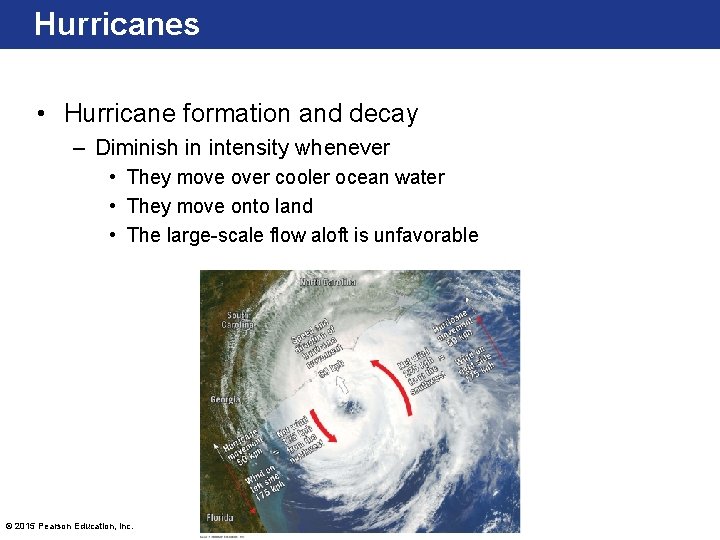
Hurricanes • Hurricane formation and decay – Diminish in intensity whenever • They move over cooler ocean water • They move onto land • The large-scale flow aloft is unfavorable © 2015 Pearson Education, Inc.
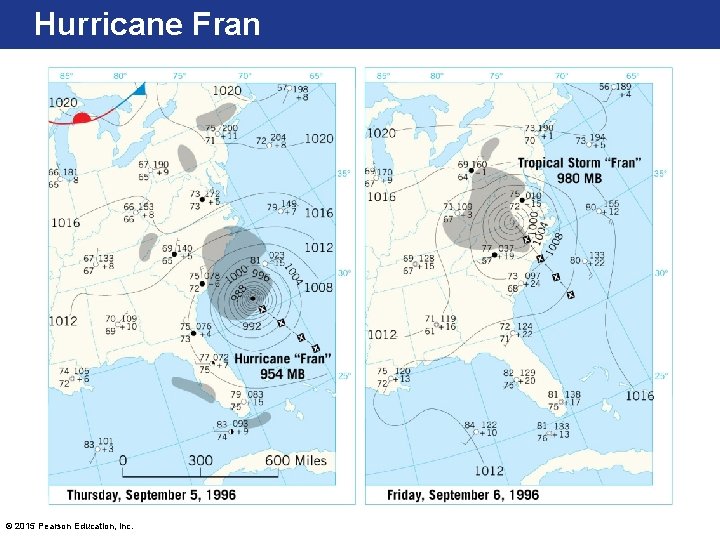
Hurricane Fran © 2015 Pearson Education, Inc.
Hurricanes • Destruction from a hurricane – Factors that affect amount of hurricane damage • Strength of storm (the most important factor) • Size and population density of the area affected • Shape of the ocean bottom near the shore © 2015 Pearson Education, Inc.
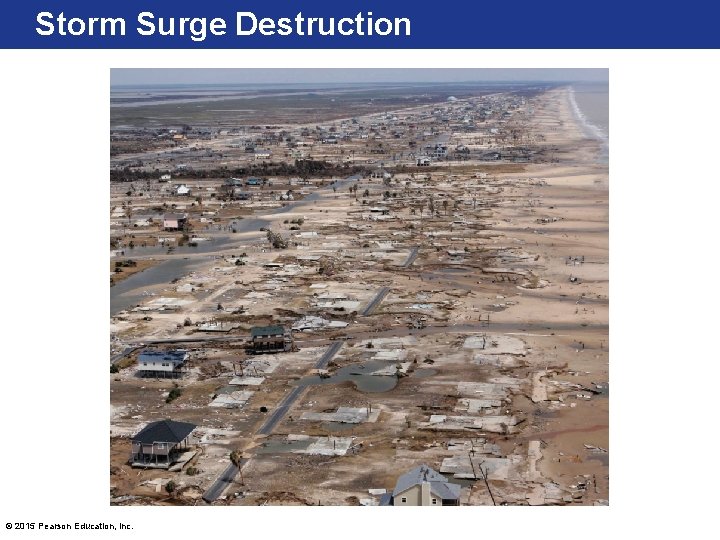
Hurricanes • Categories of hurricane damage – Storm surge – large dome of water 65 to 80 kilometers (40 to 50 miles) wide sweeps across the coast where eye makes landfall – Wind damage – Inland flooding from torrential rains © 2015 Pearson Education, Inc.
Storm Surge Destruction © 2015 Pearson Education, Inc.