
Hurricane Steering as a Potential Vorticity Advection Process
- Slides: 54
Hurricane Steering as a Potential Vorticity Advection Process Brett Hoover 21 March 2007 Copyright Brett Hoover 2007
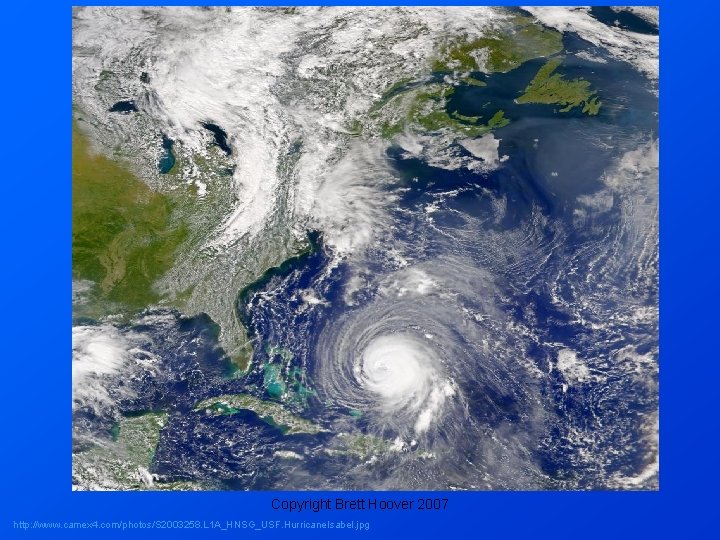
Copyright Brett Hoover 2007 http: //www. camex 4. com/photos/S 2003258. L 1 A_HNSG_USF. Hurricane. Isabel. jpg
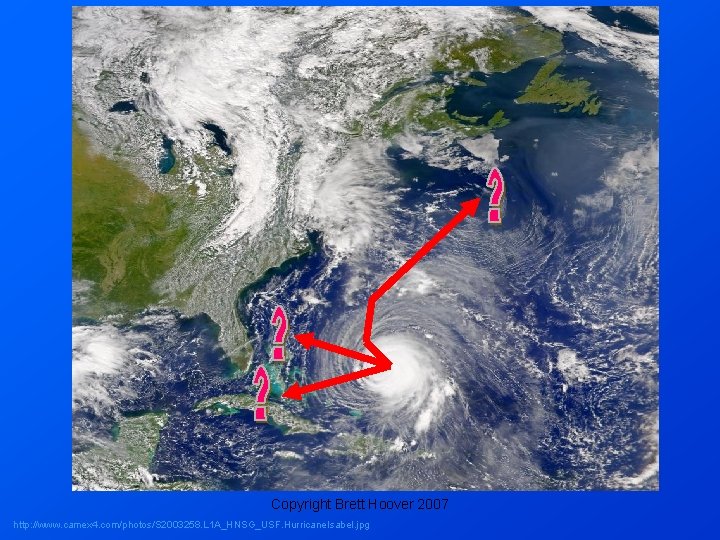
Copyright Brett Hoover 2007 http: //www. camex 4. com/photos/S 2003258. L 1 A_HNSG_USF. Hurricane. Isabel. jpg
Steering Flow – Conventional Methodology • Hurricane steering is composed of two parts: 1) Advection of the hurricane by “environmental flow” 2) Self-propagation mechanisms • Environmental advection is typically the dominant mechanism Copyright Brett Hoover 2007
Steering Flow – Conventional Methodology • Hurricane steering is composed of two parts: 1) Advection of the hurricane by “environmental flow” 2) Self-propagation mechanisms • Environmental advection is typically the dominant mechanism Copyright Brett Hoover 2007
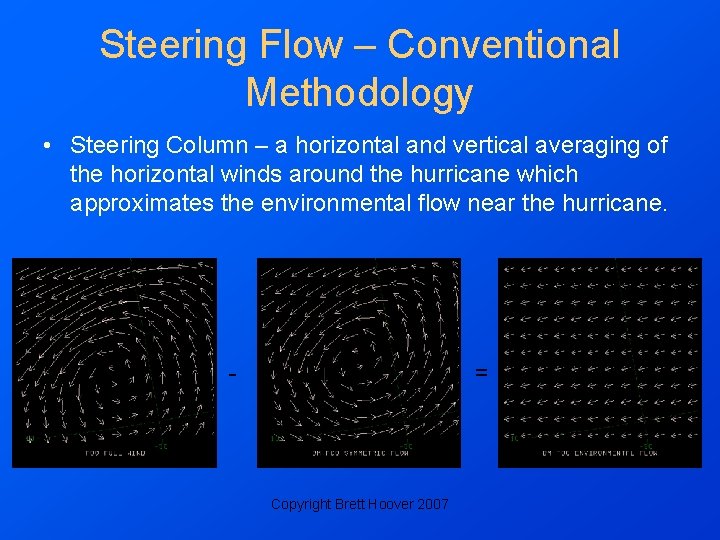
Steering Flow – Conventional Methodology • Steering Column – a horizontal and vertical averaging of the horizontal winds around the hurricane which approximates the environmental flow near the hurricane. - = Copyright Brett Hoover 2007
Steering Flow – Conventional Methodology • What are the characteristics of an optimal steering column? – Chan and Gray (1982) – 550 -770 km radius averaged over 700 -500 h. Pa – Simpson (1971), Dong and Neumann (1986), Pike (1987), and Velden and Leslie (1991) – Optimal vertical average depends on intensity of tropical cyclone – Vortex Intensity- Vortex Depth relationship Copyright Brett Hoover 2007
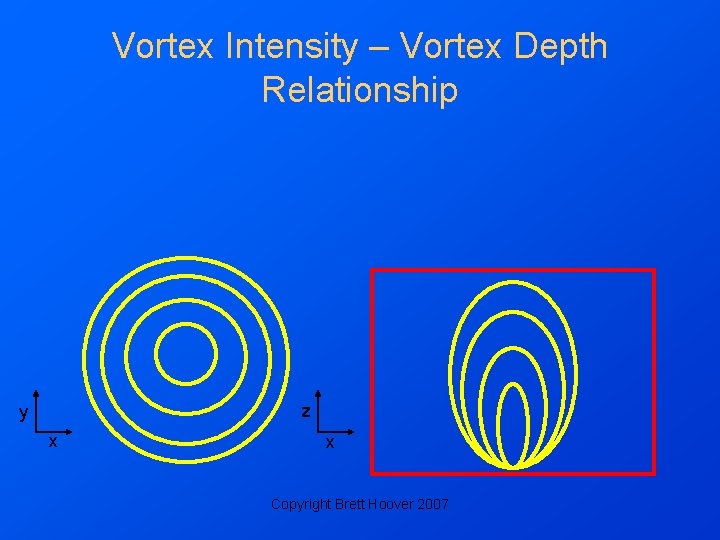
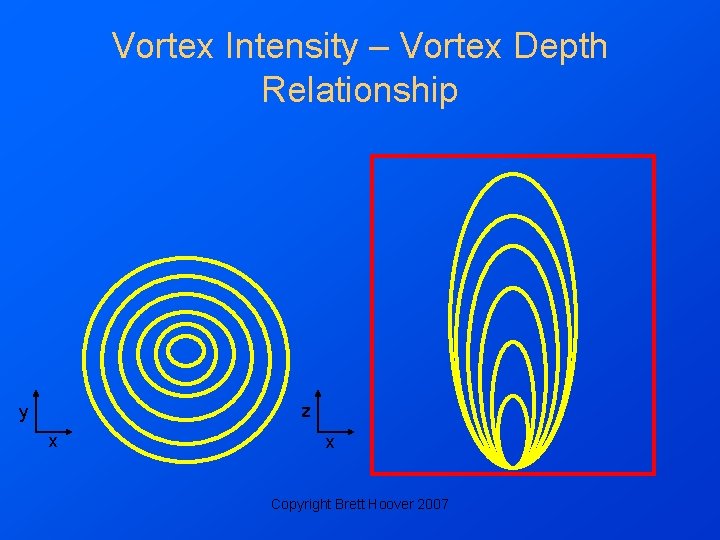
Vortex Intensity – Vortex Depth Relationship • Several studies have shown that more intense TCs move with a deeper steering column, while weaker TCs move with a shallower steering column. • Velden and Leslie (1991) proposed that the more intense a storm becomes, the deeper its characteristic vortex tower builds, which is advected by environmental flow of a greater depth. Copyright Brett Hoover 2007
Vortex Intensity – Vortex Depth Relationship z y x x Copyright Brett Hoover 2007
Vortex Intensity – Vortex Depth Relationship z y x x Copyright Brett Hoover 2007
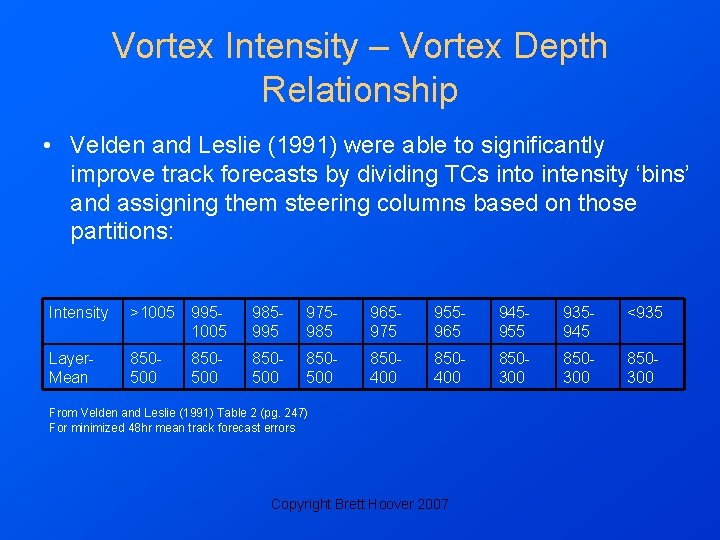
Vortex Intensity – Vortex Depth Relationship • Velden and Leslie (1991) were able to significantly improve track forecasts by dividing TCs into intensity ‘bins’ and assigning them steering columns based on those partitions: Intensity >1005 9951005 985995 975985 965975 955965 945955 935945 <935 Layer. Mean 850500 850400 850300 850500 From Velden and Leslie (1991) Table 2 (pg. 247) For minimized 48 hr mean track forecast errors Copyright Brett Hoover 2007
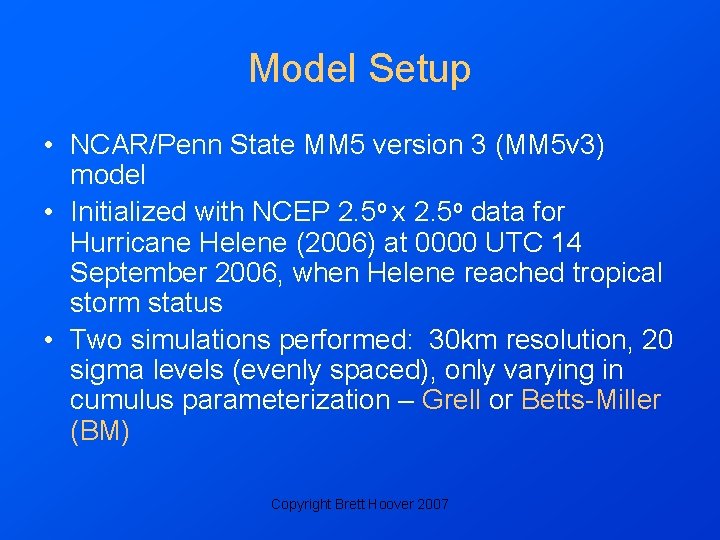
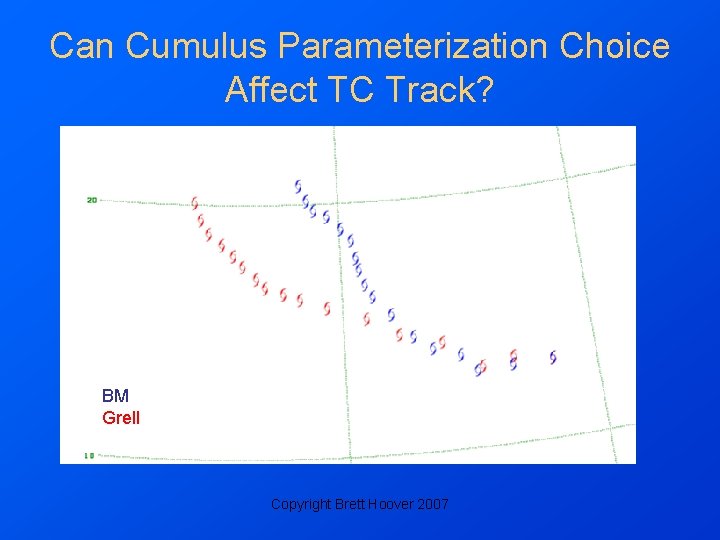
Hypothesis • TC motion can be diagnosed from the perspective of steering as a potential vorticity (PV) advection process. • Since the PV structure of a TC is dependent upon the distribution of latent heating in the cyclone, TC steering, and ultimately TC track, is sensitive to the choice of cumulus parameterization used for a modeled TC. Copyright Brett Hoover 2007
Model Setup • NCAR/Penn State MM 5 version 3 (MM 5 v 3) model • Initialized with NCEP 2. 5 o x 2. 5 o data for Hurricane Helene (2006) at 0000 UTC 14 September 2006, when Helene reached tropical storm status • Two simulations performed: 30 km resolution, 20 sigma levels (evenly spaced), only varying in cumulus parameterization – Grell or Betts-Miller (BM) Copyright Brett Hoover 2007
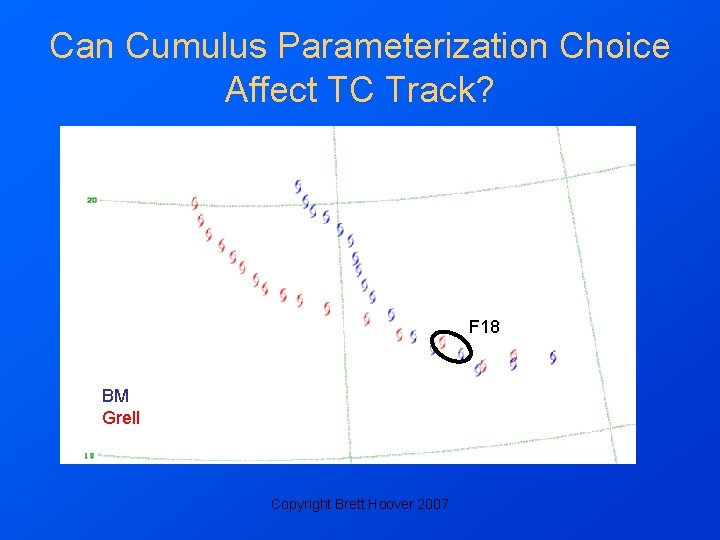
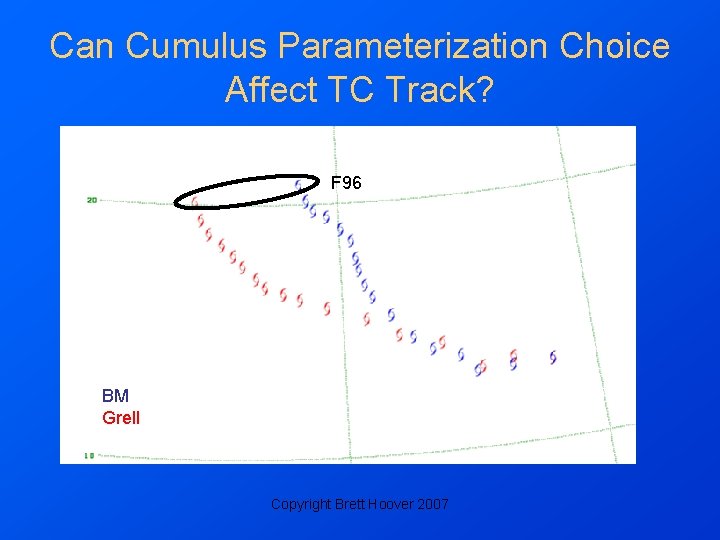
Can Cumulus Parameterization Choice Affect TC Track? BM Grell Copyright Brett Hoover 2007
Can Cumulus Parameterization Choice Affect TC Track? F 18 BM Grell Copyright Brett Hoover 2007
Can Cumulus Parameterization Choice Affect TC Track? F 96 BM Grell Copyright Brett Hoover 2007
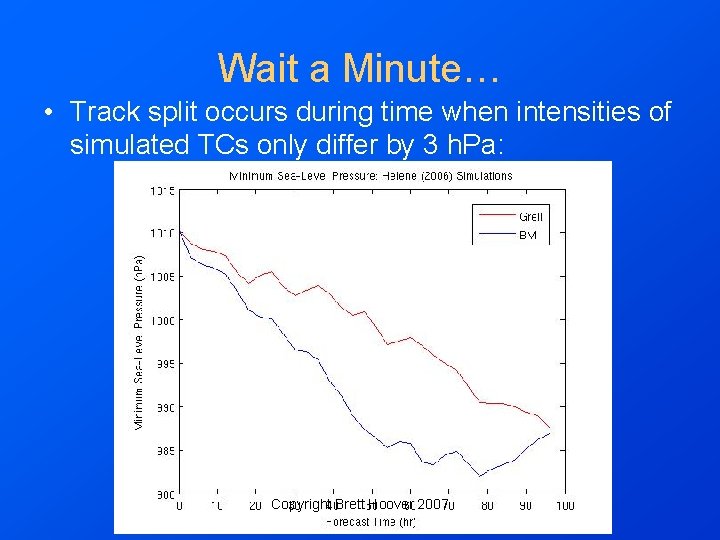
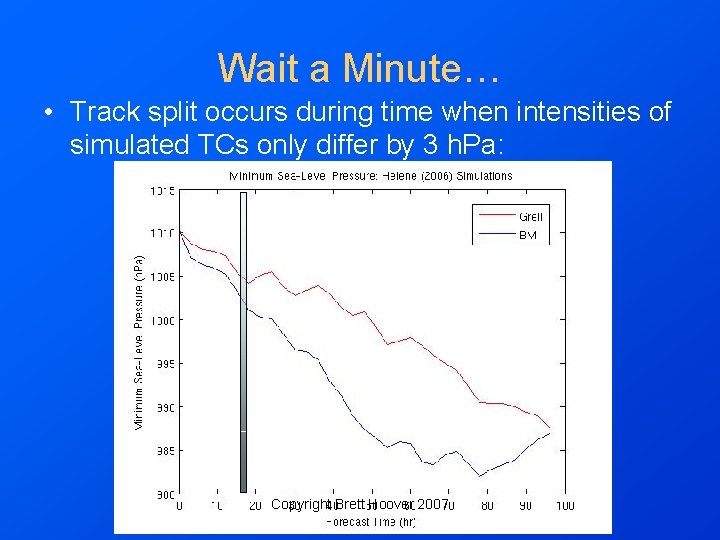
Wait a Minute… • Track split occurs during time when intensities of simulated TCs only differ by 3 h. Pa: Copyright Brett Hoover 2007
Wait a Minute… • Track split occurs during time when intensities of simulated TCs only differ by 3 h. Pa: Copyright Brett Hoover 2007
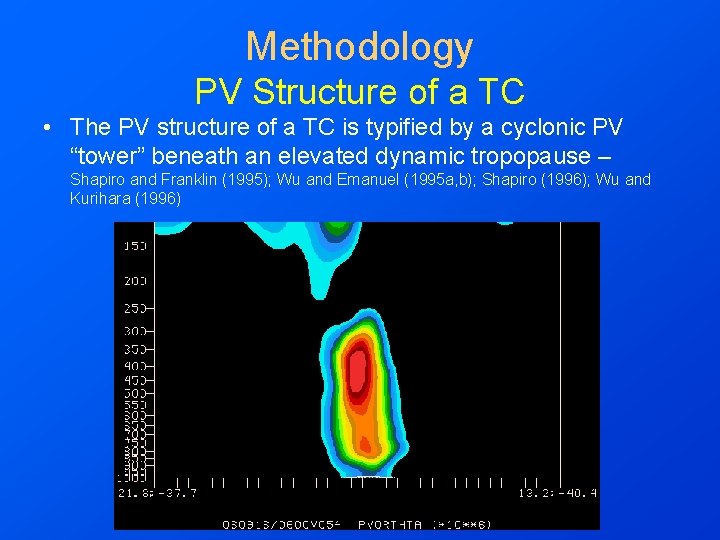
Methodology PV Structure of a TC • The PV structure of a TC is typified by a cyclonic PV “tower” beneath an elevated dynamic tropopause – Shapiro and Franklin (1995); Wu and Emanuel (1995 a, b); Shapiro (1996); Wu and Kurihara (1996) Copyright Brett Hoover 2007
Methodology Optimal Steering Level • We wish to analyze the steering of a simulated TC with respect to significant regions of the PV structure. • It is hypothesized that the optimal steering column will be at or near one of these regions. Copyright Brett Hoover 2007
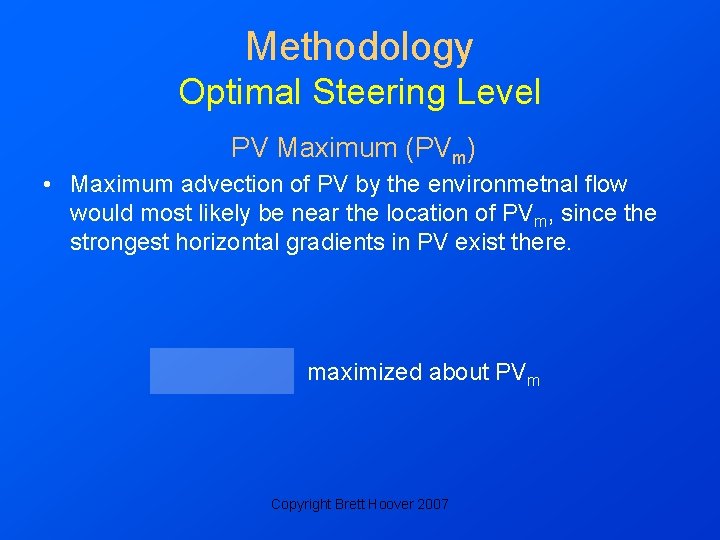
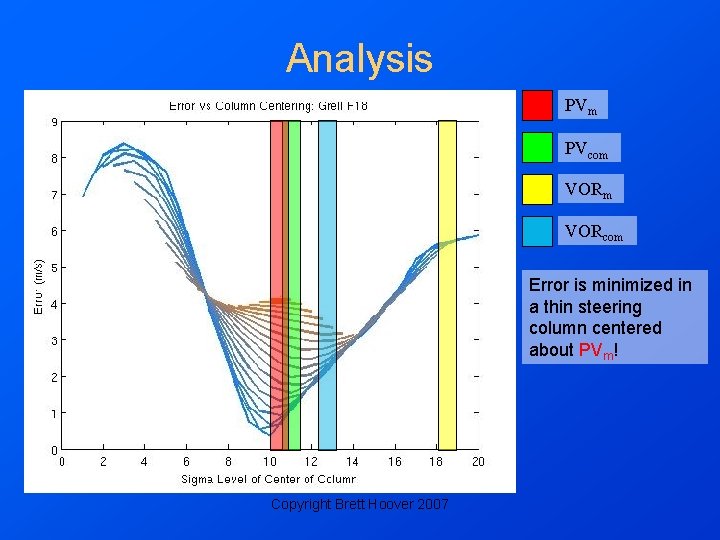
Methodology Optimal Steering Level PV Maximum (PVm) • Maximum advection of PV by the environmetnal flow would most likely be near the location of PVm, since the strongest horizontal gradients in PV exist there. maximized about PVm Copyright Brett Hoover 2007
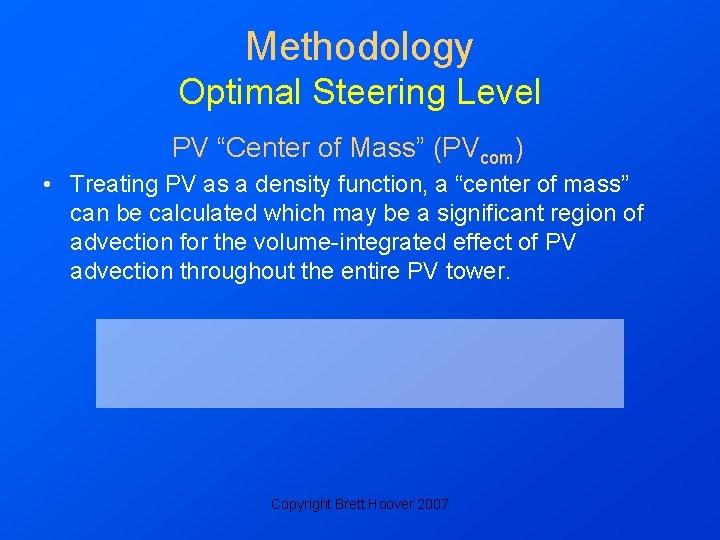
Methodology Optimal Steering Level PV “Center of Mass” (PVcom) • Treating PV as a density function, a “center of mass” can be calculated which may be a significant region of advection for the volume-integrated effect of PV advection throughout the entire PV tower. Copyright Brett Hoover 2007
Methodology Optimal Steering Level • • • In addition, we wish to look at two more regions of interest: Vorticity Maximum (VORm) Vorticity Center of Mass (VORcom) • Where these are analogous to PVm and PVcom Copyright Brett Hoover 2007
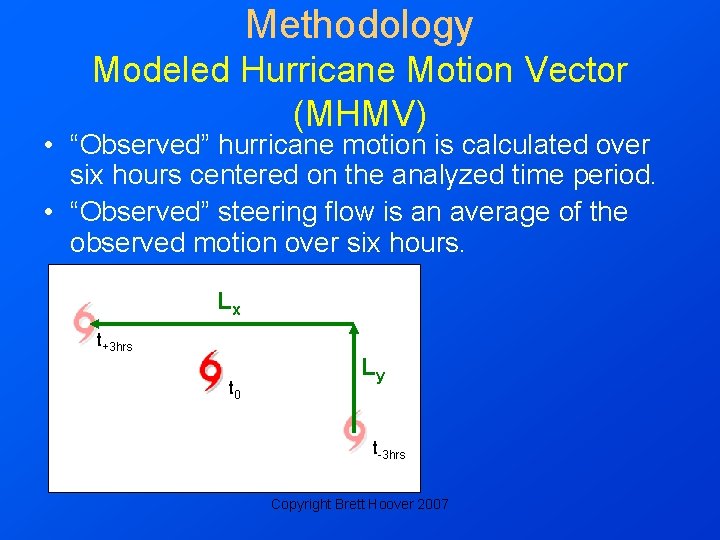
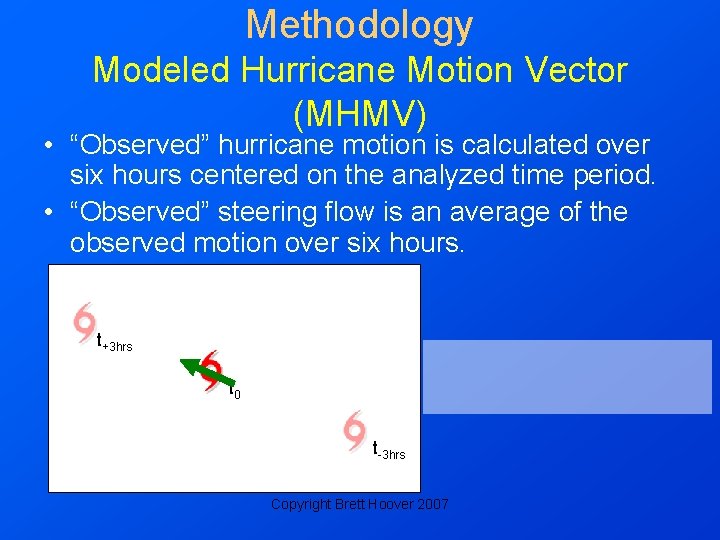
Methodology Modeled Hurricane Motion Vector (MHMV) • “Observed” hurricane motion is calculated over six hours centered on the analyzed time period. • “Observed” steering flow is an average of the observed motion over six hours. Lx t+3 hrs t 0 Ly t-3 hrs Copyright Brett Hoover 2007
Methodology Modeled Hurricane Motion Vector (MHMV) • “Observed” hurricane motion is calculated over six hours centered on the analyzed time period. • “Observed” steering flow is an average of the observed motion over six hours. t+3 hrs t 0 t-3 hrs Copyright Brett Hoover 2007
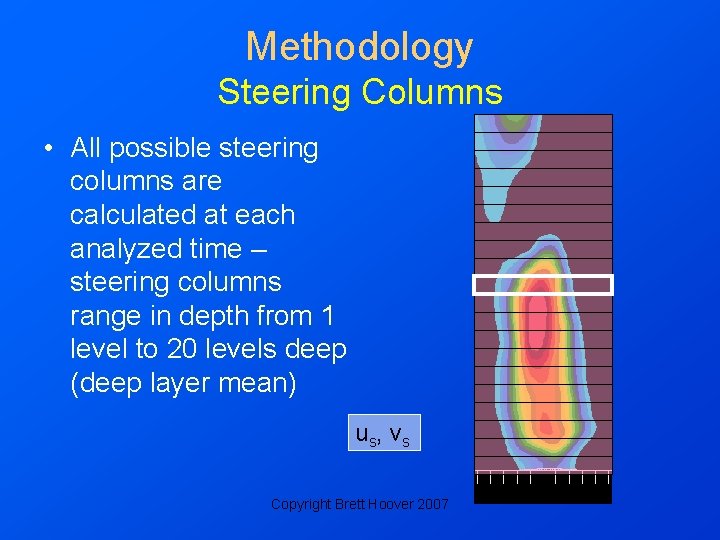
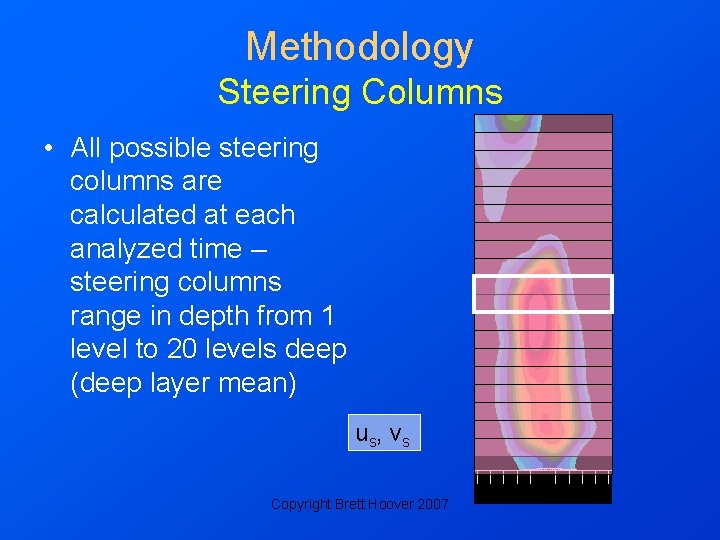
Methodology Steering Columns • All possible steering columns are calculated at each analyzed time – steering columns range in depth from 1 level to 20 levels deep (deep layer mean) us, vs Copyright Brett Hoover 2007
Methodology Steering Columns • All possible steering columns are calculated at each analyzed time – steering columns range in depth from 1 level to 20 levels deep (deep layer mean) us, vs Copyright Brett Hoover 2007
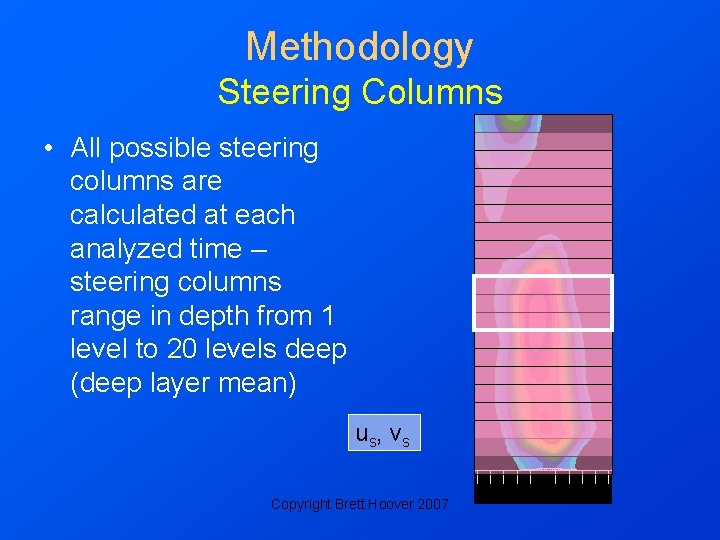
Methodology Steering Columns • All possible steering columns are calculated at each analyzed time – steering columns range in depth from 1 level to 20 levels deep (deep layer mean) us, vs Copyright Brett Hoover 2007
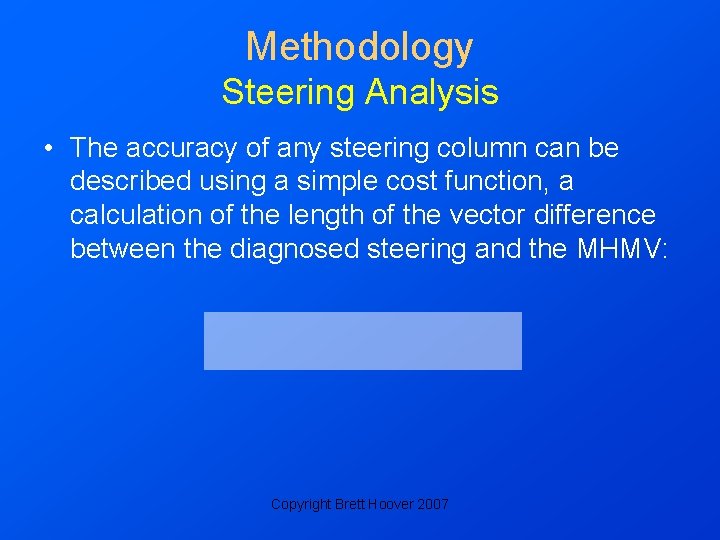
Methodology Steering Analysis • The accuracy of any steering column can be described using a simple cost function, a calculation of the length of the vector difference between the diagnosed steering and the MHMV: Copyright Brett Hoover 2007
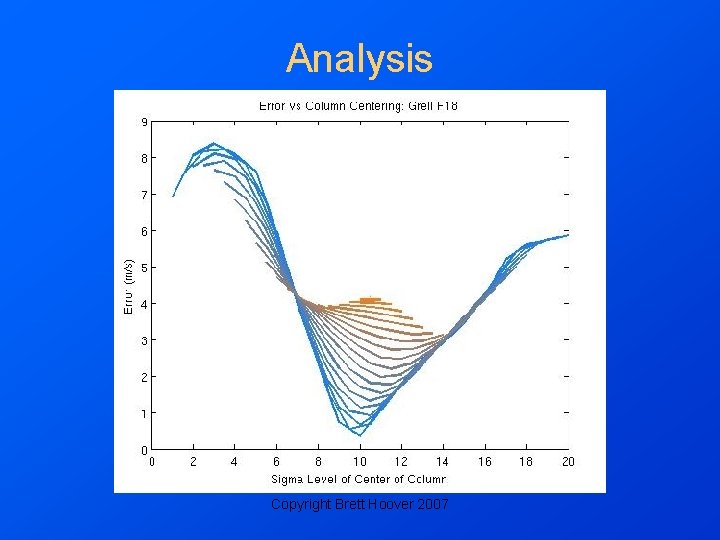
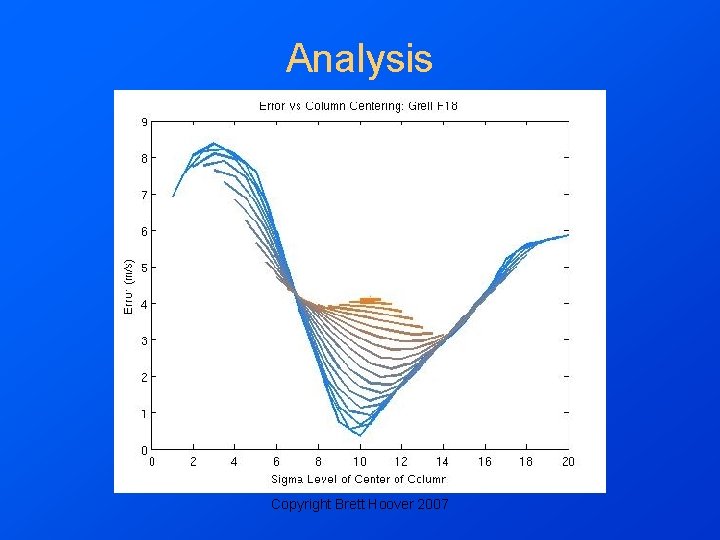
Analysis Copyright Brett Hoover 2007
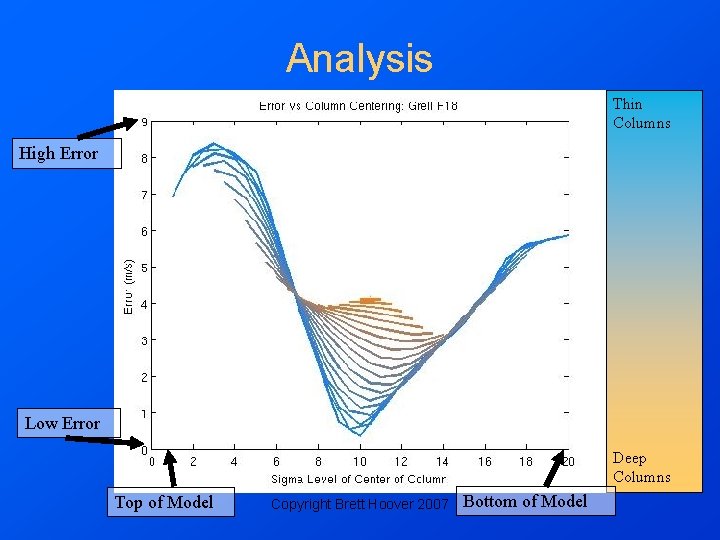
Analysis Thin Columns High Error Low Error Deep Columns Top of Model Copyright Brett Hoover 2007 Bottom of Model
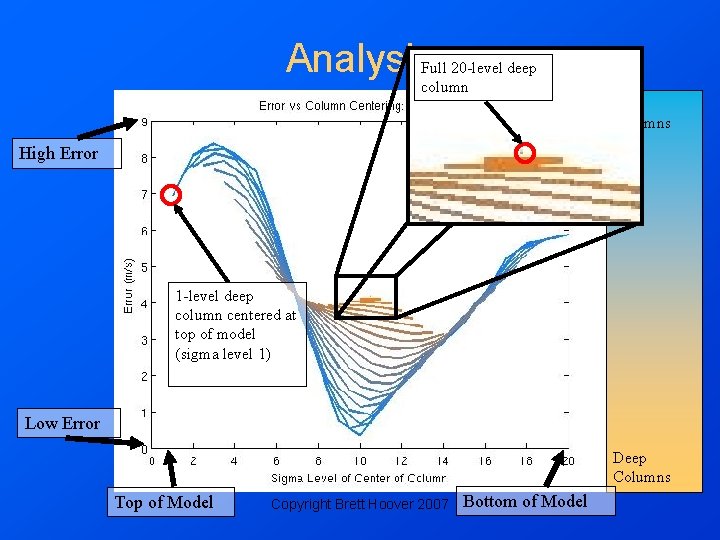
Analysis Full 20 -level deep column Thin Columns High Error 1 -level deep column centered at top of model (sigma level 1) Low Error Deep Columns Top of Model Copyright Brett Hoover 2007 Bottom of Model
Analysis Copyright Brett Hoover 2007
Analysis PVm PVcom VORcom Error is minimized in a thin steering column centered about PVm! Copyright Brett Hoover 2007
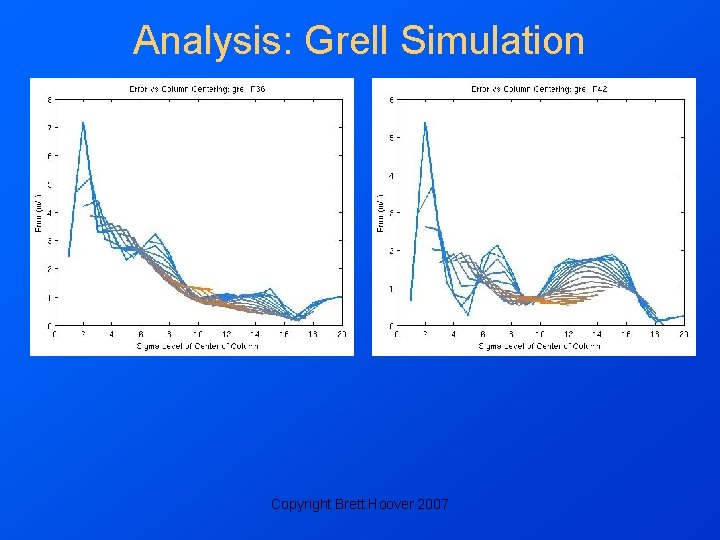
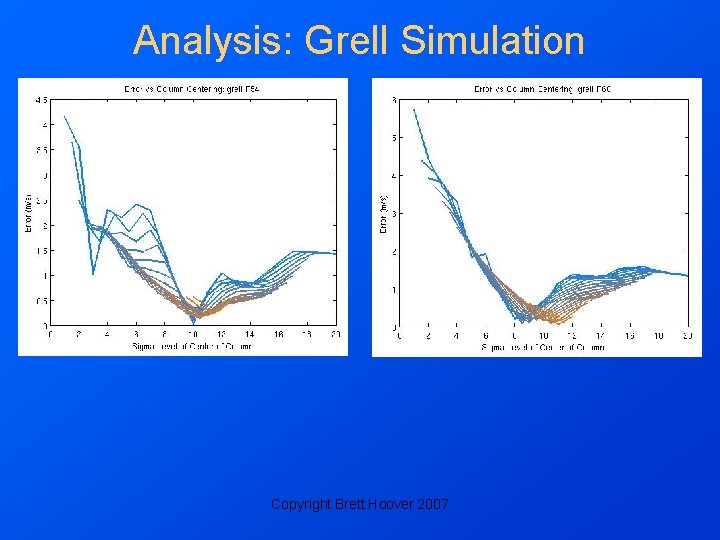
Analysis: Grell Simulation Copyright Brett Hoover 2007
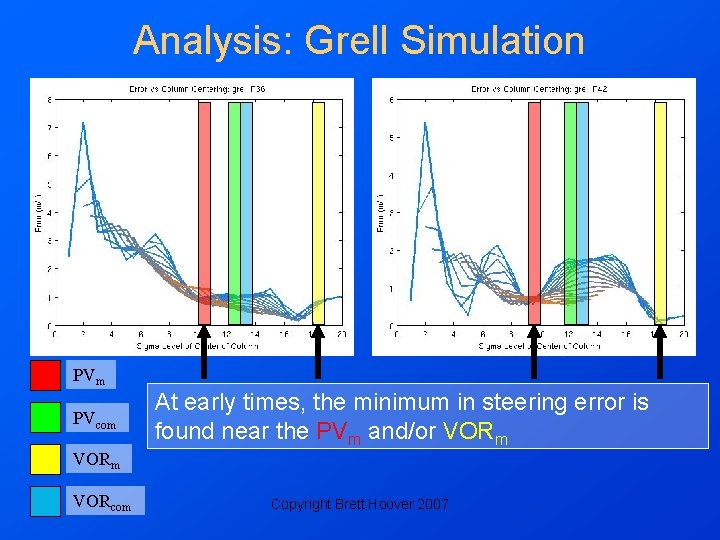
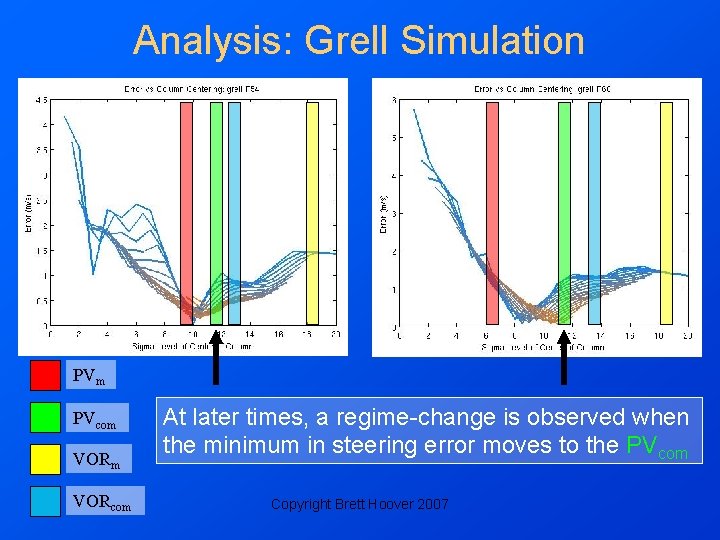
Analysis: Grell Simulation PVm PVcom At early times, the minimum in steering error is found near the PVm and/or VORm VORcom Copyright Brett Hoover 2007
Analysis: Grell Simulation Copyright Brett Hoover 2007
Analysis: Grell Simulation PVm PVcom VORcom At later times, a regime-change is observed when the minimum in steering error moves to the PVcom Copyright Brett Hoover 2007
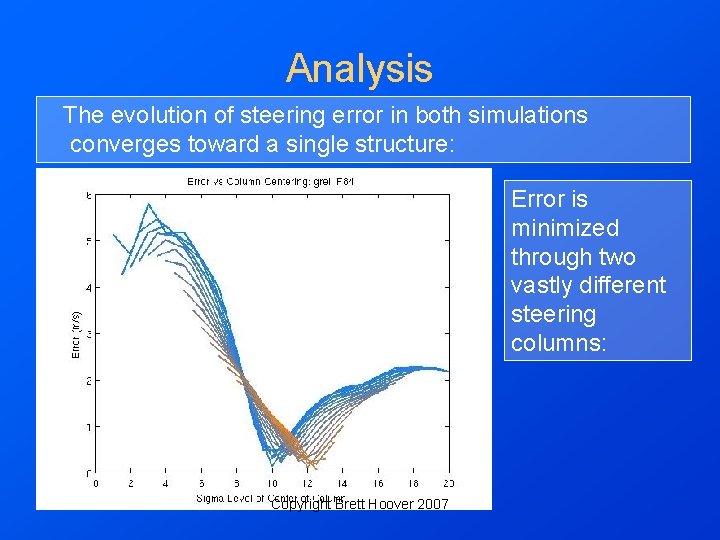
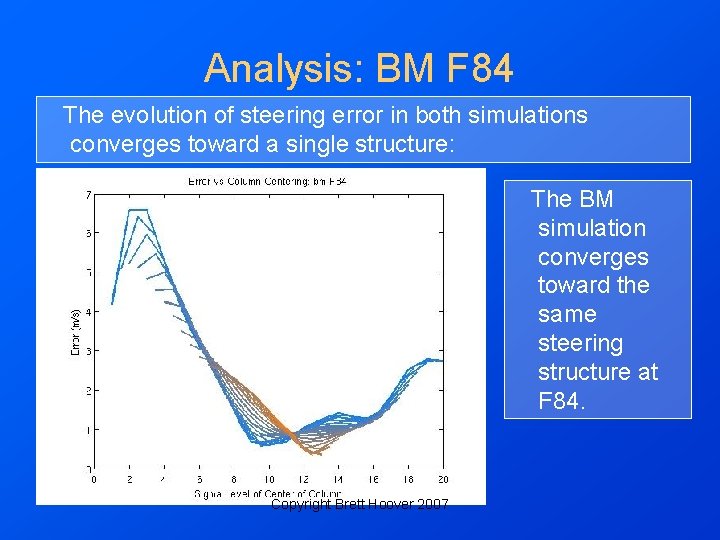
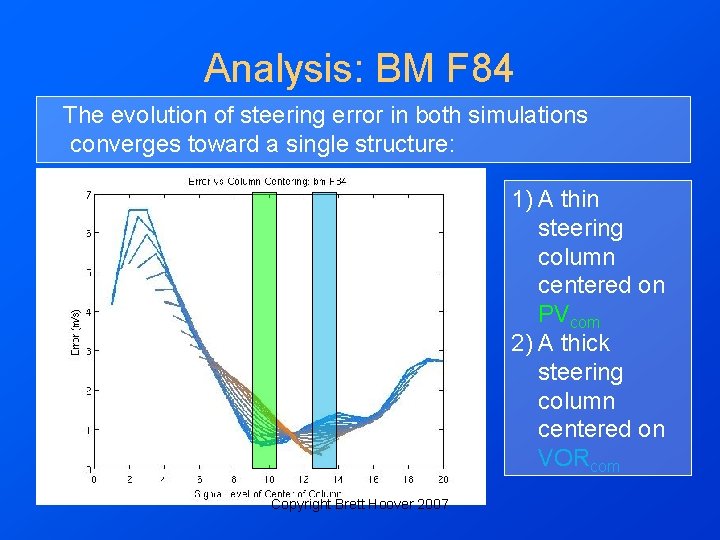
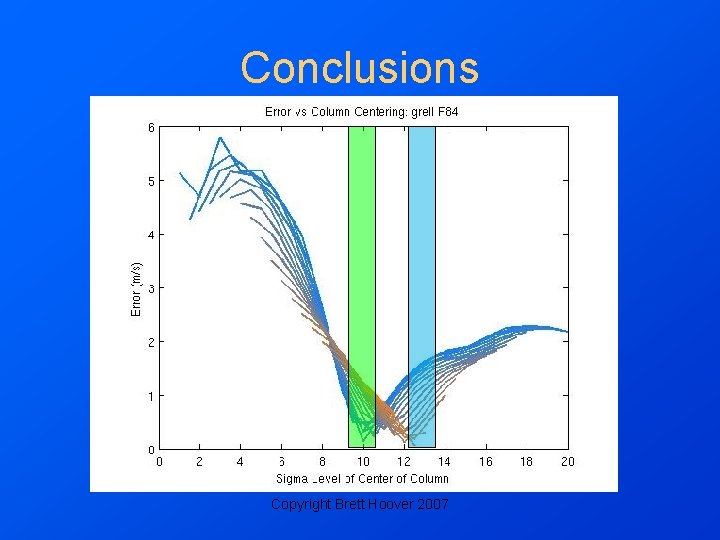
Analysis The evolution of steering error in both simulations converges toward a single structure: Error is minimized through two vastly different steering columns: Copyright Brett Hoover 2007
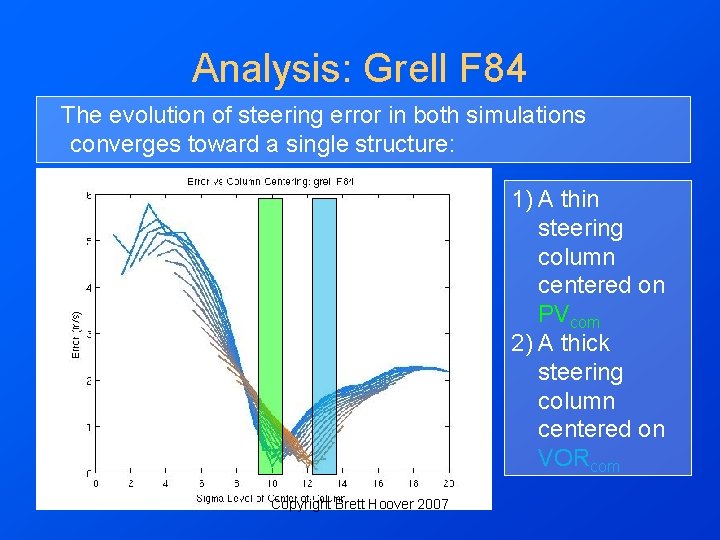
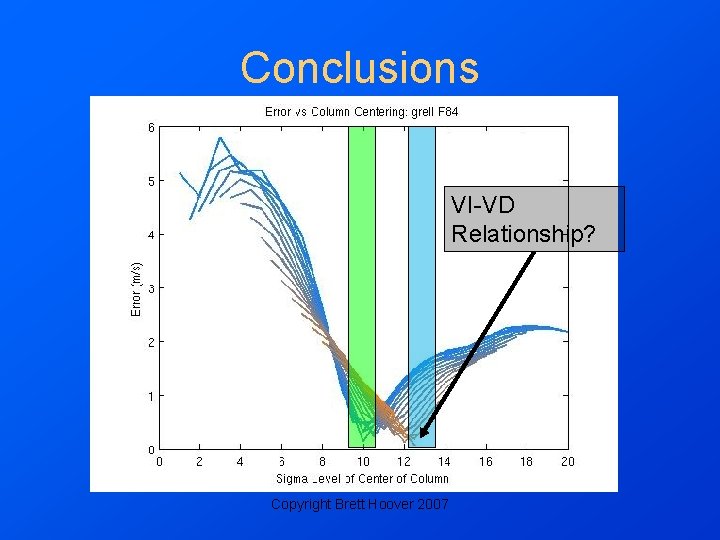
Analysis: Grell F 84 The evolution of steering error in both simulations converges toward a single structure: 1) A thin steering column centered on PVcom 2) A thick steering column centered on VORcom Copyright Brett Hoover 2007
Analysis: BM F 84 The evolution of steering error in both simulations converges toward a single structure: The BM simulation converges toward the same steering structure at F 84. Copyright Brett Hoover 2007
Analysis: BM F 84 The evolution of steering error in both simulations converges toward a single structure: 1) A thin steering column centered on PVcom 2) A thick steering column centered on VORcom Copyright Brett Hoover 2007
Analysis • The relationship of PV structure to steering column structure appears to change over the course of the simulation: PVm PVcom • Is there a corresponding change in TC PV structure? Copyright Brett Hoover 2007
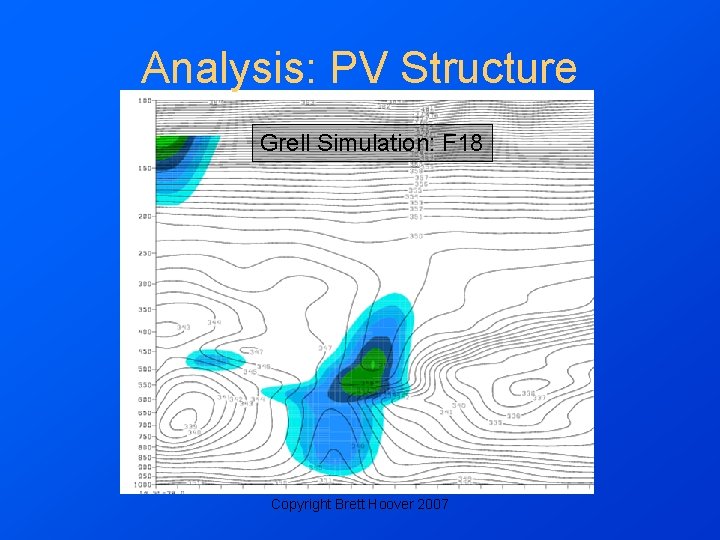
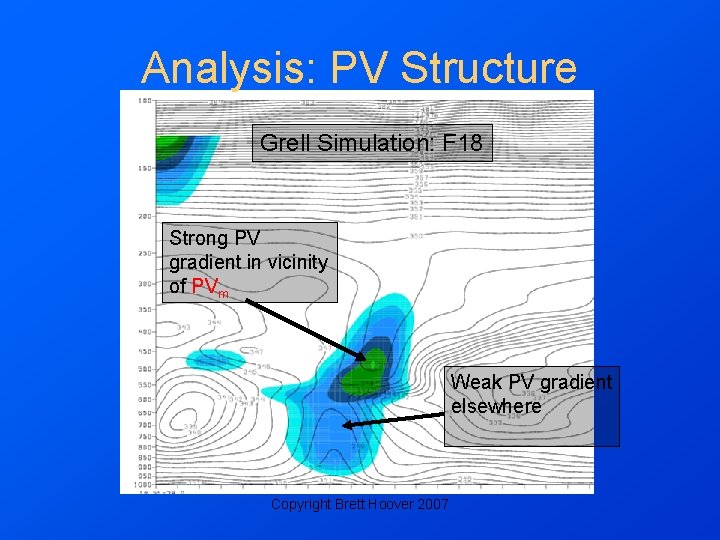
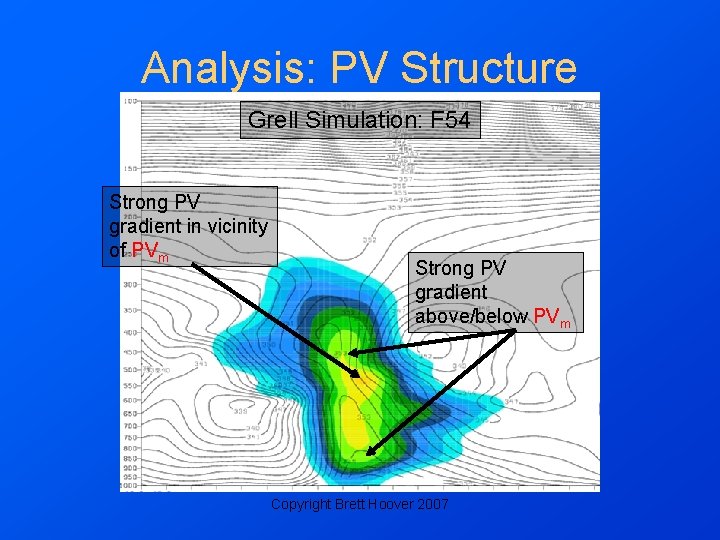
Analysis: PV Structure • PV structure is analyzed at times before and after the ‘regime-shift’ in steering. • At times when steering error is minimized around PVm, the PV structure of the TC localizes strong advection to the location of PVm. Copyright Brett Hoover 2007
Analysis: PV Structure Grell Simulation: F 18 Copyright Brett Hoover 2007
Analysis: PV Structure Grell Simulation: F 18 Strong PV gradient in vicinity of PVm Weak PV gradient elsewhere Copyright Brett Hoover 2007
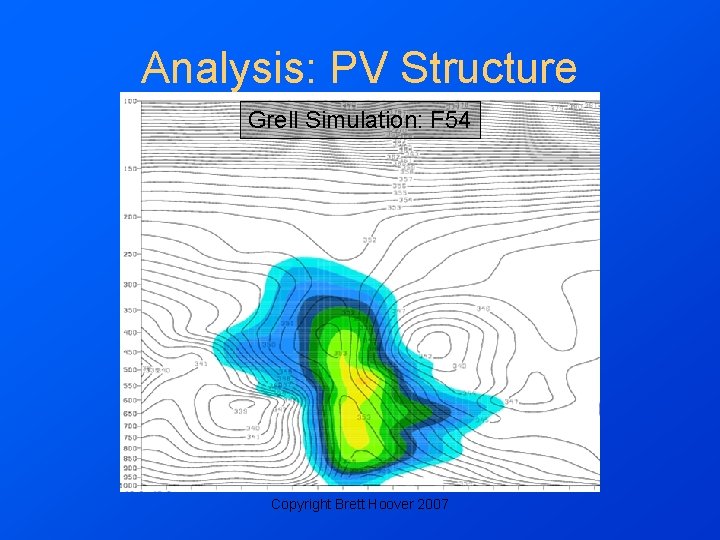
Analysis: PV Structure • At times when the steering error is minimized around PVcom, there are significant contributions to PV advection from regions below PVm. • It is thought that the integrated effect of advection throughout the depth of the PV tower creates the minimum in steering error at PVcom. Copyright Brett Hoover 2007
Analysis: PV Structure Grell Simulation: F 54 Copyright Brett Hoover 2007
Analysis: PV Structure Grell Simulation: F 54 Strong PV gradient in vicinity of PVm Strong PV gradient above/below PVm Copyright Brett Hoover 2007
Conclusions • TC steering using steering columns is optimized when the column is related to the PV structure of the TC. • Cumulus parameterization can change the PV distribution in a TC, thereby significantly changing the steering and track of a modeled TC. • The relationship between TC steering and TC structure is more complicated than a simple VIVD relationship. Copyright Brett Hoover 2007
Conclusions Copyright Brett Hoover 2007
Conclusions VI-VD Relationship? Copyright Brett Hoover 2007
Acknowledgements This work was supported by the National Science Foundation Grant ATM-0125169. The first author was supported by an American Meteorological Society 21 st Century Campaign Graduate Fellowship. Copyright Brett Hoover 2007
References • • • Chan, J. and W. Gray, 1982: Tropical cyclone movement and surrounding flow relationships. Mon. Wea. Rev. , 110, 1354 -1374. Dong, K. and C. Neumann, 1986: The relationship between tropical cyclone motion and environmental geostrophic flows. Mon. Wea. Rev. , 114, 115 -122. Pike, A. C. , and C. J. Neumann, 1987: The variation of track forecast difficulty among tropical cyclone basins. Wea. Forecasting. , 2, 237 -242. Shapiro, L. J. , 1996. The motion of Hurricane Gloria: A potential vorticity diagnosis. Mon. Wea. Rev. , 124, 2497 -2508. Shapiro, L. J. , and J. L. Franklin, 1995. Potential vorticity in Hurricane Gloria. Mon. Wea. Rev. , 123, 1465 -1475. Simpson, R. , 1971: The decision process in hurricane forecasting. NOAA Tech. Memo. NWS SR 53, 30 pp. [Available from U. S. Dept. of Commerce, Washington DC, 20233. ] Velden, C. , and L. Leslie, 1991: The basic relationship between tropical cyclone intensity and the depth of the environmental steering layer in the Australian region. Wea. Forecasting, 6, 244 -546. Wu, C. -C, and K. A. Emanuel, 1995 a: Potential vorticity diagnostics of hurricane movement. Part I: A case study of Hurricane Bob (1991). Mon. Wea. Rev. , 123, 69 -92. Wu, C. -C, and K. A. Emanuel, 1995 b: Potential vorticity diagnostics of hurricane movement. Part II: Tropical Storm Ana (1991) and Hurricane Andrew (1992). Mon. Wea. Rev. , 123, 93 -109. Wu, C. -C, and Y. Kurihara, 1996: A numerical study of the feedback mechanisms of hurricaneenvironment interaction on hurricane movement from a potential vorticity perspective. J. ‘ Atmos. Sci. , 53, 2264 -2282. Copyright Brett Hoover 2007