
HunterForagers to Settled Society Overview Key Concepts Big
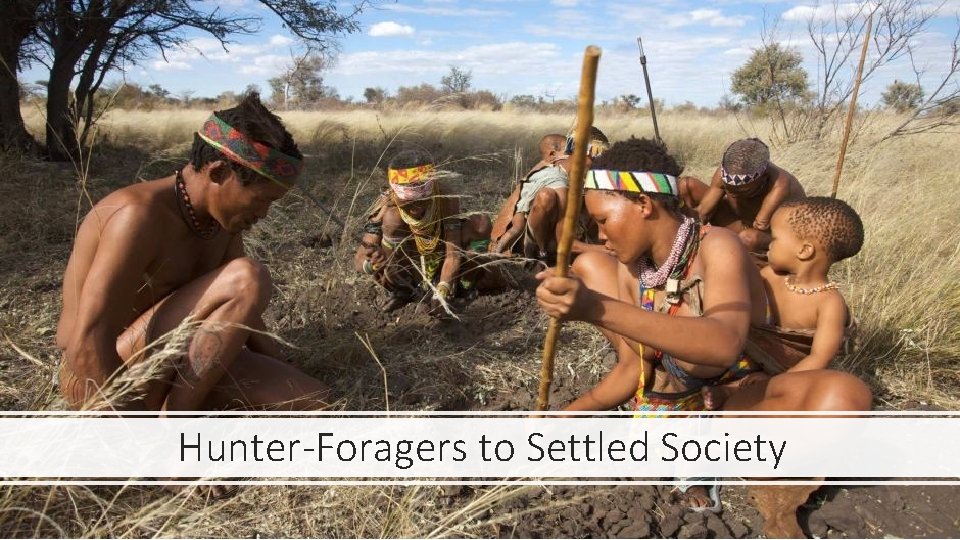
Hunter-Foragers to Settled Society
Overview • Key Concepts: • Big geography • Neolithic Revolution • Development of early societies • Material Evidence: • • Size and composition of skeletons Flintknapping remains Burn pits Material Remains
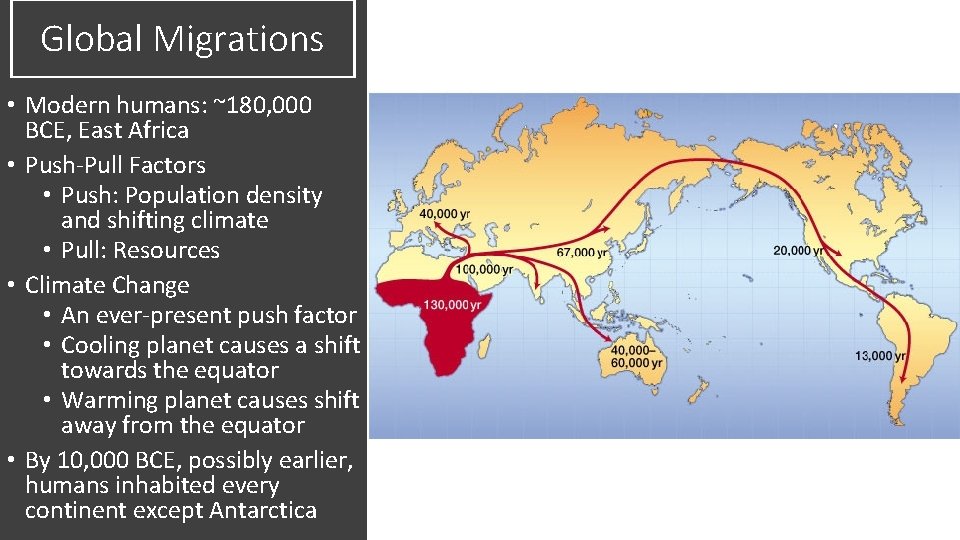
Global Migrations • Modern humans: ~180, 000 BCE, East Africa • Push-Pull Factors • Push: Population density and shifting climate • Pull: Resources • Climate Change • An ever-present push factor • Cooling planet causes a shift towards the equator • Warming planet causes shift away from the equator • By 10, 000 BCE, possibly earlier, humans inhabited every continent except Antarctica
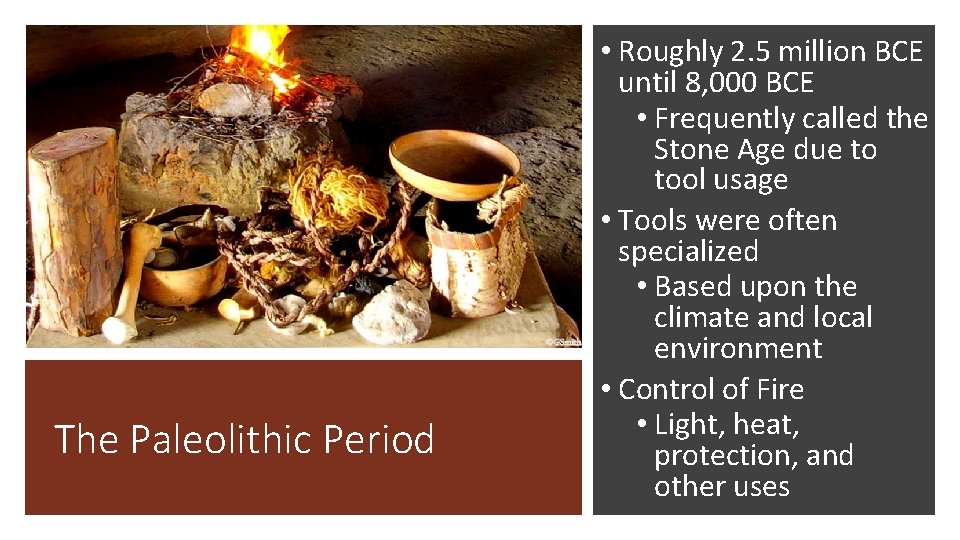
The Paleolithic Period • Roughly 2. 5 million BCE until 8, 000 BCE • Frequently called the Stone Age due to tool usage • Tools were often specialized • Based upon the climate and local environment • Control of Fire • Light, heat, protection, and other uses

Hunter-Forager Society • Nuclear family at the center of life • Kinship: Several related families working together • Kinship < Clan < Tribe • No family relation necessary to be considered part of a tribe • Though self-sufficient, generally not isolated • Trade in food, tools, clothing, and even people
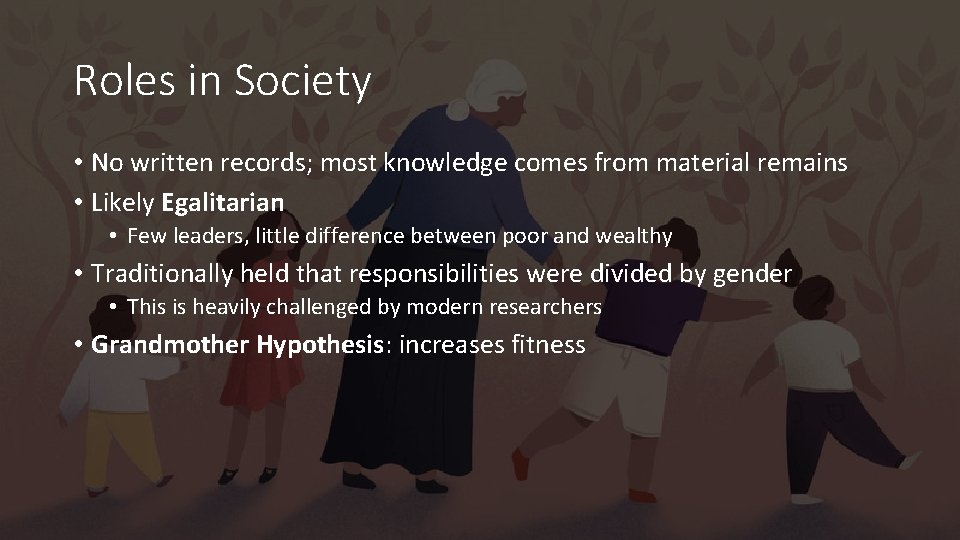
Roles in Society • No written records; most knowledge comes from material remains • Likely Egalitarian • Few leaders, little difference between poor and wealthy • Traditionally held that responsibilities were divided by gender • This is heavily challenged by modern researchers • Grandmother Hypothesis: increases fitness
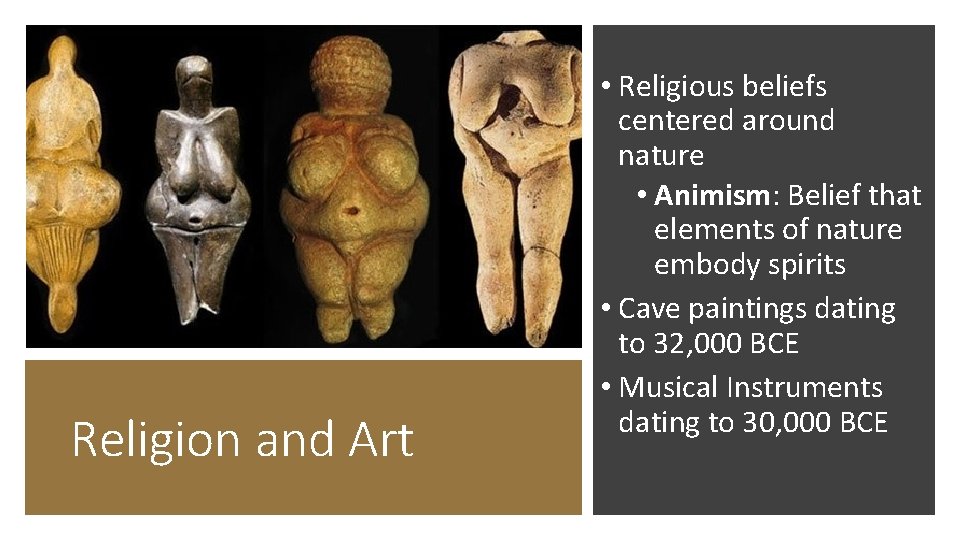
Religion and Art • Religious beliefs centered around nature • Animism: Belief that elements of nature embody spirits • Cave paintings dating to 32, 000 BCE • Musical Instruments dating to 30, 000 BCE
Neolithic Revolution • ~8, 000 BCE Ice Age was ending • Warming climate led to increase in sociopolitical developments • Agricultural Revolution • Characterized by: Agriculture, Pastoralism, Specialization of Labor, Towns and Cities, Governments, Religions, and Technological Innovations • Did not occur everywhere simultaneously
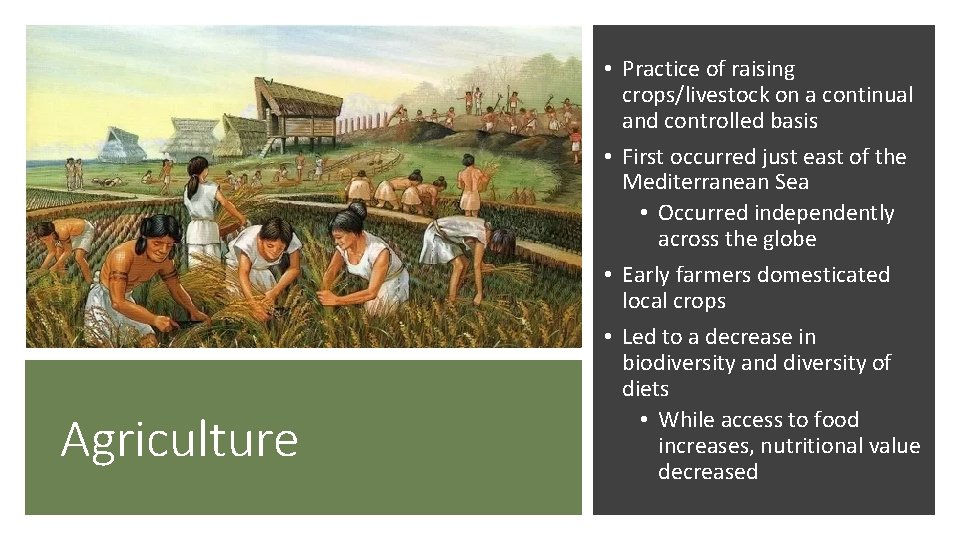
Agriculture • Practice of raising crops/livestock on a continual and controlled basis • First occurred just east of the Mediterranean Sea • Occurred independently across the globe • Early farmers domesticated local crops • Led to a decrease in biodiversity and diversity of diets • While access to food increases, nutritional value decreased
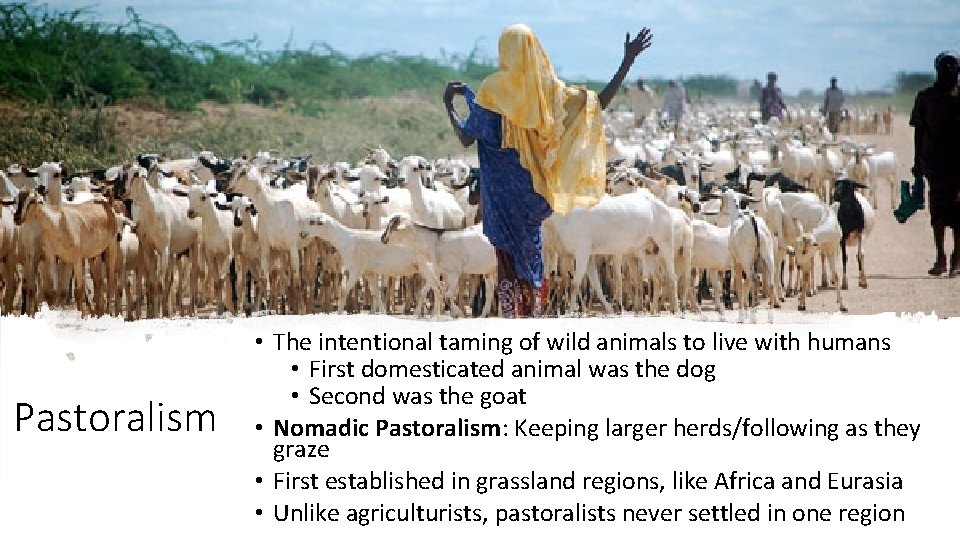
Pastoralism • The intentional taming of wild animals to live with humans • First domesticated animal was the dog • Second was the goat • Nomadic Pastoralism: Keeping larger herds/following as they graze • First established in grassland regions, like Africa and Eurasia • Unlike agriculturists, pastoralists never settled in one region
- Slides: 10