
Humoral Immunity and Complement Robert Beatty MCB 150
Humoral Immunity and Complement Robert Beatty MCB 150 1

Humoral Immunity u. Transfer of non-cell components of blood-- antibodies, complement Humoral immunity = antibody mediated 2
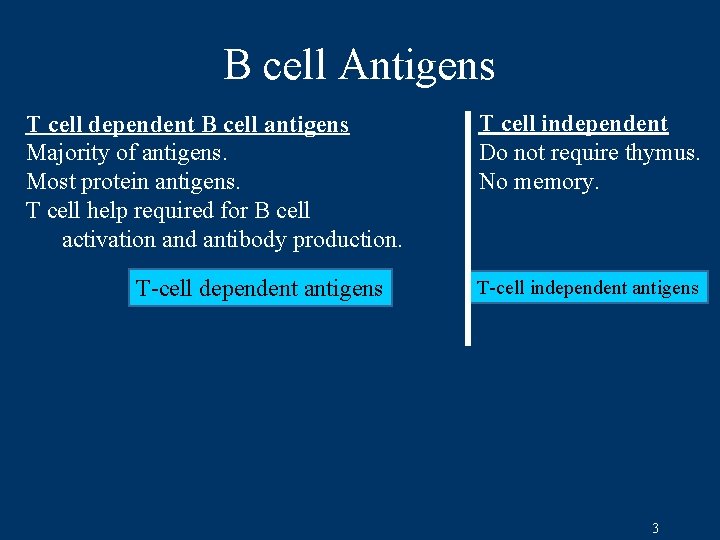
B cell Antigens T cell dependent B cell antigens Majority of antigens. Most protein antigens. T cell help required for B cell activation and antibody production. T-cell dependent antigens T cell independent Do not require thymus. No memory. T-cell independent antigens 3
B Cell Activation of T-dependent antigens 4
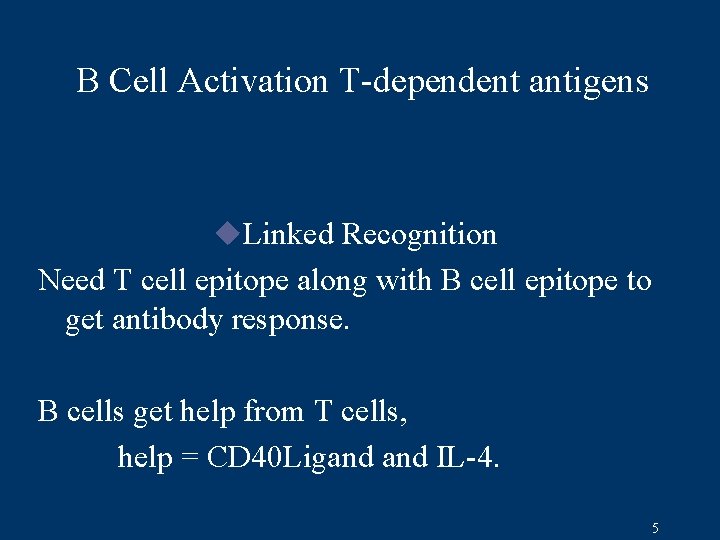
B Cell Activation T-dependent antigens u. Linked Recognition Need T cell epitope along with B cell epitope to get antibody response. B cells get help from T cells, help = CD 40 Ligand IL-4. 5
Location of B Cell Activation Antigen activated B cells remain in T cell zones of LN. Maximize contact of B cells with T cells. 6
Clonal proliferation In Follicles Affinity maturation Somatic hypermutation 7
Isotype Switching 8
T cell Independent Antigens B-1 cells Activated by repeating CHO epitopes that provide crosslinking to induce antigen uptake and activation. Antigen specific immune response Lower affinity, lower numbers, no memory. Primarily Ig. M. 9
B cell mitogens (e. g. LPS) At low levels normal immune response to LPS At high levels LPS can cause non-antigen specific activation of B cells. Mitogen effect 10
Antibody Effector Functions Neutralization Neutralizing abs block active site for adherence, entry into host cell, or active site of toxin Neutralizing antibodies are usually high affinity and primarily Ig. G. 11
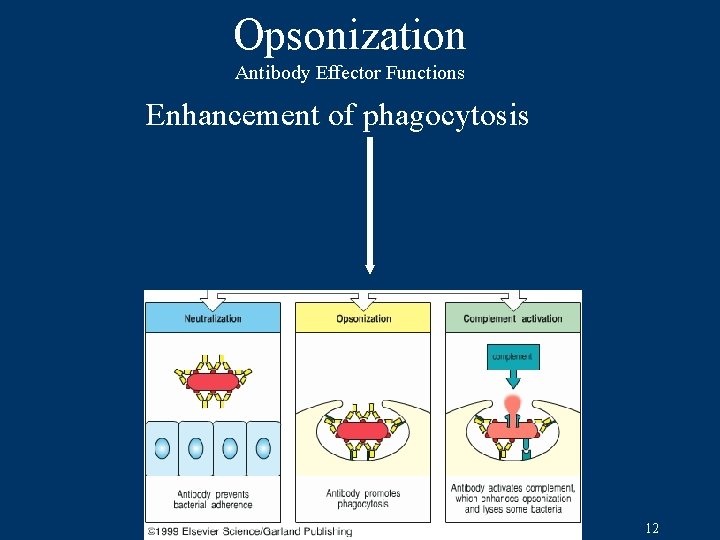
Opsonization Antibody Effector Functions Enhancement of phagocytosis 12
Antibody-dependent cell-mediated cytotoxicity (ADCC) Antibody Effector Functions Antibody binds to pathogen or infected target cell. Fc portion of antibody binds to Fc receptors of a cytotoxic cell. ADCC of target cell with bound antibody by activated NK cells 13
Complement Activation Antibody Effector Functions u. Antibody binds to antigen……. complement binds. Kill, kill……. u. Which we will talk about in great detail---- very shortly. 14
Location of Antibody Isotype Influences Function u. Ig. A Mucosal u. Ig. G Tissues/blood crosses placenta u. Ig. E Parasitic, mast cells u. Ig. M Peritoneum, tissues, 15
Control of Antibody Effector Functions Fc Receptors u. Fc g Receptors – opsonization and ADCC u. Fc. Ra 1 for Ig. A – opsonization and ADCC u. Fce. R 1 on Mast cells – can prolong life of Ig. E (role in hypersensitivity) 16
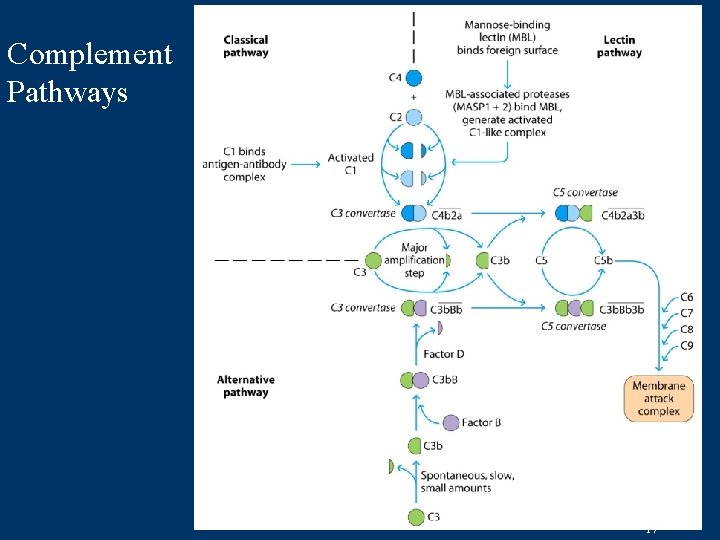
Complement Pathways 17
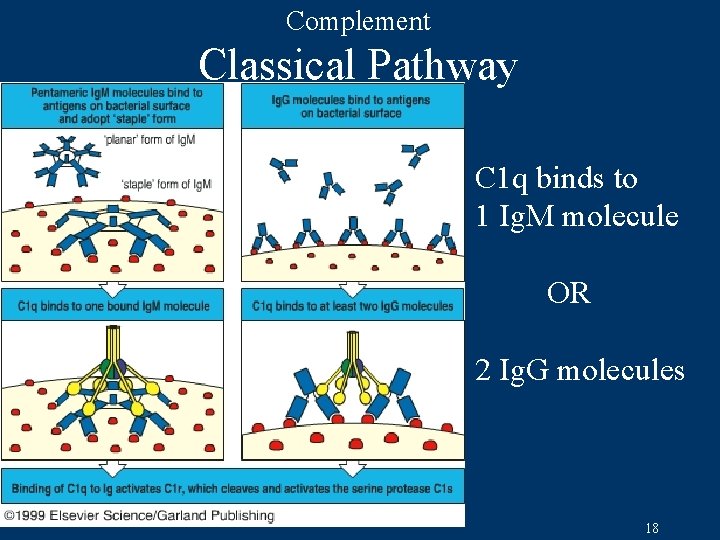
Complement Classical Pathway C 1 q binds to 1 Ig. M molecule OR 2 Ig. G molecules 18
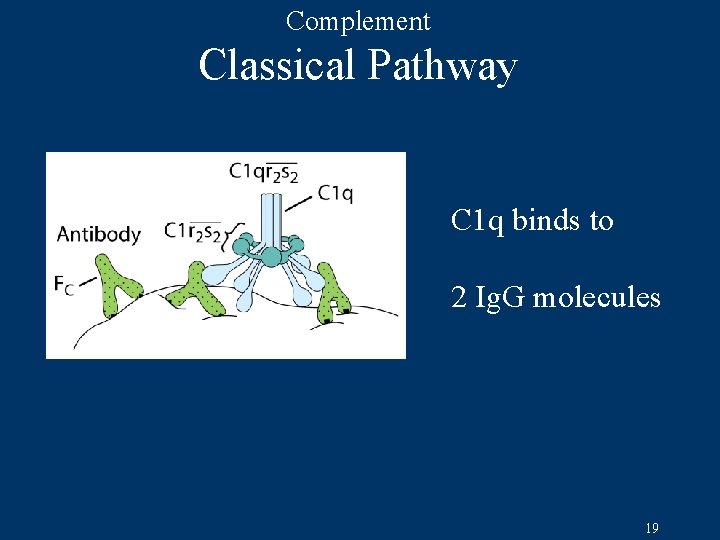
Complement Classical Pathway C 1 q binds to 2 Ig. G molecules 19
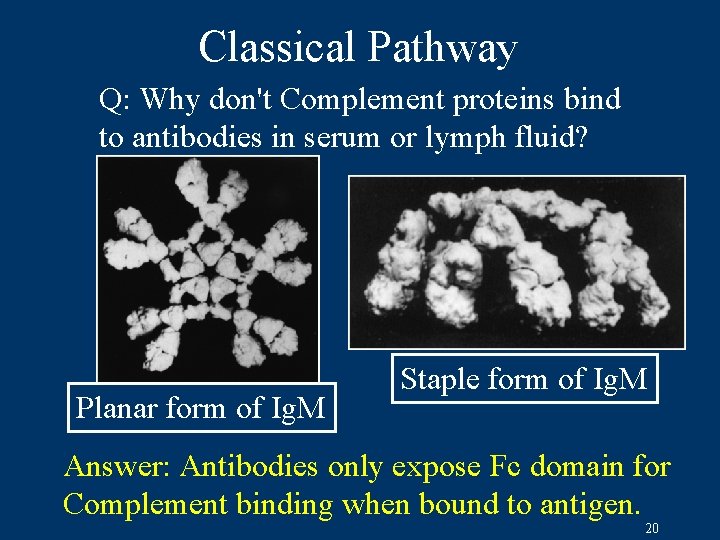
Classical Pathway Q: Why don't Complement proteins bind to antibodies in serum or lymph fluid? Planar form of Ig. M Staple form of Ig. M Answer: Antibodies only expose Fc domain for Complement binding when bound to antigen. 20
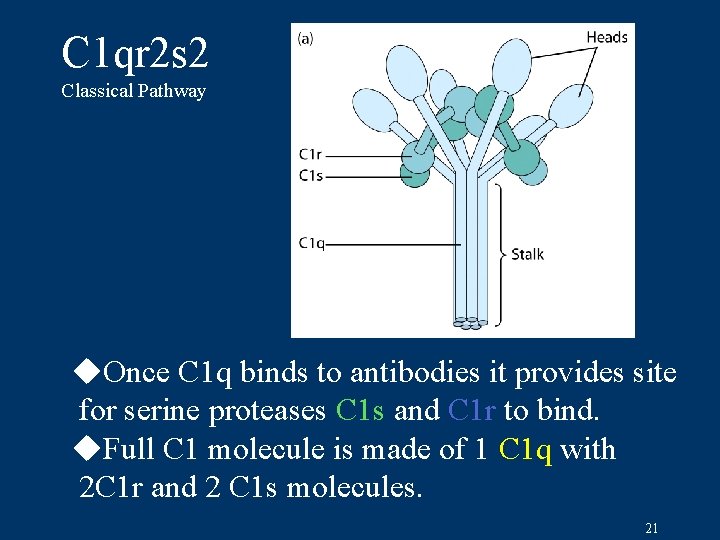
C 1 qr 2 s 2 Classical Pathway u. Once C 1 q binds to antibodies it provides site for serine proteases C 1 s and C 1 r to bind. u. Full C 1 molecule is made of 1 C 1 q with 2 C 1 r and 2 C 1 s molecules. 21
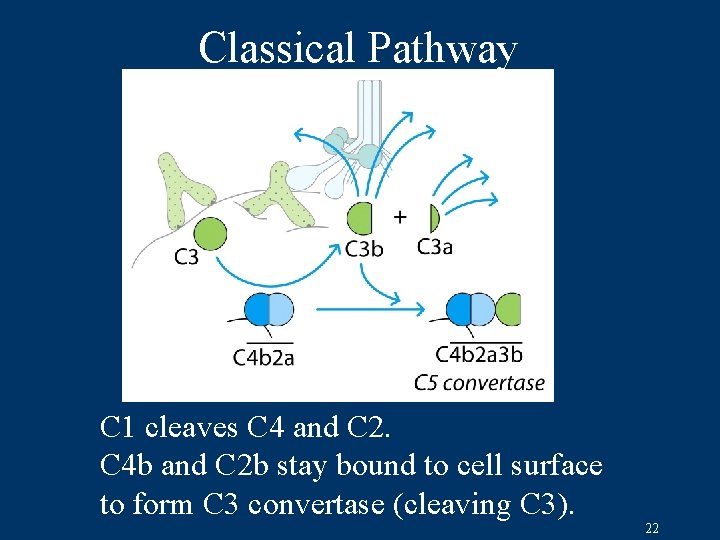
Classical Pathway C 1 cleaves C 4 and C 2. C 4 b and C 2 b stay bound to cell surface to form C 3 convertase (cleaving C 3). 22
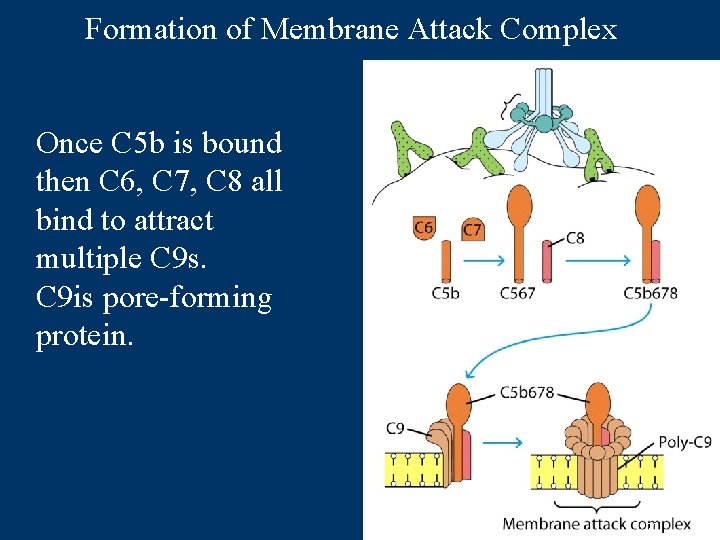
Formation of Membrane Attack Complex Once C 5 b is bound then C 6, C 7, C 8 all bind to attract multiple C 9 s. C 9 is pore-forming protein. 23
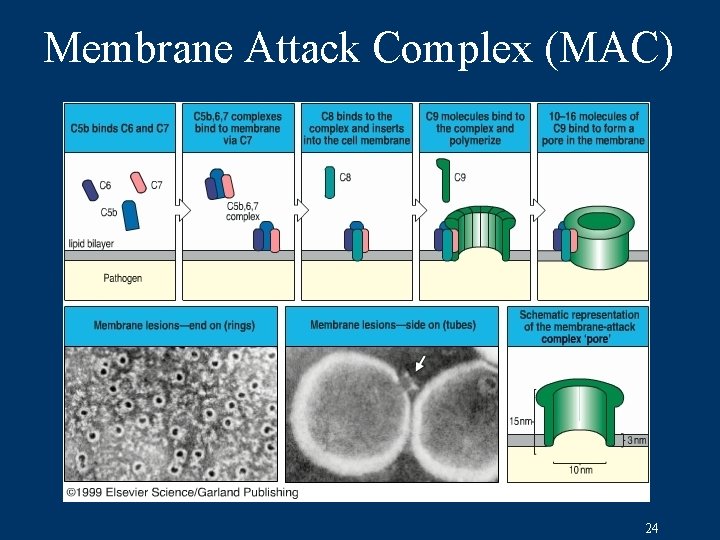
Membrane Attack Complex (MAC) 24
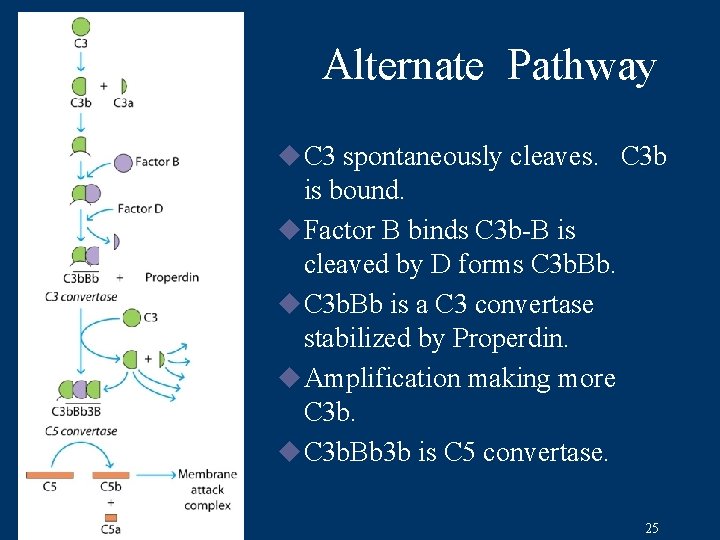
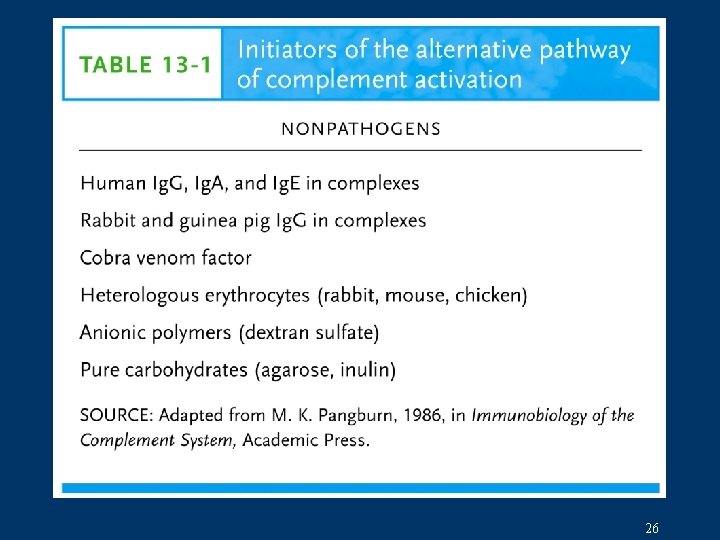
Alternate Pathway u C 3 spontaneously cleaves. C 3 b is bound. u Factor B binds C 3 b-B is cleaved by D forms C 3 b. Bb. u C 3 b. Bb is a C 3 convertase stabilized by Properdin. u Amplification making more C 3 b. u C 3 b. Bb 3 b is C 5 convertase. 25
26
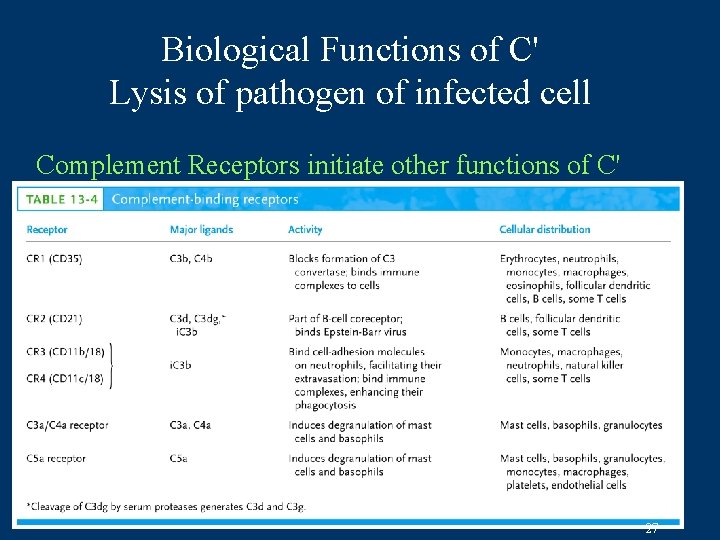
Biological Functions of C' Lysis of pathogen of infected cell Complement Receptors initiate other functions of C' 27
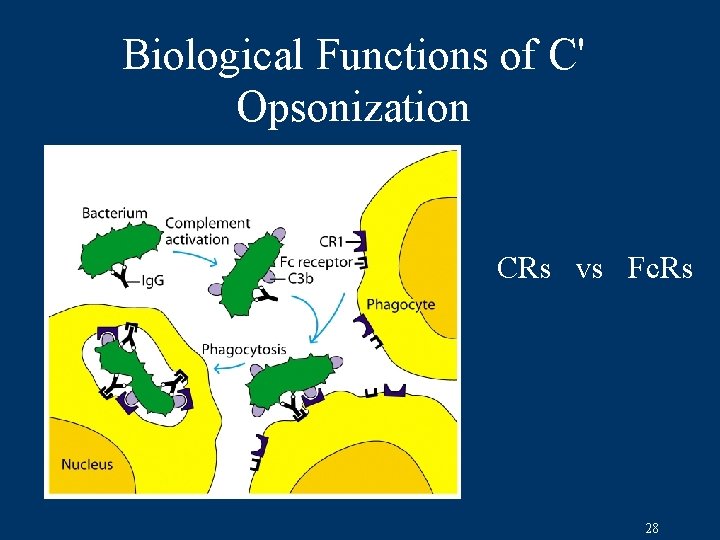
Biological Functions of C' Opsonization CRs vs Fc. Rs 28
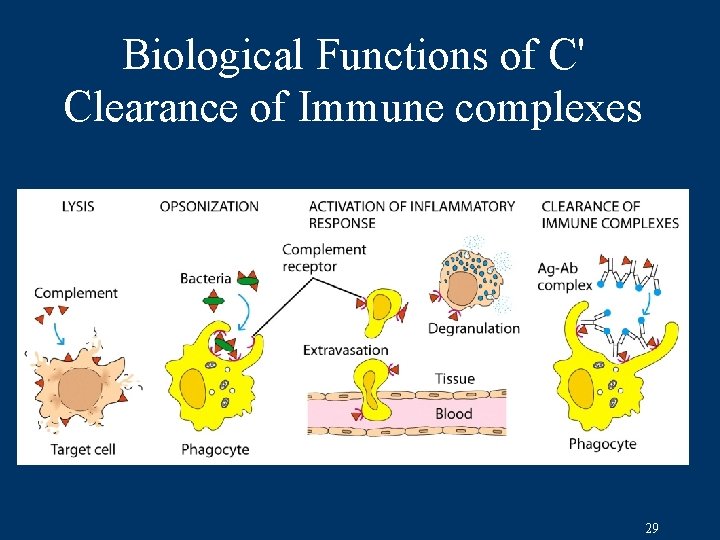
Biological Functions of C' Clearance of Immune complexes 29
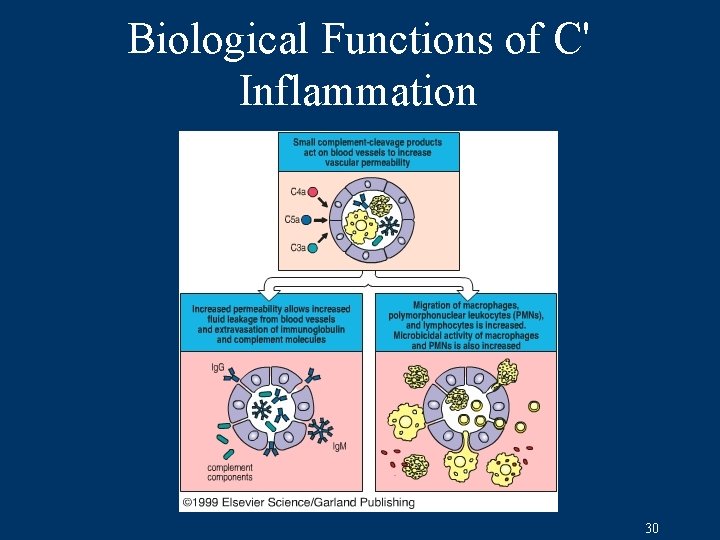
Biological Functions of C' Inflammation 30
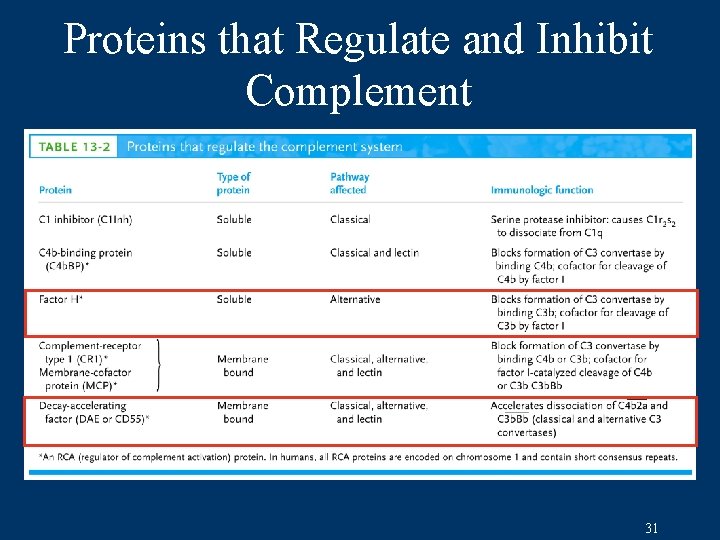
Proteins that Regulate and Inhibit Complement 31
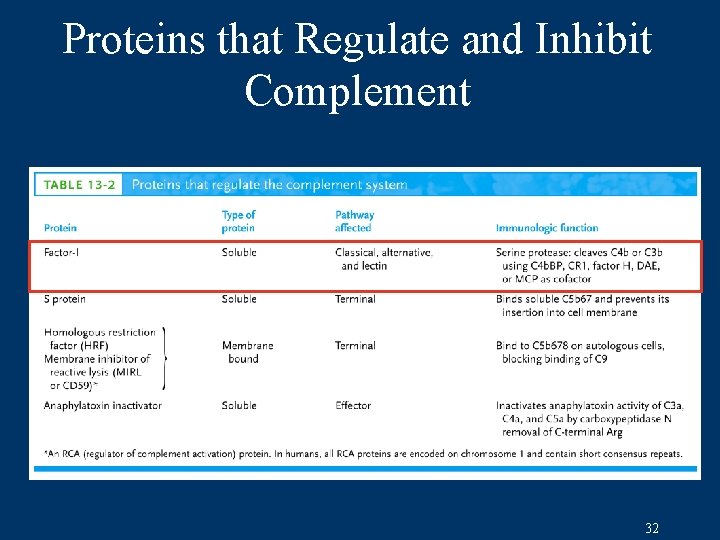
Proteins that Regulate and Inhibit Complement 32
- Slides: 32