
Humans in tropical forests 1 Learning objectives By
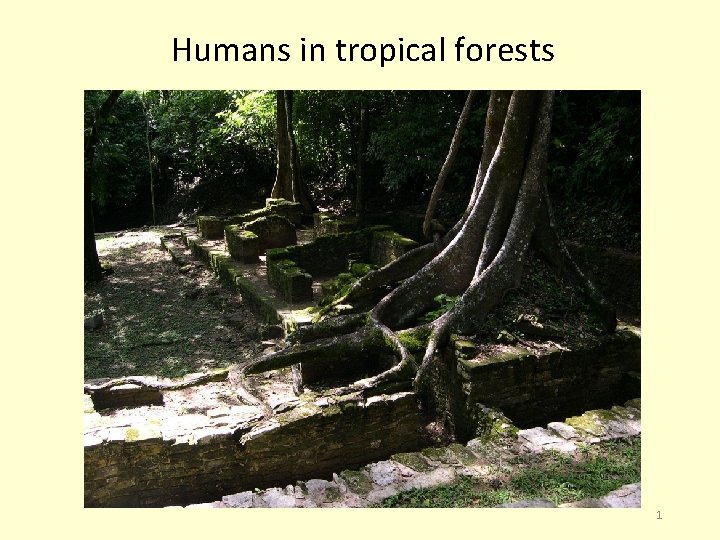
Humans in tropical forests 1
Learning objectives By the end of this presentation, you should be able to: • Describe how humans have affected tropical forests • Compare the roles of humans in forests in the five tropical forest regions • Evaluate how humans have affected the composition of forests in the Amazon Basin 2
Humans • The date at which humans or their close relatives started impacting forests remains contentious • For example, Homo erectus, a precursor of modern humans that is known to have used tools, dates back 500, 000 years, and possibly much longer 3
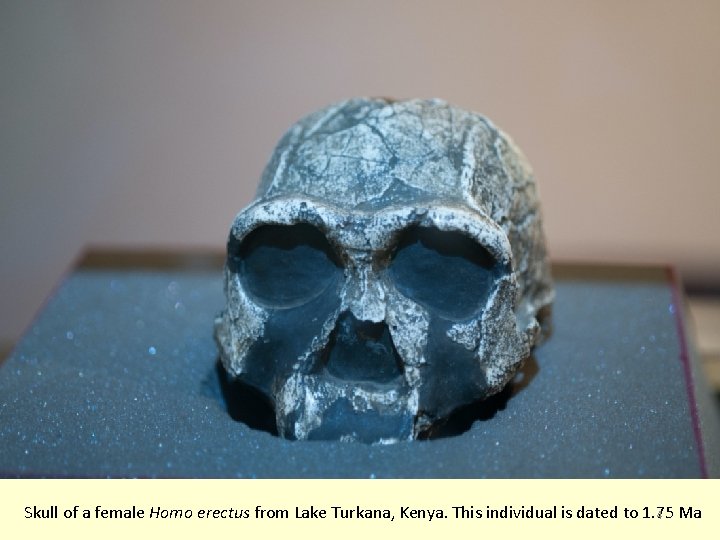
Skull of a female Homo erectus from Lake Turkana, Kenya. This individual is dated to 1. 75 4 Ma
Humans in tropical forests • The earliest suggestions of human impacts in tropical forests may have occurred at least 200, 000 years ago (Mercader 2002) • In Java, human use is suggested as early as 125, 000 years ago (Storm et al. 2005, Westaway et al. 2007) • In the Philippines, the earliest indication is ca. 60, 000 years ago (Mijares et al. 2010) • In China, the earliest indication is ca. 100, 000 years ago (Liu et al. 2015) • These dates all need to be substantiated with evidence of impact 5
Humans in tropical forests • The earliest confirmed dates of human use of tropical forests include: • Clear evidence of use in Borneo (Barker et al. 2007, Hunt et al. 2012, Barker 2013) and Malesia (Summerhayes et al. 2010) ca. 45, 000 years ago • In South Asia, the earliest evidence dates back ca. 36, 000 years ago (Perera et al. 2011) • In South America, the earliest evidence of tropical forest use dates back ca. 13, 000 years (Roosvelt et al. 2002) 6
Humans in tropical forests • The early occupation of tropical forests in Southeast Asia is accompanied by evidence of deliberate anthropogenic biomass burning designed to create forest edge habitats – dating back to the first arrivals ca. 45, 000 years ago (Hunt et al. 2012, Summerhayes et al. 2010) • The concentration on forest edge in this area may reflect a reliance on starchy plants and on bearded pigs, which are attracted to forest edges • In Sri Lanka, early human occupation of lowland evergreen and semi-evergreen rainforest was enabled by specialized hunting of monkeys (Perera et al. 2011, Roberts et al. 2015, 2017) 7
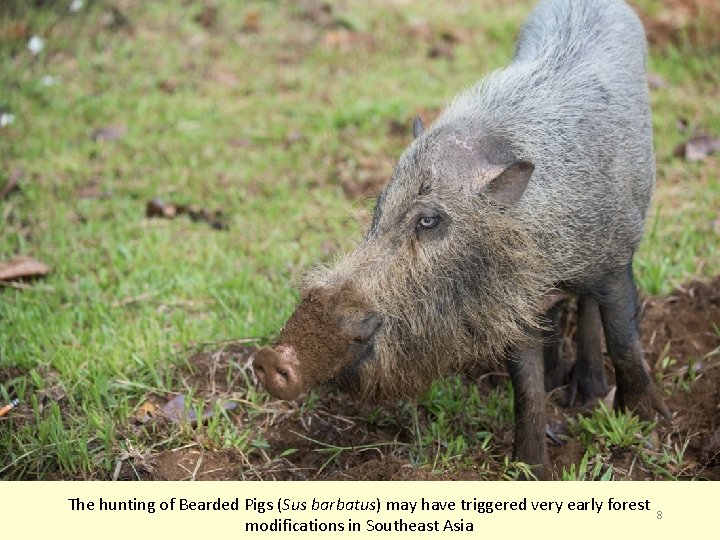
The hunting of Bearded Pigs (Sus barbatus) may have triggered very early forest modifications in Southeast Asia 8
Humans in tropical forests • In Australia, the date of human arrival is disputed, but a decline of Araucaria and increase in eucalypts and Casuarina that occurred ca. 40, 000 years ago seems to be associated with increased biomass burning (Hill and Baird 2003, Kershaw et al. 2007, Moss and Kershaw 2007, Bird et al. 2013) • Early human impacts in New Guinea from 45, 000 – 35, 000 years ago have been documented, and human impacts may have hindered vegetation recolonization following the Last Glacial Maximum (Fairburn et al. 2006) 9
Humans • More recently, humans have had major effects on forests in the temperate and tropical zones. Forests tend to occupy sites suitable for agriculture and, as populations have expanded, forests have been converted to agricultural land • In addition, the demand forest products has resulted in forests being felled: a process that has been ongoing for at least 5000 years • This presentation is however more concerned with how humans, as part of tropical forest ecosystems, have subtly altered them 10
Humans • Some of the earliest effects were associated with the extinction of large mammals, although the extent to which humans were the cause of these extinctions is hotly debated • In such cases, it is likely that hunting, possibly together with habitat modification through the deliberate use of fire, was involved (Roberts et al. 2017) 11
Humans and megafauna • Since the end of the last glacial period, humans have undoubtedly been responsible for a number of extinctions amongst tropical forest species • For example, on Java, Indonesia, since about 2600 years ago, humans have been responsible for the extirpation of the Javan tapir (Tapirus indicus), Asian elephant (Elephas maximus) and Malayan bear (Helarctos malayanus) 12
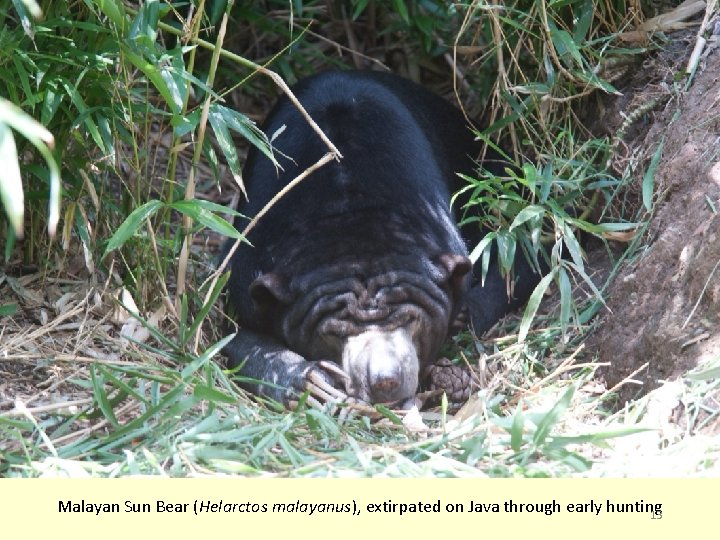
Malayan Sun Bear (Helarctos malayanus), extirpated on Java through early hunting 13
Humans and megafauna • In the New Guinea Highlands, the Pleistocene megafauna included giant marsupials such as Maokopia ronaldii and Thylogale hopeii. • Following the arrival of humans and the introduction of biomass burning, these were gradually lost (Fairburn et al. 2006, Hope et al. 1993) 14
Humans and megafauna • Across Asia, humans were at least in part responsible for the extinction of the giant pangolin (Manis palaeojavanica) and possibly also the giant tapir (Megatapirus augustus) Stegodonts (dwarf elephants) and the ape Gigantopithecus (Corlett 2007) 15
Humans and megafauna • In the Neotropics, the elimination of large mastodons (Haplomastodon waringi) and ground sloths (Eremotherium laurillardi) had major impacts, changing the biodiversity, vegetation distributions, nutrient cycling and carbon storage. These impacts are still present today (Doughty et al. 2016), although the role of humans in the extinctions is disputed (e. g. Rosetti et al. 2004) 16
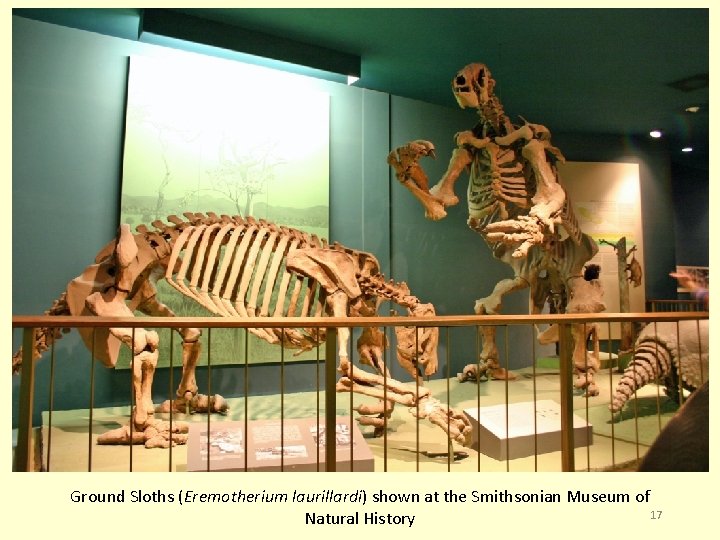
Ground Sloths (Eremotherium laurillardi) shown at the Smithsonian Museum of 17 Natural History
Modern humans • Modern humans appear to have developed in Africa 150, 000200, 000 years ago and then spread rapidly out of Africa 45, 000 -50, 000 years ago • By 45, 000 years ago, humans had reached Australia. Their arrival in Australia coincides with the disappearance of large (>45 kg) vertebrates, but the role that humans played in these extinctions is disputed, as it is in southeast Asia 18
Humans • It has been argued that the impacts of humans and their relatives were much less on the faunas of Africa as they coevolved, meaning that animals were less naïve towards humans, more resistant to human-borne diseases and had more time to adapt to human-induced habitat modification. • Animals in Asia suffered more extinctions because they had less time to adapt to humans, the greatest number of extinctions occurred in the Americas as that where animals had the least amount of time to adapt (Koch and Barnosky 2006) 19
Humans on islands • Human impacts were especially marked on islands: an estimated 2000 bird species as well as many other species have become extinct as people moved across the Pacific, starting about 30, 000 years ago in the Bismarck Archipelago and Solomon Islands (Steadman 1995; Steadman and Martin 2003) • Similarly, an extinction wave occurred shortly after humans arrived in Madagascar 2000 years ago, with losses including the elephant bird, a giant fossa, two hippopotamus species and 17 large lemur species 20
Humans on islands • In the eastern Caribbean, the first human colonists in the mid. Holocene introduced foraging, collecting and hunting techniques, modifying and managing the tropical forests that they encountered (Siegel et al. 2015) • Many island systems were very sensitive, and colonization by humans was often accompanied by the decline of tree species (e. g. Fall 2010). Bird extinctions were particularly widespread Steadman 2006), with likely implications for pollination seed dispersal and other ecosystem processes. 21
Humans as dispersers • Humans were not only responsible for the extinctions of some species • They also changed the distributions of some species, especially favoured animals • In Melanesia, there is evidence of people moving small mammals from 20, 000 years ago (Gosden and Robertson 1991), resulting in bandicoots (Perameles sp. ) and cuscus species (Phalanger sp. ) being much more widespread than would be the case naturally. 22
Humans as dispersers • Many plants also seem to have been moved around by early humans • In Southeast Asia, this included yams (Dioscorea alata), sago palm (Metroxylon sagu), taro (Colocasia esculenta) and swamp taro (Alocasia longiloba). • They were transported to islands, including the Philippines, and across Wallace’s line (Denham 2011, Hunt and Premathilake 2012) 23
Humans as dispersers • In the Caribbean, humans introduced a variety of species to the forests there, including wild avocado (Persea americana), manioc (Manihot esculenta), dogs (Canis lupus familiaris) and guinea pigs (Cavia porcellus) (Fitzpatrick and Keegan 2007) 24
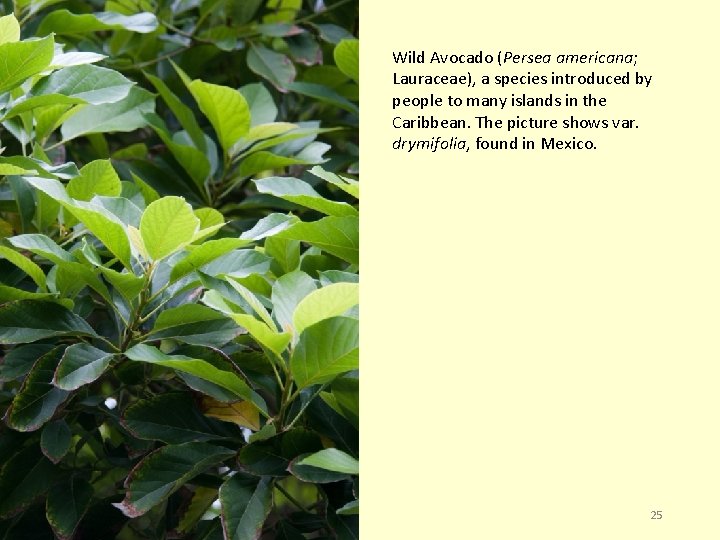
Wild Avocado (Persea americana; Lauraceae), a species introduced by people to many islands in the Caribbean. The picture shows var. drymifolia, found in Mexico. 25
Humans • The implications of vertebrate losses are difficult to judge. Some were herbivores whereas others were seed predators or seed dispersers • It has been suggested that some tree and liana species, such as Enterolobium cyclocarpum and Dioclea spp. (both Leguminosae) were adapted to dispersal by extinct herbivores (Janzen and Martin 1982), but this is disputed, and their continued existence suggests that they were not exclusively dependent on now extinct species 26
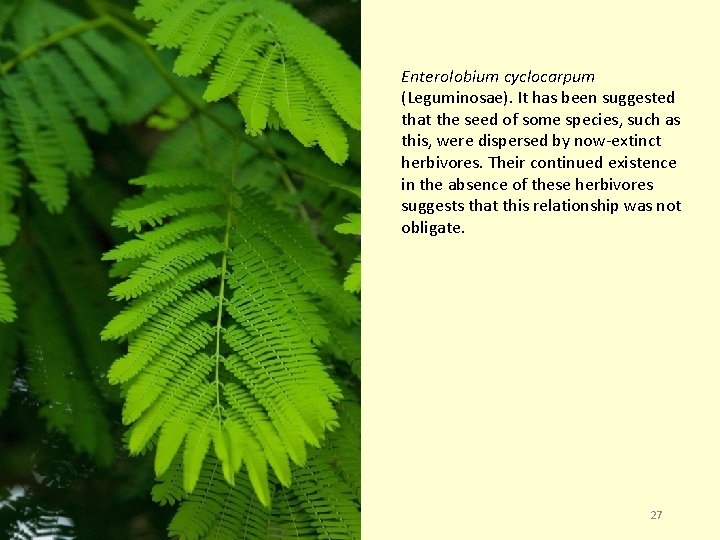
Enterolobium cyclocarpum (Leguminosae). It has been suggested that the seed of some species, such as this, were dispersed by now-extinct herbivores. Their continued existence in the absence of these herbivores suggests that this relationship was not obligate. 27
Past occupation • There is evidence of human occupation in many tropical forests, and the records continue to increase • In particular, the use of Li. DAR is revealing the presence of much greater occupation of Central American rain forest areas than previously supposed. • The only area of tropical rain forest that does not appear to have had a history of people living in it is in northeast Australia, although even here the margins have a long history of modification through the use of fire (Bowman 1998), and for example the Kuku-Yalanji Aboriginal people may have managed the forest for much longer than previously thought 28
Past occupation • Civilizations such as the Olmec, Maya and Inca existed in rain forest areas in the Neotropics, and the Javanese and Khmer occupied large areas of rain forest in Asia The evidence for past human occupation of lowland rain forests is extensive (Willis et al. 2004) • These civilizations were able to modify the landscape substantially, including constructing canals and dams and shifting the course of rivers (Lentz 2000) 29
Early settlement • As people have spread through tropical forests, so have their crops and livestock • In some areas, especially islands, the livestock has turned feral, as with pigs on many islands. Species such as agoutis, cassowaries and cuscus were spread by early people, and rats accompanied them as stowaways 30
Domestic bananas • The centres of wild banana (Musa spp. ) are located in Melanesia, including New Guinea • Archaeological evidence suggests that bananas were being deliberately planted in New Guinea 7000 years ago (Denman et al. 2004), and genetic evidence suggests that Musa acuminata ssp. banksii, which many modern varieties derive from, was domesticated in New Guinea (Lebot 1999) • Domestication involved the selection of seedless varieties: these could only be propagated vegetatively 31
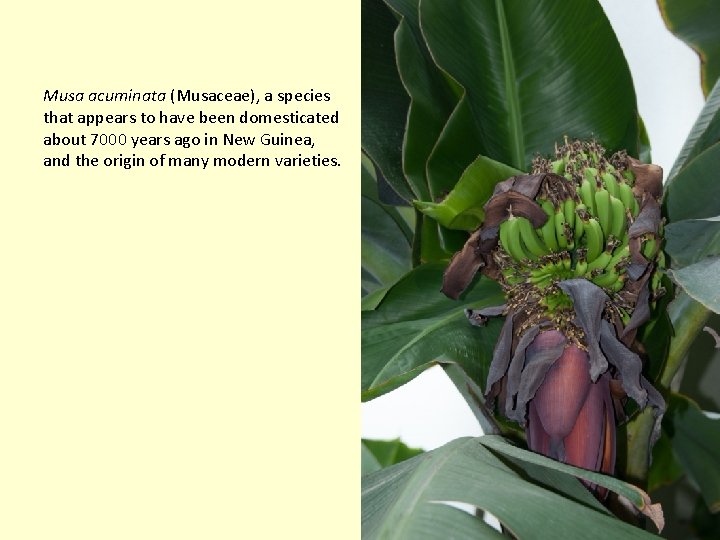
Musa acuminata (Musaceae), a species that appears to have been domesticated about 7000 years ago in New Guinea, and the origin of many modern varieties. 32
Early farming • In places such as the New Guinea highlands, there is evidence of very early farming • The farming was combined with other practices, including foraging for edible plants and hunting small mammals (Gaffney et al. 2015, Roberts et al. 2017) • While this was primarily small-scale, it may have resulted in significant changes to the flora and fauna locally 33
Domestic bananas • Domestic bananas occurred in South America in pre-Columbian times – indicating early Polynesian transfers • Musa phytoliths have also been found in Cameroon, indicating the cultivation of the Asian banana at least 2500 years ago. • It is possibly that Polynesian groups carried bananas to both South America and Africa 34
Domestication of plants • Amazonia is now identified as a major centre of plant domestication, with >83 species having populations that have been domesticated to at least some degree (Clement et al. 2015) • Pre-Columbian populations also cultivated at least 55 species imported from other parts of the Neotropics • Non-domesticated species were also encouraged, involving as many as 3000– 5000 species (Lleras Pérez 2012). This subtle alteration has been termed landscape domestication (Denevan 2001). 35
Landscape modifications • Early humans also had impacts that went beyond individual species • In particular, there is evidence of swamp areas being drained to facilitate agriculture and settlement. This has been recorded from Melanesia and from the Neotropics. • In Amazonia, early evidence comes from the Llanos de Moxos (Lombardo and Prümers 2010) and from the Guyanas (Rostain 2013), where people were adapting to flood conditions by installing drainage systems 36
Human modifications in the Amazon • Archaeological evidence, including ceramics and humanmodified soils, indicate that people were living in dispersed sites across Amazonia between 11, 000 and 10, 000 years ago, and possibly as early as 13, 000 years ago (Roosevelt 2013, Skoglund and Reich 2016) • Between 10, 000 and 8600 years ago, horticulture using native tubers and seed plants increased as well as the deliberate planting of useful trees • By 7000 years ago, large-scale food production in field systems was occurring in Central America (Piperno and Pearsall 1998) 37
Human modifications in the Amazon • In the Santarém region of Brazil, close to the confluence of the Tapajós and Amazon rivers, middens have been found that contain pottery and other artifacts dated back to 8000– 7000 years ago (Roosevelt et al. 1991) • The pottery is about 1000 years older than that found in northern South America, and 3000 years older than Andean and Mesoamerican pottery 38
Human modifications in the Amazon • In Rondônia, Brazil, occupation appears to have been more recent, with the first hunter-gatherers being present 9000 years ago, and agricultural activity starting 4500 years ago (Miller and Nair 2006) • Native fruit trees were domesticated and incorporated into early agricultural systems 39
Human modifications in the Amazon • In Acre, Rôndonia, and Amazonas states in Brazil, and neighboring parts of Bolivia, in the western Amazon, about 450 geoglyphs* covering an area of about 13, 000 km 2 have been discovered following deforestation for ranching (Pärssinen et al. 2009; Schaan 2012) • The geoglyphs are substantial, 90 – 300 m in diameter, indicating the presence of a complex and well-organized society • They are located on upland interfluvial areas, away from major floodplains • Questions have arisen over the effect of these on the Amazon forest 40
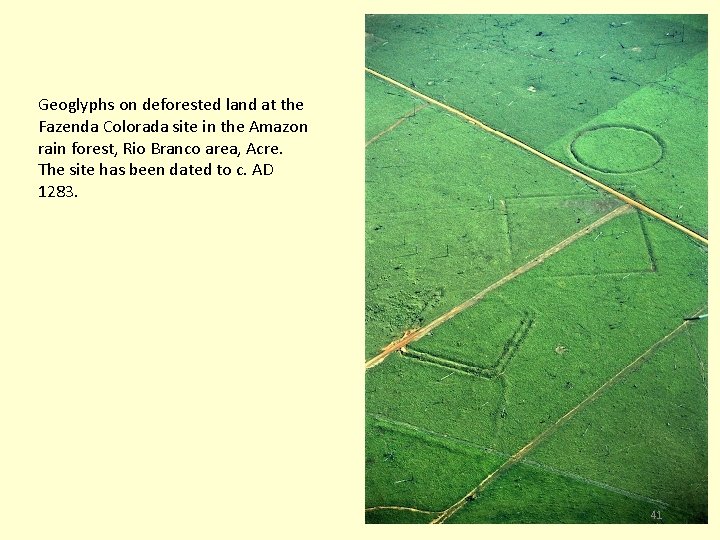
Geoglyphs on deforested land at the Fazenda Colorada site in the Amazon rain forest, Rio Branco area, Acre. The site has been dated to c. AD 1283. 41
Western Amazon geoglyphs • Detailed paleoecological work has revealed that prior to the construction of the geoglyphs, the forest in the area • At the time people moved into the area (ca. 4000 to 2600 cal. BP), the forests were dominated by bamboo (Guadua sp. ) with patches of palm and dense humid evergreen forest (Daly and Silveira 2008) • People colonizing the area appear to have burnt the bamboo forest, and then encouraged palms (Watling et al. 2017, 2018) • The geoglyphs were constructed between 2000 and 900 cal BP, although two sites have been dated to between 3000 and 3500 cal. BP 42
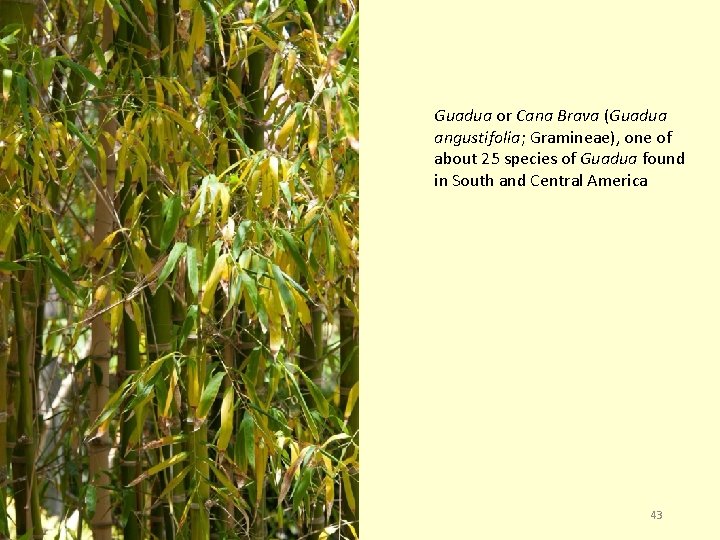
Guadua or Cana Brava (Guadua angustifolia; Gramineae), one of about 25 species of Guadua found in South and Central America 43
Human modifications in the Amazon • Detailed work has been done in the Upper Xingu region in the southern Amazon (Heckenberger et al. 1999, 2003, 2007) • This indicates the presence of Xinguano people in the region for at least 1000 years • A population (with a density of 6– 12. 5 persons km-2) has intensively managed about 17, 500 km 2 of forest, with a transportation network, agricultural areas, secondary regrowth and managed forests 44
Human modifications in the Amazon • In the eastern Amazon, the development of complex societies seems to have started about 4500 cal. BP. • These societies adopted ‘polyculture agrogforestry’ involving the cultivation multiple annual crops, with the enrichment of the surrounding forest with edible forest species and the exploitation of aquatic resources (Maezumi et al. 2018) • The forest enrichment with edible species has persisted to the current day. 45
Human modifications in the Amazon • The different land uses correspond to different forest cover types today, that contain tree species associated with terra preta anthosols (see next slides) • The moriche or buriti palm (Mauritia flexuosa; Palmae) was widely used by the Xinguanos, and is closely associated with ancient settlement areas, as is the palm Acrocomia aculeata (Palmae) • The Brazil nut (Bertholletia excelsa) is closely associated with ancient human settlements in the Amazon (Shepard and Ramirez 2011) • Fruit trees are also abundant near abandoned Xinguano settlements 46
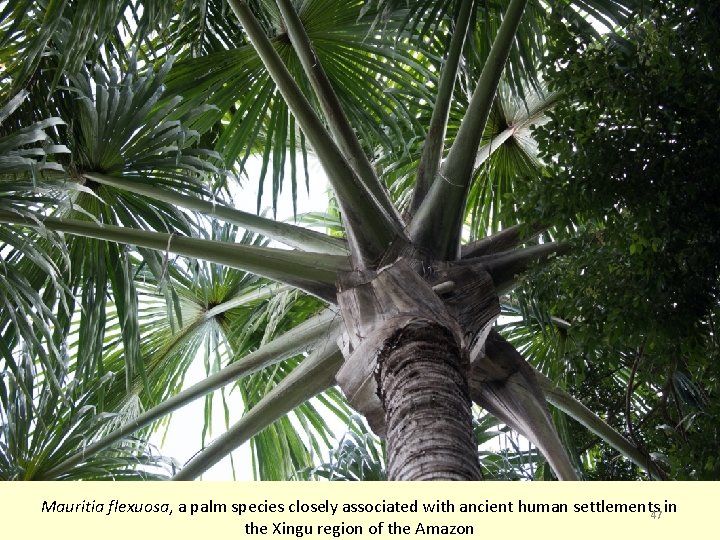
Mauritia flexuosa, a palm species closely associated with ancient human settlements 47 in the Xingu region of the Amazon
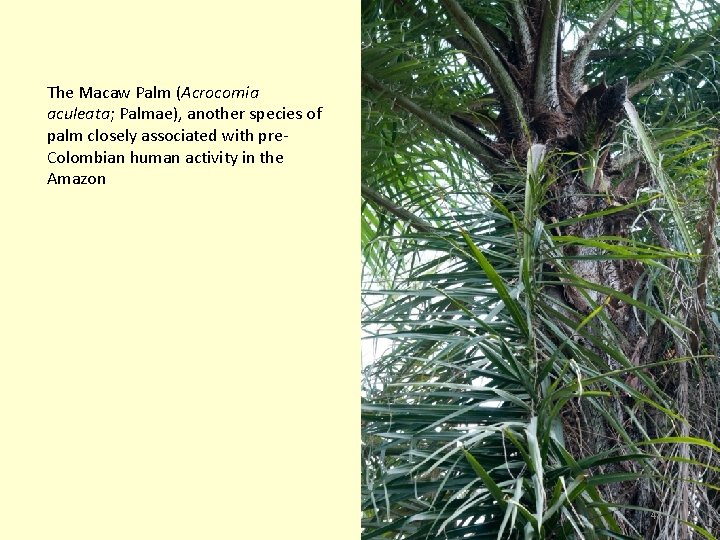
The Macaw Palm (Acrocomia aculeata; Palmae), another species of palm closely associated with pre. Colombian human activity in the Amazon 48
Terra preta anthosols • In many places, very fertile soils are found. These are often called terras pretas do Indio • They cover from a few hundred square meters to hundreds of hectares, may be as much as 1 m deep, and overlie deeply weathered infertile soils • The soils contain charcoal, ash, green manure, and sometimes fish meal, and can also contain broken ceramics and bone fragments. They are anthropogenic in origin (Glaser and Birk 2012) • They date from about 2, 000 cal yr BP to about 450 cal yr BP (Heckenberger and Neves 2009, Maezumi et al. 2018) • Today, they are often associated with palms and fruit trees (Clement et al. 2003) 49
Terra preta anthosols • A key ingredient in the soils is long-lived organic matter derived from charred woody material. It is not clear whether this was deliberately added or inadvertent • The soils are rich in phosphorous, nitrogen, potassium and calcium and supported high population densities (Glaser et al. 2001) • While the soils have been associated with old middens that surrounded terraces that held houses (Schmidt et al. 2014), their occurrence over large areas is indicative of long-term and/or multiple occupations • It is possible that the material from middens was spread, but there is no evidence to support this 50
Terra preta anthosols • Terras pretas are not found throughout the Amazon. • They are absent, for example, in the southwest Amazon, even though this area shows signs of extensive and prolonged occupation in the form of monumental earthworks and large habitation mounds 51
Terra mulata anthosols • Another soil form that also appears anthropogenic in origin is known as terra mulata. • These soils are brown in colour and contain more charcoal than surrounding soils, but have lower chemical fertility than terras pretas (Kern et al. 2017) and usually have few or no archaeological remains • They are believed to originate from Pre-Columbian agricultural activity and often surround terras pretas 52
Use of fire • Low-severity fires were evidently used to alter the structure and composition of forests currently underlain by terra preta soils • This increased light levels and reduced the competition for nutrient-demanding favoured species, such as Attalea aculeatum, Attalea maripa, Attalea speciosa (Palmae), Humiria balsamifera (Humiriaceae), Mauritia flexuosa (Palmae), Oenocarpus bacaba, Oenocarpus disticha (Palmae) and Theobroma cacao (Malvaceae) (Fraser et al. 2011, Mc. Michael et al. 2015, Levis et al. 2018) 53
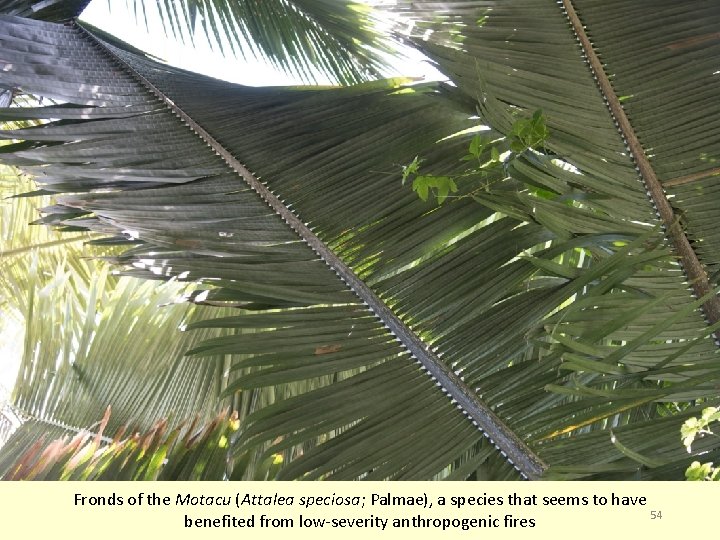
Fronds of the Motacu (Attalea speciosa; Palmae), a species that seems to have 54 benefited from low-severity anthropogenic fires
Pre-Columbian Amazonian communities • Pre-Columbian communities in the Amazon appear to have been much larger than today – by at least an order of magnitude • The populations were organized in complex societies that converted the forest into patchy, managed landscape mosaics (Heckenberger et al. 2003; Mann 2008) 55
Influence on forest composition • There are several line sof evidence for significant impacts of Pre-Columbian people on Amazonian forest composition • A disproportionate number of plants (half of all trees in the Amazon) are hyperdominant, with domesticated species being 5 x more likely to be hyperdominant (ter Steege et al. 2013, Levis et al. 2017) • Ethnographic work has revealed many practices that enrich the presence of useful plants on terra preta soils (Levis et al. 2018). Palms (Mauritia, Attalea, Astrocaryum, Euterpe, Elaeis and Oenocarpus) and fruit-bearing trees (Caryocar, Byrsonima, Theobroma and various species in the Lecythidaceae family) are amongst the most enriched, and have higher concentrations on terra preta soils 56
Influence on forest structure • Forests on terra preta soils tend to have drier canopies and more susceptible to drought than forests on other soil types (Palace et al. 2017) • It is possible that repeated burning shifted forests towards more fire-prone systems, but clear evidence for this is lacking • Maezumi et al. (2018) provide strong evidence that at Lake Caranã in the eastern Amazon, low-intensity fire management and crop management started ca. 4, 500 cal yr B. P. and intensified at ca. 2, 500 cal yr B. P. The intensification involved the enriching the forest with useful species, removing less desirable species and clearing the understorey. Terra preta soils there formed about 2, 000 cal yr B. P. 57
Pre-Columbian Amazonian communities • The influence of pre-Columbian communities on the composition of Amazon forests has been disputed (Mc. Michael et al. 2017) • The argument is that although the evidence for impacts comes from multiple sites, sampling efforts are biased towards more accessible sites, and these are where the Pre-Columbian peoples concentrated. • However, there is more and more evidence that Pre. Columbian settlements extended over large areas, and were not restricted to river margins and floodplains (de Souza et al. 2018) 58
Pre-Columbian Amazonian communities • The difficulty in interpreting some of these data lie in the size and complexity of the Amazon Basin. • It is likely that impacts varied in time, extent and severity across the Basin (Bush et al. 2016) • Species that were utilized in one area may not have been utilized elsewhere, as shown by the Brazil nut (Bertholletia excelsa; Lecythidaceae) 59
Olmec and Mayan civilizations • At the height of the Mayan civilization, populations densities were 400 -500 people km-2, compared to ca. 5 people km-2 today (Turner 1976) • The Olmec and Mayan civilizations together lasted about 3000 years • They had a major impact on the landscape that can still be seen today in areas such as the Yucatán Peninsula of Mexico. 60
Mayan agriculture • The Mayans had extensive agricultural and silvicultural systems (Hammond 1982, Fedick and Ford 1990, Peters 2000) • Two major forms of intensive agriculture occurred, one using terracing on slopes and the other using drainage canals on swampland • Very significant areas were under cultivation, such as the Pulltrouser Swamp in northern Belize, which was farmed between 200 BC and AD 850 (Turner and Harrison 1981, 1983) • The Mayans cultivated ramon – the breadnut tree (Brosimum alicastrum; Moraceae) and its abundance today is a legacy of the Mayans work 61
Charcoal layers • Soil profiles in Guyana have revealed that all contain traces of charcoal, evidence of fires – a commonly used tool of forest management • C 14 dates suggest an expansion of agricultural activity about 1750 years ago, with a series of peaks 1300 to 450 years ago. • In Costa Rica, charcoal evidence suggests that forest clearing and burning increased over ca. 2500 years, up to about 500 years ago. Since then, cultivation was abandoned and the forest has recovered to form the largest area of lower montane rain forest in Costa Rica (Anchukaitis and Horn 2005) 62
Collapse • It is evident that Pre-Columbian settlements in the Amazon were widespread. • The collapse of this society led to the abandonment of managed landscape mosaics across Amazonia and Central America • The abandoned areas regenerated into dense forests: these were (and still are) often viewed as pristine forests, untouched by humans, a view that it is clearly wrong • While the greatest impacts were likely concentrated along the main river channels, in what is now várzea forest (Heckenberger et al. 2003), there is increasing evidence of substantial modifications over wider areas 63
Collapse • The pre-Columbian population in the Amazon is estimated to have been between 8 and 20 million people (Koch et al. 2019) • Post-Contact, it is likely that 90% of this population was lost and similar losses are reported elsewhere in the Americas, with approximately 55 million Indigenous people dying • Following depopulation, many areas modified by anthropogenic activity started a process of secondary succession that is still evident today, as shown in previous slides. 56 million ha of land was abandoned throughout the Americas, and the secondary succession that followed was sufficiently important to affect atmospheric CO 2 concentrations and global surface air temperatures (Koch et al. 2019) 64
Collapse • It is difficult to assess the true extent of human modifications of the Amazon as new discoveries are still being made • Some argue that the impacts were extensive, resulted in a cultural parkland (Heckenberger et al. 2003). Others argue that the population was too low to have much impact, except in population centres. The true situation may lie somewhere in between these views (Bush and Silman 2007) • The greater use of Li. DAR is likely to reveal more sub-canopy evidence and a number of significant discoveries have recently been made. 65
Post-Contact impacts • While there has been a strong focus on pre-Columbian impacts, post-Contact impacts should not be ignored • Indigenous land use has continued to have an impact on the composition and structure of forests in the Amazon since the arrival of Europeans (Mc. Michael et al. 2017), although this has been much more localized than in the pre-Columbian times as the population is much smaller. • The most important, and best researched, is the impact of swidden agriculture, which over time has had significant impacts on the structure and composition of many Amazonian forests (see for example Riris 2018) 66
Solomon Islands • Evidence for past human activities in rain forest regions is also emerging elsewhere • In the New Georgia Group of the Solomon Islands areas now covered by coastal rain forests supported large agricultural communities (Bayliss-Smith et al. 2003) • Before the arrival of Europeans, islanders practiced agroforestry and enriched the forest with Canarium nut trees (Burseraceae) and other species of value 67
Solomon Islands • The forests contain numerous archaeological remains, and oral histories confirm the evidence on the ground • Large stands of even-canopied forest dominated by Campnosperma brevipetiolata (Anacardiaceae), a species that is light-demanding and which colonizes heavily disturbed sites, occur in many areas, often associated with former habitation sites • Early human use may also have favoured hard-wooded species that are difficult to fell with stone axes, such as Calophyllum neoebudicum (Calophyllaceae) 68
Africa • Humans evolved in the savanna landscapes of Africa, yet evidence of their modification of rain forest or seasonally dry woodlands is limited • Some suggest that some aspects of the species composition encountered in rain forests reflects past human modification, such as the groves of oil palms (Elaeis guineensis; Palmae) that occur in parts of the Congo Basin • Archaeological remains have been found in some rain forest areas that are currently unoccupied, suggesting that many discoveries are yet to be made (Brncic et al. 2007) 69
Africa • Archaeological evidence for past human occupation in the Congo Basin includes subsoil layers of charcoal, stone tools, palm nuts and pottery fragments • The evidence dates from 3000 to 1600 years ago, suggesting that African rain forests were occupied more recently than Neotropical ones. However, this may simply reflect the cultures: hunter-gatherer cultures might leave less evidence than sedentary farming communities 70
Africa • Major changes to the vegetation of the Congo Basin appear to have occurred between about 2, 600 and 2000 years ago (Bayon et al. 2019) • Forest cover declined at the periphery and the core of the central African rainforest (Vincens et al. 1998, Maley et al. 2018) • This period also coincides with a major expansion of Bantuspeaking peoples into the rainforest, and there has been debate over the causes. It now seems most likely that changes in climate, and subsequent changes in vegetation, drove the human migrations (Bayon et al. 2019) 71
Papua New Guinea • There is evidence of past agricultural activities in what today is tropical rain forest that dates back 7000 years 72
Farming systems • The available evidence points to substantial past populations in areas that are now covered in tropical forest. These populations obtained many goods and services from the forest, as do their descendants today • A common form of agriculture was shifting cultivation, also known as swidden agriculture. This involved the clearance of forest, usually by burning, cropping for a few years and then left fallow. This form of farming still supports up to 500 million people worldwide 73
Farming systems • In shifting cultivation, valuable trees are often left, such as Bertholletia excelsa (Lecythidaceae) in Brazil (from which Brazil nuts are derived). • Crops such as upland rice (in Asia) and maize (in Africa and the Neotropics) are grown, sometimes with long-lived crops such as chilli, fruit trees and root crops. Other plants be deliberately nurtured for when the fields are fallowed 74
Recovery • A key issue is the extent to which forests are recovering following the loss of the Pre-Columbian populations • In specific areas, extensive deforestation and intensive landuse has been followed by the regeneration of forest cover • For example, Louglin et al. (2018) describe the recovery of cloud forest in Ecuador following the catastrophic decline of the local population in about AD 1588, followed once again by modification as the population rose again in the early 19 th century 75
Conclusions • Human impacts on tropical forests are extensive, and have been occurring for a very long time • The earliest impacts differ markedly, and reflect when humans were first present • The degree of impact remains hotly debated, but evidence for changes in the composition of forests that have persisted until today is mounting • As with other forms of past disturbance, forests today may still be recovering from changes induced directly or indirectly by humans 76
- Slides: 76