
Humans as Geomorphic Agents Catherine Riihimaki Drew University
- Slides: 10
“Humans as Geomorphic Agents” Catherine Riihimaki, Drew University criihimaki@drew. edu
• 1 st problem set for introductory, quantitative environmental studies class • Goals of course: — Explore environmental problems that require quantitative understanding — Expose students to quantitative framework for upper-level science (order-of-magnitude calculations, dimensional analysis, conservation of mass/energy, etc. ) — Enable some students to fulfill college requirement, others to have alternative entry to geology major
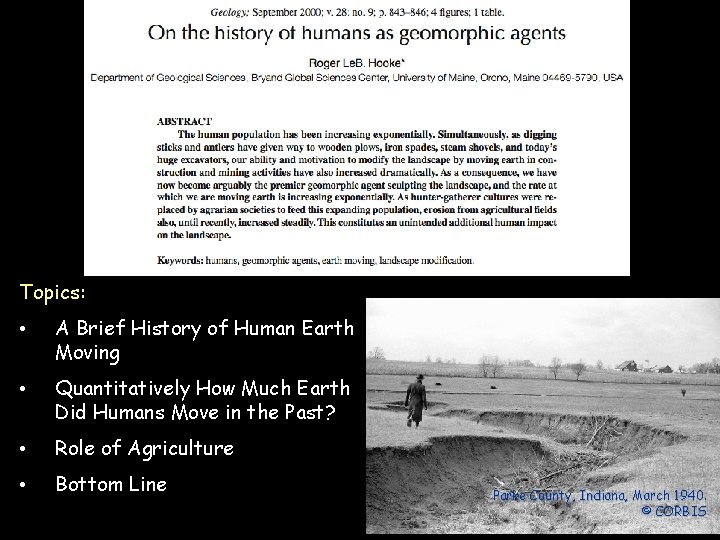
Topics: • A Brief History of Human Earth Moving • Quantitatively How Much Earth Did Humans Move in the Past? • Role of Agriculture • Bottom Line Parke County, Indiana, March 1940. © CORBIS
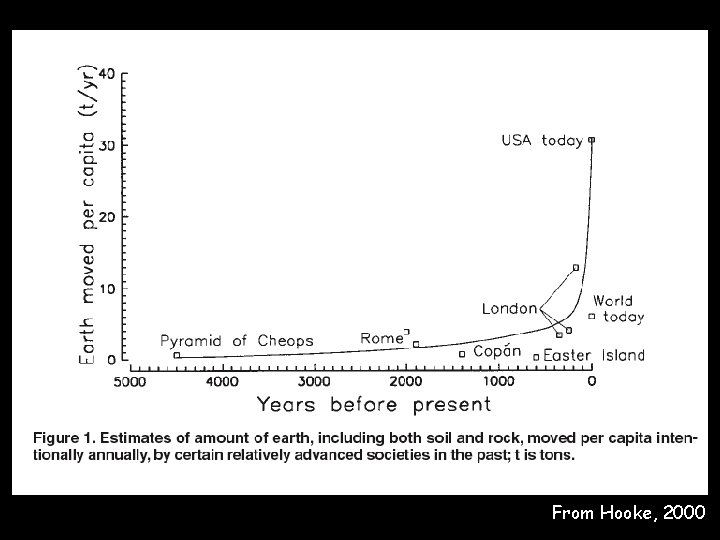
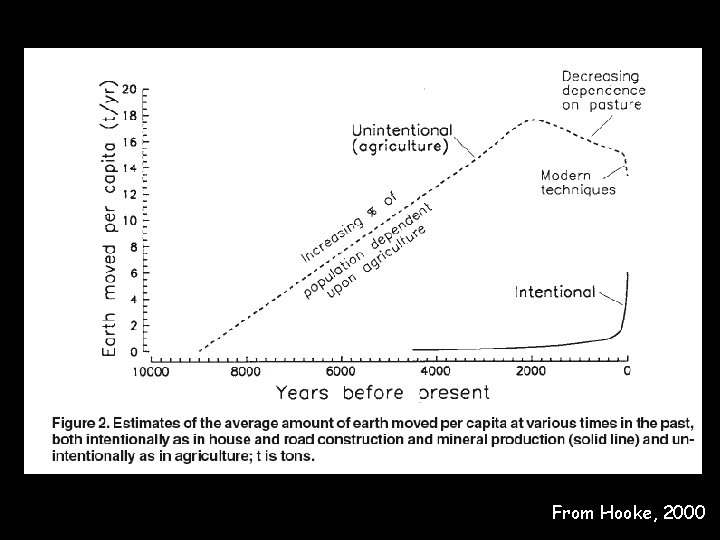
From Hooke, 2000
From Hooke, 2000
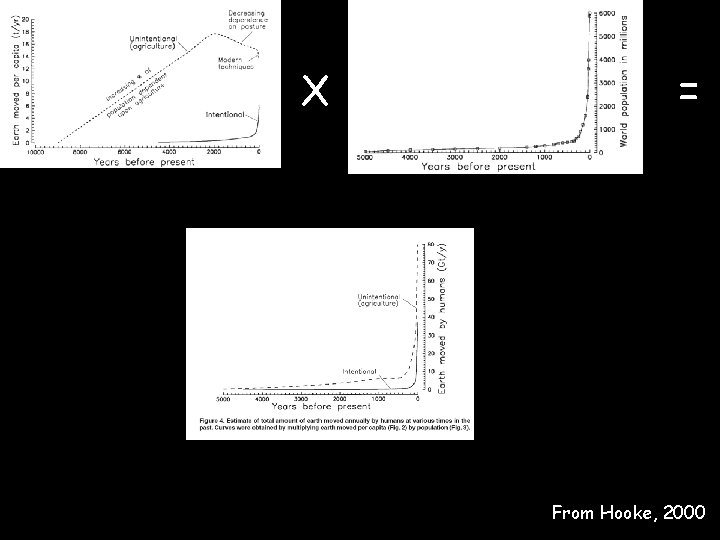
X = From Hooke, 2000
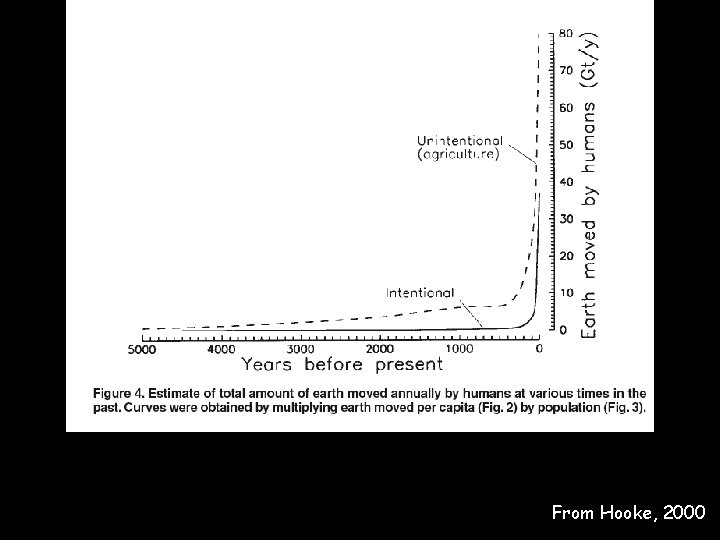
From Hooke, 2000
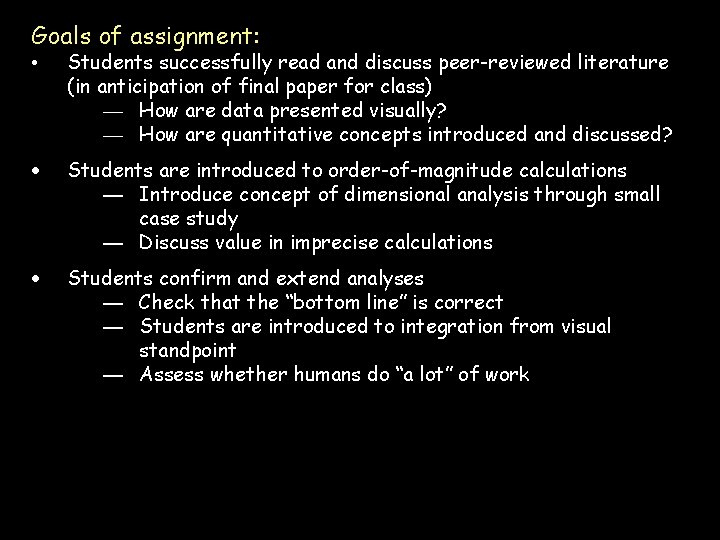
Goals of assignment: • Students successfully read and discuss peer-reviewed literature (in anticipation of final paper for class) — How are data presented visually? — How are quantitative concepts introduced and discussed? · Students are introduced to order-of-magnitude calculations — Introduce concept of dimensional analysis through small case study — Discuss value in imprecise calculations · Students confirm and extend analyses — Check that the “bottom line” is correct — Students are introduced to integration from visual standpoint — Assess whether humans do “a lot” of work
Procedures: • Introduce order-of-magnitude calculations and dimensional analysis — Take any random statistic (e. g. , Americans discard X amount of clothing each year) and have students discuss strategy for determining that number — Note that this gives just a sense of scale, not a precise number • Students read the paper on their own • Discussion of the paper in one 50 -minute class — One-word response — Discuss how you could calculate earth-moving for Roman road system — Look at plots with them to understand that unintentional earth-moving is more significant than intentional earth-moving — Make sure they understand that a comparison is needed to assess whether this is “a lot” • Students work on a problem set for next week — They double-check the “bottom line” of the paper — They compare human earth-moving to natural earth-moving
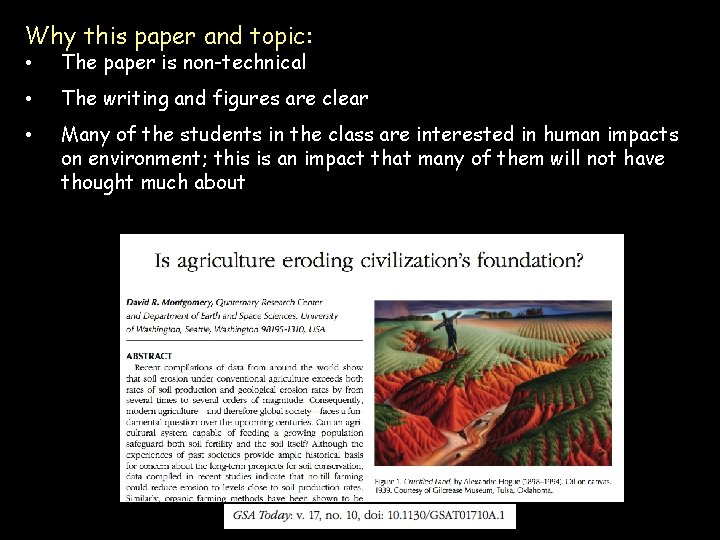
Why this paper and topic: • The paper is non-technical • The writing and figures are clear • Many of the students in the class are interested in human impacts on environment; this is an impact that many of them will not have thought much about