
Humanitarian Supply Chain WFP Logistics We Deliver Lesson
- Slides: 14
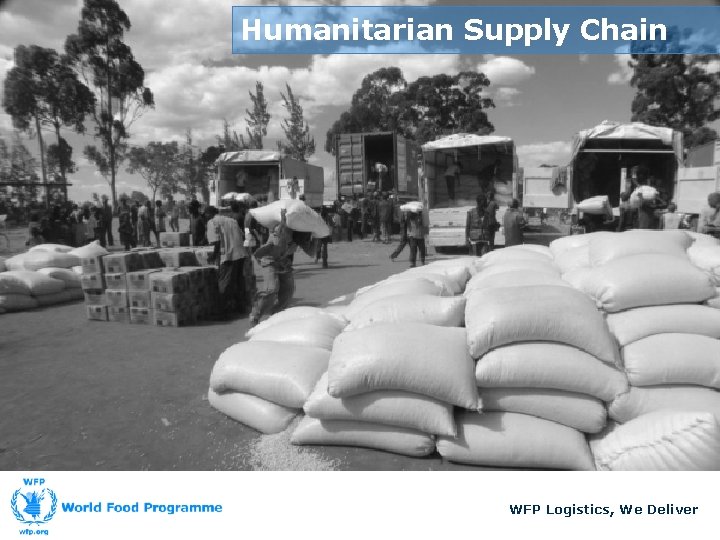
Humanitarian Supply Chain WFP Logistics, We Deliver
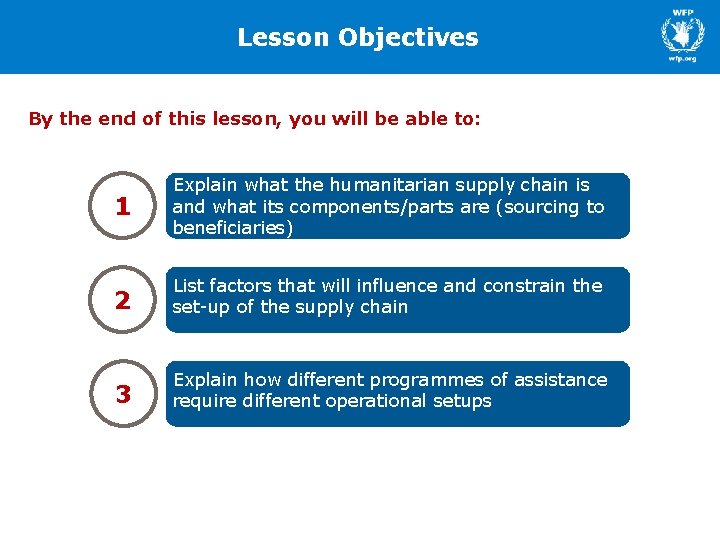
Lesson Objectives By the end of this lesson, you will be able to: 1 Explain what the humanitarian supply chain is and what its components/parts are (sourcing to beneficiaries) 2 List factors that will influence and constrain the set-up of the supply chain 3 Explain how different programmes of assistance require different operational setups
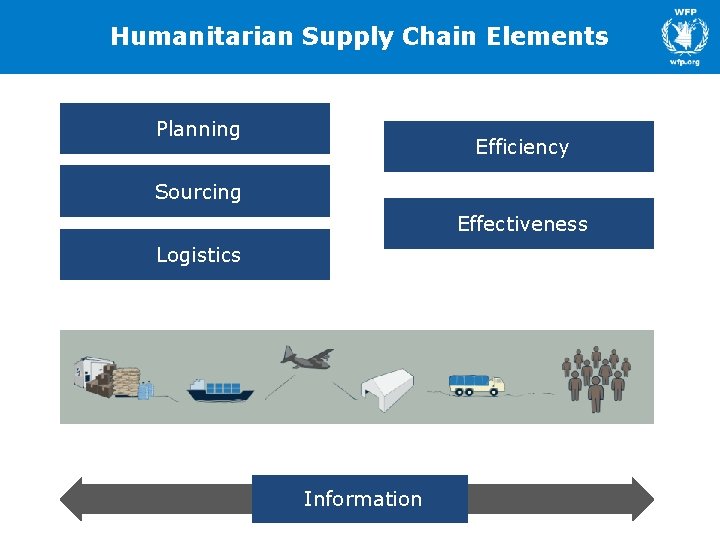
Humanitarian Supply Chain Elements Planning Efficiency Sourcing Effectiveness Logistics Information
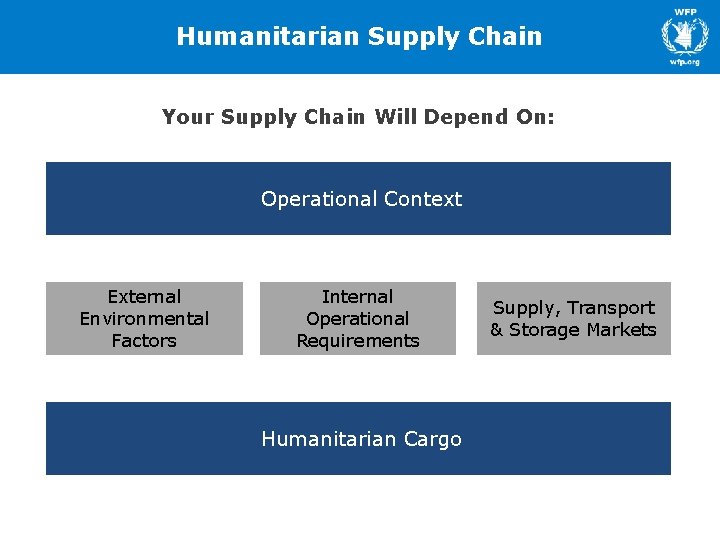
Humanitarian Supply Chain Your Supply Chain Will Depend On: Operational Context External Environmental Factors Internal Operational Requirements Humanitarian Cargo Supply, Transport & Storage Markets
Exercise In groups, list on flip charts what elements of one of the categories below would constrain the supply chain • External Environment • External Market • Internal Operational Factors 15 minutes to list 15 minutes to present/discuss
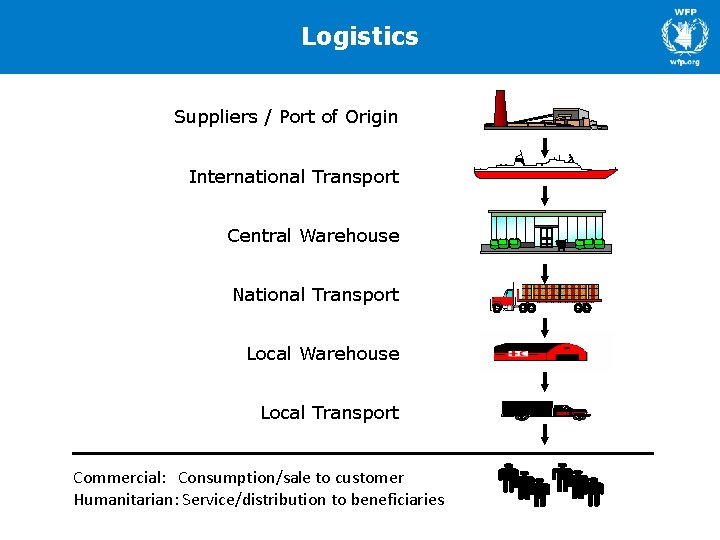
Logistics Suppliers / Port of Origin International Transport Central Warehouse National Transport Local Warehouse Local Transport Commercial: Consumption/sale to customer Humanitarian: Service/distribution to beneficiaries
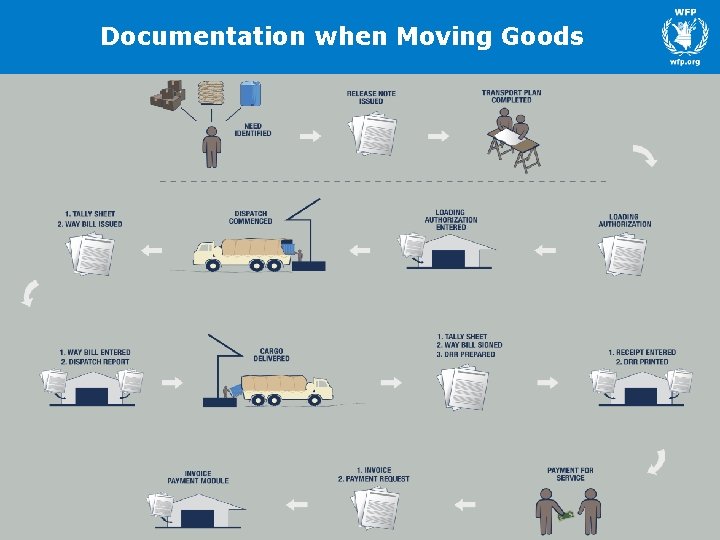
Documentation when Moving Goods
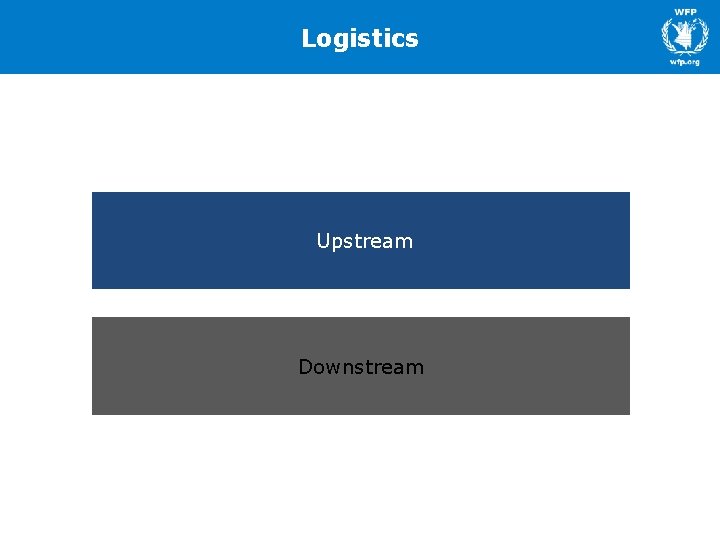
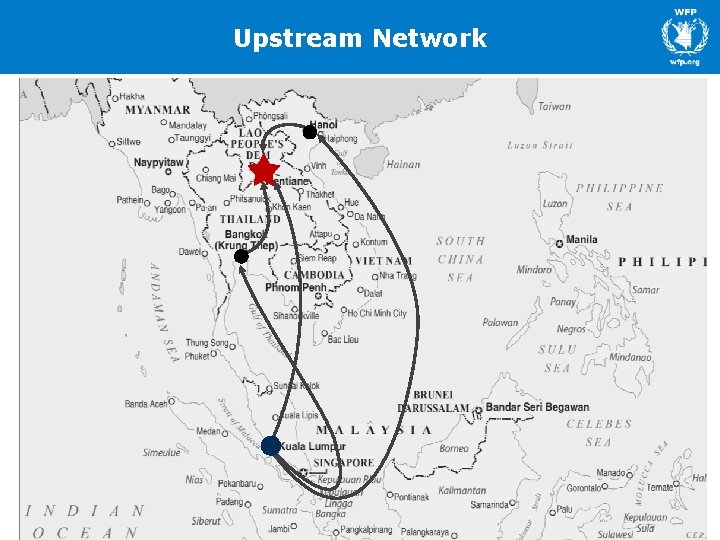
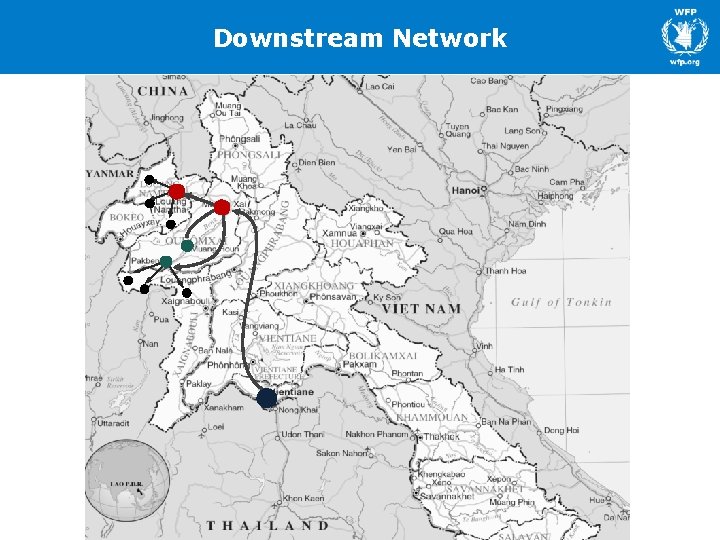
Logistics Upstream Downstream
Upstream Network
Downstream Network
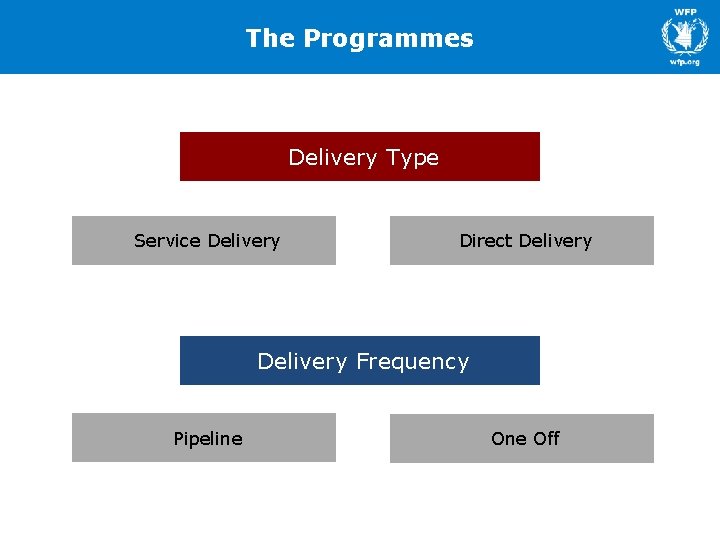
The Programmes Delivery Type Service Delivery Direct Delivery Frequency Pipeline Off
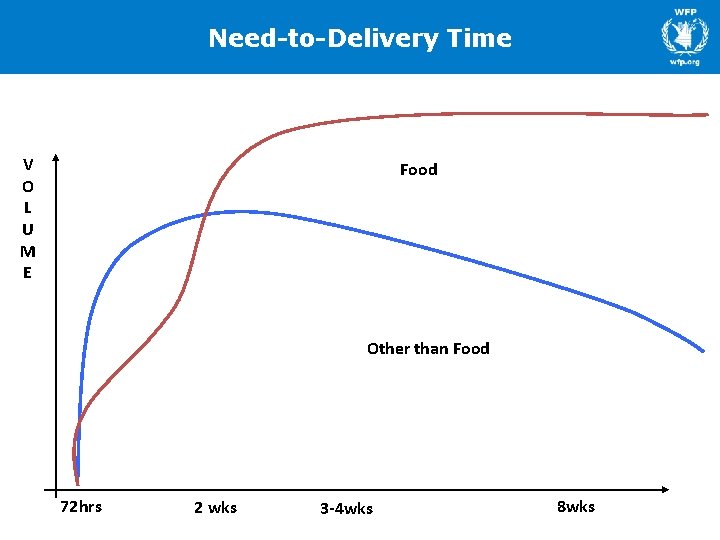
Need-to-Delivery Time V O L U M E Food Other than Food 72 hrs 2 wks 3 -4 wks 8 wks
Recap Lesson Questions: 1 What are the components of the humanitarian supply chain? 2 Summarise the main factors that constrain the supply chain? 3 Give two examples of different programmes that would require different operational setups?
Questions WFP Logistics, We Deliver