
Humanistic Perspective By the 1960 s psychologists became
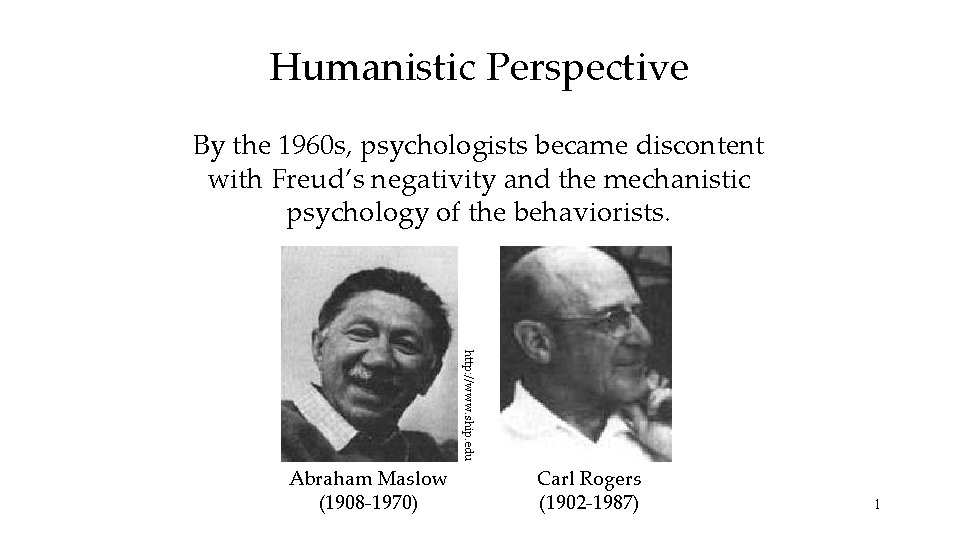
Humanistic Perspective By the 1960 s, psychologists became discontent with Freud’s negativity and the mechanistic psychology of the behaviorists. http: //www. ship. edu Abraham Maslow (1908 -1970) Carl Rogers (1902 -1987) 1
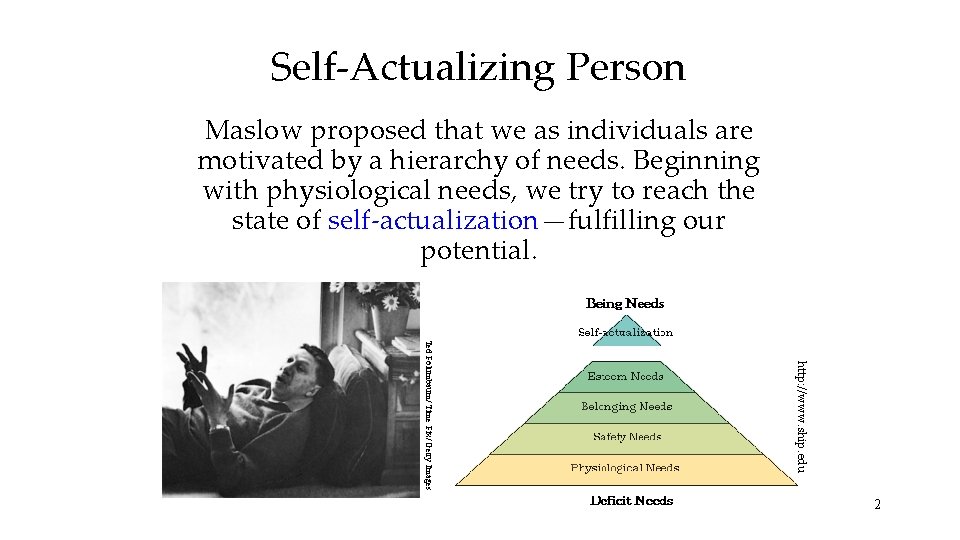
Self-Actualizing Person Maslow proposed that we as individuals are motivated by a hierarchy of needs. Beginning with physiological needs, we try to reach the state of self-actualization—fulfilling our potential. http: //www. ship. edu Ted Polumbaum/ Time Pix/ Getty Images 2
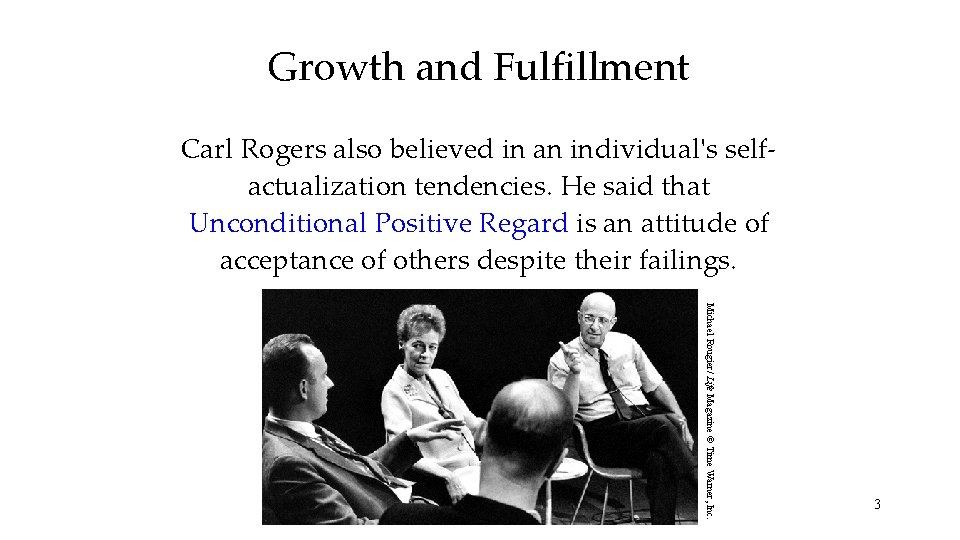
Growth and Fulfillment Carl Rogers also believed in an individual's selfactualization tendencies. He said that Unconditional Positive Regard is an attitude of acceptance of others despite their failings. Michael Rougier/ Life Magazine © Time Warner, Inc. 3
Assessing the Self In an effort to assess personality, Rogers asked people to describe themselves as they would like to be (ideal) and as they actually are (real). If the two descriptions were close the individual had a positive self-concept. Conditions of worth are evaluations of our value that distress us, placed on us by parents, teachers etc. All of our thoughts and feelings about ourselves, in an answer to the question, “Who am I? ” refers to Self-Concept. 4
Evaluating the Humanistic Perspective 1. Humanistic psychology has a pervasive impact on counseling, education, childrearing, and management. 2. Concepts in humanistic psychology are vague and subjective and lack scientific basis. 3. Gender identity may develop before 5 -6 years of age. 5
The Trait Perspective An individual’s unique constellation of durable dispositions and consistent ways of behaving (traits) constitutes his or her personality. Examples of Traits Honest Dependable Moody Impulsive Allport & Odbert (1936), identified 18, 000 words representing traits. 6
Personality Type Personality types, assessed by measures like the Myers-Briggs Type Indicator, consist of a number of traits. For example, a feeling type personality is sympathetic, appreciative, and tactful. Sympathetic Appreciative Tactful Feeling Type Personality 7
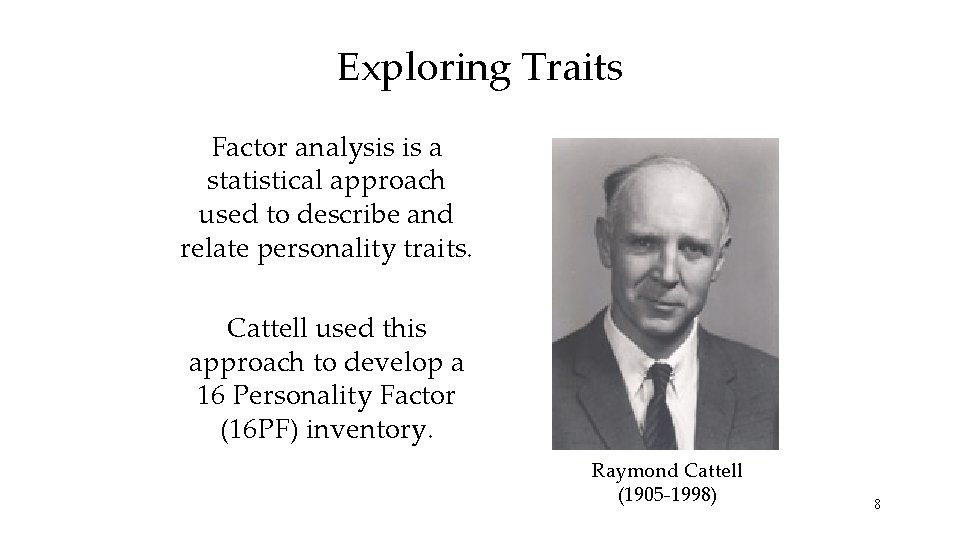
Exploring Traits Factor analysis is a statistical approach used to describe and relate personality traits. Cattell used this approach to develop a 16 Personality Factor (16 PF) inventory. Raymond Cattell (1905 -1998) 8
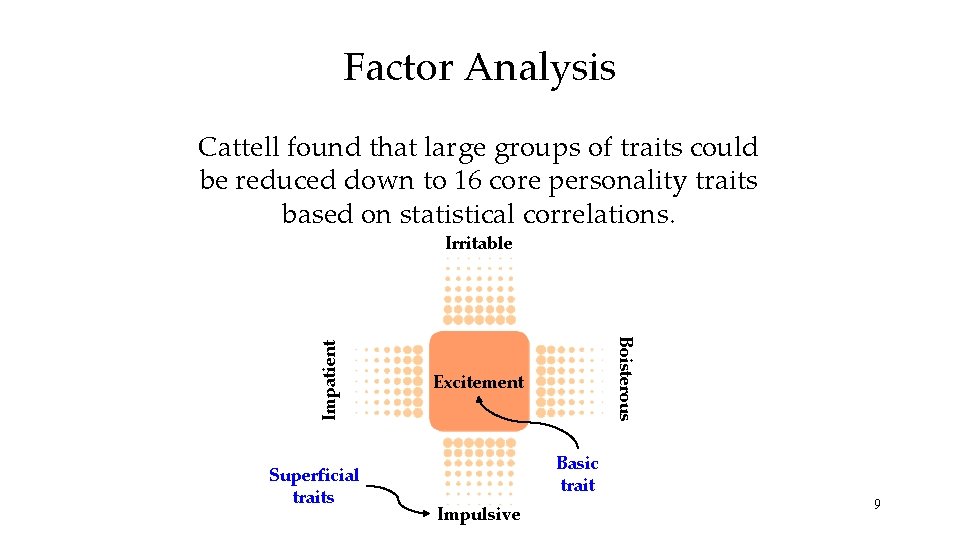
Factor Analysis Cattell found that large groups of traits could be reduced down to 16 core personality traits based on statistical correlations. Superficial traits Boisterous Impatient Irritable Excitement Basic trait Impulsive 9
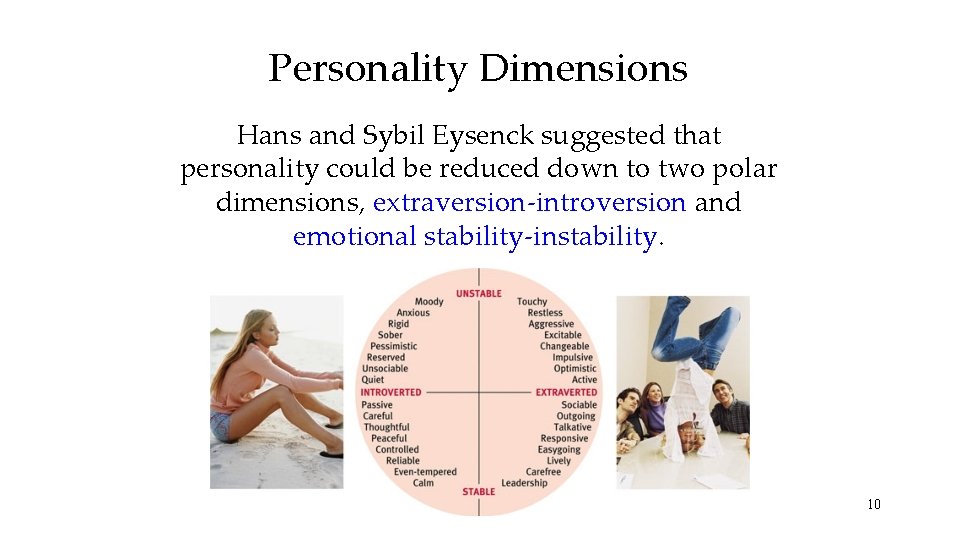
Personality Dimensions Hans and Sybil Eysenck suggested that personality could be reduced down to two polar dimensions, extraversion-introversion and emotional stability-instability. 10
Assessing Traits Personality inventories are questionnaires (often with true-false or agree-disagree items) designed to gauge a wide range of feelings and behaviors assessing several traits at once. 11
MMPI The Minnesota Multiphasic Personality Inventory (MMPI) is the most widely researched and clinically used of all personality tests. It was originally developed to identify emotional disorders. The MMPI was developed by empirically testing a pool of items and then selecting those that discriminated between diagnostic groups. 12

MMPI Test Profile 13
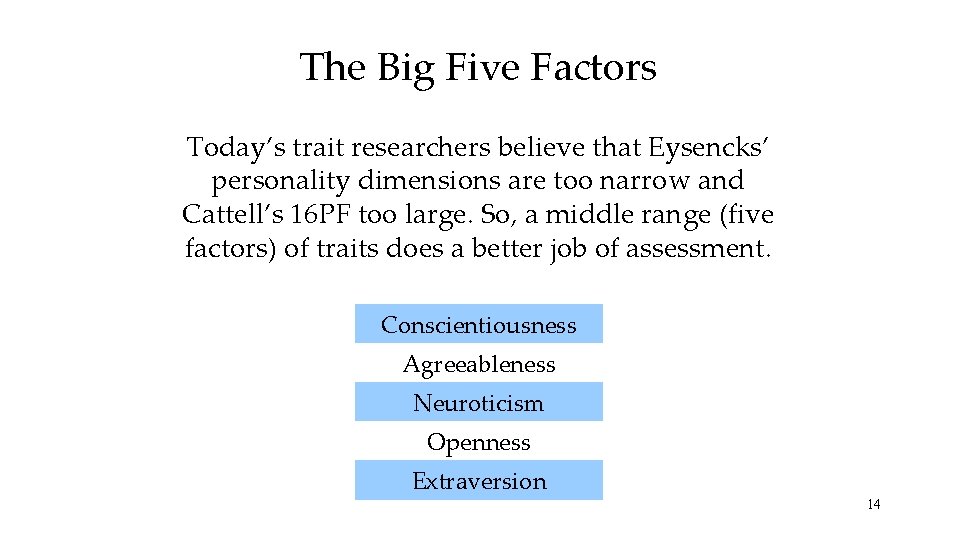
The Big Five Factors Today’s trait researchers believe that Eysencks’ personality dimensions are too narrow and Cattell’s 16 PF too large. So, a middle range (five factors) of traits does a better job of assessment. Conscientiousness Agreeableness Neuroticism Openness Extraversion 14
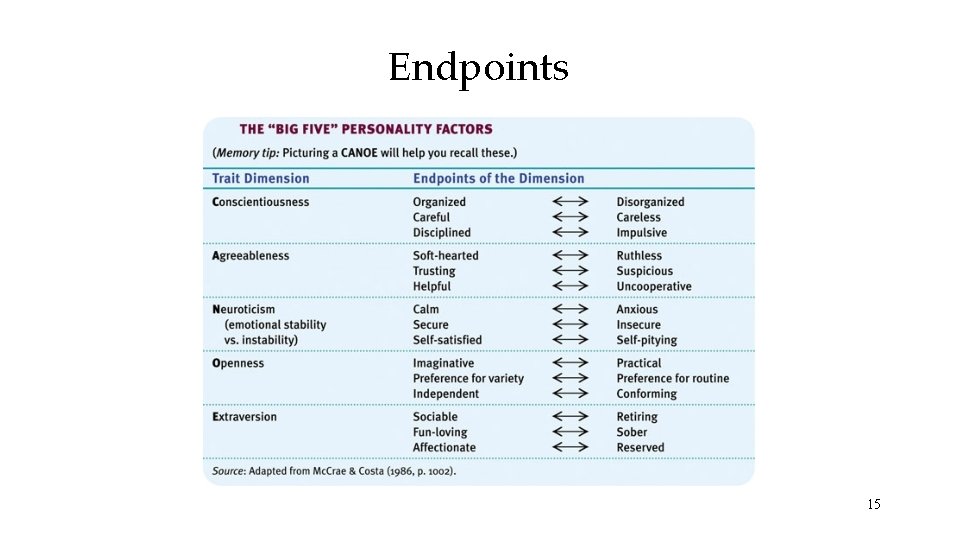
Endpoints 15
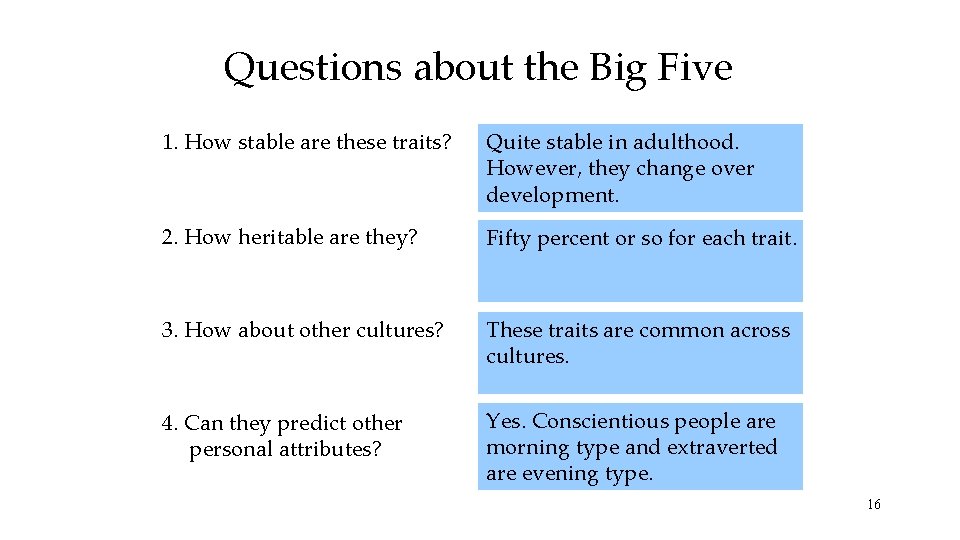
Questions about the Big Five 1. How stable are these traits? Quite stable in adulthood. However, they change over development. 2. How heritable are they? Fifty percent or so for each trait. 3. How about other cultures? These traits are common across cultures. 4. Can they predict other personal attributes? Yes. Conscientious people are morning type and extraverted are evening type. 16
Until the Bell: Take three Personality Tests online! 1. “Big Five” test: http: //www. outofservice. com/bigfive/ 2. Myers Brigg test: https: //www. 16 personalities. com/free-personality -test 3. A fun one of your choice! Take a buzzfeed quiz, figure out which house you would belong to at Hogwarts, which Space Marine chapter would you belong to, those sorts of things. Compare the results of these tests on a google doc and share it with me. Which one was the most accurate? Were these difficult at all? 17
- Slides: 17