
HUMANISM AND RENAISSANCE MARA SANZ IES MANUEL DE
- Slides: 12
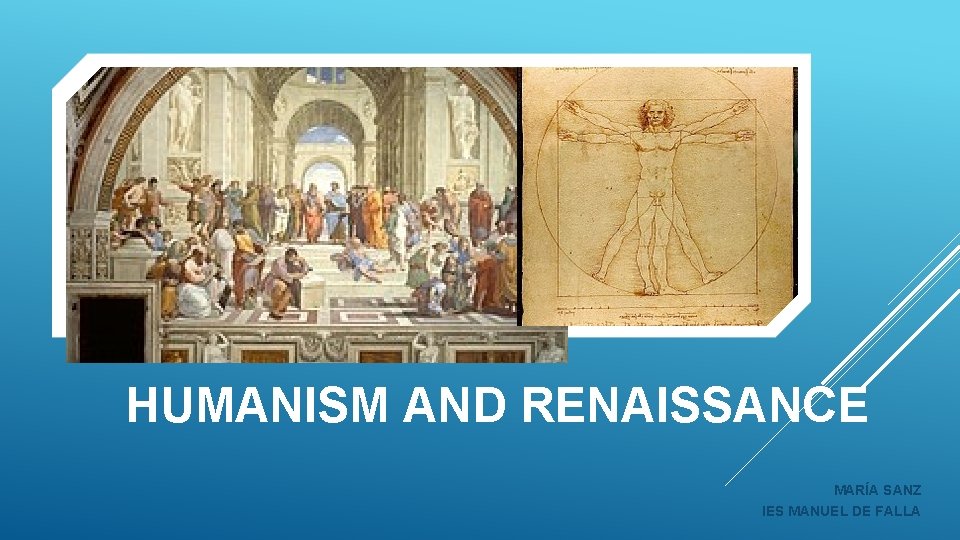
HUMANISM AND RENAISSANCE MARÍA SANZ IES MANUEL DE FALLA
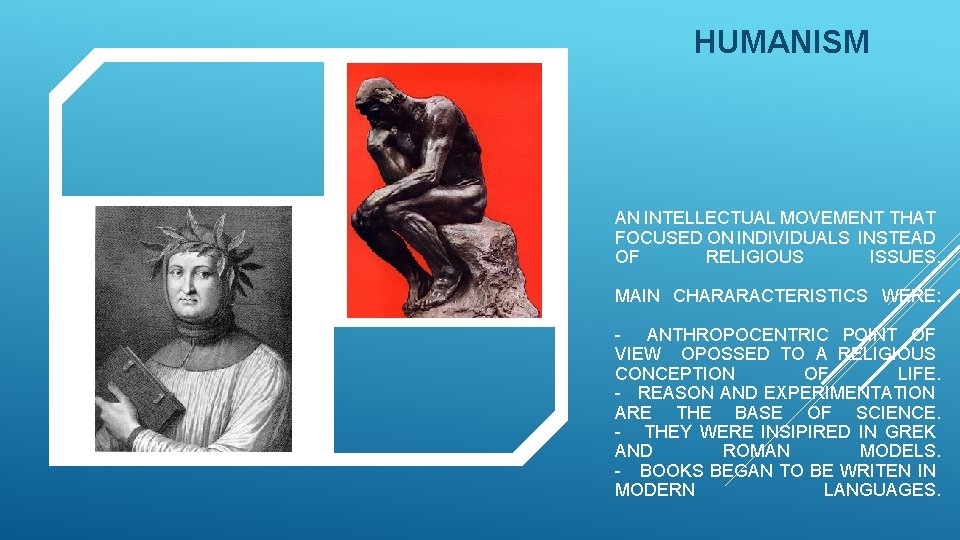
HUMANISM AN INTELLECTUAL MOVEMENT THAT FOCUSED ON INDIVIDUALS INSTEAD OF RELIGIOUS ISSUES. MAIN CHARARACTERISTICS WERE: - ANTHROPOCENTRIC POINT OF VIEW OPOSSED TO A RELIGIOUS CONCEPTION OF LIFE. - REASON AND EXPERIMENTATION ARE THE BASE OF SCIENCE. - THEY WERE INSIPIRED IN GREK AND ROMAN MODELS. - BOOKS BEGAN TO BE WRITEN IN MODERN LANGUAGES.
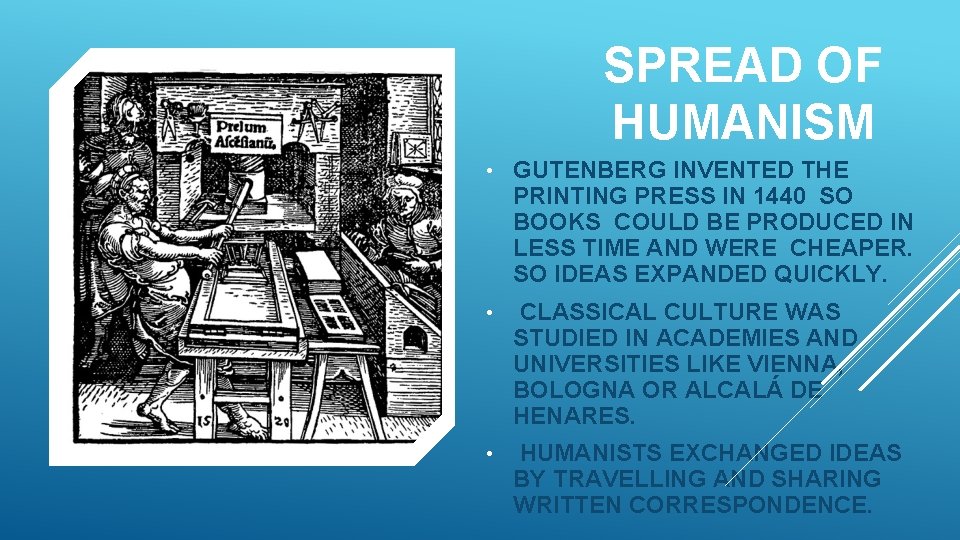
SPREAD OF HUMANISM • GUTENBERG INVENTED THE PRINTING PRESS IN 1440 SO BOOKS COULD BE PRODUCED IN LESS TIME AND WERE CHEAPER. SO IDEAS EXPANDED QUICKLY. • CLASSICAL CULTURE WAS STUDIED IN ACADEMIES AND UNIVERSITIES LIKE VIENNA, BOLOGNA OR ALCALÁ DE HENARES. • HUMANISTS EXCHANGED IDEAS BY TRAVELLING AND SHARING WRITTEN CORRESPONDENCE.
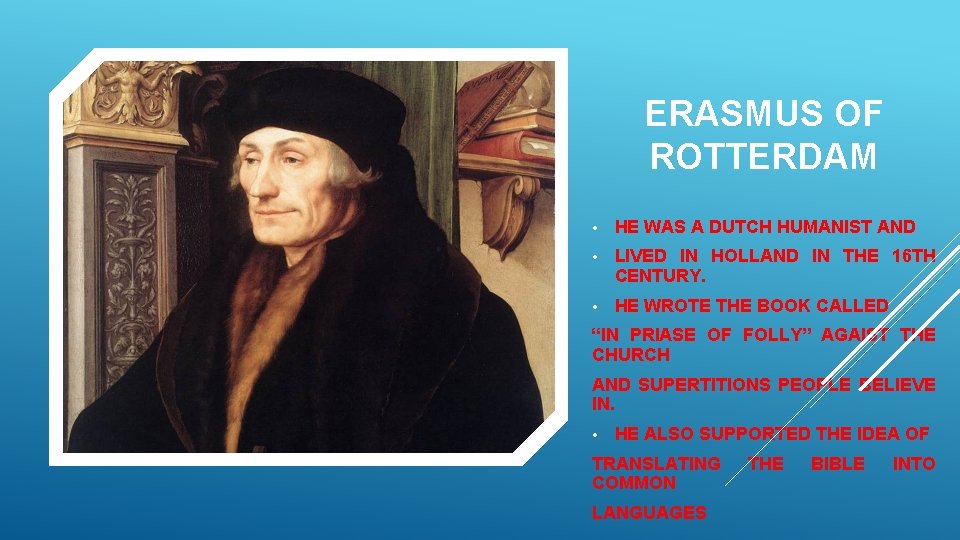
ERASMUS OF ROTTERDAM • HE WAS A DUTCH HUMANIST AND • LIVED IN HOLLAND IN THE 16 TH CENTURY. • HE WROTE THE BOOK CALLED “IN PRIASE OF FOLLY” AGAIST THE CHURCH AND SUPERTITIONS PEOPLE BELIEVE IN. • HE ALSO SUPPORTED THE IDEA OF TRANSLATING COMMON LANGUAGES THE BIBLE INTO
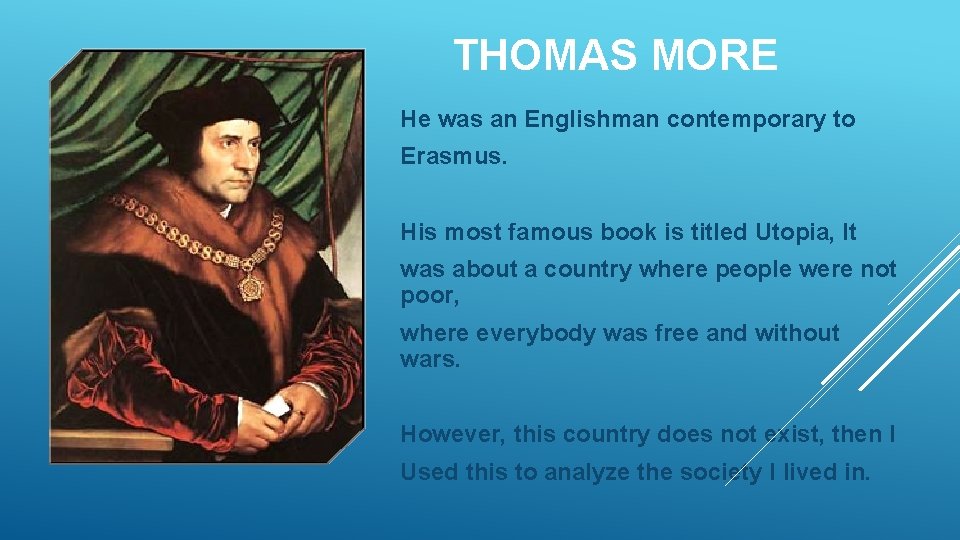
THOMAS MORE He was an Englishman contemporary to Erasmus. His most famous book is titled Utopia, It was about a country where people were not poor, where everybody was free and without wars. However, this country does not exist, then I Used this to analyze the society I lived in.
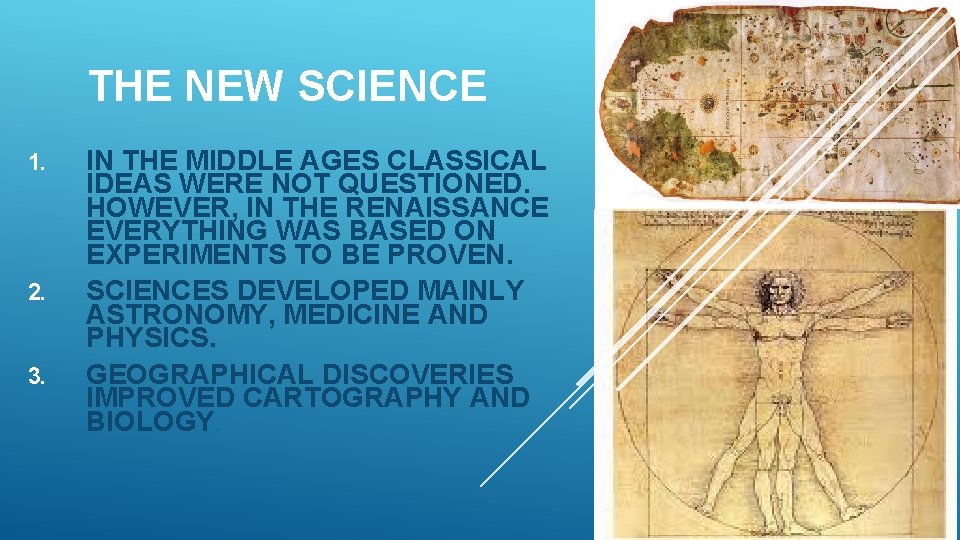
THE NEW SCIENCE 1. 2. 3. IN THE MIDDLE AGES CLASSICAL IDEAS WERE NOT QUESTIONED. HOWEVER, IN THE RENAISSANCE EVERYTHING WAS BASED ON EXPERIMENTS TO BE PROVEN. SCIENCES DEVELOPED MAINLY ASTRONOMY, MEDICINE AND PHYSICS. GEOGRAPHICAL DISCOVERIES IMPROVED CARTOGRAPHY AND BIOLOGY.
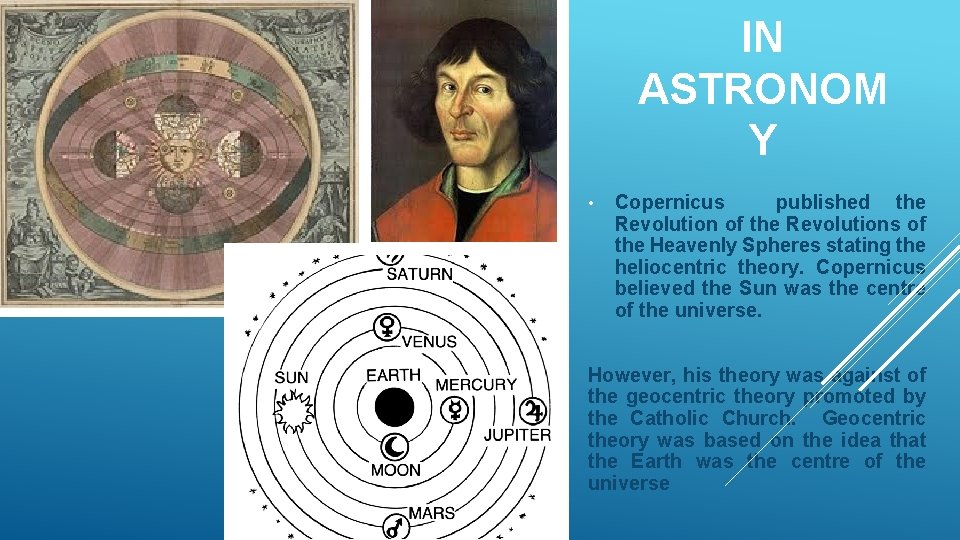
ADVANCES IN ASTRONOM Y • Copernicus published the Revolution of the Revolutions of the Heavenly Spheres stating the heliocentric theory. Copernicus believed the Sun was the centre of the universe. However, his theory was against of the geocentric theory promoted by the Catholic Church. Geocentric theory was based on the idea that the Earth was the centre of the universe
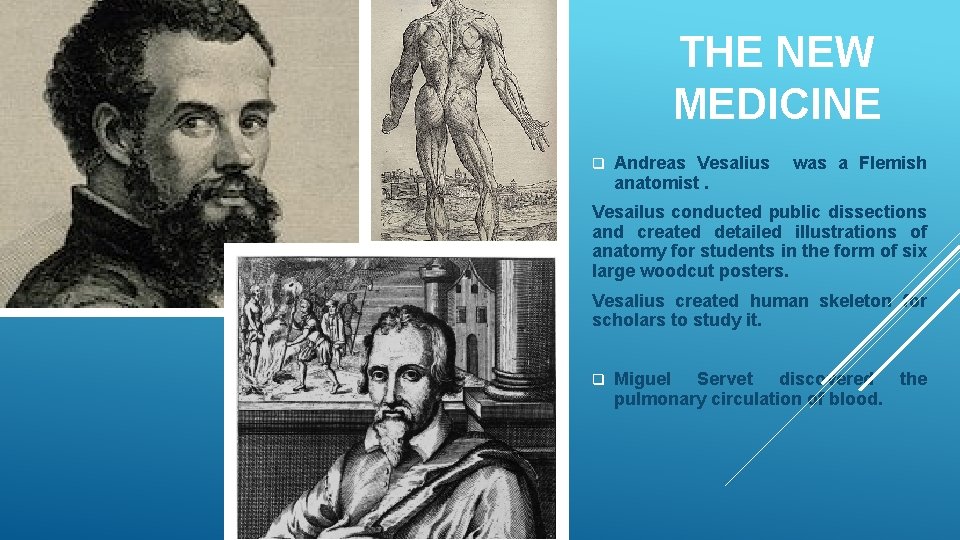
THE NEW MEDICINE q Andreas Vesalius anatomist. was a Flemish Vesailus conducted public dissections and created detailed illustrations of anatomy for students in the form of six large woodcut posters. Vesalius created human skeleton for scholars to study it. q Miguel Servet discovered the pulmonary circulation of blood.
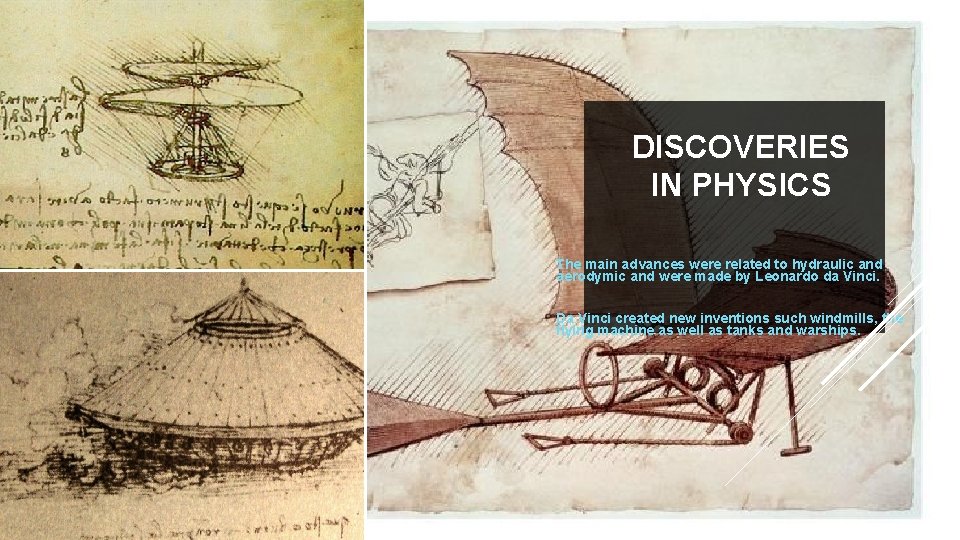
DISCOVERIES IN PHYSICS The main advances were related to hydraulic and aerodymic and were made by Leonardo da Vinci. Da Vinci created new inventions such windmills, the flying machine as well as tanks and warships.
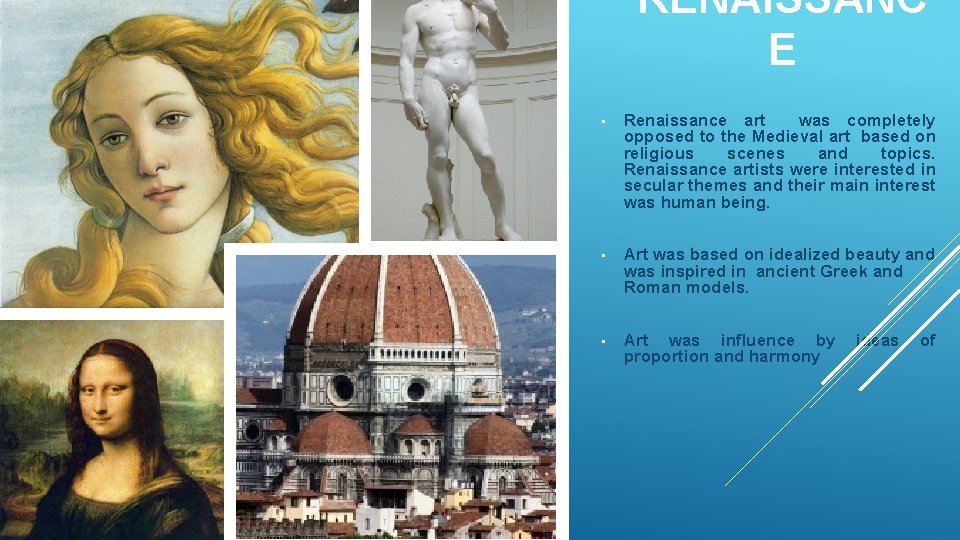
RENAISSANC E • Renaissance art was completely opposed to the Medieval art based on religious scenes and topics. Renaissance artists were interested in secular themes and their main interest was human being. • Art was based on idealized beauty and was inspired in ancient Greek and Roman models. • Art was influence by proportion and harmony ideas of
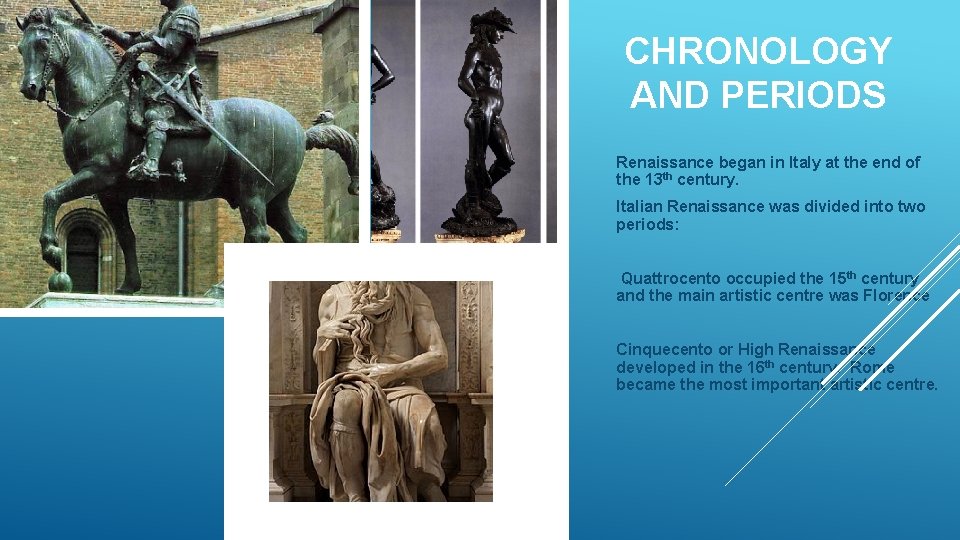
CHRONOLOGY AND PERIODS Renaissance began in Italy at the end of the 13 th century. Italian Renaissance was divided into two periods: Quattrocento occupied the 15 th century and the main artistic centre was Florence Cinquecento or High Renaissance developed in the 16 th century. Rome became the most important artistic centre.
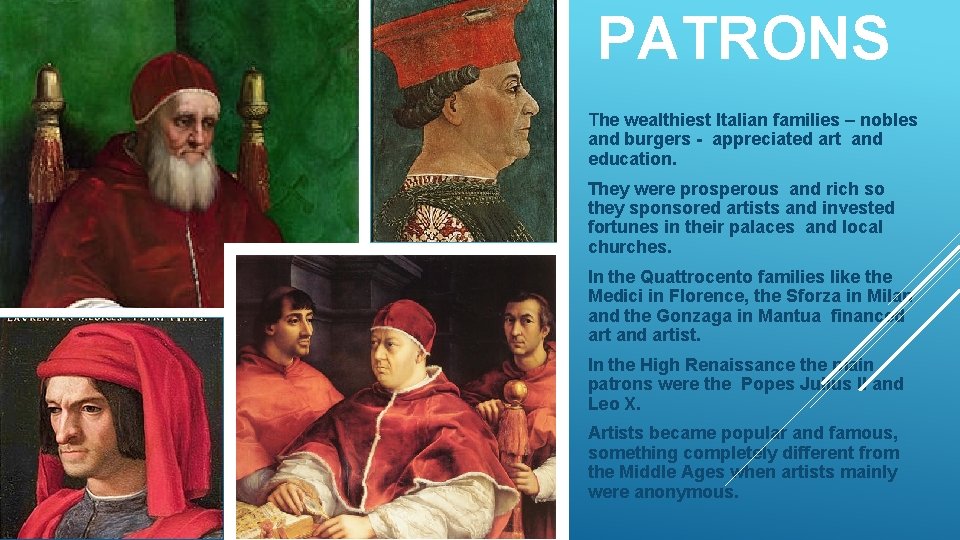
PATRONS The wealthiest Italian families – nobles and burgers - appreciated art and education. They were prosperous and rich so they sponsored artists and invested fortunes in their palaces and local churches. In the Quattrocento families like the Medici in Florence, the Sforza in Milan and the Gonzaga in Mantua financed art and artist. In the High Renaissance the main patrons were the Popes Julius II and Leo X. Artists became popular and famous, something completely different from the Middle Ages when artists mainly were anonymous.